Robots can already pollinate some crops commercially — an Israeli company’s autonomous tomato-pollinating robot has shown a 20% yield increase over manual pollination in a real 10-hectare field pilot — but robotic pollination today is a targeted tool for specific greenhouse crops, not a broad replacement for bees, which still handle the vast majority of the world’s insect-pollinated food crops far more cheaply and completely than any current machine. The honest state of the technology is somewhere between “real and working” and “nowhere close to bees” depending on exactly which crop and which claim you’re evaluating.
Key Takeaways
- Robotic pollination systems already operate commercially: Arugga AI Farming’s robot uses computer vision to identify ready-to-pollinate tomato flowers and applies calibrated air blasts to trigger pollination, and it’s running in real Israeli greenhouse operations today.
- In a 10-hectare pilot field, Arugga’s system showed a 20% yield increase compared to manual (human) pollination of the same crop — a real, measured result, not a marketing projection.
- Current robotic pollination technology clusters around a handful of mechanical approaches — air-jet, water-jet, linear-actuator, ultrasonic, and air-liquid spray methods — each suited to specific flower types and greenhouse conditions rather than one universal design.
- Nearly all commercially deployed robotic pollination today targets controlled greenhouse environments and specific crops like tomatoes, not open-field, wind- or insect-dependent crops at the scale bees currently handle.
- Researchers reviewing the field describe robotic pollination as a genuinely active and improving area of agricultural robotics, but one still facing real technical hurdles around cost, speed, and generalizing beyond a narrow set of tested crops.
Table of Contents
- What’s Actually Working Right Now
- The Different Mechanical Approaches
- Why This Isn’t Replacing Bees Anytime Soon
- Why the Research Exists At All
- Frequently Asked Questions
What’s Actually Working Right Now
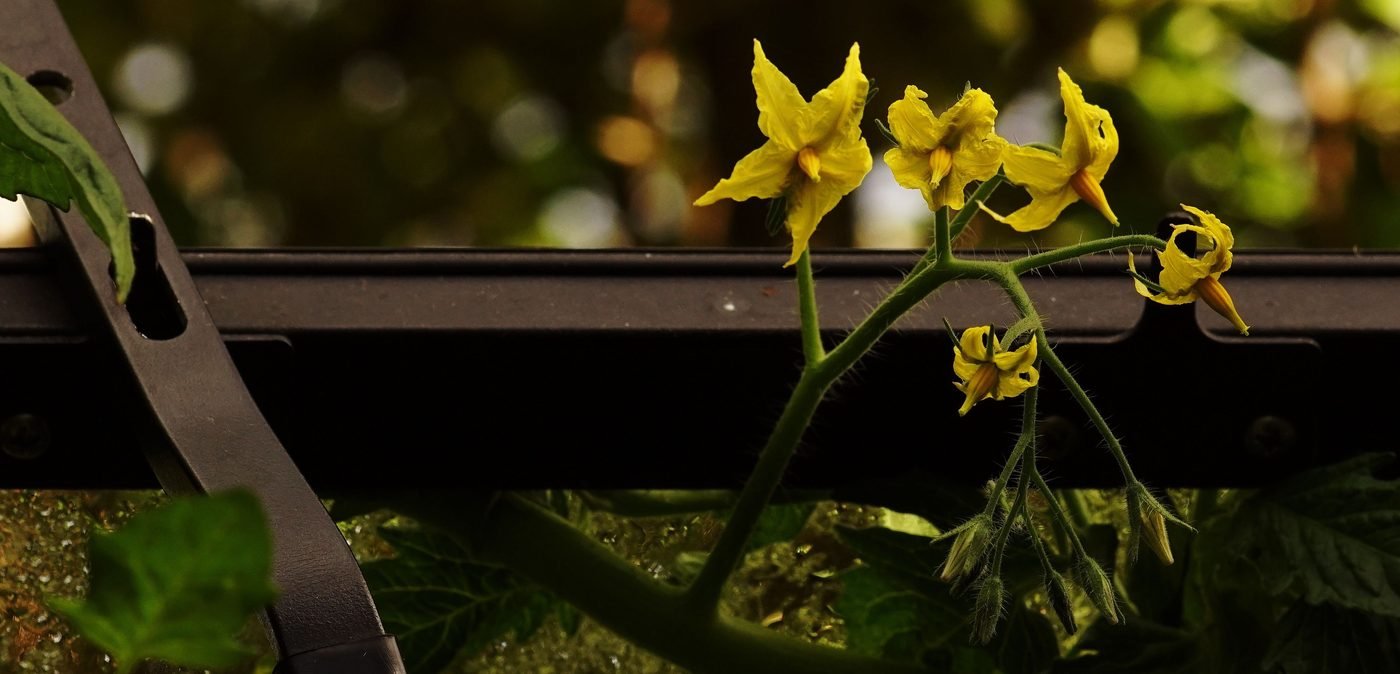
The clearest example of robotic pollination working outside a lab is Arugga AI Farming’s system for greenhouse tomatoes. The robot moves autonomously up and down rows of tomato plants, uses computer vision to assess which flowers are actually ready for pollination, and then pollinates them with precisely calibrated bursts of air that mimic the vibration effect a bumblebee’s buzz pollination naturally provides to a tomato flower. This isn’t a lab prototype: Arugga’s own reporting on its commercial deployments describes the system operating in real Israeli greenhouse farms, and a 10-hectare pilot field recorded a 20% yield increase compared to manual human pollination of the same crop — a meaningful, measured result rather than an aspirational marketing figure. Tomatoes are a particularly good early target for this technology because greenhouse tomato growers already often pay for manual pollination or rely on purchased bumblebee colonies, so a reliable robotic alternative has an existing cost and reliability baseline to beat.
The Different Mechanical Approaches
Robotic pollination isn’t one single technology — research reviews of the field categorize current approaches into several distinct mechanical strategies, including air-jet systems (like Arugga’s, using calibrated air pressure), water-jet and air-liquid spray systems, linear-actuator designs that physically contact flowers to transfer pollen, and ultrasonic-wave approaches that vibrate pollen loose without direct contact. Each approach suits different flower structures and crop types; a method that works well on a tomato flower’s specific anatomy won’t necessarily transfer to an almond blossom or a squash flower, which is part of why the field hasn’t converged on one universal robotic pollinator and likely won’t for years, if ever. Comprehensive engineering reviews published in recent years describe the space as active and rapidly developing, with distinct hardware and computer-vision approaches still being tested and compared against each other rather than one clear winning design having emerged.
Why This Isn’t Replacing Bees Anytime Soon
The success stories so far share a common thread: they’re all in controlled greenhouse environments, targeting a small number of specific, well-studied crops. That’s a fundamentally different, far easier problem than open-field pollination at the scale bees currently provide. A honeybee colony can independently locate, evaluate, and pollinate flowers across acres of varied terrain and multiple simultaneous crop and wildflower species, adjusting its own foraging in real time as bloom conditions change, entirely without human oversight, fuel, or maintenance beyond normal colony care. No current robotic system operates at that scale, that autonomy, or that cost, and open-field crops like almonds — which this site has covered in detail regarding the scale of commercial almond pollination hive requirements — remain far beyond what any deployed robotic pollination technology can currently replicate. The realistic near-term role for robotic pollination isn’t replacing managed bee colonies broadly; it’s supplementing pollination in specific high-value, controlled-environment crops where reliability and precision matter more than raw scale.
Why the Research Exists At All
Robotic pollination research has accelerated directly in response to concerns about pollinator decline and colony losses covered extensively elsewhere on this site, including in coverage of colony collapse in U.S. beekeeping — the logic being that agriculture shouldn’t be entirely dependent on a single pollination method if that method is under real, ongoing stress. It’s worth being clear that robotic pollination and bee-focused conservation aren’t presented by most researchers in the field as competing solutions; they’re generally framed as complementary tools, with robots offering a backstop for specific high-value crops in controlled settings while the vast majority of agricultural pollination — and essentially all of it in open fields — continues to depend on healthy, well-managed bee populations for the foreseeable future. This site’s coverage of robotic beehive monitoring technology like BeeHome covers a related but distinct trend: automating the care of real bee colonies rather than replacing them.
Frequently Asked Questions
Are robots actually pollinating crops commercially today?
Yes, in specific cases — Arugga AI Farming’s robotic system pollinates greenhouse tomatoes commercially in Israel and has shown measurable yield improvements over manual pollination in field pilots.
Can robots replace bees for open-field crops like almonds?
Not currently, and not in the foreseeable near term — open-field pollination at the scale bees provide requires an autonomy, cost profile, and adaptability no deployed robotic system currently matches.
How does a pollination robot actually work?
Approaches vary, but common methods include calibrated air-jet bursts, water or liquid sprays, physical linear-actuator contact, and ultrasonic vibration, each suited to different flower structures and crop types.
Is robotic pollination meant to replace beekeeping?
Most researchers and companies in the field frame it as a complement to bee-based pollination for specific controlled-environment crops, not a replacement for the far broader role bees play across open-field agriculture.
Why is greenhouse tomato pollination the leading use case?
Greenhouse growers already often pay for manual pollination or purchased bumblebee colonies, giving robotic alternatives an existing cost and performance baseline to compete against, and the controlled environment makes the engineering problem more tractable than open fields.