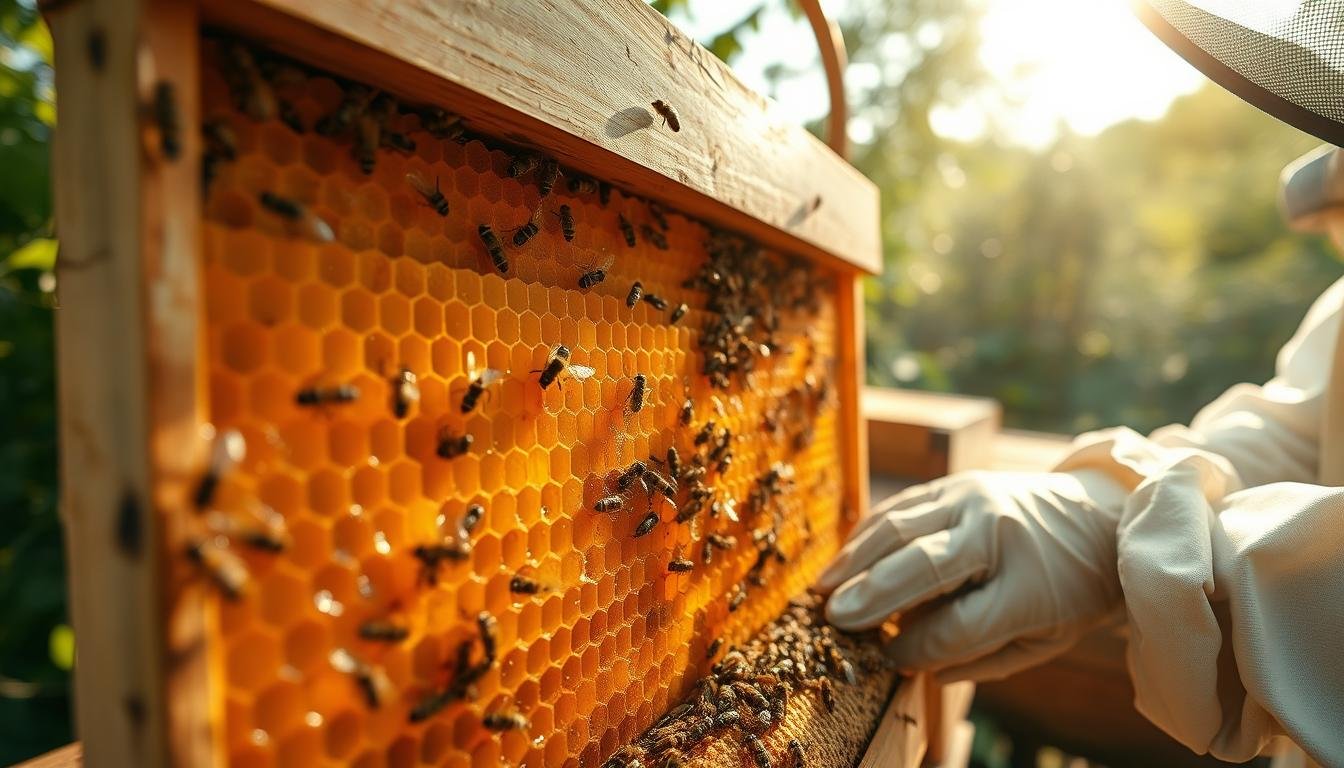
This practical guide helps beekeepers identify and correct cross comb while keeping the colony calm. The steps focus on safe moves, simple gear, and minimal mess.
Start with clear goals: check bee space, use smoke gently, and carry pre-banded frames and a lidded bucket for removed comb. Early inspections after installing swarms cut down cleanup later and help spot a laying queen by finding tiny rice-like eggs.
Light bridges can be cut with a hive tool and nudged back onto guides. For severe cases, salvage straight comb sections and rubber-band them into frames. Removed nectar or honey comb should be taken away from the apiary to prevent robbing.
Key Takeaways
- Respect bee space; gaps larger than 3/8 inch invite burr and cross comb.
- Carry a smoker, hive tool, pre-banded frames, a lidded bucket, and rags.
- Early checks after swarm installs prevent large cleanup later.
- Cut small bridges or salvage straight comb with rubber bands into frames.
- Delay big surgery until spring if late season to protect brood and queen.
Why cross comb happens and why it matters for hive management
A single gap larger than bee space can prompt bees to build comb across the intended frame lines. Cross comb forms when colonies find room wider than about 3/8 inch and decide their own orientation instead of following the frames. This behavior is common when frames are missing, boxes sit unevenly, or extra space opens at the bottom or sides.
What cross comb is and how it forms
Cross comb is comb that runs perpendicular to frames or bars, joining adjacent frame faces. Bees will fill larger gaps with new comb, and smaller gaps with propolis. Once comb spans frames, you cannot lift one frame without tearing cells and risking bee deaths.
Inspection challenges and colony risks
Removable frames are a legal and best-practice requirement for disease checks. Cross comb blocks compliant inspections and hides brood patterns, queen activity, and pests. In multi-box setups, bridged comb can lock boxes together and raise the chance of rolling bees or injuring the queen.
- Prevention note: Maintain proper bee space and fill missing frames quickly.
- Late-season, defer major surgery until spring when colonies recover faster.
For more on inspection issues see inspection challenges, and for alternative layouts consult a horizontal hives guide.
Gear up: tools, setup, and safety before you open the hive
Set your workspace and tools up first — this cuts stress for you and the bees. Arrange a small folding table, a frame rest, and a lidded food-grade bucket nearby so you can stage frames and contain removed comb quickly.
Essential tools: carry a sharp hive tool and a spare tool for leverage and clean cuts through wax and comb bridges. Have several frames pre-fitted with rubber bands so you can secure straight sections back into the frame immediately.
Pack a reliable smoker loaded for a long burn and rest it on metal, like a camp oven or bin lid, never on dry grass. Observe local fire restrictions and keep water nearby.
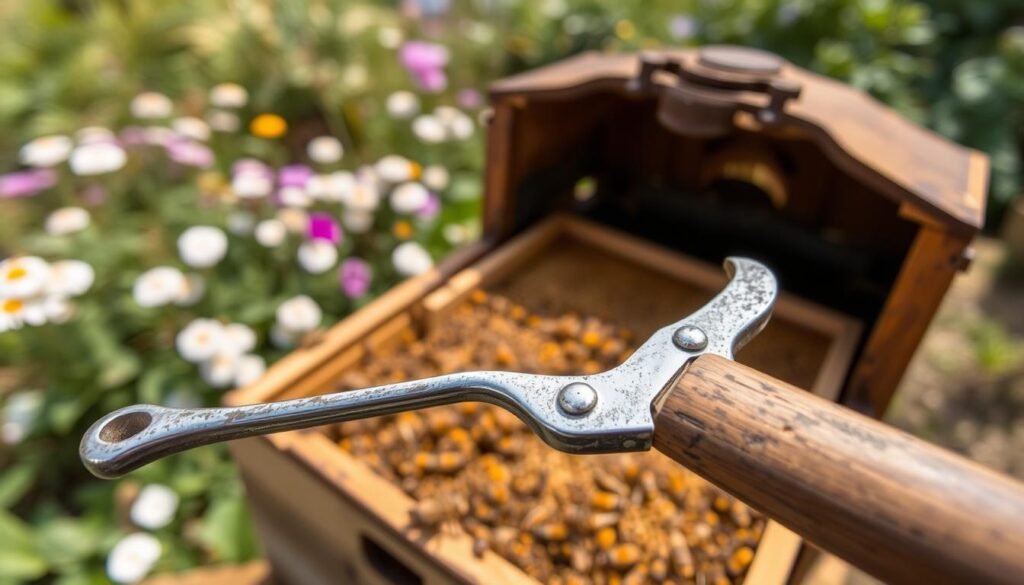
Bring two rags—one wet to wipe honey and propolis and one dry for grip. Use thin nitrile gloves if you need extra dexterity. Cap buckets with a tight lid when not in use to reduce mess and robbing risk.
“Smoke the entrance lightly and even your hands to move bees off the work line,”
Plan your way through the boxes: remove an outer frame first, then work inward. Keep your hive tool clean by wiping wax frequently and keep steady smoke so bees remain calm while you work.
For a beginner-friendly primer on setting up and inspections, see starting your first hive.
How to Fix Cross-comb in a Hive: Step-by-step Correction
Begin the repair by creating room: remove an outer frame and use gentle smoke to shift bees away from the cut line. Work calmly and keep tools ready so you move steadily and minimize disturbance.
Light cross comb: clear space, slice small bridges with a hive tool, then nudge the comb back onto the top guide. Minor crushing is acceptable; bees repair mashed cells if the alignment is restored.
Moderate cases: cut overlapping layers off honey-only sections, check carefully for brood, and push remaining comb edges so they meet the guide. Work one frame at a time and return corrected frames as you go.
Severe cases: harvest straight sections and rubber bands them into frames so the piece hangs from the top bar. Keep bands tight so the piece can’t slip while bees reattach it.
“Make sure each frame lifts freely after reassembly; removable frames save you a much larger job later.”
- Watch the bottom of frames so cut pieces don’t reattach to the floor.
- Reassemble with consistent spacing to maintain bee space.
- Schedule a follow-up check within a week.
What to do with removed comb: honey, nectar, and brood
Removed comb often holds different things: loose nectar, ripened honey, or living brood. Sort pieces quickly on your workbench so food and developing bees stay separate.

Crush-and-strain small honey harvests
For small yields, crush the comb in a wide, flat container with a fork or potato masher. Pour the slurry into a bucket strainer fitted over a pot or 5-gallon bucket.
Cover the strainer with foil or a clean bag and let it drain at least four hours. Label any oven or storage used for comb so nobody heats sealed jars by accident.
Saving brood pieces and banding securely
If brood appears in a broken section, inspect for eggs or larvae and band the straightest piece into a ready frame. Place that frame in the center of the brood nest, with honey frames to the outside.
Make sure rubber bands are snug; bees will reattach the comb and later remove the bands. Never leave chunks on the bottom board; they invite pests and may trigger robbing.
| Comb Type | Action | Placement |
|---|---|---|
| Ripened honey comb | Crush-and-strain, jar and label | Store sealed, cool place |
| Nectar (unripe) comb | Process or return to colony | Keep away from hive if stored |
| Brood comb | Band into frame, return center | Within brood boxes near queen |
- Keep processed equipment clean so wax and honey do not attract pests.
- Avoid leaving removed comb near the apiary; that causes robbing by other bees.
- For broader reading on resources and techniques, see beekeeping resources and books.
Preventing cross comb in the future
Consistent spacing and early checks keep frames usable year after year. Small, steady habits make the biggest difference. Respect bee space and keep openings near the 3/8 inch target so bees do not build between surfaces.
Foundation choices shape results: beginners often use foundation the first year to set straight lines, then alternate foundationless frames between drawn comb the next season. Drawn comb acts as an excellent guide; once several straight frames are present, bees build comb parallel with less fuss.
Practical steps
- Maintain consistent bee space near 3/8 inch around frames and box walls.
- For top-bar systems, inspect roughly every three days early on and cut small deviations immediately.
- After installing a swarm on comb guides, open within two days to confirm alignment.
- Keep boxes filled with frames so large voids do not invite cross building.
“Give the colony one or two fully straight frames as scaffolding; they will follow that pattern.”
For deeper reading on structural guidance and expansion techniques see scientific notes on bee behavior and practical expansion tips.
Timing matters: season, weather, and follow-up inspections
Seasonal timing often makes the largest difference when you decide whether to cut or wait. Early spring and mild days are the best time windows for major work. In many cases, small tweaks now prevent larger comb problems later.
When to act immediately: Light or moderate comb bridges early in the season should be corrected at once. Quick cuts and nudges keep frames removable and lower the risk of brood loss.
When to delay: If you find extensive comb late in the season, wait until early spring. Cold nights and low bee numbers make heavy surgery risky for brood and queen recovery.
- Plan around weather: choose calm, mild days so brood stays warm during work.
- After any realignment, recheck within a few days to one week to make sure edges join and no new bridges form.
- Watch for queen signs: eggs and steady brood pattern show recovery is underway.
- During strong flows, add space promptly so brood frames do not become congested and trigger swarming.
“Make sure your recheck timeline is on the calendar the day you finish repairs.”
Special situations: swarms, brood boxes, and storage congestion
New colonies on guide strips can set their pattern fast; check within days to confirm straight starts.
Fresh swarms on comb guides: open the box within two days and look for straight comb along the bar or top of frames. Early checks prevent cross links that lock boxes together and force large repairs later.
When you see lots of fresh white cells, slice small bridges right away so bees continue to build comb along the guide. If a broken piece holds only nectar, remove it from the apiary and keep it off the bottom board to avoid robbing.
Brood nest congestion: when brood frames are full and bees store honey in brood space, the queen can lose room and swarming pressure rises. Add a box or harvest surplus to give the brood room to expand.
“Prioritize queen safety: free frames gently, then stage refinements over a week if needed.”
- Free any cross connections between boxes so each box lifts independently.
- Insert a couple of straight frames as guides where bees tend to build off-axis.
- Plan follow-up checks within a week during peak time of year.
| Situation | Immediate action | Follow-up |
|---|---|---|
| Fresh swarm on guide | Inspect within 48 hours; cut small bridges | Recheck in 3–7 days |
| Broken nectar comb | Remove from hive area | Process or store away from apiary |
| Brood box congestion | Add box or harvest surplus | Watch brood pattern and queen movement |
| Cross links between boxes | Free frames, realign guides | Staged fixes over a week |
Conclusion
A tidy endnote helps beekeepers keep frames removable and colonies stable.
Keep bee space near 3/8 inch and inspect new swarms within two days on comb guides. Light, steady smoke and careful hive tool cuts protect brood and the queen during small repairs.
Remove large broken comb pieces from the apiary, cover sticky gear, and keep a lid on containers. For severe links, salvage straight sections and band them into frames, then recheck within a week so bees can reattach safely.
Across the beekeeping year, act early for build-up and postpone major surgery late in the season. Simple, consistent habits—filled box positions, drawn comb guides, and neat spacing—cut problems and keep inspection work efficient.
FAQ
What causes cross comb and why is it a problem for hive management?
Cross comb forms when bees build wax outside the intended frame plane, often across boxes or between frames. This happens when bee space is ignored, frames are spaced unevenly, or new colonies start on foundationless bars. It complicates inspections, damages drawn comb during removal, and can harm brood and honey stores if left unchecked.
How can I prepare safely before opening a hive to correct comb issues?
Wear protective gear, have a smoker and a working hive tool, and set up a clean workspace with rags, a table, and containers with lids for removed comb. Keep rubber bands and a frame rest handy. Work on a calm day and position equipment so you can set frames down without crushing bees or comb.
What’s the best approach for light cross comb that only bridges a little space?
Use gentle smoke to calm bees, cut small wax bridges with a hive tool, and realign the comb onto the nearest frame guide. Move slowly to avoid tearing brood. Reassemble frames with correct spacing to restore bee space and prevent recurrence.
How should moderate cross comb be handled when large sections are attached to two frames?
Straighten and nudge comb back onto the intended frames, trimming only where necessary. If sections resist, carefully detach and join them onto a single frame using rubber bands or a temporary support until bees draw new attachment points.
What steps do I take in severe cases where comb spans multiple frames or boxes?
Cut out clean, healthy comb sections using a sharp knife or saw. Mount salvaged comb into empty frames with rubber bands or wire so foundations hold. Dispose of heavily damaged or disease-suspect comb. Re-space frames to proper bee space before reassembling the box.
After fixing comb, how should frames be arranged to maintain proper bee space?
Ensure standard frame spacing that creates roughly 3/8 inch bee space between comb faces. Use drawn comb as guides and add or remove frames to keep consistent gaps. Check the assembled box on a flat surface before returning it to the colony.
What can I do with removed comb that contains honey, nectar, or brood?
Small honey sections can be crushed and strained for a modest harvest. Save healthy brood comb when possible and secure it back into frames with rubber bands to preserve brood. Avoid using comb that shows disease signs; follow local regulations for disposal.
How do I decide between foundation and foundationless frames to prevent recurrence?
Foundation helps guide straight comb and reduces stray builds. Foundationless frames work with experienced colonies but require closer monitoring and early inspections. Use a mix based on colony strength and your willingness to manage comb alignment.
When is the best time of year to intervene on cross comb, and when should I wait?
Intervene quickly for fresh swarms or new installations—within days—to prevent large builds. For minor issues late in winter or during heavy nectar flows, delay until brood activity slows or conditions improve. Plan follow-up inspections two days to one week after corrections.
How should I handle cross comb in swarms or congested brood boxes to avoid triggering swarming?
Correct comb early for fresh swarms and relieve congestion by rearranging frames to give space for the brood nest and honey stores. Avoid excessive disturbance during peak swarming season, but act fast when comb threatens colony function to reduce stress and swarming triggers.