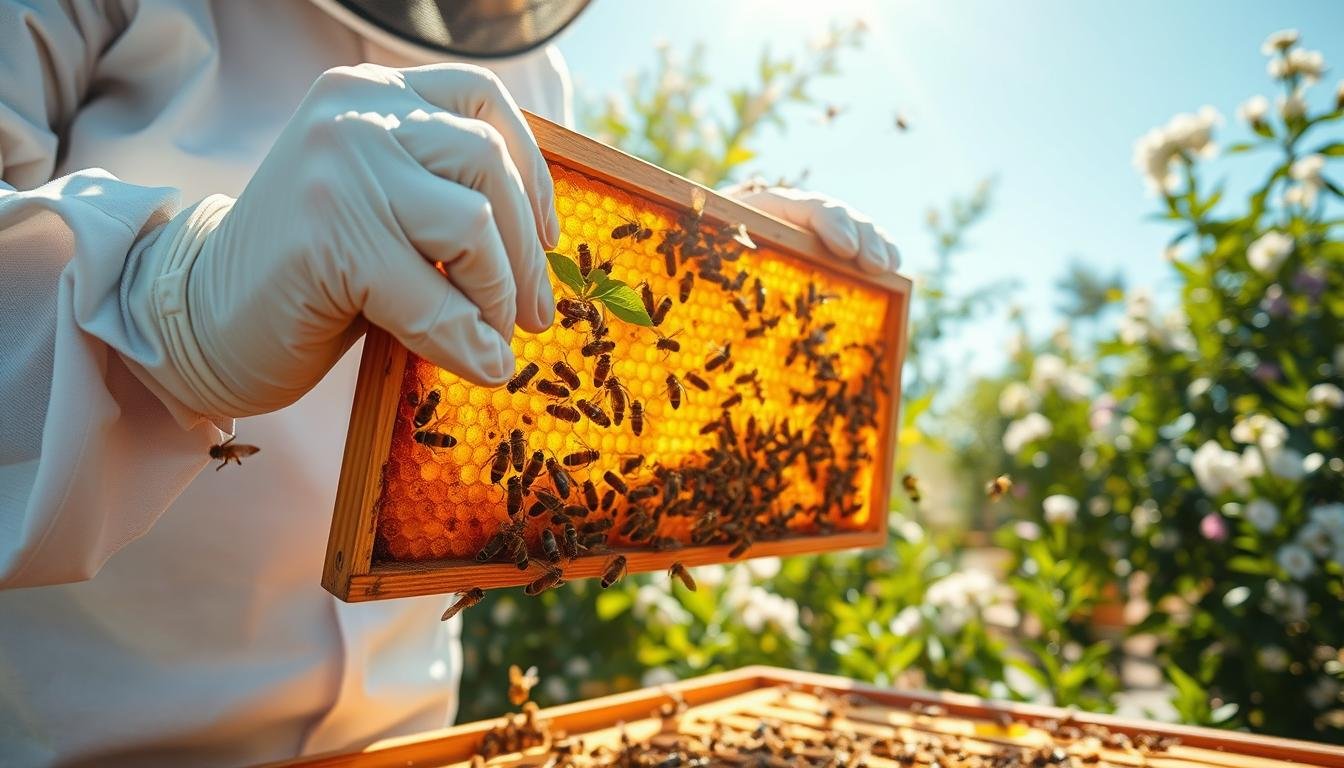
This piece asks a simple but tricky question: can honey bees identify one person at the hive or do they respond to general cues? We set expectations up front. Lab work shows capability, while the apiary offers nuance.
In 2004, Cambridge researchers trained insects to link a specific human face with a honey reward. That work proved a bee can learn visual patterns when motivated.
NC State expert David Tarpy notes the same: trained individuals can tell faces apart, but at the hive most cues are scent and routine. In practice, smell, movement, and timing shape recognition more than vision.
Field observations match this view. Colonies often seem calmer with familiar caretakers and more defensive around strangers. That suggests multi-sensory learning over time, not a face-only mechanism.
This article will unpack sensory biology, review experiments, compare apiary anecdotes, and offer practical habits to lower stress for both bees and people at the hive.
Key Takeaways
- Laboratory studies show honey bees can learn to identify a human face when rewarded.
- At the hive, scent and routine often matter more than visual cues.
- Expert reports and field notes point to calmer colonies with familiar handlers.
- Recognition likely uses multiple signals: smell, movement, and timing.
- Practical habits can reduce defensive behavior and improve beekeeping safety.
Short Answer First: Yes—But Context Matters
Laboratory conditioning demonstrates that some honey insects can discriminate a human face for a treat.
In controlled tests, trained workers learned to link a specific face with a honey reward. That proves capacity: insects can learn visual patterns when motivated.
At the hive, scent and movement usually carry more weight. The concentrated odors around frames and equipment make smell the reliable cue for calm or defensive responses.
Timing matters too. If you visit the same time each day, circadian learning helps workers expect you. Anticipation may look like recognition but often reflects routine.
Practical reason: focus on consistent scent profiles, gentle handling, and steady approach to reduce stress. Veils and suits hide faces, so visual cues weaken while smell and motion stay strong.
- Faces can be learned in clear lab settings, yet are one of several signals.
- Don’t overinterpret single calm encounters; they may reflect scent, smoke, or timing.
- Use this insight to make inspections calmer for both handler and colony.
How Honey Bees Perceive the World: Sight, Scent, and Learning
Visual cues and chemical signals work together, but scent usually leads the conversation. Honey bees spot patterns, contrasts, and edges. Their eyes pick up simple templates rather than fine detail.
Visual limits and strengths
Workers excel at detecting shapes and contrast. That lets a bee learn simplified faces as composite patterns tied to outcomes like food. Resolution is lower than human vision and can fail under veils or poor light.
Scent as the primary channel
The hive is full of strong odor plumes from wax, propolis, nectar, and smoke. Antennae sample those cues at close range, so chemical signals convey colony status more reliably than sight.
Timing and circadian rhythms
Foragers follow daily cycles and learn when rewards appear. Regular visits at the same time of day let workers anticipate arrivals. In the yard, wind and suits may change visual profiles while scent patterns stay steadier.

- Brains of a bee encode associations efficiently, linking scent, motion, and schedule.
- Combine consistent scent, calm handling, and steady timing for stronger learning than vision alone.
What the Science Says: From Cambridge 2004 to Today
Laboratory work shows clear associative learning. In Cambridge (2004), researchers trained insects to link pictured humans with a honey reward. Trained workers reliably approached the correct image, proving discrimination under controlled conditions.
Conditioned learning and a Pavlovian parallel
That training mirrors classic experiments with dogs: a neutral cue becomes meaningful when it predicts food. Insects signal expectation by extending a proboscis or moving to the cue, which shows associative learning across species.
Can versus do in everyday practice
These trials demonstrate capacity: simple visual templates can be stored and recalled. But the field context differs. In a busy yard, scent, motion, and colony cues usually outweigh fine visual detail.
Expert perspective: integration over isolation
“Bees can tell faces apart in the lab, yet at the hive smell and time matter far more.”
Even with tiny brains, workers show efficient pattern learning. They also track time via circadian rhythms, so repeated visits at the same hour become predicted events.
- Takeaway: experiments prove what is possible, not what always happens.
- For smoother inspections, focus on stable scent profiles, calm motion, and consistent timing rather than relying on visual recognition.
37. do bees recognize their beekeeper in real apiaries?
Many apiary reports describe steady hives when the same person inspects on regular times. Field accounts from backyard and commercial yards align with laboratory insights: scent and routine shape how colonies respond.

Field observations: calmer colonies with familiar beekeepers
Practitioners often report calmer behavior when a known handler approaches a hive. Repeated exposure to the same suit, smoker fuel, and handling style gives workers a predictable cue set.
Experienced educators, including David Tarpy, note these anecdotes are common. Familiar patterns—steady motion, stable scent, and regular visit times—reduce alarm pheromone release and ease inspections.
When strangers approach: defensive behaviors and why they happen
Different odor signatures, sudden movements, or odd vibrations can trigger heightened defense. Stressors such as robbing pressure, poor weather, or recent disturbance make colonies more reactive.
- Many beekeepers see calmer hives with repeat visitors and steadier yard routines.
- Bees respond to a suite of cues—timing, odor, and motion—rather than a single face.
- Responses vary by colony temperament and recent events, so not every hive reacts the same.
- Plan inspections for low-activity periods and keep movements slow to lower risk.
Practical note: consistent habits in the yard work best. For more firsthand accounts from keepers, see the community thread on hive owners.
“Familiar routines reduce uncertainty at the entrance; scent and timing are the clearest signals.”
From Yard to Hive: Practical Ways Beekeepers Can Be “Recognized”
A steady routine at the apiary helps colonies learn to expect a calm presence.
Consistency over time
Choose a fixed day and window of time for inspections. Circadian learning makes visits predictable and less disruptive.
Scent signatures
Use a dedicated suit and gloves and the same smoker fuel. A stable scent profile reduces surprises at the entrance and steadies behavior.
Gentle handling and calm voice
Keep motions slow and use a light hand on frames. Speaking calmly can help you stay steady, which lowers sudden jolts to the hive.
- Prepare tools ahead to shorten open-hive time.
- Work in good weather and during nectar flow when possible.
- Approach along a consistent path and keep entrances clear.
| Practice | Why it helps | How often |
|---|---|---|
| Same day/time | Aligns with circadian learning | Weekly or regular checks |
| Stable scent | Masks alarm cues, adds familiarity | Always use same gear |
| Gentle handling | Reduces vibration and stress | Each inspection |
Myths, Misreads, and the Role of Memory
A common tale says placing a photograph inside a hive will teach workers to “know” a face.
The crownboard photo idea is a useful caution. In a dark, odor-rich hive, flat images offer little compared with live scent and motion.
Laboratory tests show that insects can learn simple visual patterns. Still, the hive favors smell, touch, and timing over detailed sight.
Memory in colonies is multi-modal. Workers form links between odors, flight routes, and regular visit times. Those combinations produce reliable recognition effects toward familiar visitors.
Humans often over-attribute social meaning to animal behavior. What people read as personal greeting may be an association with calm handling or repeated routines.
- Single face cues rarely explain yard outcomes; scent and handling context usually dominate.
- Suits and veils hide facial features, so visual signals drop out during inspections.
- Focus on stable odor profiles and steady motion to reduce alarm and build trust.
Practical note: for evidence-based tips and broader reading, see a research overview and a practical resource guide.
research overview · beekeeping resources
Inside the Colony: Recognition Beyond Humans
Inside a hive, chemical signals and shared odors shape how workers tell friend from foe.
Queen and nestmate identity
Pheromones form a colony-wide scent signature. Guard bees check that scent at the entrance to admit nestmates and repel intruders.
The queen bee emits a specific pheromone profile that organizes behavior, inhibits rival breeding, and signals colony health.
Wax, propolis, and bee-derived cues blend into a chemical “home” that defines membership inside the hive.
Landscape memory and foraging
Foragers learn routes to flowers, water, and landmarks and refine them over weeks. That spatial memory optimizes trips for nectar and honey collection.
Reliable knowledge of nearby water helps brood cooling and hive thermoregulation.
- Chemical cues outweigh vision in dark, crowded combs.
- Heavy masking of odor can confuse guards; consistent scents become accepted.
- Shifts in nectar or brood status change whether a colony defends or forages.
Understanding these systems helps caretakers align practices with how colonies manage identity and space, making inspections calmer and safer.
What This Means for Beekeepers and Bee Lovers Today
Small, deliberate actions during inspections cut stress and lower alarm signals in most yards. Plan each visit with a clear purpose and the fewest necessary moves. That helps colonies link your presence with calm, not chaos.
Reducing stress during inspections: steady movements and clear purpose
Have tools ready and approach with a steady gait. Use smooth hand motions when lifting frames to limit vibration and avoid accidental crushing.
Keep inspections brief and focused so bees learn that your visits are predictable and nonthreatening.
Seasonal considerations: summer traffic, nectar flows, and defensive times
Align checks with warm midday hours when foragers are out. During a strong nectar flow in summer, hives often tolerate more handling.
In lean periods or after disturbances, expect higher guard activity and reduce inspection depth and frequency across the year.
Respecting bees’ space: when to step back and give the colony time
If guards spike or stinging begins, close calmly and return another day. Patience preserves safety and avoids reinforcing alarm cues.
Consistency over time—same arrival times and scent profiles—helps colonies anticipate visits through circadian learning and familiar odors.
- Prepare tools and plan the visit to minimize open-hive time.
- Move slowly with deliberate hand techniques to reduce vibration.
- Prefer warm, sunny parts of the day for inspections when possible.
- Step back and reschedule if agitation is high; closing calmly is the best option for safety and long-term trust.
“Predictable timing and gentle technique make you a low-threat presence in the yard.”
Conclusion
Evidence from lab training shows honey bees can learn a human face, yet real apiary life uses more signals than sight alone.
The practical way forward is clear: build a stable scent profile, keep motions gentle with steady hand technique, and visit at the same day and hour when possible to match workers’ rhythms.
Honey and other strong odors shape how a hive files you as low-threat. Use consistent smoker fuel and clean gear, and adjust across seasons and multiple hives as conditions change.
Respect the colony’s chemistry — queen bee signals, water needs, and breeding cycles are part of a system that favors chemical cues.
Aligning with this reality leads to calmer hives, safer beekeeping, and a more rewarding experience for people and bees alike year after year.
FAQ
What did the Cambridge 2004 study show about bees and human faces?
The 2004 Cambridge research demonstrated that honey bees can be trained to distinguish human faces in controlled lab tests. Bees learned to associate specific faces with a sugar reward and later chose those faces over others. This shows bees have learning and pattern-discrimination abilities, though lab conditions differ from an apiary.
Can honey bees really learn to associate a specific person with food or calm behavior?
Yes. Honey bees form associations between cues and rewards. If a person repeatedly provides nectar or handles the colony calmly, bees can link that combination of visual, scent, and timing cues with positive outcomes. Scent usually dominates, but visual patterns and consistent routines strengthen the association.
Is scent more important than sight when bees "recognize" someone?
Scent is the primary channel. Bees use chemical cues to identify nestmates and assess risk. Human odor, sweat, hive-colony scent, and residues on clothing make a much stronger impression than facial features. Maintaining a consistent scent profile helps bees respond predictably.
Do bees remember individual people long term in real-world apiaries?
Bees retain associative memories for days to weeks depending on reinforcement. In an active apiary, repeated, consistent interactions increase the chance of lasting recognition. However, turnover in foragers and changing seasonal conditions mean memory is not identical to human long-term recall.
Will a colony act calmer when the same beekeeper inspects it regularly?
Many beekeepers and field studies report calmer colonies with familiar handlers. Calm, consistent routines, stable scent signatures from suits and gloves, and steady movements reduce perceived threat and encourage less defensive behavior during inspections.
How do time of day and circadian rhythms affect bee responses to people?
Bees follow daily rhythms. They expect food sources and activity at certain times. A beekeeper who visits at a consistent hour can be anticipated as nonthreatening or associated with routine. Unexpected visits during peak foraging or cool dawn/evening hours may provoke different behavior.
What practical steps help a beekeeper become "known" to their colony?
Use a steady inspection routine, wear the same gear or minimize abrupt changes, use gentle handling and a calm voice, and avoid unfamiliar odors like strong perfumes. Smoke patterns should be consistent and minimal so the colony’s scent profile remains stable.
How do strangers or new visitors affect hive behavior?
Unfamiliar people can trigger defensive responses because the colony lacks associated positive cues. Rapid movements, loud noises, or novel scents increase agitation. Supervising strangers and limiting sudden interactions reduces stings and stress on the bees.
Is face recognition the same as the way bees recognize their queen and nestmates?
No. Queen and nestmate recognition relies heavily on pheromones and colony scent, not visual face cues. Inside the hive, chemical signals and close contact allow precise discrimination, whereas recognition of humans depends on a mix of scent, vision, and learned context.
Can beekeepers rely on bees’ recognition to prevent stings during all seasons?
Recognition helps but does not eliminate risk. Seasonal factors—nectar flows, high temperatures, and colony health—change defensiveness. Even familiar handlers should use protective gear when conditions or colony temperament warrant extra caution.
Do bees use landscape memory in ways that affect how they respond to people in the yard?
Yes. Foragers learn flight routes, water sources, and flower patches over weeks. A beekeeper who moves hives or alters nearby forage can change forager behavior. Stable yard layouts and water access support predictable foraging and lower stress.
What are common myths about bees recognizing individual people?
A common myth is that bees “see” faces as humans do. While bees can learn facial patterns in labs, real-world recognition relies on multiple cues with scent leading. Another misconception is that familiarity stops all stings; it reduces but doesn’t remove defensive responses.
How should new beekeepers approach building positive associations with their hives?
Start with short, regular visits at consistent times. Move slowly, limit handling to necessary tasks, and avoid strong smells. Use minimal smoke and practice gentle technique. Over weeks, these habits help bees associate the keeper’s presence with predictable, low-risk outcomes.
Are there differences between colonies in how well they "recognize" people?
Yes. Colony temperament, genetic background, queen health, and prior experience with disturbance shape responses. Some colonies are naturally more docile and quicker to form positive associations; others remain defensive despite consistent care.
What role do protective suits and gloves play in bee recognition?
Protective gear standardizes a keeper’s scent and visual profile, which can help bees form a consistent association. However, heavily perfumed or recently washed suits can add novel smells. Many beekeepers keep gear dedicated to the apiary to preserve a stable scent signature.