Starting a small apiary is rewarding, but it raises questions. New beekeepers often wonder what gear they truly need and how much the first year will cost. Expect a realistic budget near $800 if you buy everything at once, though you can stage purchases to spread expenses.
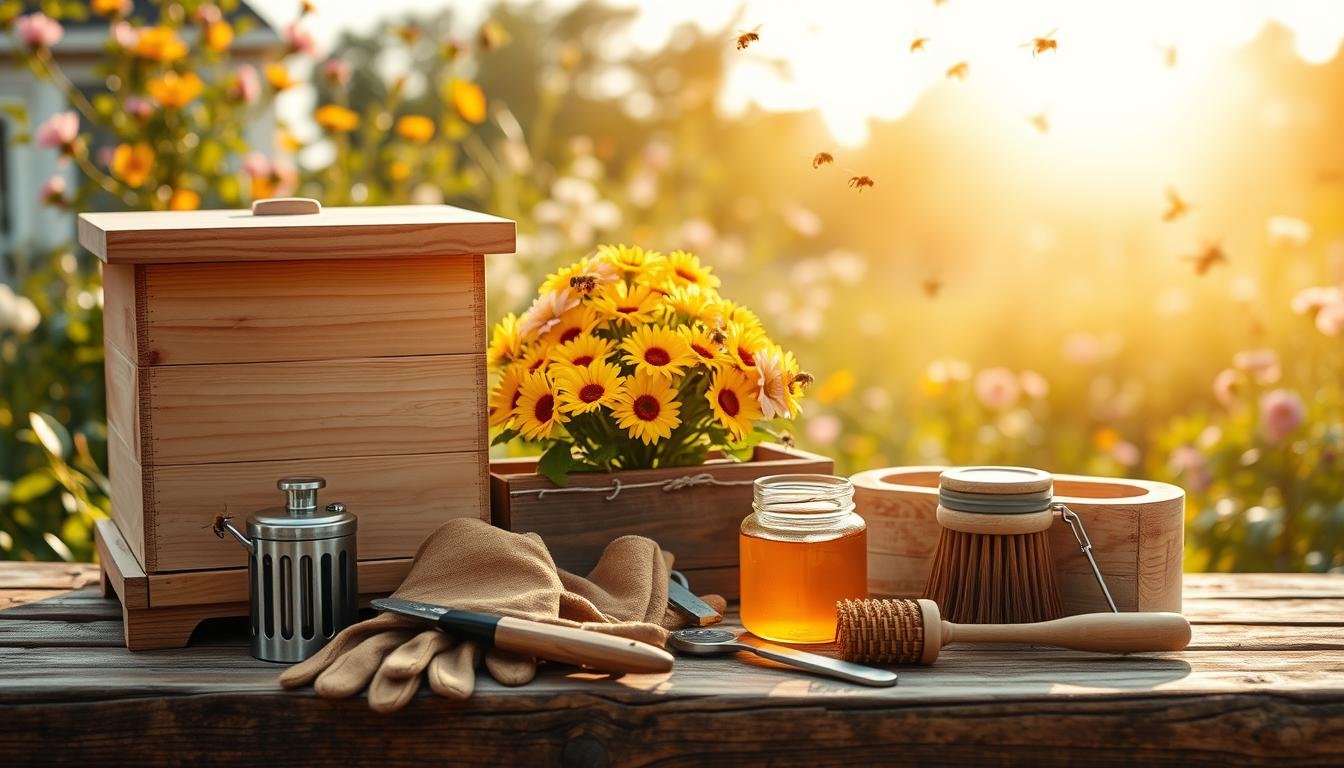
Core components typically include a 10-frame deep hive body, bottom board, inner and outer covers, frames and foundation, a hive tool and smoker, plus basic protective gear such as a veil and gloves. More complete packages add a second deep, honey supers, and a full suit.
Not usually included are the bees themselves, feeding gear, mite treatments, extraction tools, and a hive stand. This guide explains tiered kit options — essential, basic, and deluxe — and why Langstroth gear dominates in the United States. Use this buyer’s guide to match a purchase to your property, goals, and timeline.
Key Takeaways
- Plan staged purchases to avoid a high up-front cost in year one.
- Essential items: deep hive body, covers, frames, smoker, hive tool, veil, gloves.
- Langstroth parts offer easy expansion and compatibility.
- Deluxe kits save time but raise price and shipping weight.
- Check brands like Flow, Dadant, Betterbee, Hoover Hives, and NuBee for varied offers.
Start here: what a beginner needs from a beehive starter kit right now
A well-chosen set of boxes and tools gives your colony the space and protection it needs from day one.
Essential items should include a 10-frame deep box with ten frames and foundation so brood and stores have immediate room. Add a bottom board plus inner and telescoping outer covers to weatherproof the hive and cut drafts.
Include basic tools: a hive tool and bee smoker help you work safely and calmly. Protective gear such as a veil and gloves is mandatory; many new keepers upgrade to a jacket or full suit for confidence.
- Entrance reducer to manage traffic and reduce robbing.
- Consider a second deep box or one–two medium honey supers as the colony expands.
- Choose standard Langstroth parts for easy sourcing and compatibility.
| Included | Optional Upgrades | Typically Not Included |
|---|---|---|
| 10-frame deep, frames & foundation | Second deep, medium honey super | Bees |
| Bottom board | Assembled & painted boxes | Feeders |
| Inner & outer cover | Full suit or jacket | Mite treatments & extraction tools |
| Hive tool, smoker, veil, gloves | Extra frames and foundation | Hive stand |
Checklist tip: verify what the kit omits so you can order bees and any treatments before arrival. Buying the right kit now avoids rush purchases later.
How to choose a beekeeping kit: essentials, safety, and scalability
A sensible kit centers on a true-fitting hive stack and the protective items you will use every visit. Start by confirming the core parts so the colony has immediate shelter and you can inspect with confidence.

Core hive components
Validate the stack includes a 10-frame deep box, ten frames and foundation, a bottom board, an inner cover, and an outer cover. These pieces form the working hive and make later expansion simple.
Protective gear that matters
Veil and gloves are minimums. A bee suit or jacket adds comfort and reduces stings during early inspections. Good protective gear speeds learning and builds confidence.
Assembly, frames choice, and tools
Decide between unassembled boxes (lower price, more time) or assembled and painted (higher cost, ready to deploy). Consider 8-frame vs 10-frame boxes: 8-frame cuts lift weight, 10-frame adds capacity and compatibility.
“Include a hive tool and a bee smoker in your first purchases—both are essential on inspection day.”
- Keep an entrance reducer handy to manage traffic and robbing.
- Choose feeder type by climate; top feeders hold more syrup and often reduce robbing risk.
- Match frames and foundation to your hive format; plastic foundation is durable and common in kits.
For a deeper buying read, consult this buying guide to compare configurations and scale options.
Best beekeeping starter kit for beginners: top picks by category
Picking the right package reduces midseason scramble for extra boxes and frames. Below are compact recommendations that match common goals: get going quickly, allow steady growth, or cover a full first season with fewer purchases.
Essential kits to get started on a budget
Ready-to-use boxes like the NuBee 10 Frame Beehive Starter Kit and the Hoover Hives 10 Frame Starter Kit arrive assembled and include core equipment such as a smoker, hive tool, veil, and gloves. These allow fast setup but often need extra frames or a second deep soon.
Basic kits with room to grow through the first season
Unassembled options, such as Dadant’s 10-Frame Beginner’s Kit #1, trade assembly time for cost savings. They include a bottom board, covers, a feeder, and a book—helpful when you plan to add a second deep or extra frames midseason.
Deluxe kits designed to carry a colony through year one
Deluxe bundles like the Dadant Master Pollinator Kit come with two deeps, 20 Plasticell frames, a suit, helmet, books, and a stand. Adding Dadant’s Add-On Hobby Kit #3 supplies medium supers and a queen excluder to reduce midyear purchases.
- Check counts: confirm frames and boxes match your plan to install a package or nuc.
- Material choice: plastic foundation is common for durability; wax-coated wood offers weather resistance.
- Timing: factor in assembly, shipping, and painting to hit ideal installation dates.
When you’re ready to compare detailed offers, see a curated list of options at starter kit reviews or explore training and courses to support your purchase at beekeeping courses and training.
Brand spotlights: Flow, Dadant, Hoover Hives, Betterbee, and NuBee
Several well-known brands each take a different approach to tools, woodwork, and harvesting—here’s how they differ.
Flow Starter Bundle blends harvest-from-the-hive tech with education. Priced around $777–$847 on discount, it uses Australian Araucaria wood components, ships from Illinois, and includes a GOTS-certified organic cotton suit plus a month of online lessons. A full super can yield up to 44 lbs of honey.
Dadant covers both ends of the market. The unassembled Beginner’s set saves money and adds tools and a book. The Master Pollinator is assembled, has two deeps and Plasticell frames, a zipper veil suit with size options, helmet, gloves, and print subscriptions—note it omits honey supers.
Hoover Hives and NuBee favor ready-to-use boxes. Hoover’s wood is dipped 100% in beeswax for durability but may need extra frames. NuBee ships painted bodies with 100% wax coated CellTech frames and a practical tool bundle.
Betterbee focuses on fit and learning. Their Beginning choice offers glove material and size options plus optional books; the outer cover is lightweight polystyrene and no suit is included.

| Brand | Key features | Notes |
|---|---|---|
| Flow | Flow frames, Araucaria wood, organic suit, lessons | $777–$847, ships from Illinois, high honey yield |
| Dadant | Unassembled sets; Master Pollinator assembled, Plasticell frames | Suit size options on premium kit; no honey supers included |
| Hoover Hives | Fully assembled, wood dipped 100% beeswax, CellTech frames | Durable wood; likely need more frames after setup |
| NuBee | Painted deep, 100 wax coated CellTech frames, tool bundle | Quick setup; add boxes as colony grows |
| Betterbee | Assembled deep, glove size/material options, optional books | Polystyrene outer cover; no suit included |
Shopping tip: compare included gloves and suit sizing before purchase so beekeepers get a safe fit and avoid returns.
What’s included in a quality hive starter kit
A quality package gives you a complete working hive and the safety gear you’ll use every inspection. This section lists the items that make set-up straightforward and inspections calm.
Deep body with frames and foundation
Look for a 10-frame deep box supplied with ten frames and foundation. Options include Plasticell and CellTech or wax-coated wood that speeds acceptance.
Covers, bottom board, and entrance control
Good bundles include a sturdy bottom board, an inner cover, and a telescoping outer cover to manage moisture and temperature.
An entrance reducer helps defend the colony and control airflow during robbing or heavy traffic.
Tools and protective equipment
Essential tools are a hive tool and a reliable smoker; some packages add fuel to simplify first lighting.
Protective gear should at minimum include a veil and gloves. Many kits also offer a jacket or full suit to boost confidence on inspection day.
- Quick checklist: confirm frames match the deep box count and note any queen excluder or extras included.
- Assemble and stage items before your bees arrive so installation day goes smoothly.
What’s typically missing and when you’ll need it
C. Expect several important items to be missing from boxed bundles; you’ll add them as the hive develops. Most packages supply a working stack but not the seasonal items that matter later.
Honey bees, extra boxes, and queen tools
Bees are rarely included. Source local nucs or packages to reduce shipping stress and gain stock adapted to your climate.
As the colony grows you will need additional boxes and frames. Add a second deep early or medium honey supers when stores rise.
A queen excluder and a plan to harvest are often deferred until year two. Many advisors recommend not taking honey the first season.
Feeders, treatments, and extraction tools
Feeding supplies (top or entrance feeders) are commonly missing from the box. Varroa monitoring and treatments are sold separately and should be scheduled per local guidance.
Extraction equipment and larger tools are rarely needed in year one. Delay that purchase until the colony produces a clear surplus.
| Item | Usually Missing | When to Buy |
|---|---|---|
| Bees | Yes | Before installation (local nuc/package) |
| Hive stand | Yes | At setup to improve ventilation |
| Mite treatments / feeders | Yes | Seasonal—monitor and act as needed |
- Tip: keep a running list of missing items and buy them ahead of need to avoid midseason scrambling.
- Local advantage: sourcing bees locally reduces transit risk and improves survival.
Price expectations in the United States and total first‑year costs
Pricing depends on whether you buy only the essentials or choose a bundled set that handles most first‑year needs.
Starter price tiers fall into three clear levels: essential, basic, and deluxe. Essential packages are lowest in price but often prompt quick follow‑up buys such as another deep box, extra frames, and foundation.
Starter kit price tiers: essential, basic, and deluxe
Basic bundles typically include a second deep or some medium supers and more tools. They balance upfront cost with immediate scalability.
Deluxe options cost more at purchase but reduce midseason add‑ons by including two deeps, supers, a suit or jacket, and educational materials.
Why first‑year expenses can approach $800 and how to stage purchases
The first year can approach about $800 once you add bees, a suit upgrade, extra boxes and supers, feeders, and treatments. Assembled, painted, or wax‑dipped gear raises initial outlay but saves time and effort during setup.
“Staging purchases—buy the core stack first, then add boxes and frames as the colony grows—helps manage cash flow and storage.”
- Buy core items first and order extra frames and boxes before your colony needs them.
- Consider two hives to improve learning and resilience; bulk buying lowers per‑hive cost but increases assembly time.
- Track lifetime value: durable, standard equipment reduces replacement and compatibility costs over time.
Plan purchases around local supply and shipping timelines, and consult a concise beehive guide to align buys with installation dates.
Sizing and safety: getting the right bee suit, veil, and gloves
A correctly sized suit reduces sting risk and lets you move freely around the hive. Protective gear should leave space between fabric and skin so stingers cannot reach you during normal motions.
Choosing a baggy fit for sting prevention and full movement
Choose a bee suit that fits loosely over your clothing. The extra space creates a barrier and lowers sting incidents.
If you are between sizes, size up. Flow’s sizing guide recommends a larger size to keep wrists and ankles covered when crouching or stretching.
Helmet/veil styles, leather vs. goatskin gloves, and ventilation
Select a veil with wide sightlines, good airflow, and secure closures to stop bees from entering. Betterbee offers helmet/veil options that suit varied visibility needs.
Leather gloves give heavy-duty sting protection; goatskin gloves improve dexterity for delicate tasks. Many beekeepers keep both types and swap by task.
- Pick ventilated suits in hot climates to avoid overheating during inspections.
- Inspect zippers, elastic, and mesh regularly; replace worn parts early.
- Keep a spare veil and an extra pair of gloves for guests or emergencies.
Note: some brands (Hoover Hives) may not offer size options for gloves or jackets; if sizing is limited, buy protective items separately to ensure proper fit. Proper fit and quality gear boost confidence and help you focus on hive health.
Assembly, shipping, and timing: set up your hive on schedule
Factor in assembly and drying time when you schedule delivery and installation. Assembled, painted, or sealed wood arrives ready to deploy. That convenience saves effort if you lack tools or workspace.
“Plan at least two weeks for paint or sealant to cure before bees arrive.”
Unassembled vs. preassembled: tools, time, and coating
Unassembled packs save money but need tools, a clean workspace, and extra time. You must paint or seal the wood to extend service life unless it is wax treated.
Preassembled gear speeds setup. Hoover Hives uses wood dipped 100% in beeswax. NuBee ships assembled and painted with wax coated foundation for rapid deployment.
U.S. shipping, regs, and when to order extra frames
Account for U.S. shipping windows and seasonal backlogs; Flow ships from Illinois, which can shorten delivery to many states. Check local regulations on setbacks, hive counts, and registration before you purchase.
- Order extra boxes and frames before growth spikes to avoid congestion and cross‑comb.
- Keep a setup checklist: stand placement, level ground, wind exposure, sun, and water access.
- Stage tools, smoker, fuel, and protective gear so first inspections run smoothly.
First‑season roadmap: expanding your hive and adding equipment
As your colony gains traction, plan box and frame additions before space becomes a stress point.
Add a second 10‑frame deep once about seven to eight frames are built out and covered with brood and bees. That move keeps brood nest rhythm steady and reduces swarming pressure.
Install one or two medium honey supers when nectar flow increases. Have spare frames and foundation on hand so the colony can draw comb without delay.
Delay harvesting honey in year one. Most advisors recommend leaving stores for winter survival and colony strength.
- Monitor space weekly during peak buildup to avoid irregular comb and congestion.
- Keep your smoker, hive tool, and protective gear ready for frequent checks as you learn colony patterns.
- Choose feeders that suit your management: entrance feeders are simple; top feeders reduce robbing risk when flows are heavy.
Track inventory and order frames or boxes early to offset delivery lag. Consider a queen excluder only when you add supers, based on your management style.
Use notes on bloom timing, temperament, and equipment performance. In the off‑season, repair, repaint, and reorder so your next season is smoother. For planning reads and reference materials, see resources and books.
Conclusion
A clear purchase roadmap helps you avoid midseason scrambling and keeps the colony strong. Starter packages streamline early buys, but you will still need bees and extra components as the hive expands.
Essential, basic, and deluxe tiers balance price, completeness, and convenience. Assembled or wax‑coated options cost more but save setup time and speed installation before bees arrive.
Plan ahead for missing items: feeders, mite treatments, and later extraction tools. Many experts advise leaving most honey in the hive during year one to build colony resilience.
, Choose a kit that matches your budget and timeline, stage follow‑up purchases, and rely on trusted suppliers. To compare curated options and timing, compare starter options before you purchase.
FAQ
What should I expect in a complete beehive starter kit right now?
A useful starter bundle typically includes a deep hive body (or two), frames with foundation (wax‑coated or plastic), a bottom board, inner cover, telescoping outer cover, and an entrance reducer. Many kits add a basic veil, gloves, hive tool, and a bee smoker. Some premium sets include a nectar feeder, queen excluder, and extra frames or a hive stand. Check whether the frames are 8‑frame or 10‑frame and whether components arrive assembled or require construction.
Do I need protective gear immediately, and what type works best?
Yes. A proper veil and either a full suit or a jacket with long sleeves reduce sting risk and improve comfort. Choose a loose, breathable fit for ventilation. Leather or goatskin gloves offer good protection for heavy lifting, while lighter nitrile or cotton gloves help with dexterity during inspections. Prioritize visibility, mobility, and sealed cuffs to prevent bees from entering the gear.
How do I pick between unassembled and preassembled hive boxes?
Unassembled boxes save money and shipping volume but require tools, time, and painting or waxing to weatherproof the wood. Preassembled, painted, or wax‑coated boxes cost more but allow faster setup and reduced exposure to the elements. If you lack woodworking tools or need the hive ready before bee delivery, choose preassembled or partially finished options.
What’s the difference between 8‑frame and 10‑frame hives?
An 8‑frame deep is lighter to lift and easier for a single beekeeper to handle; it’s ideal for smaller yards or beginners. A 10‑frame offers more brood space and higher honey yield but increases weight when full. Compatibility matters: some brands use different frame widths, so stick to one system when adding boxes or replacements.
Are smokers and hive tools necessary in the first season?
Yes. A smoker calms bees during inspections and reduces defensive behavior, while a hive tool helps pry frames, remove propolis, and lift components safely. Smoking fuel like burlap, wood pellets, or commercial pucks extends burn time. These tools are low cost but high impact on safety and efficiency.
What is usually not included in starter bundles that I will need soon?
Most kits omit the live bees, honey supers, additional brood boxes, a queen excluder, advanced mite treatments, and extraction equipment. Feeders and disease or pest controls are often sold separately. Plan to buy a nuc, package bees, or order a queen, and budget for mite monitoring and treatment supplies.
How much should I budget for the first year in the U.S.?
Entry‑level equipment can cover initial needs for a few hundred dollars, but a realistic first‑year budget often approaches 0–0 once you include bees (nuc or package), protective gear, mite treatments, extra frames/boxes, and extraction or bottling gear. Staging purchases over several months helps manage costs.
Which brands offer reliable starter bundles and what are their strengths?
Recognized vendors include Dadant (broad selection and education resources), Betterbee (quality kits and support), Flow Hive (harvest technology and convenience), Hoover Hives (ready‑to‑use wax‑coated options), and NuBee (budget-friendly boxed kits). Compare assembly, materials, warranty, and U.S. shipping times when choosing a supplier.
How do I choose frame foundation materials: wax, wax‑coated, or plastic?
Wax foundation encourages natural comb building and is preferred by beekeepers aiming for organic practices. Wax‑coated or dipped frames resist moisture and ship well. Plastic foundation lasts longer and resists damage, but some bees draw less natural comb. Consider climate, handling, and your plans for honey quality when choosing.
When should I order bees and how do shipping and timing affect setup?
Order bees (nucs or packages) for spring delivery aligned with local nectar flows and your hive readiness. Shipping windows vary by supplier and state regulations; allow time for setup and acclimation. If your kit arrives unassembled, build and weatherproof components before bee arrival to avoid stressing the colony.
What size and style of gloves and veil should I choose for safety and dexterity?
Select gloves that balance protection and feel—leather or goatskin for heavy tasks, thinner nitrile for frame inspections. Veil style depends on visibility needs: round veils provide 360° views and comfort, while helmet veils add a rigid shell and work well with jackets. Try gear on to ensure full range of motion and sealed openings.
Is a queen excluder necessary in year one?
Not always. Many beekeepers skip a queen excluder in the first season to allow the colony to build up brood freely. Use an excluder when you add honey supers and want to keep brood out of extraction frames. Weigh pros and cons based on colony strength and your harvest goals.
How do I plan hive expansion through the first season?
Monitor brood pattern, population growth, and food stores. Add a second deep or a medium honey super when frames are half to three‑quarters drawn. Schedule mite checks, provide supplemental feeding during dearths, and keep spare frames and an extra box ready to reduce delays when the colony needs space.
What assembly tools and supplies should I have on hand?
Basic woodworking tools—hammer or cordless drill, exterior wood glue, screws or nails, and paint or beeswax for sealing—speed up assembly. Have a hive stand, a level, and a good work area. If your kit includes pre‑nailed components, you still may want sandpaper, a caulk gun for sealing, and protective finish.