

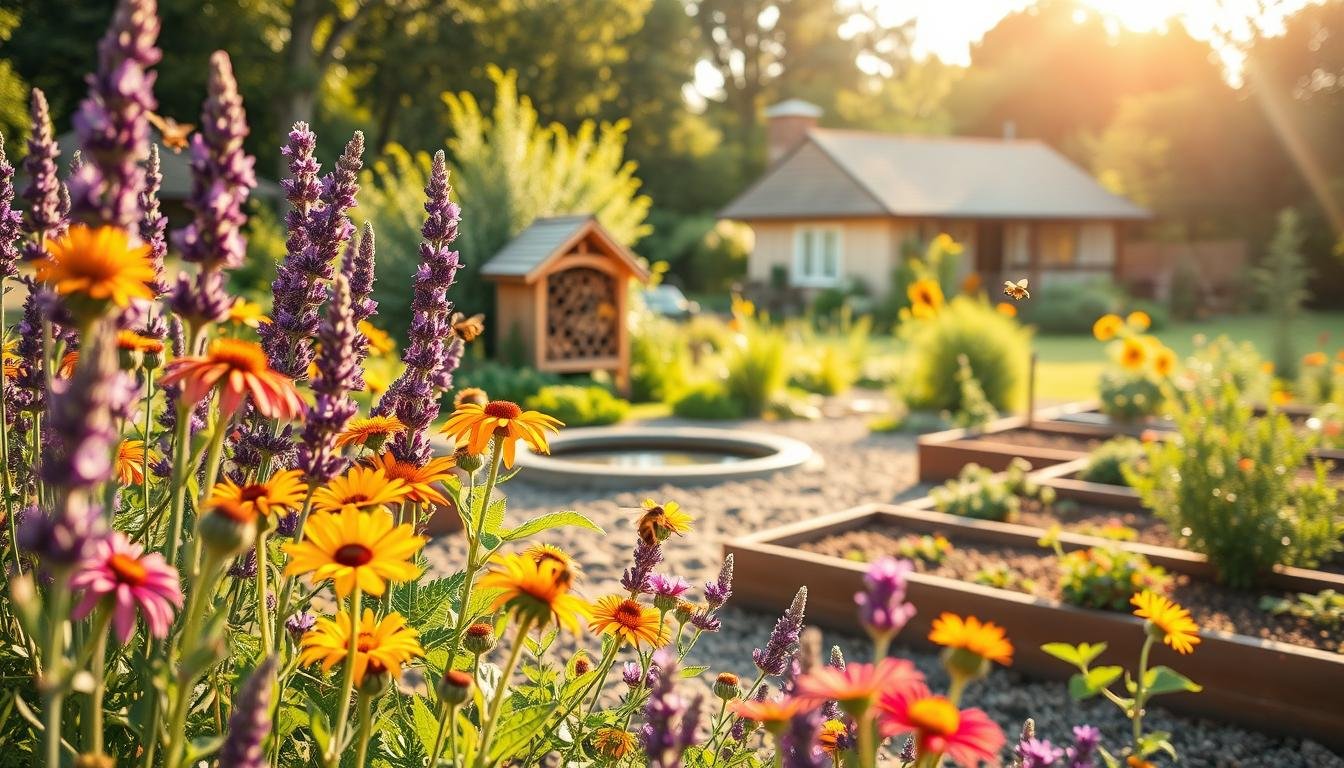
Bees are vital wildlife. They visit flowers for nectar and carry pollen that helps plants set seeds, fruits, and nuts. This process fuels food chains and supports wildlife and crops.
This short guide focuses on practical, seasonal steps any homeowner in the United States can use to help pollinators. Expect hands-on advice for planting native trees, shrubs, and perennials to provide continuous forage from spring through fall.
We clarify why North America’s honey bees are often managed, while thousands of native species face decline from habitat loss, pesticides, and climate change. Simple yard choices—less lawn, more layered plantings, leaving stems for nests—boost nectar and pollen across seasons.
Follow this plan to increase bloom consistency, improve garden productivity, and support balanced insect communities. For deeper reading and resources, see the beekeeping resources guide.
Key Takeaways
- Frame your yard as wildlife habitat to support pollinators and the food web.
- Choose native plants and plan bloom succession for year-round food.
- Provide nesting sites by leaving stems and using leaf litter.
- Reduce lawn and avoid broad-spectrum pesticides to lower decline sources.
- Layer trees and shrubs to expand forage with low maintenance.
- Small actions over time yield measurable gains in blooms, honey, and crop support.
Why Bees Matter to Your Homestead and Food System
From orchard blossoms to wildflowers, bees power the seed and fruit production that feeds ecosystems. Their work links backyard plants to regional food supplies and to wildlife that depends on fruits and seeds.
Native bees vs. honeybees: roles, risks, and realities
Honeybees in North America are an introduced, managed species kept in hives for honey and crop pollination. They are livestock and generally not at risk of extinction.
Native bees are wildlife. Many species are solitary, nest in soil or stems, and co-evolved with local plants. Yet habitat loss, pesticides, disease, climate change, and competition put many native species under pressure.
- Native bees often pollinate about 80% of wild flowering plants and help some crops.
- Honey in the U.S. is a byproduct of managed hives; wild pollinators deliver broader ecological stability.
How pollination supports gardens, wildlife, and crops year‑round
Animal pollination underpins reproduction for roughly 85% of flowering plants. Bees collect nectar and pollen to feed larvae and simultaneously move pollen that sets fruit and seed.
This process sustains vegetables, berries, orchard trees, and the fruits birds and mammals eat. Trees and shrubs add early-season sources and extend benefits beyond annual beds.
Household landscape choices—plant selection, chemical use, and habitat features—directly affect native pollinators and local crop yields. Learn more about why bees matter at why we need bees.
| Feature | Native bees | Honeybees |
|---|---|---|
| Status | Wild, many species declining | Managed livestock, widespread |
| Nesting | Soil, stems, cavities | Hives provided by beekeepers |
| Role | Efficient pollinators of local plants | Generalist pollinators for crops and honey |
| Threats | Habitat loss, pesticides, disease | Disease, management issues, less habitat-driven risk |
Creating a Bee-Friendly Homestead: Plan Your Planting for Seasons and Species
Map bloom times across your yard to ensure pollinators never face a food gap.
Many native bee species are pollen specialists, so design beds that offer diverse native plants from early spring through fall. Start by listing trees, shrubs, perennials, and annuals that bloom at different times and place them where they’ll thrive.
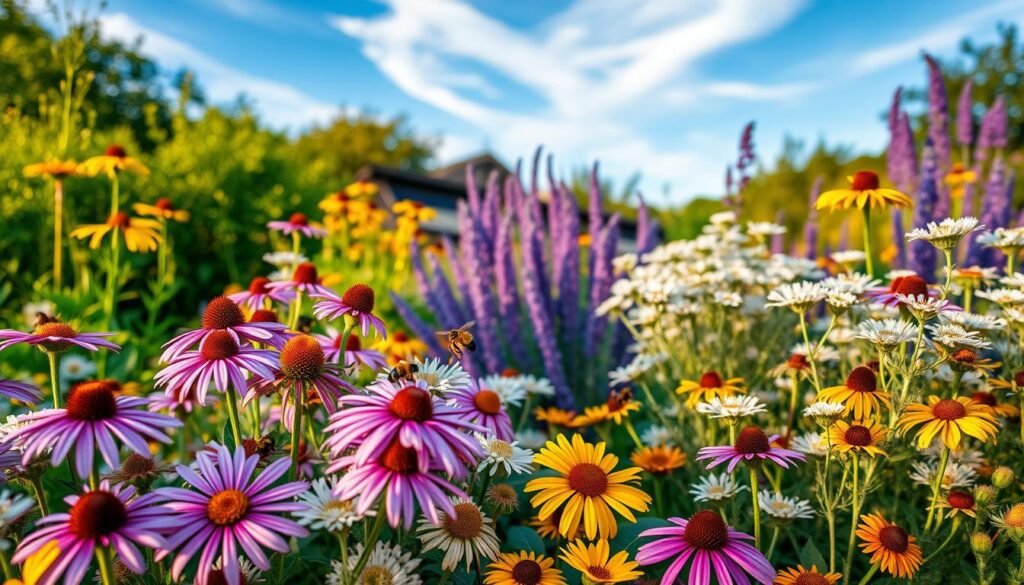
Choose plants that provide nectar and pollen across seasons
Build a season-long forage calendar with early willows and red maples, peak summer wildflowers, and late bloomers that extend resources into fall.
Trees, shrubs, and wildflowers: layered food sources
Layer canopies, mid-story shrubs, and ground-level perennials so small and large species find suitable food stations. Group the same plant in clusters of three or more to increase visibility and foraging efficiency.
Color, shape, and bloom time: match flowers to species
Choose tubular, composite, and open flowers so different bee sizes access nectar and pollen easily. Mix drought-tolerant native species with moisture-loving types to keep blooms during heat waves and dry spells.
From seeds to established plants: source regionally
Buy regionally native plants or provenance-checked seeds from reputable nurseries and conservation programs. Use tags and nursery notes to map bloom time and plan a resilient sequence that fits your climate.
“Fill your yard with a variety of bloomers, and pollinators will reward you with healthier plants and greater fruit set.”
For lists and regional suggestions, see the native plant finder at native pollinator gardens 101.
Design Habitat, Not Just a Garden: Nesting, Stems, Leaves, and Logs
Good habitat brings together forage and shelter so bees can nest near nectar and pollen sources.
About 90 percent of bee species are solitary. They nest in ground tunnels, hollow stems, or dead wood instead of hives. Leave perennial stems standing through fall and winter to protect developing brood.
In early spring, cut stems to roughly 6–24 inches to expose nesting cavities. Keep lower stem sections for 2–3 years so young bees can emerge on schedule.
- Grow hollow- and pithy-stemmed plants such as Joe Pye weed, milkweed, elderberry, bee balm, mountain mint, ironweed, and woodland sunflowers to provide living homes.
- Scatter old logs and small brush piles in quiet borders for cavity nesters.
- Use leaf litter under shrubs and trees to shelter overwintering bumblebee queens and build soil health.
Commercial bee houses can concentrate parasites if not cleaned. Prioritize natural stems and dead wood, site nesting features in sunny to part-sun spots near abundant forage, and monitor sealed stems as an indicator of success.
| Feature | Practical action | Benefit to native bees |
|---|---|---|
| Hollow stems | Plant and retain pithy species | Provides nesting cavities and nearby forage |
| Leaf litter | Leave under shrubs and trees | Protects queens and conserves moisture |
| Dead wood/snags | Add logs or brush piles | Creates additional cavity sites |
For regional plant lists and sourcing seeds and plants that support nesting and forage, see this native bee plant guide.
Reduce Lawn, Avoid Pesticides, and Practice Bee-Safe Gardening
Replacing sections of grass with locally adapted plants immediately expands forage and nesting areas and strengthens yard habitat for pollinators.
Convert turf into native plant beds
Reclaim turf in small swaths to install native beds. Even a few strips of clustered native plants will increase nectar and pollen availability.

Why broad-spectrum sprays and herbicides harm bees
Broad-spectrum pesticides, including many mosquito and lawn-care sprays, kill foraging adults and developing brood. Herbicides remove “weeds” that often fill forage gaps.
Organic and bee-safe alternatives
Adopt non-chemical methods: hand-pulling, mulching, raising mower height, and targeted biological controls reduce pest pressure without poisoning bees.
- Use mulch and mechanical weed control to limit herbicide needs.
- Time any treatments for early morning or late evening when bees are least active.
- Create small no-spray buffer strips around high-value beds to prevent drift.
Integrated pest management—healthy soil, diversity, and prevention—cuts reliance on toxic inputs and protects children, pets, and neighbors. For practical steps and local tips, see our bee gardening resources. Remember that honeybees visit many gardens, but favoring native plants and fewer chemicals benefits wild species most.
Water, Layout, and Ongoing Care for a Resilient Pollinator Yard
A resilient pollinator yard balances water, plant groupings, and predictable maintenance to support bees all year.
Set safe water sources
Provide shallow, stable water that offers footing. Install a pebble-lined dish or a solar-powered fountain so bees can drink and land safely. Refresh water often to keep it clean and avoid mosquitoes.
Cluster plantings and stagger blooms
Group the same plants together so bees find nectar quickly. Design beds with layered types — trees, shrubs, and perennials — to supply flowers across season times.
Maintenance through the year
Follow a simple rhythm: leave leaf litter through fall and winter, cut stems to 6–24 inches in early spring, and monitor activity in summer.
- Use sun exposure and windbreaks to create sheltered flight corridors.
- Water deeply in the morning to support blooms without wetting flowers during peak bee foraging.
- Light grooming keeps the garden tidy while preserving nesting habitat.
| Action | Timing | Benefit |
|---|---|---|
| Shallow water dish | Year-round, refresh weekly | Safe drinking and landing source for bees |
| Cluster plant groups | Planting season | Makes nectar easy to find, boosts visitation |
| Stem and leaf management | Fall through spring | Protects overwintering insects; ensures nesting sites |
Conclusion
A few well-chosen plants and simple habitat features can make your property a dependable refuge for bees. Even one container of native plants or a clustered bed boosts local food and shelter for pollinators.
Prioritize season-long bloom, retain stems and leaf litter, and add shallow water. These actions help native bees transfer pollen to vegetables and small fruits through spring and summer.
Reduce lawn and avoid broad‑spectrum sprays to expand food sources and protect soil life. Honeybees will visit, but focusing on native plants and natural nesting aids supports many species of bees and other pollinators.
Start this week: pick a native seed or plant, set a water dish, and plan your spring stem routine. For timing and chores, see seasonal beekeeping tasks to align care with local phenology.
FAQ
Why are bees important for my homestead and local food supply?
Bees pollinate fruits, vegetables, nuts, and many wild plants that feed people and wildlife. Without reliable pollination, yields drop and plant diversity falls. Supporting both native bees and honeybees helps maintain healthy gardens, food crops, and ecosystem services year-round.
What’s the difference between native bees and honeybees?
Native bees are usually solitary or small-colony species adapted to local habitats; they often forage close to home and pollinate specific plants efficiently. Honeybees are managed, social insects kept in hives by beekeepers. Both help pollination, but native bees face habitat loss while honeybees can spread pests and compete when not managed responsibly.
How do I plan planting so flowers provide nectar and pollen from spring through fall?
Choose a mix of native trees, shrubs, and wildflowers with staggered bloom times. Include early spring bloomers like willows, summer nectar sources such as bee balm and mountain mint, and fall asters and goldenrod. Cluster plantings and repeat bloom shapes and colors to support different bee species across seasons.
Which plants make the best layered food sources—trees, shrubs, and flowers?
Trees (apple, serviceberry), shrubs (elderberry, native blueberries), and wildflowers (coneflowers, asters, milkweed) create vertical and seasonal diversity. This layered approach supplies pollen and nectar at different heights and times, benefiting bumblebees, solitary bees, and honeybees alike.
How do bloom color and flower shape affect which bees visit?
Flower color and shape match bee preferences: bumblebees and many native bees favor wide, tubular, or composite flowers they can land on. Long-tongued species seek deep corollas. Plant variety ensures you meet the needs of short- and long-tongued pollinators across foraging seasons.
Where should I source regionally native seeds and plants?
Buy from reputable native-plant nurseries, local conservation groups, or seed suppliers that list provenance. State botanical gardens, Native Plant Societies, and extension services often recommend vendors and species suited to your USDA hardiness zone and local ecosystems.
How can I support solitary native bees with nesting habitat?
Leave patches of bare, well-drained soil for ground-nesting bees. Preserve hollow and pithy stems like elderberry, milkweed, and Joe-Pye weed for cavity nesters. Keep dead wood and brush piles where safe. Avoid removing all stems and leaf litter in fall and winter.
What specific plants provide hollow or pithy stems for bee nests?
Bee balm, milkweed, elderberry, Joe-Pye weed, and certain native shrubs develop pithy or hollow stems. Let selected stems stand through winter and cut them back in early spring so nesting bees can use the cavities.
When and how should I cut back stems and manage leaf litter?
Cut stems to 6–24 inches in early spring after temperatures stay consistently warm and nesting activity begins. Leave leaf litter and natural mulch through winter to protect overwintering bumblebee queens and other beneficial insects; remove only if disease or fire risk requires it.
How can I safely reduce lawn to expand habitat?
Convert turf gradually by creating native-plant beds, widening borders, or installing pollinator-friendly patches. Start small, remove sod or sheet-mulch sections, and replace with native grasses and wildflowers to increase food and nesting sites without major disruption.
Which pesticides harm bees and what alternatives exist?
Broad-spectrum insecticides and many systemic neonicotinoids can kill or weaken bees and destroy their food sources. Use integrated pest management: encourage predators, hand-remove pests, apply targeted biological controls, and choose horticultural oils or insecticidal soaps only when necessary and applied at times bees are inactive.
How do I provide water for bees safely?
Offer shallow dishes with stones or floating corks so bees can land and drink. Solar-powered spoons or fountains that keep water moving reduce mosquito risk and remain attractive. Place water near plantings but in partial shade to slow evaporation.
What planting layout helps bees forage efficiently?
Group the same species in clumps rather than scattering single plants. Dense clusters make nectar easier to find and conserve bees’ energy. Include continuous bloom succession and position host plants for larval food near nectar sources for adults.
How should I monitor pollinators through the year?
Watch for blooms, note visitor types and abundance, and keep simple records. In spring, check nesting areas and avoid disturbing sites. In summer, monitor for pests and water needs. In fall, leave seedheads and foliage for overwintering and food for late-season pollinators.
Can urban yards support native bees and honeybees together?
Yes—urban gardens with diverse, pesticide-free plantings and nesting options support many native bees and can complement managed honeybee hives. Ensure ample floral resources and talk with local beekeepers to coordinate hive placement and disease prevention.
Where can I learn more about local pollinator species and planting lists?
Consult your state extension office, local Native Plant Society, Audubon chapters, or the Xerces Society for Invertebrate Conservation. These organizations provide region-specific plant lists, seed sources, and habitat guidelines to support native bees and other pollinators.


