Published December 3, 2025 · Last Updated August 26, 2026
Start with two clear priorities: active varroa management and steady nutrition. These cut most problems and keep a hive calm through the season.
Gentle handling centers on slow, deliberate movement, light and timed smoke, and stopping when alarm signals appear. Learn the warning bumps from guard bees and respect them.
Use standard Langstroth gear: two deep brood boxes under medium supers. Place hives where they get morning sun and afternoon shade in hot climates. Add space before major nectar flows and halt feeding once the main honey flow begins.
Monitor mites with objective checks — alcohol wash or sugar roll — and treat only when thresholds demand it. Prioritize brood and queen health, steady nutrition, and low mite pressure. With disciplined visits and these pillars, a colony stays cooperative, inspections go smoothly, and honey yields improve.
Key Takeaways
- Varroa control and nutrition are the top management priorities.
- Handle hives with slow moves, light smoke, and respect for guard signals.
- Start with Langstroth setup and place hives for morning sun and local shade.
- Add space ahead of nectar flows and stop feeding during the main honey flow.
- Use alcohol wash or sugar roll for objective mite monitoring and treat only as needed.
Understanding What Makes Bees Gentle: Genetics, Nutrition, and Management
Genetic lines, steady feeding, and low mite loads shape how cooperative a hive will be.
Queen lineage sets the behavioral baseline. Many stocks are selected for calm temperament and Varroa Sensitive Hygiene (VSH). Young, well-bred queens often reduce swarming and yield steadier brood patterns.
Nutrition and mite control
Consistent access to diverse pollen improves brood food quality and worker physiology. During strong nectar flows workers stay busy and calmer. Dearths often make defensive responses rise unless feeding bridges the gap.
“Routine mite checks and timely action protect brood health and keep behavior stable.”
- Sample mites with an alcohol wash or a careful sugar shake; act at thresholds rather than guessing.
- Prioritize young queens and balanced forage for steady behavior across the season.
- Recognize that treatment-free hives often fail within 1–2 years unless mite levels are realistically reduced.
| Driver | Effect on Behavior | Practical Step |
|---|---|---|
| Genetics | Calmer guards, hygienic brood care | Source VSH or gentle lines; requeen young |
| Nutrition | Steady brood rearing, lower stress | Provide diverse forage and emergency feed |
| Varroa | Virus load leads to agitation | Monitor regularly and treat at thresholds |
For practical queen handling and introduction methods, see queen introduction guidelines.
Planning Your Apiary for Calm, Productive Hives
Pick an apiary spot that nudges foraging earlier and shields colonies from harsh midday heat. A smart choice lowers stress and keeps inspections smooth.
Site selection: sun exposure, wind, entrance orientation, and access
Morning sun wakes workers and starts flights early. In hot areas, offer afternoon shade to cut bearding and heat stress.
Orient each entrance away from walkways so bees fly out of the operator’s face. Avoid high-wind exposures; gusts raise agitation and heat loss.
Spacing hives to reduce drift, robbing, and defensive cross-cues
Space hives and vary heights or landmarks. That lowers drift, spreads foragers, and slows mite transmission.
Manage open feed carefully and compress entrances during dearth or when a colony is light. Keep a water source on site so workers do not bother neighbors.
“Reducing drift and robbing reduces defensive triggers at the apiary level.”
Keep grass trimmed in front of each hive and provide clear access for moving supers. A neat, accessible area makes inspections quicker and less disruptive for the bees.
For seasonal task planning and site checklists, see seasonal beekeeping tasks.
Essential Equipment for Low-Stress Beekeeping
The right gear shortens visits and limits upset in the yard. Choose items that give control, protect your face and hands, and let you move deliberately when checking brood and queen cells.
Veils, smokers, and hive tools that improve control and safety
Protective wear matters. A lightweight hooded veil or jacket shields the most painful sting zones while keeping sight lines clear for egg and queen spotting.
- Smoker: pick a dome-top 4″x7″ stainless model with a cage and square bellows for cool, dense smoke and stable handling.
- Fuel: use pine needles, punky wood, oak leaves, eucalyptus bark, or wood pellets for white smoke that calms attendants.
- Hive tool: carry a curved-end tool (Jero 7.5″ or 10″) with a 1/2″ offset for leverage and propolis scraping; keep the edge sharp.
- Gloves: 5 mil white nitrile protect in cold or training sessions; practice barehanded finesse under calm conditions.
Choosing brood boxes, frames, and lids for smooth inspections
Standardize hardware to make checks predictable. Use two deep Langstroth brood boxes with medium supers above a queen excluder for orderly inspections.
Consider 8-frame equipment if weight is a concern; lighter boxes reduce jolts and make lifting safer. Use tight-fitting lids and square, stable smokers to avoid tip-overs that alarm workers.
“Consistent, well-chosen equipment keeps inspections quick and bees steady.”
Selecting Gentle Stock: Queens and Breeds That Work in the United States
Choosing the right queen line shapes season-long temperament and performance. Good stock helps beekeepers keep inspections calm and efficient. Pick genetics that match your local climate and nectar schedule.
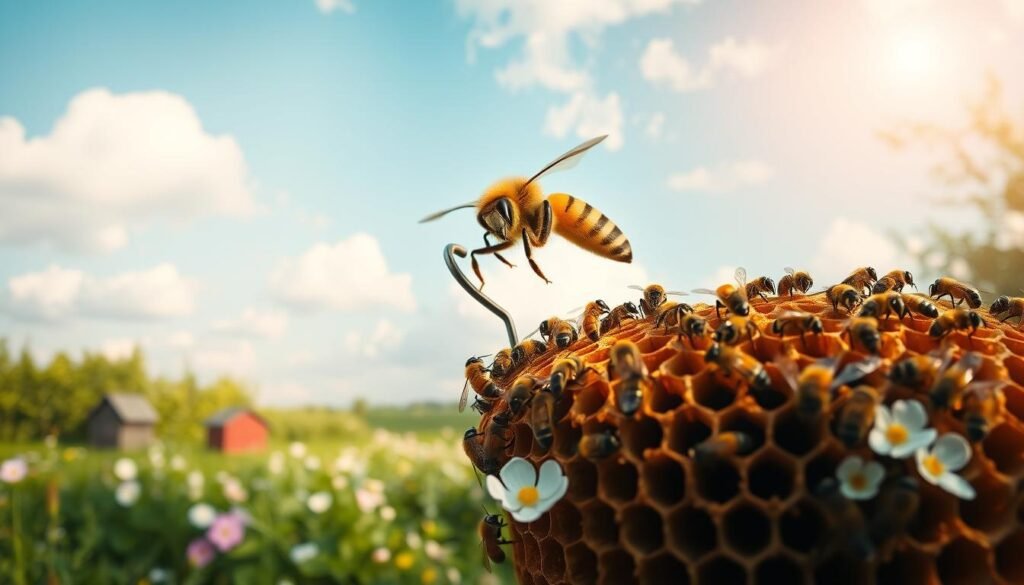
Breed notes: Italians build early, overwinter well, and suit beginners. Carniolans throttle brood with forage availability and ease spring surges. Russians can show mite tolerance, and VSH lines remove infested brood for lower virus pressure.
- Compare temperament and management: Italians—fast buildup; Carniolans—adaptive; Russians—resistant traits; VSH—hygienic behavior.
- Source carefully: buy from reputable suppliers or vetted local clubs that document lineage and mating quality.
- Timing: order in late fall (November–December) for spring delivery; quantities are limited, so early orders secure better queens and synced deliveries.
Verify mating records, age, and clear lineage information before purchase. Plan a backup new queen in case of failed acceptance or early-season loss. Align breed choice with your winters and nectar flows for steady colony growth that fits your management plan.
How to Raise Gentle Bee Colonies
Open a hive with purpose: a brief puff of cool, dense smoke, then watch the entrance guards before lifting frames. This quiet start reduces alarm and buys time for a calm inspection.
Move like slow Tai Chi: deliberate hands, steady pace, no sudden jerks. If guards bump or alarm pheromone rises, pause and let the hive settle.
Add space before major nectar flows to prevent congestion. Overcrowding stresses the brood and pushes workers toward defensive cues. Stop feeding once the main flow begins, and only resume if a dearth threatens stores.
- Approach calmly: small puff of cool smoke and watch for guard behavior.
- Inspect briefly: fair weather, purposeful checks, reassemble in original order.
- Mite monitoring: begin regular alcohol washes from late June and act at thresholds.
- Record keeping: note brood pattern, queen signs, and honey and feed levels each visit.
“Consistent, calm routines and timely mite checks protect brood and keep a cooperative hive.”
For expansion planning that pairs well with space management, see expansion tips.
Installing Package Bees the Calm, Correct Way
A fast, organized setup keeps stress low when introducing a three‑pound package and caged queen. Prepare the brood box with foundation or drawn comb, fit an entrance reducer, and have light syrup ready before the package arrives.
Preparation: brood box, frames, entrance, and food
Stage a ready box and remove four frames so the package sits upright inside the brood area. Secure the inner cover and lid quickly to limit exposure.
Open the cage carefully: remove the syrup can and uncork the candy end so attendants can feed the queen.
Queen introduction and the first week checks
- Place the package box inside the brood box with the queen cage attached horizontally, candy facing out.
- Feed 1:1 light syrup immediately and leave the entrance reduced to slow robbing and help orientation.
- Check on day three: confirm candy release, look for early comb drawing, and note cluster position.
- Once the queen is free and comb is being built, remove the package box and replace frames in original order.
“Install packages before or early in the spring flow so workers can draw comb and begin brood rearing quickly.”
- Keep the reducer until regular entrance traffic and forager patterns show it’s safe to open fully.
- Absconding risk falls after the queen lays and early honey and brood anchor the workers.
Starting with a Nucleus Colony for a Strong, Gentle Start
A healthy five-frame nuc can be the fastest route to a robust, easy-working apiary. A proper nuc arrives with drawn comb, a laying queen, two frames of food, and two to three frames of brood. Inspect before purchase for solid brood pattern, mixed stages, and good adult coverage.
Evaluating a nuc
Look for a productive queen and clear brood pattern. Confirm the queen is laying and that workers cover frames well. Two food frames must be present so early spring stores are available.
Transferring frames and first-week care
Set the nuc beside the destination hive for about a week so foragers reorient. Move frames in the exact order and orientation to keep the brood nest intact.
- Add foundation frames on each side of the nuc frames to allow growth without chilling brood.
- Feed 1:1 light syrup sparingly during early buildup to support comb drawing and steady brood rearing.
- Sample mites after the first month to set a baseline and act if thresholds are met.
“A careful frame-by-frame transfer preserves pheromone maps and reduces disruption.”
| Element | What to Check | Practical Step |
|---|---|---|
| Queen | Actively laying, calm movement | Confirm eggs and young brood; rehome if missing |
| Brood | Multiple stages, tight pattern | Move in order; avoid mixing side frames |
| Food | Two frames of stores | Keep light feeding; place foundation at sides |
For a step-by-step guide on installing nucs that supports a strong colony, see installing nucleus colonies.
Buying an Existing Hive: What to Inspect Before You Commit
Buyers should focus on the living core: queen presence, multi-stage brood, and fresher comb in the brood box.
Assessing queen, brood, comb health, and honey stores
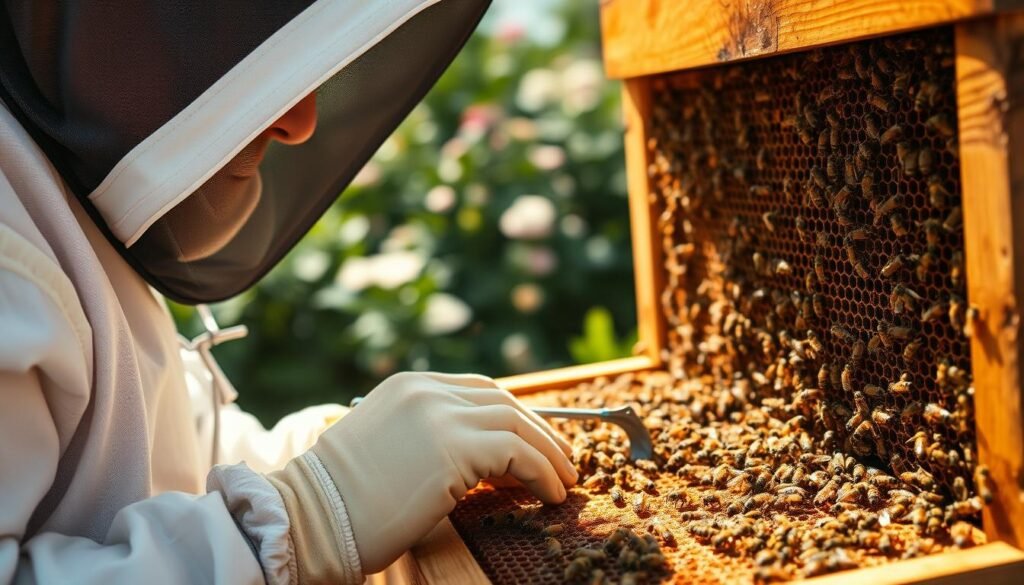
Open the unit and verify five to six frames of brood in various stages. Look for clear eggs, larvae, and adequate sealed brood. A productive queen keeps the pattern tight and predictable.
Count two to three frames of food and spot uncapped nectar or capped honey. If stores are light, plan immediate feeding after the move.
History of Varroa treatments, foulbrood, and movement logistics
Request specific information on varroa treatments and any foulbrood checks. Avoid units with signs of disease or uncontrolled mite load; those undermine long-term health and behavior.
- Confirm queen age and performance; get treatment records.
- Prefer fresh comb over very old, dark frames for brood health.
- Move the boxes at dusk to reduce drift and secure lids for transport.
- Set the hive on a level stand in the new area and assess space needs after one settling day.
“A clear inspection and honest history protect buyers and help beekeepers plan spring additions.”
Gentle Handling and Hive Inspection Techniques
Set a clear, short aim for each visit so every frame lift is purposeful. Plan what you will check, note one or two outcomes, and keep the visit brief.
Smoke timing and reading guards matters. Start with one or two small puffs at the entrance and along the top bars. Wait a moment for guard bees to turn away before lifting a frame.
Always scan for faces looking at you. If guards lock on, pause and add a light puff at the periphery rather than reaching in. Learn warning signs: bumps on hands or veil and the banana‑like alarm scent mean back off immediately.
Move like Tai Chi
Keep movements slow and deliberate. Avoid crushing workers between frames and avoid sudden jerks. Beginners should wear a veil for confidence while practicing gentle hand work.
When to pause or return
If agitation rises despite cool, white, dense smoke, close up and come back another day. Choose favorable weather and a calm hour of the day or week for checks.
- Plan the inspection, act on one goal, then exit.
- Take notes on queen sighting and brood pattern for follow‑up.
- If warnings persist, secure the lid and reassess after warm, calm weather.
| Action | Sign | Response |
|---|---|---|
| Initial smoke | Guards turn away | Proceed slowly, lift frames |
| Warning bumps / scent | Hands/veil bumped, banana smell | Pause, add puff or close hive |
| Persistent agitation | Guard lock, rapid flight | Close up and return another day |
“Keep inspections short, focused, and respectful of the colony’s signals.”
Seasonal Flow: Aligning Brood, Boxes, and Honey Supers
Plan seasonal interventions so population peaks match the main nectar window. Good timing channels worker energy into comb building and surplus honey rather than backfilling the brood nest.
Adding space ahead of nectar flow
Anticipate local bloom periods and add supers and brood boxes in advance. Give drawn comb or foundation so the brood nest stays open and workers draw wax quickly.
Tip: bloom timing shifts about one week per 200 miles north. Shift interventions with latitude and local weather.
Reducing space during dearths
When nectar inputs stall, reduce cavity volume. Smaller space retains heat, conserves resources, and lowers defensive triggers.
Early spring management often determines whether you harvest or end up feeding through summer.
- Align peak population with main flow, not after it.
- Avoid late additions that cause bearding and stress.
“Proactive space management keeps the colony composed and productive.”
| Condition | Action | Expected Result |
|---|---|---|
| Pre-flow (spring) | Add brood box, add 1–2 supers | Comb drawn, brood expands, surplus forms |
| Mid-flow | Monitor stores, add super if nearly full | Maximized honey yield, low congestion |
| Dearth | Remove extra supers, reduce entrances | Heat retention, easier defense, conserve stores |
Track regional bloom sequences and review local seasonal needs to set timing that fits your apiary.
Varroa IPM Without Agitation: Monitor, Decide, Then Treat
A clear sampling plan keeps treatments targeted and colonies calm. Start monitoring in early summer and follow a calendar of checks. Use objective counts rather than routine treatments.
Alcohol wash is the preferred method for accuracy; a well‑done sugar roll is an acceptable alternative. Sample at key season points: early summer, mid‑season, and again before winter‑bee rearing in Sept–Oct.
Alcohol wash or sugar roll cadence and thresholds
- Establish a sampling schedule and quantify mites per 100 bees.
- Treat only when counts exceed your chosen threshold and predict damaging populations.
- Re‑check within days after treatment to confirm efficacy.
Timing treatments to protect winter bees and brood health
Plan treatments so residues clear before the winter cohort forms. Winter workers must live long; mites and viruses shorten lifespan and cause January losses.
“Target decisions by threshold, not habit; protect the brood chamber during critical winter‑bee production.”
| Moment | Action | Goal |
|---|---|---|
| Early summer | Baseline sampling | Plan intervention |
| Late summer | Treat if needed | Reduce mites before Sept |
| Post‑treatment | Resample in 7–14 days | Confirm control |
Feeding Strategies That Support Calm, Steady Growth
Targeted feeding matches syrup strength and placement with seasonal needs. A clear plan encourages comb drawing, steady brood expansion, and reliable winter stores without overstimulating foragers.
Light syrup for spring build-up and comb drawing
Use thin syrup (~33% sugar) in early spring to stimulate wax production and comb drawing. Offer 1:1 light syrup at the frames near the cluster so workers find food quickly.
Stop feeding once the main nectar flow begins. That prevents contamination of surplus honey and keeps harvest clean.
Heavy syrup in autumn, candy boards for winter insurance
Switch to heavy syrup (~67% sugar) in autumn to bulk stores. Finish feeding by the end of October before cold weather sets in.
Install a candy board or place granulated sugar above the cluster for non‑stimulatory winter food. Avoid overheating syrups; HMF forms in scorched solutions and is toxic.
- Medium syrup (50%) works for short summer shortfalls without driving excess brood.
- Position feeders near the entrance and reduce opening size to limit robbing while feeding.
“Feed smart: match syrup strength to season, keep food near the cluster, and end feeding at flow.”
For timing and a regional checklist, consult a local seasonal calendar.
Swarm Prevention That Preserves Temperament and Honey
Watch the brood cluster and free up drawn comb before congestion pushes the hive toward a split. Swarming often begins when brood-area crowding dilutes the queen’s scent and workers sense reduced pheromone control.
Relieve pressure in the brood chamber by adding drawn comb or shifting frames so the queen can lay centrally. Open space reduces urge to rear swarm cells and keeps brood development steady.
Relieving brood chamber congestion and managing frames
- Rotate in open comb or a foundation frame at the edge of the brood nest to prevent backfilling.
- Move frames carefully to avoid chilling eggs and young brood.
- Provide vertical space ahead of the main flow so workers store honey above the brood.
Recognizing swarm vs. supersedure cells and next steps
Swarm cells appear along bottom bars; supersedure cells sit on the comb face near the queen. Cutting early cells delays action, but once a cell is capped the colony is usually committed.
“Check weekly in spring; rapid warm spells can change intent in a single week.”
Practical note: older queens show higher swarm tendency. Many beekeepers requeen every one to two years to reduce splits and protect honey yields by season’s end.
Requeening for Temperament, Brood Pattern, and Colony Health
Replacing an aging queen can reset a hive’s rhythm and improve brood quality for the coming year.
Younger queens often emit stronger, consistent pheromones that calm guards and reduce swarm impulses. Requeen annually or biannually to keep behavior steady and brood production robust.
Why younger queens lower swarm risk
Older queens lose pheromone strength over time. That drop raises the chance workers prepare swarm or build replacement cells.
Best timing: autumn versus spring
Many beekeepers favor autumn requeening for strong spring build-up next year. Spring swaps can fix sudden failures but may stress a light colony during prime buildup season.
- Watch for decline: scattered brood, drone eggs in worker cells, or erratic laying cadence.
- Confirm acceptance quickly: find eggs and young larvae within days and a solid laying pattern within a few weeks.
- Keep spares: have a new queen on hand during peak time to avoid prolonged brood gaps.
- Use requeening: refresh genetics toward calm temper and hygienic traits for long-term colony health.
“A planned queen change stabilizes temperament and preserves productive brood lines.”
| Sign | What it Means | Practical Action |
|---|---|---|
| Scattered brood | Poor laying or queen failing | Introduce a new queen; monitor eggs |
| Drone eggs in workers’ cells | Unmated or failing queen | Requeen and check mating quality |
| Capped supersedure cells | Colony preparing replacement | Consider controlled requeening for better genetics |
Overwintering a Strong Colony: Food, Placement, and Heat Management
Aim for a simple winter layout that keeps stores directly over the living bees. Position the heaviest combs centrally so workers can eat upward through the cluster without breaking it during cold snaps.
Target 60–65 pounds of honey in the hive before deep winter. Concentrate those stores above and around the brood area so travel is short and energy use stays low.
Finish heavy syrup feeding by the end of October. Late wet feeding risks chilling and extra moisture inside the lid and boxes. When syrup is heated, avoid high temperatures; HMF forms and is highly toxic to bees.
Emergency food and ventilation
Install a candy board under the lid as a non‑stimulatory reserve. Check it monthly so a hungry cluster finds immediate sugar without long flights.
Ventilate modestly to cut condensation while keeping heat. A small upper escape or reduced entrance helps moisture escape yet preserves warmth around brood and the cluster.
“Place the reserves where bees naturally move—upward through central corridors—and inspect boards before hard weather arrives.”
| Need | Action | Timing / Result |
|---|---|---|
| Honey stores | 60–65 lb concentrated above cluster | By early winter; steady access |
| Feeding | Finish heavy syrup by end of October; prefer no‑heat mixing | Avoid HMF; reduce chilling risk |
| Candy board | Install under lid; check monthly | Emergency reserves; non‑stimulative |
| Ventilation & footprint | Modest top vent; reduce excess boxes | Lower condensation; retain heat |
Check brood condition and late mite loads before cold weather sets in. Stressed winter bees from poor brood or high mite counts rarely carry a hive through to spring.
Conclusion
Small, regular actions across the year protect brood health and lower mite risk. Focus on clear varroa monitoring and steady nutrition. These steps keep the bees calm and the colony productive.
Handle with respect: use light, timed smoke, slow movements, and stop when warning signs appear. Keep standard equipment and plan space ahead of flows to avoid crowding in the hive.
Order quality queens early and requeen proactively for consistent brood and temperament. Feed 1:1 in spring, heavy syrup in autumn, and keep a candy board for emergencies; avoid HMF in heated syrups.
Monitor mites on a schedule and treat by thresholds so winter bees form strongly. With disciplined habits, inspections stay smooth and honey harvests become more reliable for beekeepers over time.
FAQ
What genetic lines and queen traits produce calmer hives?
Temperament links strongly to queen lineage. Italian, Carniolan, and Russian strains often show gentler behavior when sourced from reputable breeders. Select queens with a history of low defensiveness, strong brood patterns, and proven overwintering success. Consider Varroa-sensitive hygiene (VSH) lines if mite resistance is a priority—these can reduce stress on the colony and improve handling safety.
How does nutrition and mite pressure affect colony calmness?
Good nutrition and low varroa loads reduce agitation. Adequate pollen and nectar stores support robust brood rearing and steady worker populations, which lowers defensiveness. Regular mite monitoring with sugar rolls or alcohol washes helps you treat before infestations spike. Healthy bees move and respond predictably during inspections.
What site features make an apiary less stressful for colonies?
Choose a sunny, sheltered location with morning sun and afternoon shade if summers are hot. Orient entrances away from heavy human traffic and prevailing winds. Provide good drainage and easy access for inspections. Proper spacing between hives reduces drift and robbing, which helps maintain calm colonies.
Which tools and hive components reduce agitation during work?
Use a quality veil and gloves, a smoker with reliable fuel, and a sturdy hive tool. Lightweight, full-depth brood boxes and standard frames that match your equipment simplify inspections. Tight-fitting lids and well-built bottom boards lower drafts and disturbance during checks.
Which breeds are best for U.S. beekeepers seeking docile stock?
Italian bees are commonly favored for gentle behavior and strong foraging. Carniolans adjust brood rearing to nectar flows and remain calm when managed gently. Russians bring mite tolerance, and VSH-selected lines reduce varroa impact. Match breed choice to your climate and management goals.
When should I order queens or nucs for best results?
Order in late winter or very early spring for spring buildup. Local suppliers and beekeeping clubs often provide queens and nucleus colonies timed to regional nectar flows. Ordering early improves your chance of obtaining reputable, locally adapted stock.
What are the core principles for developing calm, strong colonies?
Move slowly, use light smoke sparingly, avoid overcrowding, and keep inspections consistent. Feed appropriately during dearths, monitor Varroa regularly, and requeen when temperament or productivity declines. Regular, gentle handling builds tolerance in worker populations.
How do I introduce a new queen without provoking the hive?
Prepare a clean brood box with drawn comb and food frames. Use a candy-topped cage or queen-right introduction cage and place it between frames. Allow workers to feed and accept her for several days before release. Check gently after 7–10 days for acceptance and egg-laying.
What should I check when evaluating a nuc before purchase?
Look for a solid brood pattern, presence of a laying queen or marked queen, ample brood and pollen frames, and good worker coverage. Inspect for adequate honey stores and ask about recent mite treatment history. A balanced nuc sets the colony up for calm growth.
How do I judge a used hive for health before buying?
Examine brood comb for consistent pattern and no foulbrood signs. Check stored honey and pollen, inspect for excessive drone-laying patterns, and ask the seller about past Varroa treatments and any disease history. Proper movement logistics reduce stress on the bees.
What inspection techniques keep colonies calm?
Time smoke carefully, watch guard bees at the entrance, and open the hive slowly. Move with smooth, deliberate motions—avoid sudden swipes. If bees become agitated, pause, close the hive, and return on a milder day or later in the week.
How should I add space for a nectar flow without causing agitation?
Add supers or second brood boxes ahead of the main nectar flow so bees have room to expand. Give the colony time to adjust between additions and avoid stacking too quickly. Proper timing prevents crowding and reduces defensive behavior.
What mite monitoring cadence prevents surprises while minimizing disturbance?
Perform sugar rolls or alcohol washes at key points: early spring, pre-summer build, and late summer before winter bees appear. Increase checks after treatments or unusual weather. Treat based on threshold data rather than calendar dates to protect brood and adult health.
What feeding practices support calm development during spring and fall?
Feed light syrup in spring to encourage comb drawing and brood rearing; offer heavy syrup in late summer or autumn for winter stores. Use frame feeders or top feeders that minimize robbing and limit disturbance. Candy boards can provide emergency winter food if needed.
How can I prevent swarms while preserving gentle stock?
Relieve brood chamber congestion by adding frames, performing strategic frame rotations, and making splits before populations peak. Recognize queen cells versus supersedure cells and act early. Timely requeening with calmer stock reduces swarming pressure.
Why requeen and when is the best timing?
Younger queens often produce steadier temperament and stronger brood patterns, which lowers defensiveness and swarming. Requeen in autumn where climate allows, or in early spring in colder regions. Align requeening with local nectar flows and disease-management schedules.
What are key overwintering steps for a strong, calm colony?
Ensure sufficient honey stores above the cluster, ventilate to reduce moisture, and position hives for midday sun. Provide emergency feeders if stores look low and avoid overheating syrup that can produce HMF. Proper preparation helps colonies remain manageable in spring.