Published December 3, 2025 · Last Updated August 26, 2026
This guide shows practical, proven methods to help bees thrive when you have limited room on a rooftop, balcony, or compact yard.
You’ll learn how urban environments in places like Washington, D.C., New York City, San Francisco, and Detroit can support honey production and pollination when you follow local rules and register as needed. Good placement, flight-path control, and steady inspections keep the hive calm for nearby people.
Expectations matter: match the number of hives to your footprint, pick the right hive style, orient entrances for sun and flight paths, and secure a shallow water source with stones for safe landing.
We’ll cover rooftop concerns — light roof colors to cut heat, safe access, and shade — plus year-round forage planning and simple site prep like leveling, slight forward tilt, and weed control. By the end, you’ll have the knowledge to build a legal, neighbor-friendly small apiary that supports nature and yields honey.
Key Takeaways
- Confirm legality and register as required; maintain good neighbor communication.
- Place hives with shade, windbreaks, and a shallow water source close by.
- Match hive count to space and orient entrances to control flight paths.
- Plan year-round forage with local blooms and supplemental feeding when needed.
- Prioritize rooftop safety: light surfaces, stable stands, and access routes.
- Use consistent inspections to monitor queen, brood, pests, and swarm risk.
- Learn more practical setup tips in resources like the hive planning article and a comprehensive beekeeping resource guide.
Why beekeeping in tight spaces works in U.S. cities and backyards
City landscapes often hide rich food sources that let a single hive produce honey and aid local plants. Urban bees access parks, patios, window boxes, and street trees within a two‑mile radius. That diversity stabilizes nectar and pollen supply across seasons.
Benefits are real: one well‑managed colony can boost fruit set and flowering across nearby gardens, improving neighborhood environmental health. Water, shade, and windbreaks make urban hives more stable and calm for people and neighbors.
City challenges and practical fixes
Rooftops may overheat, so prefer light roofing or reflective barriers and provide ventilation and water to help honeybees keep brood temperatures safe. Access can be limited; secure legal entry, plan safe routes for moving supers and frames, and pick inspection times that reduce disturbance.
When space is tight, choose compact hives and keep tools staged for quick checks of eggs and brood. Clear communication with neighbors and a visible water source reduce concerns while highlighting pollination gains for the wider community and the world.
Plan your legal and neighbor‑friendly setup
Before you place a hive, confirm rules and get neighbors on board to avoid surprises and fines. Start by checking city ordinances, local hive limits, and registration requirements so you comply with municipal and state rules.
Check local ordinances, registration, and hive limits
Contact your city office and your state Department of Agriculture about registration and disease inspection rules. Keep records a beekeeper can present during visits to show your knowledge and responsible keeping bees practices.
Gain buy‑in: landlords, HOAs, and neighbors
Share a clear site plan with landlords or HOAs that shows entrance orientation, water source, setbacks from the property line, and safe access routes for moving equipment and honey. Offer educational pamphlets, promise a jar of honey, and invite controlled observation to build trust with neighbors and neighbor groups.
Screening and flight paths: fences and hedges to lift bee traffic
Use tall fences or hedges (about 8 ft) to lift bees above head height and reduce crossings over patios or walkways. Place hives away from doors, play areas, and pet runs, and never install a hive on a fire escape.
Communications that calm concerns
Schedule inspections at considerate times and tell neighbors in advance. Explain swarm prevention steps and honey transport plans for multi‑story houses so shared hallways stay clean. Continued effort to educate and adapt screening keeps bees calm and the community comfortable.
Small-space beekeeping strategies
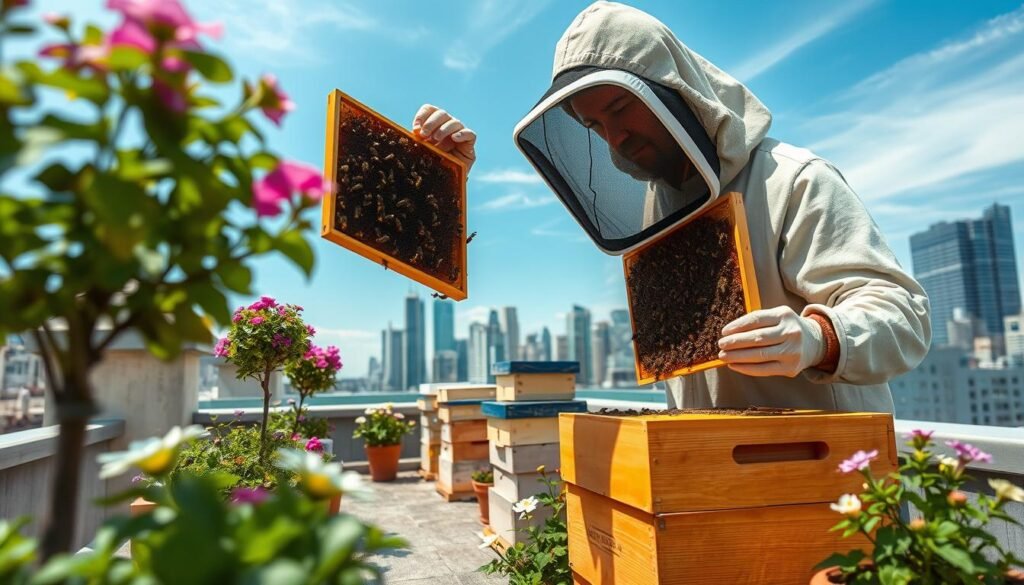
Optimize your plot by matching hive numbers to usable work lanes and legal setbacks. Keep pathways clear so you can lift supers and move equipment without stress. Plan for about 27 inches of working room between stands where possible.
Match hive count to property lines and workable space
Limit the number of hives to what the property and local rules allow. A smaller apiary reduces disturbance and makes inspections faster.
Use stands, windbreaks, shade, and water access in compact yards
Mount each hive on a durable stand placed on pavers. Level stands and add a slight forward tilt to shed rain and cut moisture buildup.
Install windbreaks and partial shade to stabilize temperatures and calm flight near walkways. Provide a shallow water dish with stones or marbles so bees can drink safely without drowning.
Rooftop-specific tactics: lighter roofs, heat mitigation, legal/safe access
On rooftops, prefer light-colored surfaces or reflective mats to reduce hive heat. Ensure legal access routes and clear space to move frames and boxes without blocking exits.
| Action | Why it helps | Quick tip |
|---|---|---|
| Right-size hives | Reduces crowding and inspection time | Match count to usable yard lanes |
| Solid stands on pavers | Improves stability and drainage | Level with a slight forward tilt |
| Water station | Keeps bees hydrated and away from pools | Use shallow dish with stones |
| Shade & windbreaks | Buffers temperature swings and gusts | Use fences or potted screening |
Document each adjustment so you refine your way over seasons and stay compliant with local expectations.
Pick and place compact hives for balconies, rooftops, and tiny yards
Choose hive types and a clear place before you move equipment. A thoughtful choice makes inspections simple and keeps bees calm around neighbors.
Hive choices: Langstroth, Top Bar, and Flow/Warre
Langstroth offers modular boxes and removable frames for easy brood and eggs checks. Top Bar fits low profiles and reduces heavy lifts. Flow/Warre suits vertical stacking and lighter handling for tight areas.
Entrance orientation and spacing
Face the entrance southeast to warm the bees early. Keep about 27 inches between hives so a beekeeper can lift a box and move a frame safely.
Stable bases and groundcover
Use pavers to level stands and add a slight forward tilt to shed water. Suppress weeds with landscape fabric, then fill gaps with damp newspaper and mulch for tidy groundcover.
- Use medium boxes to reduce weight on roofs.
- Stage a mat for smoker, frame rest, and an extra box to streamline the way you work.
- Place a shallow water dish with stones nearby and top up it often in heat.
| Type | Best for | Key benefit |
|---|---|---|
| Langstroth | Standard yards and decks | Easy inspections with removable frames |
| Top Bar | Low-profile terraces | Lighter lifts and simple comb handling |
| Flow/Warre | Vertical, low-footprint sites | Simple harvest and reduced heavy work |
For climate-fit placement and local rules, see beekeeping in different climates.
Manage tight‑space hives for health, growth, and calm behavior
A focused inspection plan and gentle handling keep colonies productive and neighbors comfortable in close quarters. Make time for short, regular checks during peak season to confirm a laying queen, fresh eggs, and a solid brood pattern.

Inspection cadence: brood, eggs, queen status, and comb use
Check every 7–10 days in spring and early summer. Verify eggs and larvae, note capped brood, and record which frames are fully drawn.
Document observations so you can spot trends and act quickly.
Proactive swarm prevention and adding boxes on time
Monitor frames for crowding. Add a deep or super when comb is well drawn to give the colony room and reduce swarm pressure.
Remove or manage developing cells if you aim to prevent swarming, or split colonies when growth is vigorous.
Pest vigilance in urban areas: mites, beetles, moths
Perform routine mite checks and watch for small hive beetle adults and wax moth damage. Rotate old comb, freeze suspect frames, and treat when thresholds are met.
Handling gently in close quarters: slow movements, protective gear
Work with a light smoker and steady, slow motions to keep bees calm. Wear appropriate equipment and stage tools so inspections take minimal time.
- Quick checklist: eggs present, steady brood pattern, room on frames, pests checked, queen confirmed.
- If queenless or defensive, requeen or combine promptly to restore colony stability.
- Keep a log by date and time to link actions with outcomes and refine your way of working.
Feed the colony: forage planning and year‑round water in small areas
Feed thoughtfully: prioritize natural forage but have a simple supplemental plan for heat waves, cold snaps, and early spring build‑up. Good planning keeps a colony working and lowers stress on bees while protecting honey quality.
Container gardens and neighborhood blooms
Map local blooms by season to cover nectar gaps. Pair your containers with nearby plantings to create a concentrated food corridor for your colony.
Choose plants that thrive in pots: lavender, rosemary, marigolds, and sunflowers offer steady pollen and nectar close to the hive. These choices suit roofs, balconies, and small backyard plots.
When to supplement sugar water
Offer syrup only when natural forage is scarce: extreme heat, prolonged rain, cold snaps, or early spring build‑up. Use low‑drip feeders and keep them tidy to avoid robbing.
- Provide year‑round shallow water with stones or marbles near the hive; refresh often in summer.
- Keep a simple feeding log by year and season to link volumes with colony growth and brood condition.
- Work with local beekeepers and gardeners to widen forage corridors and advocate pollinator plantings.
“Balance honey harvests with colony needs — always leave enough stores for shoulder seasons and winter.”
Practical tip: position water close to the hive to cut foraging distance and reduce visits to pools or neighbor containers. For detailed thresholds and feeding protocols, consult this supplemental feeding guide.
Safety, equipment, and property considerations
A careful layout keeps the public comfortable and gives you safe, efficient access to tools. Place hives away from patios, grills, play zones, and entrances. Use screens or tall hedges to lift flight paths so bees cross above people and pets.
Keeping the public at ease: placement away from gathering spaces
Stage equipment so inspections take less time. Keep smokers, hive tools, and a spare box within reach but out of sight.
Tell neighbors before big tasks like adding supers or harvesting. Choose cooler, calmer times of day to reduce agitation and visibility.
Bear and varmint protection where relevant: electric fencing basics
In bear country, protect beehives with a solar charger sized for small apiaries. Use step‑in or T‑posts with insulators and 15‑gauge (or heavier) wire. Fit gates with insulated handles and test each strand.
| Component | Recommendation | Why it matters |
|---|---|---|
| Solar charger | 6‑volt unit for small sites | Reliable, low‑maintenance power |
| Grounding rods | Three 6‑ft rods, ~10 ft apart | Stable, consistent shock in moist soil |
| Wire & posts | 15‑gauge or heavier with insulators | Durable barrier against bears and varmints |
| Fence placement | Offset from work lanes | Prevents accidental contact during inspections |
Use pavers, retaining blocks, landscape fabric, and mulch to keep the yard tidy and provide sure footing. Maintain about 2 ft of immediate working space and ~27 inches between stands for safe lifting.
- Keep a safety checklist: protective clothing, first‑aid kit, charged phone, and an action plan for people or pets near the hive.
- Seasonally review screens, shade, and fence output after storms or layout changes.
- For detailed biosecurity and producer practices, consult this practical producer guide.
“Plan for public comfort and secure equipment so your time at the hive is safe and predictable.”
Conclusion
A concise playbook helps you turn limited rooftops, balconies, or yards into reliable homes for healthy colonies.
Follow the essentials: confirm local rules, engage neighbors, and place hives to lift flight paths away from gathering spots. Use stable stands, clear work lanes, and light roof shading to cut heat and disturbance.
Prioritize inspections to confirm a laying queen, steady brood, and fresh eggs on frames; add space on time to avoid swarm pressure and keep the colony calm.
Plan water, container blooms, and measured feeding so honey quality and colony stability stay strong. Work slowly and methodically, track outcomes, and refine your way season by season.
Ready to deepen your approach? See the rules for successful beekeeping and join local groups to share tips and protect pollinators in the world.
FAQ
What are the top compact hive options for balconies, rooftops, and tiny yards?
Popular choices include the Langstroth for standard frames and honey production, the top-bar for simpler comb management, and Warre boxes for low‑intervention care. Flow hives can reduce intrusion during honey harvest. Choose by weight, footprint, and how often you can lift full supers—rooftops need lighter setups and smaller hive counts.
How many colonies can I keep on a small urban property?
Match colony count to usable space, local ordinances, and neighbor comfort. One to two hives typically suit a small backyard or balcony. More colonies increase traffic, forage pressure, and management time—plan for room to add a super and for safe flight paths.
What legal steps should I take before placing a hive in the U.S.?
Check city and county ordinances, register hives if required, and learn height or setback limits. Contact your local extension office or state Apiary Inspector for registration rules, permit requirements, and disease reporting procedures.
How do I address neighbor concerns about bees and safety?
Communicate early: explain the benefits for pollination, offer honey shares, and invite observation days. Use screening like fences or tall hedges to raise flight paths above people. Share your contact info and a simple safety plan to reassure neighbors.
What entrance orientation works best in small spaces?
Aim entrances toward southeast to catch morning sun and warm early activity. If that’s impossible, orient toward open space and away from busy walkways. Slight forward tilt and a clean landing board help bees navigate tight takeoff corridors.
How do I reduce heat stress for rooftop hives?
Use lighter‑colored hive paint, provide shade during peak sun, and ensure good ventilation with screened bottom boards or top vents. Place hives on insulating boards and avoid direct metal contact with roofing materials to limit heat transfer.
What base and leveling options work on uneven surfaces?
Stable bases include concrete pavers, cinder blocks, or adjustable metal stands. Level the hive slightly forward to aid propolis and rain runoff. Use vibration‑damping pads if the hive sits on a rooftop to protect structure and frames.
How often should I inspect hives in a compact yard?
Inspect every 7–10 days during spring buildup, and less often in summer once colonies stabilize. Focus on queen presence, brood pattern, stores, and early signs of disease. Short, targeted checks reduce disturbance in close quarters.
What are practical swarm prevention measures for limited space?
Manage space by adding supers on time, performing splits when populations surge, and removing queen cells promptly. Regular monitoring and timely interventions lower the chance of swarming that could affect neighbors.
Which pests and diseases are common in urban colonies and how do I watch for them?
Varroa mites, small hive beetles, and wax moths are common. Look for spotty brood, excess debris, beetle larvae, or webbing in frames. Use sticky boards, regular mite tests, and good hygiene to catch problems early.
How can I provide reliable water and forage in a small property?
Set shallow water sources with landing stones year‑round and plant pollinator‑friendly flowers in containers or raised beds. Coordinate with neighbors for a wider forage network and supplement with sugar syrup only during dearths or winter feed needs.
What safety placement rules keep the public at ease?
Keep hives away from play areas, sidewalks, and common gathering spots. Position them near property edges, behind screens, or elevated to raise flight paths. Post a modest sign and maintain a clear buffer to reduce accidental close contact.
What equipment basics do small‑space beekeepers need?
Essential gear includes a smoker, hive tool, veil or jacket, gloves, and a bee brush. Use lightweight supers or nucs to make handling easier. A simple first‑aid kit and phone number for a local beekeeper or extension agent are also useful.
Are electric fences necessary for suburban or rural properties?
Electric fencing helps where bears or large varmint threats exist—mainly in rural or exurban areas. In dense suburbs, secure lids, sturdy stands, and elevated placement usually suffice. Assess local wildlife risk before installing fencing.
How do I control vegetation and maintain ground cover around a compact hive?
Use landscape fabric and mulch to limit weeds, or plant low‑growing bee‑friendly groundcovers. Keep a clear area around the hive for inspections and traffic control. Newspaper or rock borders help deter burrowing pests and improve drainage.
Can I harvest honey from a small urban hive without causing conflict?
Yes—harvest modestly and at appropriate times to ensure the colony retains enough stores. Share a portion with neighbors as goodwill. Use enclosed extraction methods to minimize odors and spillage that might attract attention.