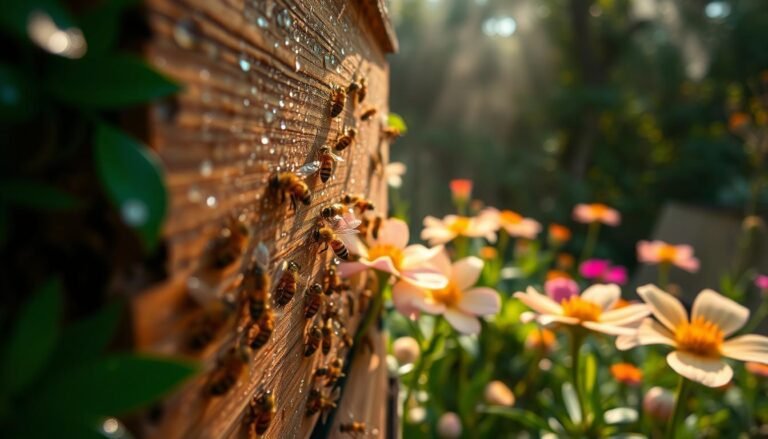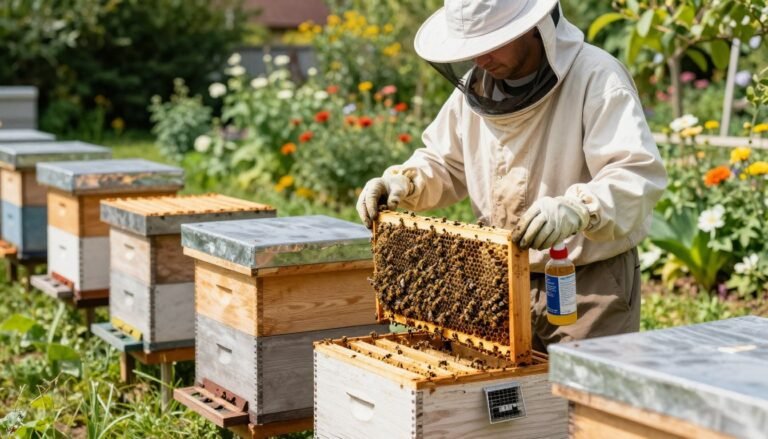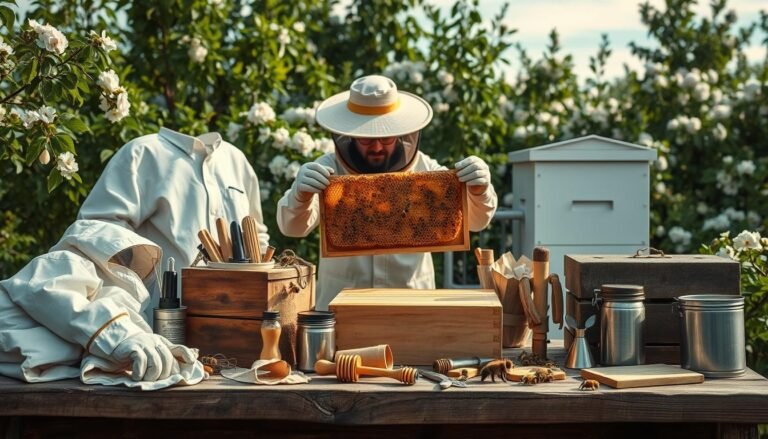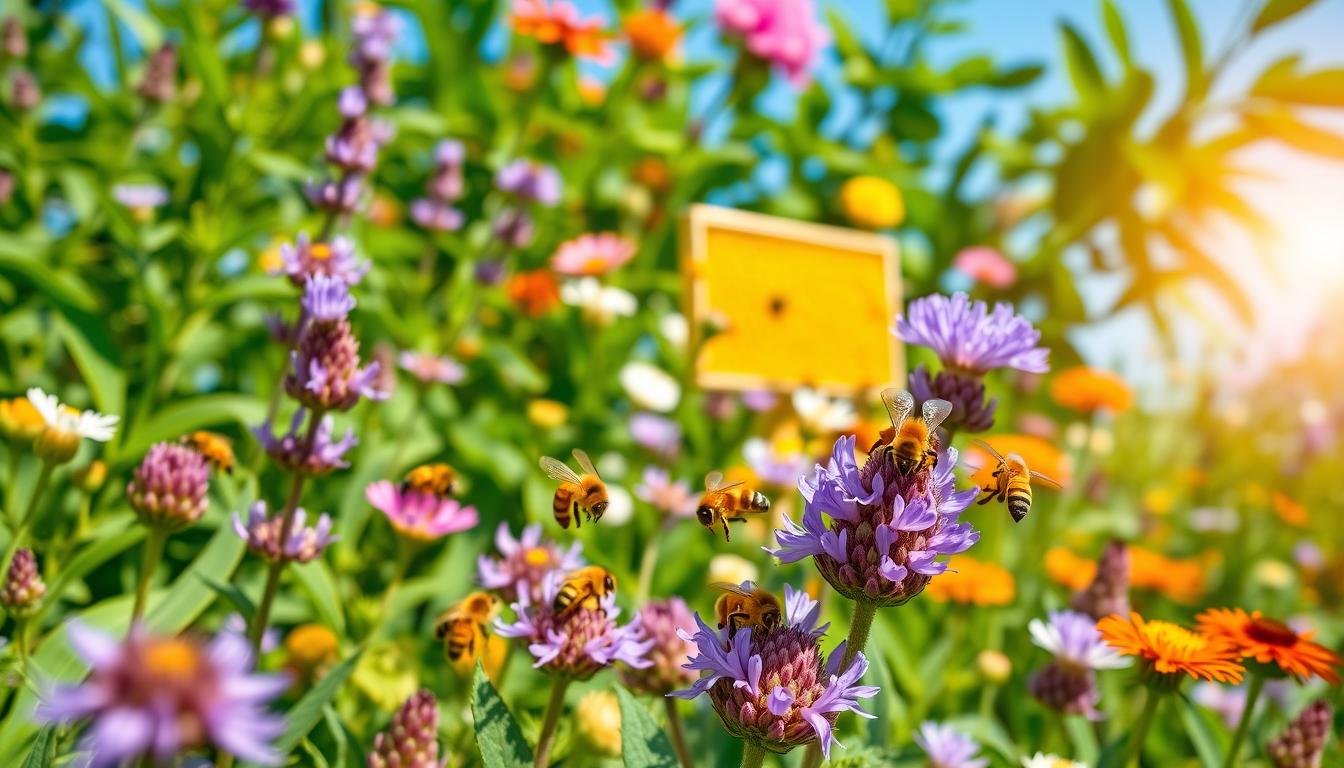
How bees make honey starts at flowers. Forager bees collect nectar, pass it to house bees, and enzymes reduce moisture while the colony fans the comb to thicken the syrup. The result is sealed, edible stores that feed colonies and produce harvestable jars.
Plant diversity keeps nectar flowing through the season. Trees such as linden and black locust, shrubs like buttonbush, and perennials such as lavender, catmint, and clover create steady sources. Full sun, steady water while young, and avoiding pesticides protect the bee population and help flowers attract bees efficiently.
Varied bloom times mean hives get continuous food, which boosts brood care and winter stores. Expect light, floral tastes from linden and clover and darker, robust notes from goldenrod or buckwheat. This guide maps selections by type, season, and region so gardeners and beekeepers can plan layered, resilient forage that strengthens apiaries.
Key Takeaways
- Honey begins as nectar collected by forager bees and transformed inside the hive.
- Mix trees, shrubs, perennials, and wildflowers to ensure continuous nectar across the season.
- Site in full sun, give water during establishment, and avoid pesticides to protect colonies.
- Flower abundance and clustered blooms reduce flight time and improve nectar intake.
- Variety drives honey flavor—from light and floral to dark and robust.
Why Forage Choice Matters for Honey Quantity, Quality, and Bee Health
What blooms near a hive directly controls the colony’s stores, immune strength, and seasonal growth. Honeybees collect nectar in a honey stomach, pass it among workers, and add enzymes while fanning to reduce moisture. That steady processing turns floral liquids into stable comb stores.
Consistent access to diverse blooms gives colonies balanced nectar pollen and protein. Good pollen supports brood food and immunity. When pollen is abundant and rich, spring build-up is stronger and fall populations stay steadier.
Different bee species and honeybees prefer various flowers and flower shapes. Diversity lowers risk during short dearths or bad weather. It also lengthens daily foraging windows so more workers can gather resources.
- Reliable nectar intake leads to larger surplus and more consistent jars.
- Flower identity shapes flavor, color, and sugar profiles in stored honey.
- Native mixes support pollinators and local ecosystems while boosting colony resilience.
Plan by bloom period and structure. Use planting mixes that bloom in sequence to keep nectar sources flowing. Strong forage reduces long-distance searching and improves how bees make honey across the season.
Criteria for Selecting the Best Plants: Nectar, Pollen, Bloom Window, and Full Sun
Choose species that offer long, steady nectar flow to keep hives foraging efficiently through heat and drought.
Nectar should guide selections first, since it drives honey stores. Next, check pollen quality to support brood and colony growth. Pick flowers that produce accessible nectar shaped to match tongue length of honeybees and other bees.
- Site in full sun to boost bloom density and sugar concentration; water while young to lock in vigor.
- Favor long-blooming species like Russian sage, catmint, and lavender and include high-nectar legumes such as white and alsike clover.
- Balance early, mid, and late bloom windows so colonies find steady forage without gaps.
- Mass plantings and spacing matter: larger clusters improve visibility and collection rates for plants bees rely on.
- Choose regionally adapted species and pest-resistant cultivars to limit pesticide use and protect bees.
These criteria help gardeners and beekeepers plan durable arrays that raise nectar intake and stabilize honey production.
Seasonal Bloom Planner for Continuous Nectar Flow in the United States
Plan blooms by season so hives find steady sources and can build stores without long gaps.
Spring starters kick colonies back into gear after winter. Dandelion and apple blossoms open early and give vital food. Early blueberries and clover follow and speed brood growth.
Spring starters
- Dandelion, apple blossoms — quick, visible nectar and pollen.
- Blueberries — early blossoms that aid pollinators and hive build-up.
- Clover — sustained spring bloom to support worker growth.
Summer mainstays carry the season. Lavender, catmint, borage, Russian sage, and sunflowers offer abundant nectar and pollen during peak foraging.
Summer mainstays
- Lavender and catmint — long bloom spans and strong floral notes.
- Borage and sunflowers — high visibility and loadable nectar.
Fall finishers stretch the calendar. Goldenrod, aster, fast-blooming buckwheat, and sourwood give late-season lift to fill supers and shore up winter stores.
Fall finishers
- Goldenrod and aster — steady late blooms that sustain foragers.
- Buckwheat and sourwood — quick or regional sources to extend nectar into cool weather.
Tips: Group species so several bloom at once, use sunny, well-drained sites, and mix nectar pollen sources. Keep records of bloom timing and honey gains each season to refine the planner for your apiary.
Top Nectar Trees for Heavy Honey Supers
A well-placed tree can become the focal nectar source that shapes a colony’s summer stores. Select canopy species that bloom in sequence so bees find high-volume nectar across the season.
Linden / Basswood
American linden produces fragrant summer blossoms that attract bees reliably. It yields light, floral honey prized by many beekeepers and helps drive steady midseason flow.
Tupelo
Tupelo thrives in moist southern soils. Its nectar makes a rich, buttery honey that resists crystallization. Site tupelo near riverine areas to maximize bloom and nectar.
Black Locust
Black locust forms prolific late-spring clusters of white flowers. These blooms produce pale, clear honey and a large burst of nectar over a short window.
Sourwood
Sourwood blooms in midsummer and yields a distinctive, caramel-like flavor that is highly valued in Appalachian markets.
- Plant in full sun and allow room for canopy growth to boost blossom and nectar volume.
- Stagger tree species to lengthen the nectar window and ease harvest timing for the beekeeper.
- Combine these trees with understory shrubs and perennials to fill gaps before and after canopy bloom.
Learn more about regional options and companion species in this guide to top nectar trees to plan stronger spring and summer flows.
Native Shrubs That Extend Nectar Supply and Support Biodiversity
Adding the right native shrubs stretches nectar availability and invites more pollinators into the garden. These species fill seasonal gaps and create layered habitat that benefits bees and local wildlife.
Buttonbush
Cephalanthus occidentalis thrives at pond edges and in wet swales. Its spherical white flowers draw bees with visible, clustered blooms.
Plant buttonbush where soil stays moist to add reliable summer nectar and increase local biodiversity.
Blueberries
Blueberries give early spring nectar and act as fruiting shrubs for edible landscapes. They need full sun and acidic soil to set fruit and to provide peak blooms that feed bees.
These shrubs supply food to workers and help boost fruit set when pollination is strong.
Wild Bergamot (Bee Balm)
Wild bergamot offers tubular flowers that honeybees and other pollinators visit often. The aromatic blooms lend a light, floral honey character.
“Mass shrubs in clusters to help bees locate resources quickly and reduce flight time between flowers.”
- Use buttonbush near ponds to diversify summer nectar sources.
- Mulch blueberries and keep soil acidic for steady early blooms and better fruit.
- Add bee balm to attract honeybees and support native pollinators with long bloom spans.
- Blend sun and light shade placements; favor species adapted to local soils and rainfall.
- Avoid pesticides on buds and blooms and track which shrubs yield the most bee traffic.
For regional planting ideas and companion species, see a guide to native nectar shrubs.
Powerhouse Perennials for Long, Nectar-Rich Blooms
Perennials that bloom for months give honeybees steady targets, helping colonies collect nectar even in heat or brief drought. Choose sun‑loving species and mass them so foragers find dense, visible displays.
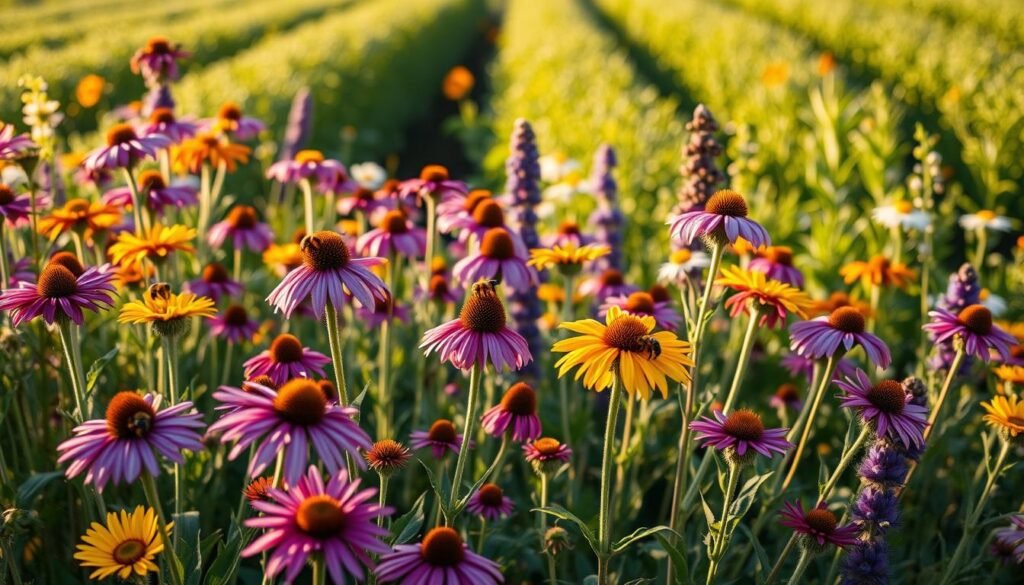
Lavender
Late spring to early fall blooms in full sun and well‑drained soil. Lavender is drought‑tolerant and produces a distinctly floral jar character. Plant in drifts to increase visibility and steady nectar flow.
Catmint
Catmint blooms from late spring through summer. It is hardy and encourages repeat bloom when sheared. Expect minty‑herbal notes to appear in the crop when this zone dominates foraging.
Russian Sage
This drought‑tolerant species keeps violet‑blue flowers coming all summer. It helps stabilize daily nectar intake during hot stretches and pairs well with lavender and sage.
Echinacea (Purple Coneflower)
Echinacea offers showy blooms and reliable pollen mid‑summer to early fall. These blooms attract bees and support brood development when paired with nectar sources.
Sage, Rosemary, Thyme
Layer culinary herbs to add variety and unique flavor in jars. Rosemary can bloom in spring and again in fall in mild climates, extending the season for floral contributions.
- Tip: Mass perennials and stagger varieties to keep daily nectar coming and to map flavor shifts in harvest jars.
- Regional perennial options help match species to your site and extend bloom continuity.
High-Impact Annuals and Cover Crops That Boost Honey Yields
Annuals and cover crops offer a fast, flexible way to add seasonal nectar and pollen where hives need it most.
Use these species to patch gaps, extend bloom, and give colonies a reliable mid‑to‑late season source.
Sunflowers
Sunflowers produce abundant nectar and pollen from midsummer into early fall. Direct‑sow in full sun and well‑drained soil to give honeybees heavy loads that support brood and colony strength.
Borage
Borage self‑seeds and blooms from late spring through early fall. It offers continuous, light‑sugary nectar that attracts bees and gently shifts jar flavor toward floral notes.
Buckwheat
Buckwheat grows fast and flowers in late summer to fall. It delivers dark, malty honey and also acts as a cover crop to improve soil and suppress weeds.
“Time staggered sowings so new stands bloom as older stands wane — this stretches forage into fall.”
- Interplant borage to bridge gaps and keep steady bloom.
- Use annual strips to respond quickly to dearths and scale resources.
- Place blocks in full sun and water at seeding for strong establishment.
- Plan mowing and harvest to avoid cutting peak bloom when colonies need it.
Clover and Legume Workhorses: Reliable, Mild Honey and Soil Benefits
Legumes anchor many apiaries by offering long bloom spans and steady nectar that keep colonies busy all season.
White and Alsike Clover dominate U.S. pastures as top sources of mild, sweet jars. White clover is the most famous American honey plant, prized for its consistent, light flavor.
Alsike clover is hardy and long‑blooming. It extends the season and fills gaps when other flowers fade. Establish these two to support dependable harvests and steady bee traffic.
Red Clover and Alfalfa
Red clover and alfalfa deliver valuable nectar when blossom shape and cutting schedules let bees access the blooms.
Plan mowing and haying so fields flower fully. When timed well, these species boost mid‑season jars with light, floral notes.
Vetch and Sainfoin
Vetch offers early‑season nectar that helps spring build‑up. Sainfoin is highly attractive and can create aromatic jars when it dominates a stand.
Both add diversity and support a resilient bee population while improving soil through nitrogen fixation.
- Rotate legume stands to keep roots alive and extend multi‑season sources.
- Use mixes so at least one species blooms at any time and reduce dearth risk.
- Match species to rainfall and soil pH to maintain persistent, reblooming beds.
Native Wildflowers and Meadow Mixes for Diverse Nectar and Pollen Sources
A mixed meadow gives bees steady color and scent cues that guide foragers from spring through fall. Seed native mixes to create layered bloom windows and boost local biodiversity. These stands produce richly flavored, multifloral jars and sustain colonies across the season.
Goldenrod and Asters
Goldenrod and asters are late-season workhorses. They deliver vital fall forage that helps hives bulk up before winter. Plant them in broad drifts to make the most of late flights.
Prairie Favorites
Include coneflowers and black-eyed Susans to anchor mid-season nectar and pollen. Add sunflowers in sunny pockets to increase visual targets and late pollen loads.
- Seed regionally adapted meadow mixes for lasting stands and reduced inputs.
- Plant in clusters and wide drifts so bees spend less energy locating blooms.
- Manage edges early, then use timed mowing or controlled burns to preserve variety.
- Avoid pesticides during peak bloom and provide nearby water to support pollinator activity.
- Monitor patches and reseed gaps to keep dense, productive sources year to year.
| Species | Bloom | Role | Notes |
|---|---|---|---|
| Goldenrod | Late summer–fall | Fall nectar | Reliable source for overwinter stores |
| Asters | Fall | Late pollen/nectar | Extends foraging season |
| Coneflower / Black-eyed Susan | Mid-summer | Main season nectar | Attracts many bees |
| Sunflowers | Mid–late season | Pollen target | High visibility; highly attractive bees |
Designing a Bee-Friendly Garden: Sun, Water, Clusters, and No Pesticides
Creating a layout that favors broad drifts of nectar sources and nearby water helps colonies gather more in less time. This approach saves energy for workers and strengthens the local bee population.
Plant in clusters to help bees forage efficiently
Group high‑nectar species into blocks and drifts. Large clusters make floral targets visible and let bees work blooms quickly. Clustering reduces flight time and raises daily intake.
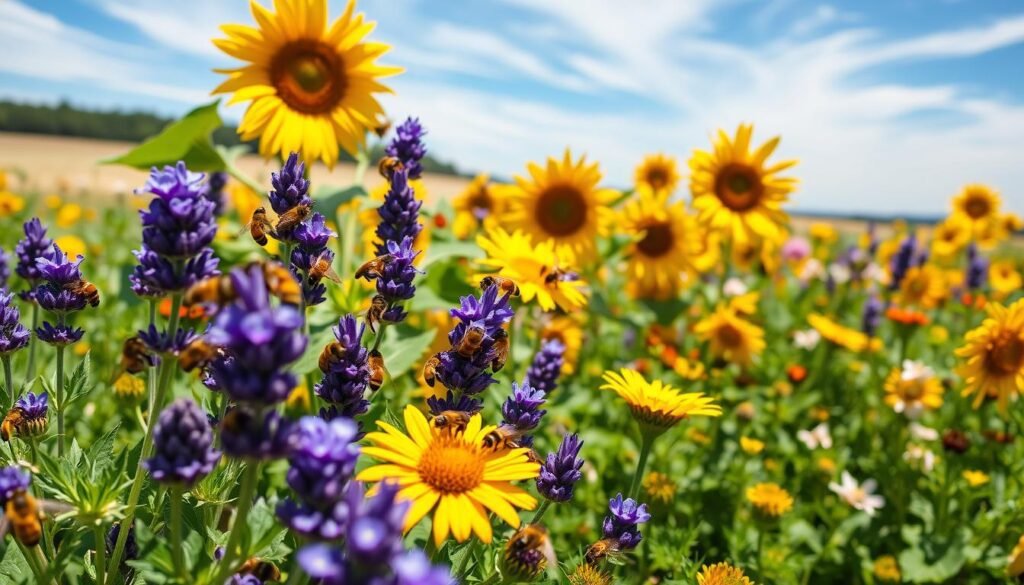
Full sun and consistent water for peak bloom
Siting major nectar workhorses in full sun increases bloom density and sugar concentration. Give steady water during establishment so flowers reach peak production.
Create gentle transitions to light shade with lower layers of shrubs to expand habitat without sacrificing main bloom areas.
Avoid pesticides; support biodiversity and provide clean water
Eliminate pesticide use near buds and blooms—many treatments harm pollinators even when labeled organic. Offer a shallow water source with stones so bees can drink safely.
- Layer trees, shrubs, and perennials to stagger bloom and add shelter.
- Use mulch to keep soil moist and cut weed competition around high‑value sources.
- Place hives or beelines close to richest blocks to shorten flights and help bees make efficient trips.
- Track cluster size, bloom density, and forage hours to refine designs that attract honeybees.
Best Forage Plants for Maximum Honey Yields: Regional Tips and Microclimates
Regional climate and river corridors shape which species deliver steady nectar and when colonies hit their peak harvest. Match local exposure and moisture to reliable sources so bees find bloom through the season.
Southeast and Gulf
Target tupelo along river corridors and wet flats. This tree makes buttery, stable honey that resists crystallization.
Long warm seasons here support multiple bloom waves and keep bees active late into the year.
Appalachians and Mid‑Atlantic
Sourwood and basswood (linden) anchor summer jars. Add broad swaths of fall goldenrod to close the season and bulk stores.
Note: these trees also influence flavor and market appeal.
Great Plains and Midwest
Lean on clovers, alfalfa, sunflowers, and buckwheat to span spring through fall. Massed strips attract honeybees and shorten flight time.
West and Southwest
Prioritize drought‑tolerant herbs and Russian sage in full sun. These species keep blooms during hot, dry summer spells and attract bees to yard and field edges.
- Match tree and herb choices to microclimate and adjust planting by spring onset.
- Place apiaries near dense blocks and manage irrigation where feasible.
- Use regional mixes and record bloom timing to refine selections each year.
For practical scheduling and seasonal tasks consult a regional guide like seasonal beekeeping tasks, or see technical references such as the planting handbook to tune species selection and harvest timing.
Honey Flavor Payoffs: How Flowers Shape Color, Aroma, and Taste
Flowers around an apiary act like a palette, coloring jars with scent, hue, and mouthfeel.
Light, floral sources yield pale, delicate jars that sell well to customers who prefer subtle sweets. Linden (basswood) and clover give clear, mild notes. Lavender adds an herbaceous floral lift. Black locust produces pale, slow‑crystallizing jars prized for clarity.
Light and floral profiles
Key picks: linden, clover, lavender, black locust. These blooms make honey light in color and soft on the palate. They often dominate spring and early summer harvests, shaping the overall honey flavor when they lead peak flows.
Rich and robust profiles
Other sources deepen color and aroma. Buckwheat and goldenrod create dark, spicy, or malty notes. Sourwood brings buttery, caramel-like nuances. Sunflower can be light-fruity yet full-bodied when abundant.
Seasonal shifts matter. Spring, summer, and fall blossoms change nectar chemistry, so a single harvest can lean floral or robust depending on which flowers dominated during peak flow.
“Dominant blossoms during peak flows often define a harvest’s signature flavor.”
| Species | Profile | Season | Tasting Notes |
|---|---|---|---|
| Linden (basswood) | Light | Summer | Floral, delicate, pale |
| Clover / Lavender | Light to floral | Spring–Summer | Mild, sweet, aromatic |
| Buckwheat / Goldenrod | Robust | Late summer–Fall | Dark, malty, spicy |
| Sourwood / Sunflower | Rich | Summer–Fall | Buttery, caramel, fruity hints |
Practical tips: separate harvests by timing to preserve distinct honey flavor lots. Gentle extraction and careful storage protect aromatics and clarity. Consider varietal-forward plantings near apiaries to target marketable profiles, and link labels to regional notes; see types of honey for tasting categories.
Conclusion
A mosaic of canopy trees, clustered shrubs, long‑blooming perennials, and meadow mixes gives hives steady nectar across the season. Plant a mix of linden, tupelo, black locust, sourwood, Russian sage, catmint, lavender, buttonbush, clovers, and wildflower meadows in full sun with water at establishment to sustain colonies.
Design rules: group blooms, provide clean water, avoid pesticides, and include bee balm and native standouts to attract honeybees and support pollinators. Plan blooms from spring dandelion and apple blossoms through summer lavender and sunflowers to fall goldenrod, aster, and buckwheat so bees find food in every window.
Track bloom timing, nectar flow, and extraction results. Start small, expand successful beds, and share regional results — diversity yields richer jars, stronger colonies, and lasting landscape benefits.
FAQ
Which sun-loving species produce the most nectar and pollen for honeybees?
Trees such as linden (basswood), black locust, tupelo, and sourwood deliver heavy nectar flows when they bloom. In open beds and fields, clover, alfalfa, buckwheat, sunflowers, lavender, borage, and various mints provide abundant nectar and useful pollen. Planting a mix of these in full sun ensures strong foraging activity and steady honey production across seasons.
How should I plan blooms to give bees a continuous nectar flow through spring, summer, and fall?
Use a seasonal planner that sequences early- to late-blooming species. Start with dandelion, apples, blueberries, and clover in spring; transition to lavender, catmint, borage, sunflowers, and nectar trees in summer; and finish with goldenrod, asters, buckwheat, and sourwood in fall. Stagger planting times and include perennials, shrubs, trees, and annual cover crops to avoid gaps.
What criteria matter most when selecting flowering species for honey production?
Focus on nectar volume and sugar concentration, pollen availability, bloom length, and sun exposure. Choose plants adapted to your soil and climate, with extended bloom windows and low pesticide risk. Cluster plantings in full sun increase foraging efficiency and make colonies more productive.
Which native shrubs and perennials help support biodiversity while boosting nectar supplies?
Native shrubs like buttonbush and blueberry and perennials such as wild bergamot (bee balm), echinacea, and native asters support local pollinators and extend the season. They offer nectar and pollen and attract beneficial insects that improve overall ecosystem health and pollination services.
Are cover crops like buckwheat and clover a good investment for backyard and commercial beekeepers?
Yes. Buckwheat provides fast, late-season nectar and produces darker, robust honey. White and alsike clover offer prolonged bloom and classic light honey while improving soil nitrogen. Use cover crops in rotations or meadow mixes to boost forage availability and soil health simultaneously.
How do different floral sources influence honey flavor and color?
Flower species strongly shape honey characteristics. Linden, clover, lavender, and black locust yield light, floral honey. Buckwheat, goldenrod, sourwood, and sunflower produce richer, darker, and more robust flavors. Combining sources or harvesting single-source honey depends on crop timing and hive placement.
What planting and landscape tips maximize attraction of honeybees to my site?
Plant large, single-species blocks rather than scattered individuals so bees can forage efficiently. Provide full sun, consistent moisture, and a freshwater source. Avoid pesticides and choose native or well-adapted species to support local pollinator communities and reduce stress on colonies.
Which trees deliver the heaviest nectar flows suitable for supering hives?
Linden (basswood) and tupelo (Nyssa) are top choices for heavy flows and distinctive, high-value honey. Black locust and sourwood also produce intensive blooms that can fill supers quickly in regions where they thrive. Position hives near riparian or forested stands if available.
How do regional climates affect plant selection for honey production?
Match species to your region: the Southeast favors tupelo and long-season herbs; the Appalachians and Mid-Atlantic do well with sourwood and basswood; the Midwest and Plains excel with clovers, alfalfa, and sunflowers; the West and Southwest benefit from drought-tolerant herbs like Russian sage, rosemary, and thyme. Microclimates may allow nonnative ornamentals if watered and sited correctly.
Can small-scale gardeners support robust honey yields, and what should they prioritize?
Yes. Even modest gardens can boost hive strength by prioritizing continuous bloom, clustering high-nectar species (lavender, borage, clover, sunflowers), and reducing chemical use. Focus on diversity, full sun exposure, and plants that bloom at different times to sustain colonies through lean periods.