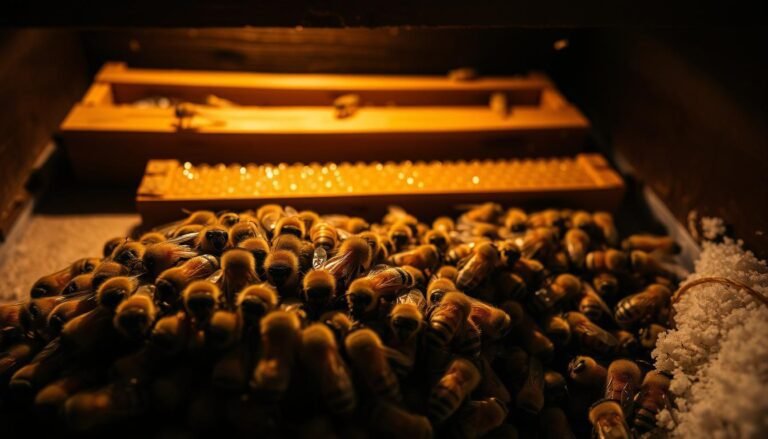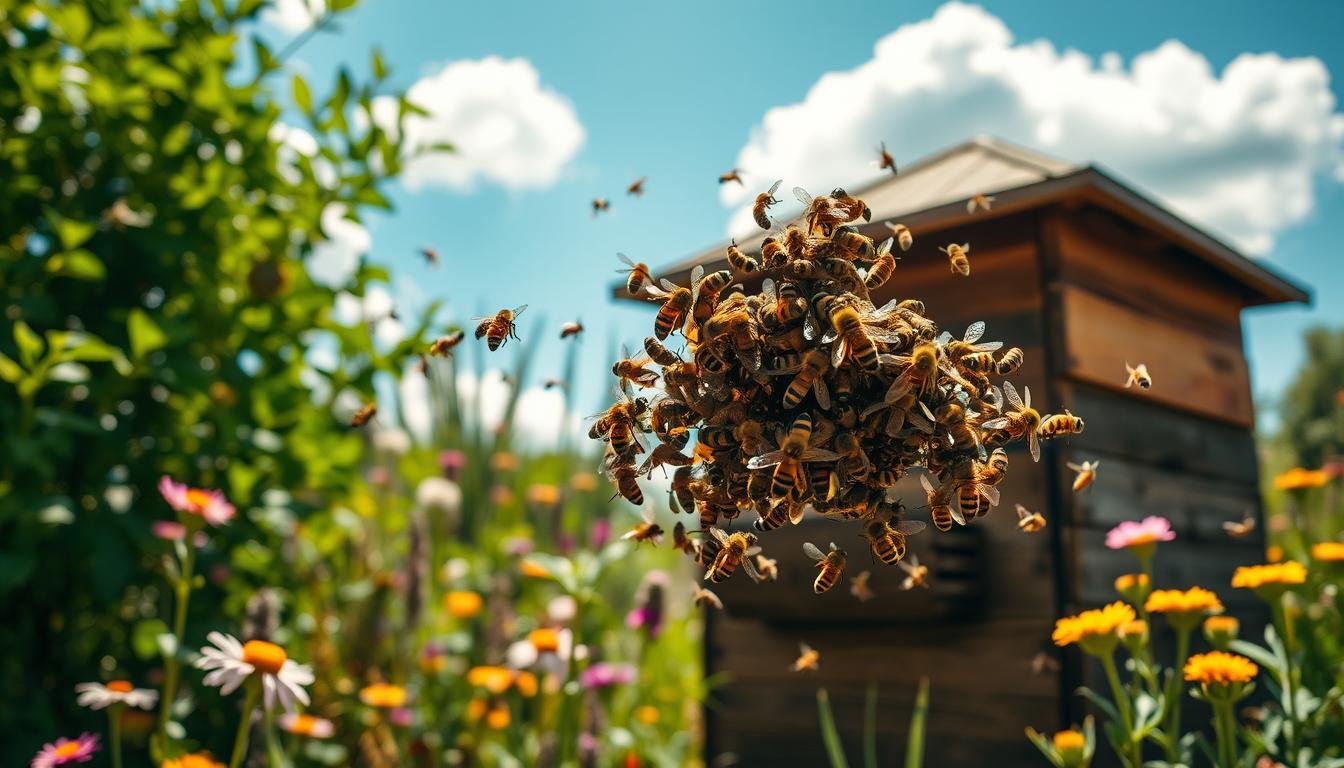
Bearding describes a cluster of honey workers gathered on the front of a hive, hanging like a beard on the landing board. This sight often shows up on hot, humid afternoons and evenings when internal temperature and moisture need control.
Thermoregulation drives the behavior. Workers fan at the entrance to pull cooler air through brood frames so developing young reach about 90–97°F (32–36°C). This allows nectar to dry into honey and keeps the colony healthy.
Calm clustering on the hive face signals a strong, stable colony rather than an imminent swarm. During heat waves a beard can last for days and grow larger when returning foragers increase numbers on the landing board.
Practical note: check ventilation and shade first. Most of the time, a hands-off approach is best. Post-heat inspections help confirm normal brood patterns and queen presence.
Key Takeaways
- Bearding is a heat-response clustering at the hive entrance to cool and dehumidify.
- It usually indicates a thriving colony, not an emergency or relocation.
- Fanning helps keep brood at its optimal 90–97°F range for development.
- Larger evening beards often follow returning foragers during hot spells.
- Provide shade or ventilation if bearding persists; inspect after peak heat.
What “bees bearding” means on a hot, humid day
In hot, humid weather, workers often move onto the landing board and front panel to change air flow and protect developing brood. This outward shift increases ventilation space and helps nectar dry into honey without fermenting.
Heat and humidity control for brood and honey
Brood must sit near 90–97°F to develop normally. Managing humidity keeps moisture low so nectar becomes stable honey instead of spoiled syrup.
Why clustering on the landing board and front helps
- On a hot, humid day, workers use the entrance and board to lower interior temperature and speed moisture removal.
- Many will fan in the same direction at the entrance to draw cooler air through the inside box and push warm, wet air out through top vents.
- Clustering on the front reduces congestion in the brood nest, letting nurse bees tend young efficiently while excess adults relocate temporarily.
- Evening peaks often follow returning foragers, producing large, calm beards that may persist until night cools.
“Bearding is coordinated airflow management — a calm, effective response rather than panic.”
If the brood box is full or honey bound, this behavior may increase and signal a need for more space. For practical ventilation tips, see the beehive ventilation guide.
Why Bees Are Bearding Outside the Hive
Warm, humid afternoons often push many workers onto the front boards as they manage airflow and moisture. This clustering usually helps keep the brood area at steady temperature and lowers humidity so nectar can ripen into honey.
Normal signals: calm, dense groups on the landing board and steady fanning point to routine thermoregulation. Large but quiet beards mean the colony is coping with heat without stress.
Red flags to watch: if one hive in a row shows little or no clustering while others do, that colony may have a smaller population or a queen issue worth checking. Frantic movement, clusters away from the hive, or heavy aerial activity suggests a swarm in progress rather than routine behavior.
- Crowded boxes or honey-bound frames can increase clustering and signal a need for added space at the next inspection.
- Certain mite treatments may temporarily raise bearding as ventilation and temperature change inside the box.
- Track patterns day to day; steady growth over several warm cycles is often seasonal, while sudden shifts merit a closer look for queen cells or crowding.
Practical advice: avoid intrusive checks during peak heat. Compare behavior across hives to learn what’s normal in your apiary and plan inspections when temperatures moderate.
How to tell bearding from swarming and washboarding
Distinguishing cool-weather clustering from an actual swarm starts with watching motion and sound at the hive entrance. Slow, even fanning and a steady curtain on the landing board usually mean ventilation and heat relief.
Visual cues at the entrance:
- Bearding looks like a calm drape on the front hive and board; movement is minimal and synchronized.
- A swarm looks like a moving cloud: rapid lift-off, dense flight, and a loud, rising buzz as bees depart.
Timing differences:
Evening clustering peaks after foragers return. Swarming often starts near midday when weather and colony pressure align.
Washboarding and orientation flights:
Washboarding shows rows of workers rocking or “polishing” the box face and sometimes licking; it is not an immediate swarm signal.
Orientation flights loop and face the hive entrance as scouts learn landmarks. These flights lack mass departure or a tight external cluster.
Practical checks: listen for buzzy intensity, look for queen cell development, and compare activity across hives. If signs are unclear, consult a community thread like the night clustering thread or review expansion tips before opening boxes.
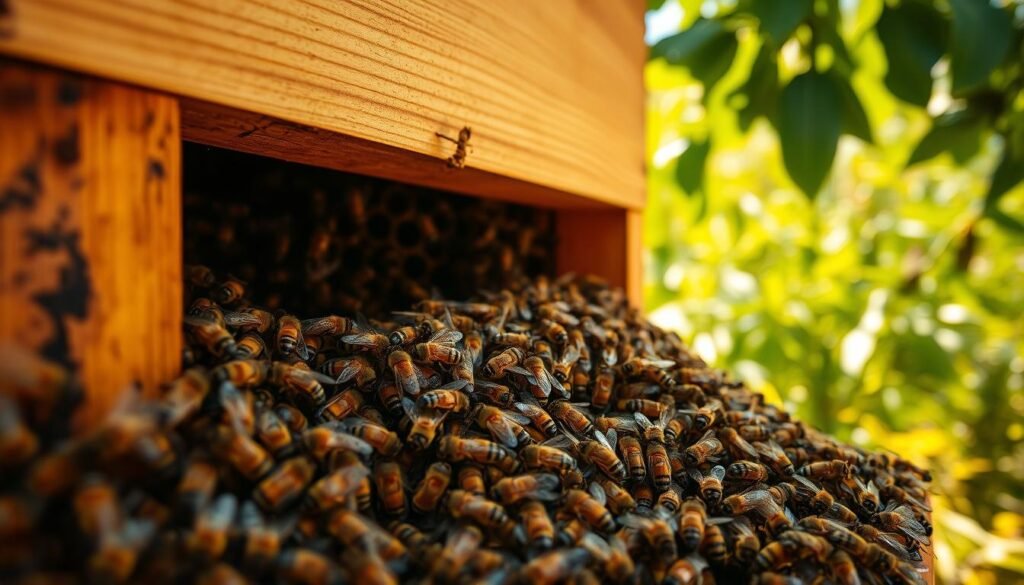
“Observe motion and sound first; those clues separate routine thermoregulation from true swarming.”
When and where bearding shows up on the hive
Clusters often form low on the front panel, spilling down from the bottom board as workers seek airflow.
Common spots include the lower front of a hive, across the landing board, and right at the entrance where airflow is strongest.
Groups usually build from the bottom board upward, creating a curtain that hangs off the board and clings to the front hive face.
Large evening beards often appear after foragers return in hot, humid weather. Extra adults step outside to relieve congestion and heat inside the colony.
Patterns shift with breeze or night cooling. Clusters tighten or spread based on temperature and moisture changes, and placement often marks preferred ventilation paths.
Observe beard density through the day to time inspections. Persistent clustering on one spot can help guide small ventilation tweaks or shade placement.
Note: teams of fanners at the entrance are normal and show coordinated airflow control. Moving a bearded hive at night is difficult; wait until clusters disperse.
| Location | Typical Time | Behavior |
|---|---|---|
| Lower front | Afternoon–Evening | Curtain formation, fanning |
| Landing board | Evening peak | Dense clustering, calm |
| Entrance | Warm periods | Steady fanning, airflow control |
For community observations and timing tips, see this apiary thread on entrance clusters and a seasonal reference in the beekeeping calendar.
Why bees beard: temperature, humidity, and space dynamics
When interior warmth climbs, groups of workers move out and coordinate fanning to protect developing brood.
Brood nest protection at 90–97°F
Maintaining brood temperature is a biological imperative. Workers fan and cluster to keep the brood nest near 90–97°F so larvae develop normally.
Fanning moves air and expels moisture needed for proper honey curing and brood health. This active cooling helps the colony hold a narrow temperature range.
Reducing congestion inside
Shifting nonessential adults to the landing board reduces crowding around brood. That opens space for nurses and improves airflow inside hive boxes.
Result: better ventilation, lower humidity, and calmer internal activity that conserves energy.
Nectar dearth and activity lulls
During a nectar dearth fewer foragers leave, so more workers help with thermoregulation by clustering outside. This eases pressure on combs and keeps brood comfortable.
- Track weather cycles; hot, humid spells raise clustering.
- Check for honey-bound boxes or limited space at inspections.
- Interpret clustering with brood pattern and resource status before acting.
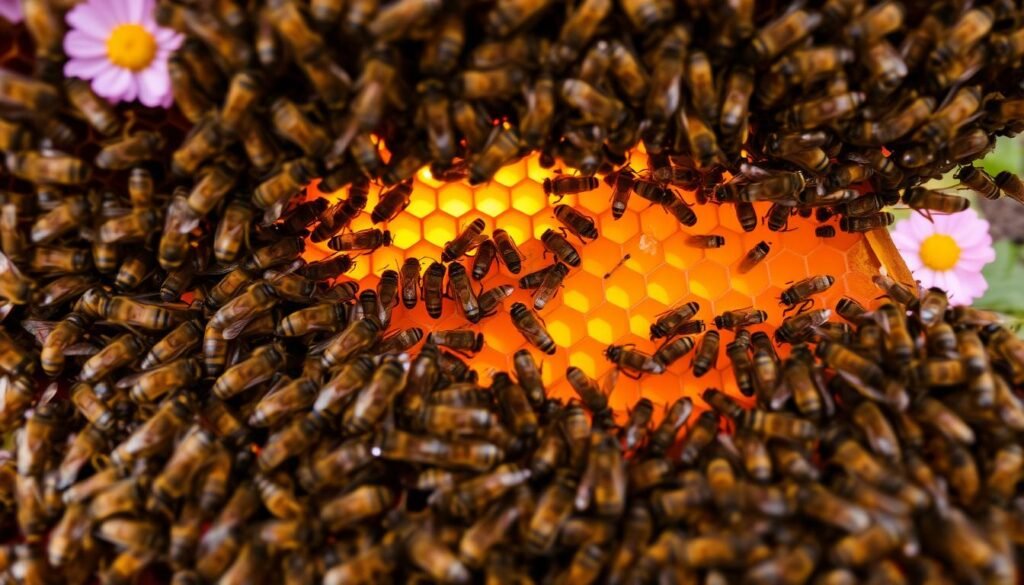
“Bearding is a flexible ventilation tool: structural gaps plus active fanning keep nest conditions steady.”
Step-by-step actions to support your colony in hot, humid weather
Small, timely adjustments at the yard can ease stress on a colony during hot, humid spells. Start with easy fixes that let workers manage temperature and moisture without frantic effort.
Provide nearby water with minerals and safe access. Place a stable source with rough landings and dissolved minerals so foragers can drink and cool combs without long flights. Dirty, mineral-rich pools often attract more visitors than pure water.
Add afternoon shade while keeping morning sun. In very hot regions add shaded lattice or tree cover for the hottest hours. Keep morning sun exposure where possible to reduce damp and pests early in the day.
Improve ventilation thoughtfully to avoid robbing. Use a screened bottom board or a top entrance to help airflow, but avoid over-ventilating during nectar dearth. Excess draft can spread honey scent and invite robbers. Keep entrance reducers in place as a simple security step.
Increase space if brood nest is restricted or honey bound. Add an extra box or super before crowding forces major changes in laying behavior. A timely box can support the queen and reduce swarm pressure; it will not stop a swarm once queen cells are active.
Stay hands-off when clustering is purely heat management. Calm, cohesive curtains on the front usually mean the colony is coping. Save inspections for cooler parts of the day and document what you change so you can refine routine year to year.
“Let observation guide intervention: small aids beat big disruptions during summer heat.”
| Action | When to apply | Expected benefit |
|---|---|---|
| Provide mineral-rich water | Immediately, year-round in summer | Reduces forager stress; aids cooling and nectar handling |
| Add afternoon shade | During extreme heat spells | Lowers daytime box temperature; reduces clustering |
| Use screened bottom/top entrance | Before and during hot, humid periods | Improves ventilation; monitor for robbing |
| Add box/super | When frames are honey bound or brood is crowded | Relieves space pressure; supports queen laying |
Ventilation, insulation, and entrance management
Insulation helps a hive mimic a tree cavity, smoothing temperature swings and reducing extreme airflow needs. Good insulation and tuned openings let workers manage interior climate with less frantic movement outside.
Top entrances, fanning, and screened bottoms
Top entrances give hot, moist air a direct exit while fanning teams draw cooler air from lower holes for efficient circulation. That stack effect supports steady ventilation without forcing large curtains on the front.
Screened bottom boards boost airflow and shed debris, but they can spread scent and raise robbing risk during a nectar dearth.
Balancing airflow vs robbing risk during nectar dearth
Tune openings to local flow. In low nectar periods, throttle wide vents and favor controlled entrance size to protect stores. Watch fanning lines at the entrance to gauge if you’ve over- or under-ventilated.
Why we keep entrance reducers in summer
Entrance reducers help guard against robbers while still allowing workers to regulate interior temperature. Adjust gradually, during cooler hours, and pair changes with observation so the queen’s laying rhythm and colony health stay steady.
“Match ventilation to nectar flow: small, measured moves keep brood safe and reduce risk.”
Space, supers, and population: preventing congestion
A quick box addition at the right time can stop interior crowding before it stresses a growing colony. Timely space keeps airflow moving and reduces prolonged bearding on hot summer afternoons.
When adding a super helps—and when it’s too late.
Add a super or extra box during buildup to give room for brood and incoming nectar. This keeps combs from becoming honey bound and eases pressure on the brood nest. But if swarm cells are present, a single new box will not stop swarming. Consider splits or other swarm-management steps instead.
Recognizing honey bound conditions.
- Look for filled frames with little open comb for the queen to lay.
- Notice a tight brood pattern and packed store frames around the nest.
- If population climbs fast, internal heat and crowding can increase bearding and swarm impulse.
Practical tips: match super size to growth and nectar flow, keep drawn comb ready when fast relief is needed, and record box additions and population changes to improve timing next season.
“Preventing congestion is balance: provide enough space for expansion without exposing brood to drafts.”
Special cases: nighttime bearding, rain, and regional heat
Rapid changes in moisture and temperature near sundown trigger coordinated fanning and mass clustering on the box front.
Big evening beards after foragers return
When many foragers come home during a hot summer evening, exterior clustering can grow fast. That surge offsets internal heat and moisture as workers increase airflow near the entrance.
Avoid moving a bearded hive at night. Many individuals remain on the outside hive and are hard to consolidate, which risks losing frames or stressing the colony.
Humidity spikes during storms and rain
Storm fronts can raise ambient humidity sharply. Even with lower air temperature, workers will form temporary curtains to keep nest moisture balanced for brood and honey curing.
U.S. climate notes: managing extreme heat regions
In places with sustained 110°F days, add targeted afternoon shade and water. In much of the U.S., full sun still helps deter pests like small hive beetles.
Monitor forecasts to anticipate peaks tied to hot humid weather, adjust water and ventilation incrementally during heat waves, and reassess after humidity normalizes.
“Temporary exterior clustering is a resilient, normal response driven by nest temperature and moisture.”
| Condition | Common response | Action |
|---|---|---|
| Evening forager return | Large exterior curtain | Wait until cooler, avoid moving hive |
| Storm-driven humidity | Short-term clustering | Keep vents tuned, add water if needed |
| Sustained extreme heat | Prolonged bearding | Provide shade, extra ventilation |
Post-bearding inspection: reading the brood nest and swarm risk
Once evening cools and activity calms, open for a short, methodical check to read brood health and swarm signals.
Check for queen cells, brood pattern, and space
Inspect frames where the queen normally lays. Look for consistent brood coverage and few gaps in the brood nest.
Locate queen cells along frame bottoms and evaluate stage. Swarm cells sit on lower edges; supersedure cells tend to be isolated and mid-frame.
Note honey-bound frames and tight combs. A crowded box raises population pressure and keeps more workers near the entrance.
Signs your colony may be preparing to swarm
- Multiple charged queen cells in advanced stages — swarm process likely underway.
- Compressed brood nest with heavy stores nearby — limited laying space.
- Loud, agitated flight or mass lift-off patterns versus short orientation loops at the hive entrance.
Practical steps: schedule inspections after bearding fades, use an entrance reducer during a dearth, and mark the queen if possible. If no queen cells and brood looks strong, keep routine. If cells and congestion exist, plan splits or other swarm-prevention tactics.
“Record what you find; linking bearding episodes to internal checks improves future decisions.”
Conclusion
When many adults gather low on the box, they are usually coordinating airflow to protect brood and stores.
Bearding is a normal, healthy response to summer heat and humidity. Calm clustering on the landing board helps keep brood near 90–97°F and aids honey curing through steady fanning and moisture control.
Distinguish this calm curtain from a swarm by timing, flight intensity, and sound. Swarms show mass lift-off and loud, chaotic flight; bearding stays synchronized and quiet.
Support colonies with mineralized water, tuned ventilation, and afternoon shade in extreme regions. Add space early to avoid honey-bound frames; remember that once charged queen cells exist, a single box may not stop swarming.
Watch, record year-to-year, and stay hands-off during peak heat. For more detail on clustering at the front, see front-of-hive clustering.
FAQ
What does “bearding” mean on a hot, humid day?
Bearding is when many honey bees cluster outside the hive entrance and on the landing board to cool the colony and reduce crowding inside. On hot, humid afternoons you’ll see a dense curtain or “beard” of workers fanning, evaporating nectar, and shading the boxes to protect the brood and stored honey.
How does heat and humidity affect the brood nest?
The brood nest needs stable temperatures near 90–97°F for developing larvae. High ambient heat and humidity force workers to alter airflow and evaporative cooling strategies. They may move nectar, fan more at the entrance, or stage outside to keep the core nest within that narrow range.
Why do bees cluster on the landing board and front of the hive?
Clustering at the hive front eases congestion inside and increases evaporative surface area. Foragers returning with nectar can unload with less backup. The front also provides a place for fanners and water-foragers to coordinate cooling without disturbing the brood area.
How can I tell this behavior apart from an impending swarm?
A heat-related cluster is generally calm, with bees fanning and returning to frames. Swarming shows agitation, circling, and workers streaming out in groups. Look for queen cells and persistent restlessness—those indicate swarming, not ordinary heat management.
What is washboarding and how is it different from bearding?
Washboarding is a rhythmic rocking and grooming motion at the hive entrance where guards and cleaners “polish” the front. It’s more active and repetitive than bearding, which is a stationary cooling cluster. Washboarding often appears with heavy traffic and cleaning needs.
When do orientation flights differ from swarm flights?
Orientation flights are short, synchronized sorties by young workers close to dusk or morning, tracing loops near the entrance. Swarm flights are mass departures with loud buzzing and directional movement away from the site. Orientation is routine; swarming is a colony relocation.
Where on the hive does bearding usually appear?
Expect bearding on the front of the hive, the landing board, and around the entrance. It commonly forms on the warmest, sun-facing side, and sometimes under eaves or between stacked boxes where bees find shade and airflow.
Why do colonies beard instead of staying inside?
Bearding reduces internal congestion, improves evaporative cooling for nectar processing, and shields the brood from temperature spikes. When the cluster grows large or nectar flow slows, workers shift outside to balance hive microclimate and worker traffic.
What immediate steps should I take during hot, humid weather?
Provide a nearby, shallow water source with minerals and landing perches. Add afternoon shade without blocking morning sun. Improve passive ventilation—add a screened bottom or top vent—but avoid openings that invite robbers. If the brood nest is crowded, add a super to give space.
How do I improve ventilation without causing robbing?
Use screened bottom boards or a small top entrance to increase airflow while keeping the main entrance reduced. Avoid large, unsecured openings during nectar dearths. Position water and shade close to the hive so bees don’t need to forage through riskier areas.
When should I add space or a super to reduce crowding?
Add a super when frames are filling with nectar or the brood nest is compressed and bees have limited movement. If honey stores are near the top of frames and population remains strong, don’t delay. Too late means bees will still cluster outside despite added boxes.
How can I recognize a honey-bound colony?
A honey-bound hive has most frames filled with capped honey, leaving little room for brood expansion. Signs include heavy bearding, reduced foraging for pollen, and packed stores at the top boxes. Inspect for limited open comb space for the queen to lay.
Why might bearding occur at night or before rain?
Large evening clusters form when many foragers return simultaneously, especially after a strong day. Bees may remain outside during humid pre-storm air to avoid nest saturation. Nighttime bearding is less common but can follow unusually hot or stormy afternoons.
Are there regional considerations for managing extreme heat?
In hotter U.S. regions, provide consistent water sources, maximize shade and reflective covers, and use deeper boxes for better thermal mass. Insulation and screened tops help in deserts and the South, while northern beekeepers focus on ventilation without losing heat in cooler spells.
What should I inspect after a bearding episode to assess swarm risk?
Open the hive during a cool part of the day and check for queen cells, brood pattern consistency, and available space. A compact, healthy brood pattern with few queen cups suggests heat management. Many sealed queen cells or erratic brood patterns point toward swarm preparation.
When is it best to leave clustered colonies alone?
If the cluster looks calm, bees are fanning, returning foragers move freely, and there are no queen cells, minimal intervention is needed. Hands-off management lets the colony naturally regulate temperature and protects foragers from unnecessary disruption.