Fast warming trends are already reshaping how bees thrive and how beekeepers plan for the season. Recent research links milder autumns and warmer winters to earlier worker activity, higher flight mortality, and leaner spring colonies. This matters because it affects pollination and honey production across operations big and small.
Field studies and trials are showing practical fixes. Controlled cold storage and improved forage planning can boost spring adult populations and reduce collapse risk. A key study by Washington State University and USDA found that indoor wintering often yields far stronger spring numbers.
This article will connect peer-reviewed findings, on-the-ground observations, and pragmatic management steps. It previews physiology, timing shifts, water and food stress, extreme weather prep, regional risk differences, and actionable management to help stabilize bee populations and pollination services.
Key Takeaways
- Warmer seasons can exhaust workers and reduce spring populations.
- Research-backed solutions like cold storage can improve outcomes.
- Beekeepers must adapt management and forage planning now.
- Regional differences require local data and tailored responses.
- Economic stakes are high because honey and pollination depend on healthy colonies.
- For practical guidance, see beekeeping in different climates.
Key takeaways at a glance: what U.S. beekeepers should expect next
Expect faster seasonal swings ahead: warmer autumns, earlier springs, and more pressure on hive survival. Worker bees begin foraging near ~50°F, which shortens adult lifespan and raises spring collapse risk if flights extend through fall.
Modeling and field findings matter: Pacific Northwest simulations show many outdoor-wintered colonies could drop below 9,000 adults by 2050. One study finds cold storage from October to April can boost spring numbers above 15,000 adults.
Practical steps for beekeepers are clear and immediate.
- Plan for longer flyable autumns and tighter forage timing with supplemental feed.
- Prepare for precipitation extremes that reduce foraging windows and stress thermoregulation.
- Consider indoor wintering where logistics and contracts (for almonds and honey delivery) allow.
- Harden apiaries for wind, heat, and flooding; monitor adult counts near 5,000–9,000 for collapse risk.
| Issue | Projected outcome | Practical response |
|---|---|---|
| Longer autumn flights | Shorter worker lifespan; spring loss risk | Use cold storage or supplemental feeding |
| Earlier blooms | Mismatch with bee activity | Tighten forage plans and shift timings |
| Precipitation extremes | Fewer foraging days; water stress | Provide water, shade, and emergency feed |
Bottom line: Combine local data, extension guidance, and trialed methods to protect bees and honey yields under ongoing climate change. Layered management will reduce risk and keep operations resilient.
Why bees matter to America’s food and economy
Healthy pollinators are the quiet backbone of many American farms and food businesses. Most crops grown for fruits, nuts, and seeds need pollination to reach marketable yields and quality. Reliable bee services boost fruit set, size, and shelf life, which directly affects grower income and retail supply.
Pollination services and the value chain for crops and honey products
Managed colonies supply movable pollination for almonds, apples, berries, and seed crops. That service links hives to harvests, processors, retailers, and specialty food markets.
Honey and wax add direct income streams for beekeepers and feed artisan and local-product demand. These products support packaging, transport, and retail jobs across rural economies.
For research and practical context, see managed pollination research.
Managed colonies, wild bees, and the pollination gap
Globally, managed colonies rose roughly 45% while bee-pollinated crop output jumped about 300%, widening a pollination gap. That gap raises service prices and increases risk for growers who rely on timely pollination.
Wild pollinators and managed bees play complementary roles. Diverse species can stabilize yields across plants and seasons when floral resources are abundant.
As pressures grow—including competition for flowers and shifting bloom windows—cooperation among beekeepers, growers, and land managers becomes essential to expand forage and reduce seasonal bottlenecks.
The science signal: how a warming climate reshapes bee health
Subtle temperature rises can reshape bee life histories, pushing emergence earlier and draining vital fat reserves. Above-normal winter warmth raises metabolic rates in overwintering workers. That burns stored lipids faster and yields smaller, underweight adults in spring.
Physiology under heat: metabolism, fat reserves, and adult survival
Higher temperatures speed metabolism. Bees use energy faster, so fat reserves fall before nectar and pollen return in force.
Smaller body mass reduces foraging range and resilience. Faster development can also mean adults die before the colony stabilizes in spring.
Phenology shifts: earlier springs and resource mismatches
Warmer winters and early springs can advance emergence by about a month. When bees appear before peak bloom, nutrition gaps follow.
This temporal mismatch reduces pollination and weakens colonies that miss critical food sources.
Precipitation extremes and limited foraging windows
Heavy rain or drought compresses days suitable for foraging. Less nectar and pollen provisioning slows brood rearing and lowers subsequent worker cohorts.
Key takeaways:
- Heat elevates metabolism and depletes fat reserves.
- Earlier emergence raises mismatch risk with flowers and plants.
- Rain or drought shortens foraging windows, cutting food sources for brood.
- Ongoing research is needed to link physiology metrics to field outcomes and guide management.
Longer autumns, shorter lifespans: new research on spring colony collapse risk
New modeling shows longer warm autumns can quietly erode hive strength before winter sets in. That erosion raises the prospect of spring losses and higher colony collapse risk where flight days extend late into fall.
When 50°F days trigger over-foraging and worker wear-out
Worker bees fly once air temps reach roughly 50°F, even if stores are ample. More frequent 50°F+ days in fall prolong flight activity and accelerate wear on foragers.
Population thresholds: the 5,000–9,000 adult bees tipping point
A Pacific Northwest study using seasonal-only simulations found outdoor-wintered hives can fall below 9,000 adults by 2050 and below 5,000 by 2100 in sites like Richland, WA.
- Modeled threshold: spring collapse probability climbs sharply as adult counts drop past 5,000–9,000.
- Outcomes occurred in conservative models that considered only seasonal variables (temperature, wind, daylight).
- Regional variation matters: colder northern sites often remain viable outdoors while warmer areas show mid-century declines.
Actionable takeaways: monitor adult trajectories each fall, integrate temperature thresholds into decision tools, and collaborate with researchers and industry to validate models across more U.S. environments.
Cold storage as a climate adaptation for commercial hives
Controlled low-temperature storage offers a practical way to limit fall flights and preserve worker lifespans. By reducing autumn activity, indoor clustering slows metabolic drain and stabilizes age structure so colonies build faster in spring.
From October to April: conserving workers by clustering indoors
A notable study using Richland, WA simulations found October–April storage raised spring adult counts above 15,000 versus roughly 5,000–8,000 for outdoor wintering in warming-prone sites.
Key operational aims are to promote tight clustering while avoiding condensation and CO2 stress.
- Temperature targets and steady ventilation to keep clustering but limit flight.
- Humidity control and feed checks to prevent moisture-related losses.
- Careful intake timing and gradual re-acclimation when releasing hives.
Logistics with almonds and regional applicability across the United States
Cold storage also helps time deployment for almond pollination; over two million hives travel to California each season. Coordinated schedules can deliver stronger colonies on arrival and improve honey returns later in the year.
Facility options include shared regional storage, retrofits, or mobile units. Cooperative models and grant funding can expand access for small beekeepers and offset infrastructure costs.
Climate Change Effects on U.S. Beekeeping: What’s Changing on the Ground
Local reports highlight rising demands for hive cooling and targeted feed as nectar quality and floral abundance decline.
Interviews with Salvadoran beekeepers note severe water scarcity, lower flower density, and weaker nectar. These stresses force apiary moves, hive reinforcement, and more supplemental feeding.
In practice, droughts and erratic rain reduce available water for colonies. Foraging workloads climb and managers must provision water and syrup during long dry spells.
Food sources under stress: flowers, nectar quality, and pollen timing
Heat and low moisture cut nectar volume and shift pollen timing. That narrows critical food windows for brood and cuts surplus honey harvests. For a deeper look at how warming trends are reshaping which flowers bloom when and where, see our guide to shifts in floral resources due to climate change.
Water scarcity and hive cooling needs during heat waves
Bees need water for thermoregulation. Without nearby sources, energy costs rise and colony efficiency falls.
- Place water with landing pads and shade to reduce flight effort.
- Use temporary feed during dearths and remove it when natural food returns.
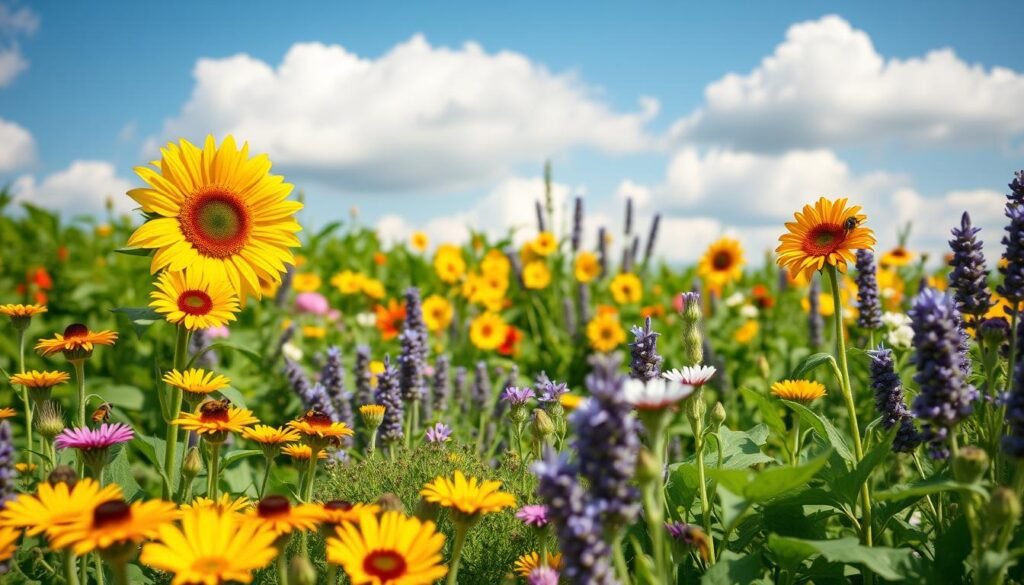
- Work with growers to plant cover crops and hedgerows to smooth forage gaps.
| Stress | Impact | Practical response |
|---|---|---|
| Prolonged drought | Less water; higher forager load | Provide water stations; relocate hives |
| Nectar and pollen shifts | Weaker brood; less surplus honey | Supplemental feed; monitor pollen diversity |
| Heat waves | Higher cooling needs; forager fatigue | Shade, ventilation, orientation to reduce solar load |
| Resource gaps | Longer flights; robbing risk | Stagger feeding; manage entrances to reduce disease spread |
Bottom line: These measures form a practical toolkit for beekeepers facing new field conditions. Monitor nectar flows and move or feed hives based on measured needs to protect colony health and future honey yields.
Extreme weather and hive management in a volatile year
Intense storms and prolonged dry spells force beekeepers to rethink where and how they keep hives. Reports show heavy rains, high winds, and droughts cut foraging time, topple equipment, and raise pest and disease risks for bees and honey production.
Drought, deluge, wind: protecting hives and maintaining forage
Plan for extremes before they arrive. Anchor boxes, add windbreaks, and use elevated stands in flood-prone yards to reduce storm damage.
- Use drought-tolerant plantings and irrigation partnerships to keep forage sources available.
- Schedule inspections around heat advisories and storm windows to limit colony stress and staff risk.
- Prioritize sanitation and pest checks after storms—robbing and disease spread rise when colonies are weakened.
- Map contingency routes for rapid relocation and maintain insurance and diversified yards to protect revenue.
| Threat | Risk | Action |
|---|---|---|
| Drought | Wildfire, forage failure | Irrigation, drought-tolerant plants |
| Deluge & wind | Toppled equipment, isolation | Anchors, elevated stands |
| Storm surge | Access loss, nectar gaps | Contingency mapping, mobile placement |
Use forecasts and degree-day tools to time moves, feeding, and contracts with growers. Clear communication after storms helps protect bees, honey yields, and shared plants used for forage.
Wild bees, managed bees, and competition for shrinking resources
When plants bloom for shorter periods, wild and managed foragers race for the same nectar and pollen.
Compressed food sources tighten windows for foraging. That raises direct competition between managed colonies and wild bees in shared habitats.
Wild pollinator diversity supports crop set and resilience when weather grounds many foragers. Diverse species can keep flowers pollinated during short, intense bloom pulses.
Concentrated apiaries can displace natives when blooms are limited. Careful stocking densities and yard dispersal reduce pressure on local communities.
- Enhance habitat with native plants and continuous bloom to support multiple species across seasons.
- Monitor pollen sources to check dietary diversity and avoid overreliance on single crops.
- Work with landowners to balance commercial needs, honey production, and conservation outcomes.
| Issue | Impact | Response |
|---|---|---|
| Short bloom windows | Higher competition; stressed wild bees | Stagger placements; add native plants |
| High apiary density | Resource depletion; displacement | Reduce stocking; disperse yards |
| Low floral diversity | Poor nutrition; crop risk | Plant year-round forage; monitor pollen |
Stewardship matters: beekeepers who support wild pollinators help stabilize pollination, lower grower risk, and improve fruit quality across seasons.
Seasonal dynamics to watch: wintering, spring build-up, summer heat
Small shifts in seasonal temperatures can have big effects on how fast adult bees burn reserves and how early colonies must forage.
Warmer winters and underweight adults
Warmer winter nights speed fat metabolism, producing smaller, underweight adults with less energy for early brood care and foraging.
That reduces spring foraging capacity and can cut honey yields if colonies lack stores.
Spring cold snaps versus early emergence
An early warm spell may trigger flight or emergence, then a late freeze can stall plants and close nectar windows.
Short cool periods are often survivable, but multi-day freezes after emergence cause heavy losses.
Abnormal heat accelerating development timelines
Hot late summers speed development so adults use fat too soon, raising winter mortality and lowering spring strength.
- Use controlled overwintering, wind protection, and ensure adequate stores entering winter.
- Plant early-blooming plants near yards to cut flight distances during cool days.
- Monitor degree-day accumulations to predict emergence and time splits or queen rearing.
Continuous observation across seasons lets managers align colony growth with reliable bloom windows and stabilize production. For operational planning, see the expansion guide.
Regional outlooks: how risks vary across the United States
Risk will not be uniform. Pacific Northwest models show many outdoor-wintered hives falling below 9,000 adults by 2050 and below 5,000 by 2100 in warmer sites, while colder northern locations remain more viable.
Study findings point to clear management options: cold storage and timed migrations improved spring populations in simulations.
Pacific Northwest lessons and national parallels
Researchers found that where autumn warmth extends flights, overwintering success drops. That pattern will repeat in other U.S. regions with warmer falls and shifted bloom timing.
Arid and mountain West: water, bloom timing, and elevation shifts
In the arid West, water scarcity and heat waves make irrigation and forage reliability central concerns. Mountain areas will see range shifts and elevation-dependent bloom calendars that complicate yard placement and timing.
- Practical steps: use cold storage, flexible migration schedules, and grower partnerships for resilient plantings.
- Set up region-specific monitoring for bloom phenology and colony metrics.
- Collect multi-year data and run on-farm trials to validate local strategies across microclimates.
| Region | Key risk | Top response |
|---|---|---|
| Pacific Northwest | Longer autumn flights | Cold storage; monitor adult counts |
| Arid West | Water scarcity; unreliable forage | Irrigation partnerships; supplemental feed |
| Mountain West | Elevation-driven bloom shifts | Flexible placement; phenology monitoring |
Colony health stressors beyond climate—and how climate amplifies them
Pests, poor nutrition, and chemicals already strain hives, and warmer seasonal patterns amplify those pressures.
Beekeepers note that parasites and pathogens rise when forage and water fall. Heat and dearth shrink worker reserves and increase vulnerability to mites and viral loads.
Storm damage and prolonged wet periods stress queens and interrupt brood rearing. That creates ideal conditions for disease to spread.
“When resources tighten, robbing and drift spike, and diseases move faster between colonies.”
Integrated management matters: combine nutrition, monitoring, targeted treatments, and strict equipment hygiene to support bee health and populations. Use water stations to aid thermoregulation and lower heat stress.
- Avoid blanket treatments—use data-driven thresholds for interventions.
- Plan for supply interruptions of feed or medicines during extreme events.
- Work with veterinarians and extension for updated protocols and local sources of help, and consult managed pollination research for context: managed pollination research.
| Stress | Climate link | Priority management |
|---|---|---|
| Parasites & viruses | Higher after heat/dearth | Targeted treatments; monitor viral loads |
| Pesticide exposure | Crop shifts raise timing risk | Coordinate with growers; move or protect yards |
| Nutrition gaps | Shortened blooms; lower forage | Supplemental pollen/nectar; diversify sources |
Bottom line: Populations rebound faster when beekeepers tackle multiple stressors together. For practical resources and further reading, see this guide for adaptive practices: beekeeping resources and books.
Management playbook for beekeepers adapting to climate change
Concrete tools and schedules give beekeepers actionable steps to protect colonies as seasons shift.
Feeding strategies: supplemental pollen and nectar management
Plan feeds around natural flows. Offer protein supplements when pollen is scarce and thin syrup during nectar gaps. Time supplements to avoid dependency: stop artificial feeds once bloom returns.
Track feed amounts and rotate brands to keep enzyme and nutrient balance. Diversify food sources with cover crops and hedgerows to reduce long-term reliance on supplements.
Hive relocation, shade, ventilation, and water provisioning
Move yards toward reliable forage and away from flood or wind zones. Provide clean water with landing pads and shade to help bees cool and hydrate.
Use screened bottoms, upper entrances, and shade cloth to manage internal temperature and airflow as daily temperature swings widen.
Apiary infrastructure and timing decisions
Reinforce equipment: ratchet straps, anchors, elevated stands, and stormproof covers cut storm damage. Train crews on heat safety and biosecurity.
Schedule splits, queen rearing, and nuc builds earlier to match earlier springs. Use cold storage windows (October–April) where autumn warmth would erode worker lifespans and to align with almond logistics.
| Action | Why it matters | Quick steps |
|---|---|---|
| Feed planning | Maintain brood and honey production | Supplement in dearth, stop when blooms return |
| Water & shade | Thermoregulation for bees | Provide shaded water with landings |
| Infrastructure | Protect hives during storms | Anchors, straps, stands, covers |
| Timing & storage | Preserve workers; sync pollination | Advance splits; use Oct–Apr storage |
Checklist & recordkeeping: keep simple logs of feed, moves, inspections, and outcomes. Iteration based on records helps refine management and protect honey yields over time.
Research, data, and collaboration: closing the knowledge gap
Clear, timely data helps translate research into actions that protect colonies during tight seasonal windows.
Monitoring colonies, blooms, and weather to inform decisions
Standardized tracking lets managers spot trends early.
Track adult counts, brood, stores, and queen status each inspection. Pair those logs with bloom maps and simple weather triggers to guide feed or moves.
Extension, local demonstrations, and accessible guidance
Salvadoran interviews showed many beekeepers needed local demos and trusted extension to apply online research and study outputs.
WSU/USDA simulations provided a strong case for cold storage and autumn action. Field demonstrations convert that study evidence into local practice.
- Standardize colony and forage monitoring across yards.
- Adopt weather-integrated decision tools that trigger actions at set thresholds.
- Build local co-ops for shared storage, data, and rapid advice.
| Metric | Use | Outcome |
|---|---|---|
| Adult counts | Early loss signals | Prompt feed or storage |
| Bloom maps | Plan moves | Reduced forage gaps |
| Weather triggers | Action timing | Better survival in tight windows |
Call to action: expand multi-year studies, share negative results, and publish plain-language summaries so beekeepers and extension can act when time is short.
Policy, markets, and the future of U.S. pollination services
Policy and markets now shape whether pollination services arrive on schedule each season.
Over two million hives travel to California almonds each year, showing how vital movable services are to agriculture and honey production.
When weather becomes unpredictable, contracts and pricing face real risk. Volatility raises disputes over delivery, reduces service reliability, and pushes prices higher for growers and beekeepers.
Public incentives can help stabilize supply. Support for forage plantings, water infrastructure, and shared storage facilities reduces seasonal losses and improves service quality.
- Risk tools: insurance and risk-sharing pools tailored to colony losses can smooth payments after bad seasons.
- Market options: premium, traceable honey and pollination products reward adaptive, resilient practices.
- Coordination: aligned transport rules, biosecurity checks, and disaster response across states reduce disruption for migratory operations.
Labor, fuel, and equipment costs rise with more frequent disruptions. Policy buffers—subsidies, tax credits, and public‑private grants—can lower those barriers.
| Policy area | Why it matters | Practical outcome |
|---|---|---|
| Forage incentives | Increases floral abundance across seasons | More reliable pollination; better honey yields |
| Water & storage grants | Reduces autumn flights and losses | Stronger spring colonies; stable service delivery |
| Risk-sharing & insurance | Offsets sudden colony losses | Fairer contracts; predictable cash flow |
| Interstate coordination | Streamlines movement and biosecurity | Fewer delays; lower disease spread risk |
Transparent metrics on colony strength and health improve contract fairness and let buyers pay for measurable service levels. Aligning conservation programs with pollination corridors supports biodiversity and long-term service supply.
Operations that adopt adaptive practices, track outcomes, and engage in cooperative risk mechanisms will have stronger market positions in a changing world year after year.
Conclusion
Be proactive: align yard practices with local data to protect colonies and pollination services.
Studies show seasonal warming can erode colony age structure and raise spring collapse risk, while cold storage often boosts spring adult counts. Observed shifts in bloom timing, extreme precipitation, and heat-driven weight loss mean managers must adapt.
Targeted measures—improved nutrition, water stations, shade and ventilation, timed splits, and storage—deliver measurable gains for bees, beekeepers, and honey yields.
Collaboration between growers, extension, and research speeds practical uptake. Invest in region-specific monitoring, test solutions year by year, and support policies that scale proven tools.
Forward view: blending science, flexible logistics, and diverse floral landscapes will strengthen bee health and the services communities rely on.
FAQ
What are the main risks a warmer climate poses to honey bee colonies in the United States?
Rising temperatures alter bloom timing, reduce nectar quality, and extend foraging days that can wear out worker bees. Heat waves increase hive cooling needs and water demand, while shifts in precipitation create droughts or floods that cut forage availability. These stresses raise disease and parasite risks and can shorten colony lifespans.
How do earlier springs affect bee foraging and colony growth?
Earlier springs shift flower bloom windows forward, often before colonies reach peak forager numbers. That mismatch can reduce pollen and nectar intake during critical brood-rearing periods, weakening colony strength and increasing the chance of spring collapse when cold snaps return.
What management steps can be taken to reduce spring colony collapse risk?
Monitor adult bee populations and food stores, supplement with pollen patties or syrup when natural forage is scarce, consider timed splits to avoid over-foraging, and use insulated or indoor storage to conserve workers. Planning around local bloom phenology and weather forecasts is vital.
Why is monitoring the 5,000–9,000 adult-bee threshold important?
Research shows colonies below roughly 5,000–9,000 adult bees struggle to maintain brood and thermoregulation under cooler or variable springs. Falling under that threshold raises collapse risk because remaining workers must forage more and tend brood less effectively.
How does longer autumn affect worker bee lifespan and hive preparation?
Extended warm periods in autumn can prompt additional brood production late in the season. Those late-season workers often have fewer fat reserves and poorer overwinter survival, leaving colonies underweight when winter arrives and increasing mortality.
What role does cold storage play for commercial beekeepers transporting hives?
Cold storage—holding colonies at cooler, stable temperatures from October to April—reduces worker activity and conserves food and energy. This helps commercial operations, such as those servicing almond pollination, maintain colony weight and worker reserves for peak spring demand.
How do extreme precipitation events influence foraging and hive health?
Heavy rains and floods shrink foraging windows, wash away pollen and nectar, and damage flowering plants. Extended wet spells can also increase disease risk in hives. Conversely, droughts reduce floral abundance and nectar concentration, forcing longer foraging trips and greater energy expenditure.
In what ways do wild bees and managed honey bees compete as resources shrink?
When forage is limited, competition intensifies. Managed hives can monopolize key floral resources near apiaries, leaving less for native pollinators. Preserving diverse floral corridors and staggered bloom plantings helps support both groups.
How should beekeepers adapt hive placement and infrastructure for more volatile weather?
Provide shade, windbreaks, and reliable water sources near apiaries. Reinforce hive stands and covers for storm resilience, improve ventilation for heat stress, and design relocation plans for drought or flood-prone sites. Mobile shade and cooling options can be lifesaving during heat waves.
What are practical feeding strategies when natural pollen or nectar is scarce?
Use high-quality pollen substitutes or patties and feed sucrose syrup in measured amounts to avoid stimulating unwanted brood rearing in poor forage periods. Time supplemental feeding to support brood cycles and rebuild adult populations without causing long-term dependency.
How do warmer winters change overwintering outcomes for colonies?
Mild winters can prompt intermittent foraging and brood rearing that depletes stores and wears workers. Colonies may emerge underweight in early spring or face sudden cold snaps that kill underprepared bees. Managing for adequate winter stores and monitoring cluster health is essential.
Are regional risks different across the United States?
Yes. The Pacific Northwest may face altered bloom sequences and wetter winters, while the arid West confronts reduced floral abundance and range shifts. Southern areas deal with extended heat and drought. Local monitoring and region-specific practices are necessary for effective adaptation.
How does abnormal heat affect development timelines in bee colonies?
High temperatures speed brood development and can shorten worker maturation, but rapid cycles may produce smaller or less resilient bees. Combined with limited forage, accelerated development can reduce overall colony fitness.
What research and data should be tracked to inform better hive decisions?
Track colony population counts, brood patterns, stored pollen and honey, local bloom phenology, and microclimate data. Collaborate with Extension services, universities, and citizen science programs to access regional models and practical guidance.
How do non-climate stressors interact with weather-driven threats?
Pests like Varroa mites, pathogens, poor nutrition, and pesticide exposure all weaken colonies and make them less able to cope with weather extremes. Climate-driven stress often amplifies these issues by reducing recovery windows and increasing physiological strain.
What policy or market changes could help sustain pollination services?
Incentives for habitat restoration, diversified crop rotations, funding for research and Extension programs, and support for beekeeper insurance or emergency aid can buffer the pollination sector. Market recognition of pollination service value can also encourage resilience investments.
For a related deep dive, check out our article on boosting bee health with climate-resilient practices.
For beekeepers dealing with this, our article on migration patterns of pollinators (global shifts) explained walks through the details.