A pollination syndrome is a predictable package of flower traits — color, shape, scent, nectar amount, and bloom timing — that has evolved together to attract one particular type of pollinator and effectively exclude the rest. A tubular red flower with no scent and copious thin nectar is built for a hummingbird’s long bill and poor sense of smell, not a bee’s; a dull white night-blooming flower loaded with heavy fragrance is built for a moth flying in the dark, not a butterfly flying in daylight. Once you know the pattern, you can often guess a flower’s primary pollinator just by looking at it.
Key Takeaways
- A pollination syndrome is a convergent set of floral traits — color, shape, scent, nectar chemistry, and timing — shaped by natural selection to match the sensory abilities and feeding behavior of one pollinator group.
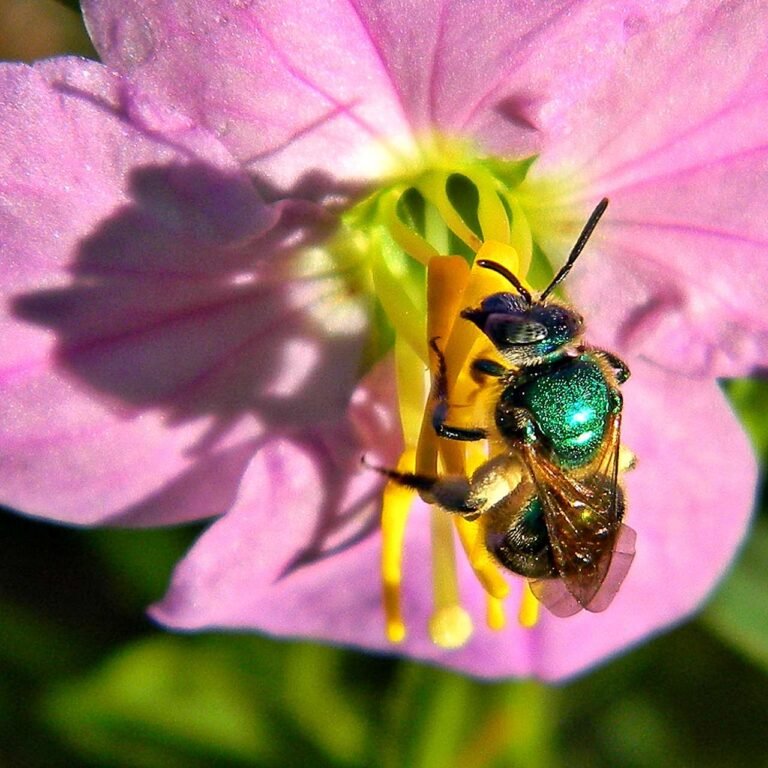
- Bee-pollinated flowers typically favor blue, purple, or yellow color (colors bees see well), a landing platform, moderate nectar, and a sweet scent, often with UV-reflective “nectar guide” patterns invisible to humans.
- Hummingbird flowers tend to be red or orange, tubular with no landing platform, scentless, and rich in thin, dilute nectar — a combination that rewards a hovering bird with a long bill and largely excludes crawling insects.
- Moth-pollinated flowers are usually pale or white, open or release scent at night, and produce a strong, sweet fragrance detectable in darkness when color is useless as a signal.
- Pollination syndromes are a useful predictive pattern, not an absolute law — plenty of flowers are visited by pollinators outside their “expected” syndrome, and some are genuine generalists.
Table of Contents
- What a Pollination Syndrome Actually Means
- The Bee Syndrome: Blue, Landing Pads, and Invisible Guides
- The Bird Syndrome: Red Tubes With No Landing Strip
- The Moth and Fly Syndromes: Built for the Dark or the Rotten
- Where the Pattern Breaks Down
- Frequently Asked Questions
What a Pollination Syndrome Actually Means
Plants can’t move, so getting pollen from one flower to another of the same species depends entirely on convincing something else to carry it — wind, water, or an animal. Where an animal is the vector, natural selection has repeatedly produced the same solution from unrelated plant lineages: flowers converge on a specific bundle of traits that best advertises to, rewards, and physically accommodates whichever pollinator visits most reliably and effectively in that plant’s environment. Botanists call this bundle a pollination syndrome, and the traits involved consistently include flower color, shape and size, scent, the type and quantity of reward offered (usually nectar or pollen), and even bloom timing across the day or season.
Because syndromes arise through convergent evolution rather than shared ancestry, you’ll find the same “bee flower” template independently in totally unrelated plant families around the world — a strong sign that the pattern reflects real selective pressure from pollinator senses and behavior, not coincidence or common descent.
The Bee Syndrome: Blue, Landing Pads, and Invisible Guides
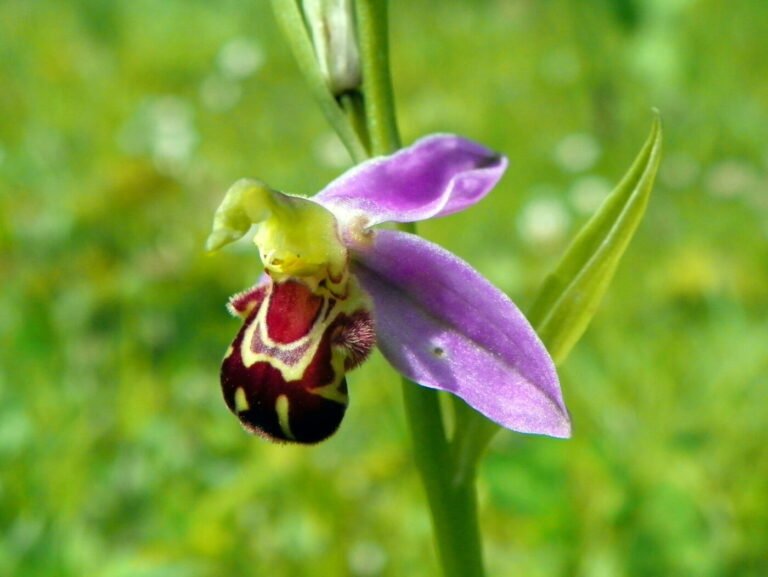
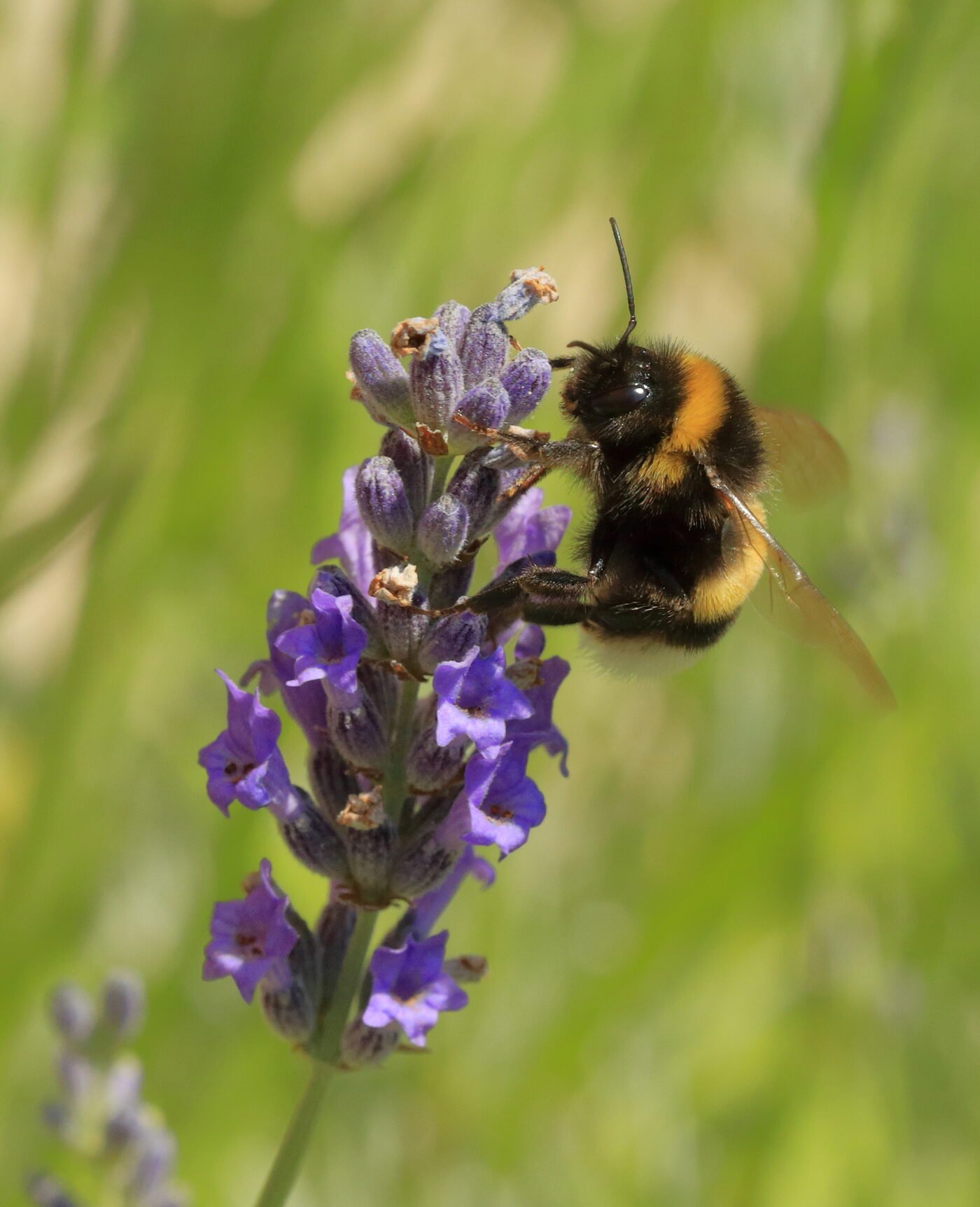
Bee-pollinated flowers are tuned to bee vision and bee body mechanics specifically. Bees see blue, purple, and yellow especially well but are effectively blind to red, so flowers built for bees cluster heavily in that blue-to-yellow range rather than pure red. Many also carry a flat lower petal or lip that functions as a literal landing platform, letting a bee touch down and walk toward the nectar rather than hover the whole time. A layer of complexity invisible to us is added by ultraviolet patterning: many “bee flowers” that look like a single solid color to the human eye actually display bold UV nectar-guide patterns, in effect painted arrows visible only to a pollinator that can see into the ultraviolet range, directing bees straight to the reward. This site’s guide to the bee orchid’s sexual-deception strategy shows just how far this bee-specific tuning can be pushed — an entire flower shaped and scented to mimic a female bee rather than simply advertise nectar to one.
The Bird Syndrome: Red Tubes With No Landing Strip
Hummingbird-pollinated flowers look almost like the deliberate opposite of bee flowers, and that’s not a coincidence — the traits that attract a hovering, red-sensitive bird while filtering out insects are often the exact reverse of what attracts a bee. Classic hummingbird flowers are red or orange (a color bees struggle to see against green foliage, but that stands out clearly to a bird), long and tubular in shape, and typically lack a landing platform altogether, favoring a pollinator that can hover in place rather than needing somewhere to perch. They also tend to have little or no scent, since birds rely overwhelmingly on vision rather than smell to find flowers, and they produce nectar that is more dilute but offered in much larger volume than a typical bee flower, matching a hummingbird’s very high daily energy demands. Research comparing related plant species that have shifted from bee to bird pollination consistently finds this exact suite of changes — flower color, tube length, scent loss, and nectar dilution — evolving together as a package rather than as isolated traits.
The Moth and Fly Syndromes: Built for the Dark or the Rotten
Because moths are primarily active at night, moth-pollinated flowers solve a different problem: how do you advertise to a pollinator flying in near-total darkness, when color is largely useless as a long-distance signal? The answer most moth flowers converge on is pale or white coloring, which reflects what little light is available and stands out against dark foliage, combined with flowers that open or intensify their scent specifically in the evening and release a strong, often heavily sweet fragrance that can be detected from a distance in still night air. A smaller but genuinely strange syndrome exists for carrion and dung flies: flowers pollinated by these insects frequently evolve dull brownish-purple coloring and a scent that mimics rotting meat or feces, exploiting a fly’s search image for a place to lay eggs rather than offering any real food reward — an even more deceptive strategy than the bee orchid’s, in that the fly typically gets nothing at all for its trouble.
“Floral syndromes are quintessential complex adaptations made up of morphological traits, nectar traits, flower color, and scent — where specific combinations of traits reflect adaptation to a particular type of pollinator.”
Where the Pattern Breaks Down
Pollination syndromes are a genuinely useful predictive tool, but working ecologists are careful not to treat them as an ironclad rule, and it’s worth being upfront about that rather than overselling the pattern. Field studies that actually record every visitor to a flower — not just the “expected” pollinator implied by its syndrome — often find a messier reality: plenty of flowers are visited by several different pollinator types, and some species classified as textbook “bee flowers” or “bird flowers” turn out to be pollinated effectively by an unexpected visitor at a given site. A well-known 2013 study on an oceanic island community, for instance, found that plants were visited by more pollinator species than their predicted syndrome would suggest. The honest summary is that pollination syndromes describe a strong, real, repeatedly-evolved tendency — useful for making sense of why flowers look the way they do — rather than a strict, exceptionless rulebook for who pollinates what.
Honeybees themselves are a good illustration of how a generalist pollinator complicates the tidy picture: they visit an enormous range of flower shapes and colors well outside the strict “bee syndrome,” which is part of what makes them so valuable commercially, a topic covered in more depth in this site’s look at measuring pollination efficiency.
Frequently Asked Questions
What is a pollination syndrome in simple terms?
It’s a set of flower traits — color, shape, scent, and nectar type — that has evolved together to attract one specific kind of pollinator, such as bees, hummingbirds, or moths, based on what that pollinator can see, smell, and physically access.
Why can’t bees see red flowers well?
Bee color vision is shifted toward blue, violet, and ultraviolet wavelengths and is comparatively weak at the red end of the spectrum, which is why very few flowers rely on pure red to attract bees specifically — red-dominant flowers are far more often adapted to birds instead.
What are nectar guides?
Nectar guides are patterns on a flower, often visible only in ultraviolet light beyond human vision, that function like directional markings pointing a pollinator toward the flower’s nectar or pollen.
Are pollination syndromes always accurate at predicting a flower’s pollinator?
No. They describe a strong general tendency shaped by evolution, but real-world field studies frequently find flowers visited by a wider range of pollinators than their syndrome alone would predict, so syndromes are best treated as a useful pattern rather than a strict rule.
Do all flowers fit neatly into one pollination syndrome?
No — many flowers are genuine generalists pollinated effectively by several different animal groups, and some plants combine traits from more than one syndrome rather than fitting a single clean category.