This short guide helps U.S. beekeepers spot and stop robbing fast. Robbing is a seasonal threat when strong colonies seek honey from weaker hives. It raises stress, spreads mites and disease, and can destroy a hive in a short time.
Acting within minutes can save frames and brood. Simple tools like entrance reducers, screens, wet sheets, and even sprinklers work immediately to calm an attack. Routine habits—covering frames, cleaning spills, and limiting open-hive time—cut scent trails that invite thieves.
Think yard-wide: standardize reduced entrances and install screens before dearths begin. Learn to tell normal orientation flights from an actual raid so you don’t disrupt colonies unnecessarily. This American-focused how-to also previews a cost‑effective DIY robbing screen that matches commercial performance.
Key Takeaways
- Identify robbing early and act within minutes to protect honey and brood.
- Use quick fixes (reducers, wet sheets, sprinklers) to stop active attacks.
- Adopt durable defenses: robbing screens and standardized reduced entrances.
- Keep weak colonies managed and strengthen yards before dearths.
- Learn to distinguish normal bee flights from a true robbing event.
Understanding hive robbing and why it happens
After the main nectar flow ends, foraging pressure can push strong colonies to target nearby stores. This type of resource reallocation happens when energy sources dry up across an area and opportunism rises.
Seasonal nectar dearth and foraging pressure
During a dearth, foragers return with little or low-quality forage. Agitation grows and scouts search harder for rich stores. That single scout can spark a rapid response once she finds a vulnerable hive.
How stronger colonies target weak hives for honey
Honey is more attractive than nectar or syrup because it stores energy densely. Scouts follow scent trails, slip into cracks or the front entrance, and recruit nestmates. Once recruitment starts, invaders can overwhelm guards and strip frames quickly.
- Most at risk: young nucs, requeening colonies, or hives with low guard numbers.
- Common route: the front entrance unless holes offer an easier path.
- Outcome: rapid depletion of stores and increased disease spread if unchecked.
| Trigger | Scout role | Target | Speed |
|---|---|---|---|
| Nectar dearth | Finds scent, returns to recruit | Vulnerable hive stores | Hours to a day |
| High foraging pressure | Leads organized incursion | Nucs, weak colonies | Rapid escalation |
| Low guard presence | Easy entry | Any nearby hive | Can be complete overnight |
How to recognize a robbing event at your bees hive
Early signs appear at the entrance. A quick walk-by can reveal whether a hive faces an active raid. Watch for tight grappling clusters on the landing board and repeated scuffles that do not break up quickly.
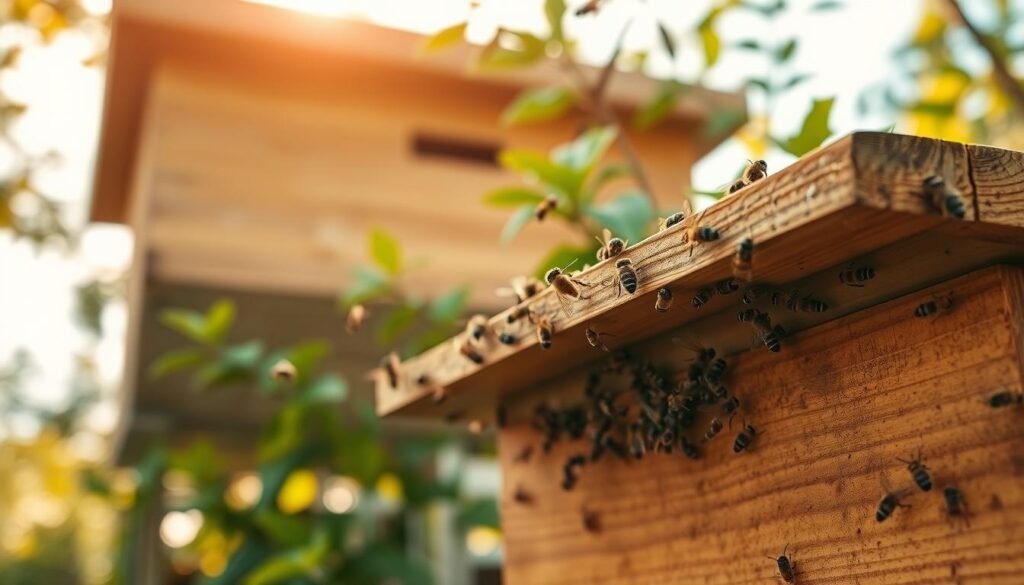
Visible fighting at the entrance and on the landing board
Look for spinning pairs or triads locked together on the board. These combative encounters often include rolling and attempted stings and show as frantic entrance activity rather than normal orientation flights.
Debris clues: wax flakes on the bottom board and torn cappings
Check the bottom board and screened trays for mess. Robbers leave large, ragged cappings and loose wax pieces, not the tiny, repaired holes you see with normal honey use.
Dead bees on the ground and frantic entrance activity
Scan the ground in front of the hive for piles of dead bees. A sudden build-up usually means guards and intruders have died in combat.
“Confirm at least two indicators—combat on the board and torn cappings—before acting.”
For more on field cues and case notes, see this practical guide to hive robbers.
Orientation flights versus robbing: tell-tale differences
Not all busy entrances mean trouble. Use simple checks of timing and motion to decide your next move.
Timing and temperament
Orientation flights usually happen on warm afternoons and last 20–30 minutes. Young bees hover, arc, and seem buoyant.
Robbing can run from first light until dark and has a grim, purposeful feel. Intruders probe for a way in and do not ease up for hours.
Simple field checks to avoid false alarms
- Use time as a first check: short afternoon sessions point to orientation; long, steady agitation suggests a raid.
- Read the temperament: buoyant, exploratory motion means orientation; tense, darting lunges mean trouble.
- Look at the landing edge: hovering and facing the hive is normal; grappling and jolting lunges are not.
- Field test: gently interrupt a bee carrying a corpse. A calm return from that bee usually rules out sustained fighting.
| Sign | Orientation | Robbing |
|---|---|---|
| When | Warm afternoons, short sessions | First light to dark, many hours |
| Motion | Boisterous arcs, spaced flights | Chaotic chase, grappling at entrance |
| Debris | Little to none | Torn cappings, wax flakes |
Train your eye to read entrance activity and note seasonal patterns across the year. A quick, accurate call saves frames and stress in any hive.
Immediate actions to stop hive robbing fast
When a raid begins, act quickly. Use a short, scripted sequence so you limit open time and scent trails. Fast moves give guard bees a real chance to hold the line and protect stores.
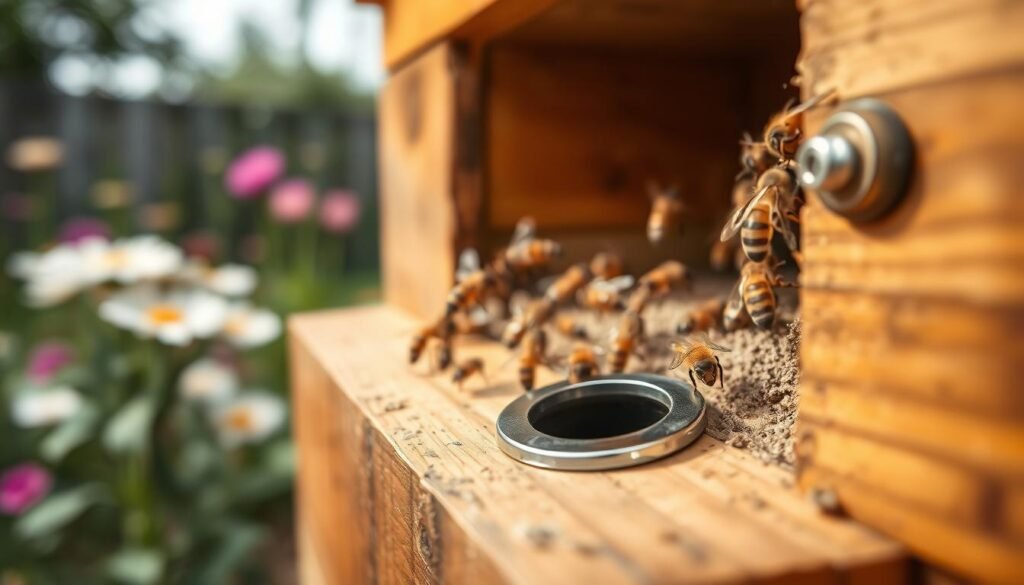
Shrink the entrance to a single‑bee width
Make the entrance manageable. Reduce the opening to one bee’s width so guards can control access. If needed, stuff fresh grass into the gap for a temporary block; resident bees will clear it in a day while intruders lose momentum.
Use a wet sheet or sprinkler to ground flights
Drape a wet sheet over the hive to dampen scent and confuse attackers. Keep the sheet wet for cooling and disruption. If a sheet isn’t available, run a sprinkler to wet wings and force bees to the ground briefly.
Close gaps, cover boxes, and secure exposed honey
Check for cracks and secondary entrances; seal them and tighten lids. Pull any exposed frames of honey and cover them immediately. Combine an entrance reducer with a robbing screen as you stabilize the colony.
- Work fast and deliberate; have tools ready.
- Limit open time and monitor traffic for 30–60 minutes.
- Maintain reduced entrances until activity returns to normal.
| Action | Purpose | Time to effect | Notes |
|---|---|---|---|
| Single‑bee entrance | Strengthen guard control | Minutes | Use reducer or grass plug |
| Wet sheet / sprinkler | Dampen scent and ground bees | Immediate | Keep sheet wet; repeat if needed |
| Cover frames & seal gaps | Remove attractants and backdoors | Minutes to hours | Pair with screen for best result |
Robbing screens and entrance reducers: how they work together
A simple screen can change how outsiders approach a hive and buy guards time to sort friends from foes. Robbing screens cover the whole entrance area and shift the effective entry up or aside. That displacement makes scent-following intruders hit the mesh and stall while resident bees learn the new way through the opening.
Displacing the entry point to confuse robbers following the honey scent
Place the screen so the old doorway is blocked visually and physically. Intruders that trace a direct scent line will meet the mesh, lose momentum, and fail to enter.
Guard bee efficiency and pheromone trail navigation through screens
Guards patrol a far smaller, controlled opening when you pair a screen with an entrance reducer. Residents lay pheromone cues under and through the screen to guide nestmates. Robbers, lacking the hive signature, cannot decode that trail and give up faster.
When to deploy screens and how to adjust openings
Install screens before pressure peaks so bees adapt. In calm times keep the entrance wider for airflow. If signs of attack rise, snap the reducer to a single‑bee slot and let the screen direct traffic to the defended point.
- Pair tools: screen plus reducer concentrates defense.
- Seal cracks: ensure the displaced entry is the only route.
- Uniformity: identical screens across hives reduce drifting and confusion.
- Maintenance: inspect fasteners and keep spares for quick fits.
| Tool | Primary effect | When to use |
|---|---|---|
| Robbing screen | Displaces entry; stalls intruders | Before dearths; during raids |
| Entrance reducer | Focuses guard defense | Emergency reduction to single‑bee width |
| Both combined | Maximize control and pheromone navigation | Standard yard practice recommended |
DIY robber screen build: tools, measurements, and setup
You can build an effective robber screen from off-the-shelf materials in an afternoon. This low-cost unit uses window screen and furring strips and runs under $10. Gather a staple gun, measuring tape, pencil, hammer, saw (or jigsaw/drill with hole saw), nails, and a small length of tape for marking.
Materials and tools
Window screen, two long furring strips, two vertical pieces ~4″ high, staples, and a bottom brace make the frame. These materials mirror commercial screens and hold up in the yard.
Measure and cut the frame
Measure the hive body side rails where the hive sits on the bottom board. Cut two long strips to that width so the frame seats snugly without gaps. Cut two verticals about four inches tall for the depth the screen needs.
Create the entrance hole and fasten the screen
Cut or drill a 3/4″–1″ entrance hole in the top long piece; err on the small side so guards can control access. Stretch the screen tight and staple it to the frame. Nail the second long piece over the screen to clamp it securely.
Fitting tips
- Add a bottom brace to stop sagging and improve fit.
- Use bungee cords to hold imperfect fits in place during heavy use.
- Check carefully for any large gaps or unintended holes before installing; the only path inside should be the designed hole.
For a quick demo and extra tips on field use, see this short guide on robber screen setup.
42. preventing robbing behavior USA: step-by-step prevention plan
Build a simple, repeatable plan that keeps weak colonies from becoming targets. Start with colony health: feed on schedule, monitor mites, and treat disease promptly so guard numbers stay strong through the year.
Anticipate vulnerable windows. Pre-install screens and a reducer on new nucs and during requeening so those hives present a defended entrance from day one.
Design inspections to be fast and organized. Stage tools in one place, cover boxes when possible, and never leave frames of honey exposed. Clean syrup spills immediately to avoid scent trails that attract robbing bees.
Routine hardware and yard-wide standards
Adopt entrance reducers and robbing screens across all hives so you can narrow openings instantly without retraining foragers. Standardized gear and identical screen pathways make it harder for outsider bees to find the way into a neighbor hive.
- Start with strength: support each colony to keep guards effective.
- Stage inspections: minimize open time and clean spills fast.
- Standardize: use identical robbing screens and reducers yard-wide.
- Log results: record incidents and refine the plan through the year.
For further reading on tools and references, see this comprehensive resource on beekeeping basics: beekeeping resources and books.
Seasonal strategy in the United States: dearth, nectar flow, and timing
Plan yard actions around local bloom cycles so you strike before foraging pressure rises. Watch your area’s calendar each year and mark when nectar stops and starts.
Late‑season gaps are common in the Southeast, where nectar often drops mid‑summer. In that place, robbing risk climbs and can run many hours through the day and resume at first light.
Late-season regional dearths and increased risk
Map local forage and note the month when blooms fade. Adjust entrances and fit screens ahead of that time. Prevention is easier than rescue when a hive becomes a target.
When to move a victim colony at dusk and why it helps
Move a hit hive at dusk when most bees are home. A short relocation breaks the flight map intruders use and gives the colony a real chance to reorient.
- Use a sprinkler to simulate rain and ground flights before working.
- Group vulnerable hives for easier monitoring and faster response.
- After the next nectar flow, widen entrances gradually as normal traffic returns.
For guidance on staging new colonies and first‑year care, see first‑year care for your nuc. To plan by climate, consult this regional beekeeping guide.
Health, safety, and apiary-wide considerations
Optimize entrances and placement now to limit contagion and reduce stress on your bee population. Treat any theft event as an apiary hazard because mites and pathogens can move quickly between colonies.
Limit cross-contamination. Keep boxes covered and never stage frames of honey in the open. Exposed frames draw attention and let robbers carry mites and disease from hive to hive.
Limiting disease and Varroa spread
Treat robbing as a yard-wide risk. Isolate struggling colonies if you can and act at the first sign of invaders.
- Right-size entrances: standard reducers and robbing screens keep guards effective and cut the way intruders enter.
- Sanitary handling: clean tools and change gloves between colonies to avoid moving pathogens on frames or hands.
- Avoid common feeding: when feeding is needed, set feeders away from hives to stop competitive frenzy at entrances.
Placement, entrances, and inspection habits
Review yard layout for sun, wind, and traffic so placement helps—not hinders—defense. Keep spare screens and reducers ready to fit every hive quickly.
| Action | Effect | When |
|---|---|---|
| Standardize reducers | Improves guard control | Before dearths |
| Cover boxes & frames | Reduce attractants | During inspections |
| Isolate weak colonies | Limits disease spread | At first signs of robbing |
Keep notes on every incident and recovery. A calm, prepared beekeeper who stages tools and follows routine checks saves honey, supports colony health, and protects all hives in the yard.
For guidance on care and setup for new colonies, see first‑year nuc care. For yard planning and expansion tips, consult this beekeeping expansion guide.
Conclusion
Close with a clear, repeatable checklist: spot a raid fast, shrink the entrance, throw a wet sheet or run a sprinkler, then fit a robbing screen to restore order. These quick steps stop attacks in minutes and protect honey and brood.
Prevention matters: standardize screens and right‑sized entrances across the yard so guards can do their job. Watch the board and bottom for torn cappings, dead bees, and all‑day aggression—those signs mean act without delay.
Keep a DIY frame on hand that fits snug, with good bottom bracing and a properly sized top opening. Log each incident and recovery time, and keep spare screens, reducers, and sheets ready so you respond in minutes, not hours. With a plan and consistent inspections, your hive health and stores stay secure.
FAQ
What is hive robbing and why does it occur?
Hive robbing happens when bees from stronger colonies invade weaker hives to steal honey. It often starts during nectar dearths when forage is scarce and forager pressure rises. Scent trails and spilled honey attract robbers, and weak or queenless colonies are common targets.
How can I tell the difference between orientation flights and robbing activity?
Orientation flights are short, calm, and occur in the warm afternoon as new workers learn landmarks. Robbing looks frantic, with persistent fighting at the entrance, long periods of aggression throughout the day, and many bees streaming in and out. Watch for torn cappings, wax flakes, and dead bees, which indicate a raid rather than normal flights.
What visible signs should prompt immediate action at a hive?
Take action if you see bees fighting at the entrance, torn brood or honey cappings, wax debris on the bottom board, lots of dead bees outside, or frantic activity on the landing board. These are classic indicators of an ongoing robbery event.
What quick steps stop a robbing event right away?
Rapid responses include reducing the entrance to a single bee width, using a wet sheet or sprinkler to slow and ground robbers, closing gaps and covering exposed honey frames, and limiting inspections until the situation calms. Working at dusk reduces aggression and lowers risk.
How do robber screens and entrance reducers work together?
An entrance reducer narrows access, while a robber screen forces intruders to navigate a barrier where guard bees can identify and repel them. Screens displace the entry point and mask some honey scents, improving guard efficiency without sealing the hive completely.
When should I install a robber screen or an entrance reducer?
Use them during nectar dearths, after queenless periods, or any time you note increased robbing pressure in the yard. Deploy screens proactively on weak colonies, during late-season work, or when you remove honey frames for extraction to reduce attraction.
Can I build an effective DIY robber screen? What materials do I need?
Yes. Common materials include window screen or hardware cloth, furring strips or thin plywood, a staple gun, saw, and nails or screws. Measure the bottom board accurately, cut snug-fitting pieces, create a small top entrance hole, and fasten the screen tightly to prevent large gaps.
What are practical fitting tips for a homemade screen?
Add a bottom brace to keep the screen firm, use bungee cords or light nails to hold it in place, and avoid large holes that allow mass entry. The goal is a narrow, tortuous path that gives guard bees the advantage while keeping ventilation adequate.
How do I manage weak colonies to reduce robbing risk?
Strengthen weak nucs by combining with stronger colonies, requeening promptly, or providing candy boards and fondant during dearths. Keep inspections short, clean up syrup or honey spills immediately, and routinely use reducers and screens to limit exposure.
What seasonal strategies work across different U.S. regions?
Monitor regional nectar flows and adjust timing: move vulnerable hives at dusk during late-season dearths, and increase protection in areas like the Southeast where prolonged dearths can spike robbing. Plan honey extraction and feeding outside peak robbing hours to reduce scent cues.
How does robbing spread disease and what safety steps prevent this?
Robbing moves pathogens and Varroa mites between colonies via drifting and fighting bees. Limit yard-wide feeding, isolate sick hives, promptly remove dead outs, and disinfect tools. Keeping colonies strong and minimizing robbing events lowers disease transmission risk.
Are there humane, non-toxic ways to deter robbers besides screens and reducers?
Yes. Use water sprayers to confuse and ground robbers, work at dusk to reduce disturbance, remove exposed honey frames, and avoid creating strong scent plumes. Strategic hive placement and regular maintenance reduce attractants without chemicals.
How long should I keep protections like screens in place?
Maintain screens and reduced entrances through the entire dearth period and until natural nectar flows resume and colony strength improves. Inspect regularly for damage and adjust openings as colonies grow or weather changes.