Reliable hydration keeps hives healthy. Bees need steady liquid for drinking, cooling the hive with fanning, and supporting brood diets. A nearby station prevents visits to risky spots like pools, pet bowls, or ditches that may hold contaminants.
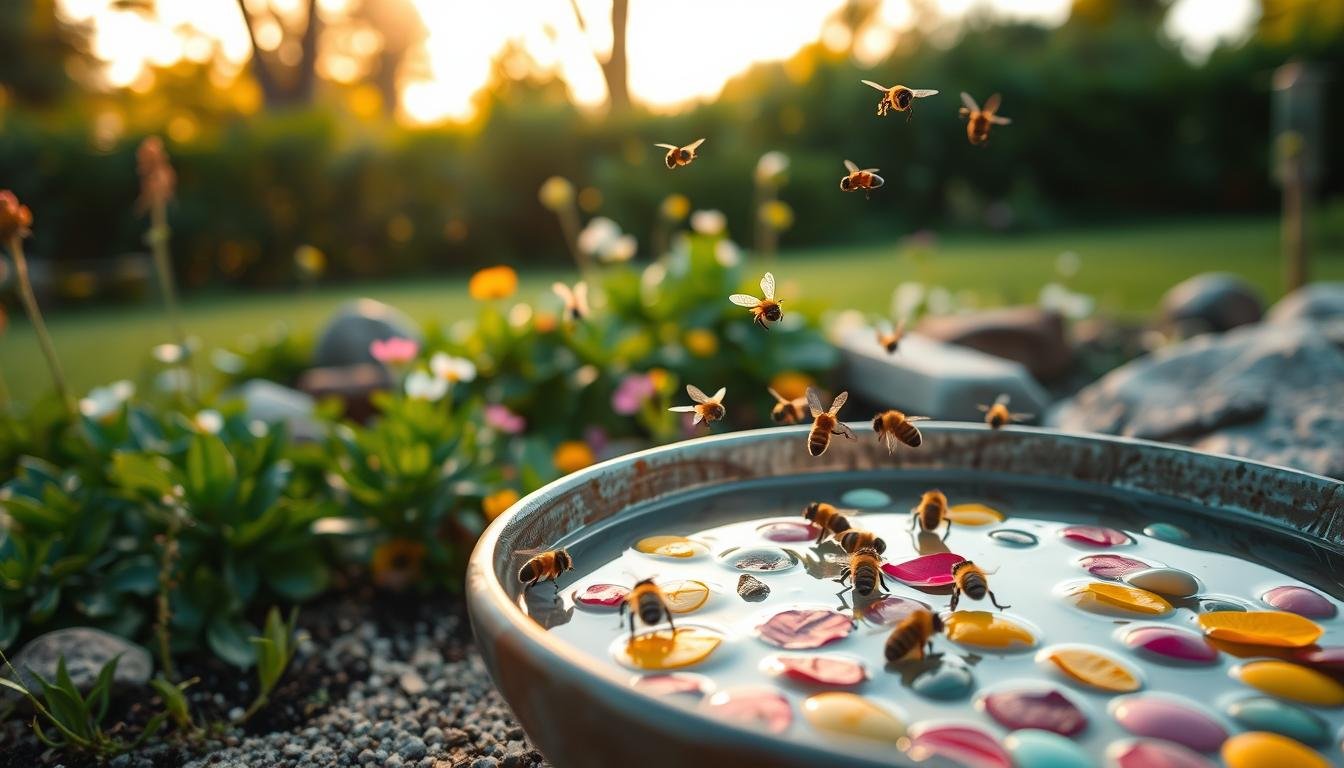
Set clear goals: offer a safe, shallow spot with textured perches so insects can climb out. Simple builds—bird baths with pebbles, shallow dishes with marbles, gravity pet bowls fitted with rocks—work well in any garden.
Place the station a few feet from the hive so foragers learn the location without confusing orientation at the entrance. Top up often during hot weather and clean or replace standing liquid to cut algae and mosquito risk.
For further reading on apiary care and reference materials, see beekeeping resources and books.
Key Takeaways
- Provide a consistent, shallow station with perches for safe access.
- Keep the site near the hive but not directly beneath the entrance.
- Refresh liquid frequently; demand rises in heat.
- Simple DIY options fit most yards and reduce risky foraging.
- Regular maintenance prevents pests and preserves hive health.
Why bees need a dependable water source year-round
Consistent access to nearby liquid is essential for hive cooling, feeding, and routine chores. On hot days, workers place thin droplets across brood comb and fan their wings. Evaporation from that film creates effective air conditioning and keeps brood temperatures safe.
Seasonal demands shift. In cold snaps or during dearths, colonies use small amounts of liquid to dissolve crystallized honey and make thick stores drinkable again. Nurse bees also mix liquid with pollen, nectar, and royal jelly; early larval diets may be nearly 80% liquid.
Foragers often specialize: some always bring liquid until house bees signal the demand has dropped. They cue into smells rather than pristine clarity—wet earth, decaying leaves, faint salt or chlorine can draw them more than tap water.
- Practical takeaway: Provide a steady, scented water point before bees target a neighbor’s pool or pet bowls.
- Keep scents mild and the basin shallow so bees find and use the station safely.
31. how to create a bee water source
A safe drinking station begins with the right shallow container and stable perches.
Materials checklist: choose a shallow bowl or bird bath, add pebbles or marbles for traction, keep corks or sticks for floating rafts, and have a gravity pet feeder or poultry trough if you need plenty of reserve water.

Step-by-step setup
Place marbles or stones in the container so the water sits just below the top of those surfaces. This gives bees safe footing and reduces drowning risk.
Use a hummingbird feeder filled with plain water as a slow drip option and add nearby perches. For longer service intervals, convert a gravity pet waterer and line the trough with rocks.
“Add floating rafts like corks or sticks and avoid steep-sided containers—small changes save lives.”
| Option | Best use | Key benefit |
|---|---|---|
| Shallow bird bath + pebbles | Primary garden station | Multiple perches, visible to foragers |
| Shallow bowl with marbles | Compact patio station | Affordable, easy to refill |
| Gravity pet feeder | High-demand situations | Longer supply, add stones for safety |
- Position the station a few feet from hives and top up regularly.
- Avoid sugary mixes; use faint salt or chlorine scent only briefly to attract bees.
Placement, attraction, and maintenance: keeping bees coming back to your water source
Choose a location that balances visibility with calm—near enough for quick trips, far enough to keep the hive entrance clear.
Positioning near the hive
Aim for a short flight from the hive—about 100 feet. This gives foragers quick round trips without crowding the landing board.
Keep the basin out from directly under boxes. That reduces drift and keeps the entrance zone clear.
Attracting visitors
Prime the basin briefly with faint mineral or chlorine scent so foragers pick your location over a neighbor’s pool. Remove additives once traffic is steady.
Place the station near flowering plantings so normal routes guide workers back each day. Consistency in placement helps source bees advertise accurately.
Safety and upkeep
Prevent drowning with varied perches and floating rafts like corks or sticks. Avoid steep, smooth sides where insects slip under the surface.
Replace liquid every few days and keep small basins moving or emptied to block mosquito breeding. For long-term features, add a gentle pump and screen intakes.
“Maintain steady, safe access and the colony will redirect risky visits away from pools and pet bowls.”
| Placement | Tip | Benefit |
|---|---|---|
| ~100 feet from hive | Visible, short flight | Faster trips, less entrance crowding |
| Near flowering plants | Use natural routes | Easy rediscovery by foragers |
| Shallow basin with perches | Floating rafts, stones | Reduces drowning risk |
| Change every few days | Empty small units | Limits mosquitoes, algae |
For more on safe options and regional differences, see practical guides on water sources for bees and beekeeping in different climates.
Conclusion
,A reliable refill point keeps colonies focused and cuts visits to risky places.
Recap the essentials: colonies need liquid for cooling, thinning crystallized honey, and feeding brood. A steady station in the garden prevents foragers from crowding pools or pet bowls.
Keep it simple and safe: shallow containers with stones or marbles, floating rafts, and stable perches reduce drowning risk. Proven formats include a bird bath, a shallow bowl, or a gravity waterer lined with rocks for larger needs.
Place the station within short flight of the hive, top up every few days, and use a faint scent briefly so bees find the location. For more seasonal care tips, see summer hive care.
Gather materials, set up one well-designed station today, and watch adoption over the next few days for steady success.
FAQ
Why do honey bees need a dependable water source year‑round?
Bees use water for several vital tasks beyond drinking. Workers bring moisture into the hive to cool the colony by evaporative cooling on hot days, and caregivers mix water with stored honey to soften crystallized supplies and feed larvae. A steady supply nearby reduces energy spent flying for water and keeps the colony healthy throughout seasons.
How does water help cool an active hive?
For thermal regulation, foragers collect droplets and spread them near brood frames while fanning with their wings. The resulting evaporation lowers internal temperature. On very warm days, this behavior can be continuous, so having an accessible shallow water spot near the apiary supports efficient cooling without long foraging trips.
Why might bees prefer “smelly” water over ultra‑clean sources?
Bees use scent to locate liquids; slight mineral or organic cues make water detectable. Distilled water can be hard for them to find. Small amounts of salt or naturally occurring odors from plant debris or pond water often attract foragers more reliably than perfectly clean, odorless water.
What materials should I gather for a safe bee waterer?
Use shallow, stable containers such as saucers, shallow bowls, or recycled lids. Add stones, marbles, corks, or sticks so insects can perch while drinking. Avoid deep basins and slippery surfaces. Consider gravity poultry or pet waterers modified with stones for continuous supply and reduced drowning risk.
Can I use a bird bath or hummingbird feeder as a bee station?
Yes. A bird bath can work if you provide plenty of pebbles and keep water shallow near the edges. A hummingbird feeder used as a drip source can supply small amounts at a time. Ensure features allow bees to land safely and that larger animals won’t disturb the station.
What’s a simple step‑by‑step setup for a DIY bee waterer?
Choose a shallow container and place it on a level surface. Fill with water and add several stones or marbles so the waterline is near the stone tops. Position near— but not directly under—your hive, in partial shade. Refill or top up regularly and clean every few days to prevent algae and mosquitoes.
Where should I position the water station relative to the hive?
Place the water within a short flight of the hive—typically 10–30 feet—so foragers save energy. Avoid putting it directly beneath hive entrances to prevent traffic conflicts. Partial shade and some cover from wind make the site more attractive and stable.
How can I attract bees without drawing other pests?
Use mild odor cues like a tiny pinch of salt or a splash of pond water to make the station detectable. Plant bee‑friendly flowers nearby for additional attraction. Keep the water shallow and maintained to discourage wasps and rodents, and avoid sweet additives that lure non‑target animals.
How often should I change or clean the water?
Replace or top up water every two to four days, more often in hot weather. Clean containers weekly to remove algae and debris. Regular maintenance prevents mosquito breeding and keeps the station appealing to foragers.
How can I prevent drowning and protect larvae and hive health?
Provide abundant perches (stones, marbles, corks) so insects can access water safely. Use shallow levels and separate sites for birds and bees if necessary. Avoid pesticides and mosquito dunks with harmful active ingredients; opt for physical controls like tight‑mesh covers or biological options labeled safe for pollinators.
Are there risks from using household faucets or chlorinated tap water?
Small amounts of chlorine usually won’t harm bees and can deter microbes, but strong chemical smells or high treatments may repel them. Let tap water sit for a day to off‑gas if concerned, or mix with a bit of natural water to add scent cues.
Can other garden features serve as water sources for bees?
Yes. Ponds with shallow margins, wet soil, saucers under potted plants, and overflowing rain barrels can all provide access. Make sure edges have firm perches and water depths remain low to minimize drowning and help bees drink safely.
How do I manage mosquitoes at a bee water station without harming pollinators?
Use methods that don’t introduce toxic chemicals. Change water frequently, add a fountain or dripper for moving water, or fit fine mesh over deeper reservoirs while offering adjacent shallow access. Avoid mosquito larvicides unless labeled safe for pollinators.
What seasonal adjustments should be made for the waterer?
In summer, increase refilling frequency and provide more shaded sites. In spring and fall, maintain availability for brood rearing and honey dilution. In freezing winter climates, keep a small heated station or use insulated containers so bees can reach liquid water when needed.