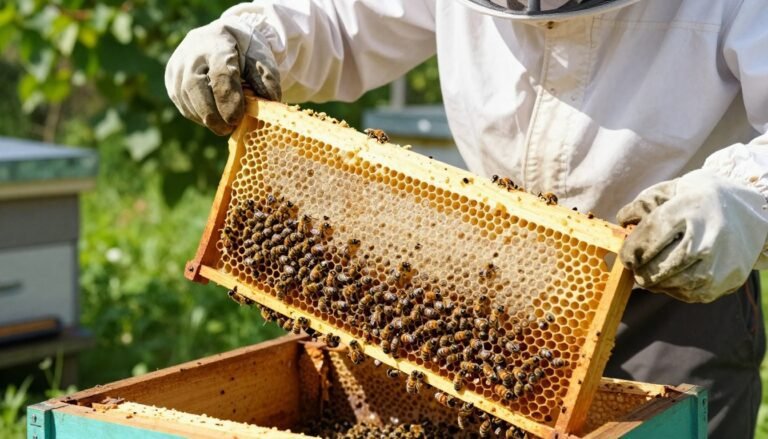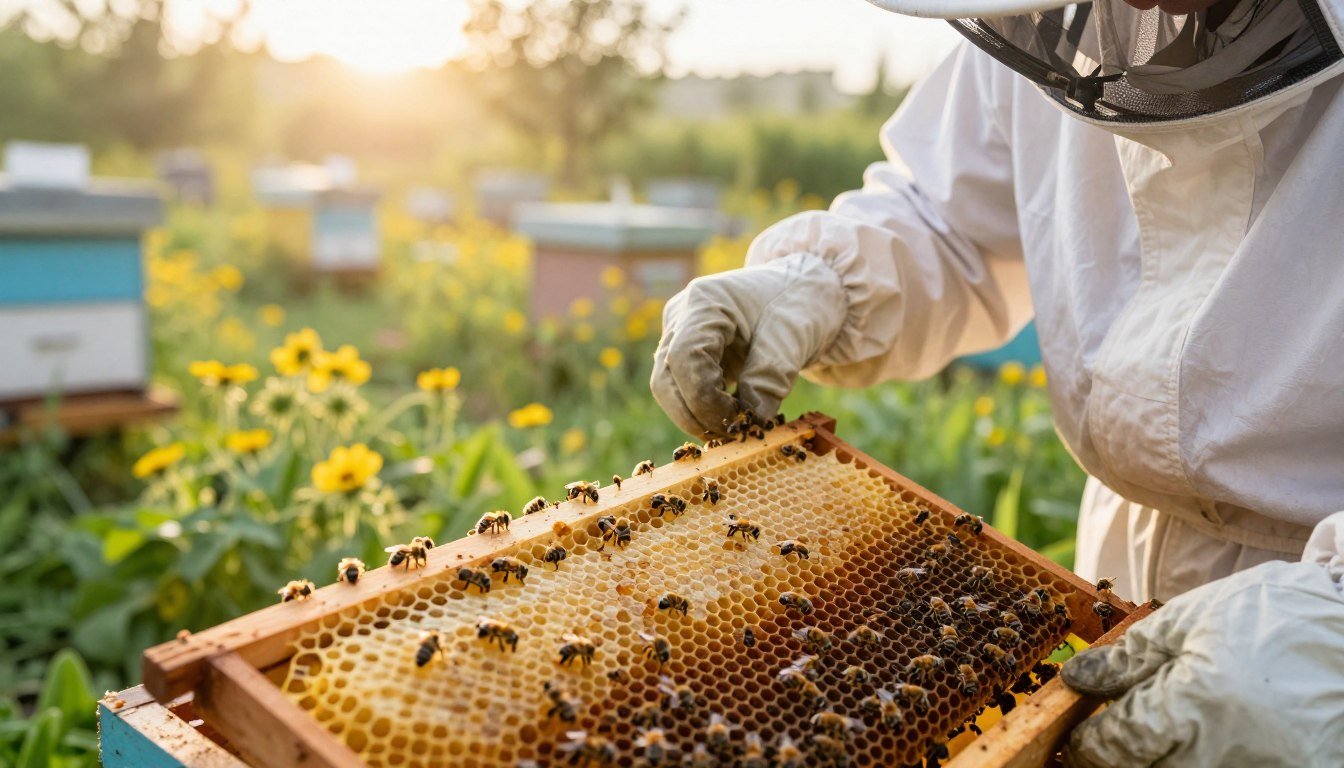
Bill Hesbach, president of the Connecticut Beekeepers Association, created a simple seasonal schedule for backyard keepers. This plan helps people monitor hive health and time control steps with the honey bee life cycle.
Effective management needs a clear plan. Watch brood frames and overall colony strength. Use regular checks like a sugar shake or alcohol roll before any chemical treatment.
Rotate products to slow resistance and protect winter bees from viruses that shorten their lifespan. Read product labels for temperature limits, especially with formic acid or thymol products during spring and summer.
Protecting bees is ongoing work. Follow a steady schedule, adapt based on mite levels, and consult trusted resources such as natural remedies for varroa mites for integrated options.
Key Takeaways
- Follow a seasonal schedule designed for backyard beekeepers.
- Monitor mite levels with sugar shake or alcohol roll before treatment.
- Rotate products and heed label temperature rules for best results.
- Focus on protecting winter bees from virus transmission.
- Inspect brood frames and colony strength often.
Understanding the Varroa Mite Life Cycle and Colony Impact
Understanding mite biology is the foundation of smart hive care. Varroa feed on the fat bodies of bees, weakening individuals and making colonies more vulnerable to viruses like Deformed Wing Virus.
Phoretic Stage
During the phoretic phase a foundress rides on adult bees for about 5 to 11 days while seeking a suitable brood cell. Research shows that for every phoretic mite seen, roughly 2–3 more hide under capped brood.
Reproductive Phase
Reproduction occurs only inside capped brood cells. A single female can yield roughly 1.5 female offspring in ~11 days, boosting the mite population rapidly.
Drone brood with its 24-day cycle accelerates growth. This can allow the population to double in about two weeks if left unchecked.
- Brood presence fuels reproduction; uncapped brood is a key risk factor.
- Late-summer rises in levels often produce weak winter bees that fail the year-end survival test.
- Monitoring informed by life cycles helps preserve the queen and worker force.
| Stage | Location | Typical Duration | Impact on Colony |
|---|---|---|---|
| Phoretic | On adult bees | 5–11 days | Disperses mites; hides infection under brood |
| Reproductive | Capped brood cells | ~11 days per cycle | Increases mite population; targets developing bees |
| Drone-focused reproduction | Drone brood cells | 24-day drone cycle | Faster population growth; potential doubling every 2 weeks |
For practical guidance on monitoring and archive resources, see archive of pest information. For multi-hive workload tips, consult apiary time management.
Essential Monitoring Techniques for Accurate Mite Counts
Regular, accurate checks give beekeepers the best chance at keeping mite populations low. Start with simple, repeatable sampling in the brood box before any treatment decisions.
Thresholds for Intervention
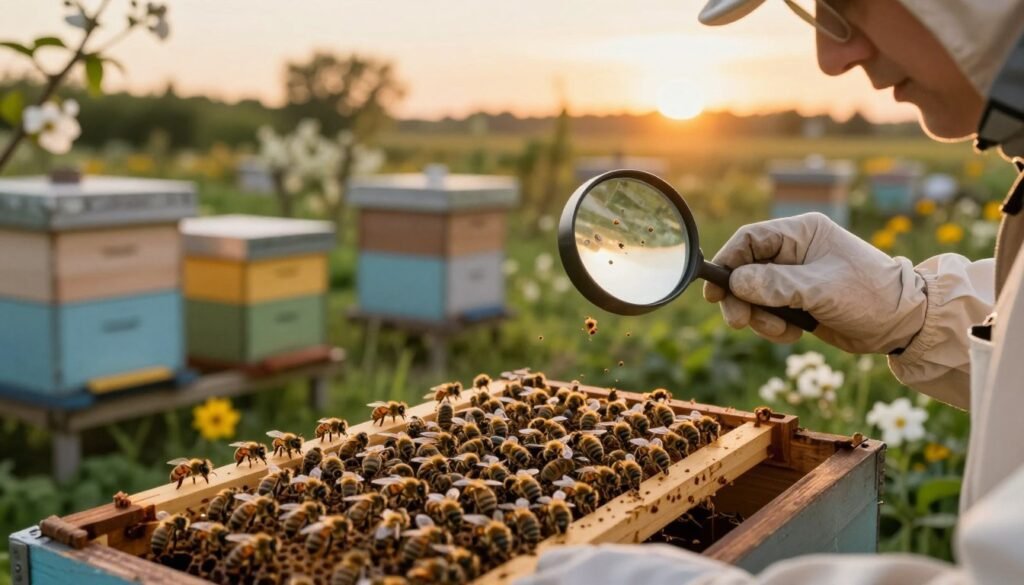
The alcohol roll and sugar shake are the most reliable methods for counting phoretic mites. Use a half-cup sample—about 300 bees—from the brood area for consistency.
If that sample shows 9 mites, the infestation is roughly 3% and often signals action. Many beekeepers use a 1% trigger in spring and 3% in autumn, adjusting based on colony strength and local risks.
“Accurate monitoring prevents unnecessary chemical exposure and protects winter bees.”
Bottom-board drop counts give general trends but lack the precision of washes. Keep clear records of each count, note frames checked and hive box ID, and track results over several weeks.
| Method | Sample Size | Accuracy | Best Use |
|---|---|---|---|
| Alcohol roll | ~300 bees (half cup) | High | Precise phoretic count in brood box |
| Sugar shake | ~300 bees (half cup) | High | Non-lethal field checks |
| Bottom-board drop | N/A | Moderate | Long-term trend monitoring |
For planning apiary work and workload balance, consult resources on apiary productivity. Good monitoring helps ensure treatments are used only when needed and protects honey bee health.
When to Treat Varroa Mites by Season
Targeted timing preserves honey and colony strength. Avoid most control products while honey supers are on the hive, since residues can contaminate harvest.
Oxalic acid works best during broodless windows, such as late November, when all mites are phoretic and exposed. In that window, a well-timed application can sharply cut mite population and protect winter bees.
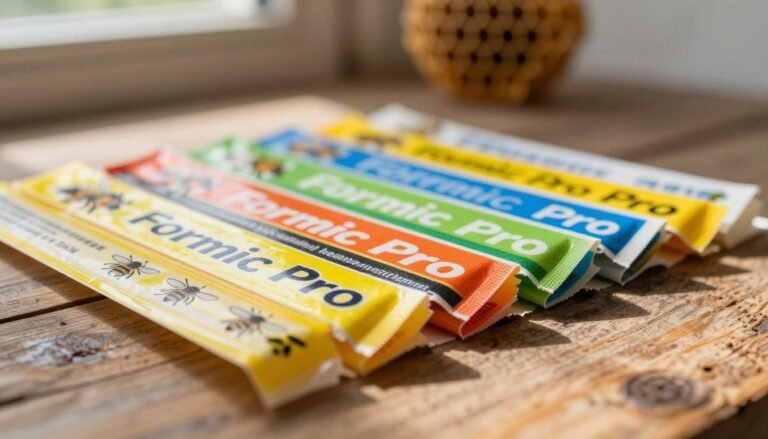
Formic acid products like Formic Pro are practical in mid-June and again in late summer. Do not use formic acid until the colony holds at least six frames of brood; that helps keep the queen and workers safe.
Thymol-based options such as Apiguard need ambient temperatures above 15°C so bees can move and spread the vapors. The first three days after starting any treatment are the most critical for reaching roughly an 80% kill rate.
Rotate products across the year and always read label temperature limits. Regular checks of mite levels guide management and help avoid resistance while keeping colonies healthy.
Spring Management Strategies for New and Overwintered Colonies
Early spring checks set the tone for hive strength and long-term health. Inspect each colony quickly and record mite levels to establish a baseline for the year.
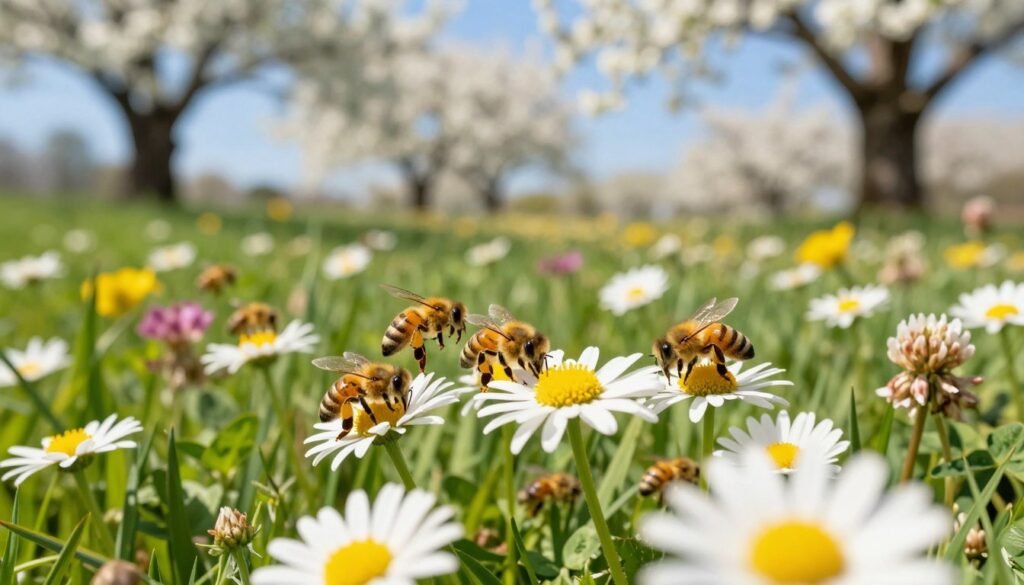
Package Bee Considerations
When installing a three‑pound package, apply an oxalic acid treatment before the queen begins laying. A gentle liquid sugar spray helps bees fill honey stomachs for safe application.
Follow label directions and plan a brief follow-up inspection about ten days after any treatment to confirm the queen is laying and the colony is recovering.
Assessing Overwintered Hives
Use a sticky board in early March to spot hives with unusually high mite levels. If counts are high, act fast with brood reduction or isolation to limit virus spread.
Note that nucleus colonies installed in May or June already hold brood, so oxalic acid is not a suitable option at that time. Good spring care and accurate counts help beekeepers plan treatments and reach full strength by June.
Summer Treatment Windows and Honey Super Considerations
Mid‑June marks a key window for summer management. At full strength, colonies often show high reproductive activity in brood and need careful checks. A well‑timed treatment now lowers pressure before bees begin rearing essential winter stock.
Formic Pro and Mite Away Quick Strips work well in a 7–14 day application. Follow label directions and note daytime high temperature limits for any formic acid product so the queen and workers stay safe.
Caution with Apiguard: do not apply if honey supers are on the hive for harvest. Residues can affect honey quality and human consumption. Plan product choices around honey flow and hive work schedules.
Monitor mite levels again in July. A drop in egg laying can concentrate mites in remaining brood and raise risk. Effective summer control prevents late explosions that harm colonies and reduce winter survival.
Autumn Protocols for Protecting Winter Bees
Protecting the long-lived winter workforce is the primary goal of fall hive work. Plan final checks that reduce virus loads and lower overall mite levels before the cluster forms.
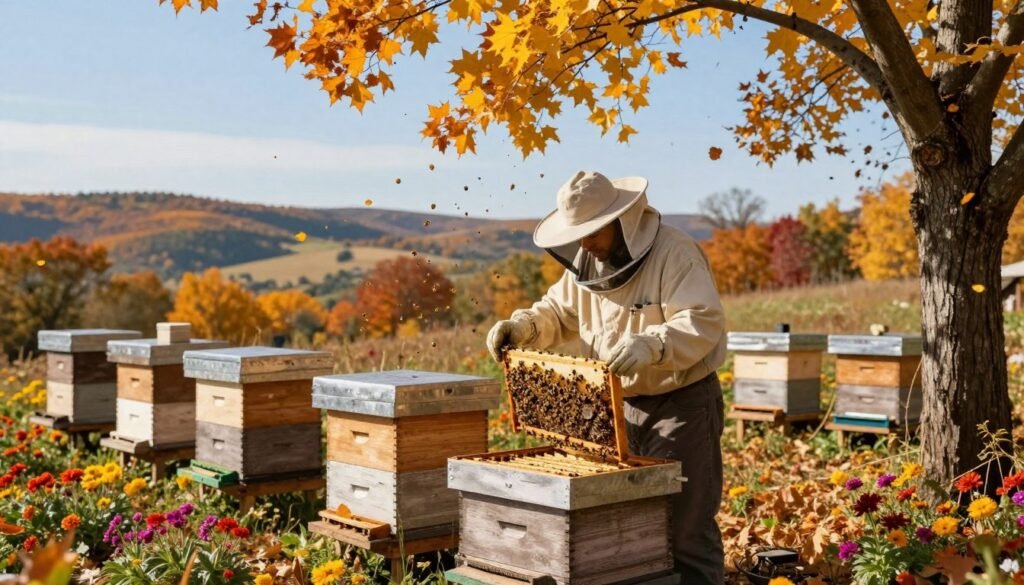
Research from Switzerland links high Deformed Wing Virus loads with shorter winter bee lifespans. For that reason, complete major treatments by mid-September so larvae are not capped in cells carrying viruses.
Practical timing and product notes
- Start Apiguard in mid-August; the product needs about 28 days to finish. Avoid Apiguard if honey supers remain on the hive, since thymol can taint honey.
- Aim for an ~80% kill in autumn. High fall pressure often produces the largest mite population of the year.
- Monitor in September. Use those counts to decide if a final application is necessary before the winter cluster forms.
A large, healthy cluster improves survival. Bees that can move between stores handle cold snaps better and burn fewer fat reserves. Record results and adjust plans for next year.
For common setup errors and practical fixes, see beginner beekeeping mistakes.
Winter Broodless Treatment Opportunities
A true broodless period in winter gives beekeepers an unusually effective moment for oxalic acid work.
Late November or December often provides the best window. With no capped brood, nearly all mites are phoretic and exposed. Vaporization or dribble at that time delivers high mortality and can reset levels close to zero.
Confirm the colony is truly broodless before any treatment. A quick frame check or a daytime inspection helps avoid wasted effort. Wait for a warm day near 50°F so vapor spreads through a loose cluster more effectively.
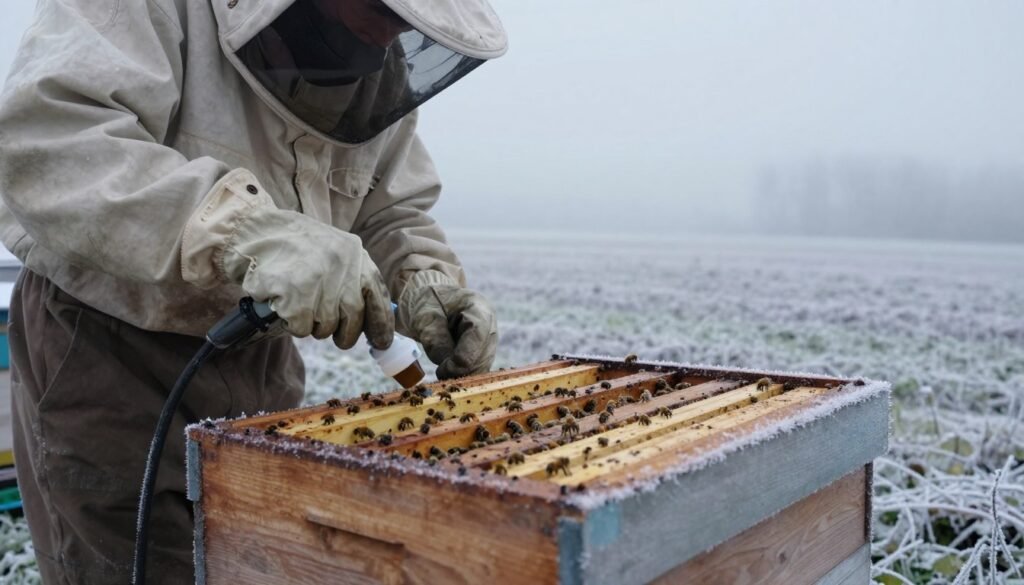
Safety matters. Use caution with hot vapor tools around polystyrene hives; high heat can damage or ignite boxes. Follow label rules and wear proper protection when using any product.
“A well-timed winter treatment gives the hive a clean start and lowers spring infection risk.”
- Inspect for brood before application.
- Choose vapor or dribble based on cluster tightness.
- Prioritize safety with equipment and hive materials.
| Timing | Method | Ideal Temp | Benefit |
|---|---|---|---|
| Late Nov–Dec | Vaporization or dribble | ~50°F daytime | High phoretic kill; resets population |
| Cold cluster | Delay until warm day | 50°F or higher | Better dispersal; less stress on bees |
| Polystyrene hives | Use caution | N/A | Avoid hot vapor; prefer dribble if needed |
Use winter work as a follow-up to autumn protocols. For a practical schedule and timing tips, review the seasonal management schedule.
Conclusion: Maintaining Long-Term Colony Health
Consistent care and measured responses form the backbone of good apiary work. Regular inspections and accurate counts help you spot rising levels early and act with confidence.
Use a rotation of products, including oxalic acid and formic options, to lower chemical resistance and protect winter bees. Protect brood and the hive during honey flows by following label rules and safe handling.
Good beekeeping blends monitoring, sound management, and steady commitment across the year. Keep records, learn from each inspection, and prioritize bee welfare. That approach gives colonies the best chance to survive winter and produce healthy honey next spring.