This review presents a concise, evidence-led look at volatile compounds in honey and their clinical potential. Honey is mainly sugar and water yet tiny fractions—enzymes, minerals, amino acids, phenolics, and VOCs—define aroma, taste, and bioactivity.
Volatile compounds come from plants, bee metabolism, handling, and environment. They fingerprint monofloral origin and guide quality claims. Extraction and analysis choices, such as HS-SPME versus solvent methods, shape which compounds appear and which artifacts form.
We link chemical diversity to measurable activities: antimicrobial, antiviral, antioxidant, anti-inflammatory, wound repair, gastroprotective, and prebiotic effects. Processing and storage change profiles through heat-labile loss and Maillard pathways, affecting markers like HMF. This section sets expectations on methods, regulation in the United States, and gaps that need standardized workflows for reliable translation to products and food research.
Key Takeaways
- Minor components drive aroma and bioactivity in honey.
- VOCs act as botanical and geographic fingerprints.
- Analytical method choice alters detected profiles.
- Chemistry links to several health-related activities.
- Processing, storage, and regulation shape quality and safety.
Abstract and Scope of the Review
This review frames volatile fingerprints as the link between floral origin and measurable bioactivity.
Volatile compounds in honey arise from diverse biosynthetic pathways. Plant-derived terpenes, norisoprenoids, and benzenoids often serve as the best discriminants for monofloral origin and fraud prevention.
The objective is to evaluate how these minor compounds contribute to reported therapeutic properties while supporting authentication and quality assessment. Methods covered include chemistry, extraction workflows, and advanced analysis with emphasis on GC-MS and GC-O for accurate profiling.
Sensory analysis and odor activity values translate analytical signals into perceptible aroma and consumer-relevant properties. The scope spans antimicrobial, antifungal, antiviral, antioxidant, anti-inflammatory, wound healing, gastroprotective, and prebiotic activity.
We note variability linked to floral source, geography, processing, and storage. Method-dependent profiles and inconsistent marker reports remain key limitations. U.S. quality control and labeling considerations are summarized.
| Compound Family | Analytical Priority | Role in Origin | Impact on Aroma/Properties |
|---|---|---|---|
| Terpenes | GC-MS, GC-O | High (floral fingerprint) | Floral, resinous notes; marker for monofloral honeys |
| Norisoprenoids | GC-MS, RI confirmation | High (botanical discriminant) | Fruity, floral nuances; odour-active at low levels |
| Benzenoids | GC-MS, standards | Moderate (geographic/plant link) | Sweet, spicy notes; linked to processing and nectar |
| Aldehydes/Ketones | Headspace methods | Variable (post-harvest influence) | Green, fatty, or cooked notes; affected by storage |
Honey Volatile Organic Compounds: Definitions, Classes, and Origins
A complex mix of volatile molecules gives each jar its scent, botanical fingerprint, and analytical challenge.
Chemical families commonly detected
Volatile compounds include more than 600 identified molecules across hydrocarbons, aldehydes, alcohols, ketones, acids, esters, benzene derivatives, furans/pyrans, norisoprenoids, terpenes, sulfur, and cyclic compounds.
Biogenic and post-harvest origins
Primary plant metabolites in nectar supply terpenes and benzenoids that act as reliable floral markers. Catabolic steps yield norisoprenoids from carotenoids and other precursors.
Apis mellifera metabolism modifies some plant volatiles during honey maturation and can add unique components. Processing, heat, and storage shift composition and create artifacts such as furan and pyran derivatives via Maillard reactions.
Why it matters: plant-derived volatiles and their metabolites are prioritized for tracing botanical origin, while processing-related compounds can obscure true fingerprints.
- Matrix effects: sugar-rich media suppress volatility and require selective extraction.
- Analytical choices (headspace, SPME, solvent methods) shape which compounds are recovered for analysis.
| Family | Typical Source | Analytical Priority | Role |
|---|---|---|---|
| Terpenes | Floral nectar | GC-MS / GC-O | Floral fingerprint |
| Norisoprenoids | Plant catabolism | GC-MS, RI confirmation | Low-threshold odorants |
| Furans/Pyrans | Heat/sugar reactions | Evaluate for artifacts | Processing markers |
| Benzenoids & Acids | Nectar / environment | Standards-based GC-MS | Geographic and floral cues |
For methodology and broader context in agricultural food chemistry, see this review on volatile analysis.
Apis mellifera, Floral Sources, and the Botanical-Geographical Origin Link
Foraging patterns of Apis mellifera map local flora into distinct aroma and chemical signatures. When bees collect nectar and pollen, they carry floral compounds back to the hive. This process links landscape, weather, and plant variety to final honey composition.
Floral honeys form mainly from nectar and tend to be lighter with delicate volatile notes. By contrast, honeydew honey derives from plant secretions or insect excretions. Honeydew products are darker, often show higher pH and acidity, and display different aroma profiles and bioactive potential.
“Local melliferous flora and seasonal flows create unique chemical fingerprints that support traceability and consumer trust.”
Seasonal shifts and climate affect bloom timing and nectar flow. Limited pollen or drought will change which flowers bees visit. Mixed-floral collections complicate origin assignment and reduce the clarity of single-flower fingerprints.
| Feature | Floral Honey | Honeydew Honey |
|---|---|---|
| Color | Light to amber | Dark amber to brown |
| pH / Acidity | Lower acidity | Higher pH and acidity |
| Volatile Profile | Floral terpenes, delicate notes | Robust, resinous, sugar-derived compounds |
| Market Impact | Variety-driven premiums | Distinct niche value |
Accurate floral attribution matters. Labeling that matches botanical origin affects price and expectations for sensory and functional qualities. This review emphasizes linking field ecology with chemical markers to support reliable product claims.
Composition of Honey Beyond Sugars: Minor Components That Matter
Beyond its sugars, honey carries a web of trace molecules that define flavor and function.
Minor constituents include phenolics, flavonoids, amino acids (notably proline), organic acids, vitamins, minerals, and enzymes such as amylase, invertase, glucose oxidase, and peroxidase.
Proline serves as a ripeness and authenticity indicator. Typical values exceed 200 mg/kg in mature samples and are used in routine quality checks.
Key components and roles
- Phenolic acids & polyphenols: correlate with antioxidant activity and vary with color; darker products often show higher totals.
- Amino acids: proline dominates and signals maturation and handling.
- Enzymes: glucose oxidase generates hydrogen peroxide; peroxidase modulates redox balance and antimicrobial effects.
- Organic acids: influence acidity, flavor, and microbial inhibition.
- Minerals: potassium is prominent; trace elements shift with floral source.
“Minor compounds shape both sensory character and functional properties in food matrices.”
Note: the dense sugar matrix can mask or alter volatile perception and measured concentrations, so compositional context matters for product development and quality assessment.
Extraction and Isolation of Honey Volatiles: From Solvents to Headspace
How we pull volatiles from a dense sugar matrix shapes both aroma profiles and chemical fingerprints.
Solvent-based routes such as LLE, SDE (Likens‑Nickerson), hydrodistillation, MSDE, and USE vary by heat and solvent use. Heat-driven methods risk forming furan and pyran derivatives via Maillard pathways during processing. Solvents (n‑hexane, dichloromethane, diethyl ether) recover broad fractions but can mask analytes, introduce toxicity, and contaminate GC systems.
Solventless advances and HS-SPME
SPE, direct headspace (HS), and HS‑SPME reduce artifacts and often better match sensory perception. HS‑SPME fiber selection matters: DVB/CAR/PDMS typically outperforms PDMS or CAR alone for a wide volatile range.
Ultrasonic extraction (USE) avoids heat and can recover semi‑volatile markers such as benzoic and phenylacetic acids while limiting artifact formation. Yet solvent removal and masking remain key drawbacks for classic liquid extraction.
“Align extraction strategy with the study goal: origin determination, aroma profiling, or biomedical screening.”
| Method | Efficiency | Risks / Notes |
|---|---|---|
| LLE / SDE | High recovery | Heat artifacts; solvent toxicity; GC contamination |
| USE | Good for low–high MW compounds | No heat; solvent use still required; recovers acids |
| HS‑SPME / SPE | Selective, artifact‑low | Fiber choice critical; better sensory correlation |
Optimization levers—temperature, salt addition, agitation, and extraction time—control partitioning and sensitivity. Use headspace mode to protect fibers from the sugar matrix and improve reproducibility across samples. Choose methods to suit determination goals and the demands of agricultural food chemistry research.
Analytical Platforms: GC-MS, GC-O, and Data Libraries for Volatile Determination
Accurate determination begins with clear methods that separate plant-derived signals from matrix artifacts in dense sugar samples. GC-MS sits at the center of modern analysis, producing total ion chromatograms that reveal complex patterns of compounds.

Core GC-MS workflow
GC-MS provides mass spectral deconvolution for overlapping peaks and enables tentative identification through library matching. Analysts pair spectra with retention indices (RI) and reference standards to elevate tentative calls into confirmed markers.
GC‑olfactometry and sensory linkage
GC‑olfactometry links chromatographic peaks to perceived aroma. This step helps prioritize odor‑active signals and supports later odor activity value calculations for key compounds.
Library matching, caveats, and data curation
Matching to NIST and WILEY libraries speeds identifications but faces isomeric ambiguity and coelution, especially in sugar-rich matrices. Curating results means filtering processing artifacts, contaminants, and low-confidence hits.
Reproducibility and strategy
Standardize columns, temperature programs, and report RI and spectra to improve multi-lab reproducibility for honey analysis. Integrate targeted and untargeted workflows to capture known markers and discover novel bioactive compounds.
| Stage | Purpose | Key note |
|---|---|---|
| GC‑MS | Profiling & deconvolution | Use RI + standards |
| GC‑O | Sensory prioritization | Aligns peaks with aroma |
| Library matching | Rapid ID | Verify against RI and standards |
Best practice: combine spectral libraries, RI, standards, and GC‑O to make determinations robust for publication in journal agricultural food and applied agricultural food chemistry studies on real samples.
Volatile Markers for Determining Botanical and Geographical Origin
Specific small molecules act as chemical signatures that trace honey back to field-level origins. Representative markers help separate monofloral varieties and regional products with practical accuracy.
Monofloral discriminants and exemplars
Reported markers illustrate this point: 3-hydroxy-4-phenyl-2-butanone isomers appear in Greek thyme (USE‑GC‑MS), while trans‑oak lactone marks Spanish oak honeydew (SDE‑GC‑MS).
GC‑O studies link hexanal with acacia, pentanal/furfural/2‑ethylhexanol with buckwheat, and p‑methyl acetophenone with lime. Methyl butanal often signals honeydew origins.
Resolving ambiguity with multi-modal approaches
Why lists vary: plant variety, microclimate, hive handling, and extraction method change which markers show up in analysis.
“Combine chemical profiling with pollen counts and trained sensory panels to increase assignment confidence.”
- Best practice: integrate VOC profiles, melissopalynology, and sensory evaluation.
- Select markers with clear biochemical links to nectar or plant metabolism, not processing artifacts.
- Harmonized marker thresholds and confidence criteria will deter fraud and support premium labeling.
For standardized workflows and agricultural food chemistry context, consult this review on origin analysis.
Aroma, Odor Activity Values, and Sensory Profiles of Honeys Produced
Odor activity values (OAVs) rank key odorants by dividing concentration by sensory threshold. This shows which molecules truly drive aroma rather than merely being abundant in composition.
Common descriptors across honey types include sweet, citrus, floral, almond, and rancid. Terpenes and norisoprenoids often give citrus and floral notes. Benzene derivatives and furans add sweet, spicy, or cooked nuances.
GC‑O links chromatographic peaks to what trained panels report. This bridges instrument data and consumer language, letting researchers tie specific volatile compounds to sensory characteristics in samples.
Storage changes can reshape aroma. In citrus products, some terpene derivatives and methyl anthranilate fall with time, while linalool, linalool oxides, and diendiols may rise, shifting the scent toward floral or oxidized notes.
“Report OAVs alongside concentrations to prioritize sensory relevance in origin and quality studies.”
| Feature | Primary contributors | Sensory impact |
|---|---|---|
| Fresh citrus profile | Monoterpenes, methyl anthranilate | Bright, zesty |
| Floral/aged shift | Linalool, linalool oxides, diendiols | Floral, honeyed, oxidized |
| Masked retronasal notes | Matrix headspace dynamics | Reduced volatility; delayed release |
- Matrix and headspace interactions modulate retronasal perception during tasting.
- Include OAVs in reviews to show which compounds matter for sensory and origin work.
Impact of Processing, Storage Time, and Heating on Honey Volatiles and Quality
Heat and prolonged storage reshape volatile profiles by destroying labile compounds and creating new products through sugar chemistry.
Thermal and temporal effects remove heat-sensitive aroma markers and reduce bright terpene derivatives. Over time, methyl anthranilate and similar delicate notes fall while linalool and its oxides may rise, changing scent and measured composition.
Maillard pathways and marker formation
Nonenzymatic browning generates furan and pyran derivatives that add cooked, caramelized facets. These products complicate botanical fingerprints and alter antioxidant balance.
“HMF accumulation signals processing stress and longer storage, and many markets set limits near 40 mg/kg.”
- HMF forms slowly at ambient time and faster with heating; higher HMF implies lower product quality.
- pH and organic acids modulate browning rates and stability of aroma-active compounds.
- Gentle handling and cool, dark storage help preserve desired compounds and antioxidant activity.
| Factor | Effect on aroma | Analytical marker | Quality note |
|---|---|---|---|
| Heat | Loss of labile terpenes | Raised HMF | Aggressive heating reduces premium value |
| Long time | Shift toward oxidized notes | Furans/pyrans | Alters origin fingerprinting |
| Acidity | Slows/nonenzymatic browning | Organic acids profile | Higher acids can protect aroma |
| Best practice | Cool, dark, sealed | Low HMF & intact terpenes | Preserves sensory and antioxidant quality |
For storage tips that protect quality, see honey storage best practices.
Therapeutic uses of honey volatiles
Trace aroma molecules in honey can influence biological endpoints despite their low concentrations.
Volatile compounds may boost antioxidant capacity by scavenging radicals and by working with phenolics and enzymes to stabilize redox balance. These small compounds can act at membranes, altering permeability and microbial signaling at sublethal doses.
Positioned within a broader matrix that includes hydrogen peroxide generation, acidity, methylglyoxal, and polyphenols, these compounds rarely act alone. Synergy with non-volatile factors likely amplifies measured activities and wound-related benefits.
Key gaps: few studies isolate VOC fractions to quantify independent effects. Targeted fractionation, controlled bioassays, and chemical profiling are needed to separate direct scavenging from matrix-driven outcomes.
“Profiling volatile signatures could guide selection of products for specific biomedical aims.”
- Test isolated fractions against standard assays to quantify impact.
- Correlate chemical fingerprints with antioxidant and antimicrobial activities.
- Prioritize markers that predict product performance in clinical contexts.
Antimicrobial and Antifungal Activities: Mechanisms and Evidence
A complex interplay of low water activity, high viscosity, low pH, and enzyme-driven chemistry underlies antimicrobial performance. Glucose oxidase generates hydrogen peroxide, while non-peroxide agents such as methylglyoxal and phenolic compounds add targeted activity.
Mechanistic drivers
Key factors: osmotic pressure imposes desiccation stress; acidity reduces growth; hydrogen peroxide causes oxidative damage; non-peroxide compounds deliver specific antimicrobial hits.
Spectrum and evidence
Laboratory studies report activity against Gram-positive and Gram-negative pathogens, including MRSA and Pseudomonas aeruginosa, supporting relevance for wound infection control.
Antifungal effects appear versus Candida spp. and filamentous molds such as Aspergillus niger, A. flavus, Penicillium chrysogenum, Rhizopus stolonifer, and Fusarium oxysporum. Regional products, including Western Australian and manuka samples, show in vitro inhibition.
“A multifactorial matrix—acids, peroxide, and specific compounds—yields broader antimicrobial potency than any single component alone.”
| Factor | Effect | Clinical relevance |
|---|---|---|
| Osmolality | Limits microbial water uptake | Supports topical barrier action |
| Hydrogen peroxide | Oxidative kill | Useful in infected wounds |
| Non-peroxide compounds | Targeted antimicrobial activity | Persistent action in low-peroxide samples |
- Matrix composition, including phenolics and minor VOCs, modulates potency and should be profiled during analysis.
- Standardize test conditions, inoculum, and endpoints to allow cross-study comparison and reliable marker development.
- Practical implication: standardized products may inform adjunct topical use in wound care protocols.
Antiviral Potential and Respiratory Health Applications
Emerging lab data suggest common apian products can limit replication of several respiratory viruses in vitro.
Evidence includes in vitro inhibition of influenza virus and HSV-1, plus early reports that honey-derived extracts reduce SARS-CoV-2 replication in cell assays.
Manuka has shown particularly strong inhibition against influenza in laboratory studies. These findings remain preclinical but point to select products as promising leads.
Proposed mechanisms
Multiple modes likely act together. Low pH and hypertonicity disrupt viral stability outside cells.
Hydrogen peroxide and reactive oxygen species (ROS) generated in situ can damage viral proteins and genomes. This peroxide-mediated inactivation complements acidity and osmotic stress.
Small organic compounds in the matrix may interfere with viral attachment and entry proteins. Reports also describe synergy when ascorbic acid is paired with apian extracts, enhancing antiviral endpoints.
- Summary: in vitro activity spans respiratory and mucocutaneous viruses, with mechanistic hypotheses including entry blockade and ROS modulation.
- Manuka: notable influenza inhibition in cell models; emerging data suggest effects versus SARS‑CoV‑2 extracts.
- Adjunct potential: soothing cough, supporting mucosal defenses, and topical mucosal applications merit study.
“Randomized clinical trials and standardized formulations are needed to move from bench findings to safe, effective respiratory products.”
Key research gaps: dose‑standardized clinical trials, isolation of active fractions, and harmonized analysis protocols to validate efficacy and safety in the United States market.
Antioxidant Properties: Volatile Compounds, Phenolics, and Redox Balance
Comparative assays reveal that darker floral types often show higher ferric‑reducing capacity and stronger radical quenching.
Honey is recognized as a natural antioxidant thanks to flavonoids, phenolic acids, vitamins C and E, and enzymes such as glucose oxidase and peroxidase. These components donate electrons, chelate metals, and limit radical chain reactions.
Assay outcomes vary by botanical origin. FRAP often rates manuka and dark honeys highest for reducing power. DPPH and ABTS show similar trends: acacia and light floral types score lower than wild carrot and some monofloral dark samples from Algeria.
Volatile compounds, though low in abundance, can add modest radical scavenging or stabilize other antioxidants. Synergy between VOCs, polyphenols, and enzymes likely explains stronger activity than any single fraction.
Practical points for analysis and interpretation
- Mechanisms: phenolics provide primary radical quenching; vitamins and enzymes support redox balance.
- Assay variability: use FRAP, DPPH, and ABTS together to capture complementary endpoints.
- Origin links: manuka often shows high activity; acacia typically scores lower.
- Recommendation: standardize antioxidant profiling alongside volatile analysis to reveal synergistic composition and improve comparability in agricultural food chemistry studies.
Anti-inflammatory Pathways and Immunomodulatory Activities
Evidence from animal and cellular models links select apian products to reduced systemic inflammation via well-defined molecular steps.
Key outcomes include suppression of TNF-α and iNOS expression, lowered COX-1/COX-2 activities, and reduced plasma prostaglandins in vivo.
Cell studies pair product exposure with declines in TNF-α, IL-1β, and IL-6 and reduced phosphorylation of signaling nodes such as IRS-1, JNK, and IKK-β. Together, these changes point to downregulation of NF-κB and MAPK cascades that drive cytokine production.
Proposed mechanisms include complement suppression, lowered ROS generation, inhibited leukocyte infiltration, and decreased MMP-9 activity. Phenolic constituents and minor compounds likely mediate much of this signaling modulation.
“Linking chemical fingerprints to immune endpoints will clarify which components predict clinical benefit.”
Translational needs: standardized dosing, rigorous safety profiling, and harmonized analysis of components are required to move from preclinical promise to reliable products.
- Summaries of animal/cell outcomes support systemic anti-inflammatory potential.
- Pathway-level effects implicate NF-κB and MAPK signaling in cytokine reductions.
- Future work should map volatile and phenolic patterns to immunomodulatory signatures.
Wound Healing and Tissue Regeneration: Clinical and Preclinical Insights
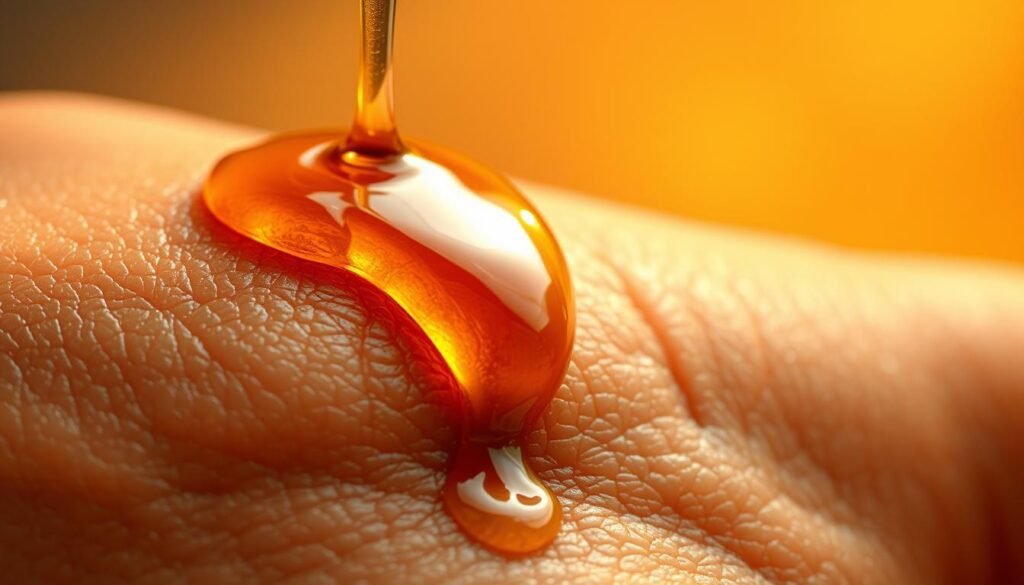
Clinical and lab studies report faster wound closure when select apian products are applied to acute and chronic lesions. Reports from multiple countries show accelerated epithelialization, improved granulation, and reduced edema across surgical incisions, graft donor sites, diabetic foot wounds, and ulcers.
Key clinical findings
Evidence synthesis highlights fewer infections and lower bacterial load, including activity versus resistant organisms. In several trials, manuka dressings lowered wound pH and produced marked size reduction; some resistant cases reached complete closure.
Mechanisms that drive repair
Physicochemical drivers include hypertonicity, low pH, and in situ hydrogen peroxide generation. These features create a moist, non-adherent, protective wound bed that favors granulation and epithelial migration.
Patient-centered outcomes and practice
Patients report less pain and greater comfort, and clinicians note reduced dressing adherence and improved scar appearance. Integration into standard care typically uses sterile gels or impregnated dressings changed per wound status.
| Outcome | Evidence | Clinical note |
|---|---|---|
| Granulation & epithelialization | Faster closure vs conventional dressings | Useful for graft donor sites and ulcers |
| Infection control | Reduced bacterial counts; activity vs resistant strains | Adjunct to systemic therapy when indicated |
| Pain & comfort | Lower reported pain scores | Improves dressing tolerance |
Practical considerations: select sterile, medical-grade preparations, follow local protocols for frequency, and combine with debridement and antibiotics when needed. For broader clinical context and methodological details, see this clinical review.
Gastroprotective and Prebiotic Effects: From Ulcer Models to Microbiome Support
Evidence from preclinical studies links select apian products to reduced gastric damage and to selective stimulation of beneficial gut microbes.
H. pylori inhibition and mucosal protection
In vitro assays show a 10% product concentration can inhibit H. pylori growth. Animal studies with chestnut and Saudi samples report lower ulcer indices and less mucosal erosion after challenge.
Mechanisms likely include lowered gastric acidity, local antimicrobial compounds, and barrier support that reduces inflammation and promotes healing.
Prebiotic oligosaccharides and microbiome effects
Short-chain oligosaccharides in these products selectively feed Bifidobacterium and Lactobacillus strains such as B. longum and L. rhamnosus.
Growth of these spp. can rebalance communities and may act synergistically with antimicrobial compounds to suppress pathogens in the stomach and gut.
“Standardized compositional reporting is essential: botanical origin and processing shift bioactive acids, sugars, and key compounds that determine outcomes.”
| Outcome | Evidence | Mechanism | Implication |
|---|---|---|---|
| Ulcer index reduction | Chestnut, Saudi animal models | Mucosal protection, acidity modulation | Adjunct to ulcer management |
| H. pylori inhibition | In vitro at 10% concentration | Direct antimicrobial activity | Potential adjunctive therapy |
| Prebiotic growth | Culture studies with B. longum, L. rhamnosus | Oligosaccharide fermentation | Supports microbiome balance |
| Synergy | Combined antimicrobial + probiotics | Pathogen suppression, niche protection | Enhanced therapeutic potential |
Standardization, Quality Control, and Regulatory Considerations in the United States
Clear standards and repeatable tests are essential to protect product quality and origin claims in the U.S. market.
Regulators and industry use physicochemical panels to flag degraded or misdeclared goods. Routine checks include HMF limits (near 40 mg/kg in many markets), pH, total acidity, proline, ash, and electrical conductivity.
Analytical determination combines these classical metrics with modern markers. Volatile marker panels, when paired with melissopalynology and trained sensory panels, boost confidence in botanical and geographical origin calls.
Documenting processing and storage is vital. Records that show heating, filtration, and warehouse conditions help explain elevated HMF or altered composition and protect consumer trust.
- U.S. priorities: enforce HMF guidance, verify declared type, and require compositional reporting for food safety and labeling.
- Best practice: integrate VOC marker sets with pollen counts and sensory descriptors for robust origin determination.
- Reporting: publish method details, retention indices, and aroma descriptors in journals and technical reports to aid enforcement.
“Harmonized analytical methods and transparent documentation create a defensible system for product verification and market fairness.”
| Parameter | Why it matters | U.S. action |
|---|---|---|
| HMF | Indicator of heating and shelf stress | Use limit guidance; include in certificates |
| Proline & conductivity | Differentiates floral vs honeydew types | Require in product specifications |
| VOC marker panels | Support origin claims and detect fraud | Integrate with pollen and sensory evidence |
Current Gaps, Methodological Challenges, and Future Directions in Honey Volatile Research
Method choice and sample handling drive major variability in extraction and analysis outcomes. Heat-based methods can create Maillard artifacts that obscure botanical markers.
Fiber coating, extraction time, salt addition, and matrix effects change HS‑SPME profiles. Disagreements on floral markers often reflect these method differences and limited geographic sampling.
Priority actions include standardized HS‑SPME/GC‑MS and GC‑O workflows with retention index reporting and reference standards to improve comparability.
“Multicenter validation and larger, well-annotated samples will turn tentative markers into reliable tools for origin determination.”
- Key sources of variability: extraction technique, thermal exposure, fiber choice, matrix suppression.
- Study alignment: multicenter trials and shared protocols to resolve marker discrepancies.
- Research needs: isolate VOC fractions to test biological roles and publish open libraries and harmonized nomenclature.
| Challenge | Solution | Benefit |
|---|---|---|
| Method-dependent profiles | Standard HS‑SPME parameters + RI | Reproducible marker lists |
| Small, biased samples | Large, seasonal, multi-region cohorts | Generalizable origin assignment |
| Unverified biological claims | Targeted fractionation + bioassays | Clear contribution of compounds |
For a practical SPME example, see the SPME analysis case study, which demonstrates chemometric comparison across samples. Moving forward, open data and shared protocols will accelerate progress in agricultural food chemistry and journal agricultural food publications.
Conclusion
This review ties volatile fingerprints to practical checks for origin and sensory quality in real products.
Key point: plant-derived markers and pollen plus sensory data give the strongest basis for fair labeling and robust quality control.
Extraction and analytical rigor matter. Standard methods reduce artifacts and let compounds be tracked across harvests and storage conditions.
Processing and Maillard chemistry can change aroma and raise HMF, which alters perceived properties and market value.
Moving forward, integrate chemical profiling with biological testing and multicenter standards. Collaborative work will translate VOC science into consistent food products and clearer quality benchmarks for researchers and regulators in the United States.
FAQ
What are volatile organic compounds in honey and why do they matter?
Volatile organic compounds (VOCs) are low‑molecular‑weight molecules that give honey its aroma and contribute to biological activity. They include terpenes, norisoprenoids, aldehydes, ketones, acids, and benzenoids. VOC profiles help verify botanical and geographical origin, influence sensory quality, and can correlate with antioxidant and antimicrobial properties.
How do botanical source and Apis mellifera behavior influence VOC composition?
Floral nectar chemistry sets a baseline for VOCs, while Apis mellifera alters that profile through metabolic processing and mixing of nectars. Environmental inputs, soil and climate, and hive handling further shift volatile composition, producing markers that point to monofloral types like thyme, acacia, buckwheat, and oak honeydew.
Which minor components beyond sugars affect aroma and bioactivity?
Phenolics, amino acids (notably proline), minerals, enzymes (invertase, glucose oxidase), and non‑peroxide factors such as methylglyoxal interact with VOCs. These minor constituents shape antioxidant capacity, influence odor activity values, and support antimicrobial effects reported for certain honeys including Manuka.
What extraction methods are used to isolate honey volatiles and what are their trade‑offs?
Solvent‑based methods like liquid‑liquid extraction (LLE), simultaneous distillation–extraction (SDE), and ultrasonic‑assisted extraction (USE) are efficient but may form artifacts (e.g., furans). Solventless approaches — headspace (HS), solid‑phase microextraction (HS‑SPME), and solid‑phase extraction (SPE) — reduce artifacts; fiber choice, temperature, salt addition, and time strongly shape recovery and quantitation.
Which analytical platforms determine VOC identity and concentration?
Gas chromatography coupled with mass spectrometry (GC‑MS) is the standard for separation and identification. Gas chromatography–olfactometry (GC‑O) links compounds to perceived aroma. Retention indices and spectral matching against NIST or WILEY libraries, plus standards for confirmation, ensure robust compound assignment.
Can volatile markers reliably authenticate monofloral and geographical origin?
Yes, when combined with melissopalynology and sensory data. Certain VOCs act as discriminants for thyme, lime, buckwheat, acacia, and oak honeydew. Multivariate profiling reduces ambiguity and improves traceability compared to single‑marker approaches.
How do processing and storage affect volatile profiles and honey quality?
Heating and prolonged storage promote Maillard reactions, HMF formation, loss of fresh floral volatiles, and shifts in antioxidant activity. Controlled storage limits aroma degradation; monitoring HMF and selected VOCs helps assess thermal history and freshness.
What evidence links volatile compounds to antimicrobial and antifungal activity?
Antimicrobial action arises from multiple factors: hydrogen peroxide generated by glucose oxidase, low pH, high osmolality, and non‑peroxide components like methylglyoxal and phenolics. VOCs can complement these mechanisms; studies report activity against MRSA, Pseudomonas, Candida spp., and filamentous fungi, but activity varies with botanical origin and processing.
Are there demonstrated antiviral or respiratory health benefits tied to VOCs?
Preliminary in vitro and some clinical data suggest VOCs and minor constituents may interfere with viral entry, modulate reactive oxygen species, and synergize with ascorbic acid or other cofactors. Evidence remains limited and requires more standardized clinical trials to support claims.
How do volatiles contribute to antioxidant and anti‑inflammatory properties?
VOCs act alongside phenolics and other minor components to scavenge free radicals in assays like FRAP, DPPH, and ABTS. Certain botanical types (e.g., Manuka, buckwheat) tend to show higher antioxidant values. Volatiles may also modulate signaling pathways involved in inflammation, supporting immunomodulatory effects observed in preclinical studies.
What role do volatiles play in wound healing and tissue regeneration?
Honey supports granulation, epithelialization, infection control, and pain reduction. Volatiles contribute to antimicrobial and anti‑inflammatory milieu, while sugars and enzymes aid moisture balance and debridement. Clinical evidence supports medical‑grade honeys for some wound types, but formulation and quality control are crucial.
Can honey volatiles affect gut health and act as prebiotics?
Oligosaccharides and some minor components promote bifidogenic effects. Volatiles have limited direct prebiotic action but may influence gut microbiota indirectly through antimicrobial modulation and by affecting metabolite profiles. Studies in ulcer models show gastroprotective effects and H. pylori inhibition linked to honey constituents.
What standards and regulatory issues apply in the United States?
Quality control focuses on composition limits (e.g., HMF), purity, and labelling. Analytical standardization for VOC profiling is evolving. Producers must follow FDA guidance on food safety and truthful labeling; medical claims require clinical evidence and may fall under drug or medical device regulation.
What are key methodological challenges and future directions in VOC research?
Challenges include artifact formation during extraction, lack of standardized HS‑SPME protocols, limited reference standards for all VOCs, and small, heterogeneous clinical studies. Future work should standardize methods, expand compound libraries, integrate sensory and melissopalynological data, and run controlled clinical trials to link VOC profiles to biological outcomes.
How can producers and researchers ensure reliable VOC data for quality and origin verification?
Use validated extraction (preferably solventless) and GC‑MS methods, include retention indices and authentic standards, apply multivariate statistics, and complement VOC profiling with pollen analysis and sensory evaluation. Transparent documentation of hive management, processing, and storage improves traceability and data reproducibility.