

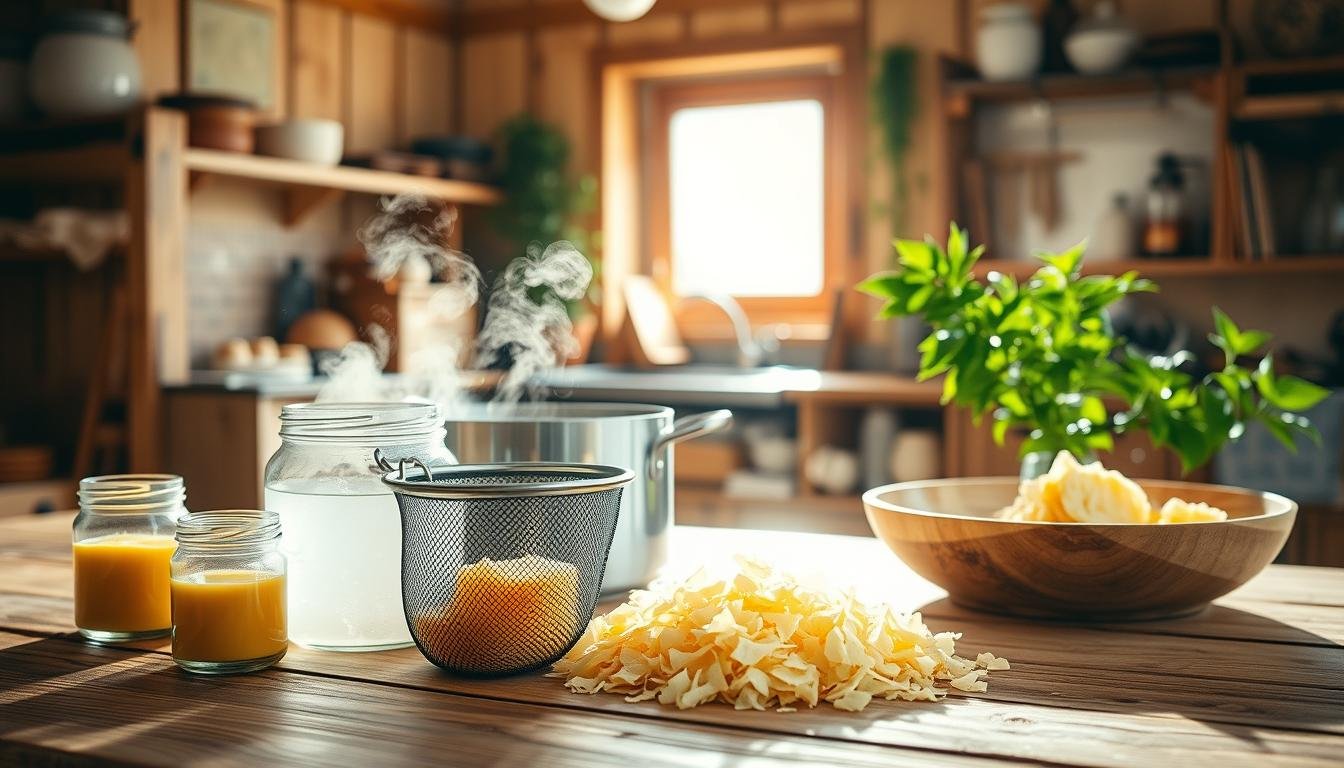
Turn raw comb into clean, market-ready blocks using low-impact steps that keep aroma and color intact. This introduction outlines a hands-on, home-friendly approach that relies on gentle heat, water separation, and layered filtering instead of harsh chemicals.
Beeswax melts near 143–151°F and discolors above about 185°F, so careful temperature control matters. U.S. beekeepers often use double boilers, solar wax melters, or crockpots to avoid scorching. Gentle rendering with water helps settle impurities before filtration.
Safety first: avoid open flames, never add water to hot wax, and use ventilation and basic protective gear. Proper cooling and patient setting produce consistent blocks that resist wax moths and suit candles, cosmetics, and other products.
Key Takeaways
- Gentle heat, water separation, and layered filtration yield higher quality wax.
- Keep temperatures low to prevent discoloration and preserve scent.
- Common equipment: double boiler, crockpot, solar melter, filters, and molds.
- Freeze unprocessed comb to stop wax moth damage before rendering.
- These steps let beekeepers turn harvesting byproducts into saleable products.
Understanding Beeswax, Impurities, and Why Purification Matters
Raw wax from the hive is more than color and scent — it carries a mix of organic and inorganic contaminants that affect how it behaves in products. Worker bees build comb as the hive’s structural material, and that starting quality determines value and use.
Organic impurities include pollen, propolis, residual honey, and tiny hive debris. Inorganic hazards can be traces of pesticides or heavy metals. Each type needs different handling to protect product safety and consumer trust.
Cappings from honeycomb are usually the cleanest and lightest. Brood comb often holds cocoon silk and years of buildup and thus needs more cycles of cleaning and filtering.
- Residue issues: leftover honey and micro-particulates make unprocessed wax sticky, cloudy, and inconsistent.
- What purification does: removes haze-forming particles and off-odors so wax performs better in candles, cosmetics, and wraps.
Water-assisted separation helps pull honey and fine debris away during cooling. Because beekeeping practices vary, inspect inputs and match filtration stages — including optional adsorption steps — to the contaminant profile.
Cleaner input saves time and loss: starting with cappings reduces processing and keeps more golden wax for high-quality end uses. For practical extraction tips, see this wax extraction DIY guide.
Safety First: Working with Heat, Wax, and Water
Safety starts with steady temperature control and a clear workspace.
Know the key thresholds: the melting point is around 143–151°F. Color shifts begin near 185°F and wax has a flash point close to 400°F. These limits make overheating and fires serious.
Practical precautions
Use indirect heat such as a double boiler or crockpot to avoid open flames. Never add water to a pot of hot, melted wax on heat — trapped steam can erupt and splatter hot material.
Wear heat-resistant gloves, long sleeves, eye protection, and closed-toe shoes. Set up in a well-ventilated, uncluttered area, protect surfaces, and keep children and pets away.
Monitoring and equipment
Use a reliable thermometer or infrared reader to monitor temperature continuously. Avoid plastic tools near hot containers; choose metal, silicone, or glass. Keep a Class K or ABC extinguisher close and know how to cut power quickly.
| Risk | Preventive Action | Notes |
|---|---|---|
| Overheat | Use indirect heat, monitor thermometer | Avoid color loss and fire |
| Scalds/Splatter | Wear PPE and keep distance | Handle hot containers slowly |
| Steam eruption | Never add water to hot wax | Only add water before heating if recipe calls |
| Tool failure | Use heat-safe equipment | Replace warped or cracked items |
Do not leave melting operations unattended. Allow sufficient time for each batch and practice safe habits to produce repeatable results for fellow beekeepers.
Tools and Equipment You’ll Need for Clean Beeswax
Select equipment that gives steady heat and easy filtering for consistent results. This short list covers the core heating options, filtration layers, and handling gear you’ll use most often.
Heating and melting options
- Double boiler: precise control for small to medium batches — avoids scorching.
- Crockpot: set-and-hold convenience for longer, low-temperature melts.
- Solar wax melter: energy-free option for sunny days and larger lots.
- Oven: best for small, supervised batches using low heat and trays.
Filtration and catchment
Start with coarse strainers (around 200 microns) to catch comb pieces and slumgum.
Follow with finer media — 50-micron filters, paper filters, or cheesecloth — to improve clarity.
Containers, molds, and measurement
- Use stainless steel or enamel vessels and heat-safe pouring pitchers.
- Keep sturdy, sealable containers for water-assisted separation and hot transfers.
- Choose silicone or metal molds (muffin tins, loaf pans, dedicated bars) for easy demolding.
- Use accurate thermometers (probe or infrared) to monitor temperature and avoid discoloration.
- Include beekeeping tools like uncapping knives, cappings strainers, and spider strainers for surface debris.
Practical tips: dedicate separate tools and space for wax work to prevent cross-contamination. Keep spare filter media and extra containers on hand so you can swap a clogged filter without losing time. Small upgrades — filter stands, insulated cool boxes, and labeled containers — improve efficiency and consistency.
Natural Beeswax Purification Methods: Step-by-Step Core Process
Follow a simple sequence to turn sticky comb into clear, usable wax. Prep reduces loss and keeps aroma and color intact. Below are concise, practical steps you can repeat for consistent results.

Pre-clean: washing cappings and separating honey
Begin by rinsing cappings with warm, not hot, water to remove residual honey and loose debris without melting the comb. Use gravity drain or flotation so wax pieces float and honey settles below.
Gentle melt with water bath for separation
Place pre-cleaned material in a water bath and apply indirect heat. Heat until the wax melts and rises; heavier contaminants stay in the water or sink to the bottom.
Settling, cooling, and scraping slumgum
- Allow the pot to cool fully so the clean layer solidifies on top.
- Lift the cake, scrape off the dark bottom layer (slumgum), and re-melt the remaining wax.
- Pour through cheesecloth, paper, or coffee filters to remove fine particles; repeat only when clarity needs improvement.
Work in manageable batches and keep temperatures low to avoid darkening. For a detailed how-to on rendering and filtering, see how to clean, render and filter.
Temperature Control: Melting Point, Discoloration, and Avoiding Overheating
Control of temperature during the melt determines whether beeswax keeps its color and scent. Aim for the practical melting point range of 143–151°F and raise heat slowly to prevent localized hot spots.
Key temperature tips
- Keep a ceiling well below 170°F to protect delicate aroma compounds; a 10°F safety buffer improves consistency.
- Avoid prolonged exposure near 185°F — that is where visible darkening commonly occurs.
- Check temperature often with a reliable thermometer and adjust heat in small increments.
- Preheat filter containers to reduce shock and prevent premature solidification while pouring.
- Use heavier pots and insulated setups to reduce heat swings; thin vessels heat faster and create hot spots.
Document batch temperatures and timings so you refine your personal process. If a batch darkens, opt for an extra fine filtration pass rather than increasing temperature. For practical limits and more on avoiding discoloration, see recommended temperature limits.
Alternative Low-Impact Methods: Solar, Oven, and Crockpot
If you need energy-efficient options, three low-impact approaches offer clean wax with modest equipment.
Solar wax melters for energy-free purification
Solar melters use a glass-covered box, a black internal tray, and a collection pan with water to catch melted wax. Optimized units can exceed 200°F in direct sun, producing very clean wax.
They are energy-free but weather-dependent. Add insulation and dark paint to boost temperatures on bright days.
Oven filtering for small batches
Use the oven at its lowest setting (~180°F). Stretch a paper towel or fine fabric over a dish and let wax drip into a pan partly filled with water.
This low setting and patient dripping cut scorching risk and give clear results for batches under about 5 lbs.
Crockpot water-assisted rendering
Set a crockpot to low, add enough water to cover cappings, and allow several hours of melting. Cool overnight so the clean cake solidifies on top.
This approach is hands-off and consistent, like a double boiler but with less monitoring.
“Match your process to volume, climate, and schedule for the best balance of clarity and effort.”
| Approach | Best for | Notes |
|---|---|---|
| Solar melter | Large, sunny batches | Energy-free; performance varies with weather |
| Oven drip | Small, precise batches | Low heat, disposable filtering; ideal under 5 lbs |
| Crockpot | Overnight, hands-off runs | Steady water-assisted melting; easy separation |
Quick tips: pre-warm containers and filters, handle hot trays carefully, and record time to melt each run. Note cappings may still hold some honey, so plan filtering accordingly.
Layered Filtration for Pure Beeswax
A staged filtration sequence gives the best clarity with the least fuss. Start coarse to remove hive debris, then refine with finer media to catch tiny particles. This approach protects flow and speeds the overall process.
Coarse pass: strainers and 200‑micron screens
Begin with a roughly 200‑micron screen or strainer to stop comb chunks and slumgum. A fast first pass prevents clogging of finer media and keeps pours steady.
Fine pass: 50‑micron, paper, and cheesecloth
Follow with a 50‑micron screen, layered paper towels, or several layers of cheesecloth to capture microscopic debris. Preheat funnels and filters so the melted wax moves without setting inside the media.
Optional charcoal and final checks
Use activated charcoal sparingly when targeting color and scent reduction. Filter thoroughly afterward to remove any carbon specks.
- Staged pours: filter into clean containers to avoid back‑contamination.
- Replace media as it clogs; forcing flow can tear a filter and reintroduce particles.
- Keep a gentle pour to limit bubbles and improve clarity of the final clean beeswax.
For step-by-step filtering tips, see this guide to filtering beeswax.
Controlled Cooling and Molding for Quality Results
Slow, even cooling is as crucial as careful heating for getting clear, crack-free wax blocks. Aim for cooling under about 5°F per hour in an insulated container to reduce internal stress and cloudiness.
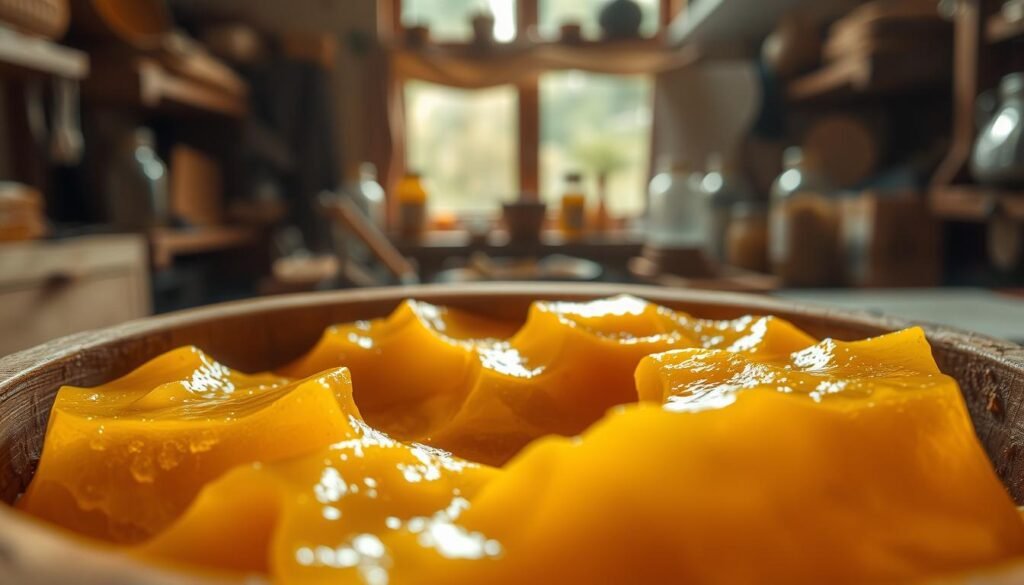
Allow the batch to sit undisturbed overnight so the cake fully solidifies and separates cleanly from the water layer. This extra time makes demolding easier and improves final quality.
- Cool slowly: use insulated boxes or coolers to avoid drafts and sudden drops that cause haze and cracks.
- Remove and scrape: once set, lift the cake and gently scrape the bottom to remove any sediment or slumgum settled from comb and honey.
- Mold tips: pour into pre-warmed silicone or metal molds sized for convenient reuse — smaller pieces melt faster and are easy to portion.
- Moisture control: let molds drain and dry before capping; residual water causes cloudiness in finished beeswax blocks.
- Labeling: mark each batch with date, source comb type, and filtration notes to track results over runs.
Briefly chilling metal molds in the freezer can ease release, but avoid extremes that warp the mold. Handle blocks at the point of demolding with care to prevent chips and preserve smooth surfaces. Patience during cooling matches the care you used with heat and filtration to deliver consistent, high-quality wax.
From Comb to Quality: Choosing Cappings over Brood Wax
Choose cleaner inputs at harvest to cut processing time and improve final clarity. Cappings pulled from honey supers are the newest comb produced by bees. They seal ripe honey and usually contain fewer embedded impurities than older comb.
Why cappings yield cleaner, lighter wax
Cappings start lighter in color and need fewer filtration passes. That means less heat exposure and less slumgum loss during rendering.
- Newest wax: cappings are fresh comb made to cap honey, so they carry less debris.
- Brood contrast: brood comb holds cocoon silk and residues that darken wax and increase loss.
- Practical tip: many beekeepers retire brood comb to manage buildup and protect colony health.
- Save effort: using cappings reduces the number of melts and filters needed to reach high clarity.
- Best use: reserve cappings-derived beeswax for cosmetics and premium candles where color and aroma matter.
“A small choice at the hive — selecting cappings — is one of the easiest ways to boost overall quality without more equipment.”
Record your inputs by hive and season to learn which comb yields the clearest results. Segregating sources shortens processing time, saves energy, and helps you produce consistent, market-ready wax.
Quality Standards and Compliance for Beekeepers in the U.S.
Establishing measurable thresholds for clarity and contaminants protects consumers and strengthens brand trust. Clear expectations help beekeepers move from hobby batches to retail-ready offerings. Follow simple checks for visual clarity and basic lab testing when selling higher-value goods.
Clarity grading: cosmetic vs. candle grade
Grade A is translucent, golden, and free of visible particles. Grade B may be slightly opaque yet still acceptable for many cosmetics and ordinary candles.
Food-safety and third-party testing
Third-party labs can confirm heavy metals under 1 ppm (lead, cadmium, mercury) and microbial loads below 100 CFU/g for topical use. These reports support claims for food-adjacent or cosmetic products.
- Document your filtration level and thermal history; controlled temperatures prevent changes labs detect in melt behaviour.
- Retain a sample from each lot and keep processing logs for traceability and quality assurance.
- Label source (cappings vs. brood), filtration, and any optional treatments such as charcoal so buyers understand product grade.
- Run periodic internal audits of equipment, filter integrity, and thermometer calibration to support consistent quality.
Meeting higher standards opens premium markets. For equipment that helps maintain reproducible results, see extraction equipment at extraction equipment.
Troubleshooting Common Purification Issues
Common issues during rendering often show up as color shifts, odd textures, or lingering scents that signal process faults.
If your batch shows discoloration, brittleness, softness, or off-odors, a quick diagnosis helps decide whether to re-melt, re-filter, or change your process.
Quick fixes and checks
- Discoloration: review heat logs. Keep peak temperature below the safe point and plan another fine filtration pass instead of raising temperature.
- Brittle wax: reduce peak heat and shorten dwell time on future runs. Blend with fresher batches if needed.
- Soft or tacky bars: usually from residual water or honey. Re-render in a water bath, allow full separation, then scrape and dry completely.
- Off-odors: improve pre-wash and drying of cappings and avoid moist storage that promotes fermentation.
- Visible particles: repeat a fine filtering stage and pre-warm filters and containers to keep flow steady.
Other tips: slow cooling to prevent cracking and stage coarse-to-fine media to stop clogging. Keep notes on source comb, temperatures, and time so you can spot patterns. For practical re-processing and safety guidance, see this processing beeswax guide and extraction safety advice.
Using Your Pure Beeswax: Candles, Cosmetics, and More
A clean batch of wax opens many product paths, from long‑burning pillars to protective polishes. This section shows practical ways to turn finished blocks into saleable items and studio staples.
Beeswax candles and wick selection
Pure beeswax candles burn longer and give a warm, steady glow. Test cotton wicks across diameters to find a match that yields an even melt pool and minimal smoking.
Preheat containers and molds before pouring to reduce sinkholes and improve side finish. For pillar, taper, and container candle types, keep wick trials logged by diameter and burn time.
Lip balms, salves, and cosmetic bases
Use wax as a structuring and occlusive agent in balms and salves. Blend measured amounts with carrier oils (jojoba, sweet almond) and a small fraction of beeswax for firmness.
Start with small batches when adding essential oils or pigments to ensure stability and safe burn or skin performance.
Food wraps, polishes, and artistic uses
Mix wax with jojoba oil and tree resin to coat cotton for reusable food wraps. Apply evenly and cure for a washable finish.
For wood and leather, a thin buff of melted wax protects against moisture and adds sheen. Encaustic painting uses pigmented wax layers for durable, luminous surfaces.
| Use | Typical Mix | Key Tip |
|---|---|---|
| Container candles | 100% wax + cotton wick | Test wick; preheat jar |
| Lip balm | Beeswax + oil (3:7) | Cool in small tins; label batch |
| Food wrap | Wax + jojoba + resin (8:1:1) | Apply heat evenly; cure flat |
| Wood polish | Wax + mineral oil (1:4) | Rub thin coats; buff to shine |
“Label finished goods with batch IDs so you can trace back temperature, source comb, and filtering notes.”
Storage and final notes: keep finished products out of direct sun and heat to preserve shape, scent, and appearance. When using fragrance, use conservative loads so the product’s own aroma remains pleasant.
Conclusion
,Finish with a clear, repeatable process: wash cappings, gently melt in a double boiler or equivalent, separate with water, and pass the liquid through staged filtering (coarse ~200 microns then ~50 micron) before slow cooling.
Keep temperatures between 143–151°F and below ~170°F to preserve scent and color. Avoid reaching ~185°F and respect the flash point near 400°F for safe handling.
Cool at under ~5°F per hour, allow overnight solidification, then scrape the bottom layer clean. Good tools, clean containers, and cheesecloth plus fine filters speed work and improve results.
Match your approach to context — solar for low-energy runs, oven for small batches, crockpot for hands-off processing — and record time, temperature, and source comb to refine quality.
Careful processing turns hive material into market-ready bars for candles, cosmetics, and household products while keeping safety and consistency top of mind.
FAQ
What is the safest way to melt wax without damaging its quality?
Use a double boiler or a crockpot set to low and keep the temperature between about 143–151°F. Avoid direct flame and never exceed 170–185°F to prevent discoloration and loss of aroma. Monitor with a reliable candy or infrared thermometer and stir gently to distribute heat evenly.
How do I separate honey and debris from comb before melting?
Break or cut comb into small pieces and rinse briefly with cool water to remove excess honey. Let pieces drain, then proceed to a water-assisted melt: place comb in a pot or melter with enough water to cover the material so honey and slumgum fall away during heating.
What filtration steps give the cleanest results for candle or cosmetic use?
Start with a coarse strain (sieve or 200-micron) while the wax is fully melted, then pass the warm wax through layered fine filters—cheesecloth or 50-micron mesh, or heavy paper filters—for finer particles. For lighter color and scent, an activated charcoal stage can help remove residues.
Can I use a solar wax melter, and when is it appropriate?
Yes. Solar wax melters work well for small to medium batches in sunny climates and offer low-impact processing without continuous fuel use. They are slower and best for already-clean cappings or frames that need gentle rendering; avoid them when immediate, high-temperature processing is required.
How do I deal with slumgum and sediment after melting?
Allow the melt to cool and settle undisturbed. Slumgum and heavier impurities sink or form a separate layer. Once fully solid, remove the block from the container and scrape the underside or edges to separate the clean wax from residues.
What protective gear and ventilation should I use while melting and filtering?
Wear heat-resistant gloves, eye protection, and long sleeves. Use a face mask if dust or fine particles are present. Work in a well-ventilated area away from open flames and flammable materials. Keep a fire extinguisher rated for grease/chemical fires nearby.
Is water-assisted rendering necessary, and what are its benefits?
Water-assisted rendering helps separate honey, brood debris, and dirt from the wax. The water captures impurities and prevents scorching by regulating temperature. It also makes cleanup easier since sticky honey dilutes into the water layer.
How do I choose between cappings, frames, and brood wax for product quality?
Cappings are best for producing lighter, cleaner wax ideal for cosmetics and high-quality candles. Brood comb contains more propolis, pollen, and residues, yielding darker wax better suited for industrial or lower-grade uses unless extensively refined.
What are common causes of wax discoloration or off-odors, and how do I fix them?
Overheating, long processing times, and presence of brood or propolis cause dark color and odors. Re-melting at lower controlled temperatures, additional filtration, or charcoal treatment can improve color and scent. For persistent issues, consider testing for contaminants.
Can I re-melt and filter wax multiple times? Is there a limit?
Yes—re-melting and re-filtering improves clarity and removes more impurities. Limit cycles to avoid excessive thermal exposure; each heating risks slight loss of natural components. Aim for efficient filtration and proper temperature control to minimize repeats.
What thermometer and filter micron sizes should I keep in my kit?
Keep a candy or digital probe thermometer accurate in the 100–200°F range. For filtration, have coarse strainers (around 200 microns) and finer options like 50-micron mesh, plus layers of cheesecloth and heavy paper filters for final polishing.
Are there food-safety considerations when processing wax for food wraps or lip balms?
Yes. Use cappings or tested cosmetic-grade wax, avoid brood wax, and process in clean, food-safe containers. Consider third‑party testing for contaminants if selling products. Label products clearly and follow FDA guidance for cosmetics and food-contact materials.
What disposal methods are recommended for slumgum and contaminated water?
Scrape slumgum into a sealed container for composting where accepted, or dispose per local waste regulations—avoid pouring greasy water into drains. Let contaminated water cool, skim solids, and follow municipal hazardous-waste guidance if chemical contaminants are suspected.
How long does the standard melt-and-filter process usually take for a small batch?
For a few pounds of wax, expect 1–3 hours total: prep and rinsing (15–30 minutes), gentle melting and filtration (30–90 minutes), then settling and cooling (30–60 minutes). Times vary by equipment, batch size, and ambient temperature.
Which equipment brands and tools are reliable for hobbyist and small-scale processing?
For crockpots, consider Crock-Pot and Hamilton Beach models with low heat settings. Weber or All-Clad double boilers work well on stovetops. For thermometers, ThermoPro and CDN offer accurate probes. For filters, stainless steel sieves from OXO or Winco and food-grade cheesecloth are practical choices.


