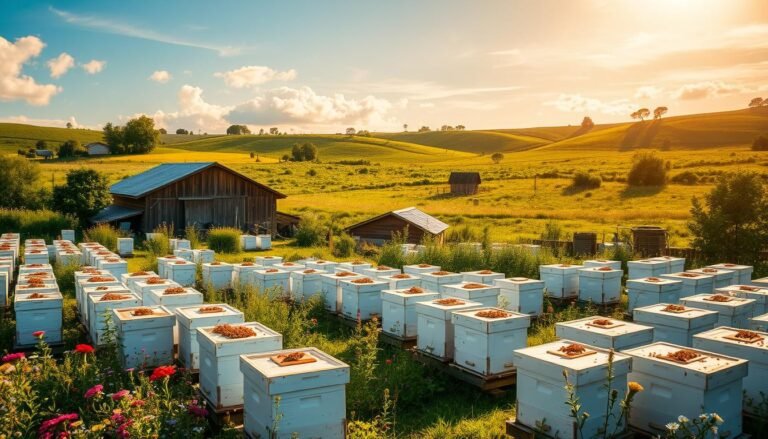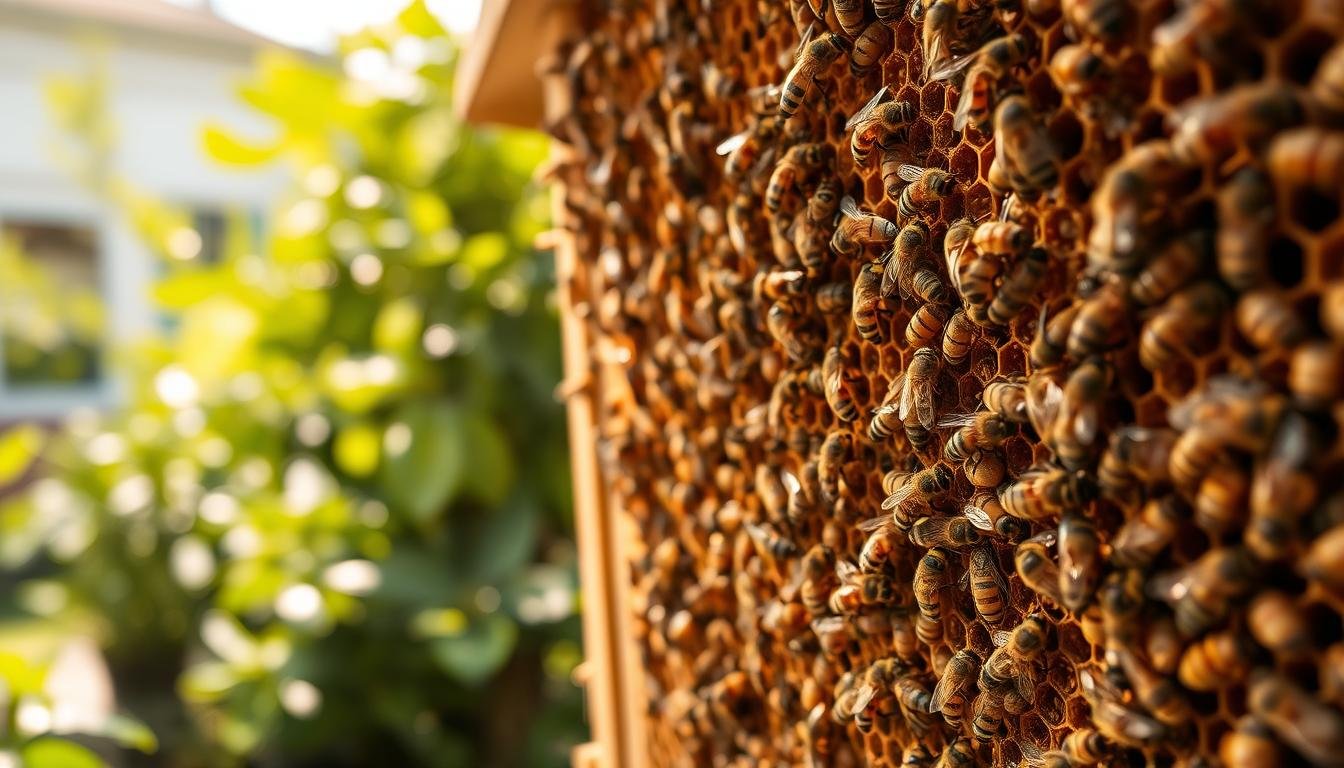
Start smart: a step-by-step approach helps create a safe, compliant backyard hive that respects neighbors and local rules. This guide lays out planning, site selection, assembly, early care, and professional checkpoints tied to the right time of year and climate.
Early choices shape long-term success. Strong starts protect bee and human health. New keepers often rush setup, skip checklists, or lack basic equipment like protective wear, a smoker, a hive tool, feeders, and measuring tools.
We also cover how to protect honey stores and limit neighborhood nuisance by managing foraging ranges, water access, and space. Expect an incremental, inspection-led plan that prioritizes colony welfare and community standards.
Make sure you plan for compliance, emergency contacts, and neighbor communication before you begin. Follow clear visual checks—eggs, brood patterns—and a regular early inspection cadence to confirm a healthy trajectory.
Key Takeaways
- Plan for compliance and neighbor outreach before any work begins.
- Gather essential equipment on day one to support stable hives.
- Time the setup to local climate for smooth colony acclimation.
- Use short, regular inspections to confirm bee health and brood patterns.
- Manage foraging, water, and storage to reduce neighborhood issues.
Plan for Success: Regulations, Safety, and Timing in U.S. Residential Areas
A smooth start depends on rules, neighbor outreach, and gear readiness when the queen and workers arrive.
Local rules and neighbor communication
Confirm city or county ordinances, zoning, and any HOA limits in your area before the package arrives. Check setbacks, maximum hive counts, and required flyway barriers.
Talk to adjacent neighbors about the planned day and the steps you will take to limit stings and traffic. Clear communication builds trust with nearby beekeepers and residents.
Protective gear and readiness
Assemble protective equipment and a reliable tool before bees arrive: veil, suit or jacket, gloves, smoker and fuel, and a spray bottle with 1:1 sugar syrup.
Stage a first-aid plan with emergency contacts and designated safe distances for family members. Test your smoker for cool smoke and practice lighting so it performs on the day.
Best time and temperature
Make sure outdoor temperatures are above 65°F for transfer. Overheating above 100°F will kill workers and the queen; chilling below 55°F can harm her stored sperm.
Rest the package in a cool, dark, quiet spot for several hours and mist lightly with syrup to keep bees calm and fed before moving them into the hive.
| Action | Responsible | Timing |
|---|---|---|
| Confirm local rules | Keeper / beekeepers | Before purchase |
| Stage gear and test smoker | Keeper | Day before |
| Rest and mist package | Keeper | Hours before transfer |
| First follow-up check | Keeper / advisor | 5–10 days after |
Choosing and Preparing the Site: Space, Leveling, Sun, and Predator Deterrence
Pick a calm corner with morning sun and some afternoon shade so workers start flying early and stay cool midday.

Orientation and microclimate
Face the entrance southeast so bees warm quickly and fly sooner. Morning rays encourage foraging and reduce early congestion.
Afternoon shade prevents overheating and helps limit pest pressure in dense shade.
Leveling and workspace
Set the stand on firm ground and use pavers to level each corner. Tilt the front slightly downward so rain and condensation run away from the entrance.
Plan a 9 ft by 9 ft bee yard. Allow about 27 1/4 inches between two stands to give enough space to work without bumping boxes.
Vegetation and water
Suppress weeds with premium landscape fabric. For tight spots slide damp newspaper or cardboard beneath the stand and add 2–3 inches of mulch.
Provide a low, reliable water source near the top of the yard so foragers find it without crowding the entrance.
Bear-aware fencing
Use a solar charger such as the Parmak Deluxe Field Solar-Pak 6. Plan 6-foot step-in steel t-posts, plastic insulators, and 15-gauge or larger wire.
Install three 6-foot grounding rods spaced 10 feet apart and connect with insulated ground wire. Add simple gate handles so you can enter without losing electrification safety.
| Need | Recommendation | Why it matters |
|---|---|---|
| Entrance orientation | Southeast facing | Warms bees early and encourages safe flight paths |
| Leveling | Pavers + slight forward tilt | Prevents water pooling and stabilizes frames |
| Workspace | 9×9 ft area; 27 1/4″ spacing | Allows two people to work and reduces tool collisions |
| Predator deterrence | Solar charger, t-posts, grounding rods | Protects colonies from bears while keeping access practical |
Assembling the Langstroth Hive: Boxes, Frames, and Covers Done Right
Start by choosing the bottom board that matches your climate and monitoring needs.
Select screened or solid: screened bottom boards (Busy Bees ’N’ More) add airflow and make mite checks easier. Solid boards (Hoover Hives, NuBee) hold warmth and are simple to place.
Dry-fit each box and check dovetail corners before you fasten. Tap dovetail joints together with a rubber mallet so corners seat squarely. Add wood glue for extra strength if you want a stiffer joint.
Predrill to avoid splitting: 7/64″ for 4D 1.5″ nails and 5/64″ for 2D 1″ nails. If you use a brad nailer, choose 18-gauge nails—2″ for boxes and 1″ for frames. To reduce splits, dull the nail tip slightly or coat nails with petroleum jelly.
Assemble frames square and true. Fit foundation so bees draw wax in straight lines; this saves time and corrective work later. Seat the inner cover to provide controlled ventilation and a bee-space buffer under the telescoping top cover for weather protection.
- Label each hive body for tracking and warranty records.
- Confirm corners are flush; out-of-square boxes hurt frame spacing.
- Stage parts on the stand: bottom board, hive body, frames, inner cover, top cover.
| Component | Recommendation | Why it matters |
|---|---|---|
| Bottom board | Screened (Busy Bees ’N’ More) or solid (Hoover Hives, NuBee) | Balances ventilation and warmth; aids mite monitoring |
| Box / hive body | Dry-fit dovetails, rubber mallet, wood glue optional | Square boxes keep frames aligned and inspections easier |
| Frames | Square assembly, fitted foundation, 18-gauge brads if nailing | Guides straight comb and reduces burr comb repair |
| Inner cover & top | Seat inner cover; use telescoping top for weatherproofing | Provides ventilation control and protects woodenware |
Beehive installation: Step-by-Step to Install a Package with a Queen
Start the transfer on a calm day, keeping the package cool, shaded, and gently misted so workers stay calm.
Staging on arrival: set the package in a quiet, shaded spot. Keep temps above 65°F but below dangerous heat. Lightly mist with 1:1 sugar water every hour while it rests.
Preparing the hive cavity
Before opening, have a veil, smoker, hive tool, and a spray bottle ready. Remove three or four center frames over the bottom board so the dumped cluster has room.
Queen cage handling
Gently remove the feeder can and queen cage. Verify the queen is alive. Remove the cork from the candy end only and keep the cage candy-side up so workers can reach the screen.
Shaking and seating the package
Give the box one firm knock to bring bees down. Invert and shake the bees into the cavity in a steady motion. Prop the empty box at the entrance so stragglers can enter by scent.
“Keep movements smooth and deliberate; stressed bees make mistakes.”
Finish and feed: replace frames slowly with the hive tool, close with the inner cover and top, and start feeding immediately. Log the day and plan a check at day 5 for queen release and day 10 for eggs.
| Action | Why it matters | Timing |
|---|---|---|
| Stage package in shade & mist | Reduces stress and maintains energy | On arrival, until transfer |
| Remove center frames | Creates room for dumped cluster | Before shaking |
| Place queen cage candy-side up | Allows attendants to feed and release queen | During frame reassembly |
| Prop box at entrance | Encourages stragglers to join hive | After shaking |
For a complete step checklist and diagrams, see how to install a package of honey.
Feed, Water, and Early Care: Getting a New Colony Established
Provide continuous nutrition and a safe water source so workers can focus on drawing comb.
Mix sugar water at a 1:1 ratio with warm water so the sugar dissolves fully. Prepare enough syrup for steady feeding during the first weeks. Continuous feed helps the colony draw wax and build comb faster.
Choose the right feeder to reduce drowning and robbing. Top feeders, internal feeders, or entrance feeders with floats work well. Verify seals, capacity, and that the feeder won’t drip into the cluster.
Place a shallow water bowl with stones or corks close to the hive so returning bees can land safely. A reliable water source lets foragers cool the hive and reduces visits to neighbor pools.
- Inspect syrup levels daily and refresh to prevent fermentation or mold.
- Keep only the boxes and frames the colony can occupy to avoid empty space that invites pests.
- Support the queen’s laying rhythm with steady sugar and protein feed when needed.

| Feeder type | Advantage | Note |
|---|---|---|
| Top feeder | Large capacity, less robbing | Requires inner cover access |
| Internal feeder | Protected from weather | Check for leaks |
| Entrance feeder | Easy refill | Use floats to prevent drowning |
Professional Checkpoints: First 5-10 Days, Brood Patterns, and Common Fixes
A focused inspection schedule in days five and ten can prevent small problems from becoming colony failures.
Day 5 and Day 10 checks
Day 5: Open briefly to confirm the queen has exited her cage. If she is still inside, gently free her so attendants can feed and tend her.
Day 10: Look for eggs—tiny upright grains in cell centers—and the start of a consistent brood pattern across frames.
Troubleshooting common queen issues
If no eggs appear, act quickly. Replace a rejected queen or unite the package body with a strong colony using the newspaper method.
Widespread drone-only cells signal a failing or poorly mated queen; replace her promptly to avoid colony decline.
Encouraging comb building
Keep feed bees steady to encourage wax secretion. Continuous syrup and close frame placement help workers draw comb faster.
- Arrange brood centrally with stores on the sides to preserve temperature.
- Note temperament and behavior; queenless groups become defensive.
- Record each step—eggs, brood stage, stores—so trends guide timely fixes.
For a practical primer on getting started, see our beginner hive guide.
Conclusion
Finish strong: follow one clear step—prepare the stand and place the box, assemble frames, move the bees, feed, and inspect on schedule.
Good residential beekeeping depends on planning and courtesy. Make sure you place the hive to respect neighbors and keep flight paths safe.
Match the cover and top to the hive body so ventilation and bee space stay stable. Keep a fresh water source near the work area to steer foragers away from pools.
Close with an equipment audit: feeder secure, hive tool handy, spare tools and protective gear dry. Continue feeding until wax is drawn and the colony stores honey.
With routine checks of frames, bottom stability, and cover fit, you will protect colony health and enjoy steady honey and pollination benefits.
FAQ
What local rules should I check before placing a hive in a residential area?
Check city ordinances and your HOA regulations for limits on colony numbers, setback distances, and fence or screen requirements. Notify neighbors and document any permissions. Keep records of local apiary registrations or permits required by your state agriculture department.
What protective gear and tools do I need for a safe setup?
Use a full or veil-style bee suit, gloves, and closed-toe footwear. Carry a smoker, hive tool, bee brush, and a feeder. A simple first-aid kit and an EpiPen are wise if anyone nearby has severe allergies. Keep tools organized on a caddy or belt to work efficiently.
When is the best time and temperature to bring a package of bees?
Install bees on a warm, calm day when daytime highs are above 60–65°F. Mid-morning to early afternoon is ideal so foragers can return. Avoid cold, windy, or rainy days to reduce stress on the colony and improve acceptance of the queen.
How should I orient and place the hive for best sun and airflow?
Face the entrance southeast to capture morning sun and provide afternoon shade. Place the hive on level ground with a slight forward tilt so rain drains away. Ensure a clear 9×9 ft working area and leave room for stands or pavers under the bottom board.
How do I level the stand and provide drainage under the bottom board?
Use spaced pavers or a compacted gravel pad and shim with composite or wood shims. Aim for a slight forward pitch (about 1–2 degrees) so water sheds from frames and the entrance. Screened bottom boards need stable support to prevent rattling.
How can I reduce vegetation and predator access at the hive site?
Clear vegetation around the stand and use landscape fabric or a layer of cardboard and mulch to suppress weeds. Keep a 3–4 ft clearance for work access. For bears, plan a fenced perimeter or install a low electric fence using treated posts and proper grounding.
Which bottom board is better: screened or solid?
Choose a screened bottom board for ventilation and varroa monitoring in warm climates. Use a solid board where predators or cold weather require better insulation. Some beekeepers swap between types seasonally or add a removable insert for flexibility.
What are the quick tips for assembling Langstroth boxes and frames?
Pre-drill and glue joints, then use finishing nails or screws for dovetailed boxes. Fit frames with foundation and spacer wedges if needed to keep comb straight. Lightly tack in nails so you can adjust alignment while squaring the box.
How should I set up inner covers and top covers for ventilation and weather protection?
Install the inner cover with the notch or hole aligned to the entrance for controlled ventilation. Add a telescoping top cover with a moisture-absorbing quilt or insulating board in colder climates. Ensure rain overhangs the front to keep the entrance dry.
What steps should I follow when a package of bees arrives?
Keep the package shaded and calm on arrival; spray lightly with sugar syrup if hot. Rest the package for 1–2 hours at the staging spot before install. Warm bees and a relaxed queen reduce losses during transfer into the prepared hive.
How do I create the right space in the hive before shaking bees in?
Remove center frames above the bottom board to create open space for bees to cluster, then position frames with drawn comb evenly. Leave enough room to place the queen cage between frames without crushing. Replace frames evenly after shaking in the bees.
What is the correct way to place the queen cage in a new hive?
Position the queen cage between two frames with the candy end facing up or slightly toward the brood area, so worker bees can access it. Secure the cage in a notch or wedge so it won’t fall when replacing frames. Check on day 5–7 for release progress.
How should I shake or pour bees into the hive safely?
Shake bees gently from the package into the hive entrance or between frames during warm calm weather. Work close to the brood nest area, cover exposed frames quickly, and reassemble the hive so the queen is secure. Keep the smoker handy but use it sparingly to avoid agitating the bees.
What sugar water ratio and feeder type should I use in the first weeks?
Use a 1:1 sugar-to-water ratio for spring buildup. Choose a top feeder, entrance feeder, or frame feeder that minimizes drownings and robbing. Maintain a small, consistent supply until foraging flowers are abundant and brood rearing increases.
How do I provide safe water sources for my new colony?
Offer a shallow water source near the hive with landing platforms like stones or floating corks to prevent drownings. Refill often and keep the water within 10–20 ft of the entrance so foragers don’t travel far and expose the colony to predators.
What should I check during the first 5–10 days after install?
On day 5 confirm the queen has been released from her cage. By day 10 look for eggs and early brood stages to verify laying. Also watch for signs of stress: clustering, excessive robbing, or sugar shortage. Note activity levels and orientation flights.
How do I troubleshoot queen problems like rejection or a drone-laying queen?
If the queen isn’t released, gently open the cage and inspect for damage. If you see only drone brood after two weeks, the queen may be poor or drone-layer; consider requeening. For rejection, introduce a new queen using a slow-release cage and ensure the colony has adequate food and space.
What encourages comb building and strong brood patterns early on?
Keep continuous feeding with 1:1 syrup, maintain warm hive temperatures, and space frames evenly with proper foundation. Provide consistent, vibration-free conditions and avoid frequent, long inspections that disrupt comb construction and brood care.
When should I consider uniting colonies or calling a mentor for help?
Consider uniting if a colony is queenless, weak, or failing to rear brood after two weeks. Use the newspaper method to combine gently. Reach out to a local beekeeping club, extension service, or experienced beekeeper when signs of disease, queen failure, or severe worker loss appear.