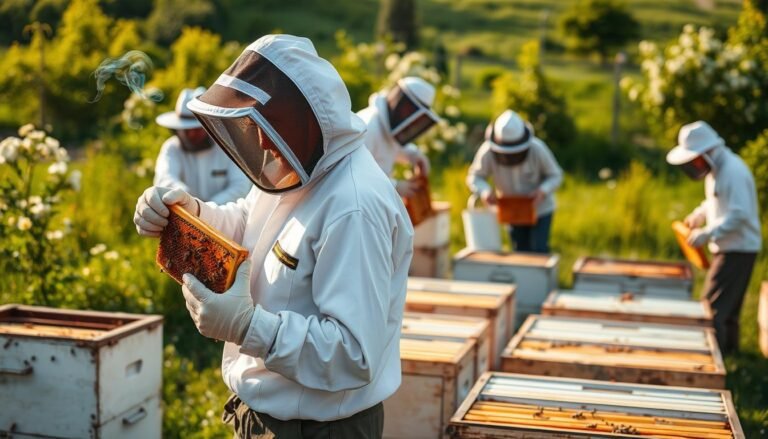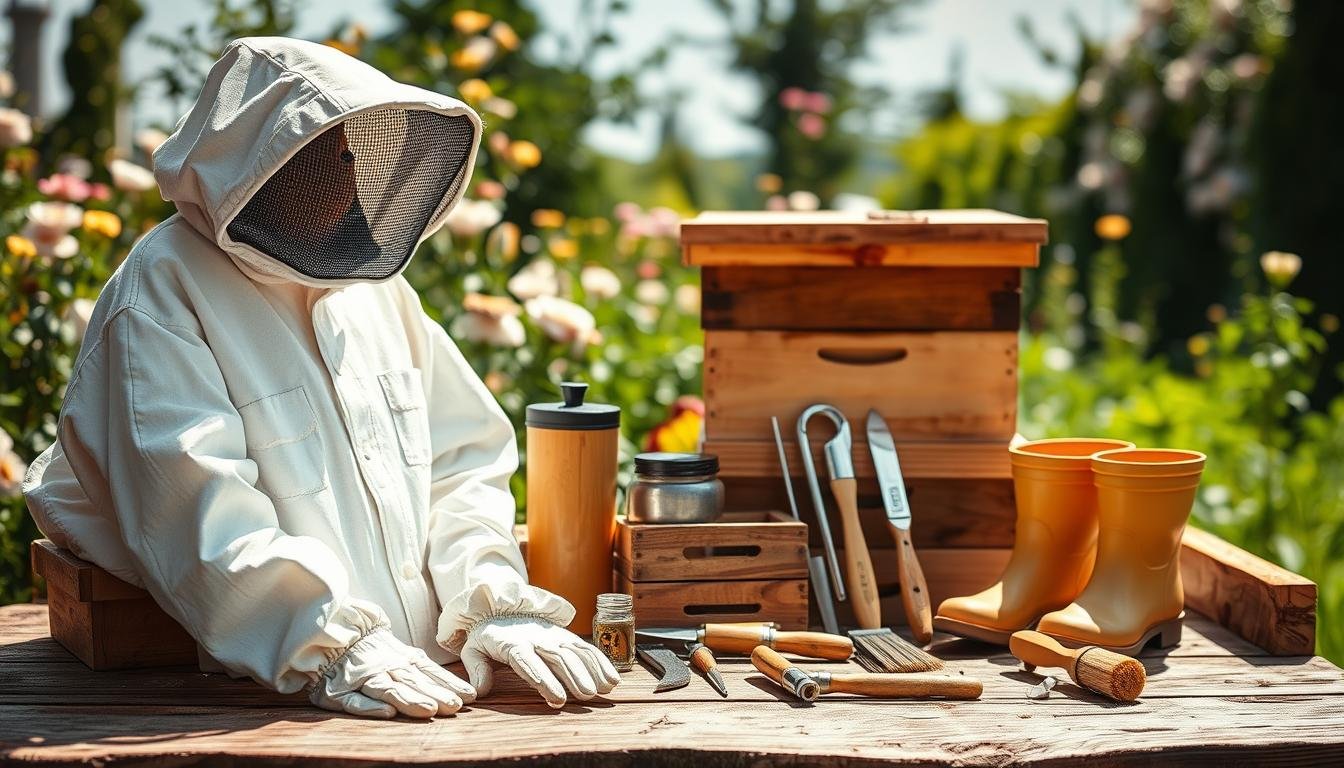
Starting an apiary means choosing the right kit and routines that match your region and season. This guide distills top beekeeping equipment and supplies into a climate-aware checklist that helps a new or seasoned beekeeper protect hives and harvest clean honey.
Practical choices matter: durable white pine boxes like Eli & Ezra, budget starter kits such as the NuBee 10 Frame set, and top feeders that simplify winter syruping all affect colony health. Quality protective wear—ventilated suits (BeBees), goatskin or ventilated gloves (Apis Tactical), and jackets—keeps you safe and focused during inspections.
We cover pest tools like Varroa EasyCheck, screened bottoms with oil pans, and smoker fuels such as cotton pellets or natural fibers. Expect clear advice on inspections, feeding strategy, and whether extractors or comb cassettes suit your goals. Read on to match tools to your yard and season so your bees thrive year after year.
Key Takeaways
- Match durable hive components and ventilation to your region to reduce stress and honey loss.
- Choose protective wear by activity: full suits for deep inspections, jackets and gloves for quick checks.
- Top feeders and reliable smoker fuels (cotton or natural fibers) simplify winter and emergency feeding.
- Integrate Varroa EasyCheck and screened bottoms into routine pest control based on local pressures.
- Balance budget kits and premium boxes—strong joints and materials pay off over years.
How to Choose Beekeeping Gear by U.S. Climate and Season
The smartest way to outfit an apiary is to let seasonal risk and local forage shape your equipment list. Cold winters need insulation, internal feeders, and mouse-proof entrances. Hot, humid areas demand strong ventilation and careful pest control.
Start with basics that match your site. White pine boxes with solid joints last through freeze–thaw cycles and propolis wear. If you install a nuc, expect five frames and plan to add extra frames and a second hive body within a month.
Feeding is a matter of time and need, not calendar dates. Use top feeders in late summer and fall in northern zones. In warm regions with year-round blooms, avoid routine syruping; it can invite small hive beetles and robbing.
- Entrances and defense: fit an entrance reducer during slow flows to help guard bees.
- Tools and redundancy: carry spare tools, an extra hive body, and durable frames so you never run out when weather windows are short.
- Site risks: at elevation or in windy sites, secure lids and sturdy stands prevent shifts across the year.
For a deeper starter reading list and practical manuals, see beekeeping resources and books.
Protective Gear That Prevents Stings and Improves Focus
Choose protective clothing that keeps you cool and confident during hive work. Good apparel reduces distractions and helps you move calmly. That leads to fewer bee stings and better decisions during inspections.

Full suit vs ventilated suit: protection, breathability, and summer comfort
A full suit offers the most complete protection and lowers the chance of getting stung during heavy manipulations. It seals cuffs, ankles, and zippers to block entry points.
Ventilated suits use layered mesh to keep you cool in hot weather while maintaining solid protection. Many beekeepers favor three-layer mesh designs for summer comfort and durable construction.
Pullover jacket, hat, and veil: lightweight options for quick inspections
For short checks, a pullover jacket and a wire-screen veil give mobility and clear sightlines. Wire-screen veils with helmets resist tearing and pack compactly for transport.
Keep a standalone veil and light jacket available when colonies are calm. But have a full suit ready if a hive is defensive or you plan long work.
Beekeeping gloves: goatskin, ventilated designs, and nitrile for dexterity
Choose gloves by task. Soft goatskin offers control; ventilated models give airflow. Nitrile gloves help with delicate frame handling and maintain dexterity.
- Fit and seal: check wrist closures and cuff seals to prevent bee ingress.
- Quality matters: prioritize sturdy zippers, reliable mesh, and reinforced stitching for years of use.
- Backups: keep spare gloves and a clean veil in your kit for unexpected tears or wet weather.
Hives, Boxes, and Frames Built to Last
A solid hive starts with strong joints and consistent frame rests to reduce repairs and stress on bees. Choose boxes and frames that stand up to prying with a hive tool, transport, and seasonal swelling.
Why joint type matters: white pine boxes with rabbeted half blind dovetail joints deliver squarer corners and long-term durability. These joints resist the torque of a hive tool and hold alignment when propolis creates tight seals.
Box materials and joint choices
Unpainted, stable wood often beats cheaper painted boxes when the lumber and joinery are high quality. Premium pine units resist splitting and allow easier field repairs.
- Durability: rabbeted half blind dovetail joints outlast many common dovetails during heavy use.
- Practicality: robust joinery reduces time spent realigning boxes and protects comb when lifting bodies.
- Spare parts: keep at least one spare box and extra frames to manage rapid growth from a nuc.
Frames and foundation: wood vs plastic
Frames come in wood or plastic, with or without foundation. Wood frames are repairable and traditional. Plastic frames and foundation speed setup and help standardize comb.
Foundation supports brood and honey comb, keeps comb straighter, and makes inspections cleaner. Starter kits such as the NuBee 10 Frame include a brood box with frames that let you expand quickly by adding a deep box and a super.
| Component | Benefit | Consideration |
|---|---|---|
| White pine box (rabbeted joint) | Strong, square corners; resists tool torque | Higher upfront cost but long lifespan |
| Wood frames | Repairable; traditional feel | May need replacement over years of wear |
| Plastic frames/foundation | Fast setup; consistent comb | Less field repairability; different thermal behavior |
| Starter kit (NuBee 10 Frame) | Includes brood box and frames for quick setup | Plan to add another deep and a super as colony grows |
Match your material choices to management style and local conditions. For product examples and detailed material choices, see the quality hive options and a practical guide to beehive materials.
Feeders and Nutrition Strategies for Different U.S. Regions
A smart feeder choice keeps syrup inside the nest and cuts waste, robbing, and drownings. Feeders and supplements should match local seasonality and pest pressure. Use equipment that limits hive disturbance and keeps stores where bees can reach them.

Top, entrance, and frame feeders: pros, cons, and why top feeders shine
Top feeders, such as the Amish-Made Top Feeder with Slatted Boards, reduce robbing risk and are easy to fill at any level. They keep syrup inside the hive and are easy to clean.
Entrance feeders increase robbing and frame feeders force you to open the brood area and can lead to drownings. Choose the least disruptive option that matches your management style.
Syrup, supplements, and pollen: Honey B Healthy and Ultra Bee dry pollen
Honey B Healthy added to syrup extends shelf life in warm months and helps prevent rapid fermentation. Ultra Bee dry pollen is versatile — feed dry or mix into patties when protein is needed.
Warm vs cold regions: when feeding helps—and when it attracts pests
In hot, bloom-rich areas avoid routine feeding; extra syrup or patties can fuel small hive beetle problems. Feed only when stores are low or the colony is weak.
In cold-winter zones, internal top feeders help bees access syrup during dearths and support fall build-up heading into winter.
- Keep feeders clean to avoid mold and pest attraction.
- Time feedings to dearths and weather windows to reduce robbing.
- Monitor results and switch feeder types if you see robbing, drownings, or SHB activity.
Inspection Essentials: Smoker, Hive Tool, and Bee Brush
Efficient hive work begins when your smoker, hive tool, and brush are chosen and ready. A calm approach makes inspections safer and faster. Prepare gear before you lift the lid so the colony has time to settle.
Smokers mask alarm pheromones and slow defensive responses. Choose a stainless model with a protective cage and sturdy bellows so it lights reliably and delivers cool smoke. Keep cotton pellets and cotton fibers on hand for steady fuel. Natural options like pine needles or eucalyptus are handy for quick field refills.
The standard hive tool is the daily driver: pry boxes, scrape propolis, and clean frame rests. A J-hook tool lifts tight frames cleanly, but slide frames side-to-side first when propolized to avoid ripping top bars.
A soft bee brush lets you clear comb without shaking. Brush gently along comb edges to protect brood and avoid rough strokes that injure bees.
- Set up: keep smoker, hive tool, and brush within reach to maintain a calm rhythm.
- Use smoke sparingly: puff at the entrance and under the lid, then wait a moment.
- After the job: clean and dry tools to preserve quality and protection against rust.
Pest and Disease Controls for U.S. Conditions
A proactive pest plan combines sampling, traps, and smart entrance management. Regular checks keep problems small and hives productive. Focus on simple, repeatable steps that fit your season and local pressure.
Varroa checks made easy: use a Varroa EasyCheck kit on a set schedule in spring and late summer. DIY jar methods with hardware cloth also work when kits are scarce. Follow clear workflows and record each test — that sampling protocols help standardize results.
Small hive beetle traps: a screened bottom with an oil pan is a great way to catch beetles that fall from frames. Towels on top bars trap beetles after bees chew them; if towels are propolized lift carefully and squash beetles beneath before moving frames.
Entrance and ventilation tactics
Use an entrance reducer during low-flow periods so guard bees can defend the colony. Add mesh or hardware cloth at weak openings to keep mice and pests out while keeping airflow.
- Schedule Varroa tests at key times to act before infestations rise.
- Keep spare traps, oil, and basic tools ready to deploy quickly.
- Rotate tactics and clean sticky equipment to avoid cross-contamination.
Honey Harvest Gear: From Extractors to Comb Honey
Deciding between an extractor and comb cassettes means weighing time, space, and product style.
Extractors and maintenance realities
Before you buy, understand that extractors demand cleaning, storage, and occasional repair. Budget models can arrive dented and may not spin freely. That adds extra work and may reduce the tool’s lifespan.
Prioritize sturdy construction and a clear return policy. A reliable warranty saves time and money over the years.
Comb cassettes: low-equipment, high-quality presentation
Comb cassettes like SimplKomb insert into the hive and come out capped and sale-ready. They cut startup costs and skip extractor maintenance.
- Match method to scale: if you have few capped frames, comb cassettes or crush-and-strain often beat buying an extractor.
- Keep harvest equipment clean; sticky tools attract pests and slow future work.
- Track how many frames you produce each season; invest in an extractor when volume justifies it.
“Choose the harvest path that keeps your product clean and your process simple.”
Organization and Field Safety Upgrades
A clear pre-inspection layout turns a rushed visit into a measured, efficient job. Set a calm pace and arrange gear before opening the hive to protect comb and queen.
Start with reliable storage. Use a sturdy tool box or a wearable belt so you keep essential tools close. A single, well-packed tool saves trips and reduces the chance of losing items in grass.
Hang a frame rack on the hive to keep frames off the ground during work. This protects comb from dirt and prevents accidental breaks. Boots that seal at the cuff guard ankles and improve footing on uneven ground.
Small upgrades that matter
- Carry a smoker cage to cool and transport hot smokers safely; it avoids burns to you and your vehicle.
- Clip a voice recorder under your suit to capture notes hands-free during inspections and review them later.
- Plan heat-aware choices: ventilated clothing, shade breaks, and hydration keep you focused on the job.
- Build buffer time into visits, hang the frame rack before you lift boxes, and set the smoker downwind to work more deliberately.
Restock and clean your field kit after each visit. Replace worn items, check fuel and spare parts, and you will save time on the next visit.
Thoughtful organization is the best way to make the job safer and more efficient. When your setup is steady, beekeepers can read frames and respond to colonies with more confidence.
Regional and Seasonal Checklists for Beekeepers in the United States
A concise seasonal plan reduces emergency repairs and keeps bees strong through the year. Use the short checklists below to match routines to cold winters or hot, humid summers. These items help you act at the right time and reduce stress on the colony.
Cold-winter states: insulation, mouse guards, and late-summer feeding
Focus on dry, retained warmth. Inspect lids and box seams for leaks. Add insulation but keep airflow so the cluster stays dry.
- Install #2 hardware cloth mouse guards before fall to block rodents while keeping ventilation.
- Plan late-summer feedings with internal top feeders to build stores without wetting comb.
- Check broodnest size before cold snaps and remove excess space that chills the cluster.
Hot-humid zones: ventilation, SHB vigilance, and syrup management
Prioritize airflow and early pest defenses. Shade, screened bottom boards with oil pans, and towel traps on top bars cut small hive beetle numbers.
- Avoid routine pollen patties and syrup unless a hive is weak or stores don’t match brood area.
- Adjust entrance size by season: reduce in dearth and open during major nectar flows to aid ventilation and traffic.
- Keep spare traps, reducers, and feeder parts ready so you can respond quickly.
“Plan your year around local flows; timing interventions to nectar and pollen availability ensures bees grow when forage supports them.”
Track notes each visit—voice recorders or an app help refine local checklists. For broader regional tips, see beekeeping in different climates.
41. beekeeping gear for U.S. climates
Practical supplies and a few informed upgrades make routine work faster and reduce colony stress. This compact list groups items you will reach for most often: clothing, hive parts, feeders, health checks, and hand tools.
Protective clothing and wearables
Full and ventilated suits protect during heavy work. Add a pullover jacket and a wire-screen veil for quick checks.
Carry durable boots, goatskin or ventilated gloves, nitrile liners, and a smoker cage for safe transport.
Hive architecture and frames
Choose white pine boxes with strong joints. Stock both wood and plastic frames, foundation sheets, a queen excluder, and an entrance reducer.
A solid bottom board, inner cover, and a sturdy stand keep the hive square and easy to inspect.
Feeding, health, and monitoring
Top feeders with slatted boards, Honey B Healthy syrup, and Ultra Bee dry pollen cover nutrition needs. Keep a Varroa EasyCheck kit and screened bottom with an oil pan handy.
Tools, fuels, and extras
Pack a stainless smoker and cotton pellet fuels, a standard and J-hook hive tool, a bee brush, frame rack, reusable queen cages, and #2/#8 hardware cloth.
These items make inspections safer, protect comb, and simplify harvests so your bees finish the season strong.
Conclusion
In short, a resilient hive comes from matching strong equipment and simple routines to local weather and forage.
Choose the right equipment with an emphasis on quality boxes, sound frames, and reliable inspection tools. That approach limits stings and keeps your work efficient across the year.
Feed thoughtfully: use internal top feeders in cold zones and avoid routine syruping where pests flourish. Keep Varroa checks and SHB traps active, and start harvests with comb cassettes until volume justifies an extractor.
Organize a compact kit, refine tactics each season, and follow basic safety precautions. This is the best way to protect bees, preserve honey, and enjoy keeping bees as a rewarding, long-term practice.
FAQ
What protective clothing do I need for summer inspections?
Wear a ventilated bee suit or a pullover jacket with a mesh veil, lightweight gloves (goatskin or ventilated), and sturdy boots. Ventilated suits by brands like BeeKeeper’s Supply or VEILITE improve airflow and reduce heat stress during long checks while keeping stings to a minimum.
How do I choose a hive body material and joint type?
White pine with rabbeted or dovetail joints offers good durability and insulation. Pine resists warping and keeps a steady internal temperature. Look for weatherproof paint and tight-fitting seams to reduce drafts and pest entry.
Should I pick wood or plastic frames and foundation?
Wood frames with wax foundation are traditional and easier to repair; plastic frames resist damage and can be more inspection-friendly. Many beekeepers use a mix: wood for brood boxes and plastic or foundationless frames for honey supers.
What feeder type works best across different regions?
Top feeders excel for summer and winter because they sit inside the hive and reduce robbing. Entrance feeders suit short-term emergency feeding but invite pests. Frame feeders work for controlled syrup delivery during inspections.
When should I feed supplements like Honey-B-Healthy or dry pollen?
Use liquid supplements and Honey-B-Healthy during nectar dearths and colony buildup. Dry pollen or Ultra Bee can help in early spring when forage is scarce. Avoid heavy feeding in regions with abundant natural nectar to limit robbing.
What smoker fuel and design are most reliable?
Stainless steel smokers with a tapered bellows and heat shield last longer. Natural fuels such as untreated burlap, cotton fibers, or pine pellets light easily and produce steady, cool smoke that calms bees without overheating the hive.
Which hive tool style is best for routine work?
Keep a standard flat hive tool and a J-hook tool. The flat tool lifts frames and pries boxes; the J-hook works well for levering and scraping propolis. A spare is smart—tools bend or get stuck during heavy inspections.
How do I monitor Varroa mites effectively?
Use a powdered sugar roll or alcohol wash for accurate counts, and integrate tools like the Varoa EasyCheck for quick sampling. Time checks in spring and late summer for treatment decisions based on infestation thresholds.
What are effective traps for small hive beetles (SHB)?
Screened bottom boards with oil pan traps, coupled with towel traps and in-hive beetle pheromone traps, reduce SHB numbers. Maintain good ventilation and clean apiary areas to lower beetle attraction.
When should I use an entrance reducer or additional ventilation?
Use entrance reducers in early spring and late fall to limit robbing and cold drafts. In hot-humid climates, add screened inner covers or mesh vents for better airflow while still using hardware cloth to keep pests out.
Which extractor size and type should small apiaries choose?
Manual tangential extractors suit hobbyists and low-volume harvests; electric radial extractors save labor for multiple supers. Consider maintenance, capacity, and cleaning ease before buying.
Is comb honey production practical for beginners?
Yes. Comb honey cassettes and small shallow frames allow high-quality presentation with minimal equipment. It requires careful management to avoid crushed comb during harvest.
How should I store and carry tools during inspections?
Use a dedicated tool box or belt with compartments for hive tools, a brush, spare frames, and queen cages. Frame racks protect comb and keep frames organized during inspections.
What footwear and heat protections help on long inspection days?
Insulated, waterproof boots with good tread protect against stings and slips. Use smoker cages or heat shields and schedule inspections during cooler morning hours to reduce heat stress.
How do checklists differ for cold-winter versus hot-humid regions?
Cold-winter checklists emphasize insulation, mouse guards, and late-summer feeding to build stores. Hot-humid lists stress ventilation, small hive beetle monitoring, and managing syrup to prevent fermentation and pests.
What core items should every beekeeper keep on hand year-round?
A quality veil or suit, a reliable smoker and fuel, two hive tools, a bee brush, entrance reducer, top feeder, and Varroa testing kit. These cover inspections, feeding, and common pest checks across seasons.