Bees shape our food supply and local economies. Since 1947, the U.S. lost over half of its managed honeybee colonies, putting pollination and crops at risk. Demand for real honey has climbed while domestic output fell, raising questions about quality and supply.
This piece frames how care and outcomes differ between dispersed farming areas and dense cities. It looks at forage variety, colony resilience, market access, and the rules that guide a beekeeper at home.
Many municipalities now use permits, setbacks, and water rules to allow managed hives. Some towns ban apiaries, while places like New York City and Madison, WI, set clear design standards. These policies affect where pollinators thrive and how neighbors stay safe.
This analysis combines ordinance examples, rooftop and farm experiences, and market facts about fake honey to help practitioners and policymakers choose practical, evidence-based approaches.
Key Takeaways
- Population decline of managed colonies raises stakes for both settings.
- Forage diversity in cities can boost resilience; some rural areas face monoculture limits.
- Local rules and permits often determine whether a hive can sit in a given area.
- Responsible management matters more than location for most outcomes.
- Use evidence-based regulation to balance pollinator benefits with neighbor safety.
- See a practical guide to benefits and methods in this beekeeping guide.
What differs when you move bees from countryside fields to city rooftops?
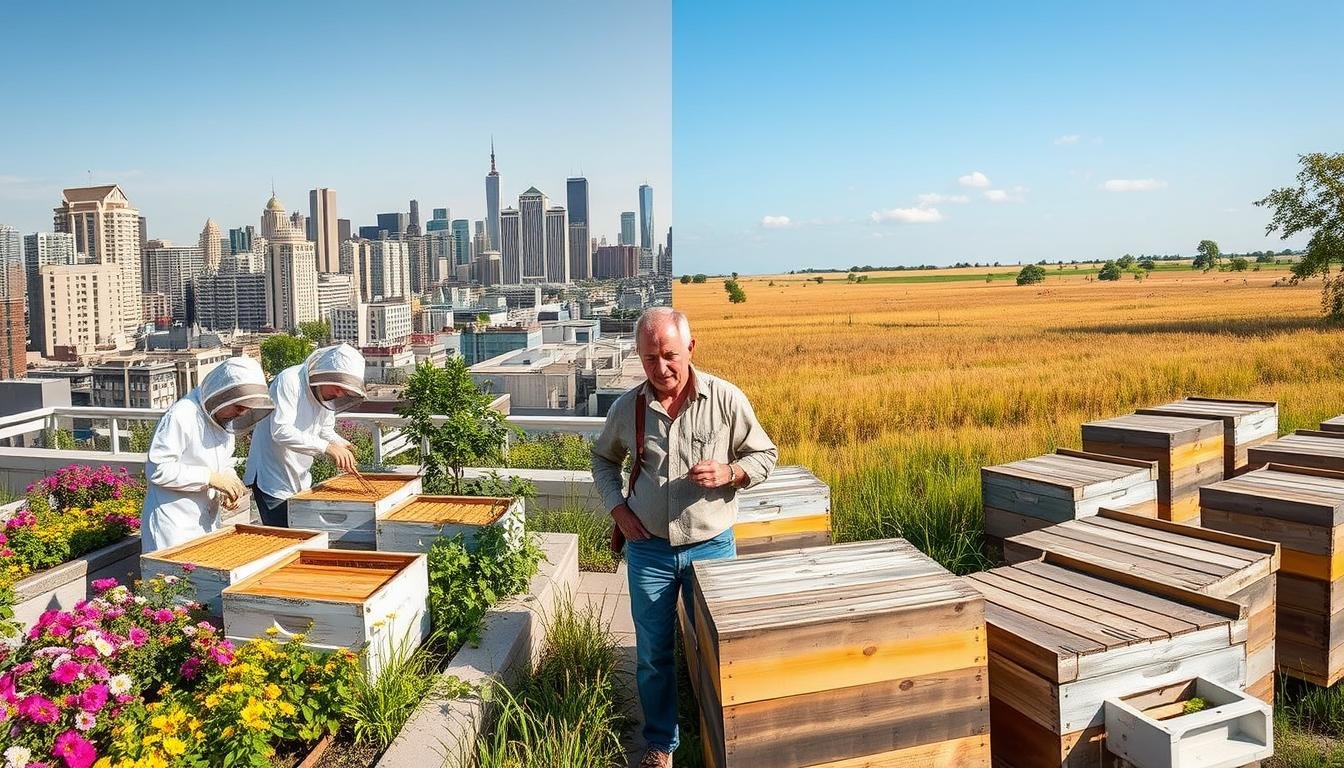
Moving hives from open fields to rooftop gardens changes what bees find and how colonies behave. In many cities, staggered bloom from street trees, parks, and gardens gives a season-long flow of nectar and pollen. Brooklyn Grange reports stronger hive outcomes on rooftops than at some New Jersey farm sites.
Rural fields can offer massive flows during a crop bloom, then long forage gaps. Broad-acre pesticide applications on farms also pose a measured risk compared with the patchwork exposures of urban landscaping.
Rooftops provide vertical flight paths, fewer ground-level disturbances, and warm microclimates that can extend foraging. In either setting, careful placement of the hive entrance and reliable water nearby reduce conflict and support brood rearing.
“Honey flavor tracks nearby plants and trees, so location shapes taste more than simple pollution fears.”
- Forage timing: staggered city blooms vs. concentrated crop flows.
- Exposure: localized landscaping sprays vs. broad agricultural applications.
- Logistics: rooftop access, wind, and inspections differ from vehicle access to field edges.
| Feature | Rooftop / Dense Areas | Open Field / Farm Areas |
|---|---|---|
| Forage Calendar | Successional flowers, trees, gardens provide steady nectar | Large but brief crop blooms; potential forage gaps |
| Contaminant Risk | Local landscaping sprays; pollution often overstated | Broad-acre pesticide drift can affect forage quality |
| Microclimate | Warmer, sheltered roofs extend season | Open exposure; strong flows during crop bloom |
| Access & Management | Elevator/stair access; wind and weight limits | Vehicle access; easier hive transport but more spray risk |
Beekeepers weigh forage patterns, wind and heat, human traffic, pesticide regimes, and routine-inspection ease when moving colonies. Small, practical steps often solve the major problems and help colonies thrive in either setting—nature and careful management decide the rest of the things.
34. urban vs rural beekeeping USA: environment, forage, and hive performance
Where bees find nectar and shelter determines yearly outcomes for hives and honey flavor.

Diverse city blooms and rural monocrops: nectar, weeds, trees, garden flowers
City streetscapes and yards often supply continuous nectar from trees, garden flowers, and even weeds in vacant lots. This variety builds steady nutrition and creates more complex honey profiles that shift with rain and planting each year.
By contrast, large fields can produce intense single-crop blooms followed by long dearths. Beekeepers in those areas rely on supplemental feeding or placing hives near consistent ornamental borders to bridge gaps.
Pesticides, pollution, and honey quality: separating fact from fear
Pesticide exposure follows different paths: drift from broad-acre applications versus spot sprays and particulates in dense neighborhoods. Honey quality reflects these inputs and, more importantly, management choices such as forage mapping and hive placement.
For evidence on landscape-level impacts, consult this research summary that examines how plant variety and pesticide regimes influence pollinator outcomes.
Pests, diseases, and overwintering realities
Varroa, mites, and pathogens drive colony losses regardless of setting. Regular monitoring, timely treatments, and brood breaks are decisive actions for healthy colonies.
Overwintering success depends on stores, ventilation, moisture control, and local microclimate. Rooftops sometimes offer warmer pockets, but careful stock selection and windbreaks matter more than location alone.
- Practical fixes: onsite water, 6-foot flight barriers, and gentle queen selection reduce conflicts and improve forager return.
- Weeds matter: roadside and vacant-lot flora supply essential nectar between major blooms.
Regulations and risk management: how U.S. cities and towns set the rules
Municipal codes balance pollination benefits with neighbor safety by spelling out where and how hives may be kept. Local ordinances typically require permits, limits on the number of hives per lot, flight barriers, and a reliable water source to prevent bees from visiting unintended spots.
Permits, flight controls, setbacks, and water
Most rules set measurable setbacks from property lines, sidewalks, and openings. They often require a 6‑foot flyway barrier or raised placement to steer bees over human activity.
Regulations also mandate fresh water on a hard landing surface. This small step reduces conflicts and keeps foragers from targeting neighbors’ pools or faucets.
Local case studies and breed rules
Madison allows up to six hives with 3‑ft and 10‑ft setbacks, a 25‑ft buffer from adjacent principal buildings, a 6‑ft barrier, licensing, and resident notification.
Milwaukee limits two hives per lot, requires mailed notice to property owners within 200 ft and a 14‑day hearing window, plus setbacks and water rules.
Boston treats hives as conditional use, sets a 50‑ft separation from other residential buildings, caps hive size, and enforces rooftop edge and sidewalk setbacks.
Enforcement and policy trends
- Many towns prohibit Africanized breeds and expect requeening or removal of aggressive colonies.
- Some small towns ban apiaries outright; others, like New York City, issued clear standards to legalize apiaries.
- A simple compliance checklist helps beekeepers: site plan, barrier specs, water provision, and licensing documents.
“Well-crafted rules solve the practical problem of coexistence by protecting neighbors while enabling small-scale apiaries.”
Local ordinance examples and legal sources provide useful templates for towns updating codes and reducing nuisance problems in dense and open areas.
People, place, and community impact: culture, education, and neighborhood relations
Successful hive programs depend as much on people as they do on plants. Social trust, simple routines, and visible care help projects thrive in shared places.

Urban projects in practice: gardens, rooftops, and neighbor relations
Community gardens and rooftops double as teaching sites. Posted guidelines, water stations, and flyway barriers show responsible management.
Practitioners recommend an onsite water source to keep bees away from pools and faucets. Screens and raised entrances route flight paths above head height and reduce concerns from neighbors.
Building inclusive clubs and outreach
Detroit Hives converts vacant lots into pollinator habitat and uses cultural hooks—food, fashion, wellness—to reach new audiences.
Local club members mentor new keepers, share gear, and talk with building managers and HOAs. That personal contact and public honey sharing build trust.
- Proactive notices and scheduled inspections ease neighbor worries.
- Show-and-tell sessions, honey tastings, and frame demos make nature approachable.
- Partnerships with schools and workforce programs create entry points for diverse members.
“Turning hives into neighborhood assets depends on clear communication, visible care, and shared learning.”
Programs that share data, invite feedback, and link to an urban beekeeping guide strengthen community support and welcome new people into stewardship.
Economics and honey: local markets, flavors, and the real vs. fake honey problem
Demand for authentic jars has opened a path from neighborhood gardens to chef’s tables and farmers’ stalls.
Market dynamics favor beekeepers who can verify traceability from the lot to the label. Small runs sell at a premium when shoppers value origin, floral source, and harvest year.
City and farm producers use different channels. In a city, rooftop tastings and pop-ups build stories for local restaurants. In agricultural areas, farm stands and CSAs link jars to fields and seasonal menus.
Flavor changes with flowers and nectar flows. Citrus, lavender, and clover leave clear signatures by season and by year. Buyers who follow a producer return for that variety.
“Adulterated honey undercuts nutrition, trust, and local livelihoods.”
Combat fraud with direct sales, transparent sources, and lab testing. Labels that show floral source, harvest date, and storage notes help people choose real product and support pollinators in community gardens.
Beekeepers can diversify: honey, wax candles, propolis, and pollination services reduce risk and add revenue. Local rules on hive counts often push producers toward premium, small-batch offerings.
For more on authenticity and testing, see the honey quality white paper and this resource guide.
Conclusion
When people align policy, practice, and outreach, bees become neighborhood assets rather than nuisances. Careful site choice, disease control, and seasonal attention let colonies thrive in both towns and open areas. Diverse gardens, trees, and even roadside weeds supply steady forage that supports hive health.
Practical steps matter: orient hive entrances away from paths, add flight barriers, and keep a reliable water source to protect neighbors. Selective requeening reduces pests and temper issues, and timed inspections cut disturbance.
Join a local club, learn the rules, and start with a manageable number of hives on your lot. For a clear checklist of seasonal care, see these seasonal tasks. Small, steady actions build trust and keep colonies healthy for years.
FAQ
What are the main differences when moving hives from countryside fields to city rooftops?
Moving colonies from rural fields to rooftops changes forage patterns, microclimate, and flight paths. In cities bees find diverse garden flowers, trees, and ornamental plantings instead of large monocrops. Roof sites can be warmer and windier, which affects nectar flow and hive ventilation. Urban placement also requires attention to water sources, flight barriers, and neighbors to reduce conflict.
How does forage variety in towns compare with farmland for honey production?
City landscapes often offer a mix of nectar sources—flower beds, fruit trees, community gardens, and weeds—giving honey complex flavors. Rural areas may provide abundant nectar when crops bloom but can be limited by monocropping and seasonal gaps. Local plant variety and year-to-year weather determine yield and taste in both settings.
Are pesticides and pollution in cities a real threat to hive health and honey quality?
Pesticide risk exists anywhere people apply chemicals. Urban exposure tends to be less concentrated than near large-scale crop spraying, but gardeners and municipal pest control can still harm bees. Pollution deposits do not typically contaminate honey at harmful levels, but best practice is to monitor hives, test honey if concerned, and work with local extension services for guidance.
Do colonies face different pests and disease pressures in towns than in rural areas?
Many pests and diseases—Varroa mites, Nosema, foulbrood—affect colonies in both places. Urban apiaries can experience higher hive density, which may increase disease spread if not managed. Conversely, fewer agricultural parasites may reduce some risks. Regular inspections, mite control, and good sanitation remain essential everywhere.
What municipal regulations should I check before installing backyard or rooftop hives?
Check local ordinances for permit requirements, hive counts, setback distances, flyway barriers, and water provision rules. Some cities require registration, neighbor notification, or specific fencing and signage. Contact your city clerk or local beekeeping association for current codes and best practices.
Where can I find real examples of urban beekeeping rules in U.S. towns?
Look at municipal codes and beekeeping program pages for Madison, Milwaukee, and Boston for practical examples of setbacks, neighbor notices, and rooftop provisions. Local university extension services and state apiarists also publish summaries of city and county rules.
Are Africanized bees and breed restrictions a common regulatory concern?
Some jurisdictions have specific rules or bans related to aggressive strains, especially in southern states where Africanized bees are present. Most northern and midwestern cities focus on hive management, placement, and public safety rather than breed bans. Always verify state and county guidance where you plan to keep bees.
How can beekeepers manage neighbor relations and community impact?
Communicate openly, provide education about pollinators, and address concerns about stings and swarming. Install flyway barriers, direct hive entrances away from shared areas, maintain good sanitation, and offer contact information for hive issues. Participating in local clubs and community gardens builds trust.
What role do community organizations play in urban hive success?
Community groups, gardening clubs, and city-run programs supply training, shared apiaries, and outreach. These networks reduce conflict, improve hive care, and expand pollinator habitat. Examples include outreach and education programs run by nonprofits and urban agriculture initiatives.
Can backyard hives be a profitable source of honey and beeswax in towns?
Many keepers sell small-batch honey, beeswax, and pollination services to local markets, restaurants, and farmers markets. Profitability depends on scale, local demand for artisanal products, season length, and costs for equipment and disease control. Urban honey often commands a premium for local flavor.
How does seasonality affect honey flavor and production in different areas?
Flowering sequences and local plant species determine honey character. Urban honey can reflect a wide range of plants across the season, while rural honey may mirror dominant crop or wildflower blooms. Weather and year-to-year variability influence yields in both settings.
What are practical water and forage strategies for city hive siting?
Provide a clean, shallow water source near the hive to prevent bees from using neighbors’ pools. Plant pollinator-friendly species, maintain trees and shrubs that bloom at different times, and support nearby community gardens. These measures improve colony nutrition and reduce nuisance flights.
How many hives are appropriate for a backyard or rooftop location?
Determine capacity by available forage, space, and local rules. Many cities limit hive numbers per property. Start small—one to three hives—and scale based on forage availability and your ability to manage disease and swarms responsibly.
Where can new beekeepers get training and support in towns and small communities?
Local beekeeping clubs, state extension services, and community college courses offer hands-on instruction and mentorship. Urban initiatives, botanical gardens, and nonprofits also run beginner classes and provide access to experienced members for guidance.