Managing hives where humidity and heat dominate takes a climate-centered approach. High moisture raises mold and small beetle risks and can push a colony toward swarming. Good placement, steady airflow, and ready water make a big difference to hive health.
This short guide gives clear, practical advice that helps beekeepers adapt tools and timing to local weather. You will learn simple ways to reduce moisture, improve ventilation, and provide nearby water during heavy nectar flows. Small shifts in site choice and ventilation can protect brood and comb integrity over time.
Plan work in the coolest hours, prepare clothing and tools ahead of time, and use lightweight, ventilated protective gear when needed. These steps lower stress on both the honey bee colony and the person inspecting the hive.
Key Takeaways
- Prioritize airflow and shade to reduce mold and pest pressure.
- Provide shallow water near the apiary during nectar seasons.
- Use screened or ventilated bottom boards to improve circulation.
- Time inspections for cooler parts of the day and keep them brief.
- Adjust entrance size, insulation, and supers with seasonal shifts.
- Consider breathable protective gear to stay safe in high humidity.
- Learn more climate-specific gear and strategies at climate-wise hive management.
Why humidity changes everything for your hive
When moisture hangs in the air, a hive’s internal balance is under constant strain. Persistent humidity raises mold and fungal growth, degrades honey quality, and can cool brood if airflow and internal movement are weak.
Biology matters: brood development needs steady temperature and low condensation. High moisture forces nurse bees to work harder to keep young warm, which stresses the colony and reduces foraging time.
Pest pressure rises: damp, shaded conditions invite small hive beetles and wax moths. Regular checks and improved ventilation cut the shelter these pests need and help protect comb and stores.
- Upgrade air flow with screened bottom boards and added upper entrances to pull moist, warm air out.
- During strong nectar flows, extra ventilation speeds honey curing and lowers fermentation risk.
- Hot, wet spells plus rapid growth can push a hive toward swarming, so add space early.
Action takeaway: build a routine that inspects lids and boxes for condensation, keeps entryways clear, and monitors moisture so brood stays warm and honey stays sound. Learn more climate-specific methods at beekeeping in different climates.
10. beekeeping tips for humid climates
Place hives so bees get morning sun and midday shade where heat and humidity spike. In USDA zones 1–6, fuller sun helps suppress some pests; in zones 7–11, add shade during peak heat to prevent overheating and protect brood.
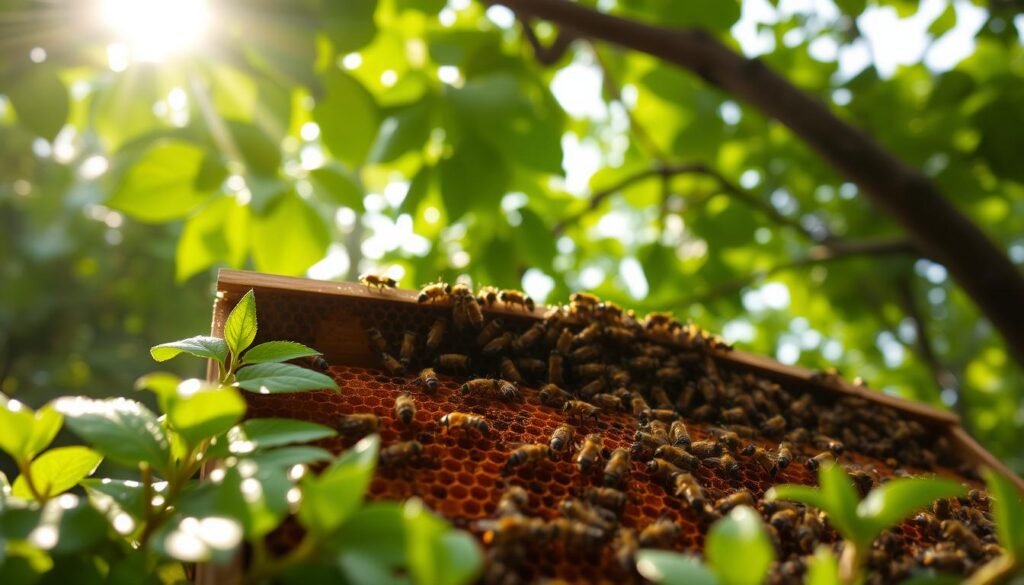
Give bees shade without losing sun
Match shade to your zone. Use trees or a partial shade cloth that blocks the hottest sun while leaving morning rays. This keeps temperature swings gentler and helps honey and brood stay stable.
Max out ventilation and airflow
Install a screened bottom and add an upper entrance to exhaust moist air. Space boxes slightly so air channels form and bees can evaporate nectar more efficiently.
Control moisture and provide safe water
Tilt the hive forward a few degrees to drain condensation and use inner covers that don’t trap dampness. Set a shallow water station with pebbles or marbles near the hive so bees have safe access without raiding pools.
“Face the entrance southeast and add wind barriers to warm the hive early and reduce chilling drafts.”
- Entrance orientation: southeast-facing helps morning activity.
- Wind barriers: block gusts but allow steady airflow.
- Pest checks: inspect more often in humid weather to stop mold and small hive beetles early.
Smart hive placement and access in wet, hot areas
Choose a stable, dry site that sheds water and stays level. A firm foundation prevents the hive from sinking after storms and keeps comb aligned. It also makes inspections safer and faster.
Choose dry, level ground and use stands
Elevate the hive on stands to improve drainage and reduce predator reach. Stands make lifting boxes easier and cut wear on the hive base.
Avoid hills, valleys, and high foot traffic
Steer clear of valleys where cold, damp air pools. Hilltops can funnel wind and stress bees during hot weather. Keep the apiary at least 20 feet from busy yards so flight paths stay calm.
Leave working room between hives and mind the bottom board choice
Allow at least 6 inches—and ideally 2 to 3 feet—between colonies for tool clearance and safe lifting. Face the entrance toward open flight paths, not walkways.
- Ground matters: choose a site that sheds water quickly and remains level.
- Use stands: elevate hives to deter predators and improve access.
- Bottom boards: use screened bottoms in hot, wet months and switch to solid bottoms in cold weather.
“Check stands and access paths after heavy weather to catch shifts before they affect hive stability.”
Heat-ready beekeeper setup: clothing, gloves, and hydration
Hot summer work calls for a plan that protects you and limits hive stress. Dress to move air, shorten inspection time, and keep water close. Small changes in gear and timing cut heat risk and help bees stay calm during checks.
Wear breathable, vented gear and cooler glove options
Choose vented jackets or a mesh suit and a breathable veil to boost airflow while keeping protection strong. Many beekeepers switch heavy leather gloves for lighter models or nitrile when frames are calm.
Plan inspections in the coolest hours and shorten time outside
Start inspections early on hot days to avoid peak heat. Keep sessions brief and focused so the colony spends less time open and you spend less time in gear.
Hydrate, use sun protection, and watch for heat stress
Drink water before you begin and sip during work. Add electrolytes on the hottest days.
Make sure you stop if you feel dizzy, nauseous, or cramped—closing up and returning later protects both you and the bees.
Keep tools ready so you can work efficiently
Lay out smoker, hive tools, and boxes in advance. Bring a helper to lift heavy boxes and cut total time outside.
Quick comparison of protective options
| Item | Cooling benefit | Protection level | Best use |
|---|---|---|---|
| Vented jacket | High airflow | Full torso | General summer inspections |
| Mesh suit & veil | Maximum ventilation | High if well-fitted | Extended work in peak heat |
| Light gloves / nitrile | Improved dexterity | Moderate | Frame handling, quick checks |
| Sweatband / cold pack | Immediate cooling | Personal comfort | Short relief during long days |
Pests, disease, and swarming in humidity
Humidity-driven pests can undercut a strong colony fast if you delay checks and space management. Act early to protect brood, eggs, and the queen. Short, focused visits spot larval infestations and mold before comb is lost.

Stay ahead of small hive beetle, wax moths, and mold with regular inspections
Increase your inspection cadence so you catch small hive larvae, wax moth webbing, and slimed comb early. Remove damaged comb and dry boxes to stop spread.
- Inspection cadence: shorten intervals during wet spells to spot pests quickly.
- Pest triage: pull slimed frames, then improve airflow with screened bottoms and an upper entrance.
- Post-rain checks: recheck after storms for mold and beetle spikes.
Use splits and add supers in time to reduce crowding and protect the queen
Add space before congestion peaks. Put on supers early or perform a split so the queen keeps laying and brood patterns stay solid.
- Space management: bring extra boxes the same day you see heavy nectar backfilling or long beards of bees.
- Queen protection: confirm eggs and young brood at each visit; spotty patterns often warn of stress or queen trouble.
- Gentle handling: lift frames carefully during splits to avoid injuring the queen and to keep colony temperament stable.
“Maintain airflow and add room early — it keeps brood healthy and makes life harder for pests.”
For expansion strategies and timing on adding supers, see this expansion guide.
Seasonal strategy for tropical and coastal climates
Timing and small adjustments each season keep tropical and coastal apiaries steady during rapid change. Plan actions around local bloom calendars and predictable weather shifts so the colony has the right space and protection when it needs them most.
Spring and summer: nectar flow timing, brood space, and ventilation
Track local source peaks and add boxes before the main nectar comes in. This gives room for honey and prevents crowding of the brood nest.
Keep ventilation steady so bees can cure nectar and avoid moisture buildup. Provide partial shade and a nearby water source during the hottest summer periods to lower cluster stress.
Autumn and winter: food reserves, entrance control, and switching bottom boards
In autumn, assess honey and move frames so each hive has compact stores. Reduce the entrance to limit robbing and cold drafts.
When winter arrives, switch to a solid bottom and shrink entrances to conserve heat. Monitor internal moisture so condensation does not harm the cluster. Even in cooler months, keep a safe water source available near the hive.
“Log the dates you add boxes, change entrances, and swap bottom boards—records make future timing simpler and more effective.”
For more on climate-tuned ventilation and seasonal timing consult a detailed guide on hive ventilation and practical climate-wise hive management.
Conclusion
Small, steady changes to shade, airflow, and water access make a large difference in hive health. Match shade to your USDA zone, use screened bottoms and an upper entrance, and set a shallow water station near the apiary so bees can manage moisture and temperature.
Place hives on dry, level stands away from traffic, add wind barriers, and orient openings to warm morning sun. In hot days choose vented gear, hydrate, and keep inspections short to protect both you and the colony.
Seasonal moves — timely supers, splits, and switching to solid bottoms as temperatures fall — help the queen and maintain honey stores. Learn more about climate-wise hive management at climate-wise hive management, and keep refining your approach each season to build long-term resilience.
FAQ
How does high humidity affect hive health and brood development?
High moisture raises risks of mold, fungal growth, and brood chill. Keep frames dry and monitor combs. Good ventilation and reduced internal humidity help larvae develop and prevent honey fermentation.
What hive placement reduces moisture problems while providing shade?
Place hives on level, well-drained stands in partial shade that still gets morning sun. Avoid low spots and dense canopy; morning sun dries dew and helps bees warm brood, while afternoon shade lowers heat stress.
Which ventilation upgrades work best in hot, wet areas?
Use screened bottom boards, add an upper entrance or ventilation notch, and leave slight spacing between boxes. These allow humid air to escape and encourage airflow without creating drafts that chill brood.
How can I control moisture inside the hive without harming bees?
Remove wet or moldy frames, avoid heavy insulation that traps humidity, and install moisture-absorbing materials outside the brood area such as shallow burlap above frames. Ensure adequate ventilation to prevent condensation on comb.
Do bees need a nearby water source in humid climates?
Yes. Provide shallow, safe water with landing pads or floating corks so bees don’t drown. Even in humid regions, bees collect water for cooling and hive functions; a reliable source reduces robbing and neighborhood complaints.
What entrance orientation and wind protection help stabilize hive temperature?
Facing entrances southeast captures morning sun to warm the hive early. Use windbreaks like shrubs or fencing on the windward side to moderate airflow and reduce chilling during cloudy or wet days.
How should I site hives to avoid sinking and predators in wet ground?
Use concrete blocks or treated hive stands to keep bottom boards off the soil. Choose firm, slightly elevated ground and clear vegetation to deter ants, rodents, and ants that thrive in damp conditions.
What bottom board choice is best for humid, hot areas?
Screened bottoms improve airflow and reduce moisture buildup. In colder or very wet seasons, use an insert or solid board temporarily to help retain heat and protect stores when needed.
What protective clothing and routines reduce heat strain during inspections?
Wear lightweight, vented suits and breathable gloves. Inspect in early morning or late evening, limit hive exposure time, and keep water and sunscreen handy to prevent heat exhaustion.
How do I adjust inspection timing and methods in high humidity?
Shorten inspections, focus on quick core checks, and avoid opening hives during peak heat or heavy rain. Work efficiently with tools organized to minimize time frames are exposed and brood chilled.
Which pests and diseases thrive in humid climates and how do I prevent them?
Small hive beetles, wax moths, and fungal mold prefer damp conditions. Prevent infestations with regular checks, clean equipment, screened bottom boards, traps for beetles, and prompt removal of damaged comb.
When should I add supers or make splits to reduce swarming risk?
Add supers as nectar flow increases and brood space fills to give bees room for stores. Make timely splits during strong buildup to reduce congestion and preserve the queen’s productivity.
How does seasonal strategy differ in tropical or coastal regions?
Spring and summer focus on ventilation, timing supers to nectar flows, and protecting brood from heat. In autumn and milder winters, secure food reserves, control entrances against pests, and swap bottom boards if moisture rises.
How can I protect honey quality from humidity-related issues?
Ensure honey is capped and fully cured before extraction. Store supers in dry, ventilated areas and avoid late-season harvesting when moisture content may be higher to reduce fermentation risk.