This introduction gives a clear, practical view for U.S. beekeepers managing honey bee colonies right now. In late autumn and early winter a brood gap can be normal. Many colonies go broodless between mid-October and late December, depending on forage and weather.
Timing, not calendar dates, drives that window. When no brood is present, oxalic acid treatment becomes especially effective because most Varroa mites are on adult workers. That makes the winter broodless period a strategic chance to reduce mites.
This guide explains signs that a broodless state is routine and when it signals a queen or health issue. You will learn quick, low-stress checks that respect cold weather and protect the colony.
Key Takeaways
- Brood gaps in winter can be normal and useful for mite control.
- Environment, forage, and weather set the timing, not fixed dates.
- Use gentle checks to confirm brood status with minimal disturbance.
- Treatments like oxalic acid work best when brood is absent.
- Follow a stepwise diagnosis to choose feeding, requeening, or combining.
Understand the beekeeping context: when a broodless hive is normal vs. a problem
Recognizing seasonal rhythm helps you decide whether to act. After the summer solstice colonies shrink and slow brood rearing to save stores. That contraction is driven by photoperiod and local weather, not calendar dates.
Seasonal brood cycles
Brood rearing usually ends in autumn and resumes after the winter solstice. A one- to three-month broodless period is common and often starts in October or November. Southern apiaries may keep small patches of brood year-round.
Regional variation and practical checks
Timing varies by region and current weather fronts. When several nearby colonies follow the same pattern, the pause is likely normal. A single weak colony while neighbors are strong suggests queen or health problems and needs further inspection.
- Tip: Use the broodless window to reduce varroa mites when safe.
- Note: Consider nest size, queen age, and local forage at the end of the season.
| Region | Typical broodless period | Weather influence | Management note |
|---|---|---|---|
| Northern US | Nov–Jan | Cold snaps extend pause | Plan oxalic treatments around brood gap |
| Central US | Oct–Dec | Variable fronts shift timing | Watch neighboring colonies for baseline |
| Southern US | Often brief or absent | Mild winters sustain some brood | Assess cells and queen activity closely |
Quick signs to assess brood status without tearing the hive apart
You can learn a lot about brood status from simple, non‑disruptive observations at the hive base. Start with low‑impact checks before planning a full inspection in cold weather.
Slide a clean, close‑fitting Varroa tray under an open mesh floor and watch for biscuit‑colored crumbs. Those tan, crumbly fragments are brood cappings and point to recent emerging brood in the colony.
Reading the bottom board / Varroa tray
- Look for tan, crumbly crumbs on the board—these are cappings from emerging bees, not general wax or propolis debris.
- A steady decrease in cappings and area over weeks suggests brood rearing is winding down for winter.
- Log the number and spread of cappings each visit; trends over time matter more than one sighting.
Spotty pattern clues at a glance
A quick top peek that shows scattered sealed or open cells with irregular distribution points to a spotty pattern. That pattern can signal queen performance or disease and merits a closer check when weather permits.
Use this non‑invasive method first. In small hives or nucs, changes show up faster and tracking is easier. Pair board evidence with any recent queen behavior you recall to form a clearer view before opening boxes.
How to confirm broodlessness safely in the present season
A reliable diagnosis relies on records from the bottom board and brief, timed center-frame checks when weather allows. Start with noninvasive data and preserve cluster warmth during cold spells.
Using an open mesh floor and a close-fitting board
Install a snug, draft-reducing board beneath the mesh to catch biscuit-colored crumbs and prevent wind from scattering debris. A close-fitting tray keeps the area readable over time.
Timing observations 10–12 days apart
Record the debris at intervals of about 10–12 days to compare area and density of cappings. Trends over several visits across a few weeks tell you whether sealed cells are decreasing or returning.
When and how to do a brief center-frame check
On a mild day, perform a very short center-frame glance. Gently spread the middle frames and look for sealed brood between prior strip locations.
- Keep the visual check under a minute to protect the cluster and quickly reseal the hive.
- If cappings disappear entirely after a downward trend, the colony is likely brood-free and ready for a single oxalic acid treatment.
- If cappings increase, delay brood-dependent treatments and reassess timing.
“Broodless windows improve treatment efficacy because most varroa mites are phoretic and exposed.”
Document each visit and compare multiple colonies. Shared trends point to seasonal change rather than a single-queen problem, helping you choose the right next step. For expansion planning and seasonal strategy, see this practical guide.
what causes broodless hives
Many colonies shift into a low-activity state in late autumn to conserve stores. From October through December, a normal broodless period helps the cluster keep warm at about 20°C instead of the 34–35°C needed for active brood rearing.

Seasonal shutdown: energy conservation and colony right-sizing
Reducing brood lowers food use and right-sizes population before harsh cold arrives. The queen often pauses egg laying, giving her a rest that improves performance when the year turns.
Stressors, pests, disease, queen failure, and nutrition gaps
Outside of normal cycles, brood gaps can signal problems. Failed mating, accidental queen loss, or a poorly mated queen may halt brood.
High Varroa loads and viruses depress brood development and can trigger Parasitic Mite Syndrome. Diseases such as EFB, AFB, sacbrood, and chalkbrood also mimic gaps and need specific recognition.
- Pollen shortages stop brood quickly, even when honey remains.
- Compare neighboring colonies and the local weather pattern to decide if the pause is seasonal or a failing colony.
“A broodless interval can be a normal strategy to stretch stores, but sudden gaps outside seasonal timing warrant inspection.”
Seasonal cause: fall and winter broodless period explained
A winter pause in egg laying helps colonies lower energy needs and protect stores through cold months.
During fall many bees reduce brood rearing and the nest can go mostly brood-free for one to three months. This period often runs from October to December, with brood resuming after the winter solstice.
The cluster target temperature drops to about 20°C without brood, versus 34–35°C when brood is present. Lowering heat demand preserves honey and stretches stores until spring.
Colony population shrinks toward the end of the foraging season and then rebuilds after the solstice. In milder southern zones some colonies keep small patches of cells with brood instead of fully stopping.
Management notes: monitor colony weight and stores, and plan brood-dependent interventions during this window—oxalic acid treatments work best when there is no sealed brood.
| Region | Typical winter span | Brood pattern | Management tip |
|---|---|---|---|
| Northern US | Nov–Jan | Full pause common | Schedule oxalic treatment during gap |
| Central US | Oct–Dec | Variable; short gaps | Track bottom-board cappings |
| Southern US | Brief or none | Small brood patches possible | Inspect cells before treating |
“Expect population to be lowest just before brood rearing restarts and climb steadily toward spring.”
Queen-related issues that lead to a broodless hive
Inspecting for eggs, young larvae, and emergency cells gives quick insight into colony leadership. A brief, calm check on a mild day reveals whether the gap is seasonal or a true queen problem.
Supersedure, failed mating, or loss after inspections
Supersedure can leave a period with no laying queen. The colony may appear broodless until the new queen emerges, mates, and starts laying.
Failed mating often shows no eggs or later yields only drones. This is common late in the season and can produce persistent gaps into spring.
Evaluating eggs, worker behavior, and emergency cells
Look for tiny eggs and very young larvae first. Their absence across multiple checks suggests a queen failure rather than normal winter pause.
- Worker clues: Queenless colonies are noisier and more disorganized.
- Brood pattern: Spotty pattern across frames signals decline; tight pattern shows a healthy queen.
- Emergency cells: Multiple or oddly placed cells indicate recent queen loss or supersedure attempts.
“If no eggs appear after a week in suitable weather, requeening or combining is often the best path.”
Varroa mites, PMS, and the brood cycle: why timing matters
When the nest has no sealed young, most varroa remain on adult bees and are vulnerable to targeted treatment. That timing makes oxalic acid especially effective during the winter pause because mites cannot hide under capped pupae.
Broodless windows as an opportunity for oxalic acid efficacy
Broodless windows in winter are prime time for oxalic acid treatment because mites are not sheltered in sealed cells. Apply OA after you confirm no sealed brood from your bottom‑board checks.
PMS indicators: mites on brood and adults, melting larvae, population decline
Parasitic Mite Syndrome (PMS) shows as a spotty brood pattern with visible mites on adults and occasional mites on open larvae. You may see melting larvae and a shrinking population of workers.
Heavy varroa pressure increases viral load, undermining worker longevity and colony resilience. Check the area on the tray for mite drops to gauge infestation before and after treatment.
Planning treatments before colonies resume brood rearing
Plan treatment early in the broodless interval rather than waiting until late winter. Mite numbers do not rise without brood, so treating sooner maximizes single‑application control.
- Confirm no sealed brood via cappings records before treating.
- Treat before pupae return; once brood resumes, OA exposure drops dramatically.
- Pair mite control with nutrition and low‑stress handling to help recovery.
“Timing is as important as the product—apply treatments when mites are most exposed.”
For regional varroa guidance and lifecycle details, consult this archive on varroa mites.
Diseases that mimic or cause brood gaps: differential diagnosis
When larvae die at multiple stages, differential diagnosis helps beekeepers pick the right action fast.
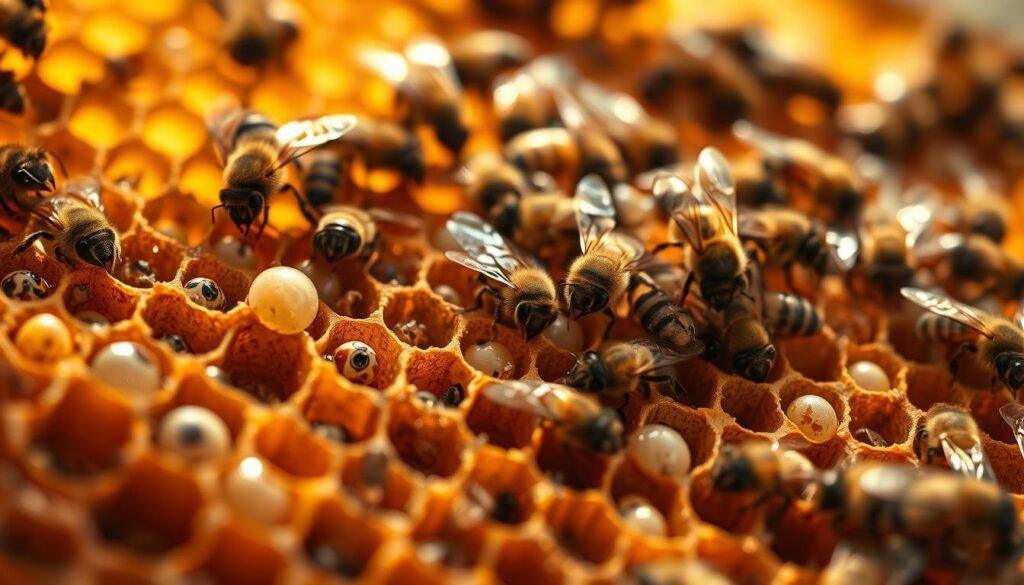
European foulbrood (EFB)
EFB presents with a spotty pattern of open brood, discolored or twisted larvae, and rubbery larval scales. It often flares in spring stress. Management: shook swarm or targeted removal; antibiotics require a veterinarian prescription.
American foulbrood (AFB)
Look for sunken, perforated caps and dark, sticky scales. A positive ropiness test (up to ~3/4″) and a foul odor suggest AFB. Contact your state apiary inspector—legal destruction is common as antibiotics mask but don’t cure.
Sacbrood, chalkbrood, stonebrood, and BQCV
- Sacbrood: canoe‑shaped larvae that pull out like a bag of liquid; requeen or cage the queen for two weeks.
- Chalkbrood: white-to-black mummies on the bottom board; reduce moisture, improve ventilation, and replace old comb.
- Stonebrood: Aspergillus creates hard mummies; severe cases may require burning to protect animals and people.
- BQCV: kills developing queens inside sealed cells; often occurs in breeder operations rather than standard production hives.
“Accurate identification prevents unnecessary antibiotics and lets you apply the right treatment for the case.”
Environmental and management factors: forage, weather, and nutrition
Early spring scarcity often shows first in the brood. A shortfall of pollen reduces protein for brood food and forces the colony to tighten the brood nest. This contraction conserves stores and protects the cluster when nectar is limited.
Early spring pollen dearth and brood nest contraction
Weather-driven gaps can leave the local area short of blooms for days or weeks. When pollen runs low, larvae suffer even if honey remains handy.
- Monitor nearby forage and plantings; limited area forage means supplemental pollen or pollen patties may be needed.
- Hygienic colonies remove diseased pupae fast, but this can spread spores—balance sanitation with comb management.
- For deeper reading on how winter pollen affects spring bees, see this piece on pollen and winter bees.
Hive ventilation, moisture control, and comb condition
Moisture raises fungal risk. Chalkbrood thrives in damp, poorly ventilated nests and can reduce production of healthy cells.
- Prevent drafts yet allow moisture to escape; a small entrance reducer and screened ventilation help.
- Replace old, dark combs that may harbor pathogens; fresh comb improves brood hygiene and long‑term production.
- Assess the site and microclimate; match management to your regional rhythms with guidance from a climate-aware beekeeping guide.
“Good beekeeping—timely comb rotation, proper ventilation, and realistic expectations about local weather—speeds recovery from winter and supports steady spring growth.”
Step-by-step: diagnosing a broodless hive today
Begin with noninvasive records. Insert a clean, close‑fitting board or tray for 2–3 days to collect biscuit‑colored cappings and mite drops. Count and note the number and area of crumbs before touching frames.
Record debris patterns, brood cappings, and mite drops
Log tray results and repeat observations about 10–12 days apart to reveal trends over weeks. Correlate mite drops with capping decline; higher drops when cappings fall suggest more phoretic mites on adult bees.
Interpret brood patterns, cells, and odors during a careful check
When weather allows, perform a very brief central frame peek to confirm sealed brood absence. Assess cells for unusual odors, discoloration, or sticky textures that point toward AFB or EFB rather than a seasonal pause.
- Note worker behavior: frantic removal or spotty patterns can indicate disease or strong hygienic activity.
- Distinguish causes: look for eggs or very young larvae to rule out queen loss.
- Weigh the colony: heft or use a scale; adequate stores reduce risk during a brood gap.
- Document everything: dates, board counts, mite numbers, and frame notes to support a clear diagnosis.
“Objective, repeated checks save colonies by guiding measured intervention.”
For identification aids and regional pest guidance consult this honey bee pests reference and align timing with a local seasonal calendar.
Action plans by cause: what beekeepers should do next
Use cause-focused steps to choose a fast, sensible response. Start with noninvasive checks and your board records, then apply the right treatment or management move for the linked problem.
Seasonal pause: conserve and monitor
If the period is seasonal and the colony is otherwise vigorous, feed syrup or honey and add a pollen substitute only if stores are low. Avoid needless queen changes during a normal winter pause.
Queen failures: reset the cycle
For confirmed queen loss, requeen promptly when weather allows. If queens are unavailable or it’s cold, cage a new queen for ~2 weeks to stabilize laying.
Alternatively, combine a weak, queenless hive with a strong queenright colony to restore population and reduce labor.
Varroa and PMS: break brood and treat
Use the brood-free window to apply an effective varroa treatment. Oxalic acid vapor or dribble works best when no cells are sealed. Consolidate space to match the colony size and feed to aid recovery.
Disease responses: follow legal and veterinary steps
For EFB, perform a shook swarm onto clean foundation, feed heavily, and consider requeening; antibiotics need a veterinarian. For suspected AFB, run a ropiness test, contact your state inspector, and be ready to remove infected equipment per law.
| Cause | Immediate action | Follow-up | Timing |
|---|---|---|---|
| Seasonal pause | Feed if low; avoid requeening | Monitor board debris and weight | Now → reassess in early spring |
| Queen failure | Requeen, cage, or combine | Check for eggs within 7–10 days | As soon as mild weather allows |
| Varroa / PMS | Break brood cycle; apply OA or approved treatment | Track mite drops on board; retreat if needed | During confirmed broodless period |
“Document each intervention and revisit within the set timeframe to verify recovery before spring.”
Conclusion
Conclusion
End this season with a clear plan: confirm brood absence using a bottom board and repeat checks, then apply timing‑sensitive treatment if needed. Early oxalic acid during a confirmed winter window gives the best knockdown because most mites are on adult bees.
Keep concise records of cappings, mite drops, and visual checks. That data turns observations into timely decisions that protect the queen, workers, and overall colony health.
Maintain good moisture control, pollen nutrition, and disease vigilance. When signs go beyond a seasonal pause—persistent gaps into spring or unusual cell mortality—act quickly with requeening, combining, or the proper disease response.
Right action at the right time turns a seasonal pause into an opportunity to preserve honey production and rebuild strong colonies for the coming year.
FAQ
How can I tell if a colony is broodless without dismantling the nest?
Inspect the bottom board or Varroa tray for a sudden drop in biscuit-colored cappings and a steady stream of adult bees with few or no pollen loads. A clean tray with mainly debris and no cappings over a 10–12 day window points to little or no brood. Watch worker behavior at the entrance—reduced nursing activity and foragers returning with nectar but not pollen can also signal a brood shortage.
When is an empty brood nest a normal seasonal response?
Colonies commonly reduce or pause rearing in late fall and winter to conserve resources. In some regions of the United States, northern apiaries show a pronounced broodless period after the autumn nectar flow, while southern colonies may maintain low-level brood rearing year-round. This seasonal shutdown is a natural right-sizing of the population for colder months.
Could a queen problem be behind the lack of brood?
Yes. Queen failure, missed mating, supersedure in progress, or sudden queen loss can leave a nest without eggs or young brood. Look for laying workers (spotty brood pattern with multiple eggs per cell), emergency queen cells, or absence of eggs when you briefly check center frames to evaluate queen status.
How do Varroa mites influence brood cycles and treatment timing?
High Varroa loads force weaker colonies and can trigger brood gaps. A broodless window offers an ideal time for oxalic acid vapor or dribble treatments because there is little protected mite brood. Monitor mite drops on a tray and plan treatments before the colony ramps up rearing to reduce reinfestation.
What disease signs mimic a brood gap and how do I differentiate them?
Bacterial and fungal brood diseases produce spotty or missing brood. European foulbrood (EFB) shows sunken, discolored open brood with rubbery larvae; American foulbrood (AFB) has sunken, perforated caps and ropy larval remains; sacbrood presents canoe-shaped larvae. Use odor, ropiness tests, and frame-level inspection to distinguish these from simple broodlessness and follow local rules for AFB.
How often should I check debris or Varroa trays to confirm trends?
Check trays every 10–12 days to capture changes across a worker brood cycle. Shorter intervals can miss patterns; longer gaps delay diagnosis. Keep the floor clean before starting observations so new cappings and mite fall are easy to interpret.
What immediate steps should I take if a productive colony suddenly shows no young brood in spring?
First, perform a brief visual check of central brood frames for eggs and larvae. If none are present, inspect for the queen or emergency queen cells and assess mite drop and adult population. Provide pollen or protein supplement if forage is scarce, and consider combining weak colonies or requeening if queen failure is confirmed.
Can environmental factors like weather or forage shortages cause brood reduction?
Absolutely. Cold snaps, prolonged rain, or an early-season pollen dearth can force colonies to contract the brood nest. Poor comb condition and moisture issues also reduce rearing. Improve ventilation, provide supplemental pollen, and place hives near reliable forage when possible.
Is a broodless window useful for integrated pest management (IPM)?
Yes. A planned broodless period improves the efficacy of many treatments against Varroa and some pathogens. Applying oxalic acid during minimal brood presence targets phoretic mites. Use recorded mite counts and timing to align IPM with the colony’s natural cycle.
What are safe diagnostic steps to confirm broodlessness without harming the colony?
Use an open-mesh floor and a clean insert for debris monitoring, observe trays over two checks 10–12 days apart, and do a quick center-frame peek rather than extended inspections. Keep checks brief, wear gloves, and avoid splitting frames during cold or stressful periods to prevent chilling brood if present.
When should a beekeeper requeen versus combine colonies to resolve brood loss?
Requeen when the current queen is failing, poorly mated, or absent and the colony has enough workers to raise or accept a new queen. Combine weak, queenless colonies with stronger ones when population is too low for successful rearing. Base the decision on brood pattern, mite levels, and forage availability.
How do I interpret a spotty brood pattern during an inspection?
Spotty brood can mean poor egg-laying, disease, or genetic laying issues. Evaluate the distribution of capped and open cells, look for multiple eggs per cell (laying workers), and test for foulbrood signs. If disease is unlikely, suspect queen quality or nutrition and act accordingly.
What treatment options exist for a colony with heavy mite pressure and little brood?
In a low-brood state, oxalic acid vapor or dribble treatments provide effective mite control against phoretic mites. Follow label instructions and safety protocols. For higher infestations, combine chemical treatment with brood interruption tactics—splitting colonies or using queen confinement—to reduce mite reproduction.
How do regional differences in the United States affect expectations for brood rearing?
Northern apiaries face long winters and clearer broodless periods, while southern and coastal regions may sustain low-level brood year-round. Local climate, floral calendar, and beekeeper management decisions all shape typical brood cycles; adapt inspection and treatment timing to regional patterns.
What records should I keep to diagnose chronic brood problems over a season?
Log dates of inspections, mite counts, tray debris observations, queen changes, feeding, weather events, and treatments. Consistent records help trace patterns—such as repeat spring brood gaps or recurring disease—and guide targeted interventions across the year.