Protecting hive assets starts before you move boxes to a shed or garage. Female moths lay hundreds of eggs and larvae feed on comb, pollen and brood residues. Assume frames may already host stages and plan to kill and deter them before storage.
This guide shows practical, stepwise methods that combine strong apiary management, deep freezing, and residual options like PDB and Certan (B402). A healthy colony is the first line of defense, but stored frames need treatment too.
Safety matters: avoid naphthalene mothballs because they taint comb and harm bees and people. Post-winter warm-ups raise moth pressure, so label stacks, log treatments, and schedule inspections to keep colonies and comb value intact.
Key Takeaways
- Assume eggs or larvae are present; treat before storage.
- Use freezing plus residuals (PDB, Certan/B402) for layered control.
- Healthy hives exclude pests; strong colonies reduce risk.
- Avoid naphthalene mothballs to protect honey and brood.
- Label, date, and document treated stacks for traceability.
- Inspect stacks as temperatures rise and keep a backup plan.
- Learn more detailed methods from a trusted source like Keeping Wax Moths Under Control.
Why prevention matters for stored comb, frames, and hive equipment
Stored comb and frames represent real value. Drawn comb saves bees time and energy. That speeds hive buildup and boosts honey production. Losing that comb to pests hurts productivity and apiary economics.
Female wax moths can lay 300–600 eggs over about five days. They pick dark cracks and quiet corners. Without bees on patrol, larvae feed on wax, pollen, and brood residues and quickly tunnel through comb.
Risk factors matter: warm, poorly ventilated, low-light storage invites infestations. Webbing, frass, and collapsed comb follow, and wooden hive parts can suffer structural damage.
- Silent losses: stored frames sit unprotected, so damage often goes unnoticed until spring.
- One lapse spreads risk: a single neglected stack can seed moth pressure across hives during warm periods.
- Prevention beats repair: restoring ruined comb is time-consuming and costly compared with routine checks and clear protocols.
Formalize storage duties, schedule inspections, and track treatments. Both greater wax and lesser wax species play a role, so treat all components the same—even clean-looking supers can attract pests.
Know your enemy: wax moth biology that impacts storage
Know the life cycle to time inspections and action.
Life stages drive damage and response. Eggs hide in cracks; larvae bore and feed on beeswax, pollen, and brood residues. Pupae occur in chewed wood and leave tough cocoons. Adult moths fly at night and seek dark, low‑light spots.
Life cycle timing and temperature
Females can lay 300–600 eggs over about five days. At 28–30°C development speeds up: eggs hatch in 3–5 days and larvae mature in ~20 days. Cooler storage slows growth but does not stop it.
Greater vs. lesser species
The larger species causes faster, heavier damage. The smaller type still tunnels and leaves cocoons. Treat both the same when sealing or cold‑treating frames.
| Stage | Storage Risk | Signs | Quick Action |
|---|---|---|---|
| Eggs | Hidden in crevices | Invisible, scattered | Freeze or seal stacks |
| Larvae | Destructive tunneling | Webbing, frass | Remove debris, inspect often |
| Pupae | Wood damage | Cocoons, gouges | Repair frames, discard fused comb |
| Adults | Reinfest stacks | Night flight, holes | Improve light and ventilation |
- Dark, dirty comb and hive debris act as beacons for laying eggs.
- Bees usually police these stages; in storage you must mimic that pressure with sealing, cold, or treatments.
Spot problems early: identifying wax moth activity in stored equipment
A quick, focused inspection can catch infestations before combs collapse or spreads occur. Check stacks at regular intervals, especially as temperatures rise. Warm, dim, and poorly ventilated places increase risk.

Key signs to watch for
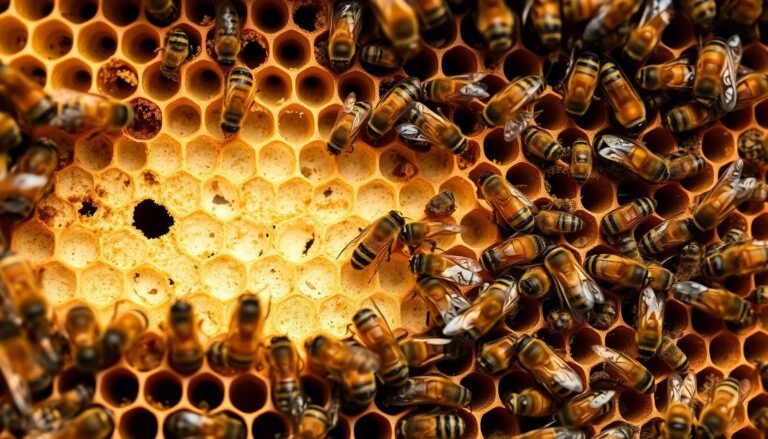
- Silk webbing across galleries and cells — the classic sign of moth activity.
- Dark, gritty frass collected on bottom boards or shelves.
- Canoe‑shaped tunnels and attached white cocoons along frame shoulders.
- Sections of comb that crumble or collapse into crumbs under light pressure.
Not the same as small hive beetle damage
Distinguish correctly: small hive beetle outbreaks produce slimed comb, fermented honey, and a sour odor. By contrast, wax moth damage shows webbing and tough cocoons without slime. Correct ID guides the right response.
“Train your eye: spot fine silk bridges and pinpoint holes before comb structure fails.”
Action tip: use a bright flashlight and hive tool to inspect top bars, frame shoulders, and dark corners. Photograph and label affected frames, then isolate or treat them immediately to limit further moth infestations.
preventing wax moths in stored equipment
Cold treatment is the safest non-chemical method to neutralize eggs and larvae before frames go into long-term storage.
Cold strategy: freezing frames to kill wax moth eggs and larvae
Stage frames and combs in batches so the core reaches below −7°C (19.4°F). Hold each batch until the entire box stays at that temperature for 4–5 hours.
Seal or wrap boxes immediately after thawing so adult moths cannot recolonize. Keep combs dry during thaw to avoid mold and preserve beeswax structure.
Heat caution: why high temperatures risk beeswax integrity
Heat above 46°C can kill life stages, but beeswax weakens near 50°C and melts by 62–64°C. Avoid high-heat solutions unless you have precise control and accept risk to drawn comb.
Light and ventilation: simple setups that deter adult moths
Use constant light, normal frame spacing, and an oscillating fan to keep air moving. This reduces low‑flow pockets where adult moths prefer to lay eggs.
Stacking, sealing, and spacing: practical storage configurations
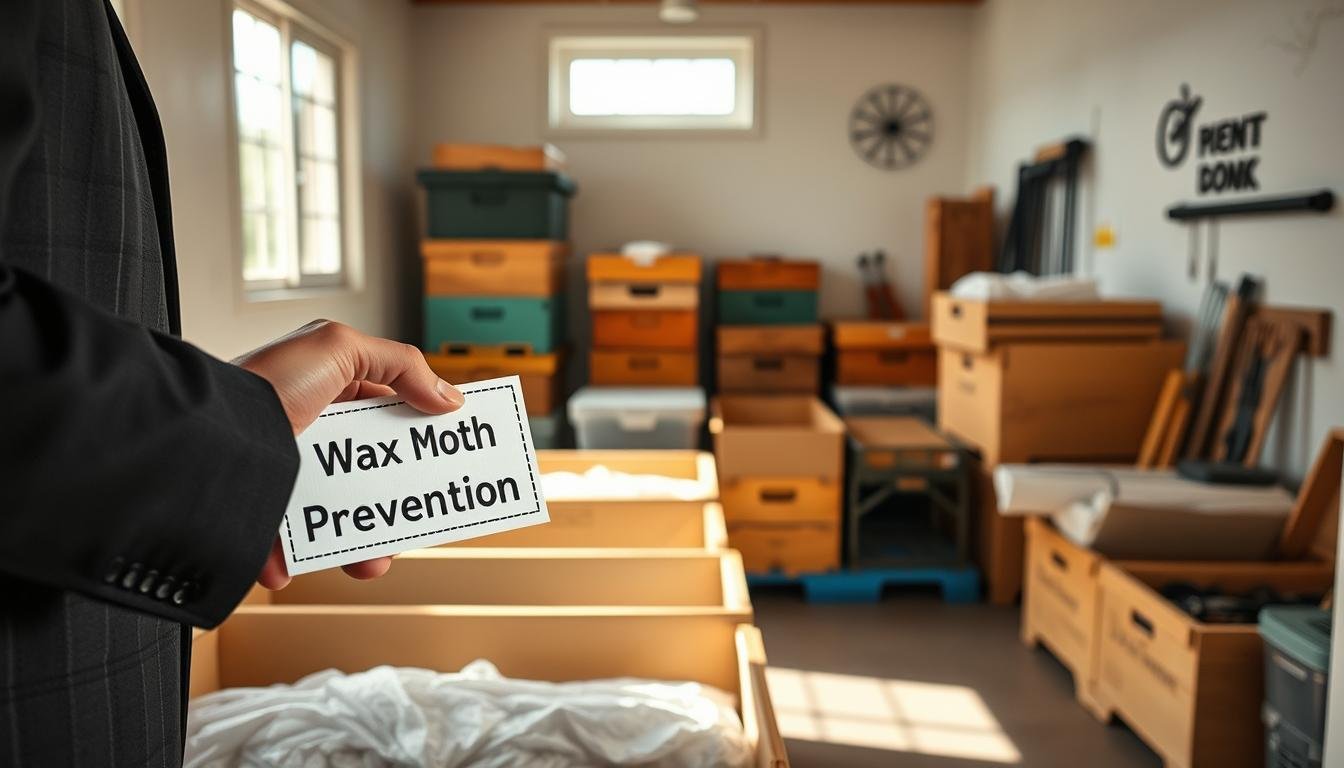
- Stack hive bodies squarely, seal cracks, and elevate stacks off the floor.
- Prioritize dark brood comb for early treatment—moth larvae target it first.
- Combine freezing with light/ventilation for layered control and scale freezer runs with your workflow.
“Document freeze cycles and inspection dates to track batches and reduce surprises.”
For additional methods on how to kill wax moth stages safely, see kill wax moth.
Control tools for stored combs: what to use and what to avoid
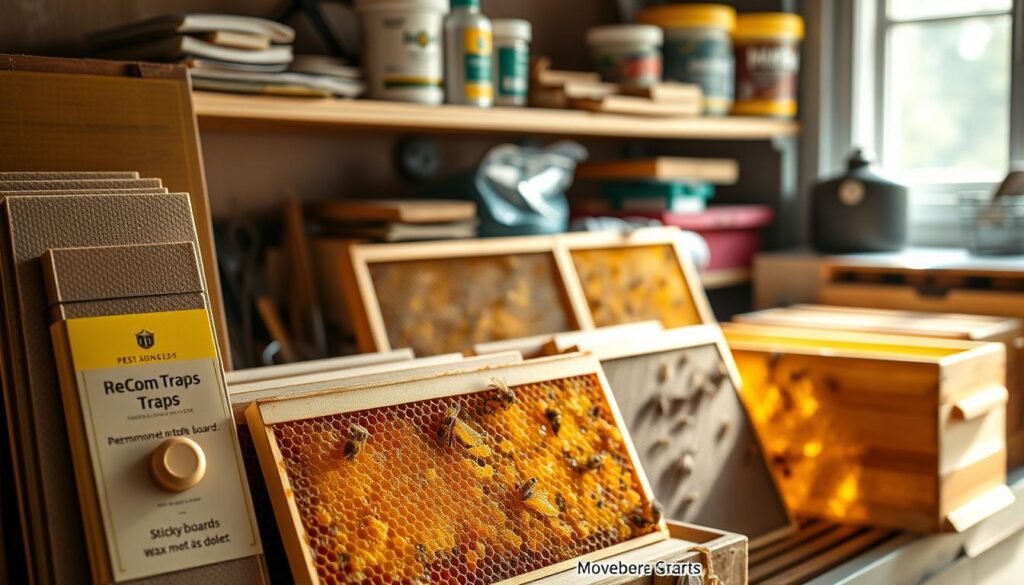
Choose treatments that match your reuse timeline and honey safety goals. Some options give rapid off‑gassing control while others provide a residue that kills larvae without tainting comb. Use each tool as labeled and document what you applied.
Para‑Moth (PDB) crystals: sealed stacks, off‑gassing, and airing out
Para‑Dichlorobenzene (PDB) crystals work by filling a sealed stack with vapors that kill and repel adult and developing stages.
Place crystals on paper or plastic above stacked supers, seal joints tightly, and label start date. After treatment, air frames fully until any odor is gone before returning them to a honey bee colony.
Bt solution (Certan/B402): spray application and residual protection
Certan (B402) uses Bacillus thuringiensis to target wax moth larvae specifically.
Spray both sides of each frame per label, let combs dry, and the protein will kill larvae without harming bees or people. Use Bt when you need fast reuse or when PDB airing time is impractical.
Avoid naphthalene mothballs: contamination risks to bees and people
Do not substitute household mothballs. Naphthalene permanently contaminates beeswax and poses toxicity risks to brood and handlers.
Use only beekeeping‑labeled products and follow disposal instructions for any contaminated comb.
“Match method to timeline: freeze heavily infested comb, use Bt for quick turnarounds, or PDB for sealed‑stack control when airing is acceptable.”
- Sealed stack discipline: label stacks, recheck seals, and refresh crystals per product guidance.
- Document treatments: track which frames received Bt vs. PDB to avoid mixing and to monitor recurring infestations.
- Combine methods: freeze to reset heavy infestations, then apply Bt or PDB based on reuse needs.
| Tool | Primary benefit | Key limitation |
|---|---|---|
| PDB (Para‑Moth) | Off‑gassing kills eggs and adults inside sealed stacks | Requires thorough airing; odor may taint comb if not ventilated |
| Certan / B402 (Bt) | Residual, bee‑safe protein that kills wax moth larvae | Requires spray coverage both sides; limited effect on eggs or adults |
| Freezing | Non‑chemical kill of eggs and larvae | Needs reliable cold source and time; does not give residual protection |
| Naphthalene mothballs | Readily available to consumers | Contaminates beeswax and toxic to brood and people — avoid |
For a fuller overview of options and label directions, see the detailed guide on keeping wax moths under control.
Beekeeper best practices that reduce wax moth infestations
A tidy apiary and routine comb care cut the chance of serious moth damage. Small, regular actions help colonies keep pests at bay and preserve drawn comb value.
Keep colonies vigorous: right-size supers and maintain queen-right hives so bees can patrol and remove eggs or larvae. Strong colonies reduce infestation risk and protect comb quality.
- High bee-to-comb ratio: stage boxes to match colony strength and avoid unguarded space where moths lay eggs.
- Routine cleaning: scrape bottom boards, frame rests, and box lips; check under screened bottoms for hidden debris and pollen that feed larvae.
- Scrap wax handling: remove burr comb promptly. Render scrap with a solar wax melter or dispose off-site—don’t toss comb near the apiary.
- Frame rotation and repair: phase out brood comb on a 3–4 year cycle and mend splits to eliminate sheltered pupation sites.
- Inspections and action: at first webbing or frass, remove affected comb, treat or freeze, and clean adjacent surfaces.
Train your team. Standardize SOPs so beekeepers across yards handle scrap, comb rotation, and inspections the same way. Consistent care keeps colonies healthier and reduces long-term damage.
Beekeeping tools & maintenance helps streamline routines and protect comb assets.
“A clean yard and steady colony care are the easiest, most cost‑effective ways to limit moth pressure.”
Timing and regional considerations in the United States
Seasonal risk windows shape how you protect comb and boxes. After cold winters, stored comb and deadouts become prime targets as warm spells arrive. At 28–30°C development speeds up; eggs hatch in 3–5 days and larvae mature fast.
Seasonal risk windows: post-winter thaw, warm climates, and storage duration
Flag post‑winter as a key window. Inspect deadouts as soon as temperatures rise. Freeze salvageable frames or move them to controlled storage the same day to cut off the way flying adults find them.
- Warm, humid regions: assume near‑year‑round pressure and shorten inspection intervals to avoid moth infestations.
- Temperature drives timing: during heat waves plan faster checks—eggs hatch quickly and larvae cause rapid loss of drawn comb and honey.
- Layer defenses for long holds: combine cold, Bt sprays, bright light, and ventilation; seal stacks to limit new wax moth infestations.
“Regional SOPs that match climate and nectar flows keep hives ready and reduce surprise moth pressure.”
Conclusion
Quick action after a thaw — inspect, freeze, or treat — is what saves comb value and limits moth damage.
Start with strong colonies and a clean yard. Then layer cold treatment, Certan (B402) where needed, and tightly sealed PDB stacks followed by full airing to protect frames and comb.
Never use naphthalene mothballs; they contaminate bees and beeswax. Document which boxes were frozen, sprayed, or sealed, and mark dates before returning them to a hive.
Discard badly ruined comb rather than waste time fighting heavy infestations. For more guidance on field practices and gear, see prevent wax moth damage and practical beekeeping resources.
Stay vigilant. Regular checks, neat storage, and swift response keep moth infestations small and protect your honey bee colonies year after year.
FAQ
What should I do before storing combs and frames to reduce moth risk?
Clean frames of excess honey, pollen, and brood comb. Cut out burr comb and propolis buildup and repair split comb. Strong colonies and fresh, healthy frames attract fewer pests. Label and sort by age so older comb gets used or processed first.
How can freezing help protect stored comb and frames?
Freezing for 48–72 hours at 0°F (-18°C) kills eggs and larvae without chemicals. Use a dedicated freezer or deep freeze and dry the wood after thawing to avoid mold. Avoid repeated freeze-thaw cycles that can warp woodenware.
Is heat an effective method to kill moth eggs and larvae?
High heat can work but it risks melting or warping beeswax and damaging frames. Temperatures above 140°F (60°C) are effective against larvae but unsafe for comb integrity. Use heat only with purpose-built equipment and careful monitoring.
Are Para-Moth (PDB) crystals safe to use around stored comb?
Para-Dichlorobenzene (PDB) can control adults when used in sealed stacks and then allowed to air out fully before reintroducing bees. PDB can taint wax and honey if misused. Follow label instructions, keep material away from food-grade surfaces, and ventilate treated gear thoroughly.
Can Bt products like Certan or B402 protect stored combs?
Bacillus thuringiensis (Bt) formulations labeled for wax moth larvae can reduce infestations when applied to exposed comb and hive parts, but they provide limited residual protection in long-term storage. Always use labeled products and avoid treating combs that will hold honey intended for human consumption.
Why should I avoid naphthalene mothballs around beekeeping gear?
Naphthalene and similar products emit fumes that can contaminate beeswax and honey and pose health risks to people. These compounds are not approved for food-contact surfaces; avoid them around frames, boxes, and supers.
How does stacking, sealing, and spacing gear help prevent infestations?
Stack frames in sealed, well-ventilated containers with screens or tight lids to block adult access. Leave spacing to allow airflow and reduce humidity. Sealed stacks with traps or treatments prevent egg-laying and limit larval development.
What early signs indicate wax moth activity in stored materials?
Look for webbing, tunnels through comb, frass (powdery droppings), silk cocoons, and areas of disintegrated comb. Adult moths may be visible at dusk near storage. Inspect often, especially during warm months.
How do I tell moth damage apart from small hive beetle damage?
Moth damage shows extensive webbing, silk-lined tunnels, and frass; comb often looks shredded. Small hive beetle causes slimy, fermented honey and dark, sticky residue. The pests require different controls, so accurate ID matters.
When is storage risk highest during the year in the United States?
Risk peaks in warm months and during post-winter warm spells when adult activity resumes. Southern and arid regions have longer risk windows. Long-term storage over summer or in uncooled sheds increases exposure.
What simple storage setups deter adult moths?
Use bright, ventilated sheds or rooms with screened vents, avoid dark cluttered corners, and keep a clean floor. Light exposure and regular airflow make the space less attractive for egg laying. Secure lids and screening to stop adult entry.
How often should I inspect stored frames and equipment?
Inspect every 2–4 weeks during warm seasons and monthly in cooler months. Check for new webbing, larvae, or adult activity. Prompt action prevents small problems from becoming severe infestations.
Can I store combs long-term without chemical treatments?
Yes. Combine freezing or immediate use, clean handling, sealed storage with good ventilation, and regular inspections. Rotate stock and process old comb into foundation or render wax if you cannot guarantee secure storage.
Are there regional best practices for reducing moth pressure?
In hot, humid or southern climates, prioritize sealed, cooled storage and more frequent checks. In cooler northern zones, freezing after harvest and storing in a dry, lighted area works well. Local extension services and state apiarists can give region-specific advice.