Welcome to a practical primer for new beekeepers who want safe, effective ways to add aromatic tools to hive care.
This article explains dilution, carriers, timing, and simple recipes for syrup mixes, patties, sprays, and lures that respect bees’ sensitivities.
We stress that these aromas are helpful tools, not miracle fixes. Pair them with good inspections, nutrition, and seasonal planning. Avoid overexposure and prefer food‑grade products.
The guide previews common choices: lemongrass for lures, thymol strategies for Varroa, and wintergreen in grease patties for mite knock‑down. It also covers safe delivery methods and monitoring pest loads.
Local context matters. Practices and legal points in the United States vary, so coordinate with regional associations and consult experts when in doubt. For deeper treatment recipes and dosing notes, see this practical reference: bee mite control resource.
Key Takeaways
- Use aromatic treatments sparingly and as part of an IPM plan.
- Dilution, carrier choice, and timing are critical for bee safety.
- Try lemongrass lures and thymol or wintergreen for mite pressure.
- Monitor pest loads; adjust methods rather than increasing dose.
- Work with local U.S. associations for regionally safe practice.
Why essential oils matter in beekeeping today
Botanical extracts can offer beekeepers a gentle, low-cost way to support colony resilience without immediately turning to stronger chemical treatments.
Used properly, these aromas leverage plant properties that may lure swarms, deter pests, and discourage mold. They are not replacements for inspections or feeding, but they can reduce reliance on harsher chemicals when matched to season and local conditions.
Bees have a keen sense of smell. That means measured application matters. Overloading a hive can disrupt navigation and communication. Introduce any oil diluted in a carrier or sugar syrup and observe changes slowly.
- Start small: pick one or two well-known oils and track results.
- Pair treatments with regular checks and logs for reliable comparisons.
- Consider brood status and forage levels before adding scent-forward mixes.
For practical recipes and regional guidance see this handy reference on aromatic treatments: aromatic treatments for honeybees, and consult broader resources here: beekeeping resources and books.
| Role | Benefit | Key action |
|---|---|---|
| Lure | Attract swarms to traps | Use low-dose lemongrass in bait boxes |
| Pest deterrent | Reduce mite pressure when paired with IPM | Dilute thymol or wintergreen; monitor mite counts |
| Hygiene | Limit mold and mildew | Apply mild fragrances near damp areas; avoid brood disruption |
How to use essential oils in beekeeping: practical methods for beginners
Start with modest scent mixes and watch hive behavior closely before scaling. Keep records of proportions, dates, and results so you can repeat what works.
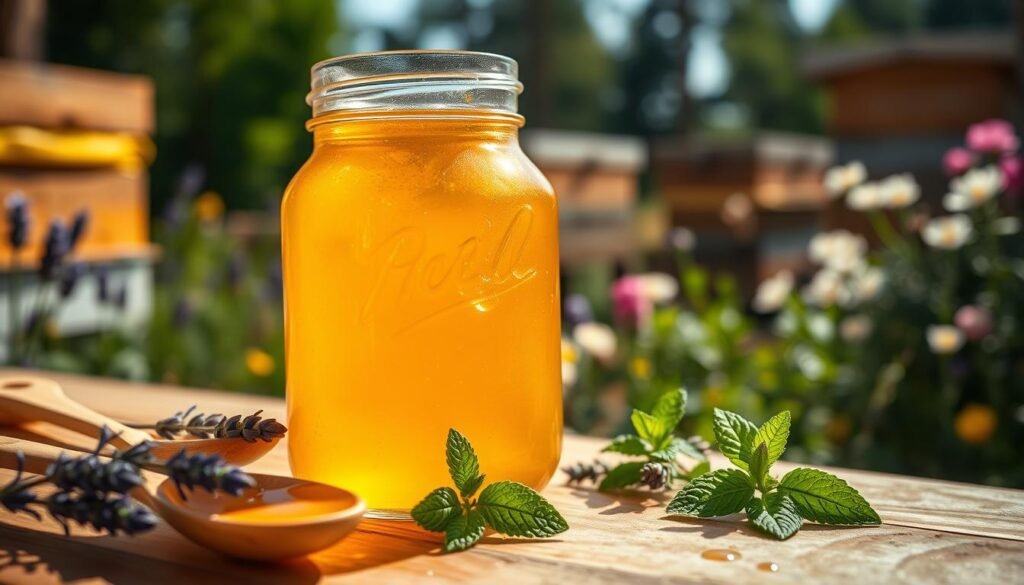
Feeding via sugar syrup: adding oils to a 1:1 syrup
Make a 1:1 sugar syrup by dissolving equal parts granulated sugar and warm water until clear. Cool the syrup before adding any scent.
Mix a tiny, well-measured essential oil mixture into the syrup and stir or shake until evenly dispersed. Offer the syrup in standard feeders and label the container with date and dilution.
Winter patties and brood-top applications
For winter or stressed colonies, place a patty gently over the brood box. Apply a few drops of essential oil sparingly to the patty surface; avoid pooling or drips.
Keep contact with frames and board minimal and wipe any spills promptly. Check brood behavior for calm feeding or signs of overstimulation.
Bee-safe spray mixes as a smoker alternative
A light spray made from sugar, clean water, and a diluted essential oil can encourage grooming rather than flight during quick checks. Use a fine mist and test on one hive first.
Consistency matters: use the same dilution each time, mix thoroughly, and scale only after positive responses. Apply in cooler parts of the day for gentler ventilation and uptake.
Lemongrass oil for swarms, bait boxes, and everyday hive support
Lemongrass mimics the nasonov pheromone and draws scout bees toward promising cavities. Use subtle applications outside a box first and track responses over time.
Swarm trap setup: q-tips, bait boxes, and placement
Place a clean bait box with a single q-tip lightly dabbed with lemongrass oil. The scent mimics orientation cues and invites inspection by scouts.
Mount the box a few feet off the ground in dappled shade. Leave a clear flight path and check periodically. Refresh sparingly to avoid a constant plume.
A simple lemongrass lure salve (beeswax and olive oil) recipe
In a double boiler, melt 1 part beeswax with 3 parts olive oil. Remove from heat and stir in several drops of lemongrass oil as the mix cools and thickens.
Spread a thin tablespoon near the back panel. A modest smear lasts longer and reduces the chance of attracting robbers.
Using lemongrass inside the hive: benefits and when to avoid it
Less is more. Light external lures draw swarms without confusing nearby colonies. Strong internal applications may lure robbing foragers during nectar dearths.
Avoid heavy use in weak hives. Keep bait boxes clean and log date, weather, and results so you can refine your mixture and timing.
| Method | Key step | Placement | Refresh interval |
|---|---|---|---|
| Q-tip lure | Single light dab of lemongrass oil | Inside bait box, shaded, 3–6 ft off ground | Every 10–14 days |
| Salve | Beeswax + olive oil + lemongrass oil | Thin smear near back panel | Every 2–4 weeks |
| Internal use | Minimal application; test first | Avoid in weak hives or during dearth | Only when needed; refresh rarely |
Mite control with essential oils: thyme, wintergreen, and spearmint strategies
Combining certain plant extracts with mechanical tactics gives beekeepers a practical mite edge. This section outlines light-touch methods that work alongside inspections and mechanical measures.
Thyme oil (thymol) and a screen bottom board
Thymol in thyme oil can confuse varroa behavior and encourage dislodgement. Place a small, well‑sealed thymol sachet above the brood chamber and ensure a clear screen bottom board below.
The board lets dislodged varroa mites fall away from the cluster so they cannot climb back. Apply treatments when brood rearing is moderate and ventilation is good.
Wintergreen with powdered sugar for tracheal mite knock‑down
Lightly infuse powdered sugar with a few drops of wintergreen oil, then dust in a fine layer across top bars. Keep doses minimal to avoid smothering nurse bees or foragers.
Even distribution is essential; avoid clumping. Check pre‑ and post‑application mite counts to confirm effect.
Spearmint/peppermint deterrents and scent management
Spearmint or peppermint may deter parasites, but strong smells can disrupt bees. Use tiny amounts and watch for agitation. Improve airflow during any aromatic treatment to prevent lingering odors.
- Rotate approaches within an IPM plan and combine with mechanical breaks.
- Verify results with mite counts and remove debris under the board promptly.
| Method | Key step | When |
|---|---|---|
| Thyme oil + screen | Sachet above brood; clear board below | Moderate brood, good ventilation |
| Wintergreen sugar dust | Fine dust, no clumps | Cooler parts of day; test one hive first |
| Spearmint scent | Tiny amounts; monitor | Use sparingly; rotate treatments |
Bee health beyond mites: oils that support resilience and hygiene
Practical aromatic measures can bolster colony resilience when matched with solid hive management. These approaches are meant as mild, supportive steps alongside inspections, feeding, and sanitation.
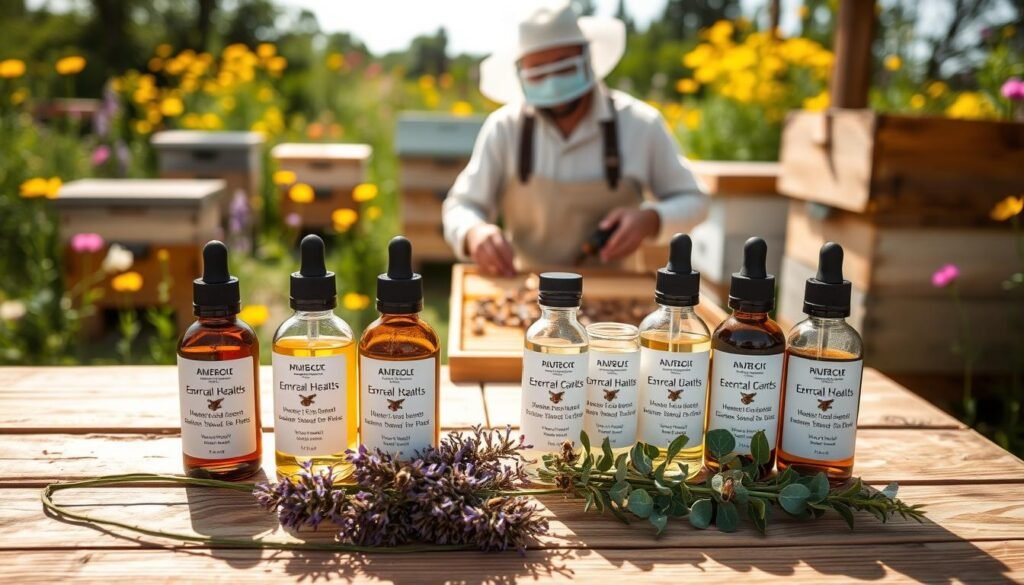
AFB-related support: some beekeepers discuss cumin, lavender, and winter savory as part of a cautious routine during early bacterial concerns. These botanicals are experimental aids, not replacements for mandated reporting or thorough sanitation.
Trial blends and observation
Test any mixture on a single colony first and keep precise notes. Apply minimal amounts, then watch brood care, forager return rates, and hive calm for several days.
Discouraging mold and mildew
Ventilation, water control, and cleanliness are primary. Lemongrass has mild antimicrobial properties and may be applied sparingly around external boxes as an adjunct to good airflow.
Honey and supers: never place scented treatments where harvested honey might pick up off-notes. Use food-grade, pure products and clean tools for every application.
| Issue | Suggested oil/action | Key caution |
|---|---|---|
| AFB support | Cumin, lavender, winter savory (small trials) | Report confirmed cases; do not rely on scent alone |
| Mildew prevention | Lemongrass around exterior vents | Prioritize ventilation and dry conditions |
| General resilience | Minimal external blends; document doses | Avoid strong internal scents; protect honey flavor |
Safe use, dilution, and IPM: doing it right in the United States
A cautious, measured approach protects colonies while letting beekeepers test scent-based tactics. Keep aromatic treatments as one part of an IPM plan. Pair any trial with brood checks, mechanical controls, and good nutrition.
Dilution basics: mix tiny amounts into a carrier or a 1:1 sugar syrup and introduce gradually. Label containers, stir thoroughly, and never pour neat oil onto frames. When adding to syrup, keep doses minimal and offer in standard feeders so bees can accept or reject the feed without stress.
Choose food-grade, pure products and avoid blends with perfumes or unknown additives. Even popular lemongrass and thyme extracts can carry contaminants if not certified for food use.
Monitor mite counts before and after any treatment, observe hive traffic, and log date, concentration, weather, and behavior. Visible agitation, entrance fanning, or stopped foraging signals a need to reduce dose or extend the interval between applications.
Consult local associations for regional windows, sourcing, and shipping rules. For seasonal timing and tasks see seasonal beekeeping tasks.
Essential oil toolkit: oils, timing, and application quick picks
Match a few reliable plant extracts with simple delivery methods and you have a practical toolkit for common hive needs.
Lemongrass is the go‑to for swarm lures. Lemongrass oil mimics the nasonov pheromone and draws scouts into bait boxes. Use light dabs on q‑tips or a thin salve and avoid heavy plumes that overwhelm the colony.
Thyme and thyme oil serve when varroa pressure rises. Pair a small sealed thymol sachet with a screen bottom board. Time this for mid‑season checks when brood levels and ventilation are suitable.
Wintergreen works well mixed with powdered sugar for grooming‑driven knock‑down of tracheal issues. Apply very small amounts and watch bee behavior immediately.
Spearmint/peppermint act as mild deterrents. Run short trials on one hive before wider application; strong scents can upset foraging and hive calm.
- Timing cues: early season for lure prep, mid‑season for mite checks, shoulder seasons for light hygiene.
- Application routes: syrup, patties, sprays, and external lures match each oil to low‑risk delivery.
- Starter kit: labeled droppers, small scale, clean jars, and a notebook for repeatable doses.
| Oil | Use | When |
|---|---|---|
| lemongrass oil | Swarm bait, light hygiene | Early season |
| thyme oil | Varroa support with screen | Mid season |
| wintergreen | Powdered sugar dust | Shoulder seasons |
Practical note: confirm supplier integrity and plan shipping so you receive fresh, food‑grade inputs. Start on a single hive, document results, and expand only if health and foraging stay steady.
Conclusion
Conclude with a simple rule: test small, log results, and let observation guide any wider adoption of scent-based treatments in this article.
Beginner’s roadmap: pick a few proven oils, dilute precisely, and trial each on one hive before expanding. Keep notes tied to season, nectar flow, and brood status.
Remember that lemongrass and lemongrass oil work best for gentle lure work and light hygiene. Thyme (thymol) helps ease varroa pressure without heavy brood disruption. Wintergreen mixed with powdered sugar can support grooming-assisted tracheal control. Use spearmint or peppermint sparingly; strong odors upset bees.
Protect honey flavor and supers by avoiding internal contamination. Prioritize ventilation, cleanliness, and local guidance. Report suspected AFB and treat official channels seriously.
Next step: adopt one method, measure outcomes, and scale responsibly so bees stay calm, productive, and resilient across seasons.
FAQ
Can I add lemongrass or thyme oil directly to 1:1 sugar syrup for feeding?
Yes, but sparingly. Add a single drop of high-quality, food‑grade oil per quart of syrup and mix well. Test on one hive first and watch for agitation or syrup rejection. Avoid more than a few drops per hive to prevent strong scents that disrupt foraging and brood care.
What dilution should I follow when making winter patties or brood‑top applications?
A light dilution is safest. Melt a small amount of beeswax or soften a patty base, then blend 1–2 drops of oil per ounce of carrier (wax, vegetable oil, or fondant). Place patties above the brood nest, not directly on brood frames. Reapply only after assessing colony behavior and stores.
Can lemongrass oil help attract swarms into traps or bait boxes?
Yes. Lemongrass mimics citrus notes that can lure scouts. Dab a cotton swab or a small piece of cardboard with a drop and place it at the back of a lure box. Refresh scent every 7–10 days during prime swarming season and position boxes at chest height in sunny, sheltered spots.
Are there simple recipes for a lemongrass lure salve?
A basic salve combines beeswax and olive oil at roughly a 1:4 wax‑to‑oil ratio, warmed gently. Stir in 2–3 drops of lemongrass per ounce of salve, cool, and apply sparingly to the inside of a trap. Keep jars labeled and use food‑grade ingredients.
How do I use thyme (thymol) for Varroa control with a screen bottom board?
Use slow‑release thymol formulations or place small, ventilated pads with 2–4 drops at the hive entrance or hive top, not touching bees. Good ventilation and timing (late summer or fall) improve efficacy. Monitor mite counts before and after treatment and rotate methods as part of integrated pest management.
Can wintergreen oil be combined with powdered sugar for mite knock‑down?
Practitioners sometimes dust powder sugar mixed with trace wintergreen to encourage grooming. Use a very light dusting and only a drop or two of oil per cup of sugar. Observe for increased grooming behavior and check mite drop. Avoid heavy oil use; it can smother bees and alter brood hygiene.
Do spearmint or peppermint scents disturb bees if used inside the hive?
Strong mint oils can be disruptive. Use low concentrations and test on a single colony. Small amounts placed away from brood (upper boxes or entrance) can act as deterrents for pests. If bees show agitation, remove the source immediately.
Which oils are recommended for general hive hygiene and resilience beyond mite control?
Mild agents like lavender and certain savory extracts are used for antimicrobial support and calming scent. Apply tiny amounts in feeder areas or on toppers, and never replace proven veterinary treatments with oils alone. Use these oils as supportive measures within an IPM plan.
Are there risks of masking queen pheromones or disrupting brood care with scented treatments?
Yes. Overuse of strong scents can mask queen pheromones, interfere with nurse bee behavior, and trigger absconding. Limit applications, avoid direct contact with brood frames, and observe colony behavior closely after any scent introduction.
What safety practices should U.S. beekeepers follow when applying plant extracts and mixtures?
Use food‑grade, pure oils from reputable brands like NOW Foods, Mountain Rose Herbs, or doTERRA for known composition. Label containers, use gloves and eye protection when mixing, follow regional guidelines, and never substitute unknown synthetics. Record treatments and monitor mite loads with sugar roll or alcohol wash methods.
How often should I monitor mite levels when using oils as part of IPM?
Check baseline mite counts before treatment, then retest 2–4 weeks after application. Continue monthly checks during high‑risk seasons. Adjust timing and methods based on mite thresholds (commonly 3%–5% infestation in late summer) and combine cultural, mechanical, and approved chemical tools as needed.
Can I use oil‑based sprays as a smoker alternative for calming bees during inspections?
Light sprays made from diluted herbal infusions can be used cautiously outside the hive entrance to calm foragers, but avoid spraying directly onto bees or brood. Smudges with dried herbs or commercial smoker fuels remain more reliable. Test any spray on one hive and monitor for stress responses.
Are there particular oils to avoid because they harm bees or contaminate honey?
Avoid petroleum‑derived fragrances, synthetic musks, and phenolic compounds. High concentrations of spice oils or wintergreen can taint honey flavor. Always limit direct contact with honey supers and remove scented materials before honey flow or extraction.
Where can I find local guidance and training for integrating botanical treatments safely?
Contact your state apiarist, extension service, or local beekeeping association (e.g., American Beekeeping Federation affiliates) for region‑specific advice. Workshops, local clubs, and university extension publications provide tested protocols and legal considerations for hive treatments.