This guide helps U.S. beekeepers respond to rising threats that affect pollination and honey production. It combines field-tested practices, recent research, and lived experience to offer practical steps that protect colonies and markets.
Risk factors now include heat spikes, drought, erratic rain, wildfire smoke, floods, and high winds. These stressors raise disease and parasite pressure and alter nectar and pollen availability. Interviews with Salvadoran producers echo similar losses: water scarcity, extreme heat, and storm damage.
This introduction previews a step-by-step path: assess local risks, apply proven management, monitor outcomes, and refine decisions using trusted local information and demonstrations. Core resilience themes—flexibility, resourcefulness, and redundancy—help match interventions to weather and plant development rather than a fixed calendar.
Key Takeaways
- Frontline reality: beekeepers face growing risks to colony health and honey production.
- Practical focus: ventilation, shade, water access, feeding timing, and secure hive placement.
- Use local data and demonstrations to turn research into usable information.
- Track forage, temps, water, and interventions to measure what works.
- Adaptation is ongoing—build redundancy and flexibility for steady yields.
Why this How-To matters now: the present-day link between climate change and honey bees
Seasonal swings in heat and rainfall now alter bloom timing and reduce nectar flows for many honey plants. Warmer temperatures, heavy rains, and longer droughts amplify heat stress, water shortages, and pest pressure. These combined stressors cut foraging efficiency and often lower honey production.
Recent research and regional reports show that temperature and precipitation swings reduce nectar volume and pollen quality. That weakens colony performance and raises disease and parasite risks.
Honey bees play a central pollination role in U.S. agriculture. Reduced pollination can ripple through crop yields, market supply, and global food security. Beekeepers across states report losses tied to weather volatility, matching published studies.
Operational impacts are immediate: mismatched bloom windows, more supplemental feeding, and higher infrastructure risk from storms and heat. Acting now with resilient practices cuts future losses and steadies production.
- Why act: prevents colony loss and stabilizes yield.
- Evidence: field reports align with peer-reviewed research.
- Scope: affects pollinators, farms, and food supplies.
| Driver | Observed Effect | Operational consequence |
|---|---|---|
| Heat spikes | Reduced foraging hours | Lower honey production |
| Erratic rain | Delayed or compressed blooms | Mismatch with peak brood rearing |
| Prolonged drought | Less nectar, poorer pollen | Increased feeding needs |
Search intent and what you’ll achieve with this guide
This guide translates research and field lessons into a compact plan that beekeepers can act on quickly. It serves informational search intent with step-by-step outputs so users leave with usable actions, not just background.
- A workable plan and simple risk assessment methods.
- Heat and drought protocols, forage diversification strategies, and extreme-weather preparations.
- Decision tools that tie weather forecasts, plant development, and seasonal cues to hive tasks.
Who benefits: hobbyist and commercial beekeepers in the United States seeking practical practices that meet regional rules and scale needs.
Evidence-informed tips draw on research and field reports. Examples include diversified Varroa control, sugar supplementation to bridge nectar gaps, and transhumance options. Salvadoran producers reported reinforcing boxes, relocating yards, and supplementing food after local demonstrations.
| Output | Use | Quick benefit |
|---|---|---|
| Risk assessment | Map heat, water, wind exposure | Prioritize actions |
| Protocols | Heat/drought response steps | Reduce colony loss |
| Monitoring plan | Track temperatures, forage windows, colony metrics | Measure what works |
Adoption focus: low-cost, high-impact steps and local demonstrations cut response costs. Track simple data to check results. Plan, do, check, and adjust as conditions and information evolve.
Understand the effects of climate change on bee colonies and honey production
Weather volatility now drives clear, measurable impacts on foraging and honey output. Heat waves, drought, and heavy rain each hit colonies in different ways. Together they reduce available nectar and lower pollen quality, which cuts honey production and weakens colony resilience.
Heat, drought, and precipitation extremes: impacts on foraging, nectar, and pollen
Heat and humidity raise thermoregulation demands. Workers divert effort from foraging to cooling, which lowers net nectar collection and shortens productive foraging hours.
Drought suppresses nectar flow and degrades pollen protein. Higher atmospheric CO2 can further reduce pollen quality, forcing more supplemental feeding and slowing brood growth.
Precipitation extremes wash out blooms and disrupt foraging windows. Heavy rains shorten safe flight days and increase stress on foragers, reducing overall honey yields.
Shifting phenology and plant-pollinator mismatches reduce food sources
When plants bloom earlier or later, peak forage may not match colony strength. That timing mismatch shrinks usable food sources and raises flight distances.
- Longer flights and higher energy costs lower net nectar intake.
- Degraded pollen and weak nectar quality reduce immune response and slow brood development.
- Combined stressors increase susceptibility to disease and parasites, further cutting productivity.
What to do: log bloom timing, daily temperatures, and rainfall. Tracking local patterns reveals mismatches and guides targeted interventions. Understanding these mechanisms explains why specific management steps are necessary to protect honey output and colony health.
Assess your local climate risks and apiary vulnerabilities
Start by mapping how local hazards overlap with hive locations to reveal where risks are highest. This makes decisions measurable and funds easier to prioritize.
Map exposures: chart heat islands, drought indices, floodplains, wildfire zones, and wind corridors for each yard.
Map heat, water scarcity, floodplains, wildfire, and wind exposure
Compile multi-year records of colony health, honey yields, losses, and interventions. Cross-check these data with hazard maps from extension services.
Prioritize risks using bee health, colony performance, and production data
Link exposure scores to observed health and production metrics to find high-impact sites. Include infrastructure access (roads, power) and hive hardware condition in the score.
“Beekeepers report more heat, heavy rains, and winds that damage hives and raise mortality; mapping water access proved critical in a recent Salvadoran study.”
| Exposure | Key indicator | Source of data | Action trigger |
|---|---|---|---|
| Heat | Max weekly temp above threshold | Local weather station | Activate shade/vent protocol |
| Water scarcity | Well flow or pond level | Site checks, seasonal logs | Move hives or secure water delivery |
| Wind/flood | Past structural losses | Field records, hazard maps | Re-anchor hives; relocate high-risk hives |
Finally, add behavioral factors—team confidence and response costs—into feasibility scoring. Produce a risk register with clear triggers (forecast thresholds for heat, rain, wind) so actions follow information, not panic.
Beekeepers’ field-tested adaptations from recent studies
Field teams and producers report a small set of practical responses that consistently reduce losses during extreme weather spells. These methods come from Salvadoran field reports and complementary European and Italian research.
Box reinforcement, relocation, and strategic supplementation
Reinforce boxes and hardware to resist wind and rain. Simple straps, corner braces, and weatherproof lids lower structural losses and protect honey stores.
Move hives to safer or wetter zones when forecasts and bloom data show prolonged drought or flood risk. Check access roads and legal permissions before any relocation.
Time supplemental feeding to bridge bloom gaps. Use targeted carbohydrate and protein mixes that support gut health and avoid continuous reliance.
Trusted local information and demonstrations
Salvadoran beekeepers report trouble applying internet guidance without local mentorship. Cooperative staff, extension agents, and live demos speed correct adoption and cut costly mistakes.
- Diversify Varroa control (queen caging, brood removal) to reduce resistance risk as warming alters parasite cycles.
- Use transhumance where feasible to secure nectar access during drought or mismatched blooms.
- Document outcomes after each adaptation to build evidence and guide future choices.
| Practice | Primary benefit | Key factor |
|---|---|---|
| Box reinforcement | Fewer structural losses | Standardized checklists & strapping |
| Relocation | Maintain nectar and water access | Roads, permissions, safety |
| Strategic feeding | Sustain honey and brood | Timing, gut-health formulation |
Plan for costs and skills: perceived control and training affect uptake. Partner with cooperatives, bee clubs, and extension to tailor practices and fund demonstrations. For a regional how-to on moving and matching hives to local seasons, see beekeeping in different climates.
Bees & Climate Change: Adapting Your Apiary step by step
Turn forecasts and bloom signals into trigger points for targeted management actions.
Plan: set goals, timelines, and thresholds for action
Define clear resilience goals such as reducing heat-related losses or preserving winter stores. Assign timelines, budgets, and forecast thresholds that prompt action.
Map which practices to deploy under given conditions. For example, ventilation at >95°F, afternoon shade for hot spells, and water provisioning before heat spikes.
Do: implement targeted practices tied to forecast and plant development
Sequence work seasonally so labor and supplies are ready before triggers arrive. Base interventions on local weather and plant development, not a fixed calendar.
- Install shade and upper ventilation during heat windows.
- Time supering and feeds to first bloom and peak flow observations.
- Move yards when dry forecasts and bloom data show long nectar deficits.
Check and adjust: monitor response and refine practices
Track colony metrics (brood pattern, forager activity, stores) alongside environmental data (temps, rainfall, bloom timing). Use that data to refine thresholds and actions.
“Effective adaptation is iterative: test practices, log outcomes, and use local guidance to improve response.”
| Trigger | Action | Metrics to Log |
|---|---|---|
| Max temp >95°F | Open upper vents; add afternoon shade; provide water | Forager returns/hr, hive temp, feed use |
| Two-week no-rain forecast | Stage supplemental feeding; evaluate moving yards | Store levels, brood weight, field bloom notes |
| Early bloom mismatch | Delay queen rearing; time supering to peak flow | Honey flow start date, brood pattern, labor hours |
Document costs and outcomes each season. Share results with local extension and networks to validate thresholds and incorporate new research. Small, measured steps make long-term production more reliable.
Handle heat: keep brood nest temperatures stable
Keeping the brood nest close to 93–95°F is the core goal when temperatures spike. Aim for that range to sustain brood development and limit stress on workers. Use measurable triggers rather than guesswork.
Ventilation options and airflow setups
Upper entrances, screened bottoms, and solar ventilators all help move hot air out without flooding the hive with drafts. Open upper vents or add an offset cover during heat windows to let warm air escape.
- Screened bottom boards increase passive flow and reduce hive temperature by letting air exit low and top vents pull it through.
- Powered ventilators or small solar fans work in extreme heat; maintain wiring and seals to avoid failures.
- Balance entrance size—wider in heat but cautious to reduce robbing risk.
Shade, covers, and surface choices
Paint hives white and prefer wooden migratory covers or reflective surfaces over metal-clad lids to cut heat absorption. Site afternoon shade to lower peak loads while keeping morning sun for forager activity.
Winter effects of milder winters
Milder winters may prompt continuous brood rearing. That raises food needs and can deplete stores. Inspect mid-winter and supplement feed when brood is active to prevent shortages.
Water provisioning and evaporative cooling
Reliable water with safe landing surfaces lets colonies cool via evaporation. Without water, hives can overheat even above 100°F ambient.
- Pre-heatwave checks: test vents, fans, and screened bottoms; top off water sources.
- During heat: add upper vents, increase entrance, deploy shade, and monitor brood temps.
- Post-heat: log ambient and brood nest temperatures and inspect for robbing or moisture issues.
“Log ambient and brood nest readings to evaluate which interventions actually work.”
Team safety: schedule heavy work for cooler hours and train staff on handling hives under stress. For detailed ventilation options, see the beehive ventilation guide.
Dealing with drought and erratic rain: safeguarding food and water
Preparing for multi-week dearths keeps colonies fed and hydrated before stores collapse. A plan ties water stations, feed decisions, and moves to clear triggers like prolonged dry forecasts and bloom checks.
Water access strategies during prolonged dry spells
Reliable water prevents overheating and supports nectar processing. Install float systems, shallow basins with rough landings, and shaded placements near hives.
- Use floats or shallow rocks so insects can land safely.
- Place tanks near shade to cut evaporation.
- Rotate fills on a schedule tied to forecasted dry weeks.
When to move apiaries to wetter zones to maintain nectar flow
Relocate when multi-week drought forecasts match low bloom density and declining forager returns. Compare transport costs, road access, and permissions before moving.
Protein supplementation caveats and preserving gut health
Protein feeds can help when pollen quality drops, but select mixes that support beneficial fermentation and limit sugars. Store supplements cold and rotate stocks to avoid spoilage.
| Trigger | Response | Key metric |
|---|---|---|
| 2+ week no-rain forecast | Stage supplemental feed; prep water tanks | Forager return rate |
| Bloom density | Evaluate relocation or transhumance | Flower counts per acre |
| High sugar-only feeding | Shift to protein + natural forage when possible | Colony disease indicators |
Plan logistics: coordinate moves, water, and feeding with land managers and check legal access. Track rainfall, bloom, and forager returns to time interventions and protect honey and health.
Forage resilience: diversify plants and stabilize pollen and nectar sources
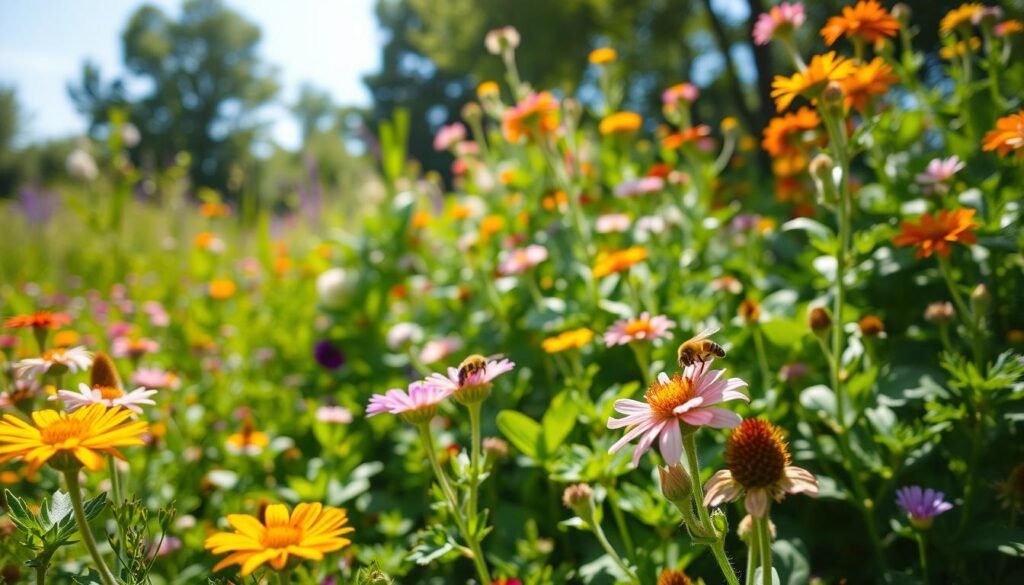
To buffer shifts in bloom timing, build mixed plantings that supply nectar and protein across spring to fall. A staged planting plan limits weeks with little to no food for colonies.
Select region-specific mixes that bloom sequentially. Choose early, mid, and late bloomers so at least one group flowers during any short drought or heavy-rain period.
Select climate-resilient, staggered-bloom plant mixes for your region
Prioritize native, drought-tolerant species and long-blooming perennials. These tolerate heat and variable moisture and often keep producing nectar and pollen when annuals fail.
Increase local pollen availability and support native pollinators
Diversified plantings stabilize colony nutrition and cut reliance on frequent supplementation. They also benefit wild pollinators that boost overall pollination services.
- Work with landowners to convert field margins into forage patches and lower pesticide exposure.
- Use drip irrigation or mulch and drought-wise landscaping to sustain bloom during dry spells.
- Install windbreak plantings that double as forage to cut wind stress while adding flowers.
- Monitor bloom phenology each season to refine species choices and planting dates.
Seed and sourcing tips: buy region‑tested mixes or join community planting programs. For guidance on native mixes, see this native plant guide, and for recent research on pollen quality shifts under stress, consult this peer-reviewed study.
“Staggered forage reduces the risk that a single weather swing erases an entire season’s food base.”
Plan development: align plantings with local extension incentives and conservation programs to share costs and scale benefits for beekeepers and the broader landscape.
Design and place climate-smart hives and apiaries
Good site design cuts exposure and simplifies routine work. Positioning matters: afternoon shade reduces overheating, while clearings limit damage from falling limbs during storms.
Site selection: shade, wind breaks, high ground, and safe clearings
Choose high ground to reduce flood exposure and improve access after heavy rain. Prefer open clearings rather than forest edges to avoid downed branches and shade gaps.
Place yards with afternoon shade but morning sun to support forager activity and lower midday heat stress. Add wind breaks on prevailing-wind sides to cut gust forces.
Hardware choices: durable stands, anchoring, and cover security
Use elevated, anchored stands in flood-prone areas. Combine concrete blocks, galvanized posts, or treated lumber with ground anchors to resist uplift.
- Strap covers and supers with marine or ratchet straps for high-wind tolerance.
- Standardize stands and fasteners across yards to speed repairs.
- Paint boxes white and prefer wooden migratory covers to lower heat load and reduce maintenance issues.
| Site Feature | Recommendation | Benefit |
|---|---|---|
| Shade | Afternoon canopy or shade cloth | Lower hive temps, reduce feed loss |
| Elevation | Raised stands (12–18 in) with anchors | Flood protection, easier inspections |
| Cover type | Wood migratory cover; white paint | Reduced heat absorption, longer lifespan |
| Layout | Clearings, access lanes, expansion space | Safer operations, scalable growth |
Plan traffic flow for safe equipment moves in poor weather. Place water stations near hives but slightly shaded and with shallow landings.
“Small investments in site design and hardware cut losses and reduce labor during extreme events.”
Document each site’s risk profile and mitigation measures for insurance and planning. Use a concise checklist and link to regional guidance and the impact report to support site decisions: impact report.
Confront fires, floods, and wind: ready your operation for extremes
When wildfires, high water, or severe winds threaten yards, a concise risk plan short-circuits loss and speeds recovery. Start with simple prevention: clear combustible vegetation, choose non-flammable pads where feasible, and locate hives on higher ground.
Wildfire defensible space and smoke precautions
Maintain defensible space by clearing 10–30 feet of vegetation around sites and scheduling regular fuel reduction. Use concrete pads, gravel, or metal surfaces to limit fire spread and ease post-event cleanup.
Smoke can harm respiratory health and reduce forager returns. Monitor air quality (AQI) and set clear work-stoppage thresholds. Provide N95 masks and limit field tasks when AQI is unhealthy.
Flood avoidance, elevation, and secure routes
Identify floodplains with local maps and pick elevated stands (12–18 in or higher) where possible. If relocation is impossible, use anchored, raised platforms and place water tanks uphill from hives.
Map primary access routes and two backups. Note bridge or road vulnerabilities and plan alternate entry points for emergency moves or supply runs.
Wind mitigation: breaks, strapping, and safe layouts
Install permanent windbreaks on prevailing-wind sides and arrange hives in staggered rows to reduce uplift. Strap outer covers and supers with ratchet or marine straps and anchor stands to ground anchors.
- Set vegetation management calendars and photo logs for insurance claims.
- Create a pre-storm checklist: strap, remove loose gear, secure supers, and clear nearby branches.
- Coordinate with local emergency managers for alerts and site access during events.
“Document condition before and after events with photos and notes to speed recovery and support claims.”
| Threat | Prevention | Immediate action |
|---|---|---|
| Wildfire / Smoke | Defensible space; non-flammable pads; AQI monitoring | Evacuate if flames near; suspend field work at high AQI; deploy masks |
| Flooding | High stands; anchors; avoid floodplain siting | Move hives to high ground; elevate equipment; secure access routes |
| High winds | Windbreaks; staggered layouts; heavy anchors | Strap hives; remove loose supers; check anchors post-storm |
Drills and roles: run simple response drills, assign team roles, and rehearse rapid moves. Keep documented procedures and contact info for emergency managers and insurers in one folder for fast access.
Nutrition strategies that balance supplementation and colony health
Smart supplementation balances immediate food needs with longer-term colony resilience. Use measured feeds when nectar and pollen sources falter, and avoid routine, open-ended sugar rations that can weaken immune response.
When to feed: set clear triggers—falling forager return rates, two-plus weeks without rain, or store checks under a set weight. Tie carbohydrate and protein interventions to these signals rather than a calendar.
When and how to use carbohydrates and protein supplements
Carbohydrates bridge short nectar gaps. Offer syrup or fondant in protected feeders to reduce robbing and moisture. Limit volume so colonies use stores, not depend on them.
Protein supports brood expansion when pollen quality drops. Choose formulations that foster beneficial bacterial growth and in-hive preservation to avoid winter deficits and dysbiosis.
Align feeding with bloom gaps and colony development stages
Time protein during brood rearing and add carbs only when stores fall or forecasts predict dearth. Coordinate feeds with relocation or forage projects to cut total supplementation needs.
“Use feeding triggers, select stable products, and log outcomes to refine protocols each season.”
- Define triggers for carbohydrate feeding to prevent starvation without causing dependency.
- Select feeders and mixes that minimize robbing and mold risks.
- Time protein to documented pollen dearths and brood expansion.
- Monitor colony response; adjust to prevent dysbiosis.
| Supplement | Primary use | Best practice | Metric to log |
|---|---|---|---|
| Sugar syrup / fondant | Short-term energy | Protected feeders; limited volume | Store weight, feed uptake |
| Protein patties | Brood rearing support | Formulas supporting gut microbiota | Brood area, pollen stores |
| Combined mixes | Bridge long dearths | Rotate stocks; track shelf-life | Colony health, disease signs |
Record-keeping and team training matter. Log dates, amounts, product lots, and outcomes. Train staff on safe mixing, storage, and sanitation to keep supplements effective and reduce contamination.
Health and pest management in a warming climate
Rising temperatures shift parasite lifecycles, so monitoring and tactics must move from routine dates to weather-driven triggers.
Varroa control diversification to avoid resistance
Diversify methods to keep mite control effective as warming alters reproduction cycles. Use queen caging, complete brood removal, and rotate treatments to reduce selection for resistance.
- Plan integrated pest management that mixes biotechnical steps with rotating chemistries.
- Time treatments to brood cycles and local temperatures that drive mite growth.
- Assess mite loads regularly with alcohol wash or sugar roll and apply thresholds tailored to local conditions.
Integrated pest and disease monitoring tied to temperatures and humidity
Track humidity and daily temperatures because pathogen pressure often rises in warm, moist periods. Adjust ventilation to lower hive humidity and curb fungal growth.
| Trigger | Action | Metric |
|---|---|---|
| Warm, humid spell | Increase ventilation; inspect for brood diseases | Disease signs per 100 frames |
| High mite count | Rotate treatment; use biotechnical control | Percent mites per sample |
| Post-treatment | Document efficacy and side effects | Follow-up mite loads |
Document results, train teams, and link nutrition and stress reduction to pest work. Share protocols with local extension and review recent research and studies regularly. For regional guidance and best management practices, see the best management practices.
Operational resilience: backups, supplies, and business continuity
Business continuity for beekeepers rests on planning for power, supplies, and swift recovery. Build simple redundancies now so a single outage does not stop honey production or sales.
Redundant power, manual tools, and diversified suppliers
Start with layered systems. Install backup generators or battery storage for critical loads like refrigeration and pumps. Keep manual alternatives—hand drills, garden pumps, and non-electric extractors—for work during outages.
Diversify suppliers for queens, jars, labels, treatments, and woodenware to reduce delivery interruptions. Maintain seasonal inventory buffers timed to high-risk months.
Insurance realities and recordkeeping for claims and recovery
Insurance costs are rising in disaster-prone areas and some carriers limit coverage. Review policies yearly and document mitigation steps to improve insurability.
- Keep photos, receipts, and timestamped logs to speed claims.
- Create incident playbooks with contact lists and decision trees.
- Cross-train staff and coordinate with local authorities for access during emergencies.
“Track disruptions and analyze data to refine continuity plans over time.”
Small investments in redundancy and records protect assets, preserve production, and help beekeepers recover faster after extreme events tied to climate and related risk factors.
Information, training, and decision support that actually work
Local, hands-on learning closes the gap between online guidance and field practice. Short demos and cooperatives turn research into steps crews can follow. Trusted peers make methods credible and repeatable.
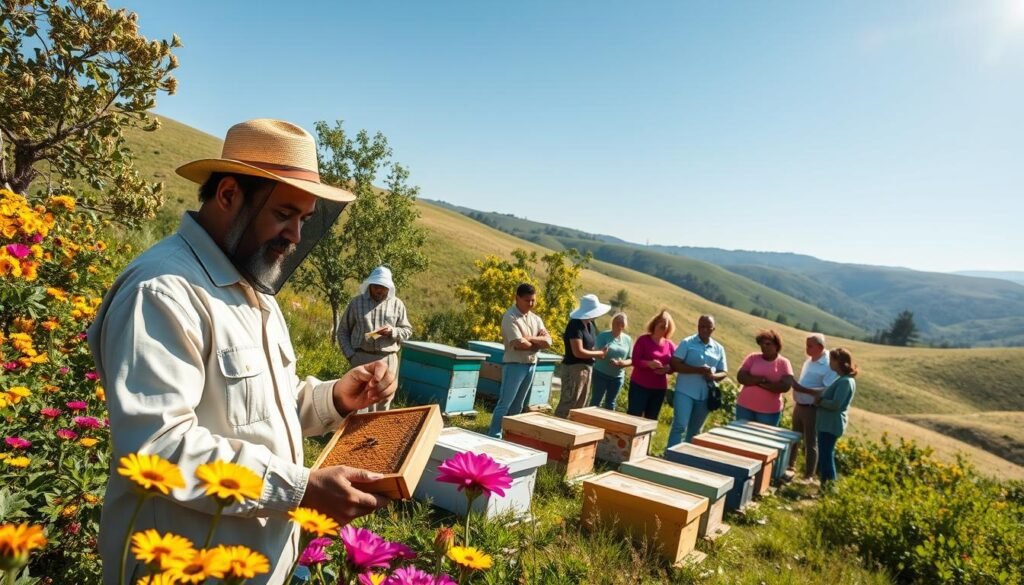
Use trusted local networks and demonstrations to translate research
Join local clubs, co-ops, and field days to see practices in real contexts. Practical demonstrations help beekeepers move from reading a study to testing a protocol.
Peer mentoring builds confidence and cuts perceived costs. Post-season reviews and shared case studies spread lessons fast.
Incorporate early warning systems, climate data, and extension updates
Integrate weather alerts, drought indices, and phenology reports into weekly plans. Build simple dashboards or logs for temperature, rainfall, bloom stage, and colony metrics.
Keep decision aids available offline for low-connectivity sites and refine them with logged outcomes.
- Translate research into checklists that match regional flora and thresholds.
- Train teams on triggers so response is fast and consistent.
- Coordinate with extension for updates on pests, treatments, and new studies.
| Tool | Primary use | Quick benefit |
|---|---|---|
| Field demos | Show techniques in context | Higher adoption rates |
| Early warning alerts | Trigger actions (heat, drought) | Timed, effective response |
| Offline checklists | Guide crews without internet | Consistent decisions |
| Post-season logs | Evaluate interventions | Refine next year’s plan |
“Local demonstrations and clear triggers turn technical information into usable tools for field teams.”
Behavioral drivers of adaptation: increase adoption across your team
Team choices shape whether resilience steps move from notes into routine practice. Adoption depends on how crew members perceive risk and believe they can act.
Risk perception, self-efficacy, and perceived control influence action
Higher perceived risk and clear benefits prompt early action before losses escalate. Show simple data and local examples so staff see why a response matters.
Boost self-efficacy with short trainings, on-site mentoring, and small wins that build confidence. Provide clear SOPs and tools to increase perceived control.
Reduce response costs and show response efficacy to boost uptake
Lower barriers by standardizing tools, using bulk buying, and streamlining workflows. Demonstrate efficacy with local case results and brief data summaries so teams trust the methods.
- Use social norms: peer recognition and team goals to encourage adoption.
- Collect feedback loops to surface barriers and refine steps quickly.
- Set measurable targets and celebrate milestones to sustain momentum.
“Combine practical training, clear SOPs, and visible results to turn intent into routine.”
U.S. considerations: aligning practices with regional climates and regulations
Practical priorities shift by region—water security in the West, ventilation in the South, and elevated stands in the Northeast. Tailor site choices and routines to local hazards, seasonal bloom calendars, and state guidelines.
Arid West
Priority: water provisioning and wildfire defensible space.
Install shaded tanks, shallow basins, and scout relocation routes to wetter zones. Build fuel breaks and rehearse moves before long dry spells threaten production.
Humid South
Priority: ventilation, shade, and hurricane anchoring.
Use screened bottoms, reflective covers, and robust straps. Plan flood avoidance and enroll in regional alerts for storms and smoke.
Temperate Northeast
Priority: elevated stands and erratic-precipitation planning.
Raise hives on anchored stands to avoid surge and ice damage. Match feeding schedules to compressed bloom windows and early frost risks.
Midwest
Priority: storm resilience and forage planning.
Anchor boxes for severe thunderstorms, prepare shade for heat waves, and work with farmers to expand staggered plantings that support nectar and pollen.
Health and monitoring: align Varroa and disease checks to regional temperature profiles and seasonal brood patterns. Use state extension guidance and check movement rules before relocations.
“Sign up for regional wildfire, flood, and severe-weather alerts to trigger timely, measured responses.”
| Region | Top Priority | Quick action |
|---|---|---|
| Arid West | Water security & wildfire space | Install tanks; scout wetter yards; clear defensible zones |
| Humid South | Ventilation & storm anchoring | Add vents; shade; strap and elevate before hurricane season |
| Temperate Northeast | Elevation & erratic rain planning | Raised stands; stage feeds for compressed blooms |
| Midwest | Storm prep & forage coordination | Anchor hives; plant staggered forage with landowners |
Note: consult state-level beekeeping resources and extension offices for movement rules, recommended plant mixes, and insurance guidance. For recent peer-reviewed context on how environmental stressors affect colony health, see this study.
Monitor, log, and learn: building a climate-ready feedback loop
Turn routine observations into actionable records that shape next season’s plan. Good monitoring ties environmental and operational data to real outcomes so teams can refine thresholds, tools, and SOPs.
What to track: ambient temperatures, rainfall totals, bloom dates, brood pattern, mite loads, and stores. Add photos and short notes on equipment and site conditions so context is clear when you review results.
Standardize logging and link actions to outcomes
Use simple templates and fixed intervals (daily temp, weekly stores, monthly mite checks). Standardized logs let you compare yards and seasons and show which interventions gave the best return for cost and effort.
- Define metrics and thresholds before the season.
- Record interventions with dates, materials, and labor hours.
- Include a short note on perceived cause-and-effect for each action.
Review seasonal results and update plans
Analyze patterns of loss or success to adjust thresholds and SOPs. Create a simple dashboard or one‑page season summary for the team and partners.
| What | Frequency | Use |
|---|---|---|
| Temperature & rainfall | Daily | Trigger ventilation, shade, or moves |
| Forage & bloom dates | Weekly | Time feeding and supering |
| Mite load & brood pattern | Monthly | Adjust pest control and protein feeding |
Share findings with local networks and extension so data and lessons scale. For a compact set of logging tools and reading material to help teams set up standards, see this beekeeping resources guide.
“Treat the feedback loop as core infrastructure: data collection, review, and revision make operations resilient.”
Conclusion
Start with one high‑impact change this season—for example, add shade or secure water and log results. Small, timely moves that stabilize brood temperatures, water access, and forage availability reduce losses and protect honey production.
Plan to act on forecasts and plant signals rather than dates. Pair diversified Varroa control and careful supplementation with site hardening—elevation, anchoring, and defensible space—to lower fire, flood, and wind risk.
Build local information pipelines through extension and peer demos. Document interventions, evaluate response efficacy, and iterate annually across U.S. regions so practices fit local risk. Share results with other beekeepers and scale what works.
Take action now: pick one proven step, test it, and expand as evidence and research support further gains in resilience.
FAQ
How does rising temperature affect honey bee colonies and honey production?
Higher temperatures stress colonies by forcing them to expend energy on cooling the brood nest. This can reduce foraging time, lower honey yields, and increase water needs. Prolonged warmth may also shift flowering times, creating mismatches between bees and key nectar sources that reduce overall food availability.
What immediate steps can I take to protect hives from heat?
Provide shade, add ventilation (upper entrances or screened bottoms), and supply fresh water near hives for evaporative cooling. Use reflective covers or lighter painted boxes and ensure good airflow inside boxes. Monitor brood nest temperatures and relocate hives to cooler microclimates if necessary.
How should I assess local risks like drought, floods, fire, and wind?
Map local hazards using FEMA flood maps, state wildfire risk tools, and regional heat or drought outlooks. Combine those layers with on-site checks for wind exposure, drainage, and nearby fuel loads. Prioritize risks by colony health impact and production losses to guide planning.
When is moving an apiary a sensible option?
Consider relocation when local nectar flows decline, water access is unreliable, or when repeated extreme events threaten colony survival. Move to wetter zones or areas with staggered bloom when transport logistics, permits, and forage resources make the transfer feasible and cost-effective.
What forage changes increase resilience to erratic weather?
Plant mixes with staggered bloom times and drought-tolerant species support continuous nectar and pollen supply. Incorporate native wildflowers, early- and late-season bloomers, and shrubs that suit your region. Diversifying forage reduces reliance on a single crop or bloom window.
Are protein and carbohydrate supplements safe for long-term colony health?
Supplements help during prolonged dearths but require care. Use tested pollen substitutes and high-quality sugar feeds sparingly, aligned to colony development stages. Overuse can harm gut microbiota and mask underlying forage limitations, so pair feeding with habitat improvements.
How does drought affect water provisioning strategies?
During dry spells, increase water stations and maintain reliable sources with shallow, clean basins and perches. Consider portable water tanks or moving to locations with natural water access. Secure supplies against contamination and evaporation, checking them daily in heat waves.
What hive hardware changes reduce loss in extreme weather?
Use sturdy stands, anchors, and strapped covers to resist wind and storm surge. Reinforce boxes and lids against heat and moisture. Consider screened bottom boards for ventilation and insulated inner covers for winter warmth where warmer winters are causing continuous brood rearing.
How should I adjust Varroa and pest management under warmer conditions?
Use integrated pest management with rotating control methods to avoid resistance: timed treatments, monitoring counts, mechanical controls, and biotechnical methods like brood interruption. Warmer, more humid conditions can alter parasite cycles, so increase monitoring frequency and record results.
What records and backups help with operational resilience?
Keep logs of colony health, feedings, treatments, weather events, and production. Maintain spare equipment, redundant power for ventilators, and multiple suppliers for key inputs. Good records support insurance claims and guide adaptive decisions after extreme events.
Where can I find reliable local guidance and training?
Use land-grant university extension services, state beekeepers’ associations, USDA resources, and local demonstration sites. These sources translate research into region-specific practices and often provide early warning systems and updates tied to plant development and weather forecasts.
How do I prioritize adaptation actions with limited time and budget?
Focus first on low-cost, high-impact measures: shade, water provisioning, basic ventilation, and forage diversification. Use simple monitoring to identify the most vulnerable colonies and scale investments based on the risks that most affect colony survival and production.
Can changing management reduce pollen and nectar mismatches?
Yes. Monitor bloom timing and adjust feeding, splitting, or queen rearing to align colony needs with floral resources. Establish plantings that extend bloom windows and work with farmers to stagger crops. These practices reduce gaps and stabilize food supplies for pollinators.
What emergency steps protect hives from wildfire smoke?
Create defensible space by clearing vegetation around apiaries, move hives to lower-risk locations if evacuation is required, and reduce activity that disturbs colonies during heavy smoke to limit stress. After smoke exposure, check for contamination and provide clean water and supplemental feed if foraging is impaired.
How often should I monitor colonies for climate-linked stressors?
Increase checks during heat waves, droughts, and unusual weather—at least weekly in extreme periods. Track brood pattern, forager activity, food stores, and pest loads. Frequent, simple records let you act quickly and refine practices season to season.