This guide offers clear, practical information for service members and families seeking a hands-on path to wellness. Since 1919, tending hives has helped returning soldiers find steady work, calm routines, and a renewed sense of purpose.
At select VA centers, honey work appears in recreational care and shows real gains: stronger social ties, reduced depression, and fewer PTSD symptoms. Many participants report less need for medication and fewer clinic visits after engaging with hives.
Low startup costs and light labor make this accessible to those managing mobility or health limits. Typical initial investment ranges are modest, and thoughtful scaling can produce extra income while supporting pollinators and community resilience.
Later sections detail training paths, gear, seasonal timing, and how local nonprofits and university initiatives build skills and connection. This introduction frames the benefits—improved mental health, structured routine, and meaningful service that reaches beyond personal recovery to help the world.
Key Takeaways
- Hands-on hive work can reduce depression and PTSD symptoms while boosting social connection.
- Startup costs are modest; seasonal income is possible with careful management.
- Light tasks and limited social demand suit varied physical abilities and daily health needs.
- VA centers and community programs provide training and supportive pathways—see related VA coverage here.
- Beyond honey, caring for bees links personal recovery with environmental stewardship; more practical guidance appears later, including costs and hive options—learn additional benefits here.
What beekeeping therapy means for veterans today
A calm, structured hobby can add steady routine and clear purpose to a veteran’s daily life.
User intent: Veterans, service members, and family members often seek practical, trustworthy information that links hands-on activity to improved well-being.
How this fits clinical care: This activity can complement counseling for PTSD, depression, and stress by offering mindful, low-impact work that supports sleep and mood. About 78% of veterans report sleep problems, so gentle routines matter.
Mindful attention to steady tasks helps ground focus. That focus can reduce anxiety and ease day-to-day symptoms while clinical treatment continues.
| Benefit | How it helps | Access | Safety |
|---|---|---|---|
| Routine | Improves sleep and structure | VA centers, clubs | Protective gear, pacing |
| Mindfulness | Focus reduces stress | Local organizations | Supervised practice |
| Community | Peer support and purpose | Nonprofits, universities | Mentorship |
This guide gathers reliable information and links to support, training, and reputable organization networks. It is a practical companion to care, not a substitute for treatment.
Therapeutic benefits backed by programs and practice
Practical, task-based care of colonies creates a predictable, grounding practice that supports recovery.
Mental health and mindfulness: PTSD, depression, anxiety, and stress relief
Mindfulness during inspections—steady breathing, calm posture, and precise movements—can lower stress responses and ease intrusive thoughts linked to ptsd and depression. Focusing on frame reading or spotting brood patterns shifts attention to the present. That focused attention helps veterans re-center and supports ongoing clinical work.

Physical, social, and purpose-driven gains through hive care and community
Light lifting, walking to the apiary, and seasonal tasks add gentle activity that boosts overall health without strain. Team hive checks and club meetups expand social networks and reduce isolation for veterans and families.
- Purpose: protecting colonies, prepping hives, and tracking stores creates clear goals that rebuild confidence.
- Routine: scheduled checks and notes stabilize sleep and daily rhythm.
- Visible progress: growth in population and honey stores gives tangible feedback.
- Family inclusion: simple roles like planting forage or bottling honey strengthen bonds.
“Learning calm movement reduces stings and teaches emotional regulation that applies beyond the yard.”
Beekeeping for veterans and therapy programs
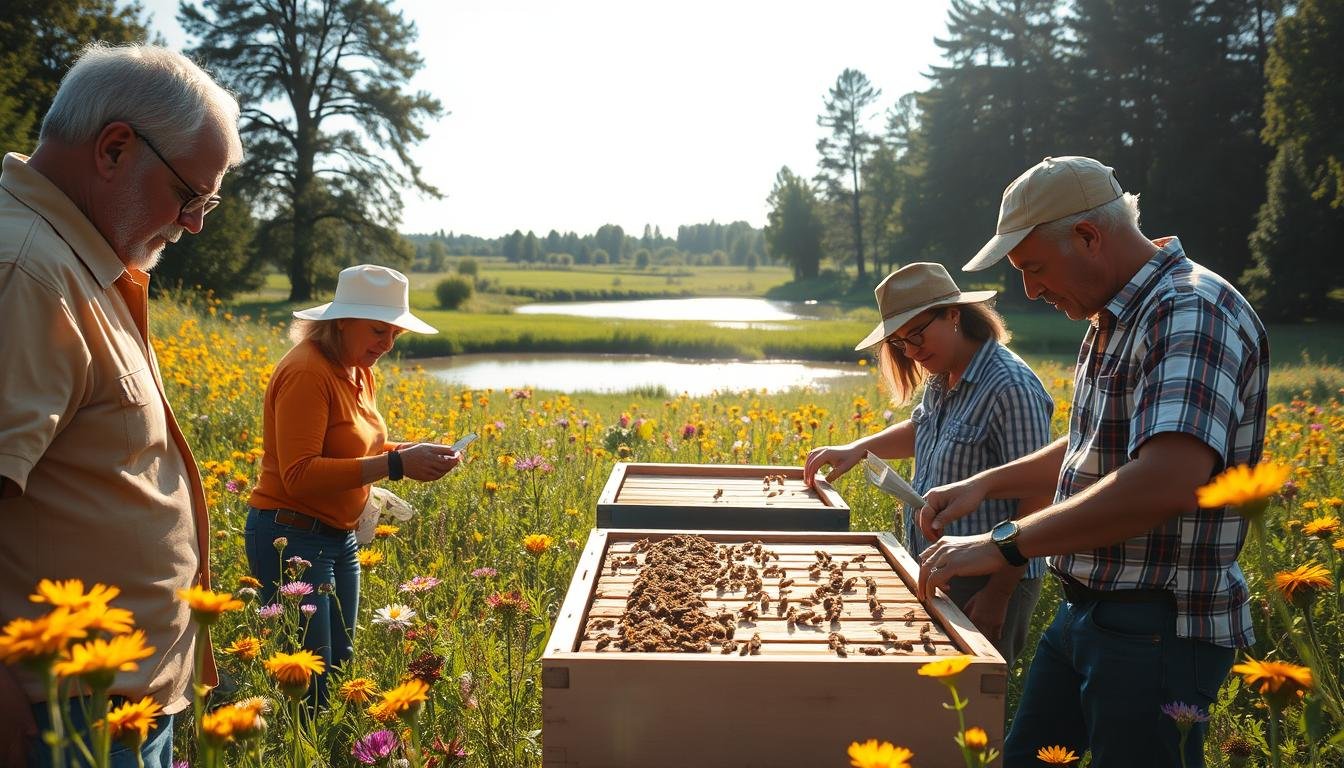
A growing network of mentor-led initiatives links outdoor instruction with vocational pathways and peer support.
VA recreational context
VA recreational therapy includes hive work at select medical centers where clinicians note better social connection and symptom drops. This care is local rather than a uniform national program, but it offers clear access points inside medical centers and clinics.
National and university-led options
Heroes to Hives (MSU Extension) delivers multi-state training and cohort models that professionalize apiary work.
Hives for Heroes pairs participants with mentor beekeepers to provide hands-on access, resources, and ongoing guidance.
University efforts—like Bee Veterans at UMN—offer free workshops, tools, and protective gear at public sites.
Regional programs and broader networks
Bees4Vets in Nevada tailors vocational tracks for those with PTSD or TBI. West Virginia’s Veterans & Heroes to Agriculture supplies education, scholarships, and mentorship statewide.
Nationwide groups such as Farmer Veteran Coalition, Armed to Farm, and Growing Veterans connect agricultural education to apiary pathways and local opportunities.
“Organizations often adapt timelines and tasks to meet individual abilities, including disabled veterans.”
- Tip: Contact local clubs or state associations to find nearby training and community mentorship.
How to get started: costs, equipment, training, and accessible practices
Launching a backyard apiary often begins with a single hive, a basic kit, and guided training. Start small, plan costs, and pick systems that match strength and mobility.

Startup ranges, returns, and essential gear
Budget: Expect $300–$500 per hive for a starter setup and bees, plus occasional feed and replacement parts.
- Essential gear: suit or jacket with veil, gloves, smoker, hive tool, feeders, frames, boxes, and a stand for waist-height work.
- Income note: A well-managed hive can yield $1,000–$5,000 gross per season, but results depend on forage, climate, and skills.
Timing, hive choice, and beginner support
Preorder bees in January for April–May pickup. Prepare equipment and a safe site at home before installation.
- Hive types: Langstroth fits modular growth; top-bar lowers lifting and suits those with back limits or disabled veterans.
- Accessible practices: use lighter supers, ergonomic tools, waist-height stands, and a buddy system during inspections.
- Training: Combine local club classes, mentorship, and structured workshops. See recommended beekeeping resources for reading and courses.
“Scale slowly, keep a schedule for inspections and mite checks, and plant forage to support bees and honey yields.”
Conclusion
Practical care of bees creates short, reliable tasks that build confidence and calm over time.
This approach links mindfulness and routine with clear, measurable benefits in sleep, mood, and ptsd symptoms. Many who join local clubs or national program report lower stress and stronger social ties.
Start small: plan one hive, find a mentor, choose accessible gear, and invite family members to share roles at home. Step-by-step training builds skills and opens opportunities from hobby to small enterprise.
With a little support, this work becomes a steady part of post-service life—boosting health, helping community, and extending service into the wider world.
FAQ
What are the main mental health benefits of apiculture-based therapy for service members?
Programs using hive care help reduce symptoms of PTSD, depression, anxiety, and chronic stress through structured routines, sensory grounding, and mindfulness. Regular tasks like hive inspections and honey harvesting create predictable, goal-oriented activities that improve sleep, lower cortisol, and rebuild daily purpose for veterans and family members.
How do local VA recreational therapy services incorporate hive work into care plans?
Many VA facilities partner with community organizations or university extension services to add hive-related sessions to recreational therapy. These offerings often appear as supervised group activities, vocational training, or adaptive garden programs that meet rehabilitation goals and support social reintegration.
Which national and university programs provide training and resources for service members?
National initiatives like Heroes to Hives and nonprofit programs such as Bees4Vets work with universities, including University of Minnesota Extension, to supply hands-on classes, mentor networks, and curricula. These partnerships deliver equipment grants, workshop series, and certification pathways for interested veterans.
What startup costs and equipment should veterans expect when starting hive stewardship?
Initial expenses typically cover protective clothing, a basic hive kit, smoker, hive tool, and a nuc or package of bees. Startup ranges vary by region and scale, but many programs offer subsidized kits or loaner gear to lower financial barriers for service-connected and disabled veterans.
Are there state-level initiatives that link agricultural transition programs to hive care?
Yes. Several states run veterans-agriculture collaborations that include hive pathways, like Veterans & Heroes to Agriculture in West Virginia. These efforts combine farm business training, mental health supports, and community markets to help veterans build income and life skills.
How accessible is hive work for veterans with mobility or disability limitations?
Adaptive practices make hive care accessible: raised hives, seated inspection stations, ergonomic tools, and team-based tasks reduce physical strain. Many organizations tailor roles—education, honey processing, or outreach—that match each member’s abilities and therapeutic goals.
What seasonal timing should new participants consider before beginning hive care?
Timing depends on climate and forage. Spring is ideal for establishing colonies and training, while late summer into fall focuses on harvest and winter prep. Introductory workshops often align with local seasonality to ensure hands-on learning during key management windows.
Can hive-based activities lead to small business or vocational opportunities for veterans?
Yes. With training in honey production, label compliance, and market access, participants can develop supplemental income streams. Many programs include small-business modules, cooperative sales, and farmer’s market access to transition skills into viable enterprises.
How do group hive programs support social reintegration and peer connection?
Group sessions create a shared mission and steady interaction, which rebuilds trust, teamwork, and communication. The communal nature of hive care fosters friendships, mentorships, and family involvement—key elements for long-term recovery and community belonging.
Where can caregivers and family members find educational resources and volunteer roles?
University extensions, county master gardener programs, and nonprofits publish beginner guides, online courses, and volunteer listings. Family members often join workshops, assist with processing days, or support outreach efforts that deepen their understanding and involvement.
What health and safety measures should participants follow when working near bees?
Standard precautions include allergy screening, wearing appropriate protective gear, using smoke properly, and following sting-response protocols. Programs emphasize training in safe handling, emergency plans, and gradual exposure to build confidence without causing undue risk.
How do programs measure therapeutic outcomes from hive-based interventions?
Effective programs use validated tools for mental health screening, track attendance and skill progression, and collect qualitative feedback on mood, sleep, and social engagement. Outcome measures help adjust care plans and secure funding for sustained services.
Can active-duty service members participate in community hive initiatives?
Many community and nonprofit programs welcome active-duty participants, often coordinating with military wellness offices. These collaborations provide flexible schedules, training credits, and pathways to continue involvement after transition to civilian life.
What are common long-term benefits veterans report from sustained involvement in hive stewardship?
Long-term participants cite increased purpose, improved mental resilience, new vocational skills, richer social networks, and a calming daily routine. Honey production and educational outreach also provide tangible achievements that reinforce confidence and life satisfaction.