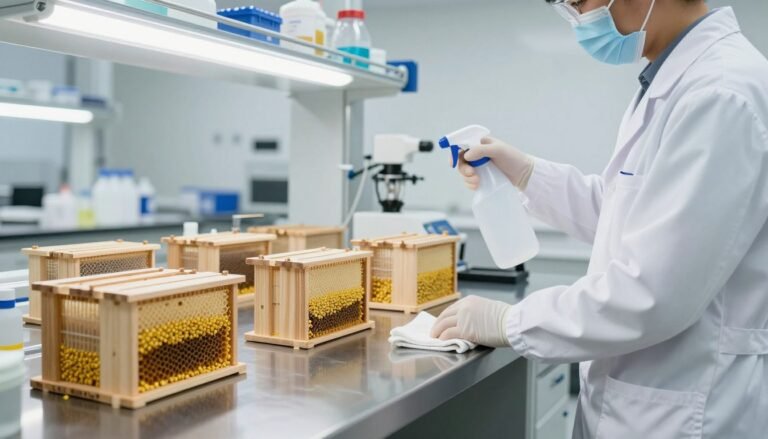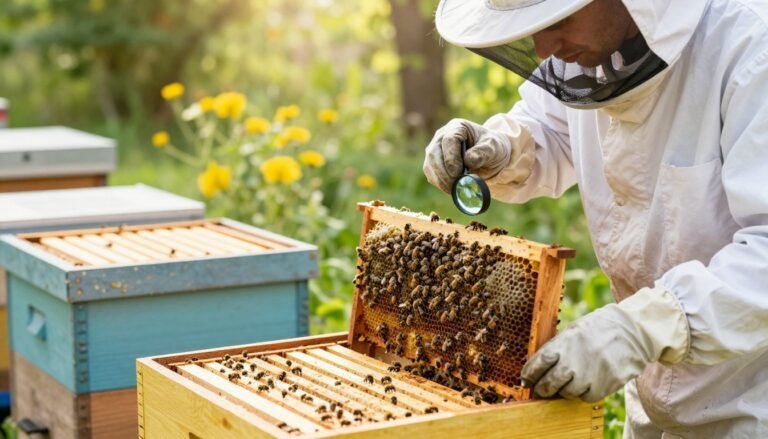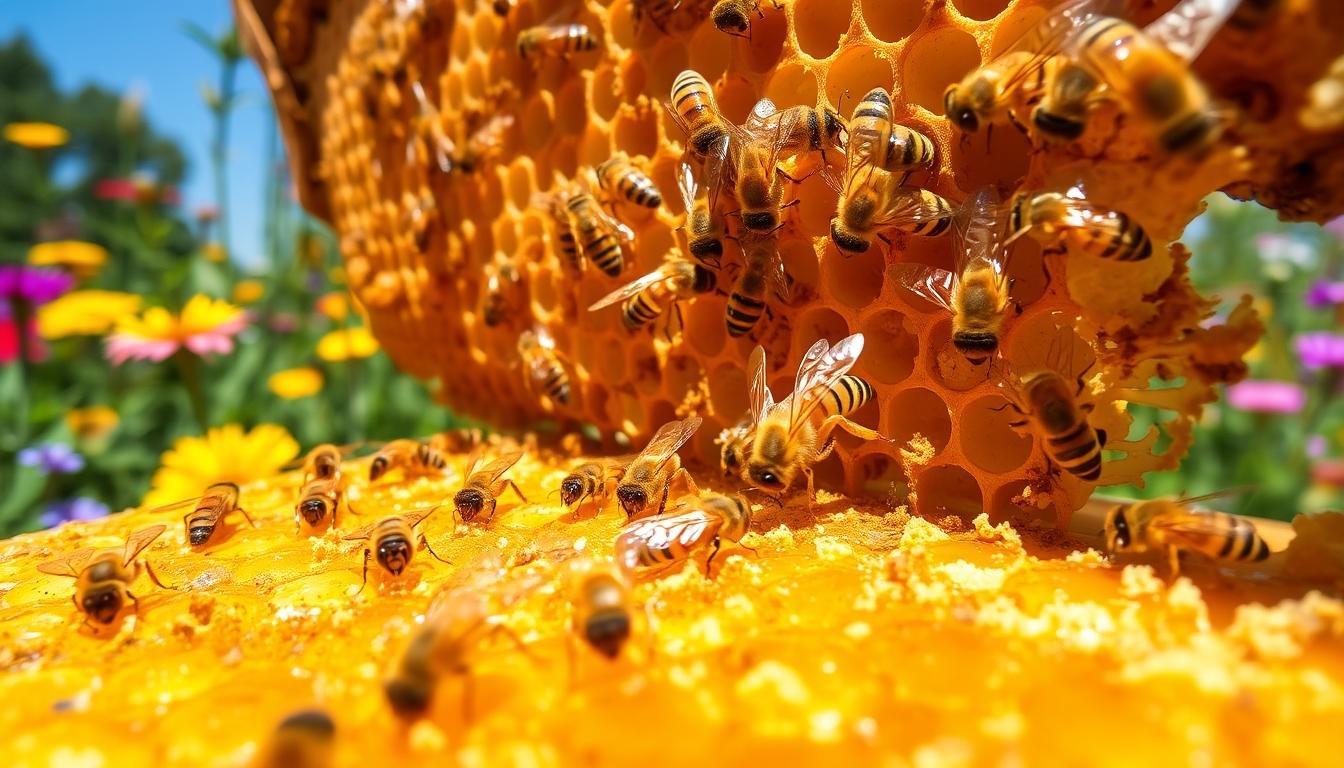
Fresh comb matters. Clean, refreshed comb improves airflow, boosts brood rearing, and lowers pathogen and pesticide buildup that can harm hive health.
A simple rotation plan keeps frames productive: many beekeepers replace about 20–30% of comb each year so no piece stays in service longer than three to five years. Spring or early summer is the best season for gradual swaps when the hive is growing and can rebuild.
Use starter strips or foundation and rotate frames slowly rather than all at once. Offer light feeding if the colony needs support, and freeze retired comb at least 24 hours before storage or recycling to kill pests.
Find practical guidance on comb care and sustainable reuse in this guide, and see a related note on colony scaling for expansion plans: comb care and recycling and beekeeping expansion tips.
Key Takeaways
- Rotate roughly 20–30% of frames yearly; no comb older than 3–5 years.
- Schedule swaps in spring or early summer during hive growth.
- Use foundation or starter strips and swap frames gradually.
- Freeze old comb 24+ hours before reuse or storage to kill pests.
- Recycle wax for foundation or crafts to save costs and reduce waste.
- Monitor rebuilding and provide syrup if colonies need extra energy.
Why getting bees to clean old comb matters for hive health
Renewing interior wax keeps a colony efficient. Fresh frames shorten the time a hive spends fixing cells and let workers focus on brood and nectar work.
Faster spring build-up: clean, open cells give colonies immediate space for eggs and pollen stores. That momentum lifts early population growth and speeds nectar processing for honey.
Better brood rearing: cells free of brood-cycle debris and residue support stronger larval development and more uniform capping. Healthier brood reduces pressure from common diseases and helps colonies cope with seasonal stresses.
Efficient honey storage: intact cell walls let workers dry and cap nectar faster. Cleaner wax also reduces moisture intrusion and spoilage risks.
Risks in aged wax
Old wax darkens and becomes brittle as cocoons and detritus build up. It also can harbor spores like those linked to American foulbrood and collect pesticide residues over the years.
| Issue | What happens | Practical effect | Action |
|---|---|---|---|
| Darkened wax | Cell diameter narrows | Smaller brood, less storage | Rotate frames annually |
| Pathogen build-up | Spores persist in wax | Higher disease risk | Replace 20–30% per year |
| Chemical residues | Contaminants concentrate | Stress on colonies | Recycle wax for new foundation |
Practice tip: track frame age in years and swap methodically so critical brood frames never all age out at once. For extra reading on management practices, see Off the Wahl: Beekeeping.
Safety first: evaluate comb before reuse to avoid spreading disease
Start with a careful inspection. Check frames and hardware for obvious signs that could spread disease through your apiary. A focused review saves time and prevents larger problems later.

Rule out American foulbrood
Look for an AFB “scale” — a dark, dried remnant stuck to the cell floor. If you see scales, stop and seek expert confirmation from a state bee inspector, university extension, vendor, or a veterinarian trained in honey bee diseases.
Poisoning vs common deadout causes
Many winter losses come from varroa, starvation, or cold. In most cases frames and equipment are safe after a basic check.
What they will clean on their own
- Removal of dead bees lodged in cells.
- Mold from bodies and stored pollen.
- Use of crystallized honey by the colony.
- Light feces that can be shaved off with a knife.
When to discard and how to store
Discard extremely dark, brittle, sagging, mouse-chewed, misshapen, or any AFB-suspect frame. Avoid spraying bleach or household disinfectants; residues cause more harm than help.
Scrape propolis from frame rests and store frames in ventilated boxes with a bottom board. Do not pack frames in sealed plastic totes; trapped humidity fuels mold. Budget a bit of time now so the hive is ready come spring.
For guidance on preparing starter colonies and nuc handling, see first year nuc care.
Timing and setup that make cleaning successful
Plan frame swaps during peak colony growth. Spring into early summer is the best time because the workforce and nectar flow let workers redraw and polish cells quickly.
Swap gradually. Remove a few frames each inspection rather than all at once. That preserves brood continuity and prevents chilling the nest.
Support the effort
Offer wax or plastic-coated foundation or starter strips to guide straight, usable comb. These sheets reduce tear-outs and speed usable surface creation.
Monitor build-out and add sugar syrup or pollen patties if natural food is scarce. Track progress over several visits and adjust the plan.
- Stage boxes so space is steady and airflow remains good while work proceeds.
- Balance refreshed frames next to active brood to prompt house workers to prepare cells.
- Keep spare equipment ready — prepped frames and a spare box make swaps quick and clean.
| Step | When | Why | Action |
|---|---|---|---|
| Initial swap | Spring | High workforce, nectar | Replace 2–3 frames, add foundation |
| Follow-up | Every 4–6 weeks | Monitor drawing and brood | Swap a few more, feed if needed |
| Annual plan | Per year | Keep comb fresh within 3–5 years | Rotate 20–30% of frames |
For notes on handling moldy or suspect frames, see guidance on moldy combs.
How to encourage bees to clean old comb
Assign work to strength. Let a vigorous colony or a robust nuc handle restoration. Strong house numbers and plenty of workers speed redrawing and polishing of cells.
Place frames smartly. Set older frames at the brood edge or above the brood nest. Use a queen excluder when staging frames over brood to prevent unwanted laying.
Keep prep light. Tap out dead bees and shave only heavy fecal streaks. Avoid harsh chemicals; leave delicate, cell-by-cell cleanup to the workers.
- Freeze first: hold suspect frames frozen 24+ hours to kill wax moths and hidden pests without pesticides.
- Limit idle time: return frames quickly so guard bees protect them at the entrance and moth pressure drops.
- Keep a small stash of foundation-ready frames and minimal equipment on hand so swaps are fast.
- Work efficiently as a beekeeper; bring only essential tools to keep the cluster warm and the restoration moving.
Create a hive environment that speeds cleaning
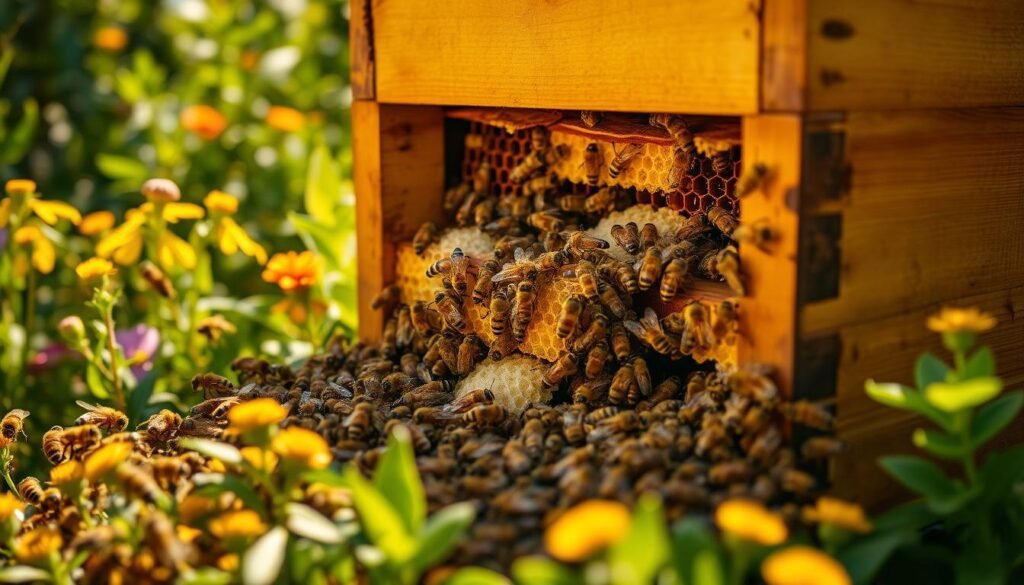
Select a sunny, level site that warms the hive each morning and cuts overnight condensation. Choose dry ground with natural wind protection so the interior heats quickly and the workforce stays active longer each day.
Provide a nearby water source with floating stones or landing surfaces. Place it near the entrance but not directly at the hive so workers hydrate safely without crowding the landing board.
Ventilation and moisture control
Keep frame rests and shoulders free of heavy propolis so frames seat correctly and air circulates across comb. A clear bottom board helps convection and lowers trapped moisture that slows rebuilding.
- Stage equipment in ventilated hive boxes with a cover and a bottom board; stacked, breathable boxes deter mold and pests.
- Avoid sealing frames in plastic containers that lock in humidity; plastic storage often makes wax clammy and invites problems.
- Maintain airflow around stored boxes — simple spacing and vents reduce dampness and keep wax attractive for reuse.
- Watch the area for persistent odors or damp spots; correct site drainage or replace faulty board pieces quickly to protect hive health.
For a deeper look at airflow and internal hive moisture, consult this ventilation guide.
Rotate, recycle, and reuse: long-term comb management
Plan a yearly swap rhythm so frames never age beyond their useful life. Replace roughly 20–30% of comb each year so no brood comb stays in service beyond 3–5 years. This keeps residue low and brood health consistent.
Practical rotation and recycling steps
Sort frames during the off-season. Repair sound frames and discard badly damaged or disease-suspect pieces. Render discarded wax and pour new foundation or make candles and balms.
- Create a rotation calendar targeting 20–30% per year and label sets by year.
- Store salvaged equipment in breathable stacks with a bottom board and vents.
- Use medium-dark brood pieces in bait hives and swarm traps to leverage their strong scent.
- Assign captured swarms frames you want polished early in the season.
| Action | When | Benefit | Notes |
|---|---|---|---|
| Rotate frames | Annual | Limits residue, improves brood | Replace 20–30% per year |
| Render wax | Off-season | New foundation, products | Reduces supply costs |
| Use brood scent | Swarm season | Improves bait hive capture | Place small pieces in traps |
Track outcomes. Log frame age, hive yields, and pollen or honey performance so future rotations become faster and more precise.
Conclusion
Make a short, repeatable plan that pairs strong colony numbers with smart frame placement. Inspect frames first and rule out disease. Rotate roughly 20–30% each year and favor spring swaps when the workforce and nectar flow help redraw cells quickly.
Store and stage thoughtfully. Freeze suspect frames 24+ hours, keep boxes ventilated, and avoid sealed plastic that traps moisture. Recycle rendered wax into new foundation and use scent-rich brood pieces in bait hives to catch a swarm and start a new home fast.
Keep a checklist: disease checks, rotation targets, labeled boxes, and frame tracking. For seasonal timing and task lists, see seasonal beekeeping tasks.
FAQ
Why does getting the colony to clean old wax matter for hive health?
Cleaning aged wax speeds spring build-up, improves brood rearing, and creates efficient honey storage. It reduces pockets where pests and pathogens can linger, helping colonies grow faster and store food more reliably.
What risks hide in old frames and brood comb?
Dark, brittle frames can harbor disease spores, pesticide residues, and brood-cycle debris. These contaminants increase disease pressure and can slow colony recovery after winter or a deadout.
How can I safely evaluate comb before reuse?
Inspect for brood “scales,” sunken or perforated cappings, and foul odors that signal American foulbrood (AFB). If AFB is suspected, contact your state apiary inspector and avoid reusing the comb until confirmed safe.
What common causes of dead colonies should I consider versus poisoning?
Starvation, varroa-driven collapse, poor queens, and environmental stress often cause deadouts. Many frames remain usable if they lack AFB signs or heavy contamination; testing and inspection clarify the cause.
Which cell contents will the colony clean out on their own?
Bees remove mold, dead bees in cells, crystallized honey, and light fecal deposits. They readily refurbish lightly soiled comb during strong buildup periods when brood rearing increases.
When must I discard comb instead of returning it to the hive?
Toss comb that is severely dark, brittle, misshapen, infested with heavy wax moth damage, or shows AFB indicators. Heavily contaminated comb risks spreading disease and lowers colony health.
When is the best season to get nests working on old frames?
Spring or early summer works best. Colonies expand then and have ample nurse bees to clean and reuse cells, accelerating brood production and honey storage.
How should I introduce old frames so the colony accepts them?
Rotate in just a few frames at a time, placing them at the brood nest edge or above brood. Gradual swaps avoid stress and let workers attend cleaning while maintaining brood care.
What quick prep should I do before returning frames to the hive?
Tap out loose debris and lightly scrape heavy feces. Avoid harsh chemicals or deep cleaning that removes pheromone cues; minimal prep preserves beneficial scent while reducing loads of dirt.
Should I freeze frames before reuse?
Yes. Freeze for 24+ hours to kill wax moth larvae and other pests. Freezing protects stored comb during the interval before frames rejoin an active colony.
How can I keep wax moths from attacking idle equipment?
Minimize idle comb exposure, return frames to active colonies quickly, and store spare boxes in cool, dry places. Use tight storage, screened bottom boards, or light fumigation for long-term stock.
What hive placement and site conditions speed cleaning activity?
Morning sun, wind protection, dry ground, and a reliable water source near the entrance help. These factors boost daily foraging and colony vigor, increasing worker numbers available for maintenance.
How does ventilation and moisture control affect cleaning?
Proper airflow and dry conditions reduce mold and discourage pests. Keep frame rests clear, maintain bottom boards, and avoid sealing frames inside plastic totes that trap moisture.
What rotation plan keeps brood comb healthy long term?
Replace about 20–30% of comb each year so brood comb is refreshed every three to five years. Regular rotation lowers disease buildup and maintains productive cell structure.
What are practical options for recycling old wax and frames?
Render beeswax into new foundation, candles, or balms. Repair salvageable frames and use melted wax for starter strips. Recycling recovers value from old equipment while removing contaminants.
Can old brood scent be useful for attracting new colonies?
Yes. Old brood scent and used comb can attract swarms and work well in bait hives or swarm traps. That scent jumpstarts acceptance by scout bees and speeds nest establishment.