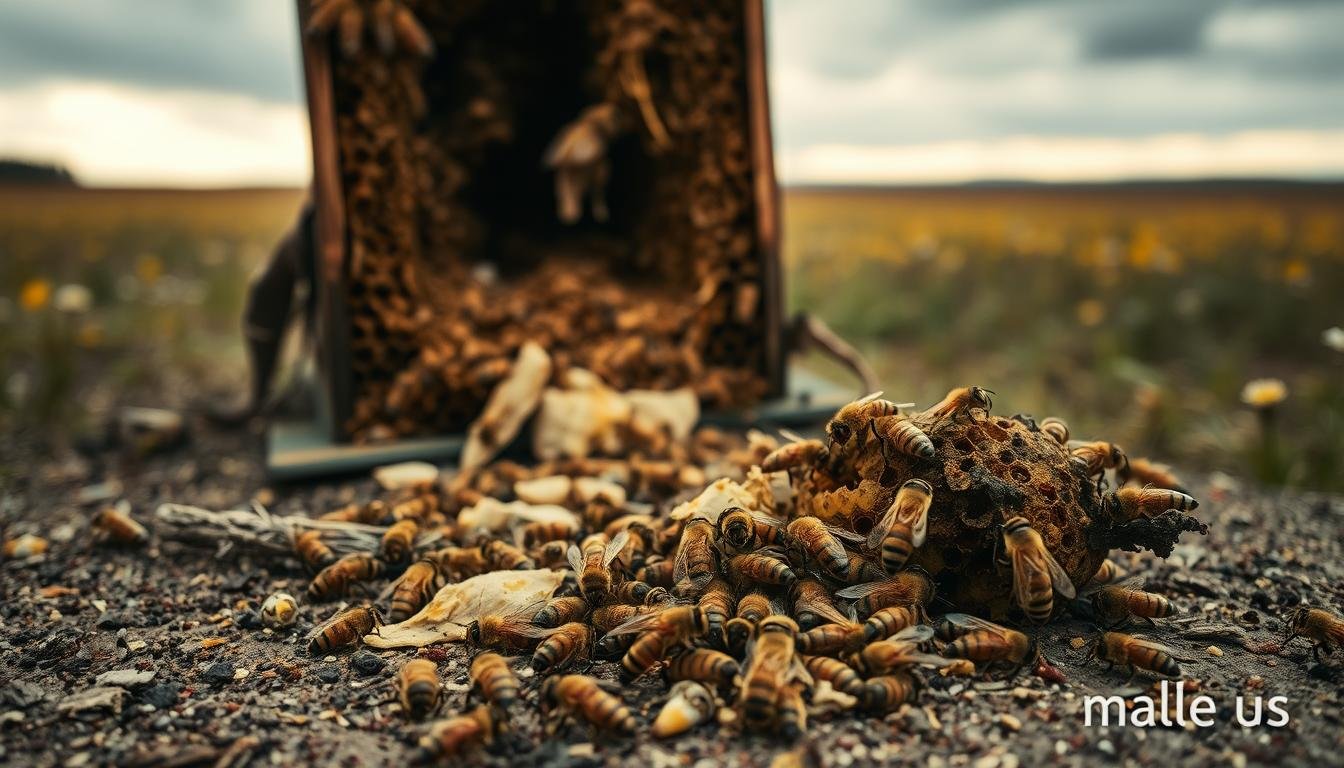
A dramatic die-off swept U.S. apiaries from summer 2024 to spring 2025. New estimates show about 1.7 million colonies died, amounting to over 60% of commercial operations and roughly US$600 million in lost pollination fees, honey sales, and replacement costs.
Project Apis M. and USDA surveys report average losses near 62% for commercial beekeepers, with some operations reporting 70–100% losses. USDA-ARS testing found high viral loads and Varroa destructor mites resistant to amitraz, signaling failing control tools and rising pathogen pressure.
These events surfaced as beekeepers staged hives for California almond pollination in January 2025. Stakeholders urged sustained USDA-ARS funding and fast data sharing to guide response. The crisis links parasites, pathogens, and management stressors and threatens the resilience of pollination services valued at about US$30 billion annually in the united states.
Key Takeaways
- More than 60% of commercial colonies perished between summer 2024 and spring 2025.
- Estimated economic impact: roughly US$600 million in direct losses.
- USDA-ARS found high viral loads and amitraz-resistant Varroa mites in affected hives.
- Project Apis M. survey showed average commercial losses of ~62%.
- Researchers and industry groups call for continued funding and rapid data sharing.
- Downstream effects include tighter honey markets and risks for pollination-dependent crops.
- For background on historical patterns and research, see colony collapse disorder.
Honeybee Colony Collapse USA: What Happened and Why It Matters
The early pollination season laid bare a national emergency when many hives arrived weak or empty for almond staging.
USDA and Project Apis M. signal record losses from summer 2024 to spring 2025
Commercial beekeepers began reporting exceptional bee losses in summer 2024, and the trend intensified through the next year.
USDA estimated about 1.7 million dead colonies. Project Apis M. found an average 62% loss among commercial operations, with some near-total failures.
Early warnings from winter almond pollination routes reveal a nationwide crisis
Staging for the almond bloom highlighted shortages because orchards require massive numbers of healthy bees.
Washington State University experts warned that honey bee colonies could decline up to 70% in 2025. WSU professor Brandon Hopkins cautioned about potential bankruptcies and higher grower costs.
State university pollinator specialist Priya Chakrabarti Basu emphasized that pollination demand has not eased. That pressure forces beekeepers to try to maintain the same number colonies despite shrinking stock.
- Timeline: losses began summer 2024 and became most visible during almond staging.
- Scale: USDA’s 1.7 million estimate and Project Apis M.’s 62% figure signaled a national disruption.
- Impacts beyond almonds: shortfalls can ripple into berries, apples, melons, and other crops.
“Maintaining contract numbers is becoming a struggle for many operations,”
Next: the following section examines the drivers that combined to create this crisis.
Drivers behind the collapse: mites, diseases, nutrition, and pesticide pressures
Field diagnostics in 2024–25 pointed to overlapping stressors that pushed many apiaries past recovery thresholds.
Amitraz-resistant Varroa destructor and rising viral loads
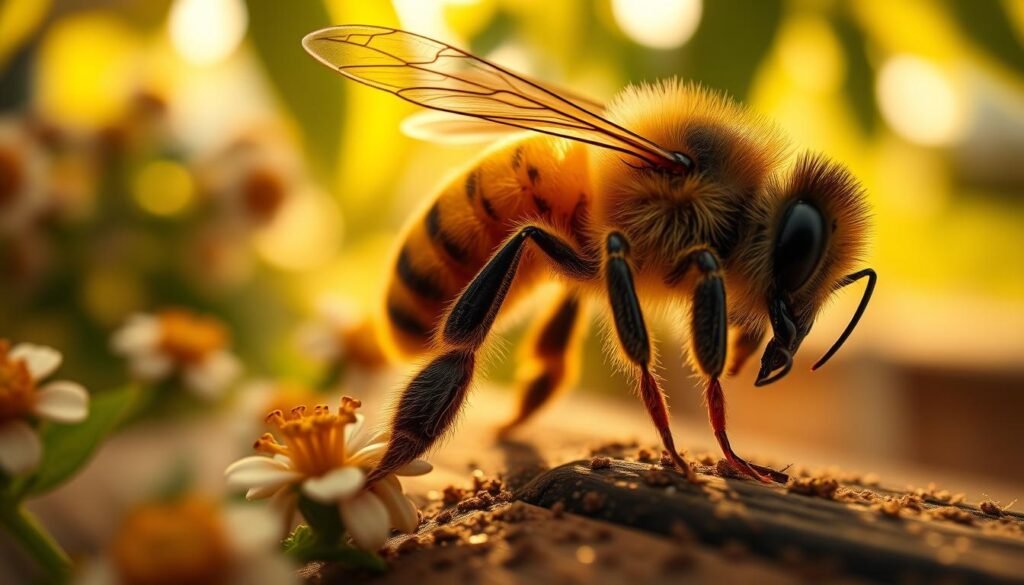
Varroa mites resistant to amitraz undermined a core control tool. That resistance allowed mite populations to surge and vector viruses that debilitate adult workers and brood.
USDA-ARS found high levels of DWV and ABPV in affected honey bee colonies, showing how parasites and diseases amplify one another and drive rapid losses.
Nutrition deficits and seasonal stressors
Limited forage diversity, long transport routes, and seasonal dearths lower immunity in bees. These stressors make it harder for a bee colony to recover across the year.
Management crowding and repeated moves for pollination services further raise stress and mortality rates.
Potential pesticide exposure and sublethal effects
Scientists and ongoing research point to sublethal pesticide impacts that impair behavior and immunity. While causal certainty is pending, stakeholders urge reduced exposure and coordinated practices.
Project Apis M. has called for broader dialogue with growers and regulators to lower agrochemical risks to bees.
From CCD history to today’s wider dynamics
Colony collapse disorder first drew attention in 2006. Today’s pattern shows higher background mortality and losses spread through the year, not just winter.
- Parasite dimension: amitraz-resistant varroa mites have weakened miticide efficacy and allowed disease spread.
- Pathogen load: elevated DWV and ABPV are central to recent failures.
- Nutrition & management: forage limitations and transport stress reduce resilience.
| Driver | Evidence | Effect on bees | Action needed |
|---|---|---|---|
| Varroa resistance | Miticide failure in samples | Mite surges, viral transmission | New controls, integrated pest management |
| Viral pathogens | High DWV & ABPV (USDA-ARS) | Weakened workers and brood | Improved diagnostics, targeted treatments |
| Nutrition & stress | Seasonal dearths, transport reports | Lower immunity, year-round losses | Habitat, seasonal planning, reduced moves |
| Pesticide exposure | Sublethal effect studies cited by stakeholders | Impaired behavior, synergy with disease | Coordinated reduction, field trials |
Scientists emphasize that no single factor explains the recent collapse. Instead, the convergence of parasite resistance, pathogen burdens, poor nutrition, and chemical exposures destabilizes managed bees. Renewed research and data-sharing — including field trials and best-practice guides such as recent research summaries and practical seasonal tips at beekeeping resources — are essential to restore resilient honey bee colonies.
Economic and food system impacts across U.S. agriculture
A widespread shortfall of strong hives this season has pushed pollination logistics into uncharted territory.
Pollination services for almonds, apples, berries, and other fruit crops depend on reliable numbers of healthy colonies. Reduced colony strength meant growers faced fewer available units when blooms opened. That mismatch can lower fruit set and reduce yields for high-value crops.
Pollination at risk: almonds, apples, berries, and more amid colony shortages
Almond orchards require strong units at bloom. Reports in early 2025 showed some orchards had pollination shortfalls.
When demand outstrips supply, growers pay more and face scheduling uncertainty. This raises the chance of lower yields and price pressure along the food chain.
Beekeeper viability, rising costs, and pressure to maintain number of colonies
According USDA, about US$600 million in direct losses hit beekeepers and growers from lost pollination fees, replacement costs, and reduced honey income. That strain increases the risk of operations exiting the market.
WSU warned that rising costs and contract gaps could push some beekeepers into bankruptcy. The almond sector is particularly sensitive to shortages because of strict strength requirements.
Honey production declines, revenue losses, and supply chain ramifications
Honey production fell while retail prices rose roughly 5%. One analysis valued recent honey loss at $139 million. These shifts squeeze margins for producers and complicate supply agreements.
Spillover effects hit queen breeders, equipment suppliers, trucking, and cold storage—raising costs across the supply chain and increasing uncertainty for food production and processors nationwide.
- Reduced supply increases pollination fees and grower risk.
- Lower production and higher honey prices strain cash flow for beekeepers.
- Metrics to watch: production volumes, pollination set rates, colony strength scores, and contract fulfillment.
| Impact area | Evidence / metric | Short-term effect | Recommended response |
|---|---|---|---|
| Pollination services | Reported shortfalls in almonds, apples, berries | Missed contracts, lower yields | Diversify providers, early booking |
| Beekeeper finances | ~US$600M lost (according USDA) | Cash flow stress, potential exits | Targeted aid, insurance options |
| Honey market | 5% price rise; $139M loss estimate | Tighter supply, higher retail costs | Market diversification, value-added products |
| Supply chain | Queen, equipment, transport delays | Operational bottlenecks | Strengthen logistics, regional planning |
“Sustained shortages will force growers and beekeepers to rethink contracts and timing.”
Longer-term resilience will require habitat, improved management, and policies that lower risk across the food system. For conservation context and practical steps, see importance of honeybee conservation.
Conclusion
Field data and lab studies together painted a stark picture for pollinators and growers.
Scientists and research teams found mites resistant to common miticides, high viral loads, and nutrition gaps that combined to drive severe colony collapse. The result was elevated losses across commercial operations and pressure on pollination for key crops like almond.
Action priorities include rapid testing of alternative Varroa controls, expanded pathogen surveillance, and programs that boost forage and reduce chemical exposure. Department agriculture units and partners must share results quickly so beekeepers can adapt before the next bloom.
Coordination among Project Apis, growers, and industry will help rebuild honey production and protect food systems. See reporting on wider threats to the food supply and practical beekeeping resources.
FAQ
What triggered widespread losses among managed bee colonies between summer 2024 and spring 2025?
Multiple factors drove those losses. Reports from the U.S. Department of Agriculture and Project Apis m. pointed to surges in Varroa destructor populations, including mites showing reduced sensitivity to amitraz, accompanied by higher loads of viruses such as deformed wing virus (DWV) and acute bee paralysis virus (ABPV). Poor nutrition from depleted forage, seasonal stress during almond pollination, and suspected pesticide exposures also combined to increase mortality across commercial operations.
How did almond pollination routes act as early warning signs for a national problem?
Almond groves concentrate millions of managed hives each winter. In 2024–25, commercial beekeepers and university specialists documented elevated losses and weakened colonies after those migrations. Because almonds rely on transported hives, weakened returns there signaled broader shortages and pointed to stressors that affected colonies before they dispersed back to summer ranges.
What role do amitraz-resistant Varroa mites play in current bee health challenges?
Varroa mites are the top biological stressor for managed bees. When mites develop reduced sensitivity to common miticides like amitraz, treatments lose effectiveness. That allows mite levels to rise, which amplifies viral replication inside bees. Higher virus loads reduce lifespan and colony resilience, making hives more likely to fail during other stress periods.
How important is nutrition for preventing large-scale apiary losses?
Nutrition is critical. Colonies with diverse, seasonally available forage build stronger worker populations and immune responses. Monoculture landscapes and habitat loss limit floral diversity and deplete pollen protein, which raises susceptibility to disease and reduces overwintering success. Restoring diverse forage helps reduce year-round losses.
Are pesticides confirmed as a main cause of these losses?
Researchers have not pinned a single pesticide as the primary cause. Instead, studies show sublethal pesticide exposure can impair navigation, immunity, and brood development, which interacts with mites, disease, and poor nutrition. Ongoing field and lab work aims to clarify which chemical mixtures and application practices pose the greatest risks.
How does this wave of losses compare with earlier colony collapse disorder (CCD) events?
CCD historically described sudden, unexplained mass disappearances of adult bees. The recent pattern differs: losses are broader and arise from interacting, measurable stressors—Varroa, viruses, nutrition deficits, and chemical exposures—rather than a single mysterious syndrome. Management and research now focus on multifactorial solutions.
What are the immediate risks to U.S. food production from fewer managed hives?
Reduced availability of healthy hives threatens pollination for crops like almonds, apples, berries, squash, and many vegetables. Shortages can raise pollination fees, increase production costs, and risk lower yields or quality. Specialty crops that rely heavily on rented colonies face the greatest near-term impact.
How are commercial beekeepers coping with rising losses and costs?
Beekeepers are responding with intensified mite management, increased hive splits, and investments in supplemental feeding and queen replacement. Many face higher operating costs and labor demands. Some operations scale back, while others diversify services or adopt integrated pest management strategies to maintain viable numbers of colonies.
Has honey production been affected by these recent declines?
Yes. Weaker hives and fewer productive colonies reduce honey yields. Regions that supplied large commercial operations reported lower output, which affects beekeeper revenue and retail supply. Honey production trends vary by state and depend on local forage and management success.
What are scientists and universities doing to address the crisis?
Researchers at land‑grant universities and institutions like Washington State University and others study mite resistance, viral dynamics, forage restoration, and chemical risk. Collaborative programs—often involving USDA, Project Apis m., commercial beekeepers, and extension services—test new miticides, breeding programs for resistant stock, and landscape interventions to improve nutrition and resilience.
Can improved hive management and breeding reduce future losses?
Yes. Integrated approaches that combine effective mite control, breeding for hygienic and mite‑tolerant genetics, diversified forage, and careful pesticide stewardship show the best results. Long‑term resilience depends on adopting multiple proven practices rather than relying on a single fix.
What can growers and land managers do to support pollinators now?
Plant and maintain diverse, season‑long bloom sources, reduce broad‑spectrum insecticide use during bloom, and coordinate pesticide applications with beekeepers. Establishing hedgerows, cover crops, and wildflower strips improves nutrition and provides safe foraging habitat, which helps stabilize managed and wild pollinator populations.
Where can beekeepers find current data on losses and best practices?
The U.S. Department of Agriculture publishes colony loss and health reports. Project Apis m., university extension services, and organizations like the Apiary Inspectors of America offer management guides and regional updates. Commercial beekeepers also share field observations through industry networks and trade associations.