Last Updated August 26, 2026
Across North America, managed honey bees have bolstered crop yields for decades. Yet recent research and field notes raise hard questions about their effects on local pollinators and plant communities.
Studies, a University of Calgary discussion with Ron Miksha, and garden footage show that dense apiaries can dominate scarce floral resources. This pressure can reduce native pollinator abundance and alter how native plants get pollinated.
Key concerns include aggressive foraging, changes in plant reproduction, and local declines in wild bee populations. Evidence also shows recovery is possible when managed colonies are moved or hive density is reduced.
The goal here is practical: synthesize the research, show mechanisms, and offer guidance for beekeepers, land managers, and urban growers. Readers will get clear definitions, context for site-based choices, and citations such as a useful summary at native bees vs. honey bees.
Key Takeaways
- Managed honey bees can dominate floral resources where flowers are limited.
- High hive density often correlates with lower wild pollinator abundance.
- Behavioral interactions documented include chasing and pollen robbing.
- Reducing colonies and boosting floral diversity helps native populations rebound.
- Site assessments and adaptive management are vital for balanced outcomes.
Why the competition issue matters in the United States: historical context, agriculture, and native biodiversity
The arrival of European Apis mellifera made managed hives a backbone of U.S. farming. Over the years, honey production and hive movement supported broad crop pollination needs.
The continent also hosts thousands of native species that evolved with local plants. Wild bees often deliver effective pollination for native plants and many regional crops when habitat remains intact.
Where floral resources are limited, high hive density can reduce native abundance and shift how plants are pollinated. Urban rooftops, parks, and small gardens are places this pressure can grow.
| Context | Primary effect | Management response |
|---|---|---|
| Historical (arrival of Apis) | Widespread use in agriculture | Recognize non-native status; plan hive placement |
| Agricultural reliance | Improved crop yields in many regions | Integrate native pollinator habitat into farms |
| Biodiversity stakes | Altered pollination of native plants | Limit colonies in sensitive areas; restore floral resources |
Site assessments matter: flower abundance, habitat connectivity, and local pollinators shape outcomes. Good practice asks beekeepers to match colony numbers to available resources.
For further background on managed hive impacts, see the problem with honey bees.
What the research shows about Competition between honeybees and native bees
Multiple lines of research show that large numbers of managed hives can change who visits flowers and how plants get pollinated. Field notes, interviews, and site surveys point to consistent patterns linked to hive density and time spent in an area.
Podcast insights on foraging pressure
Ron Miksha and others note that honey bees, non-native in many regions, can concentrate on limited floral resources by sheer numbers. This reduces nectar and pollen for other insects and can shift plant reproduction when flowers are scarce.
Urban garden observations in St. Louis
Video work at three community plots recorded clear behaviors: chasing, dive bombing, pollen robbing, and occasional attacks. Sites with four managed colonies showed higher interaction rates than gardens without hives.
Migratory apiary case: Qinghai–Tibet Plateau
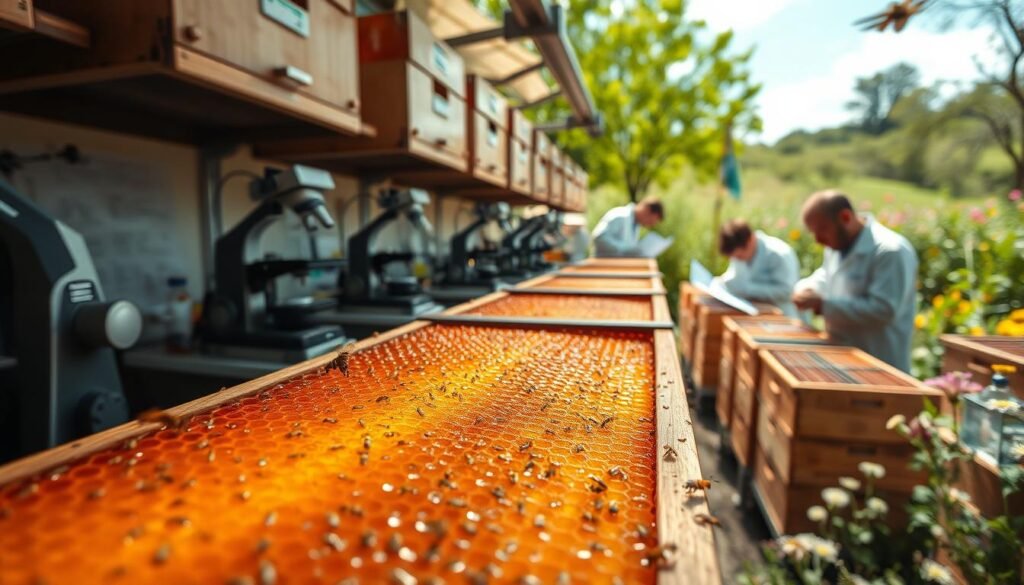
A Penn State-led study found that migratory apiaries of about 60–100 colonies lowered native bee abundance and species diversity. One year after apiary removal, total counts recovered where floral resources and low pesticide use supported rebound.
| Study | Setting | Key finding |
|---|---|---|
| Podcast summary | Various areas | Foraging concentration depletes nectar and pollen |
| St. Louis gardens | Urban community plots | Observed aggressive interactions at flowers |
| Qinghai–Tibet study | Migratory apiaries | Lower native abundance; partial recovery after removal |
Takeaway: density and duration of honey bee colonies matter. Adaptive management—matching colony number to local resources—helps protect native bee species and overall pollinator community health.
Ecological mechanisms: how honey bees compete with native bees for floral resources and shape plant communities
Dense managed hives can drive intense foraging that quickly strips small flower patches of nectar and pollen. This fast depletion leaves less for wild bee species that have short flight ranges or narrow activity windows.
Foraging pressure and resource depletion
Mechanism: High numbers of foragers raise visit rates per blossom, accelerating nectar and pollen loss. Native bee and solitary bee species often cannot match that influx of visits.
Species-specific effects and behavioral interference
Some bee species, such as Andrena mining bees, show sharper declines where many colonies forage nearby. Observed behaviors—chasing and dive-bombing—add interference that displaces smaller foragers.
Plant community pathways and pollination tradeoffs
When managed foragers favor mass-flowering crops or common garden plants, certain native plants receive fewer effective visits. Over time this can shift plant composition and reduce seed set for specialist species.
| Mechanism | Result | Management lever |
|---|---|---|
| Foraging pressure | Lower resource availability | Limit hive number; add flowers |
| Temporal mismatch | Early/late blooms vulnerable | Extend bloom periods with plantings |
| Species sensitivity | Selective declines (e.g., Andrena) | Monitor local bee species; adjust placement |
Takeaway: balancing crop pollination services with diverse plantings and connected habitat reduces per-flower competition and helps maintain resilient pollinator communities.
Implications for beekeeping, conservation, and urban agriculture in North America
Decisions on how many hives to place, where, and for how long shape outcomes for local pollinators. Responsible beekeeping helps sustain both honey production and wild bee diversity.
Managing colony density and duration
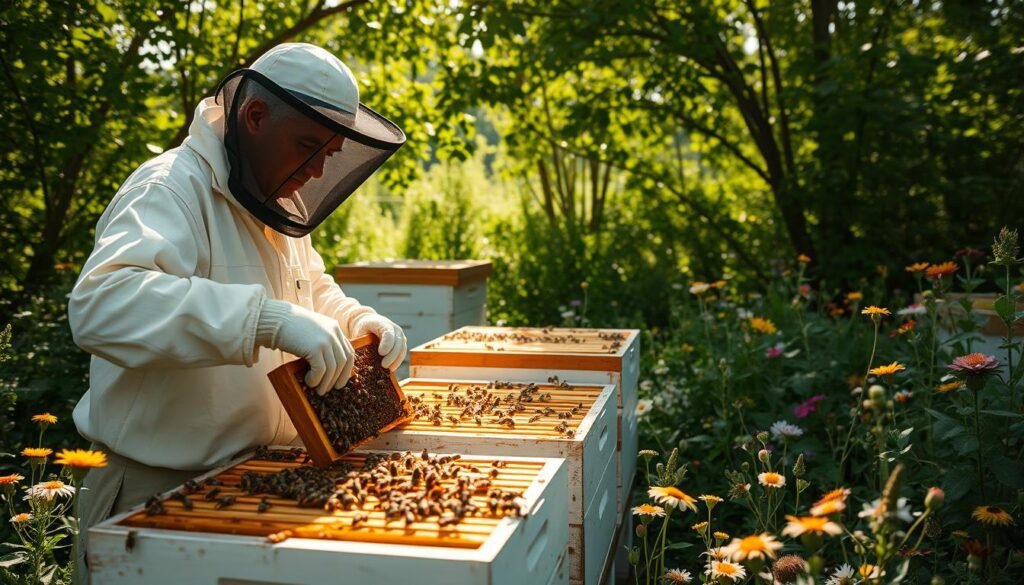
Right-sizing colonies means matching hive numbers to verified forage across seasons. Large apiaries can lower native bee populations; rotating or reducing stays eases long-term pressure.
Site context and risk factors
Assess floral diversity, pesticide use, nesting habitat, and foraging range before adding colonies. Cases on high plateaus and in St. Louis gardens show that limited floral resources increase aggressive interactions and decline in native bees.
Actionable practices for growers and beekeepers
- Place hives away from sensitive habitat and spread apiaries to reduce congestion.
- Restore native plantings that flower across seasons and add nesting substrates.
- Coordinate local policies so beekeepers, gardeners, and planners monitor bee populations and adjust colony numbers.
| Focus | Practical step | Benefit |
|---|---|---|
| Colony density | Match to forage surveys | Lower forage depletion |
| Habitat | Native plant mixes | Support diverse bees |
| Policy | Shared monitoring | Adaptive management |
Takeaway: simple, coordinated actions by beekeepers and land managers can protect bee populations while keeping pollination services strong.
Conclusion
Research across varied sites finds that high hive numbers can change visitation patterns and plant reproduction. Multiple studies link intense foraging to faster depletion of nectar and pollen and measurable impact on local populations.
Nuance matters: results differ by areas with abundant flowers versus limited landscapes, and some species respond more slowly to recovery after hive removal.
Practical takeaway: align colony numbers and duration with habitat capacity, restore diverse plantings, and monitor pollinator counts to reduce conflicts while supporting crop pollination.
Shared action by beekeeping groups, growers, and land managers will help save bees and secure both production and conservation goals.
FAQ
What is the core issue about competition between honeybees and native bees?
The issue centers on non-native honey bee colonies increasing foraging pressure on shared floral resources, which can reduce nectar and pollen available to wild bee species. That pressure may lower wild bee abundance and diversity in some settings, alter plant-pollinator interactions, and change pollination outcomes for native plants and crops.
Why does this matter in the United States for agriculture and biodiversity?
The U.S. relies heavily on managed colonies for crop pollination while also hosting a rich community of wild bees vital to native plant reproduction. When managed hives concentrate in agricultural or urban areas, they can outcompete local pollinators, threaten specialist species, and reduce overall pollinator resilience that supports both crops and native ecosystems.
What does recent research reveal about the effects of managed honey bee colonies on wild bee communities?
Studies document cases where high densities of managed colonies correspond with declines in wild bee numbers and species richness. Research shows shifts in flower visitation, displacement behaviors, and lower reproductive success for some ground-nesting and oligolectic species when floral resources are scarce or when apiaries remain long-term.
Are there documented behavioral interactions in urban gardens that show direct displacement?
Yes. Field observations in urban community gardens have recorded chasing, dive-bombing, pollen robbing, and aggressive encounters that reduce foraging efficiency of many smaller wild bees. These interactions can exacerbate resource depletion in flower patches popular with both groups.
Do migratory beekeeping operations affect native bee abundance in nearby landscapes?
Case studies, such as assessments near large temporary apiaries, indicate drops in native bee abundance and diversity in proximity to heavy hive concentrations. The effect tends to be strongest where floral resources are limited and when many colonies stay for extended periods.
Can native bee populations recover after managed colonies are removed?
Recovery is possible, especially when removal is paired with habitat improvements like increased floral diversity and nesting sites. Rebounds occur faster where surrounding natural habitat exists and pesticide pressures are low; recovery is slower in highly altered or fragmented areas.
What ecological mechanisms drive the impact of managed colonies on wild bees?
Key mechanisms include foraging pressure that depletes nectar and pollen, temporal overlap in floral use, and preferential visitation to high-reward plants. Some specialist species, such as certain mining bees (Andrena spp.), suffer more because they rely on limited floral resources, while generalist pollinators may tolerate overlap better.
How do pollination services shift when managed colonies dominate a landscape?
Managed colonies can boost crop pollination but sometimes at the cost of pollination for native flora. Dominant visitation by one species may reduce pollination quality for plants that require diverse pollinator assemblages, leading to altered seed set, genetic diversity loss, or shifts in plant community composition.
What practical steps can be taken in North America to reduce negative impacts on wild bees?
Strategies include limiting colony density and duration in sensitive areas, siting apiaries away from high-value wild bee habitats, restoring native plantings, reducing pesticide use, and creating nesting habitat. Collaborative planning between beekeepers, land managers, and conservation groups improves outcomes.
How does site context influence the degree of impact from managed beehives?
Site factors—floral diversity, habitat connectivity, pesticide exposure, and available foraging range—strongly mediate impacts. Landscapes with abundant and diverse flowers can buffer effects, while resource-poor or highly fragmented sites increase competition risks for native species.
What recommendations exist for beekeepers to balance honey production and wild bee conservation?
Recommended practices include monitoring colony placement and numbers, rotating hive locations, supporting local floral resources, avoiding sensitive conservation areas, and participating in regional planning. Many beekeepers find that harmonizing practices benefits long-term pollination services and community relations.
Where can I find reliable studies and resources on this topic?
Look for peer-reviewed articles in journals like Ecology, Conservation Biology, and Journal of Applied Ecology, plus reports from USDA, Xerces Society, and state extension services. These sources summarize field experiments, long-term surveys, and management guidelines relevant to pollinator conservation.