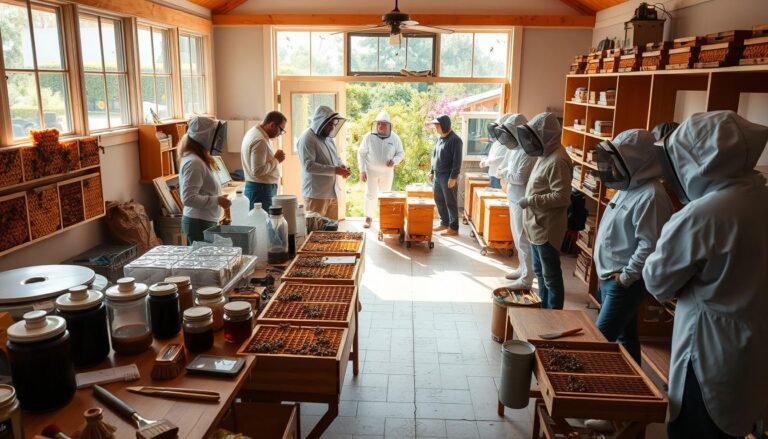
This article is a concise resource for anyone who keeps bees or plans to place hives on their property. It explains federal import limits under 7 U.S. Code § 281 and how those rules set a national baseline for colony health and movement.
Local rules add the details. Louisiana’s apiary program, for example, requires permits, inspections, marked queens, and posted contact info. Some parishes set hive types and allow immediate action if colonies pose a direct threat.
Municipal differences matter. In Minnesota, cities range from outright bans to permit systems with setbacks. In Washington, King County and Seattle limit numbers, require registration, and set setback or fence alternatives.
We also note how sale and inspection rules can affect commercial activity, and how to read ordinance chapters to find the exact section you need before placing a hive or buying equipment.
Key Takeaways
- Federal law controls importation to protect colony health.
- States and cities add rules on permits, inspections, and hive placement.
- Louisiana and some parishes have strict posting and equipment standards.
- Minnesota municipalities vary from bans to conditional permits.
- King County and Seattle set numeric limits, setbacks, and registration.
Why state and local beekeeping rules matter for U.S. beekeepers today
Local codes shape whether a hive is welcome in a neighborhood and how conflicts get handled. Many city rules set minimum distances from property lines and give animal control powers to inspect premises and order corrections.
Practical examples help. In Bellingham, hives must sit at least 50 feet from a lot line and violations can carry fines up to $250. Several Minnesota cities classify bees as farm or non-domestic animals, which affects whether a beekeeper needs a permit, training, or setback variances.
“Clear placement standards protect neighbors and provide stable conditions for the colony to thrive.”
- Placement and nuisance: Rules decide when repeated stings, flight paths, or swarming become a legal problem.
- Design and purposes: Requirements may include water, barriers, orientation, and limits tied to honey or pollination sale activity.
- Enforcement: Inspection powers and section citations show how a person avoids abatement or removal.
Seek accurate local information before you install a hive. A quick code check saves time, cuts costs, and reduces the chance you must relocate a colony after complaints.
Federal framework that shapes state rules
Federal law sets the guardrails that many local apiary programs follow. Under 7 U.S. Code § 281 the Secretary of Agriculture may issue an order limiting importation of honeybees and semen to block pests, parasites, or undesirable species from entering the united states.
That federal order influences how a department agriculture drafts its chapter and section provisions. States then build apiary programs that require permits, quarantine authority, and Certificates of Inspection for movement and sale of bees and equipment.
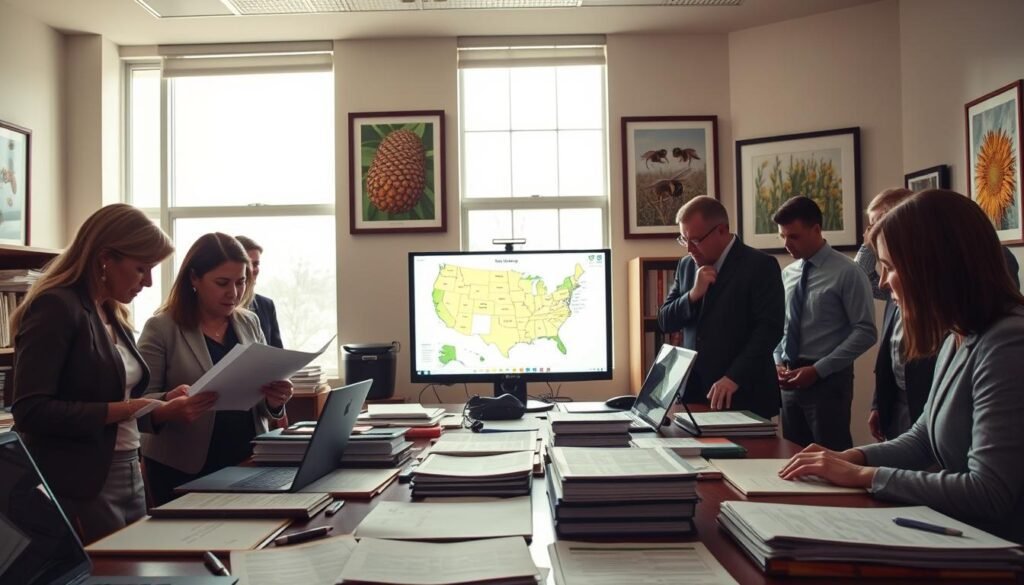
USDA guidance moves through a department agriculture to set registration windows during the year and to coordinate outbreak response. The result is a layered system where federal import controls and state provisions work alongside local nuisance rules.
“Federal import controls protect against harmful species and give states the tools to enforce quarantine and inspection.”
- Why it matters: sale and transport of bees may need paperwork tied to federal sanitary goals.
- Local impact: nuisance and abatement sections often mirror disease-prevention aims, listing when colonies shall be removed or a person shall cooperate with inspectors.
Louisiana spotlight: permits, inspections, and apiary law in practice
Louisiana combines statewide law and parish rules to control disease risk and set practical apiary standards. RS 3:2301-2311 and Title 7, Part XV, Chapter 5 require registration and inspection to keep contagious honeybee issues from moving across lines.
All beekeepers must file a New Apiary Permit Application with the Department of Agriculture. The department agriculture also accepts an Application for Apiary Inspection when a chemical kill or disease is suspected.
East Baton Rouge Parish specifies Langstroth hives with removable frames and a year-round water source. All colonies shall be maintained with marked queens of European stock to lower aggression and aid identification.
Posting rules require the beekeeper’s name, telephone, and the LDAF registration yard marker on the premises. Inspectors have entry rights during set times, and if bees shall show unusual aggression a person shall allow immediate destruction to stop imminent harm.
“Follow Title 7 section and local posting to avoid delays when moving bees or equipment.”
- Practical tip: keep paperwork current with the department agriculture before any sale or transfer.
- Warning: the Structural Pest Control program restricts products used to remove bees; violations can carry large fines.
Minnesota local rules: from outright bans to permits with setbacks
Local codes form a patchwork. Some cities permit apiaries subject to clear conditions while others ban hives or treat them as farm animals.
Cities allowing bees with restrictions and a permit
Bloomington (City Code 12.116.01), Edina (Section 300.11), Shoreview (Section 601.020(E)), and Plymouth (amended August 2023) allow bees with limits. Plymouth now permits up to two hives when a permit is approved.
Places that prohibit bees or treat them as animals
Bayport (Section 14), Burnsville (Section 6-2-20), and Mahtomedi (Chapter 3.02) bar hive placement or forbid facilities that house colonies. Other towns classify bees as farm or non-domestic animals, restricting keeping to larger lots.
Typical conditions you will encounter
- Minimum lot size: examples include one-half acre in Centerville and Circle Pines.
- Limits on the number of hives or colonies and requirements for removable-frame equipment.
- Setbacks range from 25 to 100 feet (St. Francis), plus training (often 16 hours) and city registration.
High-bar permits and fees
Lakeville requires an Interim Use permit with Planning Commission approval and a $500 application fee. These high-bar processes add time and cost before a person may keep bees.
Nuisance-based allowances
Where codes are silent, many cities rely on nuisance rules. That means managing flight paths, water sources, and screening to avoid complaints and potential action under the local section.
“Confirm local rules and paperwork early; a quick call to the planning office can prevent costly delays.”
Washington State & King County: model provisions and city-by-city differences
Washington jurisdictions offer a clear mix of numeric limits and practical standards for keeping colonies in populated areas. Local chapters set the number of hives based on lot size and require simple maintenance to limit nuisance risks.

King County framework
King County (K.C.C. 21A.30.020) limits hives to up to 50 on sites under five acre and no cap at five acre or more.
Colonies shall be in movable-frame hives and shall maintained to prevent overcrowding and swarming. Requeening is required after swarming or aggressive behavior and registration is due each year before April 1.
City highlights
- Seattle: Up to four hives on small lots, 25-foot setbacks or fence/height alternatives, annual registration with the department agriculture and nuisance abatement for abandoned or diseased colonies.
- Redmond: Caps tied to zoning, movable frames, requeening, and 25-foot setbacks with alternatives in the same section.
- Renton / Des Moines: Minimum lot sizes, setbacks, hive orientation rules, fencing, posted signs, and screening to reduce neighbor impacts.
- Bellingham & Lake Forest Park: Larger setbacks (50 feet in Bellingham), registration, and clear nuisance remedies enforced by city staff.
“Many local sections require that colonies shall have adequate space and shall be maintained to prevent overcrowding.”
| Jurisdiction | Lot / Acre Rule | Key operational rules | Registration / Nuisance |
|---|---|---|---|
| King County | Under 5 acre: cap 50; 5+ acre: no cap | Movable frames, requeening, prevent swarming | Annual by April 1; abatement for diseased colonies |
| Seattle | Lots under 10,000 sq ft: up to 4 hives | 25-ft setback or fence/height option; requeening | Annual registration with department agriculture; nuisance fines |
| Des Moines / Renton | Min lot sizes (12,500 sq ft / 1 acre) | Setbacks, fencing, signage, hive orientation | Screening authority; enforcement for abandoned colonies |
| Lake Forest Park / Bellingham | Scaled caps by lot size; 50-ft setback in Bellingham | Movable frames, requeening after aggression | Annual registration; nuisance abatement enforced |
Note: Where a city references commercial activity, local definitions of sale and charge may affect permits, business licensing, and chapter compliance. Check the applicable section and chapter before expanding an apiary or offering sale of product.
5. U.S. beekeeping regulations by state: how to read and compare
A quick code lookup saves time: find the chapter and section that governs animals or accessory uses in your city or county. Many local provisions live in land-use or animal control titles rather than agriculture.
Know the terms you will meet. An apiary names the managed site, a colony is the biological unit, and a hive is the container. A permit or registration often starts compliance, and nuisance language triggers enforcement.
Read the definitions before standards. A code may define certain species as farm animals or non-domestic animals. That single phrase can move hives into a prohibited use category.
Scan for maintenance phrases such as “movable-frame hives,” “prevent swarming,” and requeening after aggressive behavior. Note setback formulas and allowed alternatives like a six-foot fence or elevation changes.
“Start with definitions and the applicable chapter to avoid surprises when you compare provisions.”
| What to check | Where to find it | Why it matters | Example citations |
|---|---|---|---|
| Definitions | Chapter or article opening | Determines classification and applicable rules | K.C.C. 21A.30.020; RS 3:2301 |
| Maintenance & equipment | Animal control / land-use sections | Sets hive types, spacing, requeening duty | SMC 10.36; Redmond 7.04.154 |
| Setbacks & barriers | Lot-use or accessory use provisions | Controls nuisance risk and neighbor exposure | Seattle SMC 23.44; Bellingham rules |
| Registration & sale triggers | State chapter or department notice | Affects movement, sale, and inspection duties | Title 7, Part XV; local licensing articles |
Keep a concise comparison file with the section numbers and update dates. That makes future checks faster when a code or the department posts a new revision.
Permits, registrations, and applications: what agencies typically require
Before placing colonies, confirm which agencies issue permits and what forms they need. Many jurisdictions require early-year registration with the department agriculture to help disease monitoring and inspection planning.
When to register colonies
Most areas ask that you register colonies annually. In several Washington cities, for example, registration is due by April 1. Louisiana requires a New Apiary Permit Application for all keepers under Title 7.
Permit classes and movement documentation
Permit programs often define classes for stationary or migratory operations. Certificates of Inspection or quarantine orders commonly accompany movement of bees and equipment across lines.
Documentation to prepare
Prepare a site plan showing setbacks, hive entrances, barriers, and a water source. Have contact details, the number of hives, and proof of training ready. Some permits require neighbor notice and written responses.
“Align application timing with inspection windows to avoid seasonal delays.”
| Item | Typical content | Why it matters |
|---|---|---|
| New Apiary Application | Location map, contact, hive number | Registers the apiary and starts inspection |
| Registration | Colony count, annual renewal | Tracks disease and supports inspections |
| Certificate of Inspection | Health status for movement | Allows transfer of bees and equipment |
Keep clear records of hive IDs, treatments, and requeening dates. For guidance on ongoing logs and tracking, see apiary records.
Zoning, lot size, and colony density rules that affect your yard
Local zoning rules shape whether your backyard can host hives and how many you may keep.
Residential vs. agricultural zones often carry different limits. Many jurisdictions restrict apiaries to agricultural or large-lot districts and set an acre threshold for eligibility. In Minnesota, for example, some towns require one-half acre while others ask for five acre parcels for larger operations.
Setbacks, barriers, and orientation
Setbacks commonly range from 25 to 100 feet. Several cities will allow a reduced setback if the hive is raised eight feet above grade or shielded behind a six-foot solid fence or hedge.
Orient hive entrances away from the nearest property line and add a year-round water source to keep bees on your premises. These small steps cut neighbor contact and lower nuisance complaints.
Density and compliance
Lot size usually controls the number and density of colonies. Start with one or two hives on small lots and expand only where local rules permit additional units.
“Document elevation or fencing in permit submissions to meet local requirements and avoid delays.”
- Confirm whether your jurisdiction classifies bees as animals; that can trigger different accessory use rules.
- Check city, county, and any HOA covenants before you order equipment or sign a purchase.
Nuisance, inspections, and enforcement: staying compliant
Local enforcement shapes the day-to-day rules that keep colonies healthy and neighbors safe.
Marked queens and requeening
Many jurisdictions require that colonies shall be requeened after any aggressive behavior. East Baton Rouge Parish mandates marked European queens to aid identification and gentler stock.
King County requires requeening following swarming or aggressive acts to reduce future nuisance risks.
Inspections, quarantine, and abatement
Inspectors may enter the premises during normal hours to verify that colonies shall be maintained in movable-frame hives. Where bees shall pose an immediate danger, a person shall follow abatement directives that can include immediate destruction without a prior hearing during inspection hours.
Abandoned or diseased colonies are often labeled a public nuisance under the local chapter and can trigger quarantine, testing, and civil abatement actions.
Penalties and common violations
Violations range from failing to register to ignoring setback or barrier rules. Cities such as Seattle designate diseased or abandoned colonies as nuisances and allow fines or enforced removal. Bellingham may assess fines up to $250 for unsafe or unsanitary conditions.
“Keep clear records of inspections, requeening, and swarm prevention to show compliance in any enforcement review.”
| Action | Typical trigger | Possible outcome |
|---|---|---|
| Requeening | Aggressive behavior or swarming | Required within set period; reduces nuisance |
| Inspection entry | Complaint or routine check | Verification; orders to correct or quarantine |
| Abatement / destruction | Immediate danger or diseased colony | Immediate removal or destruction; civil action |
| Penalties | Registration lapse, setback violations, banned products | Fines, removal, loss of sale privileges |
- Maintain water, screening, and flight-path measures to cut complaints.
- Log inspection dates, queen marks, and swarm prevention steps each year.
- Align any sale or transport with the applicable section and chapter to avoid added violations.
How to verify current law and keep your apiary legal
Begin at your city’s online code and then compare county ordinances and the relevant chapter to make sure the provisions match across levels. This layered check helps you spot conflicts before you order bees or equipment.
Cross-check codes before you buy
Read disclaimer notes carefully. A notice from an association or listing is not authoritative. A person should verify the exact chapter and section text before acting.
- Call the department agriculture and local planning or animal control for current rules and any moratoria.
- Request written confirmation or a link to the exact section and keep it with your apiary files.
- Convert code standards into a simple site plan showing hives, setbacks, barriers, and a water source before submitting any application.
When to escalate questions
If rules conflict, ask a code administrator for a written interpretation. Track update cycles and calendar a review at least twice per year. For practical guidance on record-keeping and related topics, see this comprehensive guide.
“Verify the text in the chapter and section cited; oral advice helps, but written guidance protects you later.”
Conclusion
A practical compliance plan protects your colonies and reduces neighborhood conflict. Start with federal import controls and the role they play in preventing harmful species and disease. Then follow the permit and inspection steps that departments enforce.
Local examples — Louisiana’s permit and posting rules, Minnesota’s range from bans to permits, and Washington/King County’s numeric and setback standards — show how layered oversight works in the united states. Check codes early, prepare a simple site plan, and log maintenance for each colony and hive.
Before any sale or expansion, confirm business licensing and whether a charge triggers extra duties. For detailed transport and inspection guidance see the transport and inspection guidance.
Use this article as a reference and update your compliance steps yearly to keep hives legal, productive, and welcome in your neighborhood.
FAQ
What state laws require registration or permits for keeping colonies?
Many states require registration with the department of agriculture or a local health office before placing colonies on a property. Requirements vary: some states ask for an annual registration number, others require a one-time permit or proof of inspections. Check your state department of agriculture website and local city code for current application forms and deadlines.
When must I obtain an inspection or certificate to move hives across state lines?
Movement often triggers inspection or certificate rules under the Honeybee Act and state statutes. If you transport colonies, nucs, queens, or equipment, you may need a health certificate, proof of inspection, or a permit from the receiving state. Verify import limits and pest restrictions with USDA and the destination state before moving bees.
How do local zoning rules affect the number of hives I can keep?
Zoning defines where and how many hives you can keep. Residential zones commonly limit colony density by lot size or acreage and may cap hives on small lots. Agricultural zoning usually allows more colonies. Review city zoning maps and ordinances for lot-size thresholds and any acreage exemptions.
What common setback and screening rules can neighbors expect?
Setbacks from property lines range from about 25 to 100 feet in many jurisdictions. Alternatives often include fencing, planting screens, or placing hives at a height that forces bee flight paths above neighbor access. Providing a year-round water source can also reduce nuisance complaints.
Are there training or education requirements to keep an apiary in some cities?
Yes. Several municipalities require beekeepers to complete basic training or provide proof of experience before issuing permits. Some permit classes also ask for documentation such as site plans, neighbor notice, and training hours to demonstrate competency in hive management and swarm prevention.
How do nuisance and abatement rules affect colony management?
Local nuisance codes allow authorities to require requeening, hive relocation, or removal if colonies repeatedly sting neighbors, swarm on private property, or create public hazards. Prompt response to complaints, marked queens, and active swarm control reduce the risk of enforcement action or fines.
What steps should I take before buying bees for my yard?
Cross-check city ordinances, county rules, and state statutes for registration, permit, setback, and density limits. Contact the state department of agriculture for inspection and import guidance. Prepare site plans, notify neighbors if required, and confirm you meet any training or registration obligations before ordering hives.
How are aggressive colonies handled under inspection and enforcement policies?
Inspectors or local animal control may order requeening, treatment, or removal of aggressive colonies. States and counties use quarantine, abatement, or fines when colonies endanger public safety. Keeping records of inspections and promptly responding to orders reduces escalation.
Where can I find specific ordinance and chapter numbers referenced in model rules?
Local government websites publish ordinance texts, chapter numbers, and section citations. State registers and departments of agriculture provide statutory citations and administrative rules. Use official municipal code portals and state legal resources to locate exact chapter and section numbers for faster research.
Do county or city rules ever allow unlimited hives on large properties?
Some counties permit unlimited colonies when a parcel meets or exceeds a stated acreage threshold (commonly five acres or more). Others still require registration but relax density caps. Confirm the acreage-based rules in local zoning codes to be sure.
What documentation do agencies typically request with an application?
Typical applications ask for applicant contact information, site plans showing hive placement, number of colonies, proof of prior inspections or training, and neighbor notice affidavits. Fees or renewable registrations are common. Prepare copies of inspection certificates and maps to speed approval.
How can I keep current with law changes that affect my apiary?
Subscribe to state department of agriculture email alerts, monitor city council and county commission agendas, and check the municipal code regularly. Contact agricultural extension agents or local beekeeping associations for timely updates and practical compliance guidance.