This practical, science-based guide gives clear information for anyone in the United States who wants to start keeping bees at home. It blends veteran field experience with step-by-step advice you can use today.
Begin with the essentials: standard Langstroth equipment, smart hive placement, and simple inspection routines. The two pillars of success are varroa control and colony nutrition.
Most new keepers lose their first colony to mites when they skip monitoring methods like the alcohol wash or sugar shake. Late-summer and September decisions shape winter survival and spring honey and brood outcomes.
This introduction frames what follows: laws, setup, seasonal tasks, feeding, mite management, harvests, and how to work bees safely with cool, dense white smoke and calm movements. Expect data-driven tips, checklists, and timelines to reduce guesswork and help you be a confident beekeeper.
Key Takeaways
- Focus first on varroa monitoring and strong nutrition to protect colony health.
- Use standard equipment and place hives with morning sun and afternoon shade.
- Perform regular inspections and learn proper smoke and handling techniques.
- Pay special attention in late summer and September to improve winter outcomes.
- Rely on proven, data-driven practices and ongoing education to succeed.
Why Keep Bees at Home in the United States
For many, the appeal of keeping bees is a mix of honey harvests and a closer link to nature.
People most often start to keep bees for fresh honey, improved garden pollination, and hands-on learning. A hive becomes a living classroom for family members and offers a daily connection to the natural world.
Be realistic: a colony needs regular checks, seasonal tasks, and tolerance for stings. This is animal husbandry, not a set-and-forget hobby. Plan short inspections in spring and summer and targeted fall work to ready the bees for winter.
New beginners often underestimate varroa mites. Monitoring and timely treatment save many colonies that otherwise fail in year one. If your goal is to help pollinators, note that the honey bee is not at risk of extinction; planting native flowers and supporting local farms also help bees and the wider bee population.
Be a good neighbor: place hives thoughtfully and provide a nearby water source. Start for the right reasons, prepare your budget and gear, and learn the honey bee’s life to become a confident beekeeper.
Know the Rules: U.S. Backyard Beekeeping Laws and Good Neighbor Practices
Check municipal and HOA rules first to avoid surprises when you place hives.
Local codes often govern how many hives you can keep, where they sit, and whether registration or permits are required. Start by reviewing city and county ordinances and any homeowners association covenants that may limit hives or dictate setbacks from property lines, sidewalks, or rights of way.
Practical placement reduces complaints. Orient hive entrances toward low-traffic areas and use fences or hedgerows to raise flight paths above head height. Post a small, onsite water source so bees do not visit pools, fountains, or pet bowls.
Good neighbor steps
- Tell neighbors your plan and offer clear information and simple advice.
- Use signage at the yard entrance and keep the area tidy to show responsible care.
- Document compliance with photos and measurements in case of HOA or municipal questions.
For a practical checklist and local best practices, see the nuisance-free beekeeping resource. Good placement and neighbor outreach protect your right to keep bees and help beekeepers maintain positive community relations.
Safety First: Working Bees Confidently and Responsibly
A confident visit to the hive begins with the right gear and a quiet approach. Start inspections by checking your veil and having gloves within reach. Beginners should always wear a hooded veil because defending bees most often target the head.
Glove choice affects dexterity and confidence. Use 5 mil long-cuff white nitrile for fine work and sting protection, or snug goatskin gloves in colder weather. Practice barehanded work only in calm colonies and ideal conditions.
Use cool, dense white smoke sparingly. One or two gentle puffs at the entrance and top bars will move guard bees without masking your sense of the colony’s mood. Never reach for frames when bees are “looking” at you.
Place hives in low-traffic corners and direct entrances toward open areas so flight paths clear people and pets. Provide a steady water source with floats or pebbles; refresh it often in heat to keep bees away from pools and pet bowls.
- Carry a small sting kit: scrape the sting, apply antihistamine, and seek help for systemic reactions.
- Move like you are doing Tai Chi—slow, smooth motions keep bees calm and reduce stings.
- Keep spare veil, nitrile gloves, lighter, and smoker fuel handy for controlled work.
Train family and visitors on safe distances and what to do if bees are flying or bearding. If alarm pheromone or warning bumps appear, pause, add a small puff of smoke, or close up and try again another time.
Essential Equipment for New Beekeepers
Choose equipment that makes inspections predictable, safe, and easier to learn.
Standard hives and top bar options
Start with two deep Langstroth brood boxes and add medium supers later above a queen excluder. Two deeps give room for brood and winter stores while keeping management straightforward.
Consider 8-frame equipment if weight is a concern; it keeps boxes lighter while staying compatible with standard extraction and frames. Top bar systems work for hobbyists who prefer simpler comb build, but they change harvest and management practices compared with Langstroth.
Frames, foundation, smokers, and tools
Use wax or plastic foundation depending on your extraction method. Foundationless frames are practical for natural comb builders and swarm rescues.
Choose a dome-top 4″x7″ stainless smoker with a basket and square bellows. Avoid full inside-insert smokers and favor a perforated bottom plate with three legs. Ready fuels include pine needles, punky oak, eucalyptus bark, oak leaves, or wood pellets. Aim for cool, white, dense smoke.
Pick a curved-end hive tool with about a 1/2″ offset (Jero 7.5″ is a common choice). Keep the curved end sharp for propolis work and prying frames safely.
Protective wear and starter checklist
Select a lightweight hooded jacket with a zippered veil for easy on/off and good airflow. Use nitrile long-cuff gloves for fine work; switch to goatskin when conditions are cooler or the colony is defensive. Practice barehanded technique only under perfect conditions.
- Starter kit: two deeps, bottom board, inner and outer covers
- Frames/foundation (or foundationless), smoker and reliable fuel
- Curved hive tool, veil/jacket, nitrile or goatskin gloves, feeder, queen excluder
For practical, research-backed steps for beginning beekeeping, see beginning beekeeping.
Getting Started Right: Two Hives, Timeline, and First Inspections
Running a pair of colonies gives you a built-in control for problems and progress. Beginners learn faster when they can compare growth, brood patterns, and stores side-by-side.
Why two hives helps:
- Benchmark growth between hives and spot issues earlier.
- Share drawn frames of brood or eggs to boost a weak hive.
- Balance resources without risking a single colony’s survival.
First-week to first-month timeline:
- Install nucs or packages and confirm queen acceptance within 7 days.
- Verify eggs and brood on the second inspection (7–14 days later).
- Feed 1:1 syrup aggressively to drive comb drawing until the main honey flow.
Practice a calm inspection flow: light puffs of smoke, slow hands, check outer to inner frames, then reassemble carefully. Record queen status, eggs/larvae, stores, temperament, and schedule a baseline mite check (alcohol wash or sugar shake) as the season advances.
“Start with two hives to compare progress and reduce surprises later in the year.”
| Action | When | Why |
|---|---|---|
| Queen check | 7 days | Confirm acceptance and laying |
| Feed 1:1 syrup | Early buildup | Drive comb drawing before honey flow |
| Mite baseline | As season advances | Detect problems early |
Buying or Moving Bees: Packages, Nucs, and Swarms
Choosing how to acquire your new hive shapes the first weeks of colony success. Beginners commonly select package bees or nucleus colonies, each with clear pros and cons.
Package vs. nucleus colonies: pros, cons, and installation tips
Packages offer flexible timing and cost advantages, but the bees must draw comb and accept a queen. Nucs arrive with drawn frames, brood, and usually a laying queen, so they often establish faster and reduce early risk for new beekeepers.
Install in late afternoon or evening to reduce drifting. Prepare equipment, gently smoke the box, and transfer frames carefully to avoid crushing bees. Place a frame of stored honey or capped stores near the cluster to deter robbing.
Transporting bees safely and setting up the new hive
Secure boxes with straps, provide ventilation, and keep loads cool and shaded. Minimize vibration and transfer bees promptly to the prepared hive. Feed 1:1 syrup after installation to speed comb drawing; stop feeding at the main honey flow.
- First-week checks: confirm queen release and laying, verify syrup uptake, and watch for robbing or absconding.
- Order early from reputable suppliers and record source, breed, installation date, and first observations.
“Place honey frames near the cluster and feed 1:1 syrup to accelerate comb building and brood rearing.”
Hive Placement and Setup for U.S. Conditions
Choose a sunny, well-drained spot to give colonies an early boost and steady access to forage.
Sun, shade, ventilation, and stands:
Place hives to catch morning sun; this helps bees warm quickly and start foraging. In hot regions, provide afternoon shade to cut heat stress and protect honey stores.
Elevate boxes on sturdy stands for airflow and moisture control. Keep stands level side-to-side so comb builds straight and inspections are easier.
Entrance direction, wind breaks, and predator awareness:
Orient entrances away from walkways and neighbor activity to lower interactions. Use fences, hedges, or screens as windbreaks where winds are strong.
Keep a constant water source nearby with landing stones. Watch for local predators: raise entrances for skunks, add moats for ants, and reduce openings to deter yellow jackets.
| Site Feature | Recommendation | Why it matters |
|---|---|---|
| Morning sun | Full early sun | Jump-starts foraging and colony warmth |
| Stand | Sturdy, level elevation | Improves ventilation and inspection ergonomics |
| Water | Nearby, refreshed regularly | Prevents bees visiting pools or neighbor sources |
| Top bar hives | Confirm level and secure lids | Protects comb and eases side inspections |
Handling and Hive Inspection Technique
A calm inspection starts with reading how the bees move and respond as you open the hive. Pause for a breath, watch the entrance, and note scent and posture before reaching for frames.
Timing smoke and moving like Tai Chi
Use cool, dense smoke immediately upon opening. Aim a few gentle puffs at guard bees on the periphery to turn attention away from you.
Move slowly and smoothly—think Tai Chi with your hands. Avoid sudden motions and never reach when many bees are facing you; give another puff and wait.
What to look for on each frame
Inspect frames for eggs (tiny pin dots), larvae (white C-shapes), and capped brood to confirm a queen-right colony. Check stores: honey arcs and pollen bands around the brood show balanced nutrition.
- Prioritize brood pattern, egg presence, and signs of the queen (fresh eggs, polished cells).
- Evaluate comb progress to decide when to add frames or a super and avoid crowding.
- Monitor temperament and alarm cues; pause, smoke lightly, or end the inspection if needed.
- Keep concise records of findings and timing to spot trends and plan work in the field.
Nutrition and Feeding: Keeping Colonies Well-Fed
Timely feeding decisions are one of the simplest ways to protect hive health. Good nutrition supports brood rearing, disease resistance, and spring buildup. Plan feeding around local forage conditions and inspection timing to avoid attracting robbers.
When and how to feed syrup or pollen supplement
Feed 1:1 sugar syrup for new installations and early spring to drive comb drawing and stimulate brood. Stop feeding once the main nectar flow begins.
In fall, offer 2:1 syrup only if stores are light. End feeding 2–3 weeks before the first hard frost so stores can cure.
- Provide pollen substitute during critical brood windows if natural pollen is scarce.
- Place honey frames near the cluster early to keep food accessible.
- Track weight by lifting the back of the hive or using scales to make data-based choices.
Water, dearth periods, and preventing robbing
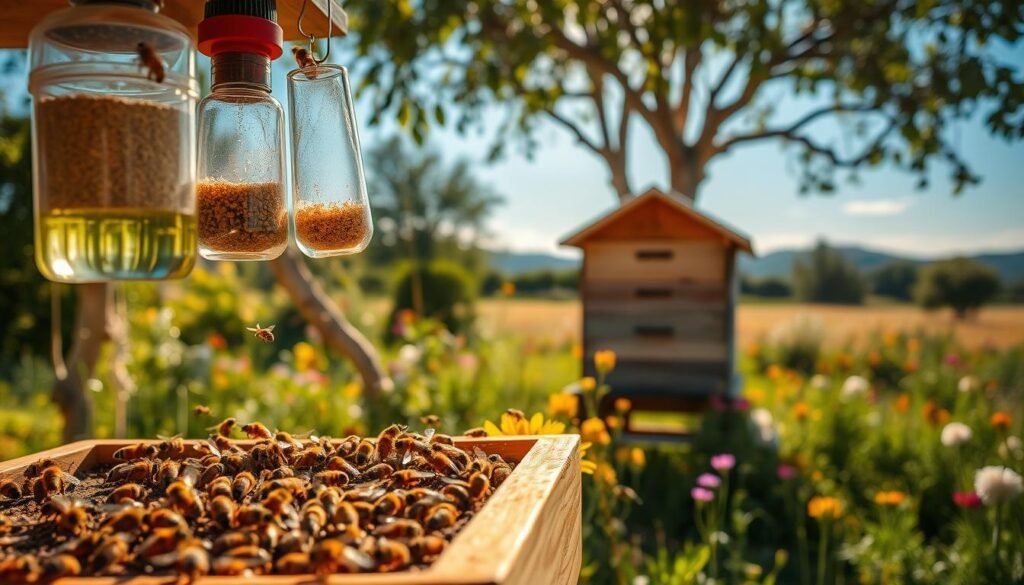
Always supply clean water with landing stones and refresh in hot conditions. During dearths, reduce entrances and feed internally rather than openly to prevent robbing.
Good nutrition is part of management: well-fed bees and a strong colony resist stress and recover faster from mites and other challenges.
Varroa Management Fundamentals for Backyard Hives
Mite pressure grows quietly; regular checks are the only way to spot trouble early.
Monitoring: alcohol wash, sugar shake, and action thresholds
Regular monitoring gives the data you need to act. An alcohol wash is the most accurate field test for varroa. A well-done sugar shake can work when you want a non-lethal option.
Set an action threshold and track trends. Record counts, date, and conditions so you see whether mite levels rise or fall.
Treatment options, timing, and “treatment-free” realities
Safe, approved treatments exist; read labels and follow timing windows. Organic acids and thymol products are common choices when used properly.
Treatment-free strategies are real but rare. Most colonies fail without intervention unless they have proven resistant genetics and isolation.
Late summer focus: protecting winter bees from mites
Check from late June onward and increase frequency through late summer. Suppressing mites before fall preserves the fat, long-lived winter bees your colony needs to survive.
Integrated pest management works best: combine cultural steps, brood breaks where practical, and treatments based on data. Keep records of mite counts, products used, and outcomes to refine future decisions.
- Why varroa drives losses: mites amplify viruses and weaken bees and the honey bee immune response.
- Schedule checks: start late June, more often in July–September when winter bees form.
- Community note: unmanaged hives can spread mites to neighbors; responsible management protects local bees.
Seasonal Beekeeping in the United States
Plan beekeeping tasks around local nectar flows rather than fixed dates. Seasonal timing varies across the united states, so use bloom calendars and past yard notes to set inspections and interventions.
Spring buildup, honey flow, and swarm prevention
Spring is for expanding the brood nest and drawing comb. Feed 1:1 syrup early to speed foundation drawing, then stop once the main honey flow begins.
Prevent swarms by adding space, splitting strong colonies, or reversing boxes when you see congestion and queen cups.
Summer dearth, feeding, and hive ventilation
In summer, expect dearth windows and hotter conditions. Provide shade and extra ventilation to reduce heat stress and sustain honey production.
Monitor stores closely and offer supplemental feed if forage is scarce to protect the colony through lean weeks.
Fall consolidation, mite control, and winter preparation
Condense boxes as brood shrinks and verify queen status. Base varroa treatment on recent counts and treat before winter bees are produced.
Combine weak colonies selectively to create winter-ready strength and reduce overwinter losses.
Wintering strategies: moisture control and survival checks
Moisture control is critical: provide top ventilation and a small top entrance to vent damp air. Check weight or lift hives on warm days to assess stores.
Perform minimal, quick inspections on mild afternoons to reduce disturbance and keep records to refine timing next year.
| Season | Key actions | Primary risk | Goal |
|---|---|---|---|
| Spring | Feed, add space, swarm prevention | Swarming, slow comb draw | Rapid buildup, strong brood |
| Summer | Ventilation, monitor stores, supplement feed | Heat stress, dearth | Maintain honey production, healthy bees |
| Fall/Winter | Mite control, condense boxes, moisture venting | Varroa-driven winter losses, damp | Survive winter, strong spring start |
September Focus: The Month That Sets Up Spring Success
A focused September checklist turns summer momentum into winter survival. This is the last practical time to confirm stores, check varroa, and correct queen or population issues before bees begin making long-lived winter workers.
Food and feeding: lift hives to gauge weight. Aim for about 40–60 lbs of honey equivalent per hive. If hives feel light, feed 2:1 syrup and stop feeding 2–3 weeks before your first hard frost so the syrup can cure and the cluster can cap stores.
Mite testing and rapid response
Test for varroa using a sugar shake or alcohol wash. If counts exceed your action threshold, treat the same day with a season-appropriate product and follow label directions. Prompt varroa management protects winter bees and reduces virus loads.
Queen checks and colony strength
Confirm a laying queen and solid brood pattern. Requeen or combine weak units to produce a single, strong colony for winter. Consolidation reduces empty space and keeps the cluster centered under food.
Robbing prevention and ventilation
Reduce entrances to about 1–2 bee widths to deter robbing. Add top ventilation or a moisture quilt; in many climates, moisture is a greater winter threat than cold. Watch for yellow jacket pressure and place traps or guards if legal and needed.
“Treat September work as insurance for spring strength and honey productivity.”
| Action | Target | When |
|---|---|---|
| Stores goal | 40–60 lbs honey equiv. | Early–mid September |
| Feed | 2:1 syrup if light; stop 2–3 weeks before frost | As needed |
| Varroa test & treat | Test now; treat same day if over threshold | September |
| Colony consolidation | Combine weak hives; requeen if needed | Mid September |
Record-keeping tip: update weights, mite counts, treatments, and queen status in your log. These notes save time next spring and improve long-term management.
For local events and timing cues, check the seasonal calendar for beekeepers at calendar of events.
Diseases, Parasites, and Predators Every Beekeeper Should Know
A routine yard walk is the best insurance against pests and predators. Small problems show early: a few beetle larvae, a ragged comb, or frantic flights at the entrance signal the need for action.
Varroa, small hive beetle, and wax moth signs and responses
Varroa are the primary parasitic driver of colony health problems. Monitor regularly and link test results to treatment decisions to protect winter bees and reduce virus spread.
Small hive beetles show as larvae in combs and slime-outs in supers. Use approved traps, maintain strong colonies, and remove infested frames quickly.
Wax moths attack weak or stored comb. Keep equipment rotated and clean; freeze or burn badly infested frames and store spare boxes sealed to deter moths.
Robbing, ants, and yellow jackets in the bee yard
Robbing behavior—frenzied flight, fighting at entrances, and torn comb—demands immediate entrance reduction and stopping any syrup spills. Close feeders and reduce openings to one or two bee widths.
Manage ants with elevated stands, oil- or water-moats, and tidy yards to prevent scent trails. Trim branches that bridge into equipment.
Yellow jackets prey on foragers and can stress colonies. Use legal traps, remove food attractants, and tighten entrances during peak season.
“Strong, well-fed colonies deter many pests; weakness invites opportunists and secondary disease.”
- Walk the yard weekly to catch early signs before damage escalates.
- Keep spare equipment clean and stored to avoid inviting pests.
- Document tests, traps, and treatments to refine future decisions and share useful information with other beekeepers.
For more on scaling your apiary safely, see expansion tips for practical advice.
Honey, Wax, and Beginner-Friendly Harvesting
Harvest season is where careful decisions pay off for both you and the colony.
Responsible harvesting means leaving enough stores so the bees can overwinter or ride dearths. Never remove frames until the hive has surplus capped comb.
Responsible honey harvesting and basic extraction methods
Beginner methods include crush-and-strain, bucket strainers, and renting a manual extractor. Each has trade-offs: crush-and-strain is low-cost; a radial or tangential extractor preserves comb for reuse.
- Uncap frames evenly with a hot knife or scratcher.
- Spin or crush and pour into food-safe strainers or buckets.
- Let honey settle 24–48 hours, jar, and label.
Keep the room warm to improve flow and avoid overheating that can darken the product.
Rendering beeswax and household uses
Clean wet frames by returning them to the hive during low-robbing times; bees will clean residual honey. For wax, melt in a double boiler, filter through cheesecloth, and pour into molds.
- Practical wax uses: wood polish, reusable wraps, candles, soaps, and salves.
- Sanitation: use food-safe equipment and a warm, tidy space to deter pests.
- Label jars with harvest date and source; check local rules before selling.
“Leave ample stores and document yield—this improves future honey production planning.”
Community, Mentors, and Learning Resources
Hands-on mentorship and community support turn raw curiosity into reliable skills. Joining a club connects new beekeepers with seasonal calendars, hands-on workshops, and regular hive visits.
Mentors demonstrate technique in the field: watch smoke timing, grip, and how to read bee movement. Practical correction from an experienced beekeeper speeds learning and reduces mistakes.

Where to learn and what to read
Pair live instruction with a few solid books to build depth. Recommended titles include First Lessons in Beekeeping, The Beekeeper’s Handbook, and Storey’s Guide to Beekeeping. Classic USDA works like Farrar’s Productive Management of Honey Bee Colonies and Beekeeping in the United States remain valuable field references.
Practical steps and ongoing education
- Attend field days and inspections to see real-time hive evaluation.
- Keep a journal to track notes, mite counts, and mentor advice.
- Share resources: equipment swaps, bulk orders, and group extraction days.
- Rely on evidence-based information and regional extension programs for current varroa and management research.
“Mentors teach safe habits that books cannot show: calm handling, precise smoke use, and timely corrections.”
23. backyard beekeeping guide USA
Start with a short, action list to turn interest into a working hive this season.
Top tips, tools, and timelines to start keeping bees today.
Quick-start sequence: verify local zoning and HOA rules, secure a mentor, order bees early, and stage all equipment before arrival. Do these steps in the weeks leading up to installation so the first day is calm and controlled.
Setup and equipment: begin with two standard Langstroth hives for a forgiving learning curve. Minimum toolset: a reliable smoker and fuel, a curved hive tool, a hooded veil/jacket, and nitrile gloves.
First 30 days timeline: verify the queen is laying, feed 1:1 syrup until main flow, add space as frames draw, and keep a concise log of observations and dates.
- Begin mite monitoring in late June and follow your action thresholds for treatment.
- Prepare a September checklist: target 40–60 lbs of stores, feed 2:1 syrup if light, reduce entrances, and ensure top ventilation.
- Schedule seasonal tasks on a calendar matched to your USDA zone to stay ahead of local conditions.
Neighbor-relations plan: offer a water source, use hedges or screens to elevate flight paths, and talk with neighbors before hives arrive. Proactive outreach prevents complaints and builds support.
| Task | When | Goal |
|---|---|---|
| Check zoning & HOA | Before ordering bees | Avoid legal surprises |
| Install / first checks | Day 1–30 | Confirm queen, feed 1:1, draw comb |
| Mite monitoring | Start late June | Detect and treat early |
| September prep | Early–mid September | 40–60 lbs stores, ventilation, reduce entrances |
Success metrics: queen-right colonies, strong brood pattern, adequate stores, low mite counts, and calm handling sessions. Use these measures to judge readiness and next steps.
Action call: set concrete dates for zoning checks, mentor meetings, and your install day today. Small scheduled steps move you from interest to confident practice.
Adapting to Climate: Backyard Beekeeping Across the United States
Climate shapes nearly every management choice for a successful hive over the year. Anchor plans to USDA zones and local bloom calendars so timing for feeding, splits, and harvests matches real floral flows.
USDA zones and calendars
Use your zone to set checks and calendar dates rather than fixed months. Regional timing for honey flows and winter lengths varies widely; plan by local events and past yard notes.
Regional tweaks for common conditions
Hot, dry areas: add afternoon shade, increase ventilation, and keep a reliable water source to prevent overheating and forager stress.
Cold climates: prioritize moisture control with top vents, windbreaks, and extra stores or insulation to protect the colony.
Arid zones: schedule frequent water availability and watch for dearths; adjust feeding to sustain brood cycles.
Humid regions: boost airflow and reduce condensation risk with proper spacing and screened options.
Practical equipment notes: swap screen bottoms for ventilation in heat and use moisture quilts or insulation in frigid winters.
“Adapt one season at a time; refine next year’s plan based on what your yard taught you.”
Pollination, Gardens, and Helping Bees Beyond the Hive
Landscaping choices make a measurable difference for local pollination and the wider bee population. Thoughtful plantings and small habitat features turn a single place into a high-value resource for honey bees and other pollinators.
Plant trees and continuous bloom for big gains. Nectar- and pollen-rich trees such as basswood and tulip poplar deliver large-scale forage early in the season. Combine those trees with native perennials and shrubs that extend bloom from spring through late fall.
Practical steps for a bee-friendly yard
- Choose natives and mix bloom times to buffer dearth periods.
- Include herbs—thyme, mint, oregano, bee balm—for small-flower forage and kitchen use.
- Provide shallow water with stones for safe landings and refresh it often.
- Map plantings to learn which species influence honey character and seasonal visits.
How non-beekeepers can help
Anyone can support pollinators by planting native flowers, reducing insecticide use during bloom, and creating simple water stations. Community projects—school gardens, roadside plantings, and tree-planting initiatives—amplify impact across neighborhoods.
Support local action: plant for continuous bloom, avoid sprays when flowers are open, and buy from local producers to bolster habitat and markets. Small landscape choices are practical ways for everyone to help bees and strengthen the local ecosystem.
Learn more about practical planting and community to expand pollination opportunities in your area.
From Hobby to Business: Labeling, Pricing, and Marketing Honey
A successful jar on a shelf combines accurate labels, fair pricing, and appealing photos.
Designing labels, selling legally, and pricing your product
Label essentials include product name, net weight, contact info, and origin. Add lot codes and simple traceability for customer questions.
Check state and federal food rules before selling. Cottage food laws or local health departments often set packaging and ingredient requirements.
Price by adding material costs, labor, overhead, and a margin that reflects varietal or raw quality. Compare local market rates to set competitive offers.
Photographing honey and hive products for sales
Use natural light, plain backgrounds, and close-ups to show color and clarity. Avoid glare on jars and style shots with wax blocks or clean comb to tell a story.
Brand consistency across labels, jars, social profiles, and signage builds trust. Include short varietal notes and hive stories to educate buyers and raise value.
“Clear labeling and honest presentation turn a jar of honey into a reliable local product.”
- Sales channels: farmers markets, farm stands, online shops, and local stores—each has rules to verify.
- Package with airtight closures, tamper bands, and food-safe jars to preserve quality.
- Diversify with wax products; label ingredients and directions for use.
Conclusion
Finish with clear, practical steps that keep colonies healthy year after year.
Core pillars: monitor and manage varroa and keep colonies well fed to avoid the most common failures. Start with standard equipment and a two-hive plan to compare progress and act on data.
Place hives thoughtfully, provide a nearby water source, and shape flight paths to ease neighbor concerns. Match timing to your local climate and USDA zone across the United States.
Learn from mentors, clubs, and trusted books; test in September to protect winter bees. Use calm, Tai Chi-like handling and measured smoke, keep clear records, and plant to help the wider world of pollinators.
Next steps: pick three actions now—check zoning, call a mentor, and set a September mite-test date—and schedule them. For further reading, see our resources and books to deepen skill and confidence.
FAQ
What motivates people to keep bees at home?
Many start for honey production, improved pollination for gardens, and the chance to learn about nature. Beekeeping also builds connection to local ecosystems and can become a rewarding hobby or small business when scaled responsibly.
How much time does hive management require?
New beekeepers should expect several short weekly checks during active season and longer seasonal tasks like feeding, mite monitoring, and harvest. Starting with two hives spreads workload and helps with comparison, but plan for regular commitment throughout the year.
Are there legal requirements for keeping bees in the United States?
Yes—local zoning, county or city permits, and state hive registration rules vary. Homeowners associations may have additional restrictions. Always check municipal ordinances and register hives where required to stay compliant and be a good neighbor.
How do I choose between Langstroth, top-bar, or nucs and packages?
Langstroth offers standard frames and easier inspections for beginners. Top-bar hives appeal for low-cost, alternate management. For starting colonies, nucs give a head start with brood and workers, while packages are less expensive but need more care. Pick equipment that matches your goals and local resources.
What are essential pieces of equipment to start?
Basic essentials include a hive body (Langstroth or top-bar), frames or bars, a smoker, hive tool, and protective veil or jacket. Gloves are optional for dexterity. Good feeders and a water source are also important for colony health.
How do I protect my bees from Varroa mites?
Monitor regularly with sugar shake or alcohol wash to track mite levels. Apply integrated pest management: mechanical controls, timed treatments, and approved miticides when thresholds are exceeded. Late-summer treatment is critical to protect winter bees and improve survival.
When should I inspect my hives and what should I look for?
Inspect in fair weather, mid-morning to early afternoon. Look for a laying queen or signs of brood, adequate food stores, disease symptoms, and mite damage. Use calm, smooth movements—practice “Tai Chi” handling—and avoid over-smoking, which can disrupt colony behavior.
How do I feed bees and when is it necessary?
Feed 1:1 syrup in spring for buildup and 2:1 syrup in fall if stores are low. Pollen supplements help during dearths. Always provide fresh water near the hive and take measures to prevent robbing when feeding.
What should I know about hive placement on my property?
Choose a site with morning sun, afternoon shade, good ventilation, and firm stands. Face entrances away from high-traffic neighbor areas, use windbreaks, and elevate hives to deter predators like skunks and raccoons.
How can I reduce sting risk and manage stings when they happen?
Wear a veil and use gloves if you are nervous; experienced keepers often forego heavy gloves for dexterity. Stay calm, move deliberately, and have an epinephrine plan if you or household members are allergic. Remove stingers quickly and treat reactions per medical guidance.
Can I move or transport bees safely?
Yes—secure hive boxes, ventilate appropriately, and transport at times of low flight activity (early morning or night). For long moves, reduce entrance size and follow local transport regulations. Use experienced help for larger relocations or swarm captures.
How do I prevent robbing and protect against pests like wax moths and small hive beetles?
Reduce entrance size during dearths, avoid spilling syrup, and space feedings. Maintain strong colonies, remove weak frames, and use traps or approved treatments for small hive beetles. Store spare combs properly to prevent wax moth infestation.
When is honey harvest appropriate and how much should I take?
Harvest only surplus honey—leave adequate stores for winter. Time extraction after major flows when frames are capped. Use responsible methods to avoid stressing colonies; beginners often harvest small amounts while learning processing and labeling rules for sales.
How do I winterize hives in different U.S. climates?
Adjust strategies by region: insulate and control moisture in cold zones, ensure ventilation in humid or hot areas, and maintain fall mite control everywhere. Provide adequate food or plan for spring feeding if stores are light.
Where can new beekeepers find reliable education and mentorship?
Join local beekeeping associations like the American Beekeeping Federation or state clubs, attend extension service workshops, and find an experienced mentor through meetups. Recommended books and hands-on classes speed learning and build community connections.
What are ethical considerations if I want to sell honey or start a small honey business?
Follow local food safety and labeling laws, obtain necessary permits, and price products to cover costs. Design clear labels, keep good records for traceability, and use quality photography when marketing online or at markets.
How can non-beekeepers help pollinators locally?
Plant native flowers, reduce pesticide use, provide water sources, and support community conservation efforts. Even small gardens and pollinator patches contribute to healthier local bee populations and biodiversity.