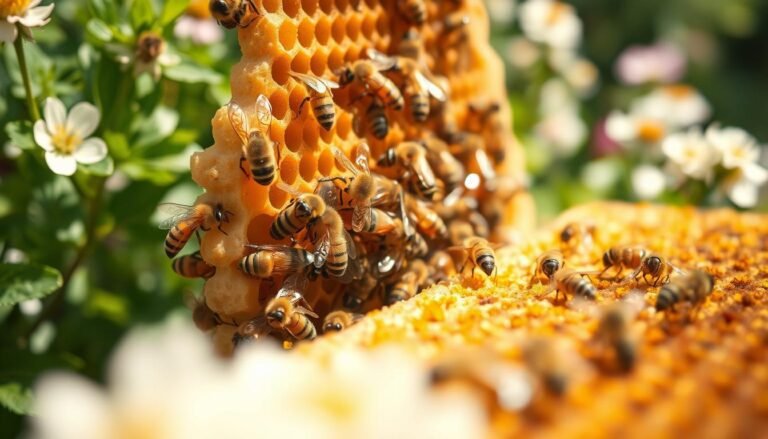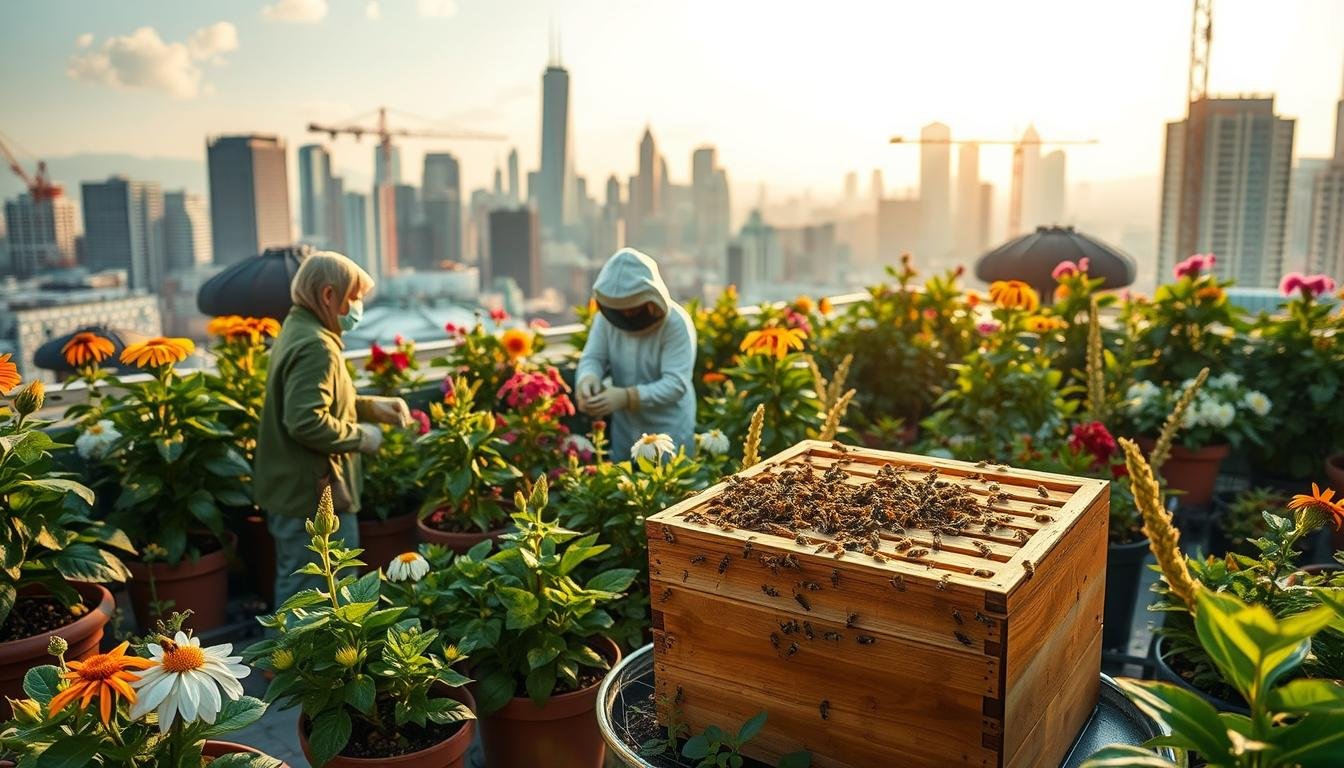
This guide maps practical steps for urban beekeeping in the United States today. It explains what new and experienced keepers should expect when they place hives in cities or on rooftops.
Bees can thrive in dense neighborhoods when caretakers plan for space, safety, and forage. Rooftop hives need legal access, water, and heat mitigation in hot summers to protect hive health.
Municipal rules vary across U.S. cities; many require permits, placement rules, and water sources. Tall screens or fences help raise flight paths above human activity and reduce conflicts.
Modern tools such as Hivemind and BeeScanning support monitoring and quick responses to pests or swarms. Community outreach and clear neighbor communication turn potential friction into shared benefits for nature and local honey production.
Ethical beekeeping balances the needs of bees, caretakers, and the broader community to support a healthier urban environments future in a warming world.
Key Takeaways
- Plan site, permits, and neighbor outreach before installing hives.
- Mitigate rooftop heat and provide water to protect hive health.
- Use screens and fences to direct flight paths above people.
- Monitor hives with apps like Hivemind and BeeScanning.
- Local honey reflects diverse city flora and supports biodiversity.
- Follow municipal rules—compliance is the first step to safe keeping.
Why keep bees in cities today: benefits, realities, and scope
City hives offer surprising pollination power across parks, balconies, and rooftop gardens. They lift local food webs and create distinct honey profiles tied to ornamental trees, native shrubs, and balcony herbs.
How cities boost pollination, biodiversity, and local honey profiles
Pollination services from urban colonies help gardens, parks, and street trees set fruit and seed. Mixed plantings in many neighborhoods produce varied nectar and pollen, so honey can show complex seasonal flavors.
Sustainability gains appear when shorter transport chains cut emissions and local sales keep honey within the community. Historical roots reach back to Rome and Egypt, while modern efforts—like Paris’s Opera hives—show public interest.
Present-day momentum: community initiatives from NYC to Vancouver
Legal change in New York City after 2010 and Vancouver’s Greenest City plan sparked programs and mentorship. Networks give new keepers training, shared tools, and planting coordination to improve outcomes.
“City apiaries connect residents to seasonal blooms and teach stewardship across neighborhoods.”
| Benefit | Example | Outcome |
|---|---|---|
| Pollination | Rooftop hives, community gardens | Better yields for fruit trees and vegetable plots |
| Biodiversity | Mixed plantings, parks | Richer floral resources and complex honey flavors |
| Sustainability | Local sales, shorter transport | Lower emissions and stronger local markets |
Realistic scope: small areas and rooftops can support healthy colonies, but success depends on responsible beekeeping, regular monitoring, and following local rules.
Urban beekeeping challenges
Tight lots and roof terraces force keepers to think small but smart when placing hives.
Space and access limits: rooftops, balconies, and small gardens
Evaluate weight loads, stairwell or elevator access, and safe movement before moving boxes onto a roof or balcony. Confirm building approvals and local ordinances so inspections and honey harvests do not run into legal or safety issues.
Heat, wind, and pollution: stabilizing hive conditions in city environments
Roofs can overheat. Use shade cloth, reflective stands, and added ventilation to keep internal temps steady. Install windbreaks where gusts funnel between buildings and avoid reflective surfaces that amplify heat.
Neighbors and safety: minimizing stings, swarms, and complaints
Position entrances away from walkways and install tall screens or fences to raise flight paths above yard level. Keep a water source on site so bees do not trouble nearby pools. Calm handling, proper gear, and scheduled inspections reduce sting incidents and worry.
Forage gaps across seasons: navigating diverse yet patchy food sources
Map local bloom periods and identify seasonal gaps. Plan container plantings or partner with parks to extend nectar flows and feed supplements only when needed to protect colony strength and honey quality.
| Issue | Impact | Mitigation |
|---|---|---|
| Limited space | Hard to move equipment; weight limits | Assess load limits; use smaller hive systems |
| Microclimate heat | Overheated brood; stress | Shade cloth, ventilation, reflective stands |
| Wind and pollution | Colony stress; reduced foraging | Sheltered placement; windbreaks |
| Neighbor concerns | Complaints, safety issues | Screen flight paths; share plans; onsite water |
Good planning and clear neighbor communication keep bees and people safe and improve hive health.
Getting set up the right way in the city: legal, site, and hive choices
Start by confirming local rules and site safety before adding a hive to a yard or rooftop. Many U.S. cities require permits, set placement distances, and mandate a water source. Check municipal codes or your county extension for specifics.

Local ordinances and permits
Find your requirements: locate city and county beekeeping ordinances, clarify permit steps, and document required setbacks from property lines and public ways. Local associations offer guidance and courses.
Smart placement and rooftop access
Orient entrances away from shared paths and use tall screens or eight-foot fencing to lift flight paths above neighboring yards. For rooftops, confirm load capacity and secure, legal access routes.
Choosing the right hives
Select a hive that fits your space and handling ability. Langstroth gives modular inspections, Top Bar saves footprint, Flow eases extraction, and Warre offers a vertical, low-intervention option.
Water that works
Place shallow, splash-proof reservoirs with landing stones close to hives to keep bees from pools and pet bowls.
| Decision | Why it matters | Practical tip |
|---|---|---|
| Permits | Legal compliance | Document approvals before setup |
| Placement | Neighbor safety | Use setbacks, screens, and orient entrances |
| Hive type | Handling & space | Match hive to your skill and area |
| Rooftop access | Structural safety | Confirm load limits and secure routes |
Start small and formalize a simple management plan for inspections, swarm prevention, and seasonal tasks.
Further reading: find practical local beekeeping resources at urban beekeeping resources.
Day-to-day management in urban environments
Routine checks and calm handling are the backbone of good hive management. A clear inspection plan keeps colonies stable and limits surprises in dense settings.
Inspection cadence and calm practices
Inspect semi-regularly in spring and summer to review brood pattern, eggs, and food stores.
Move slowly, use minimal smoke, and keep sessions efficient to reduce agitation around neighbors.
Swarm prevention in dense areas
Prevent swarms by adding supers on time, rotating frames, and planning splits before peak flow.
Space management and timing aligned with local nectar peaks protect colony strength and reduce incidents.
Monitoring brood, stores, and nectar flows
Track which flowers bloom nearby and compare notes with hive weight or forager activity.
Verify stores during dearths and requeen or adjust space as records suggest.
- Keep simple records of inspections to help decide requeening and harvest timing.
- Work in calm weather, avoid peak pedestrian hours and mark equipment to reduce drift.
“Consistent, gentle management keeps bees productive and neighbors reassured.”
Forage, planting, and supplemental feeding strategies
Smart container gardens keep nectar and pollen available for hives when city blooms ebb.

Design rooftop and balcony plantings with staggered bloom times. Prioritize hardy herbs like lavender and rosemary, sunflowers for summer nectar, and a few native plants for pollen. Use self-watering planters and drip irrigation to cut upkeep in tight spaces.
Partnering to expand forage
Work with parks, community gardens, and local beekeeping groups to create habitat corridors. Shared planting plans help spread nectar sources across blocks. Coordinate bloom maps with neighbors and building managers to reduce seasonal gaps.
When and how to feed
Feed only when necessary. Offer syrup or patties during real dearths to prevent brood loss. Avoid feeding when supers are on to protect honey quality. Use internal feeders and keep them clean to limit robbing and wasp attraction.
Water and monitoring: place shallow, consistent water near hives to aid cooling and stop nuisance visits to neighbors.
| Action | Why it helps | Practical tip |
|---|---|---|
| Staggered plantings | Extends nectar flow | Mix herbs, sunflowers, and natives |
| Partner with parks | Expands forage across blocks | Share bloom maps and schedules |
| Controlled feeding | Prevents brood gaps | Use internal feeders; stop before harvest |
Track results and note which plants and spaces perform best. For more planting ideas, see native bee-friendly plants for practical resources.
Pest and disease management in the city: practical, responsible fixes
Smart monitoring and timely treatment keep bees strong through late-summer stress.
Varroa mites remain the main threat to colony survival. Teach detection using alcohol wash or sugar roll and set action thresholds before mite counts rise.
Varroa mites 101
Detect early: perform regular checks in late summer when mites peak. Count mites, log results, and act when counts exceed your chosen threshold.
Treatments that work
Formic and oxalic acids are common. Use label directions, mind temperature limits, and ensure good ventilation on rooftop or tight spaces. Treat brood and adult bees according to product timing.
Winter survival and preparation
Build a solid population and stores before cold weather. Reduce drafts, maintain ventilation to prevent moisture, and keep hive entrances appropriate for city conditions.
Using tech to track health
Smart sensors and apps like Hivemind and BeeScanning help monitor weight, temperature, and humidity. Share data with nearby beekeepers to coordinate treatments and limit reinfestation.
| Issue | Detection | Action |
|---|---|---|
| Varroa mites | Alcohol wash / sugar roll; count mites | Formic or oxalic per label; retest after treatment |
| Low stores | Hive weight checks; visual inspection | Feed syrup/patties only when needed; stop before harvest |
| Winter moisture | Condensation signs; chilled cluster | Improve ventilation; reduce drafts; keep compact cluster |
Consistent monitoring and coordination protect both your hive and neighboring colonies. Integrate IPM: monitor, use cultural fixes, and apply targeted treatments to keep bees healthy in dense spaces.
Conclusion
A practical approach lets city dwellers support healthy bees and produce memorable honey without risking safety or neighbor trust.
Follow legal steps, secure safe access, and place your hive where flight paths avoid busy areas. Keep steady inspections and protect stores through seasonal planning to build a resilient colony.
Work with other beekeepers, parks, and gardeners to expand forage across blocks and boost biodiversity. Use sensors and data for early issue detection to limit spread between beehives.
Choose one next step today — join a local association, map nearby gardens, or assess a rooftop — and help your community and nature thrive in cities.
FAQ
What are the main benefits of keeping bees in cities today?
Urban beehives boost pollination for gardens, parks, and food-growing projects, increase local biodiversity, and produce distinctive small-batch honey. They also support environmental education and community initiatives in places like New York City and Vancouver, where rooftop and community apiaries connect residents to nature while helping urban plants set seed and fruit.
How do cities affect pollination and honey flavor compared with rural areas?
Cities offer diverse floral sources—ornamentals, herbs, and native plants—that create complex honey profiles. While forage can be patchy, the mix of trees, community gardens, and rooftop plantings often produces unique flavors and steady pollination benefits for urban green spaces.
Where can I check local rules and permits before starting an apiary?
Contact your city or county zoning office, state department of agriculture, or a local beekeepers’ association. Many municipal websites list ordinances and permit steps. Joining groups like the American Beekeeping Federation or local clubs helps you learn specific requirements and best practices.
How do I site a hive safely on a rooftop, balcony, or small yard?
Place hives away from heavy foot traffic with a clear flight path that directs bees upward and away from neighbors. Use tall screens, hedges, or fences to guide bees, provide secure rooftop access for inspections, and ensure the landing area is stable and sheltered from prevailing winds.
Which hive type works best in tight urban spaces?
Langstroth hives are compact and modular, making inspections straightforward. Top bar and Warre hives suit low-impact rooftops or balconies where a quieter approach matters. Flow hives add convenience for harvesting but still need proper colony management and space planning.
How can I provide reliable water for my bees in the city?
Install splash-proof water stations with rocks or floating corks so bees can land safely. Locate water close to hives but away from high-traffic areas. Consistent, clean sources reduce foraging stress and deter bees from drinking from neighbors’ pools or gutters.
What inspection schedule works best for urban colonies?
Inspect every 7–14 days during build-up in spring and early summer, then space checks to every 2–4 weeks in calmer months. Keep visits calm and efficient to reduce disturbance and maintain good neighbor relations while monitoring brood, stores, and queen health.
How do I prevent swarms in densely populated areas?
Manage space by adding supers early, removing swarm cells promptly, and performing splits when colonies get congested. Regular inspections and timely queen management reduce swarm impulses. Notify neighbors and register hives if local programs require it.
What forage strategies work on rooftops and balconies?
Plant layered bloom sequences using herbs, natives, and seasonally staggered flowers. Use shallow containers with pollinator-friendly mixes and include trees or larger planters where possible. Coordinate with community gardens and parks to broaden forage availability across the neighborhood.
When should I feed colonies in a city, and how can I avoid affecting honey quality?
Feed in early spring and during dearths, using sterile sugar syrup or pollen patties as a temporary supplement. Stop supplemental feeding at least four to six weeks before the main nectar flow to avoid altering honey taste. Keep feeding discreet and targeted to colonies that need it.
How do I detect and manage Varroa mites in an urban apiary?
Use regular monitoring methods—alcohol or sugar roll and sticky boards—to measure mite load. Treat when thresholds are met, following integrated pest management: drone brood removal, timed treatments, and monitoring post-treatment. Maintain records to track trends over seasons.
Which treatments are safe and effective for urban colonies?
Formic and oxalic acid treatments work when applied correctly and with proper personal protective equipment. Use label-approved methods, follow temperature guidelines, and consider organic and mechanical controls as part of a plan that minimizes chemical residues in honey.
How can urban hives survive winter in the city?
Ensure adequate winter stores, maintain a healthy population going into cold months, provide windbreaks and proper ventilation to reduce condensation, and minimize hive disturbances. Urban microclimates often mean less extreme cold, but insulation and population management remain essential.
What tech tools help monitor hive health without constant inspections?
Smart hive sensors, temperature and weight monitors, and remote apps let you track stores, brood conditions, and activity trends. Use them to target in-person checks and detect problems early while reducing stress on colonies and time spent on rooftops.
How do I work with parks and community gardens to expand forage and support pollinators?
Partner with local parks departments, garden coordinators, and groups like Pollinator Partnership to plan pollinator-friendly plantings and seasonal bloom maps. Volunteer for planting days, propose native species lists, and share maintenance tips to create linked forage corridors across the city.
What do I tell neighbors worried about stings or swarms?
Explain bee behavior, emphasize that most bees forage rather than sting, and describe your management practices: swarm prevention, safe hive siting, and a clear flight path. Offer contact info for immediate concerns and provide educational materials from trusted sources like the USDA or state cooperative extensions.