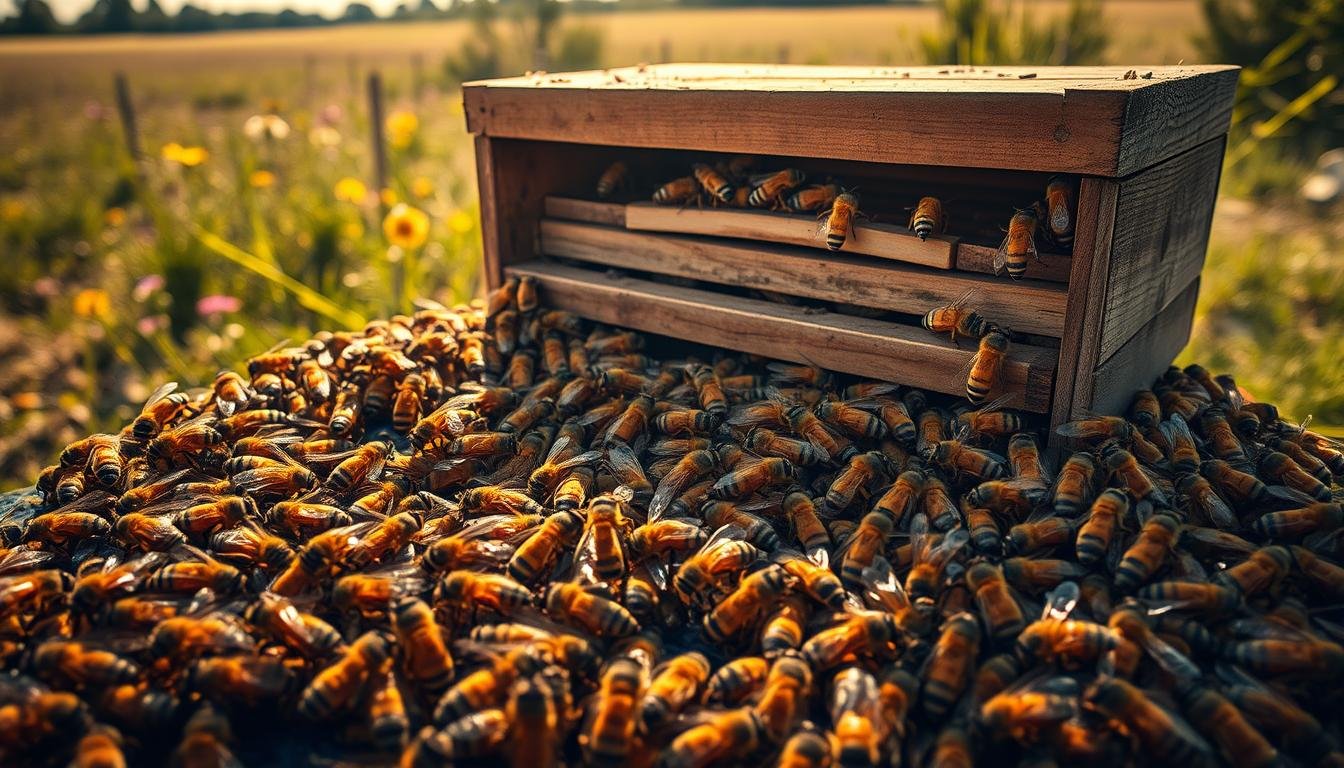
Early detection can stop a swarm before it leaves the apiary. In spring and early summer, a top box that is over 80% covered with bees often precedes a swarm. Beekeepers who spot peanut-shaped queen cells on the lower edges of brood frames or heavy bearding at the entrance can catch pre-swarm behavior.
Routine inspections every 7–14 days help confirm whether congestion or queen decline is driving the colony to prepare new queens. Look for capped swarm cells, reduced fresh eggs, or a lighter adult population—these cues often mean a swarm has already occurred or is imminent.
Practical actions like adding space, splitting colonies, improving ventilation, or reversing boxes work far better than simply removing cells. This guide will teach how to read both inside and outside indicators and when to act to protect productivity and neighborhood goodwill. Learn more about identifying swarm cells at beehive swarm cells.
Key Takeaways
- Catch congestion in spring early to reduce swarming risk.
- Look for swarm cells, bearding, and top-box fullness during inspections.
- Add space or split colonies rather than just removing cells.
- Regular, structured checks protect colony strength and honey yields.
- Differentiate swarming from absconding and heat-related bearding before acting.
Why Overcrowding Happens and Why It Matters for Your Colony
When a strong colony runs out of usable space, it often switches from growth to reproduction and prepares to send off a new queen with part of the workforce. This process protects the genetic line, but it also reduces labor for brood care and honey storage.
Swarming is natural: the old queen departs with roughly half the workers after the colony builds and caps new queen cells near the lower edges of Langstroth frames. That move occurs when worker numbers are high, food stores are abundant, and the brood nest lacks room.
From natural event to managed-bee problem
For beekeepers, a departing swarm weakens the original colony at a critical time. The reduced population slows nectar processing and brood feeding and can cut into honey yields.
- Triggers: full frames, heavy nectar flow, and a dense population prompt queen cell construction.
- Timeline: after cells are capped and the queen slims for flight, swarms often leave on a calm, sunny day, cluster nearby, and scouts search for a ~1.5 cu ft cavity.
- Urban impact: free swarms may occupy structures and rarely thrive long-term, so prevention helps communities and bees.
| Situation | Colony Response | Beekeeper Action |
|---|---|---|
| Frames packed with bees | Queen cells appear; pre-swarm behavior | Add room or split the colony |
| Heavy nectar flow and stores | Reduced brood space; flight readiness | Increase ventilation; reverse boxes |
| High worker population | Swarm cluster and scouting | Perform timely splits to retain resources |
For step-by-step prevention, see the swarming preparation guide to plan space and splits before pressure peaks.
Key signs your hive is overcrowded
Watch external clues first. A crowded landing board or long bearding on warm days often signals internal pressure. If the top box reads more than 80% covered with bees during spring or early summer, add space and inspect fast.
Top box 80%+ full in spring or summer
When the top box approaches that 80% mark, the risk of swarming rises. That top coverage means the brood nest may lack room and the colony will start building swarm cells.
Swarm cells along frame bottoms and sides
Swarm cells—specialized queen cells for reproduction—usually hang on the bottom or sides of brood frames. Find rows of cells to judge urgency and act before they are capped.

Bearding and crowded front
Sustained bearding and many bees on the front can mean heat or congestion. If boxes are packed, don’t assume it’s only warm weather—open the hive and check for cells.
Brood nest congestion and rapid growth
Honey and pollen pushing into the brood area flattens the brood pattern. A quick rise in workers, more drones, and many nurse bees over brood frames show growth that can outpace room.
Timing cues to watch
As swarm cells near capping and the queen lightens for flight, the colony will change behavior and may cluster near the entrance on a calm day. If these signals align—full top boxes, visible swarm cells, and brood crowding—take action: add a box, check each frame for cells, or consider a split.
Learn practical responses at how to handle overcrowding for step-by-step relief methods.
Don’t confuse the clues: swarming, absconding, heat, and healthy strength
A calm read of brood, stores, and entrance behavior separates planned reproduction from crisis evacuation.
Swarming vs. absconding: In a true swarming event the old queen departs with about half the workers after new queen cells are capped. Brood and food remain in the hive so the original colony can raise a replacement.
Absconding looks very different. The entire colony may leave abruptly and no new queens are produced. Causes include severe disturbance, mites, disease, or poor ventilation that forces a complete exit.
Heat bearding versus congestion bearding
Bearding on hot afternoons often shows temperature control. If bees are simply fanning and spaced out, add ventilation like a screened bottom board or prop the inner cover slightly.
When bearding comes with tight boxes and visible queen cells, the behavior points to crowding. In that case add space and inspect frames for developing cells to decide on a split.
Healthy strength compared to population pressure
A thriving colony shows strong, evenly spaced brood, active nurse coverage, steady foraging, and no cluster of developing queen cells along frame bottoms.
An overfull colony displays constricted brood nests, multiple developing cells, and many bees pressed into central frames. That combination often signals pre-swarm drive.
| Condition | Key Clues | Quick Response |
|---|---|---|
| Swarming | Queen cells capped; brood and stores left | Add space or split before flight |
| Absconding | No new queens; whole colony gone; signs of disease or predators | Inspect nearby for pests; treat disease; improve shelter |
| Heat bearding | Open, fanning bees; no cells; normal brood | Improve ventilation; prop inner cover |
| Congestion bearding | Bearding with full top boxes and developing cells | Add brood box or perform split |
Quick health scan: verify larvae are pearly white and curled, check that foragers move in orderly patterns, and note whether nurse bees cover brood. Standardizing seasonal checks and using a beekeeping calendar reduces wasted time and misreads. See the beekeeping calendar for a sample schedule.
How to confirm overcrowding during hive inspections
A steady, methodical check of each frame shows whether the colony needs room or intervention. Start with a calm approach and work frame-by-frame so you do not miss developing cells at the frame bottom or sides.
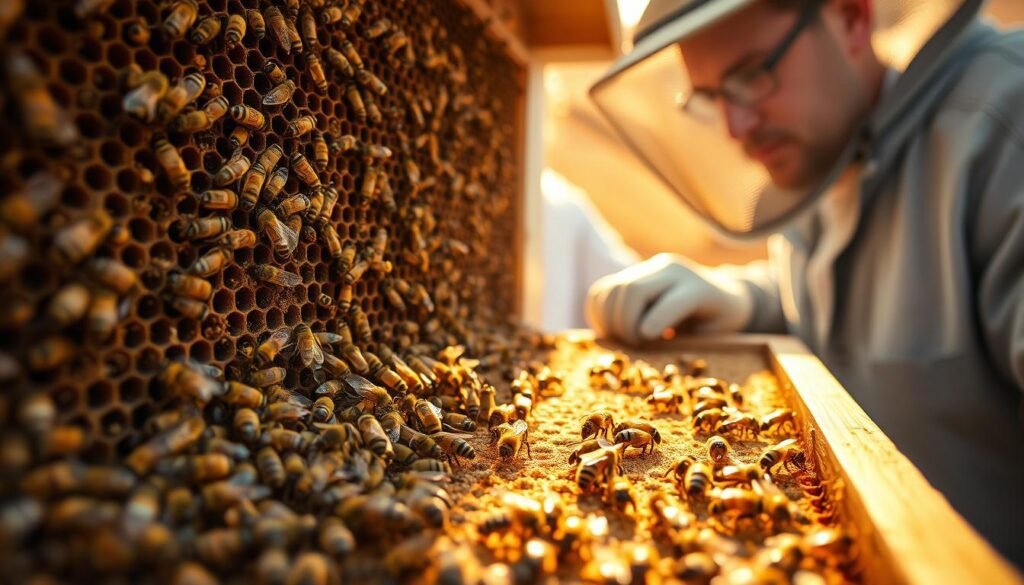
Frame-by-frame checks
Lift each frame slowly and scan the lower bars and sides for swarm cells and queen cells. Look for several developing cells in a row—this often signals an urgent need to add space.
Assessing space
Judge whether most frames are covered with bees and whether comb is packed with honey or pollen. If the brood nest is squeezed by stores, the population can outgrow available room quickly.
Queen and brood clues
Examine brood cells, eggs, and larvae. Solid, uniform capping suggests stability; patchy brood or capped swarm cells alongside fewer eggs may mean the queen has left.
Reading the entrance
Correlate internal checks with entrance activity: heavy traffic, sustained fanning, and clustering at the board support internal congestion findings.
“Clear, consistent notes after each inspection make decisions easier the next week.”
- Document counts of frames with developing cells and the number of packed combs.
- Note nurse bees over open brood to assess growth momentum.
Preventing and correcting overcrowding before swarms take off
Small, timely moves often stop a colony from committing to a swarm. Add space early — when the top box nears 80% bee coverage — so workers can expand brood and stores without pressure.
Provide space early
Add boxes proactively in spring. A single additional box at the right moment gives room for comb, honey, and nurse bees to spread out. This one habit prevents many swarming events.
Reverse boxes and improve ventilation
Reversing boxes moves the cluster downward and opens fresh comb for brood. Open screened bottom boards and prop the inner cover slightly to lower hive temperature and relieve congestion cues.
Splits, priming, and what not to trust
A strategic split or artificial swarm reduces population pressure immediately. Move the queen with a frame of brood and a frame of stores to create a nucleus and a brood break that helps with mites and later winter strength.
Prime an upper box with a couple of outer-edge brood frames only in mild nights; cold spells can chill developing larvae. And make sure you don’t rely on wiping out cells — scraped cells often reappear and rarely stop swarms once commitment begins.
“Combine space, airflow, and timely splits to keep colonies strong and swarming risk low.”
For detailed ventilation methods, see beehive ventilation.
Conclusion
Conclusion
Read brood patterns, larvae condition, and frame coverage each inspection. These quick checks help beekeepers catch developing queen cells and judge population pressure before a swarm departs.
Act early: add space when top boxes near 80% coverage, improve ventilation, reverse boxes, or perform a split with the queen plus brood and stores. Scraping cells rarely stops a committed swarm.
Keep a short checklist during checks — queen presence, eggs, brood cells, number of frames covered, and entrance activity — so a beekeeper can decide on the right day to act.
Protect honey and colony strength through consistent beekeeping routines. For practical steps on handling swarming, see swarming honey bees.
FAQ
What are the earliest indications a colony may be overcrowded?
Look for a rapid population increase, frames heavily covered with bees, and the top box filling toward 80% in spring or summer. You may also notice many nurse bees and an uptick in drone numbers. These cues suggest limited space for brood and stores and can lead to swarm preparation.
How can I tell the difference between a swarm-ready colony and a healthy strong colony?
A swarm-ready colony will show queen cells—often along the bottom or sides of brood frames—congestion in the brood nest, and bearding at the entrance. A healthy strong colony maintains brood pattern quality, steady egg laying, and balanced stores without excessive congestion or repeated queen cell construction.
Where do I typically find queen cells when bees are preparing to swarm?
Scout the bottom edges and sides of brood frames first. Swarm cells and emergency queen cells often appear there. Finding multiple well-developed queen cells is a clear signal the colony is preparing to reproduce by swarming.
What is bearding and does it always mean the colony is overcrowded?
Bearding is when clusters of bees gather on the front of the hive. It can indicate overcrowding, especially combined with brood nest congestion, but it also happens during hot weather as bees seek cooler space. Check brood coverage, stores, and ventilation before deciding.
How should I inspect frames to confirm limited space for brood?
Do a frame-by-frame check. Look for packed combs of honey and pollen that press into the brood nest and frames with brood surrounded by little empty comb. Also note if frames are consistently covered with bees and there’s little room to add eggs or young larvae.
When should I add another box to prevent swarming?
Add a super or brood box when the top box reaches roughly 80% coverage in active months. Providing space early—before queen cells start forming—reduces swarm pressure and keeps the brood nest from becoming congested.
Can improving ventilation stop a swarm in progress?
Better ventilation can reduce heat-related bearding and help colony comfort, but it won’t reliably stop a true swarming impulse. Use screened bottom boards or prop the inner cover to improve airflow, and combine that with space or management tactics for best results.
Are there effective management techniques to reduce population pressure quickly?
Yes. Strategic splits, artificial swarms, and moving frames of brood into an upper box can relieve congestion. Reversing boxes and priming upper boxes with young brood during mild weather also helps. Avoid merely destroying queen cells—that rarely solves the underlying pressure.
How do I distinguish swarming from absconding during inspections?
In swarming, bees leave with a queen or rear a new queen and leave brood and stores behind. In absconding, the entire colony abandons the hive, usually leaving little brood or honey. Check for brood pattern, remaining stores, and whether queen cells were present to determine which occurred.
What entrance behaviors indicate overcrowding or imminent swarm activity?
Watch for heavy traffic with many foragers, intense fanning, and clustering at the entrance. These behaviors, when paired with internal signs like queen cells or packed frames, suggest the colony may swarm soon and needs intervention.
How do timing cues affect my decision to act against overcrowding?
Watch for queen cells nearing capping and the presence of many nurse bees preparing brood. If you see multiple late-stage queen cells during spring buildup, act quickly with space or splits. Early-season interventions are more effective than late attempts to abort a swarm.
Can I rely on removing swarm cells to stop swarming?
No. Simply pulling swarm cells often fails because the colony will build more. Address the root causes—limited space, heavy stores, and high population—by adding boxes, performing splits, or creating better brood distribution to prevent further cell construction.
What role do drones play in assessing overcrowding?
A noticeable increase in drone numbers can accompany rapid population growth and signal a colony preparing to reproduce. While drones alone don’t prove overcrowding, they are part of the picture when combined with packed combs, queen cells, and bearding.
How often should I inspect during spring buildup to catch overcrowding early?
Inspect at least every 7–10 days during active buildup. Frequent checks let you spot early queen cell construction, shifting brood patterns, and store placement so you can add space or take management steps before swarms form.
What immediate steps should a beekeeper take if they find multiple developed queen cells?
Consider performing a split or artificial swarm to remove population pressure. Adding brood frames to an upper box and increasing ventilation can help temporarily, but splitting the colony is the most reliable way to prevent an upcoming swarm when many cells are present.