Two common hive foods start from the same foraging habit but end up very different in the comb.
Collected grains are flower pollen mixed with trace honey, enzymes, and bee secretions. Their makeup shifts by plant source and season, often showing 40–60% simple sugars, 20–60% proteins, and varying fatty acids and minerals.
Inside a cell, workers pack those grains with nectar and saliva. Fermentation creates a bread-like store rich in lactic acid, B vitamins, vitamin K, probiotic strains, and more polyunsaturated fats.
Why this matters: fermentation can boost digestibility and bioavailability, while raw collected grains remain a potent, variable whole-plant product. We will compare composition, enzymes, amino acids, vitamins, safety, and storage for U.S. consumers.
For a deeper look at how hive fermentation works, see natural hive alchemy and bee bread.
Key Takeaways
- Both products come from foraging, but hive handling changes their nutritional value.
- Raw collected grains vary by floral source and season, affecting proteins and sugars.
- Fermented hive food offers added lactic acid, B vitamins, and improved absorption.
- Sourcing and storage affect quality; buy from reputable producers focused on hive health.
- We will cover safety, serving tips, and evidence-based uses for modern health-minded readers.
Overview: Bee Pollen and Bee Bread in Nature and Nutrition
Foragers gather microscopic floral grains that form the main protein reserve used by the colony. These collected grains arrive from many plant sources and supply essential proteins, amino acids, vitamins, minerals, lipids, flavonoids, and phenolic compounds for hive growth and human use.
Bee pollen is a concentrated botanical mix. It contains meaningful ranges of proteins and carbohydrates plus trace oils and antioxidants that influence composition and commercial value.
Inside wax cells, workers mix those grains with nectar or honey and gland secretions. A controlled fermentation led by lactic acid bacteria produces bee bread, raising reducing sugars, vitamin K, and polyunsaturated fatty acids while improving digestibility.
“Fermentation converts stored grains into a more bioavailable, probiotic-rich reserve for the colony.”
- Both products originate in nature but differ by in-hive processing.
- Seasonal collection and plant source drive nutrient variability.
- For consumers, composition and handling affect product value and antioxidant potential.
In this overview we set the stage for a closer comparison of composition, benefits, and safe handling so readers can make informed choices for health-minded use.
Pollen vs Bee Bread: What’s the Difference
Collected floral granules arrive at the hive and are either stored raw or converted into a fermented reserve.
Definitions and roles in the hive
Bee pollen refers to pellets gathered at entrances, mixed with a little honey and gland secretions. Workers use this raw store as a primary protein source for colony growth.
Bee bread is the packed, fermented product stored inside honeycomb cells. It supplies larvae and young workers with a gentler, more digestible food.
How each is made
Collectors bring in floral pellets that can be removed as-is by beekeepers or moved deeper into comb. To make the fermented reserve, workers compact those grains, seal cells with honey and allow lactic acid microbes and enzymes to act.
At-a-glance comparison
- Appearance: multicolored granules versus dense, compacted cell stores.
- Composition: raw material may show higher nominal protein, but fermentation improves amino acid bioavailability and raises reducing sugars and vitamin K.
- Fatty profile: fresh granules favor α-linolenic; fermented stores trend toward linoleic and oleic acids.
“The honeycomb microenvironment makes true bee bread a product of the hive that is hard to replicate outside it.”
Practical takeaway: choose fermented stores for digestibility and raw granules for botanical variety and botanical composition interest in human health uses.
Nutritional Value and Composition: From Proteins to Fatty Acids
Hive fermentation reshapes raw floral stores into a more digestible nutrient matrix. This change affects sugars, proteins, fats, vitamins, and minerals in measurable ways.

Macro- and micronutrient profile
Raw floral granules show wide ranges: simple sugars often run 40–60%, proteins 20–60%, fatty content 1–32%, and minerals plus vitamins near 3%. These ranges reflect plant source and season and explain product variability.
Stored, fermented stores mix about 70% floral material with roughly 25% nectar or honey and added gland secretions. Fermentation raises reducing sugars and vitamin K while adding B vitamins and probiotic strains.
Fatty acids and amino composition
Fatty profiles shift with storage. Collected granules favor α-linolenic and α-palmitic long-chain fats, while fermented stores show more linoleic, oleic, and 11,14,17-eicosatrienoic acids.
Essential amino acids found in raw granules include leucine, isoleucine, valine, lysine, methionine, threonine, tryptophan, phenylalanine, histidine, and arginine. Fermentation increases free amino acids and eases absorption.
Fermentation, enzymes, and absorption
Fermentation produces lactic acid and enzymes that lower pH, break parts of the protective walls, and release nutrients. This action improves protein bioavailability and mineral access even when total protein looks lower in fermented stores.
“Fermentation converts complex botanical matrices into more bioavailable, probiotic-rich reserves.”
- Key micronutrients: vitamins A, B group, C, E, K and minerals like magnesium, calcium, iron, selenium, sodium, zinc, potassium, and phosphorus.
- Antioxidants and phenolics exist in both forms; fermentation can alter their form and bioaccessibility.
- Choose based on goals: unsaturated fatty content and digestibility often favor fermented stores, while raw granules offer broader botanical variety.
Health Benefits and Practical Uses
Small servings of hive stores can deliver concentrated vitamins, amino acids, and enzymes.
Energy and antioxidants: Both bee pollen and bee bread supply natural sugars, protein, and phenolic antioxidants that support short-term energy and recovery. Reported benefits for bee bread include energy support, immune support, and help with mineral gaps, plus potential effects on triglyceride and cholesterol regulation.
Who may prefer which
Individuals with sensitive digestion often prefer fermented products because enzymes and lactic acids increase nutrient uptake and lower allergenic barriers.
Those seeking a raw plant matrix for culinary use may choose bee pollen; others prioritize bee bread for gentler absorption.
How to use safely
Start small—many sources recommend about 1 tsp/day of bee bread, with tiny amounts of raw pollen as a complement. Mix into yogurt, smoothies, oatmeal, or honey and eat with meals to aid mineral absorption.
- Timing: pre-workout for quick energy or morning with breakfast for steady intake.
- Sensitivity: introduce gradually and watch for reactions; consult a clinician if pregnant or immunocompromised.
- Handling: avoid high heat to preserve enzymes and vitamins; rotate sources to diversify amino and micronutrient exposure.
“Fermented hive products contain lactic acids and bactericidal compounds that reduce spoilage and support gut-related immune pathways.”
For readers wanting a deeper, research-focused view on fermentation and health effects, see this clinical review of fermented hive products. Remember these items complement a balanced diet and should not replace standard care.
Quality, Safety, and Storage in the U.S.
Good outcomes start with clean collection and prompt handling. For U.S. buyers, supplier hygiene and rapid post-harvest steps matter more than labels. With no unified global standard, choose vendors that publish batch tests, harvest dates, and handling methods.
Choosing reputable sources and purity checks
Prioritize transparency. Look for companies that avoid leaving traps full for long periods and that remove debris before packing. Brands that support hive health and disclose testing usually deliver safer products.
Best storage practices
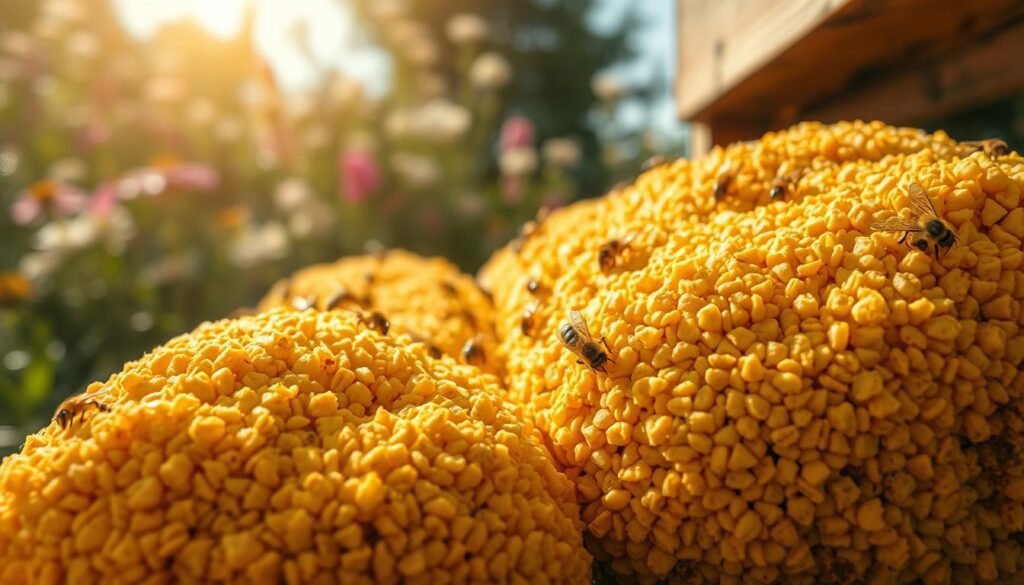
Freeze collected pollen at −18 °C (−0.4 °F) for at least 48 hours after cleaning to limit microbes. Dried or segmented bee bread should be stored cool, dry, and airtight to prevent moisture uptake and mold.
Allergy and safety notes
Allergic reactions often come from airborne anemophilous grains, not the entomophilous material gathered by insects. Still, anyone with allergy history should introduce small amounts and consult a clinician.
“Controlled temperatures protect flavor, color, and mineral integrity.”
| Method | Why it helps | Trade-off | Recommended |
|---|---|---|---|
| Freezing | Stops microbial growth and preserves enzymes | Texture changes on thawing | −18 °C for ≥48 hours |
| Vacuum drying | Removes moisture gently | Can lighten flavor and color | Low temp, controlled cycle |
| Acoustic drying | Non-thermal moisture removal | Less common, higher cost | Good for small batches |
| Segmentation & filtering | Reduces wax and debris | Requires careful handling | Use clean tools and fast processing |
- Keep stored items away from heat and light.
- Use clean, dry utensils and reseal containers after each use.
- Check labels for harvest date and lab results where available.
Real-World Factors That Influence Nutritional Value
Local flora and weather shape what foragers collect each day, creating wide swings in nutrient mix.
Plant origin matters. Different plant sources deliver distinct amino and mineral profiles that alter composition of both bee pollen and bee bread. Labels that list dominant blooms help buyers predict value and content.
Climate and seasonality
Drought, cool spells, or heavy rain change nectar flow and floral availability. That shifts sugars, proteins, and fatty acids in stored material and in hive-processed stores.
Collection, processing, and storage
Tools and timing affect results: prolonged trapping raises moisture risk for collected granules, while prompt removal preserves vitamins and enzymes.
- Enzymes and lactic acids from hive fermentation boost stability and bioavailability, but benefits drop if storage is poor.
- Freeze or dry quickly to protect delicate vitamins and minerals.
- Limit oxygen and heat to prevent oxidation of fatty acids and proteins.
“Nature-driven variability is a feature—rotate sources and check supplier harvest windows for consistent health outcomes.”
For a deeper look at hive fermentation and its effects, read this research on hive fermentation.
Conclusion
Stored inside wax-sealed honeycomb, packed grains undergo controlled fermentation that alters sugars and vitamins.
In short: collected pollen gives a broad, raw plant matrix rich in proteins, minerals, vitamins, and varied fatty acids. Fermented bee bread converts many nutrients into more absorbable forms and adds lactic acids and probiotic context that can aid digestion and uptake.
Essential amino acids remain present in both forms, but partial breakdown in the bread increases accessibility. For lipid-minded consumers, fatty acids shift between products, so choose based on digestion and goals.
Buy from transparent sources, store pollen frozen and keep bread cool and dry, and start small. For a technical review of hive fermentation, see this hive fermentation review.
FAQ
What are the basic roles of pollen and bee bread in a hive?
In a colony, collected flower granules serve as a protein and micronutrient source for nurse bees and developing brood. After workers mix those granules with nectar and glandular secretions and store them in comb cells, fermentation begins and transforms the mix into a more stable, nutrient-rich product used for long-term feeding.
How does collected pollen become fermented bee bread?
Foragers pack floral granules into cells, then add nectar, honey, and enzymes. Lactic acid bacteria and yeasts start fermentation inside the sealed cells. This process lowers pH, increases digestibility, and preserves the stored material, making it richer in available nutrients than the raw floral granules.
How do composition, texture, and color compare between raw granules and fermented product?
Raw granules are dry, coarse, and often brightly colored depending on plant source. Fermented material becomes softer, darker, and pastier as sugars, organic acids, and microbial activity change its structure. Nutrient profiles shift too, with higher bioavailability of amino acids and some vitamins after fermentation.
Why is the fermented product unique to honeycomb storage?
The sealed comb cell environment creates anaerobic conditions and concentrates enzymes and microbes that drive lactic acid fermentation. That controlled microenvironment is essential; open storage of collected granules does not reproduce the same biochemical changes or preservation.
What macro- and micronutrients are found in both products?
Both contain proteins, carbohydrates, lipids, vitamins (especially B complex and some provitamin A), minerals like calcium and iron, and antioxidants from plant pigments and phenolic compounds. Protein content and mineral levels vary with floral origin and processing.
How do fatty acid profiles compare, including polyunsaturated fats?
Lipid content is modest but includes essential fatty acids, often with higher proportions of unsaturated and polyunsaturated fatty acids. Fermentation can slightly alter the fatty acid availability, but plant origin remains the main driver of lipid profile.
Are essential amino acids present and is protein bioavailability different?
Both products contain essential amino acids. Fermentation increases free amino acid levels and breaks down protein complexes, improving digestibility and bioavailability for insects and humans compared with unprocessed granules.
What role do lactic acid, enzymes, and fermentation play in nutrient absorption?
Lactic acid lowers pH, inhibiting spoilage organisms and aiding preservation. Bee and microbial enzymes break down complex molecules into simpler forms, enhancing absorption of proteins, sugars, and some micronutrients when consumed.
What potential health benefits are associated with each product?
Users report increased energy, antioxidant support, and immune modulation. The fermented product often rates higher for digestibility and nutrient uptake, while raw granules provide concentrated plant-derived compounds. Scientific evidence varies, but both show antioxidant and anti-inflammatory potential in studies.
Who might prefer one product over the other for digestion or sensitivity?
People with mild sensitivities may tolerate fermented material better due to reduced allergenic potential from protein breakdown. Those seeking minimal processing and concentrated plant compounds might choose raw granules, but allergy risk can be higher.
How can these products be used safely and effectively in meals?
Use small servings—mixed into yogurt, smoothies, oatmeal, or spread on toast. Add near mealtime for absorption with other foods. Start with low doses to check tolerance, and avoid heating at high temperatures to preserve enzymes and some nutrients.
How do you choose reputable sources and assess product purity in the U.S.?
Buy from suppliers with transparent sourcing, third-party testing, and clear labeling of floral origin and processing. Look for certificates of analysis that report microbial counts, pesticide screening, and moisture content to ensure quality.
What are best storage practices for long-term quality?
Keep products cool, dry, and airtight. Freezing raw granules extends shelf life and limits microbial growth. Fermented comb material should be refrigerated or frozen if not consumed promptly; avoid moisture and direct sunlight to prevent spoilage.
What allergy and safety considerations apply?
People with pollen or bee-product allergies risk reactions ranging from mild irritation to anaphylaxis. Consult an allergist before use. Also consider microbial safety—improperly handled fermented material can harbor undesirable microbes—so buy tested products.
How do plant origin, climate, and season affect nutritional value?
Floral species determine pigment, protein, and lipid profiles. Climate and season affect flowering cycles and nectar composition, which in turn change the biochemical makeup of collected granules and the resulting fermented product.
How do collection and processing methods influence final nutrient content?
Gentle harvesting, rapid drying or appropriate refrigeration, and clean handling preserve enzymes and sensitive vitamins. Overheating or prolonged exposure to air reduces antioxidant levels and can denature proteins, lowering nutritional value.
Are common laboratory analyses available to verify nutrient claims?
Yes. Laboratories can measure protein content, amino acid profiles, fatty acids, vitamin levels, mineral content, antioxidant capacity, and microbial counts. Reputable brands often provide these test results to support product claims.