
This short, U.S.-focused how-to guide helps beekeepers reduce mite pressure while keeping honey and wax low in residues. It frames integrated pest management (IPM) priorities: monitor first, act at thresholds, and match treatments to brood status, weather windows, and hive layout.
Varroa arrived in the United States in 1987 and now drives most colony losses. These parasites reproduce under capped brood and prefer drone cells because drones remain capped longer. Mites feed on bee hemolymph and fat bodies and spread viruses that rise with mite loads from spring to fall.
Expect practical steps ahead: accurate sampling (alcohol wash is most precise), thresholds near ~2 mites per 100 bees, and rotating cultural, mechanical, and soft chemical tools to slow resistance. For detailed treatment notes and product timing, see treatments and timing. The guide is an actionable reference for any scale of operation, with a focus on fall control to boost overwinter survival.
Key Takeaways
- Monitor regularly and use thresholds to guide action.
- Match methods to brood status, temperature, and hive setup.
- Rotate approaches to delay resistance and protect colony health.
- Use organic acids, essential oils, or hop chemistry with cultural support.
- Fall treatments strongly affect overwinter survival.
- Follow labels to protect queens, brood, and honey integrity.
Why Varroa Mites Threaten Honey Bee Health in the United States
Since its jump to Apis mellifera in 1987, varroa destructor has rewritten how U.S. beekeepers manage colonies. The pest spread quickly and forced new, year‑round practices in both hobby and commercial operations.
From 1987 to today: how varroa destructor spread and changed beekeeping
After the 1987 host switch, varroa moved through apiaries nationwide. Beekeepers shifted to routine monitoring, thresholds, and rotating treatments to slow resistance and protect honey and wax.
Virus transmission, winter survival, and the cost of delayed control
These parasites reproduce in capped brood and prefer drone cells because drones are capped longer (about 15 vs 11 days). They rarely reproduce in queen cells, which have a short capping phase.
Feeding on hemolymph and fat bodies weakens bees’ metabolism and winter resilience. As mite loads rise from spring through fall, viral titers climb too.
- Seasonal pressure: spring → fall escalation demands pre‑winter intervention.
- Action thresholds: measurable mite levels guide timely control to reduce colony losses.
- Benefit: fall-focused steps improve winter survival and lower per‑colony economic risk.
How to Use This How‑To Guide
Follow these steps to match hive status and weather windows with effective control choices.
This guide is organized into clear, actionable parts: background, monitoring, cultural and mechanical tools, soft treatments, last‑resort synthetics, seasonal planning, and rotation. Jump directly to monitoring when you need sampling protocols, or to seasonal planning to pick treatments by brood status and flow.
Use the decision elements to choose a product that fits brood presence, temperature, and whether honey supers are on. Sample ~20% of colonies in large apiaries and aim for the threshold of ~2 mites per 100 adult bees before adding chemical steps.
Document counts, product used, dates, and outcomes. Safety and strict label adherence are woven into each treatment section to protect bees and honey and to reduce residue risk.
| Method | Best time to use | Pros / Limits |
|---|---|---|
| Alcohol wash | Any season; precise counts | Most accurate; requires sample handling |
| Sugar roll | Warm, dry weather | Field friendly; less harsh than alcohol |
| Sticky board | Monitoring drop during inspections | Noninvasive; less precise for thresholds |
| Decision checklist | Monthly and pre‑season | Matches colony size and equipment to treatments |
- Let the IPM pyramid guide year‑round tactics and reduce reliance on heavy chemistries.
- Use this section as a monthly checklist to keep records and refine timing across the year.
IPM Essentials: Monitor First, then Treat
Consistent monitoring gives beekeepers the evidence to act before colonies decline. Start with routine checks and record counts so decisions rest on data, not guesswork.
Action thresholds and why ~2 per 100 matters
Aim for a mean threshold near 2 mites per 100 adult bees. Staying under this level limits virus amplification and keeps winter bees stronger.
Sampling methods compared
Alcohol washes are the most accurate for measuring mite populations. Sugar rolls and sticky boards are practical alternatives during field checks and when handling constraints exist.
Sampling design for larger yards
Check about 20% of colonies, choosing hives that represent different strengths and equipment. Representative sampling gives reliable whole‑yard estimates and supports targeted treatment.
Timing and interpretation
Monitor monthly through the year and increase frequency as fall approaches. If counts exceed thresholds, retreat, rotate modes of action, or escalate to stronger treatment based on brood status.
- Handle alcohol washes with gloves and consistent technique to preserve data quality.
- Document mite levels, dates, and treatments to track trends and evaluate efficacy.
- Timely fall intervention correlates with better overwinter survival and spring build‑up.
For a seasonal checklist and tasks by month, see seasonal beekeeping tasks.
Cultural Controls: Building Mite-Resilient Colonies
Long-term control depends on genetics and brood management that shift pest pressure away from brood.
Resistant stock and sourcing
Choose Russian, VSH, or “ankle biter” lines to lower reproduction and brood infestation. Russian bees show reduced brood infestation; VSH strains remove infested pupae; ankle‑biters damage mites on contact.
Practical tip: Buy queens from certified breeders and test colonies with frozen‑brood or pin‑test assays to confirm hygienic behavior.
Small cell comb and brood breaks
Small cell comb (~4.9 mm) has mixed efficacy in trials but causes no harm to bees. Results vary; some operations report shorter capping periods, others see little change.
A planned brood break ~21 days (queen caging or temporary removal) forces the parasite onto adults. Pair this with screened bottom boards and follow with a soft treatment or mechanical control to boost drop.
| Strategy | When to use | Expected result |
|---|---|---|
| Resistant queens (Russian/VSH) | Year-round breeding cycle | Lower brood infestation, reduced chemical needs |
| Small cell comb (≈4.9 mm) | During comb replacement or new frames | Variable efficacy; no documented harm |
| 21-day brood break | During dearth or post-flow | Mites shift to adults; grooming and drop increase |
Costs and benefits: Cultural controls reduce chemical reliance over the year but can dip short‑term productivity. Stage interventions around nectar flows and record results to refine your plan.
Mechanical Controls That Reduce Mite Populations
“Targeted mechanical steps reduce reproductive opportunities and buy time before thresholds are reached.”
Practical mechanical actions trap and remove parasites using bee biology and simple equipment. These methods lower pressure on brood and extend the interval before chemical control is needed.
Drone brood removal
Insert dedicated drone frames or foundation in the outer brood nest every 4–6 weeks during peak drone rearing. Mites reproduce more in drone cells—about 2.2–2.6 offspring vs 1.3–1.4 in worker cells—and can be concentrated there.
Remove capped drone comb before emergence. Freeze frames or scrape capped brood into a container and dispose of or destroy it. Returning frozen frames after cleaning can recycle wax without reintroducing live pests.
Expect modest reduction rates; repeated cycling delays threshold crossing and reduces colony viral buildup when paired with monitoring.
Screened bottom boards
Screened bottoms let fallen parasites drop away and lower reinfestation from the hive interior. Install them as a passive layer under the brood boxes, and keep an open drop tray to quantify fall.
Note: Screens rarely hold counts below action thresholds by themselves. Combine screens with brood breaks or other control steps to gain meaningful control.
Powdered sugar dusting
Dusting with powdered sugar stimulates grooming and boosts mite drop. Use a hand duster or shaker, apply when bees are calm, and repeat weekly for several cycles.
Labor is high and efficacy is limited as a stand-alone control, but it is valuable as an adjunct during brood breaks or before a planned treatment.
“Measure before and after mechanical actions—sticky boards or wash counts show real impact.”
Monitor drop and follow up with sampling to quantify benefit. For an IPM approach and more methods to control pests, see methods to control varroa.
Formic Acid Treatments: Penetrating Capped Brood
Formic acid treatments penetrate capped brood cells, allowing the vapor to reach reproducing mites where contact products cannot.
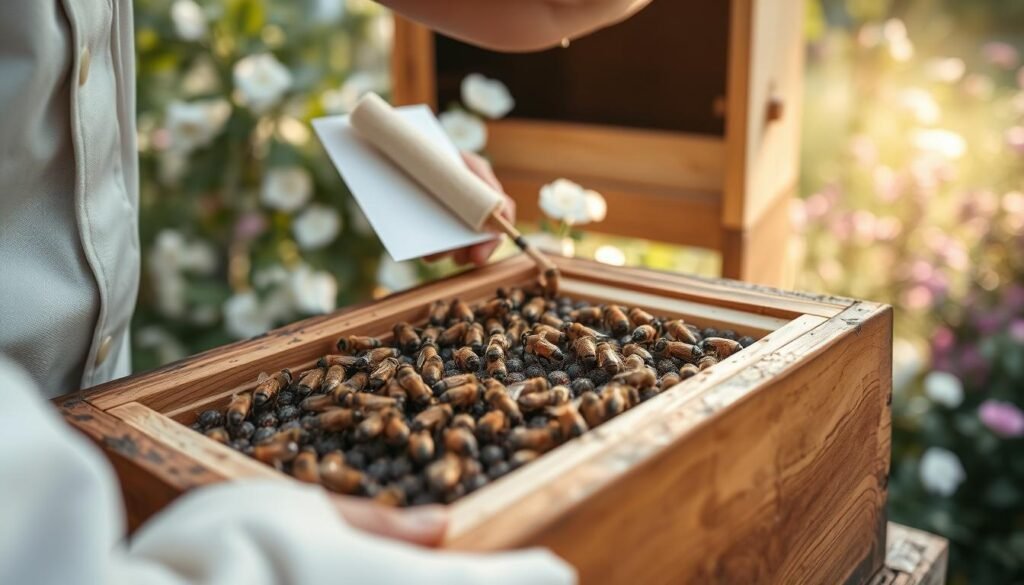
How it works: concentrated formic acid off-gasses and crosses cappings to kill parasites inside sealed cells. That makes this option uniquely effective when brood is present, but efficacy is temperature dependent and risks rise at high heat.
When and how: temperature windows and placement
Follow labeled ranges. Many products note low efficacy below 50°F and elevated risk above 85°F. MiteAway Quick Strips, for example, list an effective window near 50–92°F and a 7‑day application.
Efficacy and risks: brood mortality and queen loss
Expect good brood penetration but monitor closely. High temperatures can increase brood mortality and cause queen stress or loss. Keep colonies level and ventilated to manage vapor rate and reduce harm.
Using strip products during honey flow
Certain labeled strips are allowed during honey flow and are compostable. Place strips low at brood box edges per label, use entrance reducers or vents as directed, and avoid extreme heat or cold.
“Follow label directions exactly; placement, ventilation, and temperature control determine both safety and efficacy.”
| Item | Guidance | Why it matters |
|---|---|---|
| Placement | Two strips near bottom brood box edges | Maximizes vapor flow across capped brood |
| Temperature | 50–92°F (product dependent) | Balancing efficacy and queen/brood safety |
| Duration | Typical: 7 days | Long enough to reach reproducing stages |
| Post‑treatment | Wait per label before adding/harvesting supers | Protects honey integrity and complies with law |
Monitoring and safety: check sticky boards or wash counts after treatment to confirm drop. Watch brood pattern and queen activity for adverse signs. Wear PPE, handle acids carefully, and rotate this treatment with other modes of action to preserve long‑term control.
Oxalic Acid Strategies for Broodless Periods
Oxalic acid is most effective when little or no brood is present. It targets phoretic mites on adult bees and gives a high kill rate during tight cluster periods.
Vaporization vs. dribble: delivery and safety
Vaporization uses heated equipment to produce a vapor that coats adult bees quickly. It is fast, limits direct chemical contact, and is efficient in tight clusters.
Dribble applies a sugar‑solution with oxalic crystals directly between frames. It requires careful dosing and more handling of adult bees.
| Method | Equipment / workflow | Pros / Cons |
|---|---|---|
| Vaporization | Heater unit, nozzle; short application time | Low bee wetting; PPE needed for operator; good efficacy in broodless hives |
| Dribble | Measured syringe or applicator; slow, frame‑by‑frame | Simple gear; risk of overexposure if concentrations are wrong; labor intensive |
| Common goal | Target phoretic mites | Does not penetrate cappings; best when brood is absent |
Timing, doses, and risks
Best windows: deep winter, early spring before buildup, or immediately after a managed brood break. Confirm broodless status by quick frame checks.
Accurate mixing and dose control matter: follow label concentrations and weigh chemicals. Overuse can crystallize in larval guts, raise larval mortality, and shorten worker longevity.
“Treat during verified broodless periods, keep records, and follow up with monitoring to confirm efficacy.”
Use oxalic as part of a rotation with formic or thymol and pair it with mechanical steps like drone brood removal and screened bottoms. Record outcomes to refine timing and dose next season.
Thymol and Essential Oils: What Works and When
Thymol-based treatments and blended essential oils act as fumigants that reduce phoretic counts when temperature, placement, and timing are right.
Apiguard is a 25% thymol gel applied twice about two weeks apart. Allow a 1/4″ ventilation gap and place gel between brood boxes to cut brood pull. Api Life Var uses wafers (thymol ~74% plus eucalyptol, menthol, camphor) in pieces on top bars at 7–10 day intervals for three rounds.
| Product | Dosing schedule | Temp window | Notes |
|---|---|---|---|
| Apiguard (25% thymol gel) | Two applications, ~14 days apart | ~60–90°F (updates allow up to 105°F) | Place between brood boxes; 1/4″ gap; watch queen activity |
| Api Life Var (wafers) | Pieces on top bars, every 7–10 days ×3 rounds | ~60–90°F | Top placement; break wafers in hot weather; close screened bottoms |
Reported efficacy often reaches 90–95% when used correctly, but responses vary by colony. Thymol does not penetrate capped cells, so repeat exposure or pairing with other tactics is necessary.
“Close screened bottoms to improve vapor retention and reduce colony disruption.”
Watch for bearding, fanning, or temporary brood pull. Mitigate stress by lowering dose in heat (e.g., use smaller wafer pieces) and by ensuring good ventilation and PPE when handling concentrated oils. For a detailed review of soft treatments, see soft treatments review.
Hop Beta Acids: An Option with Lower Residues
Potassium salts of hop beta acids (HopGuard formulations) offer a low‑residue contact option that fits some IPM rotations.
How it works: hop beta acid products act on phoretic pests on adult bees and do not penetrate capped cells. That is why use during periods of reduced brood increases effectiveness — more mites are on adults and exposed to the treatment.
Typical multi‑application schedule: apply strips or pads every 7–10 days over ~4 weeks to provide sustained exposure. Space applications so you do not exceed the annual maximum listed on the label.
| Feature | Guidance | Notes |
|---|---|---|
| Timing | Best when brood is minimal; can be used during honey flow | Does not enter capped cells; broodless windows improve kill |
| Schedule | Repeat every 7–10 days ×3–4 applications | Sustained exposure needed; follow label for max/year |
| Residues | Compatible with honey supers per label | Expect minimal residues when used correctly |
| Legal status | State approvals may be required (Section 18) | Check your state department of agriculture |
Expect variable efficacy compared with some other soft treatments. Always check post‑treatment counts (alcohol wash or sticky board) to confirm performance and plan follow‑up actions. Combine hop beta acid use with mechanical steps — drone removal, screened bottoms, or a brief brood break — to boost outcomes when brood persists.
Handling tips: strips can be sticky. Wear gloves, keep tools clean, and protect frames and gloves from residue. Record dates, counts, and products used so you can judge season‑to‑season results and remain within label limits.
“Use hop beta acids as a rotational component when temperatures or honey flow limit other options, and verify efficacy with post‑treatment monitoring.”
When Soft Becomes Hard: Synthetic Miticides as a Last Resort
When soft options fail to hold mite levels, synthetics may be the necessary final step to protect weak colonies.Treat synthetics as emergency tools only after monitoring, cultural fixes, and mechanical steps have been attempted.

Amitraz (Apivar): contact action and monitoring
Amitraz acts by contact and can give a strong drop in populations when applied correctly. Expect a high initial rate of kill, but track post‑treatment counts to spot falling efficacy.
Document results after each application. Diminishing kill or re‑builds can indicate emerging resistance.
Why fluvalinate and coumaphos are discouraged
Fluvalinate and coumaphos have widespread field resistance and leave persistent residues that build in wax. These residues contaminate hive products and harm bee health when they accumulate.
Long half‑lives and negative interactions make them poor IPM choices in many operations.
“Use synthetics only when thresholds persist despite rotation and non‑chemical tools.”
- Follow label limits: avoid use during honey flow and obey maximum annual use rules.
- Monitor immediately after treatment to confirm kill and plan non‑synthetic follow‑up.
- Watch queen and brood for adverse effects during and after application.
- Consult state guidance on local resistance trends and approved products.
- Return to cultural, mechanical, and soft approaches as soon as counts allow within the year.
Seasonal Game Plan: Matching Treatments to Brood and Weather
Plan treatments around when colonies raise winter bees and local temperature windows to protect long‑term survival. A simple quarter‑by‑quarter approach helps align actions with brood cycles, nectar flows, and heat or cold events.
Spring and early build‑up
Priority: cultural and mechanical steps. Use drone brood removal, screened bottoms, and selective brood breaks to lower pressure with minimal queen disruption.
Note: thymol products can suppress queen and brood activity in cool spring weather—use only if counts demand it and temperatures match label guidance.
Summer flows
During nectar flows, choose options compatible with honey supers. Formic products labeled for use in flows and hop beta acid strips are viable if label conditions are met.
Late summer / fall
Target decisive reductions before the winter cohort is raised. Aim to lower loads well ahead of the switch to long‑lived bees; timing here strongly affects overwinter survival.
Winter broodless windows
Cleanup: schedule oxalic acid during confirmed broodless periods or immediately after a managed break. Dose precisely and maintain safety practices.
- Monitor each phase and adjust actions by measured counts.
- Plan contingencies for heat waves and cold snaps.
- Rotate modes across the year and keep a seasonal logbook or a linked beekeeping calendar.
“Match tools to brood status, weather, and hive layout to improve control varroa outcomes.”
Resistance Management and Treatment Rotation
Long-term success hinges on rotating treatment types and keeping nonchemical tactics active year‑round. Repeated reliance on a single active ingredient speeds genetic selection that reduces product effectiveness.
Why rotation slows resistance
Resistance arises when a few tolerant individuals survive an application and pass traits to offspring. Alternating acids, oils, and hop‑based products changes selection pressure and slows that process.
Practical annual rotation
Alternate a formic or oxalic phase in brood windows with a thymol cycle in warmer months, then follow with hop beta applications during flow‑safe periods. Insert a planned brood break between chemical modes to push mites onto adults and increase exposure.
Combine cultural and mechanical tools
Drone removal, screened bottoms, and timely queen management lower baseline pressure and extend product life. These steps reduce how often treatments are needed and support long‑term control varroa goals.
Verify efficacy and stewardship
Do post‑treatment counts (alcohol wash recommended) to detect falling kill rates. Limit consecutive applications of the same active ingredient in a year, dose per label, and complete full courses to avoid sub‑lethal exposure.
“Regional coordination among beekeepers reduces reinfestation and shared resistance issues.”
Document dates, counts, and products used. Share trends with local clubs and consult treatment recommendations and a disease prevention guide to stay current: treatment recommendations and a disease prevention guide.
Safety, Residues, and Honey Integrity
Careful mixing, correct dosing, and good airflow are as important as product choice when treating colonies. Follow label directions and prepare before you open a hive to reduce risks to people and bees.
Protective gear, handling acids and oils, and ventilation
PPE: nitrile gloves, eye protection, and a respirator or mask when vaporizing or mixing acids and concentrated oils.
Avoid skin contact with aromatic oils and acid vapors. Mix outdoors or in a well‑ventilated area and measure concentrations precisely.
Close screened bottoms during thymol or oil wafers to raise vapor retention; reopen screens when using acids to improve airflow and protect brood and queen health.
Minimizing residues in wax and honey
Organic acids and thymol typically leave low residues when applied per label. Thymol honey residues usually sit below taste thresholds and wax residues dissipate in weeks.
Avoid legacy synthetics such as fluvalinate and coumaphos whenever possible; they persist in wax and harm colony health over time.
| Practice | Guidance | Why it matters |
|---|---|---|
| Timing vs. honey flow | Apply only when label permits; respect pre‑harvest intervals | Protects honey quality and consumer safety |
| Storage & temperature | Store thymol gel below ~100°F; keep acids sealed and cool | Maintains product stability and predictable concentrations |
| Wax management | Rotate and replace brood comb periodically | Dilutes legacy residues and improves colony health |
| Recordkeeping & disposal | Log product, dates, doses; dispose of used strips per label | Tracks residue sources and protects the environment |
Practical tips: dose accurately and complete full courses to avoid sub‑lethal exposure and residue buildup. Move or hold supers as label requires and wait required intervals before harvesting honey.
“Plan ahead: correct gear, ventilation, and recordkeeping preserve honey quality and reduce residue risk.”
Natural Remedies for Varroa Mites: Step‑By‑Step IPM Plan
A clear, repeatable IPM calendar helps beekeepers keep mite populations below damaging levels year‑round.
Monthly monitoring and thresholds
Perform an alcohol wash monthly and sample ~20% of colonies in large yards. Target counts near 2 mites per 100 adult bees.
If the mean exceeds threshold, act immediately: use cultural or mechanical steps first, then apply a soft treatment matched to brood and temperature.
Quarterly cultural and mechanical schedule
Quarter checklist:
- Q1 (late winter/early spring): vaporize oxalic in confirmed broodless windows; plan resistant‑stock placements.
- Q2 (build): rotate queens, begin drone brood cycles every 4–6 weeks, install screened bottoms.
- Q3 (flow): use drone removal, powdered sugar weekly as adjunct, and limit disruptive moves during nectar flows.
- Q4 (pre‑winter): schedule a 21‑day brood break if possible and follow with a treatment to catch shifted mites.
Decision tree for selecting soft treatments by season
| Condition | Recommended soft treatment | Expected rate & days |
|---|---|---|
| Broodless / winter | Oxalic acid (vapor or dribble) | High phoretic kill; expect >80% in tight cluster; single treatment, days: 1 |
| Capped brood present, 50–90°F | Formic acid strips | Penetrates brood; 60–90% reduction; days: 7–10 |
| Warm, steady temperatures; honey supers on | Hop beta acid strips or labeled thymol | Moderate reduction; 40–80% depending on use; days: repeat every 7–10 for 3–4 cycles |
Recordkeeping: always log before/after counts to calculate efficacy and inform the next step. If reductions fall short, swap modes of action and combine with mechanical steps.
“Use PPE, confirm temperature windows, and ventilate hives per label before applying treatments.”
Rotation & contingency: rotate actives across the year to slow resistance and reserve synthetics for last‑resort use only if soft methods fail to bring mite populations under threshold.
Conclusion
, Be a data‑driven beekeeper. Keep regular checks, act at thresholds, and use a mix of cultural and mechanical steps to protect bees and the colony.
Match soft treatments to brood status and weather, and reserve stronger options only when needed. Good timing cuts varroa and lowers losses while limiting residues and harm to honey bee health.
Rotate actives, keep precise records, and prioritize safety and honey integrity. Work with local beekeepers to reduce reinfestation pressure across yards.
Small, consistent actions through the year prevent big fall crises. Stay informed as guidance and products evolve, and trust that a disciplined IPM plan keeps colonies productive and resilient.
FAQ
What is the recommended action threshold for treating colonies?
Aim for roughly 2 mites per 100 adult bees (about 2% infestation) as a practical threshold. Use regular sampling—alcohol wash, sugar roll, or sticky boards—to compare counts against that threshold and trigger treatment or cultural responses.
Which sampling method is most reliable for detecting mite levels?
Alcohol wash gives the most consistent accuracy for adult bee infestation. Sugar rolls and sticky boards are useful alternatives; sugar rolls are less lethal to bees, while sticky boards help monitor natural mite drop over time. Use the same method consistently to track trends.
How often should I sample colonies across an apiary?
Sample about 20% of colonies in an apiary, focusing on different apiary locations and sizes. Increase sampling frequency during seasonal transitions—spring buildup, pre-winter—and after treatments to confirm efficacy.
When is fall treatment most important?
Treating in late summer to early fall reduces mite pressure when winter bees are produced. Lowering mite loads before the long cluster period improves winter survival and reduces viral transmission to winter bees.
Do resistant bee stocks eliminate the need for treatments?
Stocks such as Russian and Varroa Sensitive Hygiene (VSH) reduce mite reproduction and slow population growth but rarely remove the need for monitoring and occasional intervention. Combine resistant stock with IPM practices.
Does small cell comb work to control mite populations?
Scientific evidence is mixed. Some beekeepers report modest benefits, but controlled studies show limited and inconsistent effects. Use small cell only as part of a broader IPM plan rather than a standalone solution.
How effective is drone brood removal and how often should it be done?
Drone brood removal exploits mites’ preference for drone cells and can cut population growth when done regularly during drone-rearing periods. Remove capped drone comb every 2–3 weeks in seasons when drones are reared to trap and remove mites.
Can screened bottom boards significantly reduce mite loads?
Screened bottoms increase natural mite drop and can slightly reduce mite buildup, especially when combined with other controls. Alone they usually do not keep mite levels below treatment thresholds.
How and when should powdered sugar dusting be used?
Powdered sugar can stimulate grooming and cause some mites to fall from bees. Use during warm, low-humidity conditions and repeat treatments every 4–7 days if relying on it. Expect modest, short-term reductions rather than full control.
When is formic acid appropriate, and what are the risks?
Formic acid penetrates capped brood and can reduce mites inside cells. Use within recommended temperature windows and follow product labels (e.g., MiteAway strips). Risks include brood mortality and queen loss at high temperatures or incorrect application.
How should oxalic acid be applied and when is it best used?
Oxalic acid works best during broodless windows—winter or after a deliberate brood break—via vaporization or dribble. Vaporizing reaches more bees with lower brood risk; dribble is simpler but can stress colonies. Avoid repeated use that may harm brood or workers.
What are practical dosing and temperature considerations for thymol and essential oil products?
Products like Apiguard and Api Life Var have labeled temperature ranges and placement guidelines. Thymol works in warm, stable conditions; high temperatures increase queen disturbance and honey contamination risk. Follow manufacturer dosing and ventilation recommendations.
Are hop beta acids a good low-residue option?
Hop beta acids can reduce mites with lower residues than some synthetics, but they perform best when brood is limited and may require multiple applications. Check state regulations and product approvals before use.
When should synthetic miticides be considered?
Use synthetic miticides such as amitraz (Apivar) as a last resort when soft options fail or mite levels threaten colony survival. Rotate modes of action to limit resistance and avoid persistent compounds like tau-fluvalinate and coumaphos that build wax residues.
How do I manage resistance to miticides?
Rotate treatments with different modes of action, integrate cultural and mechanical tactics year-round, and avoid under-dosing. Regular monitoring after treatment helps detect reduced efficacy early.
What safety and residue concerns should be prioritized?
Wear protective gear when handling acids and concentrated oils, maintain good hive ventilation during treatments, and follow label withholding times to minimize honey taint and wax contamination. Choose low-residue options when honey supers are present.
How should I build a seasonal treatment plan?
Match controls to brood status and weather: use brood-targeting methods in late summer/fall, oxalic acid during broodless winter windows, and soft options during flows if allowed. Monitor monthly and adapt treatments based on counts and colony condition.
Can combining methods improve control?
Yes. Combining cultural measures (resistant stock, brood breaks), mechanical tactics (drone brood removal, screened bottoms), and soft chemical options increases overall effectiveness while reducing reliance on any single product and slowing resistance.
How do I avoid honey contamination when treating colonies?
Avoid treatments labeled as unsafe during nectar flows or when honey supers are present. Use temperature-appropriate products like certain thymol formulations, and always adhere to label withdrawal periods to protect honey quality.