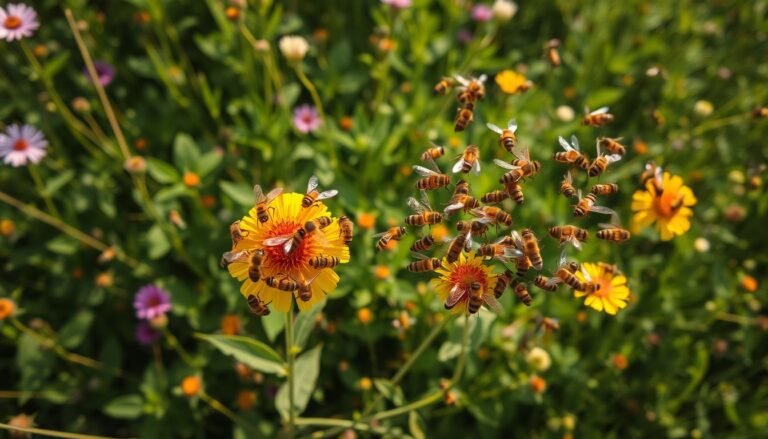
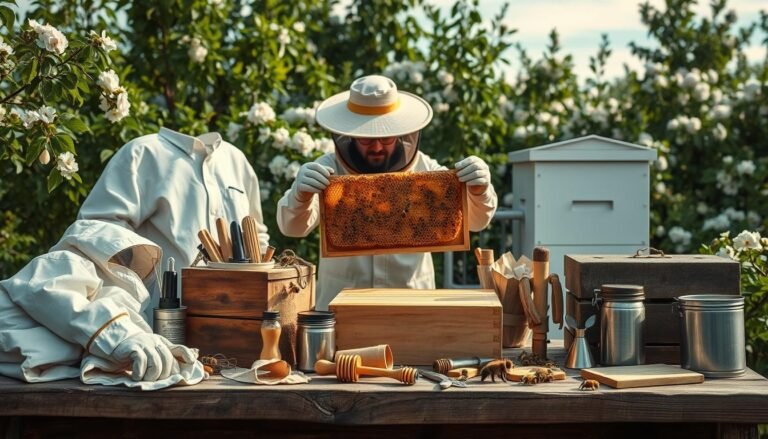
Beekeeping connects people with nature and helps protect vital pollinators. This guide aims to help every beekeeper strengthen a hive using natural-first decisions that match bee biology and local forage cycles.
A thriving hive rests on a healthy queen, a balanced workforce, and steady nutrition. Queen egg-laying peaks between 1,000 and 2,000 eggs daily in season, while young workers care for brood and older workers forage. Regular brood pattern checks give a quick read on hive health and early signs of disease or parasites.
This short guide outlines site selection, seasonal management, queen support, nuc expansion, swarm prevention, nutrition, and integrated pest strategies. Expect practical steps you can use right away: inspection cadence, space management, non-chemical aids, simple record keeping, and measurable indicators like brood pattern, resource intake, comb use, and trends over time.
Key Takeaways
- Strong queen, balanced workforce, and nutrition are core drivers of healthy populations.
- Inspect brood patterns regularly to catch early disease or parasite signs.
- Time major actions with spring and summer forage peaks for best results.
- Use non-chemical tools, record keeping, and simple metrics for progress.
- This approach fits hobby and sideline operations and scales with experience.
Understanding Bee Colony Population Dynamics in the United States
Queen output and forager timing set the rhythm of hive growth across a season. The queen can lay roughly 1,000–2,000 eggs per day at peak, and that daily number sets the ceiling for how many bees a hive can add when resources align.
Queen egg-laying capacity, worker roles, and seasonal population peaks
Young adult bees serve as nurses and keep the brood nest warm and clean. They feed larvae royal jelly and process nectar into stored food.
Older adult bees become foragers. They collect nectar and pollen during spring and summer when blooms are abundant. When flowers are scarce, brood rearing slows even if honey stores remain.
Why nectar and pollen flows drive brood growth
Pollen supplies essential amino acids, sterols, vitamins, and minerals needed for larval growth. Without steady pollen intake, brood cannot develop normally.
Brood rearing raises energy demand and requires the nest temperature near 95°F. That need increases feeding and foraging rates during peak production.
- Regional bloom timing shifts roughly one week later per ~200 miles north; plan space and inspections accordingly.
- Monitor brood frames for steady brood patterns; dips often precede wider declines in adult numbers.
- When nectar and pollen flow, colonies expand brood nests quickly—add comb space before congestion appears.
| Factor | Effect on Brood | Beekeeper Action |
|---|---|---|
| Queen laying (1,000–2,000 eggs/day) | Sets max growth rate | Check brood pattern; ensure room to lay |
| Pollen availability | Limits larval development | Provide forage diversity; supplement when scarce |
| Nectar flow timing | Drives brood expansion in spring/summer | Align inspections with local bloom cues |
| Brood nest temperature (~95°F) | Increases energy needs | Avoid sudden cooling; maintain hive strength |
How to Boost Colony Population Naturally
Practical management links forage access and queen quality with timely space adjustments to guide hive size.

Start with forage. Expand access to diverse, season‑long nectar and pollen. Nutrition sets the throttle for brood growth and adult numbers.
Match genetics to local conditions by choosing queens known for steady laying, disease resistance, and calm temperament. A young, high‑quality queen steadies worker age structure and supports larger nurse cohorts.
Simple operating order
- Ensure forage and patch plantings before major flows.
- Confirm queen quality and compact brood patterns.
- Right‑size hive space: add room before a flow; consolidate after.
Keep management light but proactive. Reduce unused space during dearth to help temperature control and defense. Monitor brood patterns; even, compact brood signals good health while scattered brood needs correction.
| Action | Purpose | When |
|---|---|---|
| Improve forage diversity | Supports brood and adult bees | Year‑round, emphasize spring/autumn |
| Select quality queens | Stabilizes laying and size | At requeening or nuc introductions |
| Right‑size space | Prevents congestion and swarming | Before and after major flow |
For a seasonal checklist and detailed timing, see seasonal tasks.
Choose Optimal Hive Locations for Growth
A well-sited apiary helps bees start early, conserve energy, and fend off stress. Site choice affects daily foraging, brood nest warming, and overall colony health.
Sunlight, wind protection, and water access
Prioritize locations that receive six to eight hours of direct sun each day. Morning sun warms the brood nest and prompts earlier foraging flights.
Use natural windbreaks such as hedges or tree lines. These features lower chill, protect equipment, and help the hive keep a steady internal temperature.
Provide a reliable water source nearby. A shallow dish with textured landing spots keeps bees returning and reduces stress during hot or dry days.
Forage accessibility across the season and nectar flow timing
Place hives near diverse, season-long forage: wildflowers, pastures, ornamentals, and trees. Short flight distances increase net gain per trip and ease brood rearing.
“Bees forage most efficiently when forage is close, consistent, and varied through the season.”
- Elevate stands for drainage and airflow; orient entrances to morning sun.
- Avoid frost pockets and heavy shade that delay warm-up time.
- Check access for inspections and map nearby pesticide use; buffer with vegetation when possible.
| Site Factor | Why it matters | Practical step |
|---|---|---|
| Sun (6–8 hours) | Speeds brood nest warming and early foraging | Sit hives facing southeast when possible |
| Wind protection | Reduces chill and equipment wear | Use hedges, fences, or tree lines |
| Nearby forage | Supports brood growth across season | Assess bloom sequence within 1–2 miles |
| Water source | Keeps bees hydrated and returning | Provide shallow, textured water dishes |
Seasonal Management That Accelerates Natural Growth
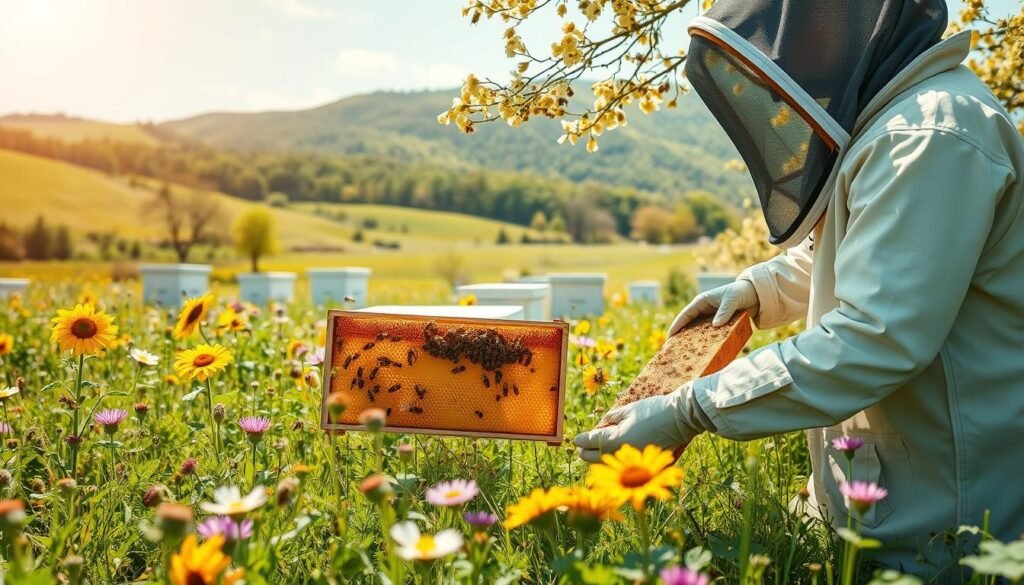
Seasonal shifts guide practical hive moves and feeding choices that protect brood growth and honey stores. A clear plan for each period—spring, summer, autumn, and winter—keeps inspections timely and actions effective.
Spring: build-up strategies during strong nectar and pollen flows
Add brood and super space ahead of the first major flow. Align frames so the queen finds room quickly and brood expands into clean comb.
Tip: Use medium syrup sparingly for shortfalls and track hive weight and brood coverage weekly.
Summer: maximizing production while preventing stress
Monitor heat, ventilation, and water access. Add supers when honey production rises and use sampling for mite levels.
When flows end, reduce unused space and keep shade and water available on high‑temperature days to limit foraging stress.
Autumn: preparing winter bees and food reserves
Encourage late‑season pollen from goldenrod and asters to help make long‑lived winter bees with higher fat reserves. Control Varroa now to protect those bees.
Target at least 60–65 lb of honey above the cluster. Feed heavy syrup (67%) early enough for drying and capping, and center heavy frames before cold arrives.
Winter: sustaining clusters and avoiding starvation
Monitor stores monthly and use candy boards or granulated sugar as emergency nonstimulative food when the cluster reaches the inner cover.
Avoid syrup feedings in very cold spells and provide upper ventilation to reduce condensation. Record brood area, hive weight, and mite counts across the season to guide timely moves and protect hive survival.
Support Queen Productivity and Genetics
Queen vigor and smart frame management determine whether a hive expands or stalls through the season.
Room for laying and brood checks
Ensure continuous open comb in the brood nest so the queen can keep a steady laying rate. Rearrange frames when nectar or pollen blocks the nest.
Assess brood pattern often. A compact, uniform brood patch signals good performance. Scattered brood or many drone cells suggests problems.
Requeening intervals and selection
Set requeening at one to two years to refresh genetics and lower swarming risk. Source queens from reputable breeders with proven disease resistance and consistent production.
Introducing new queens
Prepare the colony by confirming it is queenless and that workers are stable. Introduce a caged queen so workers acclimate to her pheromones. Wait several days before release and watch worker behavior.
- Check for eggs within 7–10 days after release.
- Time requeening with seasonal goals—autumn requeening helps spring build-up; spring fits availability.
- Record queen lineage, age, brood quality, and notes for future choices.
For breeding program design and selection methods, see breeding program design.
Expand Smartly with Nucleus Colonies (Nucs)
Nucs deliver a mated queen, live brood, and an active work force that shorten the time needed for expansion. Use them in spring when rising day length and blooms give the best chance for rapid growth.
Install nucs early in the year so rising temperatures and forage support brood development and honey flow. Place nucs in full sun with wind protection and a nearby water source to reduce stress during the first days.
Practical steps for successful introductions
- Match frame sizes and equipment before transfer to avoid cross-comb and gaps.
- Donate brood frames from strong hives to equalize weaker colonies and speed growth.
- Track initial brood frames, bees on frames, and laying rate to forecast when extra boxes will be needed.
- Add space in measured steps; avoid large expansions on cool nights that break nest warmth.
- Use nucs to diversify genetics across colonies for better disease resistance and calmer temperament.
| Metric | Why it matters | Recommended action |
|---|---|---|
| Number of brood frames | Predicts near-term growth | Record at install and weekly |
| Queen laying rate | Sets potential size | Check eggs within 7–10 days |
| Equipment match | Reduces comb issues | Use same frame width and box type |
Plan feed, spare frames, and boxes before arrival day. For detailed expansion planning, see beekeeping expansion tips.
Prevent Swarms to Retain Population and Honey Production
Swarm prevention begins when space, scent, and timing are managed before congestion takes hold. Read early cues and act in a clear order so bees remain productive and your harvest stays intact.
Early warning signs
Watch for backfilled brood nests, scattered frames with little open comb, and a drop in queen pheromone spread. Multiple swarm cells near frame bottoms are urgent signs.
Space management and splits
Add supers during a strong nectar flow and reorganize frames to open laying room in the brood center. If size and congestion persist, split the colony as a controlled option to keep genetics and production.
Inspection cadence and peak-season practice
Inspect weekly during peak months. Tip boxes briefly to scan frame bottoms for new queen cells without full dismantling. Remember: capped queen cells usually mean a swarm is likely.
- Order of tasks: open laying space, add box volume, adjust frames, then split if needed.
- Improve ventilation and shade on hot days to lower swarming drive.
- Track entrance traffic and check on specific days around local flow peaks.
For a technical guide on practical methods and planning, consult the swarm prevention guide.
Nutrition: Nectar, Pollen, and Strategic Feeding
Reliable forage and smart feeding choices give bees the resources they need each season.
Plantings and landscape sources
Provide continuous bloom from spring through fall. Include native wildflowers, maples, and fruit trees to supply steady nectar and pollen. Diverse plantings reduce reliance on supplemental food and support brood growth during lean periods.
Feeding recipes and timing
- Thin syrup (≈33%): stimulate comb building during early buildup.
- Medium syrup (≈50%): bridge short dearths without heavy backfilling.
- Heavy syrup (≈67%): feed early autumn so bees can dehydrate and cap honey stores.
- Use fondant, hard candy, or candy boards above the cluster for nonstimulative winter food.
Cold-weather cautions and HMF
Avoid liquid feeding when the temperature is very low. Evaporation can cool the brood and harm developing bees.
Heating sugars poorly creates HMF, which is toxic. If heat is needed, boil water first, remove from heat, then add sugar and mix without prolonged heating.
“Place emergency candy within easy reach of the cluster and check monthly to prevent late-winter starvation.”
| Feed | Use | When |
|---|---|---|
| Thin syrup | Comb building | Early spring |
| Medium syrup | Short gaps | Summer dearths |
| Heavy syrup / candy | Winter stores / emergency | Autumn / winter |
Integrated Pest and Disease Management for Sustainable Populations
Sampling-based Integrated Pest Management (IPM) keeps colonies healthier and limits unnecessary chemical use. Use consistent sampling methods and thresholds to decide when intervention is needed.
Varroa IPM timing to protect winter bees and spring build-up
Sample in early summer (June–July) and again before autumn. Make treatment decisions early enough that any chemical is removed before the September–October period when winter bees are reared.
Sampling thresholds, treatment windows, and avoiding comb contamination
- Order of tasks: sample, interpret thresholds, select treatment, remove on time, confirm efficacy.
- Track mite number alongside brood area and frames to assess true risk across years.
- Never leave miticide strips past the labeled period and rotate actives to limit residue and comb contamination.
- Combine hopelessly weak colonies in early autumn, but do not merge diseased hives; freeze and sanitize salvageable equipment.
- Maintain queen-right status during treatments, since a poor queen lowers survival odds and complicates recovery.
| Metric | Action | When |
|---|---|---|
| Mite count | Treat if above threshold | June–July, pre-autumn |
| Brood area | Compare with mite trend | Monthly during spike period |
| Comb residue | Remove contaminated frames | Before winter bee production |
“Protecting winter bees is the most direct way beekeepers preserve spring survival and production.”
Landscape and Community Actions that Help Bee Colonies Thrive
Communities and landscapes shape daily risks and rewards for local bees. Small shifts in yard care, planting, and spray timing add up across a neighborhood and lower annual loss rates that have approached 30% in some winters.
Minimize pesticide exposure by choosing degradable products and spraying during evening or early morning when most foragers are inside. That simple timing saves workers and preserves food stores.
Create forage sanctuaries with native blooms from March through October. Continuous sources of nectar and pollen — plus maples and fruit trees like apples and plums — give heavy early and mid‑season support for brood growth.
Provide reliable water and nesting habitat. Shallow dishes with textured landings and leaving hollow stems or brush piles help wild pollinators and bolster local bee numbers.
“Buy local honey, join a club, and share yard‑care plans with neighbors — community action sustains bees and builds stewardship.”
- Coordinate spray timing and planting with nearby beekeepers.
- Support local beekeepers by purchasing products and volunteering at field days.
- Teach respectful behavior around hives and schools to reduce fear and promote conservation.
For broader benefits and practice guides, see beekeeping benefits.
Conclusion
Small, timely steps repeated each season deliver larger, lasting gains in hive health and honey output.
Match inspections and space moves with the local flow so brood and nurse cohorts peak in spring and summer. Keep a strong queen, tidy frames, and clear brood patterns; these basics set the path for steady growth.
Feed strategically: thin, medium, and heavy syrups at the proper times and candy or fondant in winter prevent starvation without chilling the cluster. Sample for mites, treat within windows, and protect winter bees that drive spring build-up.
Keep concise records of hive weight, brood area, and dates. Work with neighbors on forage and spray timing. Assess queen and brood, right-size space, align with flow, verify results — then repeat. With steady practice, your colonies will hold size and improve honey production year after year.
FAQ
What factors determine bee colony population changes in the United States?
Seasonal cycles, queen egg-laying rate, worker lifespan and roles, and forage availability drive numbers. Spring brings peak brood rearing when nectar and pollen flows are strong. Temperature, disease pressure, and beekeeper management also influence growth and survival.
How important is forage diversity for steady hive growth?
Very important. Diverse nectar and pollen sources across spring, summer, and autumn give consistent protein and carbohydrates for brood and adult bees. Plantings of native wildflowers, fruit trees, and early- and late-blooming species extend the forage window and improve brood rearing and honey production.
What hive placement features encourage colony expansion?
Choose sites with morning sun, wind protection, and accessible water nearby. Locate hives near diverse forage within flight range and away from pesticide drift. Proper placement reduces stress, improves foraging efficiency, and supports steady population gains.
When should I add space to prevent swarming and population loss?
Add supers or brood frames during rapid build-up in spring and early summer when brood pattern and forager returns indicate congestion. Timely space relieves crowding, maintains queen pheromone distribution, and lowers swarm impulse while preserving worker numbers and honey flow.
What seasonal management supports natural growth during spring?
In spring, monitor queen laying, provide ample pollen and nectar, and add brood space as needed. Use nuc introductions or splits if you want to expand colonies without stressing the queen. Keep Varroa levels low to protect expanding brood.
How do I manage colonies in summer to maximize production without causing stress?
Ensure adequate ventilation and shade on hot days, maintain forage access, and avoid oversplitting during dearths. Continue Varroa treatments as appropriate and harvest honey only when supers are capped to prevent stressing the colony.
What should be done in autumn to prepare colonies for winter survival?
Focus on building winter bees and food stores. Reduce Varroa to winter-safe thresholds, leave sufficient honey or provide heavy syrup/fondant if needed, and consolidate weak frames so the cluster can access reserves during cold spells.
How can I sustain a winter cluster and avoid starvation?
Position stores so the cluster can move upward as it consumes honey. Use insulated covers or windbreaks in cold regions, check weight periodically, and provide emergency fondant or candy boards when temperatures permit safe inspections.
What practices support queen productivity and better genetics?
Provide the queen ample, well-arranged brood space and monitor brood pattern regularly. Replace failing queens with tested stock from reputable breeders, and consider controlled requeening or instrumental insemination programs if improving genetics is a priority.
How should I introduce a new queen to encourage acceptance and rapid laying?
Prepare the colony by removing rival queens and queen cells, reduce queenright stress, and use a release cage to let workers acclimate over several days. Monitor acceptance and check for consistent brood pattern within two to three weeks.
What are the advantages of using nucleus colonies (nucs) for expansion?
Nucs provide a ready-made, laying queen and brood, which jumpstarts population growth in spring. They reduce time to production compared with packages and lessen stress on source colonies when created properly.
What early signs indicate a hive may swarm soon?
Look for congestion in brood nest, thinning queen pheromone distribution, rapid appearance of queen cells, and reduced egg-laying by the queen. Increased scouting flights by workers and heavy nectar storage in the brood area are other warning signs.
What are practical swarm-prevention methods during peak season?
Manage space proactively by adding supers, rearranging frames to give the queen more laying room, and performing splits when needed. Keep a regular inspection cadence during high nectar flows to catch queen cells early.
When and how should I feed colonies for best results?
Feed thin syrup in early build-up to stimulate spring brood rearing, medium-to-heavy syrup or fondant in autumn for winter stores, and pollen patties when natural pollen is scarce. Avoid feeding during heavy nectar flows and follow regional guidelines to reduce fermentation and HMF risks.
What are cold-weather feeding cautions and HMF risks?
Use approved winter feeds and avoid overheating sugar syrups that produce hydroxymethylfurfural (HMF), which can harm bees. Store fondant and candy boards in cool, dry conditions and only feed when bees can access and use the stores safely.
How does Varroa Integrated Pest Management (IPM) protect population growth?
Varroa IPM combines monitoring, threshold-based treatments, mechanical controls, and hygienic genetics. Timed treatments in late summer and autumn protect winter bees, while spring monitoring prevents heavy mite loads that reduce brood survival and adult longevity.
What sampling thresholds and treatment windows are recommended for Varroa?
Use sugar roll or alcohol wash sampling; treat if mite rates exceed regional thresholds (often 2–3% in spring/summer, lower for winter prep). Apply treatments during brood minima when possible and rotate chemistries to avoid residue buildup in comb.
How can neighbors and communities help local bee numbers thrive?
Plant pollinator-friendly gardens, reduce pesticide usage or choose bee-safer products, and provide water sources. Support local beekeeping clubs and extension services for education and coordinated forage planning to extend nectar and pollen availability.
What landscape actions most effectively increase forage and survival?
Establish native wildflower strips, plant flowering hedgerows and trees that bloom across seasons, and protect nesting habitats. Collaboration with farmers and municipalities to create forage corridors multiplies benefits across the landscape.
How often should I inspect hives during active season to maintain growth?
Inspect every 7–14 days in spring and early summer to monitor brood, queen status, stores, and disease. Short, focused checks reduce disruption while allowing timely interventions like adding space or treating pests.