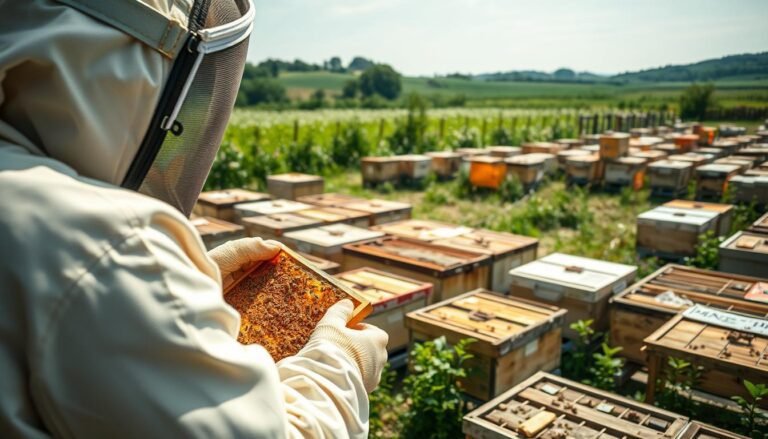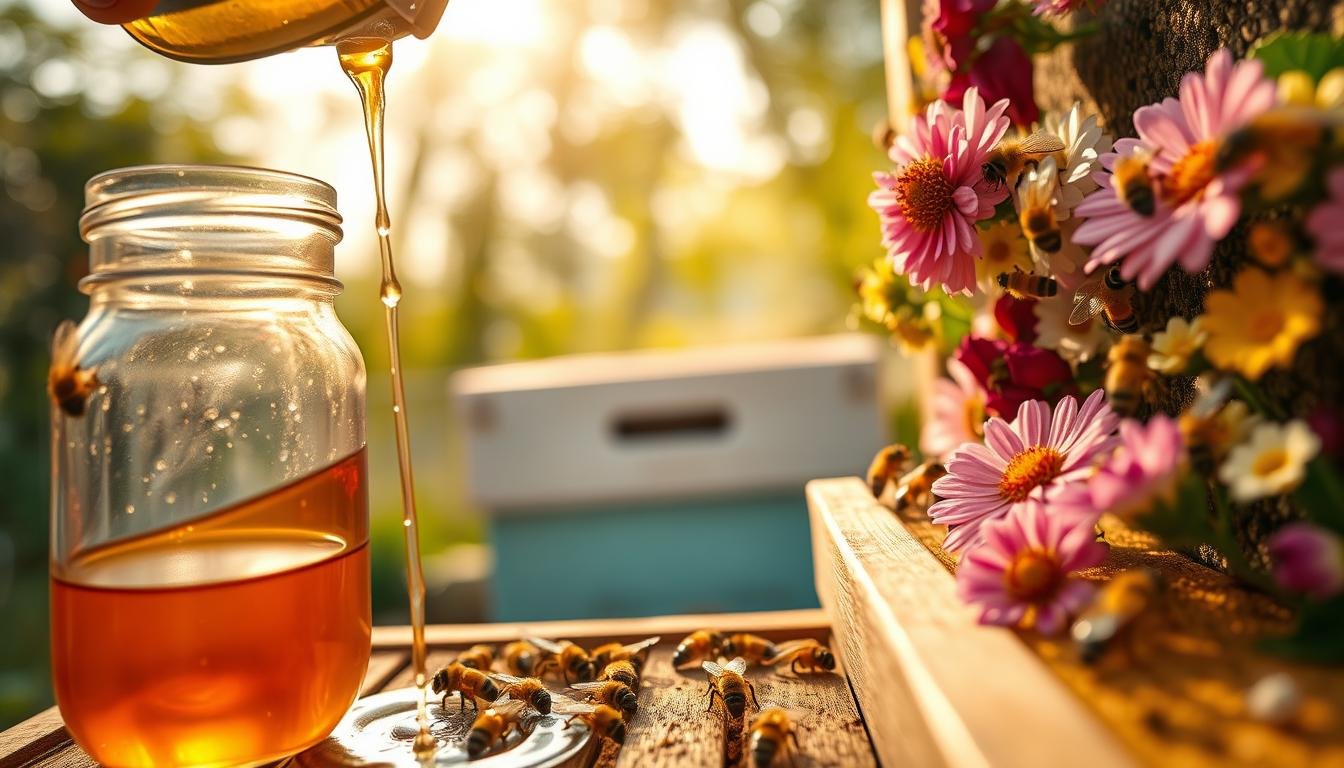
Deciding when to supplement a hive is one of the most important calls a backyard keeper makes. In most seasons, stored honey and local forage sustain a colony. Still, cold snaps or poor bloom years can force intervention to protect winter survival.
Targeted syrup can boost brood rearing, help draw comb, or top up winter stores. When used correctly it is fast and controllable. However, honey is the optimal food and leaving true surplus for harvest preserves quality for people.
Good practice means feeding only when stores run low, using white refined sugar, and avoiding unrefined granules that cause fermentation or off-flavors. Read the hive first: check stores, brood pattern, and activity before you add any supplement.
Later sections cover seasonal timing, proper ratios, feeder choices, protein options, and clear stop rules to protect colony health. For a seasonal checklist, see seasonal beekeeping tasks.
Key Takeaways
- Leave honey when possible; only take true surplus.
- Use refined white sugar if you must supplement.
- Feed to stimulate brood, draw comb, or build winter stores.
- Avoid feeding during honey harvest to protect quality.
- Watch each hive—genetics and local forage change needs.
Why this How-To matters for U.S. beekeepers right now
This practical how‑to matters now because weather swings and local bloom failures are changing colony risk across the U.S. Rapid heat, drought, or wildfire smoke can turn abundant forage into a sharp nectar dearth within days.
Summer is often fine without supplements, but extreme heat and regional shortages sometimes force action. In stressed hives a 1:1 sugar solution can sustain brood and prevent starvation until blooms return.
Late‑summer and early‑fall checks are critical. Many keepers begin fall support in late August or early September to bulk stores before winter, even when activity still looks strong.
- Inspect brood pattern, stored food, and incoming nectar to decide if a colony needs help.
- Assess each hive independently—two hives in one yard may have very different reserves.
- Provide a steady water source during heat waves to aid thermoregulation and reduce stress.
Use sugar syrup only as a contingency, feed internally to limit robbing, and stop as soon as natural nectar returns. Keep clear records by year so future decisions match your microclimate and past outcomes. Timely support can prevent a small setback from becoming a season‑ending loss for both bees and beekeepers.
For a deeper, practical guide on precise techniques for feeding bees, see the linked resource.
Understanding natural forage vs supplemental feeding
Colonies rely on three core resources—nectar, pollen, and stored honey—to grow, resist disease, and sustain brood through lean spells.
What the hive gathers and stores
Nectar supplies carbohydrates and water for energy and cooling. Pollen supplies protein and lipids needed for brood and gland development.
Honey is the colony’s stabilized, enzyme-rich reserve. It supports long-term immunity and winter survival, so leaving surplus honey on frames is best when possible.
When a sugar syrup supplement belongs
Use a small, targeted sugar syrup boost to imitate a nectar flow. That encourages comb drawing and ramps up brood rearing when natural sources are scarce.
Colonies convert sucrose into glucose and fructose much like they process nectar into honey. Still, honey bees prefer true honey for lasting resilience.
- Only white granulated cane or beet sugar dissolves cleanly; unrefined sweeteners can leave particles and harm bees.
- Regional bloom timing varies; inspect incoming nectar and visible stores before adding any supplement.
- Reserve syrup for high-impact goals—comb growth, brood ramp-up, or quick emergency calories—and never use it when honey supers are on for harvest.
Bottom line: favor natural sources first, and use refined sugar solutions as a brief bridge between flows to protect honey quality and colony health.
Feeding bees: syrup vs natural feeding — how to decide
Match your goal to season and colony condition before you add any supplement. Start by naming the objective—draw comb, stimulate brood, or build winter stores—and check frames of reserves, adult population, and local bloom status.
Quick decision framework by season, strength, and forage
Spring: Offer light syrup (about 1:1 or even 1:2) to jump‑start comb and brood when nectar is scarce.
- Summer: Only intervene during a clear nectar dearth; keep feeding minimal to avoid disrupting natural flows.
- Fall: Use heavy syrup (~2:1) to bulk winter stores when preparing hives for cold months.
- Winter: Prioritize leaving honey; use targeted emergency feed only if a colony is at risk.
Consider colony strength: thin hives respond best to steady, light additions; strong hives often recover with local forage alone. Watch for response signals—comb whitening, visible nectar arcs, and active brood—to confirm the plan is working.
For detailed feeder options and practical steps, see this feed bees feeder survey.
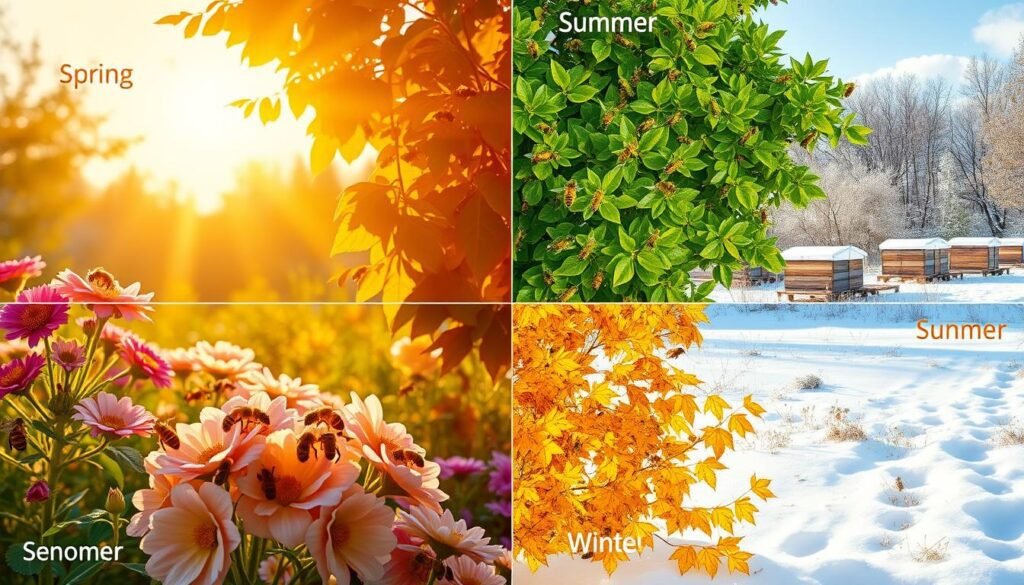
Seasonal timing: spring, summer, fall, and winter feeding strategies
Match your calendar to colony needs: spring growth, summer watchfulness, fall buildup, and winter caution. Timing matters more than volume; the right addition at the right time supports brood and comb without causing problems later.
Spring build-up
Use light 1:1 or even 1:2 solutions to encourage comb drawing and stimulate brood when nectar is scarce. Provide steady internal feed and warm water mixes to shorten the build window during cool nights.
Summer nectar dearth
Do not add calories if local nectar runs are strong. If a dearth or extreme heat knocks back forage, offer thin 1:1 sugar water briefly and stop as soon as a flow returns.
Fall prep for winter
Shift to thicker solutions late August or early September in most U.S. regions. Heavy additions bulk stores efficiently; set clear weight or frame targets and stop when goals are met.
Winter options
Prioritize leaving honey in brood boxes. If stores are short, top up during warm spells with dense syrup or provide refined granulated sugar as an emergency, reachable reserve the cluster can access.
- Fit the feeder to the season: internal units reduce robbing, top feeders add volume in fall.
- Align actions with weather and monitor each hive so you don’t honeybound the brood nest.
How to identify nectar dearth in your area
Early detection saves colonies. Watch the yard closely in late summer; small changes at the hive entrance and in flight patterns often show a drop in incoming nectar.
Behavioral cues
Listen at the entrance. A sustained louder roar and an edgy temperament usually mean foragers return light and the colony is short on food.
Watch flights. Meandering paths, repeated revisits to the same flowers, or odd, “searching” behavior from a bee indicate scarce sources and wasted energy.
Environmental cues
Scan the landscape in your area. Dead or dried blooms, fire damage, and prolonged drought point to a dearth that can last weeks.
Track weather and temperature. Triple‑digit days or extreme heat often suppress foraging and can create sudden strain on hives and brood feeding.
Robber pressure as a red flag
Note sudden fighting at the entrance, testing of seams, or frenzied activity around lids. Robbing spikes when local food is scarce and can rapidly weaken nearby colonies.
- Inspect frames for minimal open nectar, shrinking honey arcs, and dry comb edges to confirm external signs.
- If several cues line up, add an internal 1:1 sugar water feed in the evening to stabilize the hive and reassess daily.
- Reduce or screen the entrance and eliminate exposed drips to lower robbing risk while blooms are scarce.
- Keep a water source with floats to help cooling and hive hydration during hot spells.
Stop promptly when foragers resume straight, purposeful flights and you see visible nectar returning to the brood nest. That is your cue that the dearth has ended and normal timeframes resume.
Choosing the right syrup ratio and recipe
Small changes in ratio change how quickly a hive stores calories and draws comb—pick a recipe with purpose.
Light stimulation: Use a 1:1 sugar syrup (by weight or volume) to mimic a nectar flow. A 1:2 mix can be even more stimulatory in warm weather. These thin mixes promote comb drawing, brood rearing, and quick uptake.
Winter provisioning: Choose a heavier ~2:1 or near‑saturated solution for pre‑winter bulk. Thick mixes deliver dense calories with less evaporation and suit top feeders when you need volume fast.
- Measure consistently: weight is precise; cup-to-cup works for practical work in the yard.
- Mixing tip: always add water first, heat to about 140°F, then stir in granulated sugar to avoid clumping and caramelization.
- Ingredients: use only white granulated sugar; do not use unrefined or molasses‑containing products.
- Record results: track ratio, amount, and hive response so you can repeat what works.
Note: For new colonies on foundation, a continuous light supply until the first chamber is drawn saves foraging time and speeds establishment. Use targeted feed and match your feeder to the recipe for best results.
Safe ingredients only: sugar types, HFCS, and HMF risks
Start with the cleanest sugar you can buy—refined white cane or beet granulated sugar keeps stores pure and reduces contamination risk.
Approved bases and why they matter
Only white granulated sugar is recommended as the base for liquid mixes or dry reserves. Unrefined products carry ash and particles that can ferment or taint honey.
Sucrose, HFCS, and blends
Many beekeepers prefer sucrose because colonies often build and winter more reliably on it. HFCS can be cheaper and resists fermentation, but it may underperform versus sucrose in some operations.
Compromise options include measured sucrose:HFCS blends or inverting sucrose to simpler sugars. If you use blends, source suppliers who document low HMF and proper pH.
Spotting HMF and unsafe mixes
HMF forms when acidic sugar solutions sit warm. A tan to brown hue, caramel notes, or bitter taste signals danger—do not feed such syrup to honey bees.
- Adopt a sensory check: if you wouldn’t drink it, don’t offer it to the hive.
- For winter contingencies, dry granulated sugar placed where the cluster can reach is a practical lifesaver.
- Keep water, containers, and feeders clean; avoid additives that raise acidity or speed HMF formation.
Preserving syrup and preventing spoilage
Light sugar solutions spoil fast in warm weather. That makes storage and sanitation critical when you prepare feed for colonies. A few simple steps cut microbial risk and keep food attractive to foragers.
Safe preservative options and dosing
- Bleach: use 4 ml of 6% unscented household bleach per gallon (about 1 cup per 55 gallons) to suppress microbes during short-term storage. Initial free chlorine dissipates quickly while the treated mix retains reduced microbial activity.
- Thymol: an effective alternative when used at recommended low concentrations. It limits yeast and bacterial growth if you follow supplier dosing guidance and fully dissolve the compound into the solution.

Storage, sanitation, and handling
Keep batches cool, shaded, and sealed to slow fermentation and HMF formation. Avoid leaving dilute mixes in direct sun or hot vehicles for more than a few hours.
Sanitize tools and feeders between uses. Rinse buckets, funnels, and the feeder itself. Chlorinated fresh mixes can sterilize contact surfaces when poured, but do not rely on this as the only cleaning step.
| Risk Factor | Preventive Action | Why it matters |
|---|---|---|
| Warm temperatures | Store shaded, cool, and use small batches | Limits yeast growth and fermentation |
| Dirty containers | Clean and dry before reuse; sanitize after mixing | Removes residue that seeds microbial blooms |
| Dilute mixes left long | Mix only what you need for the time window | Shortens exposure and reduces spoilage risk |
| Open feeders | Use in-hive or covered top feeder designs | Reduces contamination and robbing pressure |
Spot and respond: watch for foam, cloudiness, or sour off-odors and discard any questionable batch. Track colonies receiving preserved mixes for normal uptake and behavior over the next 24–48 hours.
Feeders, entrances, and preventing robbing
Small hardware choices cut risk. A clear plan for feeder placement and entrance control protects weak hives during scarce times.
Use in-hive feeders when robbing pressure is high. They keep the scent inside and limit drift between colonies. In the evening, add syrup or reserves so daytime robbers have less chance to find the resource.
Top feeders move volume fast and suit fall bulk-ups, but they can leave residue on lids and attract attention. Inverted designs reduce surface film and help the hive polish containers clean.
Quick guard actions: tighten entrances with reducers, fit robber screens, and clean any sugar water spills immediately. Watch hive activity after a refill—testing at cracks or unusual fighting signals you should restrain access.
- Standardize your feeder gear across hives to speed refills and reduce errors.
- Train helpers in evening fill routines and cleanup to lower yard-wide risk.
- Match feeder type to season: internal units for summer safety, top feeders for fall volume.
| Feeder Type | Residue Risk | Robbing Risk | Best Season |
|---|---|---|---|
| In-hive feeder | Low | Low | Summer / dearth times |
| Top feeder | Medium – lid residue | Medium | Fall bulk feeding |
| Inverted feeder | Low – minimal film | Low | All year, where fit |
For step-by-step setup and safety notes, consult the guide to safe hive feed. Follow a consistent routine and you will cut robbing and protect colony stores.
Protein and brood: integrating pollen supplements with syrup
A steady carbohydrate source paired with quality protein transforms nurse behavior and drives healthy brood expansion.
Why it matters: brood rearing depends on a nectar flow or its equivalent. Without steady carbs, nurses cut jelly and may cannibalize eggs. A reliable syrup and a quality pollen patty keep nurses producing royal jelly and sustaining larvae.
Forms and placement
Pollen patties often work best when set near frames of brood. Bees find them quickly and uptake rises. Liquid diets can be mixed into a feeder for convenience but may leave residue depending on design.
Timing and physiology
Fall supplements boost vitellogenin and store protein in comb. That stored protein supports mid‑winter or early spring brood starts. Check for young larvae glistening and “swimming” in jelly as a sign of success.
| Action | Best form | Why it helps |
|---|---|---|
| Stimulate brood | Light syrup + patty near brood | Energy for nurses; protein for gland function |
| Bulk protein stores | High-quality patties (e.g., MegaBee) | Builds comb reserves and vitellogenin |
| Small colony support | Slow, steady syrup + modest patty | Maintains momentum without attracting pests |
- Calibrate amounts to avoid small hive beetle attraction in warm areas.
- Use inverted feeders for liquids or frame/top space for patties so brood stays warm.
- Verify response in a week: whiter comb and larger jelly rings mean the colony converts energy into brood growth.
Monitoring progress and knowing when to stop feeding
Look for fresh white wax and clean cell walls as the best sign your plan is working. Open a frame and scan comb edges. Fresh, bright wax and polished cells show that food is converting into stored reserves and comb build.
Signs in comb, brood, and stores
Check brood quality closely. Young larvae should sit in thick jelly. Thin or dry cells mean the colony isn’t getting a true nectar-equivalent flow and you must adjust feed rates or stop.
Avoiding honeybound hives and creating space
Count frames of capped honey and open nectar. If feed begins to backfill the brood area, add drawn frames or rearrange boxes to give the queen room. Overcrowded brood nests harm growth and winter readiness.
- Inspect regularly: whitening comb and polished cells show uptake.
- Stop when regional targets or visible nectar returns occur to protect harvest honey.
- Keep water nearby so workers can evaporate moisture and regulate brood temperature.
- Record time, volumes, and hive response this year to refine plans next year.
| Metric | What to check | Action |
|---|---|---|
| Comb condition | Fresh white wax, polished cells | Continue at current rate; monitor |
| Brood quality | Larvae in ample jelly across frames | Maintain supply; avoid overload |
| Stores | Frames with solid honey/open nectar | Stop when regional target met |
| Weight trend | Heft or scale increase | Confirm storage vs. consumption |
For regional timing and thresholds, see this fall support guide and stop once a bona fide flow returns to your colonies.
Conclusion
Let hives keep honey first and use sugar only as a focused tool to bridge dearths, draw comb, or add winter energy. This simple rule keeps colonies resilient and preserves honey quality for harvest.
Choose safe ingredients and clean technique: watch color and taste, avoid heat‑damaged mixes, and preserve small batches with approved methods when needed. Favor in‑hive or evening fills, trimmed entrances, and tidy pours to cut robbing risk.
Monitor for comb whitening, jelly‑rich brood, and rising weight. Record what worked this year and refine the way you manage feeders, water, and protein so each beekeeper can protect bees and honey over the long term.
For growth planning and yard-scale tips see beekeeping expansion tips.
FAQ
When should I give sugar water instead of relying on nectar?
Use sugar water when local forage is scarce, colonies show reduced foraging, or stores are low going into winter. In spring, a light 1:1 mix can boost comb drawing and brood rearing. In late summer or fall, a heavier 2:1 solution helps build winter reserves. Always check frames for actual honey stores before feeding and match your choice to colony strength and weather.
What ratio is best for stimulating spring growth?
A 1:1 ratio (by weight or volume) mimics nectar and encourages brood rearing and comb building. Offer it in small amounts to motivate foragers and nurse bees without making the hive honeybound. Use clean water and white granulated sugar, and avoid overheating while mixing to prevent HMF.
Can I use raw or brown sugar to mix with water?
No. Use white granulated cane or beet sugar. Raw or unrefined sugars contain impurities that increase microbial growth and can harm brood or fermentation in feeders. Pure sucrose minimizes risks and stores predictably in comb.
Is HFCS safe for colonies and cost-effective?
HFCS has been used commercially but can affect colony health and taste, and it may contribute to higher HMF when heated. For hobby and small-scale use, granulated sucrose is safer and more reliable. Evaluate cost and supplier reputation if considering HFCS blends.
How do I avoid creating a honeybound hive when supplementing?
Stop syrup when supers are nearly full or when bees store large volumes in brood frames. Monitor comb spacing and brood pattern. Provide space by adding empty frames or supers and remove feeders once natural forage resumes to prevent excess storage in brood areas.
What are signs of a nectar dearth I should watch for?
Watch for quieter or louder colonies, increased defensiveness, long wandering foragers, and reduced pollen loads. Environmental cues include drought, very hot weather, or a lot of dried flowers. Robbing behavior from nearby hives is another strong indicator.
How do I feed without triggering robbing or theft?
Use entrance reducers, feed in the evening, and choose in-hive or top feeders to limit scent. Keep feeding equipment clean and remove spilled syrup promptly. Robber screens and small, staged feedings reduce attention from neighboring colonies and wasps.
What feeder type is best: in-hive, top feeder, or entrance feeder?
Each has trade-offs. In-hive feeders reduce robbing and offer quick access but risk spills and condensation. Top feeders are easy to fill and keep syrup away from brood but can foster moisture. Entrance feeders are simple but invite robbers. Choose based on season, colony strength, and hive setup.
Can I store mixed syrup for later use?
Avoid long-term storage of mixed syrup. It ferments and grows microbes. Prepare fresh batches and keep dry sugar in a clean, dry container. If you must store, refrigerate short-term and discard if cloudy, foamy, or off-smelling.
What is HMF and how does it affect my colonies?
Hydroxymethylfurfural (HMF) forms when sugar solutions are overheated or stored in acidic conditions. High HMF damages brood and adult bees. Prevent it by mixing with cool to warm water (not boiling), avoiding prolonged heating, and discarding dark or caramelized syrup.
Should I combine protein patties with sugar water for brood rearing?
Yes. Nectar or an energy equivalent plus protein supports brood production. Place pollen patties near the brood nest so nurse bees can access them. Time protein supplements in spring and early fall to boost vitellogenin stores and support strong winter bees.
How do I know when to stop giving syrup for the season?
Stop once foraging resumes and frames show adequate honey stores. In spring, cease when natural nectar flows are steady. In fall, end after the hive has built sufficient stores for winter and the queen’s laying slows. Monitor comb stores and brood condition weekly.
Are there safe preservatives for syrup to prevent spoilage?
Chemical preservatives like thymol or dilute bleach have been discussed, but they require precise dosages and careful handling. Best practice is sanitation, fresh batches, cool storage for dry sugar, and keeping feeders clean. If using additives, follow extension service guidance and label instructions.
What temperature and mixing method reduce contamination risk?
Use the water-first method: heat water slightly, dissolve sugar gradually, then cool to hive-safe temperatures before offering. Avoid boiling to prevent HMF. Keep tools and containers sanitized and fill feeders in a clean area to minimize microbial growth and fermentation.
Can I leave granulated sugar in the hive for winter instead of syrup?
Dry sugar is an option in emergency situations. Place it in a breathable container above the cluster so bees can access it without moisture issues. It won’t replace the antifreeze and nutritional properties of honey but can prevent starvation when honey stores are exhausted.
How do local climate and weather affect my feeding plan?
Climate influences nectar flows, dearth timing, and winter needs. In arid regions, dearths last longer; in temperate zones, spring and fall transitions matter more. Adjust syrup ratios, feeding duration, and timing to local forage availability, temperature, and colony buildup.