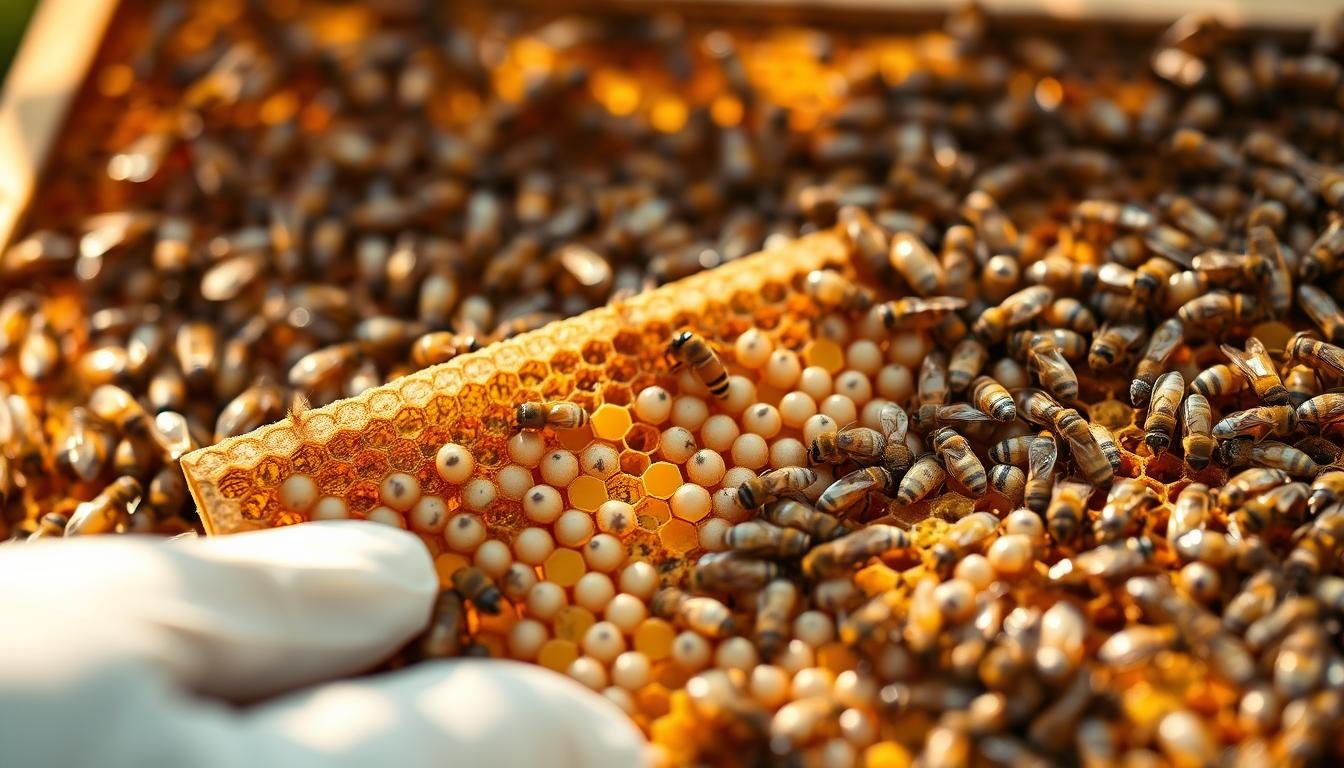
Targeted drone comb removal is a practical IPM method that uses pest preference to reduce varroa reproduction while limiting chemical use. This approach removes capped male brood where female parasites reproduce more per cycle because drones have a longer post-capping period than workers.
When paired with regular monitoring, such as an alcohol wash to measure mites per 100 bees, scheduled removal can hold infestations near or below action thresholds. Small-scale keepers may freeze and scrape frames; larger operations can use field cut-outs or trap frames like the Oliver design.
Start cycles in spring as drones appear and intensify through early summer to curb exponential population growth before late-season viral pressure. This technique fits into a broader IPM plan alongside screened bottom boards, powdered sugar, resistant stock, and timely soft treatments.
Key Takeaways
- Removing dedicated drone comb targets where varroa prefer to reproduce and reduces population growth.
- Accurate monitoring (alcohol wash) guides timing; aim for thresholds near 2 mites per 100 bees.
- Begin in spring and continue on a strict schedule through early summer to limit spread.
- Options range from hobby freezing and scraping to commercial field cut-outs and trap frames.
- Use this method as part of an IPM program; reserve hard chemicals as a last resort.
- See trial data and practical details at maximizing varroa mite control through drone brood.
Why Drone Brood Removal Works Against Varroa
Concentrating attention on male brood frames creates predictable capture points for parasites. Varroa destructor females seek cells where offspring can mature. Male capped periods run about 15 days, versus roughly 11 days in worker caps. That extra time yields more viable offspring per reproductive cycle.
Drone vs. worker: longer post‑capping and higher reproduction
Mites produce roughly 2.2–2.6 daughters in male pupae but only about 1.3–1.4 in worker pupae. The longer sealed period and larger cell size give mites more time and space to feed, mate, and emerge with mature daughters.
Mite preference and timing of cell entry
Mites prefer male cells at ratios commonly near 10:1. They enter during a narrow attractiveness window—about 40–50 hours for male larvae versus 15–30 hours for workers. Most entries occur around days 8–9 of larval development.
Practical takeaway: Concentrate male comb on dedicated frames. These predictable hotspots let beekeepers remove many parasites in one action, protecting worker colonies and supporting stronger adult bees during nectar flows.
- Watch cappings to gauge infestation density.
- Time frame removal to occur before mite daughters mature and emerge.
- Pair trapping with monitoring to validate effectiveness.
Assessing Your Hive: Monitor Mite Levels Before You Start
Begin monitoring early in the season to establish a clear baseline. Accurate, repeatable sampling tells you which colonies need action and when to schedule removals.
Alcohol wash vs. sugar roll: accuracy and when to use each
Start with an alcohol wash for the most reliable estimate. Sample about 300 adult bees from the brood nest to calculate mites per 100 bees.
The sugar roll is a low‑impact alternative. It is useful for frequent checks but can undercount compared with an alcohol wash.
Interpreting mites per 100 bees and action thresholds
Thresholds commonly target around 2 mites per 100 bees. Use local extension guidance to refine timing.
| Method | Sample | Accuracy | Best use |
|---|---|---|---|
| Alcohol wash | ~300 adult bees | High | Baseline and decisive checks |
| Sugar roll | ~300 adult bees | Moderate | Frequent, low‑impact checks |
| Sticky board | Hive‑level drop | Low (trend) | Supplement to traps and screened bottoms |
- Sample at least 20% of hives to estimate apiary risk.
- Standardize cohort, time of day, and frame location when sampling.
- Log results by colony to track trends and test management steps.
The Biology You Need to Time It Right
Syncing removal with the colony life cycle maximizes the number of parasites trapped under cappings. Drones develop over a 24-day window: about nine days as larvae, then roughly 15 days sealed. That sealed span explains why a four-week frame cycle works best.
Drone development timeline and the 24‑day window
Leave a dedicated frame in place a full four weeks. This allows an initial laying period plus complete development while still stopping emergence. Pulling at four weeks ensures reproducing varroa do not exit with adults.
Days 8–9 cell entry: maximizing trapping efficacy
Mites commonly enter cells around larval days 8–9. Because the queen lays progressively at the brood nest edge, frames hold staggered ages. That pattern extends the trapping window across several cohorts.
“Pull frames just before emergence to remove the highest density of reproducing parasites under the cappings.”
| Feature | Timeline | Action |
|---|---|---|
| Larval attractiveness | Days 8–9 | Peak entry; plan insertion early |
| Sealed development | ~15 days | Schedule removal before day 24 |
| Full cycle | 24 days total | Four‑week removal |
- Align early spring placement with the first wave of drone rearing.
- Inspect capping patterns to estimate the oldest emergence date.
- Use a calendar per hive to track insertion and removal dates precisely.
Tools and Materials: Frames, Drone Comb, and Basic Kit
A simple set of frames and a clear workflow shortens inspections and limits disease spread.
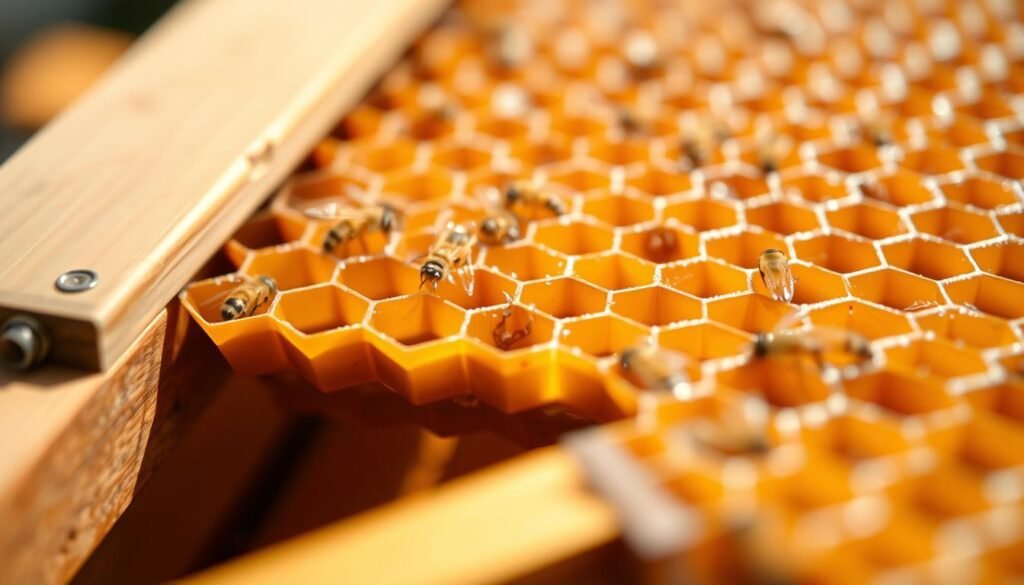
Plug‑and‑play green plastic drone comb gives predictable cell size and supports reliable four‑week cycles. These inserts clean easily and last multiple seasons. They work well where you want uniform trapping without extra shaping or repair.
Foundationless and cut‑out options
Foundationless or deep wooden frames let bees draw natural comb. Old comb may attract more varroa, which can help trapping but needs careful hygiene.
Handle options include scraping cappings with a fork, freezing frames then reusing, or quick field cut‑outs when time is short.
The Oliver trap concept
The Oliver trap frame uses a narrow worker foundation strip at the top to cue honey above and an open space below to concentrate drone brood. Tests show a fast ~15‑second cut‑out and reinsertion routine that keeps frames in the same colony to reduce cross‑hive spread.
“Return frames to their original hive whenever possible to limit pathogen transfer between colonies.”
| Option | Speed | Maintenance |
|---|---|---|
| Plastic drone comb | Fast plug‑and‑play | Washable, durable |
| Foundationless/cut‑out frames | Moderate; draws natural comb | Repair wood as needed |
| Oliver trap frame | Very fast field removal | Low; monitor honey placement |
- Practical kit: tote, hive tool, cappings fork, gloves, and a marked storage for returned frames.
- Place honey above the targeted section to keep brood lower and cut‑outs cleaner.
- Choose materials by operation size, time available, and personal workflow preferences.
Step‑by‑Step: Drone Brood Harvesting for Mite Control
Place the trap frame at the brood nest edge so the queen moves progressively across the comb. Mark the installation date on the top bar and record it in a yard calendar to keep cycles strict.
Placement and encouraging laying
Slide the marked frame into the nest margin where nurse bees cluster. This cue increases the chance the queen will use the cells within a few days.
Timing the pull to avoid emergence
Remove the frame after exactly four weeks: a brief laying window plus the 24‑day development. Inspect cappings in week three to confirm the oldest cohort and plan removal before any emergence.
Disposal: scraping, freezing, or heating
Choose a humane, efficient method that fits your workflow. Quick field scraping is fast; freezing at −18°C overnight kills sealed brood humanely and lets bees clean the comb when returned.
- Use a cappings fork to sample capped cells and check that the trap is intercepting mites.
- Oliver style cut-outs can remove a frame in ~15 seconds when time is limited.
- Always return the comb to the same hive when possible to reduce pathogen spread.
| Action | Timing | Benefit | Notes |
|---|---|---|---|
| Install frame | Early spring / when drones appear | Predictable laying | Mark top bar date |
| Inspect cappings | Week 3 | Estimate oldest cohort | Plan removal before emergence |
| Remove & dispose | Day 28 (4 weeks) | Removes reproducing mites | Scrape, freeze, heat, or Oliver cut-out |
Good discipline wins: missing the four‑week window lets parasitic individuals exit with adult drones and undoes gains.
Scheduling Strategies That Keep Mites Below Threshold
Set a simple calendar and stick to it. Well-timed frame removal slows parasite growth and protects honey production. Aim for a predictable routine during the active season.
Practical schedules that work
- One full frame per month: Low effort, effective at delaying growth 2–4 months when started in spring.
- Two frames per month: Better suppression; trials showed ~2.5% infestation and higher yields when run June–September.
- Alternate two frames every other week: Continuous trapping that keeps pressure steady and minimizes escapes.
Timing, monitoring, and colony logistics
Emphasize spring and early summer when colonies ramp up male rearing. Use routine checks to confirm mite levels remain under action thresholds as cycles progress.
| Schedule | Benefit | When to use |
|---|---|---|
| 1 frame / month | Low labor; delays growth 2–4 months | Small yards; spring start |
| 2 frames / month | Stronger suppression; may extend protection for a year | Larger operations; peak season |
| Alternate biweekly | Continuous trapping; steady pressure | When labor allows weekly visits |
Tip: Stagger insertion dates across colonies, coordinate labor by cohorts, and adjust pull dates by a day or two for storms—but don’t risk emergence.
Integrating Drone Brood Harvesting into IPM
A layered approach gives the best chance to keep varroa numbers low while protecting hive health. Position mechanical trapping as the backbone of an integrated program and add tactical tools around it.
Pairing with screened bottoms and sugar dusting
Screened bottom boards let fallen parasites exit the hive and lower reinfestation. Use them year-round to reduce return rates.
Powdered sugar dusting stimulates grooming and increases immediate drop. It works best during inspections and when combined with a screen below.
Brood breaks, resistant stock, and small‑cell comb
Planned brood interruptions (queen caging or removal ~3 weeks) force parasites onto adults, then follow with other measures.
Adopt VSH or Russian lines to reduce reproduction and boost hygienic removal. Evaluate small cell comb as an adjunct; it may shorten development and slightly reduce reproductive output.
- Sequence tactics: trap, induce drop with sugar, then apply a soft treatment if thresholds remain exceeded.
- Tailor the stack to each colony and monitor after every intervention.
- Return frames to the same hive and clean gear between yards to maintain biosecurity.
Practical note: rotate tools across the season to avoid resistance and align actions with colony biology.
Comb Management: Directing Where Bees Build Drones
Providing a targeted spot for comb construction helps guide where males develop and reduces random cells in the hive.
Install a dedicated drone comb at the brood nest edge so the queen moves onto it predictably. Colonies with trap frames produce far fewer volunteer drone cells when given a clear outlet.
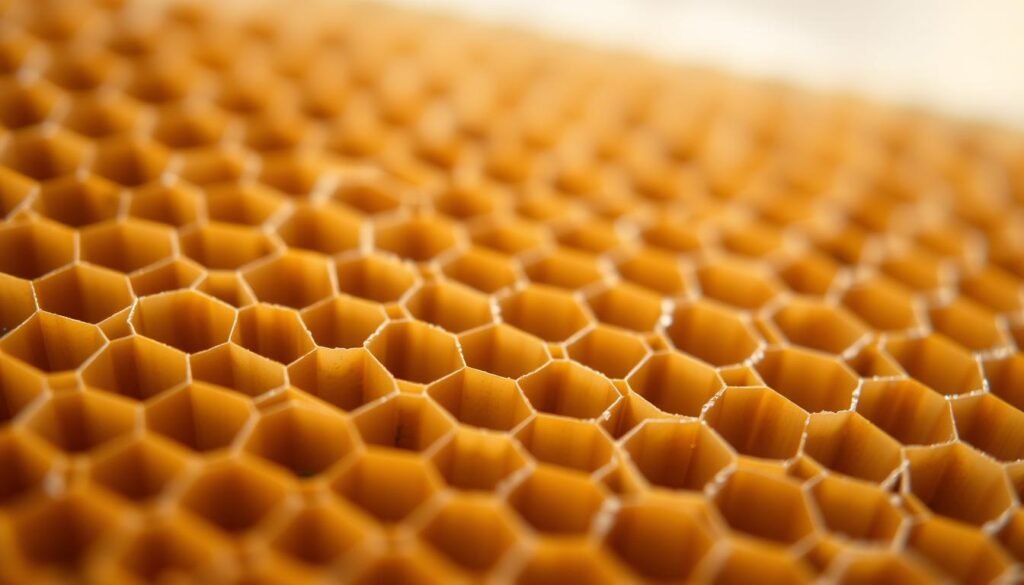
Keep a managed frame year‑round to channel production into one area. This cuts burr comb and bridges between boxes and makes inspections simpler.
- Place the frame consistently at the nest margin to cue the queen.
- Inspect the managed zone first to assess infestation and plan removals.
- Rotate or replace dark or damaged comb to keep drone cells workable.
- Bias genetic management by removing excess males in non‑breeder colonies.
“Controlled comb simplifies both harvesting and routine checks, and gives you a predictable place to act.”
| Action | Why it helps | Frequency | Note |
|---|---|---|---|
| Dedicated frame | Channels male production | Year‑round | Reduces burr comb between boxes |
| Consistent placement | Predictable queen laying | At installation | Mark top bar date |
| Rotate frames | Maintains comb quality | Annually or when dark | Return to same colonies when possible |
Document drone cell density over time to refine how much managed comb each colony needs. Good records make beekeeping decisions faster and more reliable.
Safety, Welfare, and Biosecurity Considerations
Handle frames calmly and deliberately to minimize disturbance and prevent accidental queen injury. Work near the brood nest gently and locate the queen if you suspect she may be on the frame you will remove.
Limit loss of developing bees by harvesting only the targeted area. Avoid taking large sections that include worker cells, especially during slow buildup.
Return removed frames to the same hive whenever possible. This practice reduces pathogen transfer between colonies and preserves the local microbiome of each colony.
Practical steps to protect colony health
- Work gently around the brood nest and pause if the queen is present.
- Track removal frequency so you do not over‑harvest and weaken a hive.
- Sanitize tools between yards and dispose of cut brood away from apiaries to limit robbing.
- Wear PPE and follow label directions if using chemical or heat disposal methods.
- Avoid opening colonies in cold or windy weather that could chill brood.
- Train helpers in safe handling to protect both bees and beekeepers.
- Document any observed brood loss or behavior changes after removals to refine timing.
- Use smoke sparingly near the frame to keep bees calm without stressing them.
Note: Trapping, when managed correctly, shows no negative effect on colony development or honey yield; missing scheduled removal, however, can allow varroa levels to rebound.
When and How to Add Soft Chemical Treatments
Introduce gentle chemical options only after you verify trapping and monitoring results. Use treatments as part of an integrated plan, not the first line of defense.
Oxalic acid during broodless periods
Oxalic acid vapor or dribble works best when little or no brood is present. It cleans up phoretic mites on adult bees with high efficacy.
Tip: Use oxalic acid in late fall or right after a planned brood break. Avoid repeated use and follow label directions to protect colony health.
Formic acid during moderate temperatures
Formic acid penetrates cappings and reaches mites inside sealed cells. It performs well when daytime highs are between 50–85°F.
Be cautious if temperatures exceed ~92°F in the first three days; the treatment can stress queens and cause brood loss. Avoid use below 50°F due to reduced efficacy.
Thymol and hop beta acids: constraints and expectations
Thymol products (ApiLife Var, Apiguard) do not penetrate cappings. They can reduce brood area and may trigger robbing if used during honey flows or very warm spells.
Hop beta acids (HopGuard 3) are allowed during nectar flow and work best with less brood. Multiple applications may be needed to reach target reductions.
Apply treatments only when monitoring shows thresholds exceeded despite mechanical measures, and re‑check counts 7–14 days after application to confirm success.
| Treatment | Best window | Key limits |
|---|---|---|
| Oxalic acid (vapor/dribble) | Broodless windows; post‑break or late fall | Avoid overuse; follow label; safe during nectar flow if labeled |
| Formic acid | Moderate temps (50–85°F) | Risk of brood or queen harm in high heat; low efficacy |
| Thymol (ApiLife Var, Apiguard) | Cooler, non‑flow periods | Doesn’t reach capped mites; avoid during honey flows/high temps |
| Hop beta acids (HopGuard 3) | During nectar flow; when brood low | Often multiple doses; lower efficacy with heavy brood |
Protect honey integrity by following product labels about use during nectar flow and super placement. Watch colonies closely in the first days after application, noting queen behavior and brood patterns.
- Pair oxalic acid with a brood break to maximize contact with phoretic mites.
- Adjust dosing to colony strength, brood presence, and ambient temperature.
- Keep detailed records of product, date, temperature, and outcome to refine timing.
Recognizing Limits and Common Pitfalls
Even small lapses in a timed removal schedule can reverse gains and let parasite numbers rebound quickly. Missing the four-week pull often means reproducing individuals emerge with adult drones and re-seed the apiary.
Key error to avoid: skipping the scheduled removal turns a trap into a breeding site. Inspect calendar marks and move frames on time to prevent that outcome.
Removal alone can fall short in high-pressure seasons. When brood area is abundant late in summer, traps may not catch enough to protect winter bees.
Do not rely only on sticky boards. They show trends but can miss colony-level spikes. Use alcohol washes to verify actual mites per 100 bees after each harvest.
- Keep worker space adequate; overemphasis on male comb can crowd worker brood and weaken colonies.
- Poor timing, inconsistent placement, or irregular checks invite reinfestation and loss of gains.
- Drifting and robbing move parasites between hives; apply yard-wide IPM and tighten schedules during nectar flows.
Practical step: run a post-harvest verification count. Confirm reductions immediately and plan adjunct measures if levels rebound.
Measuring Success: Records, Metrics, and Honey Production
Good records turn occasional checks into clear seasonal insight. Keep a simple log of sample dates, counts, and actions so trends are visible at a glance.
Track the basics each visit: use a standardized alcohol wash and note mites per 100 bees, the top bar installation and removal time, and honey supers weights.
Tracking mites per 100 bees across the season
Sample about 20% of colonies to infer yard‑level risk. Graph counts by colony to spot rising pressure and link any viral upticks to higher loads.
Yield impacts and swarming signals on frames
In one study, colonies with monthly replacement of two drone frames held mite levels near 2.5% and produced more honey than controls. Use the targeted frames as diagnostics: finding swarm cells on a removed frame is an early swarming signal.
- Maintain a season‑long log of mites per 100 bees using the same protocol each time.
- Record removal dates and any missed cycles to correlate schedule integrity with outcomes.
- Track honey extraction totals alongside weather and forage notes to contextualize yields.
“Compare treated and untreated cohorts when possible to quantify benefits and refine next season’s plan.”
Drone Brood Harvesting for Mite Control: U.S. Seasonal Game Plan
Early spring choices set the season. Allow the first male cohort if queens still need mating. That cohort often carries few varroa mites, especially after a winter cleanup. Start trapping cycles immediately after that window.
Early season: allow first cohort, then begin cycles
Begin monthly or alternating frame cycles as the nest ramps up. This strategy slows exponential growth before main nectar flows in late spring and early summer.
Late summer and fall: integrate chemical timing before winter bees
Re‑evaluate loads in late summer. If thresholds are exceeded, add a timed formic acid treatment when daytime highs are between 50–85°F to reach mites under cappings.
Aim to lower numbers before winter bee rearing. Fall reductions strongly influence overwinter survival. Consider a mid‑ to late‑summer brood break for persistently high colonies, then follow with a broodless cleanup in late fall.
- Keep yard calendars for insertion and pull dates.
- Time supering and removals to avoid disrupting honey bee production.
- Coordinate actions across all hives to limit reinfestation.
Core principle: trap early, monitor often, and treat only when monitoring shows action is needed.
Conclusion
A disciplined schedule that matches colony biology gives predictable reductions and steadier yields. Using targeted frames leverages varroa mite reproduction patterns to remove many reproducing individuals without harming honey production.
Keep a strict four-week pull cycle, monitor with alcohol washes, and pair traps with screened bottoms, sugar dusting, and resistant stock. Return removed comb to the same hive and handle brood areas gently to protect the queen and local microbiome.
Track results by hive, be ready to layer soft treatments when counts exceed thresholds, and accept that trap work may not suffice every season. A proactive, data-driven approach to controlling varroa supports healthier colonies and better overwintering. Adapt timing to local conditions and record outcomes so the program improves year to year.
FAQ
What is the main idea behind effective drone brood removal as a varroa strategy?
The method traps reproductive female varroa in larger male cells that stay capped longer. Beekeepers add or encourage drone comb at the brood nest edge, let mites enter drone pupal cells, then remove and destroy the infested comb before mites emerge. This reduces mite reproduction and lowers colony infestation when done regularly and paired with other measures.
Why are male brood cells preferred by varroa destructor?
Female varroa prefer male brood because the longer post‑capping period gives mites time to produce more offspring. A single mite can produce more viable daughters in these cells than in worker cells, so capturing these cycles removes a disproportionate share of the breeding population.
How should I check mite levels before starting removal cycles?
Use an alcohol wash or sugar roll to estimate mites per 100 adult bees. Alcohol washes give the most accurate count; sugar rolls are nonlethal and useful in the field. Compare results to action thresholds and repeat tests after interventions to track efficacy.
What thresholds indicate I should act?
Thresholds vary by region and management goals, but many beekeepers treat when counts exceed roughly 2–3 mites per 100 bees for commercial operations or 3–5 per 100 for hobby hives. Use lower thresholds before honey flow or winter preparation.
When during development should I remove capped male comb to maximize trapping?
Time removal before adult bees and mites emerge. Drone development from egg to adult averages about 24 days, with mite entry often on days 8–9 after egg laying. Remove comb around day 20–23 after placement to recover mites while still inside pupae.
How do I encourage queens to lay more male brood where I want it?
Place frames with larger cell foundation or plastic foundationless sheets at the brood nest edge and space them near existing drone patches. Reduce worker brood density in that spot and avoid placing frames too far from the queen’s usual areas so she will use them for drone laying.
What materials and frames work best for this technique?
Use plastic drone comb, foundationless frames fitted for larger cells, or cut‑out drone comb inserts. The Oliver trap frame—a removable frame that holds contiguous drone comb—speeds field removal and reduces disturbance.
How often should I cycle frames to keep mite populations down?
Many beekeepers run a monthly full‑frame cycle in spring and summer, or alternate two frames to maintain continuous trapping. Focus effort in spring through early summer when drone production and mite reproduction peak.
What are humane, practical ways to dispose of removed comb with live pupae?
Common methods include freezing frames for 24–48 hours, sealing and steaming, or heating brood comb where legal and safe. Scraping and feeding comb to livestock may spread disease, so follow biosecurity rules and local regulations.
Can this practice replace chemical treatments entirely?
No. While it reduces mite reproduction significantly, removal alone rarely eliminates varroa. Integrate with other IPM tools—screened bottom boards, brood breaks, selective stock like VSH or Russian—to keep populations under thresholds. Soft chemicals such as oxalic or formic acid may be timed to broodless windows.
How do I integrate soft chemical options with brood removal?
Use oxalic acid during broodless periods for strong adult mite knockdown. Apply formic acid when brood is present but temperatures are moderate, as it penetrates capped cells. Time chemical treatments after brood removal cycles to maximize impact and reduce reinfestation risk.
What common mistakes reduce the technique’s success?
Forgetting to remove frames in time lets mites complete a reproductive cycle. Returning heavily infested frames to other hives spreads mites. Overharvesting drone cells can stress colonies or harm future queen performance. Keep records and stick to a schedule.
How should I manage comb to direct where bees build male cells?
Offer larger‑cell foundation or foundationless frames at the brood nest edge and maintain consistent frame spacing. Rotate or remove frames that accumulate too much worker brood. Monitor and adjust placement seasonally to prevent unwanted drifting or swarming triggers.
Will removing male comb affect honey yield or colony strength?
Properly timed removal minimizes long‑term yield impacts. Short‑term losses of pupae are offset by healthier colonies that invest less energy coping with high varroa loads. Avoid excessive removal during nectar flows and reduce frequency if colonies show weakness.
What biosecurity steps should I follow when handling infested frames?
Never move heavily infested frames between operations. Sanitize tools and gloves, keep frames from different apiaries separated during disposal, and return frames only to the same hive when safe. Monitor for brood diseases before reusing comb.
How do I measure success after implementing this approach?
Track mites per 100 bees regularly, record the number of frames removed and dates, and watch for reduced autumn mite loads. Also note honey yield and colony overwinter survival to judge long‑term effectiveness.
When is the best seasonal timing in the U.S. to focus on this practice?
Begin cycles in spring after initial drone production, continue through early summer when mite reproduction peaks, and add a final cycle before fall chemical treatments. Adjust timing by regional climate and colony development.