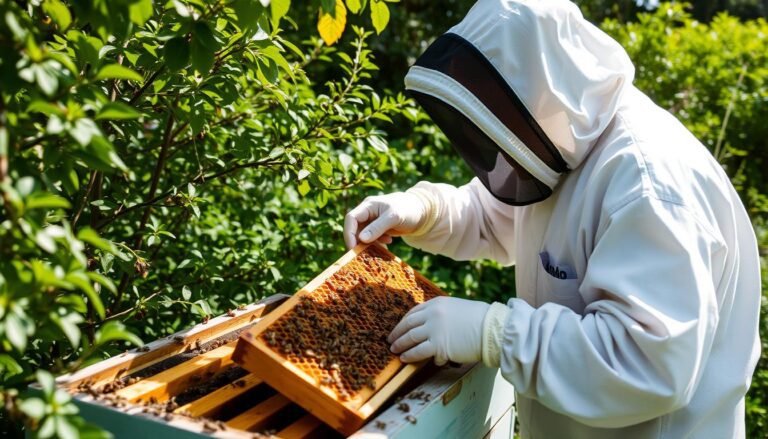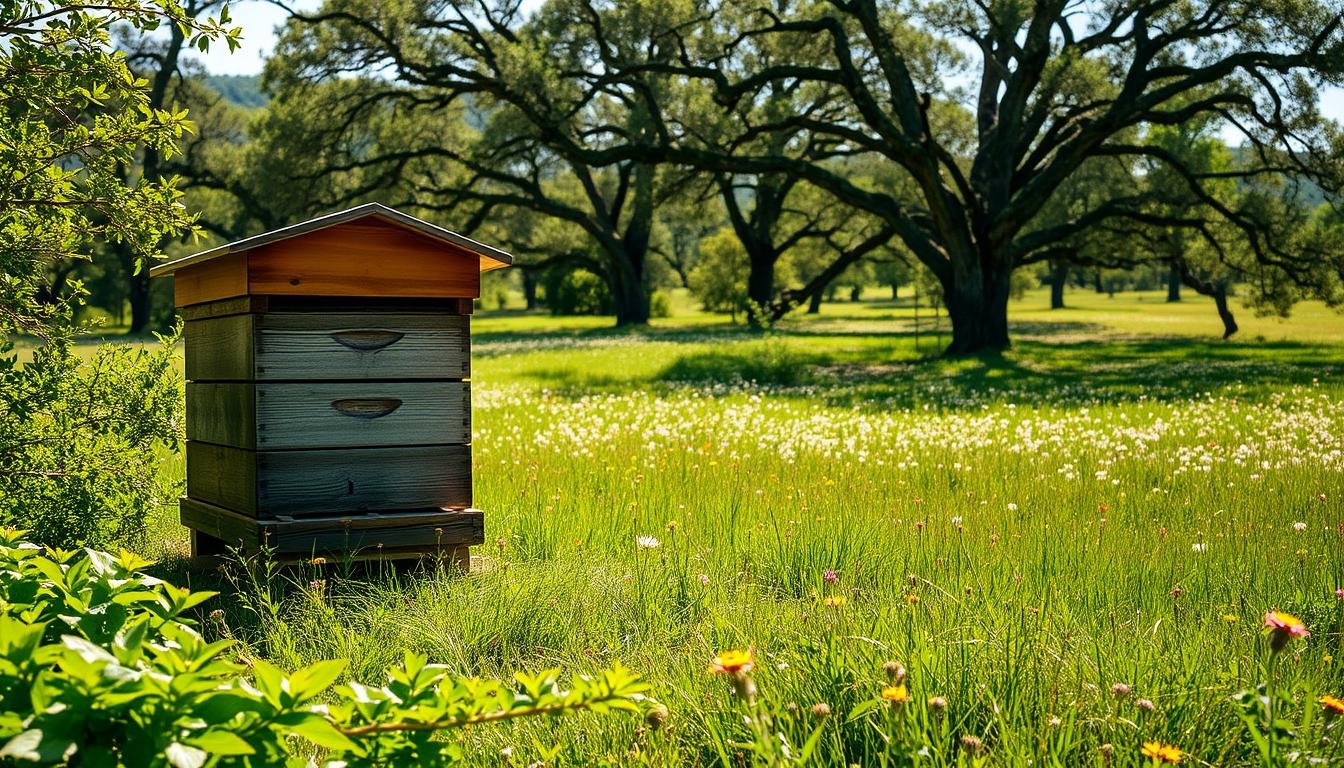
Choosing where to place a hive is one of the first and most important decisions for new and experienced beekeepers. A good site balances bee biology with real-world constraints on your property.
Sun exposure, a southeast-facing entrance, and wind protection help colonies stay healthy. Aim for a dry, level base—gravel with pavers works well—and leave a 10–15 ft clear flight path so bees avoid high-traffic areas.
Daily visibility and easy access make inspections and harvests simpler. Elevate the hive at least 12 inches, add windbreaks, and plan a safe water source to keep bees from using pools or pet bowls.
For regional examples and planning tips, see this practical guide on beekeeping resources and yard design: beekeeping resources and books.
Key Takeaways
- Prioritize sun, wind protection, and a level, dry base for hive health.
- Leave 10–15 ft clear flight paths and place hives where you check them daily.
- Elevate hives 12+ inches and add nearby water to guide bees safely.
- Design spacing to reduce conflicts with people and pets on the property.
- Consider local wildlife risks, like bears, and plan electric fences if needed.
Beehive placement: Step-by-step site selection in the United States
Plan the hive spot so bees leave on a rising path and avoid busy yards or walkways. Start by picturing how the insects will fly from the entrance. Simple choices now prevent conflicts later.
Understand the flight path
Keep 10–15 feet clear in front of each entrance so bees can climb up and out without hitting obstacles. Do not point the entrance at a sidewalk, driveway, neighbor’s yard, or the house unless you add a hedgerow or fence to lift the flight path above people.
Choose daily-access spots
Place hives where you can glance at them from your property each day. This helps you catch loose covers, tipped stands, or other storms quickly and act as a responsible beekeeper.
Plan workspace and logistics
Leave 2–3 feet of clear space around hive bodies for tools, smokers, and extra boxes. Think through how you’ll move full honey boxes to the house — wheelbarrow, cart, or vehicle — and avoid high-traffic areas used by kids or pets.
- Stagger hives so flight paths do not cross and keep at least 6 inches between units if space is tight.
- Mark apiary areas to keep people out of active flight areas during busy times.
Set hive orientation and entrance direction for productive mornings
A hive that warms quickly at dawn gives honey bees a head start on daily work. Face the entrance toward the southeast so the first rays reach the boxes early. This early sun speeds internal warm-up and often releases older foragers sooner.
Avoid directing entrances at sidewalks, driveways, or a neighbor’s yard. Low, direct flight paths bring bees through people zones. Use hedgerows, privacy fences, or trellises to make bees climb above head height right after they exit.
Factor wind and local microclimates
In much of the U.S., northwest winds are common. A southeast entrance reduces winter wind chill entering the brood area. Still, check your specific location—local breezes can differ.
- Keep the entrance away from high-traffic routes to lower conflicts.
- Rotate the hive slightly if prevailing gusts or reflected heat create problems.
- Observe morning flights and refine the direction through experience as a beekeeper.
Reassess after a season. Small adjustments often fix issues without moving the hive far. Ask local associations for tips that match your microclimate and neighborhood patterns.
Manage wind, sun, and shade by zone for healthier honey bees
Microclimate control around each hive makes a big difference for colony comfort and productivity. Assess prevailing gusts, daytime sun, and where shade falls between noon and 3 pm. Small fixes often reduce stress and improve foraging.

Create wind barriers that work
Assess site wind exposure and add a barrier where needed. Use an existing privacy fence, house wall, or tree line first.
If none exist, arrange angled pallets, hay bales with mouse guards, or short fencing to deflect gusts. These blocks help stop lids from shifting and protect brood from chill.
Match sun and shade to your USDA zone
Zones 1–6 usually benefit from full sun to warm the cluster. In zones 7–11 plan for midday shade so colonies avoid overheating and long bearding spells.
Dappled shade between noon and 3 pm reduces fanning and helps bees spend energy foraging instead of cooling the hive.
Winter tweaks and routine checks
Swap screened bottom boards for solid ones in winter to cut wind chill and conserve heat. Secure outer cover and inspect after storms so the cover stays snug.
- Use barrier locations to lift flight paths over neighbors.
- Avoid deep, continuous shade that can trap moisture and pests.
- Adjust temporary shade cloths or movable panels as seasons change.
Ground, level, and elevation: setting stable hives that stay dry
Start with firm, dry ground so a full hive does not sink or tip after rain. Avoid marshy spots that compress and unlevel boxes the first season.
Create a gravel-and-paver pad: excavate 4–6 inches, add compacted gravel and a paver base, then set large pavers and check they are level. This pad helps drainage and can disrupt small hive beetle larvae.
Tip: give the front a slight forward tilt to shed water from the landing board while keeping frames aligned.
Stands, blocks, and support
Raise each hive 12–18 inches on a sturdy stand. This deters skunks, reduces splash-back moisture, and eases inspections for the beekeeper’s back.
| Base type | Pros | Cons |
|---|---|---|
| Gravel + pavers | Good drainage, stable, local materials | Requires time to level |
| Concrete blocks | Rigid support, low cost | Can rock if not seated on pad |
| Steel stands | Durable, adjustable height | Higher upfront cost |
Re-check level after storms or when adding heavy boxes. On slopes, terrace individual sites to keep base material from washing away and maintain airflow at the bottom board.
Access, traffic, and space: keeping bees and people safe
Keep hive lanes clear so routine movement around the yard won’t trigger defensive behavior. Choose spots that separate daily activity from where bees fly. That reduces surprises for visitors and lowers stress on colonies.

Distance from busy areas
Where possible, set hives at least 20 feet from play areas, sidewalks, and driveways. Galena Farms advises this buffer to cut down on accidental encounters and loud disturbances.
Work space between units
Leave a minimum of 6 inches between hives, and aim for 2–3 feet when you can. That extra space gives beekeepers room to pry boxes, lift supers, and set tools without squeezing or reaching over open frames.
- Keep clear aisles on both sides of each hive so inspections are safe and efficient.
- Plan staging spots for smokers, gloves, and covers so nothing blocks entrances or creates trip hazards.
- Offset electric fencing from the working perimeter so you won’t back into energized wires while focused on frames.
- Train family and frequent visitors to avoid lingering in front of entrances; returning bees may queue and bump into people.
| Concern | Practical tip | Benefit |
|---|---|---|
| High foot traffic | Keep 20+ feet buffer | Fewer conflicts with people |
| Limited space | 2–3 ft between hives when possible | Easier inspections and tool handling |
| Electric fence | Set outside work aisles | Safer handling and fewer shocks |
Observe spring and honey-flow seasons. Bees expand and worker activity rises, so reassess space needs before adding boxes. For more detailed guidance on planning your apiary, see this apiary planning resource.
Water and forage: give bees nearby sources without creating problems
A nearby, reliable water source can keep colonies cool and focused on collecting nectar and pollen. Offer shallow basins with rocks or glass marbles so insects can land and drink safely. Place these a short walk from the hives but not directly in front of entrances.
Safe drinking and maintenance
Top up containers during heat spells. A single hive can use up to a gallon of water daily in summer. Clean and rotate several small dishes rather than relying on one large trough to prevent stagnation and algae buildup.
Forage, neighbors, and pesticide risk
Bees will choose the closest water and will visit pools or birdbaths if nothing better exists. Keep mind that nearby fields may be sprayed; site hives farther from treated crops when possible to reduce exposure to fumes and drift.
- Install shallow basins with rocks or marbles for safe landing zones.
- Refresh water often and place containers in sun to help scent cues while limiting algae.
- Support local forage with flowering plants so workers spend energy on nectar and pollen collection, not long flights.
- Communicate with neighbors who have pools and offer alternatives to direct bees toward your provided sources.
Backyard and urban beekeeping considerations, including fences and relocation
A well-planned backyard apiary balances neat landscaping with safe, clear flight paths for bees. Start by creating a compact, low-maintenance footprint so you and your neighbors coexist comfortably.
Design compact apiaries
Use landscape fabric under mulch to suppress weeds and reduce maintenance. Add a one-level retaining block or edging to stop washouts and keep run-off from flooding hive stands.
Electric fencing in bear country
Install the fence before introducing bees. Choose a solar charger (Parmak 6V is common), plastic insulators, sturdy posts, 15-gauge aluminum wire, simple gate handles, and three 6-foot grounding rods spaced 10 feet apart.
Rooftop and small-space setups
Pick sites with safe access. Avoid locations reached only by ladders, hatches, or fire escapes. You must be able to move heavy equipment and honey boxes without risk.
Commit to a spot and moving hives
When you must relocate, move hives a few feet per day within the yard, or shift them miles away temporarily to reset forager orientation before returning to a new final spot.
“Document decisions and track experience across seasons — small adjustments save headaches later.”
Conclusion
A stable, visible location saves time and prevents many common hive problems. Aim for a morning-facing entrance, a clear rising flight path, and wind barriers that match your property. These choices help bees warm quickly and let you check colonies each day with less stress.
Set hives on firm, drainable ground, raised about 12 inches, and give yourself workable space around boxes. Provide a nearby shallow water source with rocks or marbles so workers drink safely and skip pools or birdbaths.
Small tweaks matter: rotate a barrier, add shade for hot afternoons, or move a few feet to reset orientation. Thoughtful site work makes beekeeping more productive, keeps honey bees steady, and reduces conflicts with people and wildlife at home.
FAQ
How far should I keep the hive entrance clear for the bees’ flight path?
Keep at least 10–15 feet clear in front of the entrance. This gives worker bees a climb-out zone and reduces interactions with people at head height. Use hedges, fencing, or a low barrier to raise the flight path if your property is narrow or has a sidewalk nearby.
Where on my property should I place hives for daily checks and easy access?
Choose a spot you can see and reach every day, close to a service route and away from busy zones. A visible location helps spot swarming or predators early and makes routine inspections simpler. Ensure a 2–3 foot working space around hive bodies for lifting boxes and handling tools.
Which direction should hive entrances face for the most productive mornings?
Face entrances to the southeast when possible. Morning sun warms the colony earlier, encouraging earlier foraging and more productive daylight hours. Adjust slightly for local microclimates and prevailing winds so bees avoid blowing cold air into the hive.
How do I prevent bees from flying into neighbor areas or along walkways?
Avoid aiming entrances at sidewalks, driveways, or neighboring yards. Plant a hedge or put up a fence to lift the flight path above head height, or angle the entrance toward a low-traffic area. Clear signage for neighbors also reduces unwanted encounters.
What wind protection works best for healthy colonies?
Create wind barriers with a privacy fence, tree line, pallets, or stacked hay bales. These reduce wind chill and help maintain internal hive temperatures. In colder months swap screened bottom boards for solid ones to cut drafts and retain warmth.
How much sun and shade should I give hives depending on USDA zones?
In USDA zones 1–6, full sun is ideal to keep colonies active and dry. In zones 7–11 aim for morning sun with dappled shade by noon to 3 pm to prevent overheating and bee bearding. Tailor sun exposure to local summer temperatures.
How should I set up the ground and foundation so hives stay level and dry?
Build on dry, level ground and avoid marshy or low spots that sink after rain. Use pavers or a gravel base with paver base material for drainage and easier leveling. Raise hives 12–18 inches on stands to deter skunks and reduce moisture transfer from soil.
What spacing between hives and from people keeps inspections safe and efficient?
Keep hives out of high foot-traffic areas and at least 20 feet from busy zones. Leave 6 inches to 2–3 feet between hives so you can remove supers, use tools, and manage frames without bumping neighbors’ colonies.
How do I provide water for bees without creating a nuisance?
Offer a shallow water source with rocks, corks, or marbles so bees can land and drink without drowning. Place it near but not next to the hive and away from pools or areas where people gather. Monitor nearby agricultural fields for pesticide use that could contaminate forage.
What should I consider for urban or rooftop setups and small-space apiaries?
For compact or rooftop installations ensure safe, reinforced access for heavy equipment and secure footing. Use landscape fabric, mulch, and retaining blocks to control vegetation. Design the apiary so hives are easy to service and neighbors remain unaffected.
How do I protect hives from bears or larger predators?
In bear country install an electric fence with a reliable charger, properly spaced posts, insulators, grounding rods, and secure gates. Keep the area tidy to reduce attractants and use sturdy hive stands to make fence lines more effective.
Can I move a hive if I need to relocate it in my yard?
Commit to a site when possible. If you must move a hive, shift it only feet per day to keep foragers returning. For longer moves, transport hives at night with entrances secured, or temporarily relocate colonies for several miles to reset the foraging map.