Can a backyard truly become a reliable refuge for bees, butterflies, and honeybees all year long? This guide shows a friendly, practical way to turn small yards into thriving habitat that feeds and shelters pollinators across the season.
Start by planting mostly native plants—research suggests aiming for about 70–80% native species gives pollinators the nectar and pollen they prefer. Use trees and shrubs like serviceberry in spring and asters in fall to stretch your flowering window from early spring to late fall.
Group five to seven of the same species so bees show flower constancy, and add sunny, wind-sheltered spots plus shallow water basins with stones for landing. Don’t forget nesting: leave patches of bare ground and some hollow stems to support ground-nesting and cavity-using species.
For easy planting ideas and native plant lists, see this guide on native bee-friendly plants to help you plan a resilient, low-effort garden that benefits people and insects alike.
Key Takeaways
- Aim for 70–80% native plants to supply preferred nectar and pollen.
- Keep blooms from early spring to late fall for continuous food.
- Group plantings to help bees forage efficiently.
- Provide sunny, sheltered spots, shallow water, and nesting sites.
- Diverse flower shapes and colors attract different pollinators.
Why Bee-friendly landscapes matter and what success looks like
A thriving patch for pollinators combines food, shelter, and clean water so insects can complete their life cycles and your plants set more fruit and seed.
Benefits for pollinators and your garden: Robust access to nectar and pollen improves pollinator health and raises fruit set in small gardens. You’ll notice more frequent visits by bees and butterflies, fewer pest outbreaks thanks to beneficial insects, and stronger trees and ornamentals.
Core principles that drive success
Prioritize native plants to support a wide range of species across the season. Aim for early and late flowering types—serviceberry and wild columbine in spring, asters in fall—to close gaps when food is scarce.
Group five to seven of the same plant so bees forage efficiently. Provide a shallow water source with stones or corks for landings and change water often to cut disease risk.
Habitat, pesticides, and simple maintenance
Leave leaf litter, hollow stems, and brushy corners for nesting and overwintering. Avoid systemic pesticides like neonicotinoids; they can taint nectar and pollen and harm honeybees and native pollinators.
Small maintenance changes—mow less, skip routine sprays, and keep some debris—turn yards into resilient refuges. For ideas on getting started, see why become bee-friendly and check recommended plant lists at best plants for honeybees.
How to plan Bee-friendly landscapes step by step
Pick a sunny, sheltered spot in your yard to maximize visits and extend bloom time. Look for southeast-facing corners, warm edges, or spots buffered by hedges to create inviting microclimates for pollinators.
Know your site
Do a quick soil check: dig a small hole and feel the texture. Sandy, well-drained areas suit one set of plants; clay or wet pockets need different species. Match choices to soil and drainage to cut maintenance and watering time.
Planting strategy and timing
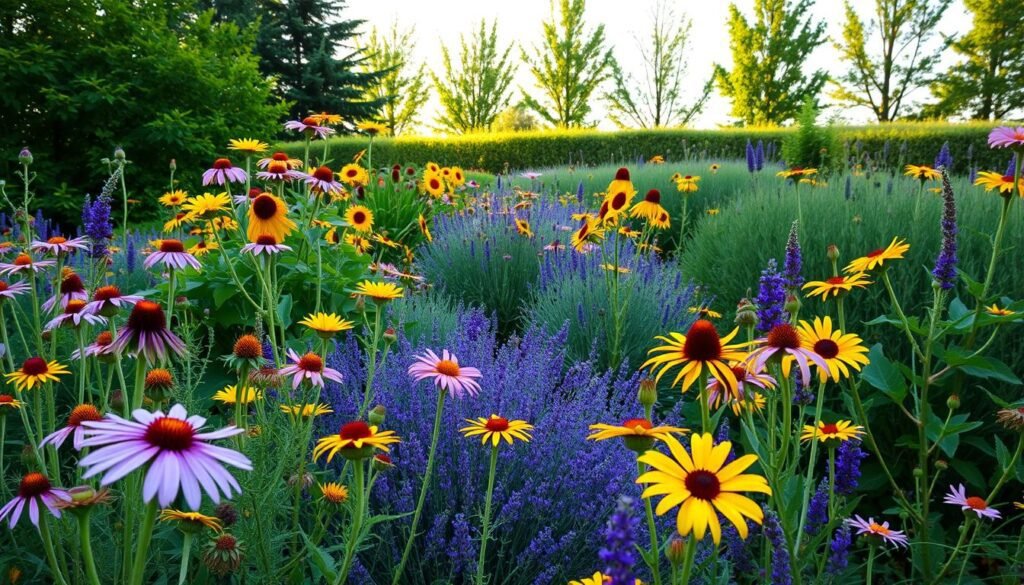
Favor native plants and avoid double-flowered or heavily hybridized cultivars. Use masses of five to seven of a species to help bees forage efficiently. Map a bloom calendar from early spring through fall to avoid seasonal gaps.
Seeds, nursery stock, and hosts
Seeds save money for large patches; sow in fall or late winter for natural stratification. Potted plants give quicker results—wait until frost risk passes. Ask growers about pesticide-free stock. Include milkweed and lupine as larval host plants and leave small ground patches undisturbed for nesting.
For seasonal timing and tasks, see the seasonal tasks guide.
Planting, water, and maintenance that keep pollinators coming back
Good planning makes a garden a steady refuge. Prep the site by removing patches of lawn, loosening compacted soil, and mixing in compost so plants establish quickly and support more pollinator visits. Apply mulch sparingly around transplants to suppress weeds but leave some bare ground for ground-nesting bees.
Prep the site
Convert lawn by cutting turf, loosening soil, and blending 1–2 inches of compost into the topsoil. This improves drainage and fertility so seeds and plugs take root faster.
Planting timing
Sow seeds in fall or try late-winter snow-sowing; freeze-thaw cycles help germination. For transplants, wait until after local frost dates, plant to the same depth as the pot, and backfill with native soil mixed with compost.
Create safe water sources
Use a shallow basin or birdbath with stones or corks as landing pads. Change the water daily to keep it fresh. A small muddy spot can act as a natural water source and mineral point for many pollinators.
Build habitat
Keep patches of bare ground, retain hollow stems and small brush piles, and reduce mowing to expand usable habitat. Milkweed and other host plants may need a season or two before they bloom—patience pays.
Skip pesticides and choose clean plants
Avoid systemic pesticides like neonicotinoids. Ask nurseries whether stock is treated and choose untreated plants when possible. If neighbors spray, talk with them or add buffer plantings to reduce drift.
| Task | When | Quick tip |
|---|---|---|
| Soil prep | Spring or fall | Loosen soil and add 1–2″ compost |
| Seed sowing | Fall or late winter | Cover lightly or snow-sow for freeze-thaw |
| Transplants | After frost risk passes | Plant to pot depth; mulch lightly |
| Water care | All season | Shallow basin with stones; change daily |
| Habitat maintenance | Year-round | Leave bare patches and stems; mow less |
Care rhythms: water consistently while plants establish, spot-weed, and expect some species to take time. For regional planting calendars and extra guidance, consult this pollinator garden guide.
Conclusion
A small, well-planned patch can turn a sunny corner into a year-round food and shelter source for pollinators. Match site and sun, favor native plants, and map flowering from early spring through fall to feed visiting bees and butterflies when they need it most.
Start small — one sunny bed or lawn edge — then expand. Group species to boost nectar and pollen access and place a shallow water source where insects warm in morning sun.
Choose pesticide-free stock, add trees and perennial plants, and include milkweed for caterpillars. Leave some cover and a brushy patch for nesting and let plants take time to establish.
The payoff: a healthier garden, more honeybees and pollinators across seasons, and a simple way to support local biodiversity.
FAQ
What makes a garden truly friendly to bees and other pollinators?
A successful pollinator garden uses mostly native plants that bloom across seasons, offers varied flower shapes and colors, provides safe water, and includes nesting sites like bare soil patches and stems. Avoiding pesticides and planting in sunny, sheltered locations also helps attract a wider range of bees, butterflies, and beneficial insects.
When is the best time to plant for spring bloom and long-season nectar?
For many native perennials and wildflower mixes, fall planting or late-winter sowing gives roots time to establish and yields stronger spring blooms. Transplants can go in after the last hard frost, while some seeds need cold stratification. Stagger plantings and choose species that flower from early spring through late fall for continuous nectar and pollen.
How do I choose native plants and avoid problematic cultivars?
Pick local native species listed by your state extension or native plant societies. Avoid double-flowered or heavily bred cultivars that often have less nectar and pollen. Look for single-form blooms and check plant labels or nursery policies to ensure they’re nursery-grown without systemic insecticides like neonicotinoids.
Can I convert part of my lawn without creating a lot of maintenance work?
Yes. Start small by replacing a lawn patch with a mixed planting of natives, mulch paths, and leave some meadow edges mowed lightly. Use sheet mulching or sod removal to prep the site, amend with compost if soil is poor, and choose durable species to reduce long-term upkeep. Over time, a smaller lawn and more planting beds save time and water.
What water features work best for bees and small pollinators?
Shallow basins, saucers, or birdbaths with sloped stones, corks, or pebbles let insects drink safely. Keep the water clean and changed regularly to prevent mosquitoes. In larger gardens, a small, slow-moving fountain or pond with shallow edges and rocks provides reliable hydration and microhabitats.
How do I support butterflies and other insects that need host plants?
Include specific host species like milkweed for monarch caterpillars, parsley or fennel for swallowtail larvae, and native grasses for skipper butterflies. Plant host patches near nectar sources and avoid removing plant stems and leaves in fall if they contain eggs or pupae—leave some brush and stems for shelter.
What soil and sun conditions should I look for when site-planning?
Most pollinator-friendly natives prefer full sun and well-drained soils, but many species tolerate partial shade or clay soils. Conduct a simple site assessment for sun exposure, wind breaks, and drainage. Choose plants adapted to your microclimate—this reduces irrigation and improves plant survival.
Are seed mixes or nursery plants a better option for creating habitat?
Both work. Seed mixes can be cost-effective for large areas and allow genetic diversity, but they take time to establish. Nursery transplants give immediate flowers and structure. Whichever route you take, source pesticide-free seed and plants from reputable nurseries or native plant sales to avoid chemical contamination.
How can I provide nesting habitat for ground-nesting bees and cavity nesters?
Preserve or create patches of bare, well-drained soil for ground-nesters by reducing mulch in small areas. Leave hollow stems, brush piles, and standing dead wood for cavity-nesting bees and beetles. You can also install pre-made bee hotels, but maintain them to avoid disease buildup.
What maintenance practices help keep pollinators healthy year-round?
Practice seasonal maintenance: deadhead selectively to extend blooms, leave some seedheads through winter for birds and seeds, and cut back stems in late winter to protect overwintering insects. Minimize pesticide use; if needed, apply spot treatments at dusk or dawn when pollinators are least active and choose targeted, least-toxic options.
How do I avoid harming pollinators with pesticides and drift?
Read labels, avoid systemic insecticides like neonicotinoids, and never spray during bloom. Use mechanical controls, hand removal, or biologicals when possible. Apply treatments in the evening or early morning and avoid windy days to minimize drift onto nectar sources and nearby gardens.
Can trees and shrubs be part of a pollinator plan? Which ones are best?
Absolutely. Flowering trees and shrubs like serviceberry (Amelanchier), redbud (Cercis canadensis), native cherry, elderberry, and willow provide early-season nectar and pollen. Include a mix of trees, shrubs, and herbaceous plants to offer layered habitat, nesting sites, and seasonal resources.
How do I measure success once I create a pollinator garden?
Success shows as increasing visits by bees, butterflies, hummingbirds, and beneficial insects, more seed set and fruit on garden plants, and visible nesting activity. Keep a simple journal or take photos through the seasons to track diversity and plant performance, and adjust plant choices and management based on observations.