Last Updated August 26, 2026
Choosing the right vessel helps keep honey fresh and flavorful. This short guide shows which materials shield honey from air and moisture and why seal quality matters.
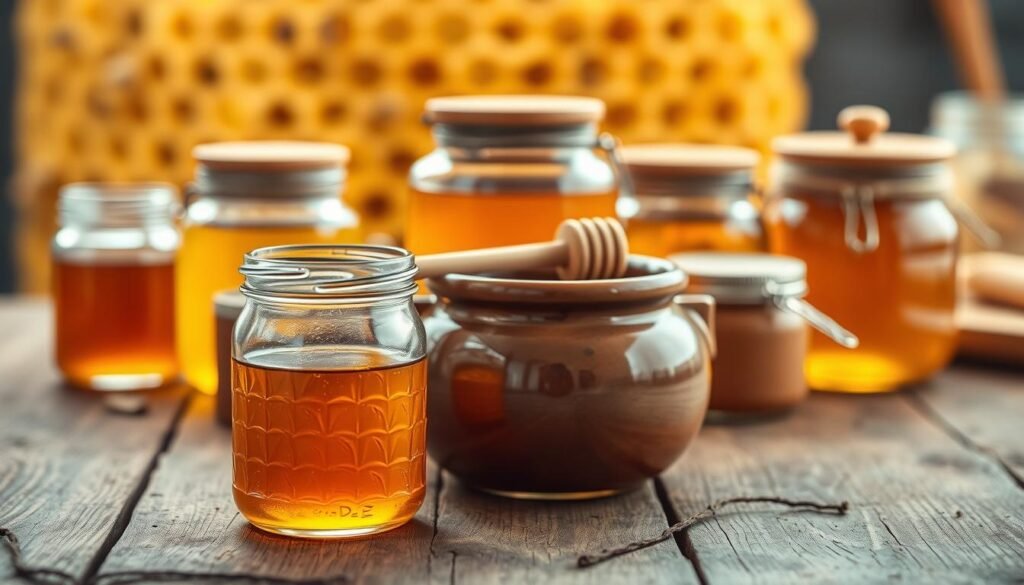
Glass jars and bottles are popular because they are inert and easy to clean. Clear glass also lets you check color and gently warm crystallized honey in a warm water bath.
Food‑grade plastic offers light, shatterproof options with tight lids. Look for BPA‑free plastics and secure seals to avoid leaks and off‑notes.
Ceramic pots and stainless steel also protect taste when non‑reactive finishes are used. Across all options, airtight seals and cool, dark places help preserve quality.
Brands like Ball, Mason, Weck, Tupperware, Rubbermaid, Lock & Lock, and Blue Sky Bee Supply give a range of sizes from small hex jars to one‑gallon jugs. Consider price, durability, and ease of use when you pick a solution.
Key Takeaways
- Airtight, non‑reactive vessels preserve flavor and quality over time.
- Glass jars are easy to sanitize and show color; warm gently to re‑liquefy.
- BPA‑free plastic is lightweight and shatterproof for daily use.
- Pick lids that seal well and store in cool, dark places to limit air and moisture.
- Compare capacity and lid type—wide mouths, bear bottles, and secure caps suit different needs.
Buyer’s guide overview: how to store honey right in the United States, today
Keeping honey at a steady room temperature near 70°F (21°C) and out of direct light is the simplest step to preserve flavor and quality over time.
Airtight, non‑reactive vessels prevent air and moisture from reaching the jar and reduce fermentation risk. Crystallization speeds up with sudden drops in temperature, so avoid cold spots in pantries.
Glass jars and BPA‑free plastic bottles with tight lids are common U.S. choices. Metal and glazed ceramic also work when interiors are non‑reactive. Brands like Ball, Mason, Weck, Lock & Lock, Rubbermaid, Tupperware, and Blue Sky Bee Supply are easy to find nationwide.
https://www.youtube.com/watch?v=Das8fVDGPL8
Price and availability often decide between reusable jars and single‑serve bottles. Squeeze bottles save time in busy kitchens and limit contamination of the main jar.
- Quick decision path: non‑reactive material + reliable lid + cool, dark location.
- Handling tip: always fill clean, dry jars and reseal promptly to keep honey fresh.
- Where to shop: check local stores or wholesale options via honey storage best practices.
Best container types for honey storage
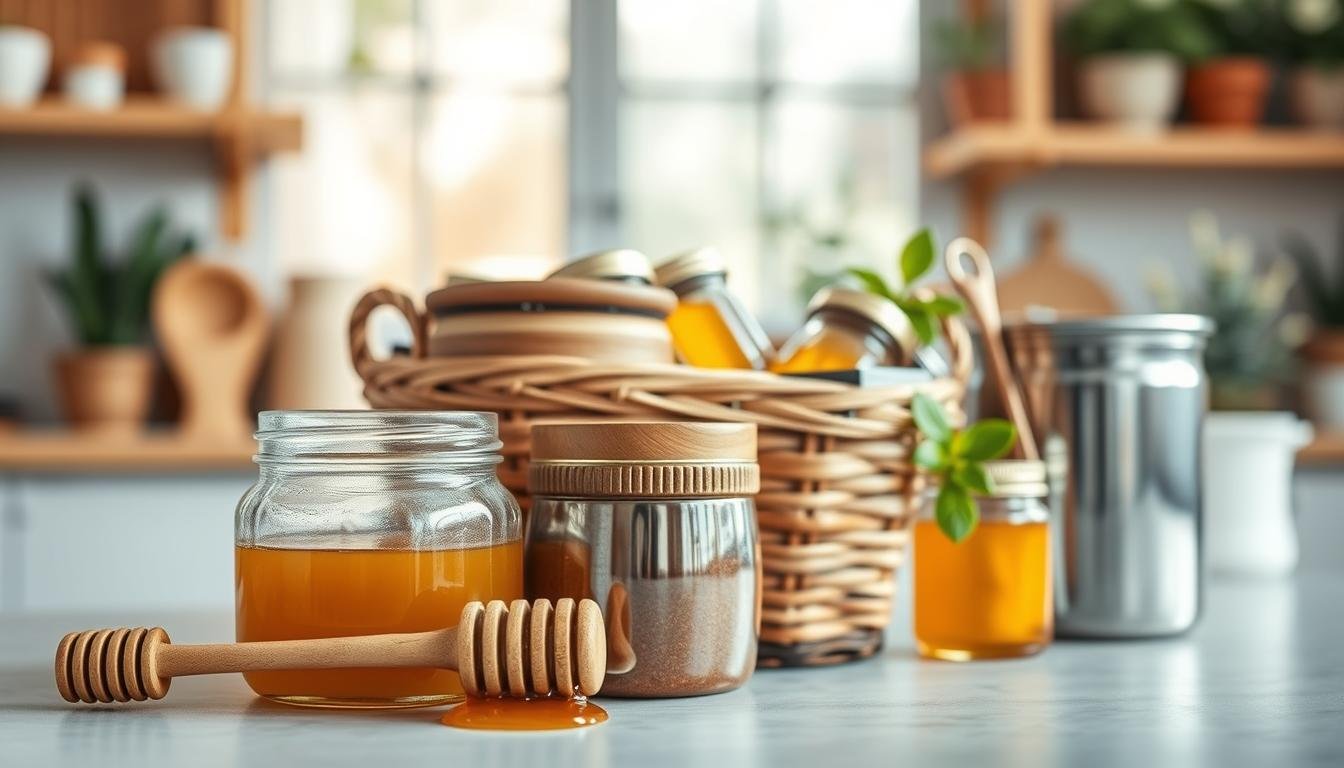
Control of air, moisture, and light makes the biggest difference in shelf life. Choose vessels that seal tightly, resist reaction with food, and match daily use or long‑term needs. Below are focused notes on seals, materials, and light protection.
Airtight seals to keep out moisture and air
Screw and lug lids with good gaskets limit air exchange and moisture absorption. Tight lids reduce oxidation and slow fermentation or crystallization. Choose caps that close firmly and check seals periodically.
Non‑reactive materials that protect flavor and quality
Glass is inert and easy to sanitize, and warm water in glass jars can re‑liquefy crystalized honey safely. BPA‑free plastic offers lightweight, shatterproof bottles for everyday use. Stainless steel resists corrosion and suits long‑term bulk needs; avoid reactive metals and porous finishes.
Light protection to preserve color, aroma, and taste
Exposure to light can degrade aroma and color. Use tinted or opaque containers, dark cabinets, or wrap clear jars. Wide and narrow mouth bottles and jars come in a range to match gifts, pantry staples, or wholesale solutions.
- Quick care: clean, dry, odor‑free containers and close lids promptly.
- U.S. shoppers: look for Ball, Mason, Lock & Lock, and Blue Sky Bee Supply for common options.
Glass jars for honey storage: clarity, inert safety, and versatile sizes
Kitchen jars made of glass pair visual appeal with reliable food safety and easy cleaning. Clear glass lets you check color and crystal formation. It is non‑reactive and preserves aroma and taste without imparting off‑notes.
Why glass excels
Glass offers an inert surface that resists staining and odors. It sanitizes easily and tolerates gentle re‑warming in a warm water bath (up to ~110°F) to clear crystallization while protecting flavor and quality.
Lid and seal options
Common systems include screw caps, lug lids (43–58 mm), and shrink bands. Each affects seal reliability and retail presentation. Check liners and replace compromised seals to limit air and moisture ingress.
| Closure | Seal reliability | Retail look |
|---|---|---|
| Screw cap | Good; wide availability | Casual pantry |
| Lug lid (43–58 mm) | Very good; tamper options | Display‑ready |
| Shrink band | Moderate; adds tamper evidence | Gift and retail |
Best uses and sizes
Match sizes (8–32 oz) to kitchen use or gifting. Blue Sky Bee Supply lists 1.5 fl oz Glass Hex, 12 oz Glass Bears, and embossed cylinders that suit retail. Weck, Ball, and Mason remain reliable pantry picks.
Practical tip: fill dry jars, avoid wet utensils, and close lids promptly to protect honey quality and limit moisture entry.
Food‑grade plastic containers and bear bottles: lightweight, durable options
Plastic bottles let you portion and pour quickly without the worry of broken glass in busy homes. Food‑grade plastic is light and shatterproof, which makes it ideal for families, travel, and outdoor use.
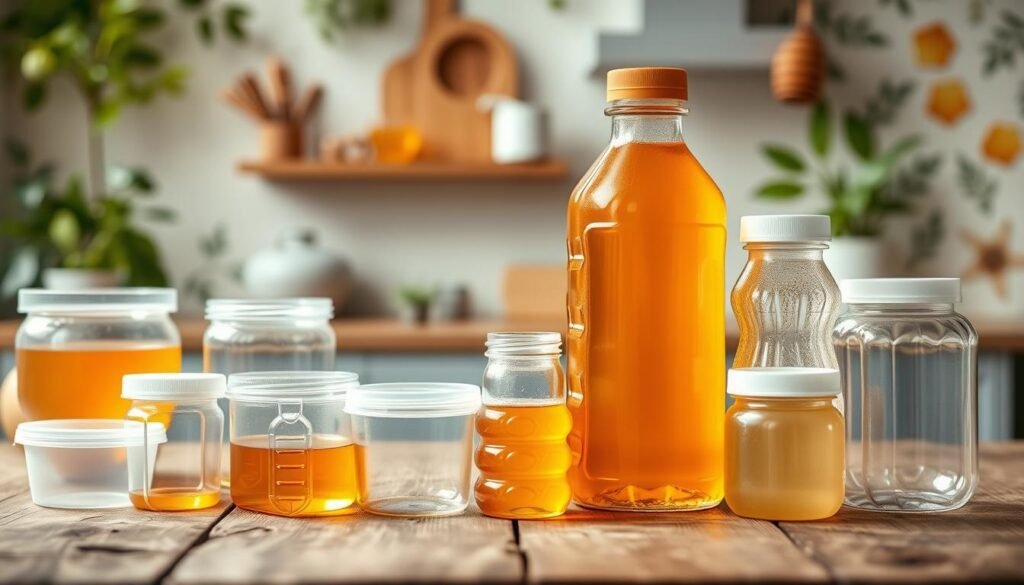
When plastic shines: shatterproof handling, travel, and family use
Use squeezers and bear bottles for quick dispensing at the table, in lunchboxes, or on trips. They are easier to drop and carry than jars or glass and save time when decanting bulk into daily bottles.
Safety first: BPA‑free choices, odor control, and warp avoidance
Choose BPA‑free plastics with tight lids to limit air and moisture intrusion. Store bottles away from strong odors and clean hands and utensils before filling to protect honey taste.
- Blue Sky Bee Supply offers Plastic Classics, hazy belly and panel bear bottles, and 1‑gallon jugs that suit different sizes and budgets.
- Buying in case counts cuts price per bottle and works well for bakers and backyard beekeepers.
- Reseal immediately and wipe threads after pouring to keep a reliable seal over time.
Practical note: plastic trades glass clarity for portability. Keep warm heat sources away to avoid warp and use glass if you need to re‑warm crystallized honey.
Ceramic honey pots: glazed, food‑safe, and display‑ready storage
Ceramic pots can be a lovely serving option when the interior glaze is fully sealed and food‑safe. Use them on the table for short-term jars and quick access rather than long-term keeping.
Glazing matters: a complete, non‑porous glaze prevents absorption and preserves taste and quality. Unglazed or cracked interiors can trap moisture and odors, which harms flavor over time.
Best practices: always scoop with a clean, dry utensil and reseal the lid promptly to limit air and moisture. Keep pots away from direct light and heat to protect aroma and color.
Care, fit, and practical notes
Choose pots with snug lids; the tighter the fit, the less drying and contamination between uses. Smaller sizes reduce repeated exposure when entertaining.
- Compare ceramic to glass and plastic: ceramic is attractive and reusable, glass is easiest to warm, and plastic offers lightweight handling.
- Avoid heating pottery directly—decant to a glass jar for gentle warm‑water de‑crystallization.
- Hand wash, dry completely, and store away from strong odors.
For decorative serving or gifts, consider artisan pots and view curated options like ceramic honey pots that balance price and presentation.
Stainless steel and other metal containers: long‑term and bulk honey storage
For scale operations, robust stainless options cut handling risk and simplify sanitation routines.
Stainless vs. other metals: corrosion resistance and non‑reactivity
Stainless steel resists corrosion and does not react with sugars or acids, which helps preserve flavor and quality over time.
Avoid reactive alloys like raw copper or unlined steel that can alter taste and darken product. Choose food‑grade finishes and smooth welds to limit crevices where residue can collect.
Bulk storage considerations: secure lids, stackability, and temperature stability
Pick vessels with airtight, tamper‑evident lids and robust seals. Stackable jugs and tubs save space and speed handling in busy packing areas.
Keep bulk units in a cool, stable area to limit moisture uptake and slow crystallization. Plan transfers into retail bottles or jars when orders require smaller portions.
| Metal | Corrosion resistance | Sanitation |
|---|---|---|
| Stainless | High | Easy; non‑porous |
| Aluminum (lined) | Moderate | Acceptable if food‑safe lining used |
| Unlined steel/copper | Low | Poor; may react |
- Practical accessories: tamper seals, labeling systems, and drain valves streamline packing and compliance.
- Avoid dents or cracked welds — they trap moisture and residues and reduce seal effectiveness.
- Assess price and time: tanks cost more up front but lower per‑unit labor for perfect bulk operations.
Mid‑scale beekeeping and brands often find stainless jugs and tubs economical. Blue Sky Bee Supply lists several bulk‑friendly solutions that suit filling and transport needs.
stainless steel guidance can help verify material specs and best practices before investing in large vessels.
How to choose the right container: size, lids, materials, and price
Select shapes that suit shelves and tasks — wide mouths for scooping, narrow necks for pouring.
Size and shape
Match sizes to use: large jugs for bulk and small jars or bottles for daily access. Wide‑mouth glass jars make spooning simple. Tall profiles pour neatly; flat profiles fit shallow shelves and gift boxes.
Closure quality
Check lids and gaskets. Screw caps and lug lids seal well; locking lids and shrink bands add tamper evidence. A tight seal reduces air exchange and keeps honey quality high.
Price, availability, and sourcing
Balance per‑unit price with durability. Glass jars cost more but reheat safely. Plastic bottles are lighter and cheaper; verify BPA‑free labels. Blue Sky Bee Supply and common U.S. brands offer a wide range of bottles, glass jars, and gallon jugs at case discounts.
| Feature | Glass | Plastic | Metal |
|---|---|---|---|
| Reheat/crystallization | Good | Not ideal | Requires transfer |
| Break resistance | Low | High | High |
| Price per item | Moderate–High | Low–Moderate | Moderate–High |
- Build a kit: one bulk vessel plus smaller daily bottles to keep honey fresh.
- QA checks: test gasket condition, cap torque, and fill only dry, odor‑free items.
- Compare lifecycle costs: reuse, break risk, and long‑term seal performance guide the final pick.
Storing honey properly: temperature, light, and common issues
A stable pantry at about 70°F (21°C) keeps flavor intact and slows unwanted changes. Keep jars away from direct light and sudden temperature swings to preserve texture, aroma, and color.
Crystallization is natural and speeds up at cooler temps. To re‑liquefy, place a glass jar in warm water and stir gently. Never microwave or overheat a jar — overheating harms honey taste and nutrients.
Moisture invites fermentation. Always use dry jars and utensils. Seal lids firmly and inspect threads and gaskets to limit air ingress.
Plastic bottles are fine for daily use, but avoid strong odors; plastic can absorb smells and change flavor. Use glass jars when you plan to warm or test the product.
- Troubleshooting: graininess = gentle warm‑water bath; layers or separation = warm and stir; off‑aroma or foaming = check for moisture and discard if sour.
- Label jars with fill date and floral source to track age and honey quality over time.
- Price tip: buy bulk, then portion into smaller glass jars for daily use to cut waste and lower price per unit.
Avoid reactive metals and never add water while filling. For more detailed guidance on how to store honey, see how to store honey.
Recommended honey containers and brands available in the US
Pick vessels that fit your workflow: retail-ready jars, squeeze bottles for quick dispensing, and large jugs for bulk handling.
Top glass picks
Ball, Mason, and Weck offer canning-grade glass jars that hold up to repeated use. Small hex jars (1.5 fl oz), skep and cylinder designs, and wide-mouth 12–16 oz options work well for retail presentation and gentle re-warming.
Top plastic and bottle choices
Tupperware, Rubbermaid, and Lock & Lock supply BPA-free plastic that resists breakage and seals tightly. Classic bear bottles come in multiple sizes and case counts to suit roadside stands and family kitchens.
Bulk and beekeeping solutions
Blue Sky Bee Supply sells 1-gallon plastic jugs with lids, creamed tubs, and wholesale pallets. These products speed packing and lower per-unit price when you buy in cases.
| Product group | Common sizes | Key feature |
|---|---|---|
| Glass jars | 1.5 oz hex, 12 oz bear, 12 oz skep, 16 oz cylinder | Reusable, reheat-safe, lug/shrink options |
| Plastic bottles | Bear bottles (various), 16 oz squeezers, 1-gallon jugs | Shatterproof, BPA-free, easy pour |
| Bulk beekeeping | 5–55 lb tubs, 1-gallon jugs, case/pallet counts | Airtight lids, consistent sizing, lower price per unit |
- Packaging notes: check LUG diameters (43–58 mm) and cap compatibility before ordering.
- Price guidance: buying cases reduces per-item price; compare reuse life and break risk when calculating value.
- Handling tip: keep lids and bands dry and avoid moisture air exposure while filling.
- Perfect bulk honey pathway: buy bulk, then portion into retail jars or squeeze bottles to simplify sales and cut waste.
Conclusion
A reliable seal and steady pantry temperature make the biggest difference in flavor. Choose airtight, non‑reactive jars or BPA‑free plastic bottles and store them in a cool, dark place to keep honey tasting fresh over time.
Practical solution: pair a bulk vessel with smaller daily bottles to reduce exposure and waste. Check seals regularly, replace worn lids, and handle with dry utensils to avoid moisture air problems that can cause fermentation.
Glass works best for gentle re‑warming in a warm water bath; plastic offers lightweight, low‑price options for travel and daily use. Compare packaging and price, then pick the mix of products that fits home, gifting, or beekeeping needs.
Ready to act? See more on the best container to store honey and choose the right solution to keep honey easy to pour and full of flavor.
FAQ
What are the safest materials to keep honey fresh and preserve flavor?
Use non‑reactive materials such as glass, food‑grade stainless steel, or fully glazed ceramic. These options resist scent absorption and chemical reactions that can alter taste. If you choose plastic, pick BPA‑free, food‑grade types designed to avoid warping and odor transfer.
How important is an airtight seal and which lid types work best?
An airtight seal is crucial to keep moisture and airborne yeast out. Screw caps, lug lids with rubber gaskets, and locking lids with silicone seals all provide reliable closure. Shrink bands add tamper evidence and extra protection during transport and retail sale.
Does light affect honey quality, and which solutions reduce that risk?
Yes. UV and strong light can darken honey and dull aroma. Store jars in dark cupboards or use amber or opaque containers. Decorative clear glass is fine if kept away from windows and direct lighting.
Are glass jars better than plastic for long‑term storage?
Glass is inert, easy to sanitize, and keeps flavor stable over time, making it ideal for long‑term and retail storage. Plastic works well for short‑term use, travel, or families with children because it’s lightweight and shatterproof—just ensure it’s food‑grade and BPA‑free.
How should bulk honey be stored by beekeepers or retailers?
Use food‑grade stainless steel drums, heavy‑duty plastic food jugs, or sealed HDPE buckets. Ensure lids seal tightly, containers are stackable for space efficiency, and the storage area stays at stable room temperature to limit crystallization and fermentation risk.
What container sizes and shapes are most practical for kitchen use?
Common household sizes range from 8 to 32 ounces in wide‑mouth jars or squeezable tall bottles. Wide mouths make scooping easier; narrow, squeezable bottles control dispensing. Choose shapes that fit pantry shelves and match typical serving needs.
How do I handle crystallized honey without damaging the container?
Warm jars gently in a water bath at low heat until crystals dissolve. Glass and glazed ceramic tolerate this well. Avoid microwaving or overheating plastic, which can warp or release odors. Always keep lids slightly loosened during gentle warming if using heat.
Are ceramic honey pots a practical choice or just decorative?
Glazed, food‑safe ceramic pots are both functional and attractive. A non‑porous glaze prevents absorption and makes scooping easy. They’re best for countertop display and short‑term use, provided they have a tight‑fitting lid to keep air out.
Can metal containers cause honey to spoil or change taste?
Choose stainless steel or other food‑grade, corrosion‑resistant metals. Reactive metals like plain aluminum or uncoated tin can affect flavor and should be avoided. Properly finished steel containers are excellent for bulk storage and transport.
How do I prevent fermentation or moisture problems in stored honey?
Keep honey in dry, airtight containers and store at stable room temperature below 77°F (25°C). Avoid introducing wet utensils and ensure lids seal tightly. If honey becomes foamy or smells sour, fermentation may have started and should be discarded.
Which US brands offer reliable packaging and supplies for home and commercial use?
Reputable glass options include Ball, Mason, and Weck. For plastic, look at Tupperware, Rubbermaid, and Lock & Lock, plus classic bear bottles from trusted retailers. Beekeeping and bulk supplies are available from Blue Sky Bee Supply and other specialized distributors.
What should I consider when choosing between price and durability?
Balance initial cost with expected use. Glass and stainless steel cost more up front but last longer and preserve quality. Food‑grade plastics are cheaper and practical for travel or children. Factor in seal quality, ease of cleaning, and US availability when budgeting.