This guide explains how honey bees survive cold months and how careful beekeeping reduces losses.
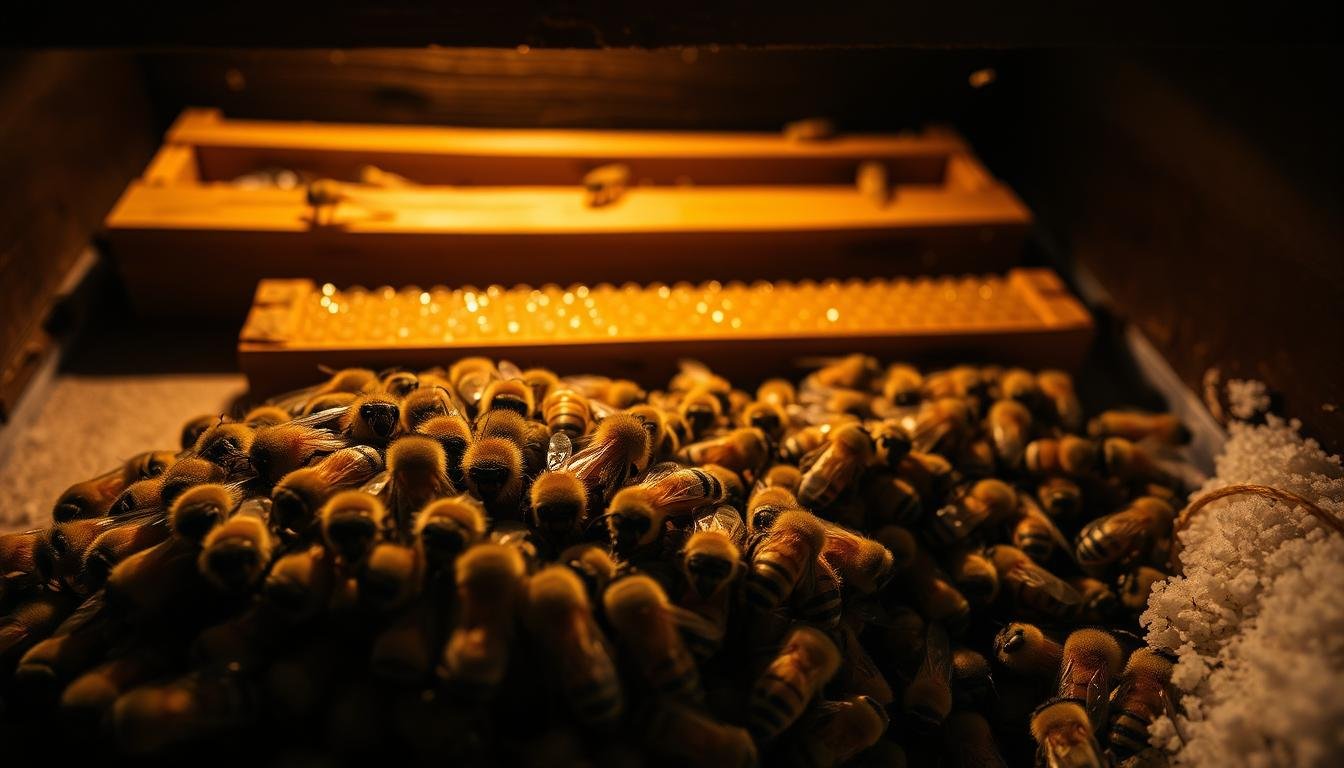
The colony forms a tight cluster with the queen near the warm center. Workers shiver flight muscles to raise temperature. They eat honey and move through frames to access food.
On mild days, workers take short cleansing flights. Losses can be high: U.S. managed colonies saw roughly 32.2% winter loss in 2021. Smart fall preparation and varroa control cut that risk.
Ventilation, adequate stores, and regional choices about wrapping affect moisture and survival. This article previews cluster biology, frame coverage, emergency feeding, and minimal inspections to help beekeepers plan for spring.
For a seasonal planning reference, see a practical beekeeping calendar to align fall actions with local climate.
Key Takeaways
- Honey bees form a warm cluster and consume honey to survive cold weather.
- The queen stays near the cluster center where temperatures reach about 90–100°F.
- Bees do not hibernate; they generate heat by muscle movement and take short flights on warm days.
- Proper fall varroa treatment and adequate stores are critical to reduce winter losses.
- Ventilation and moisture control, plus region-based wrapping decisions, affect outcomes.
- Emergency feeding and minimal inspections help colonies reach spring strong.
Understanding the goal: keep the colony warm, fed, and healthy through winter
Winter’s mission is simple: preserve a stable cluster, protect the queen and brood, and ration honey so the group can generate steady heat.
The colony’s survival rests on two basics: a compact cluster that conserves warmth and enough stores of food to fuel muscle-generated heat. A cohesive cluster shields inner workers and keeps the core near 90–100°F where the queen stays viable.
Beekeepers support this mission by confirming late-season weight, arranging frames so bees can move upward as they consume reserves, and using shims or small notches to reduce condensation risk. Proper ventilation helps prevent damp that can weaken the colony.
Low fall disease loads reduce energy drain and improve odds through the cold months. Heavy feeding is wise where natural honey is low; otherwise, colonies can starve despite nearby stores when temperatures limit movement.
Success begins in autumn: healthy populations and solid food reserves create a resilient colony that can generate heat efficiently. During the cold spell, keep checks minimal and avoid breaking the cluster unless conditions allow safe, quick inspections.
How honey bees behave when winter approaches
Late summer marks a biological pivot: short-lived summer workers are replaced by hardy winter bees. These winter bees grow larger fat bodies and live about six months, compared with roughly six weeks for summer workers.
As fall progresses, colonies cut nonessential mouths to feed. Drones are removed because mating flights end and resources must stretch toward survival.
Foraging fades and entrance activity drops. The group reorganizes into a tight cluster over accessible frames and honey stores to conserve warmth and energy.
Inside the cluster, winter bees maintain heat, exchange food, and tend limited brood when conditions allow. Their physiology and behavior set the stage for early spring buildup.
On warm, calm days, occasional cleansing flights let workers clear wastes. Otherwise, most activity stays internal to protect the cluster and conserve honey.
| Feature | Summer workers | Winter bees |
|---|---|---|
| Lifespan | ~6 weeks | ~6 months |
| Fat reserves | Smaller | Larger (supports thermoregulation) |
| Primary role | Foraging and brood care | Heat maintenance and food sharing |
| Activity at entrance | High | Low (few flights) |
Inside the winter cluster: mantel, inner core, and steady heat
A winter cluster layers workers to hold warmth where it matters most.
Outer mantel bees pack tightly to form an insulating shell, while a looser inner core circulates and feeds. The queen stays near the warm center so brood and her survival are protected.
Outer mantel vs. inner core: how bees insulate and circulate
The mantel adjusts thickness with ambient chill. Bees rotate between shell and core to share the load and avoid chilling out on the surface.
Circulation lets inner workers move to frames of honey. Thoughtful frame placement helps the group move upward as stores are used without risky lateral shifts.
Flight muscles as tiny furnaces: heat without flying
Bees generate heat by contracting flight muscles while stationary. These rapid muscle pulses act like many tiny furnaces and keep the center warm without wing movement.
Core temperature targets and survival thresholds
The inner core aims for about 93–100°F to protect the queen and any brood. If that core falls below roughly 55°F, survival drops sharply.
The outside shell should stay above about 46°F to prevent immobilization and falling from the cluster. Stable warmth also reduces condensation risk and protects comb and stores.
- Cluster architecture: tight mantel, dynamic core.
- Heat source: shivering flight muscles, continuous honey access.
- Management tip: position frames so upward movement is easy and moisture stays away from the center. See a seasonal checklist at seasonal beekeeping tasks.
Key temperatures and what happens at each stage
Temperature shifts drive a predictable tightening of the cluster as days cool. Use these benchmarks to read colony condition and plan actions.
When clustering starts and becomes compact
Clustering begins around 64–65°F as movement slows and workers gather. By about 57°F, the outer layer forms a firm insulating shell.
How frame coverage changes with colder degrees
At roughly 41°F, the cluster typically spans 8–10 frames. Near 28°F, coverage tightens to 6–8 frames.
When temperatures fall to about 7°F, expect 4–6 frames. In extreme cold near -15°F, only 2–3 frames may remain occupied.
Muscles, critical thresholds, and practical takeaways
Outer shell workers begin shivering thoracic muscles near 23°F to add heat without flight. That action helps stabilize the inner core and center.
Minimum safe values: inner core should stay above about 55°F, and the outer shell should remain near or above 46°F to keep mobility and survival odds high.
- Practical tip: watch cluster contraction to decide when to limit inspections and place supplemental honey or fondant near the center.
- Risk note: misjudging these stages can chill brood or expose the colony to fatal cold.
- Goal: maintain a steady center temperature close to 93–100°F so the queen and any brood remain protected.
What Bees Do in Winter Inside the Hive
A tight living mass forms as temperatures drop, concentrating warmth where it’s most needed.
Form tight clusters and rotate positions to share heat
Honey bees gather into a compact cluster. Outer workers act as insulation while inner ones keep the queen warm.
Individuals rotate between mantel and core to avoid chilling and to share energy demands.
Consume honey stores and move upward between frames
The group feeds steadily on stored honey and advances upward through frames rather than shifting sideways.
This methodical movement preserves thermal balance and keeps stored food accessible as fuel for muscle-generated heat.
Take cleansing flights on warm days when conditions allow
On brief mild days some workers leave for short cleansing flights, but entrance activity stays low most of the time.
“A compact cluster protects the queen and inner workers while the outer layer insulates.”
- Beekeepers should place emergency feed above the cluster, not to the side.
- Avoid long inspections that disturb temperature stability.
Food and energy: how colonies use honey stores during cold months
A hive’s winter success comes down to stored calories and how easily the cluster can reach them.
A healthy colony may use roughly 30–90 pounds of honey over a cold season, depending on climate and size. Track weight so you know if a group trends light.

Typical consumption ranges and why weight matters
Heft hives or fit scales to detect declines before a crisis. In colder regions expect higher use; milder areas need less. Summer and fall nectar flows set reserve levels for winter.
Why starvation can occur even with honey nearby
Sometimes the cluster cannot move laterally to reach adjacent frames during extreme cold. That blocks access and leads to starvation despite nearby stores.
“Place feed above the cluster so bees can reach it without breaking thermal balance.”
- Emergency feeding: offer sugar syrup only in warm spells; use fondant or candy boards when cold.
- Frame layout: ensure an upward path into honey to avoid risky lateral moves.
- Goal: keep enough energy for steady heat until spring forage begins.
| Item | When to use | Notes |
|---|---|---|
| Sugar syrup | Warm days, temps above freezing | Quick energy but risks chilling if too cold |
| Fondant / candy | Cold periods | Solid feed placed above cluster; safer in freezes |
| Hefting / scales | Seasonal checks | Early detection of store loss; plan supplements |
Moisture and ventilation: preventing deadly condensation
Simple adjustments stop moisture from becoming a lethal hazard. Warm, humid air rises from the cluster and can condense under a cold cover. That condensate may form sharp drips that fall onto resting bees and chill them quickly.
Entrance reduction, shims, and top notches
Reduce the entrance to block predators and wind while adding a small top ventilation notch or shim. This encourages slow airflow that carries humidity out without drafting the cluster.
Tilt, insulation, and avoiding cold drips
Tilt the hive slightly forward so condensate runs out the front rather than dripping back over comb and cluster. Place absorbent or insulated material above the inner cover to keep the underside warmer and reduce cold spots.
- Balance: sealing too tightly traps moisture; leave controlled vents to remove humidity while keeping core temperature steady.
- Local note: in milder regions, heavy wraps can worsen moisture buildup—follow regional practice and monitor results.
- Quick checks: on a warm day, verify ventilation paths are clear of propolis and ice.
“Dry, breathable hives let bees convert honey to heat more efficiently and greatly improve winter survival.”
Preparing in fall: beekeepers’ seasonal checklist
Good fall prep gives colonies the best chance to ride cold spells and reach spring strong.
Select region-adapted stock and assess strength
Choose stock suited to local nectar flows and freeze cycles. Inspect queen laying and adult numbers. Combine weak colonies or requeen to reduce risk.
Verify stores; feed heavy sugar syrup before deep cold
Heft or use scales to check weight. If light, feed heavy sugar syrup while liquid feeding is safe. Plan fondant later if cold sets in.
Position frames for upward winter movement
Arrange honey continuity above brood so the cluster can move up without sideways shifts. Place emergency candy or fondant over the center if needed.
- Test and treat mites before cluster formation to cut virus-driven losses.
- Add shims or top notches for gentle ventilation and reduce front entrance to block pests.
- Time matters: act in fall when daylight shortens; this avoids last-minute scrambles.
“Plan now so spring feed gaps are manageable and colonies emerge healthy.”
Varroa mites and disease: manage before winter clustering
Fall testing and timely intervention are the best defenses against viral decline over cold months.
Why fall mite loads matter: Varroa feed on fat bodies that help workers survive chill and produce heat. High mite pressure weakens immune response and spreads viruses that increase mortality once temperatures drop.
Why mite counts predict survival
Colonies entering cold with heavy infestations often fail despite good late-summer strength. Fat-body damage shortens worker life and reduces the cluster’s ability to hold core warmth for the queen and brood.
Treatment timing, testing, and records
Test in late summer and again in early fall using alcohol wash, sugar shake, or sticky board methods. Treat before clustering; choose products suited to current temperatures and follow label directions.
“Late or missed treatments commonly appear as unexplained loss after spring arrives.”
| Test | When | Treatment timing |
|---|---|---|
| Alcohol wash | Late summer / early fall | Treat within 2–4 weeks if high |
| Sugar shake | Pre-cluster checks | Use temperature-appropriate acaricides |
| Sticky board | Ongoing trend monitoring | Rotate chemistries to avoid resistance |
Good records—dates, counts, products, and outcomes—help beekeepers refine timing and protect spring buildup. Pair mite control with proper nutrition, ventilation, and minimal disturbance for best results.
For wider management planning, see a practical beekeeping expansion guide to align treatments and seasonal tasks.
Supplemental feeding options when stores run low
Smart winter feeding focuses on access and minimizing temperature disruption. Choose a feed type that the group can reach without breaking formation. Match the method to weather and hive condition.
Fondant, candy boards, and when syrup is appropriate
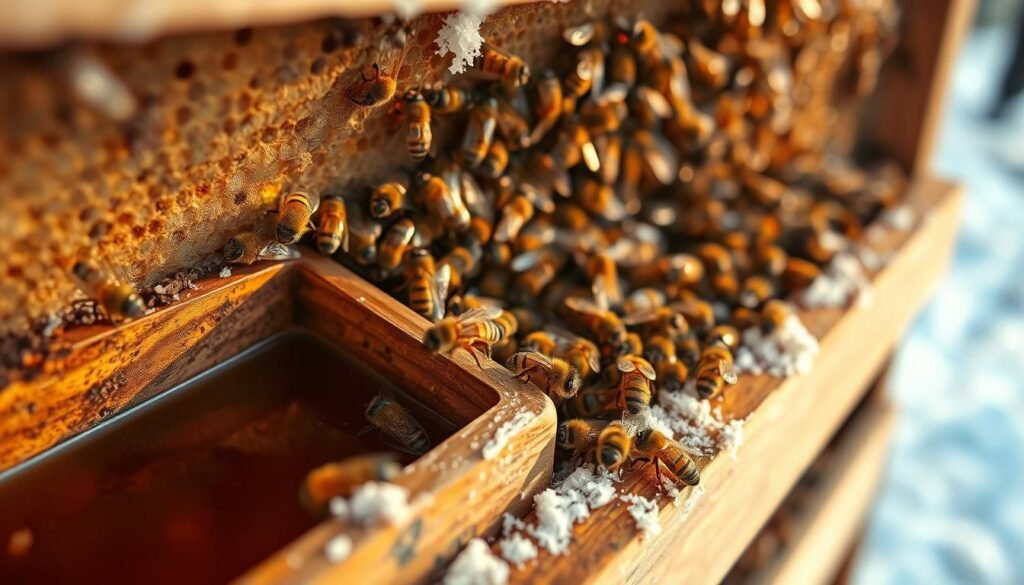
During cold spells, use solid sugar such as fondant or candy boards placed above the cluster. These provide steady calories without adding moisture.
Reserve liquid syrup and sugar syrup for warm days when bees can move and evaporation will not chill them. Syrup in a frozen or very cold hive risks cooling and condensation.
Placing feed above the cluster for access
Position blocks over the center so the cluster can feed upward through adjacent frames. A thin shim creates headspace and improves ventilation while holding patties.
- Monitor hive weight to spot falling reserves early.
- Move capped honey frames from healthy, disease-free colonies when available.
- Check feed quickly on mild days, then close up to preserve heat.
| Feed Type | Best When | Placement |
|---|---|---|
| Fondant / candy board | Cold periods | Directly above cluster, under inner cover |
| Sugar syrup | Warm, liquid-feeding window | Feeder above frames or at entrance on mild day |
| Capped honey frames | Any time if disease-free | Replace a weak frame over cluster |
“Place feed so the cluster can reach it without risking temperature loss.”
Insulation, wrapping, and regional differences across the United States
Regional climate decides whether a thermal wrap will help more than it harms. Consider moisture patterns, winter highs, and local practice before covering a hive. A short test on one colony gives insight for an entire apiary.
Pros and cons of wraps and local moisture risks
Pros: insulated wraps and dark outer covers raise nighttime temperature and can capture solar heat on sunny days.
Cons: in warm, humid zones wraps may trap moisture and cause condensation that drips onto the cluster.
- In humid regions like central North Carolina, many avoid full wraps to reduce damp problems.
- Colder, drier areas often benefit from breathable, insulated solutions such as black wraps that add solar gain.
Using snow and roof insulation wisely
Snow can act as a natural blanket: it creates an insulating air layer if entrances and vents remain clear of ice. Keep a top notch or shim to let moist air exit.
Place insulation above the inner cover to warm the ceiling and cut cold drips. Always pair wraps with slight forward tilt and reliable ventilation to move moisture out.
“Insulation should complement good varroa control, adequate stores, and minimal disturbance.”
For deeper guidance, see a focused review on winter insulation revisited.
Managing entrances and ventilation during the season
A modest entrance reducer cuts drafts while leaving enough airflow to keep interior air moving. This small change limits predators and pests yet preserves exchange that prevents damp buildup. Place it at the main opening so air passes low and warm, not over the cluster.
Pair a narrowed bottom opening with a top notch or shim to create gentle convection. Warm air rises and exits via the notch while cooler air enters below. That flow removes moisture before it condenses on comb or covers.
Keep regular visual checks to ensure entrances stay clear of snow, ice, or dead insects. Expect short cleansing flights on mild days; avoid disturbing colonies during those brief outings. These checks are quick and reduce stress.
“Small ventilation tweaks keep interiors dry and greatly lower the risk of chilled, wet colony members.”
- Tilt forward: a slight lean channels condensate out the entrance, away from the cluster.
- Avoid over-sealing: a breathably tight box with top ventilation beats a fully sealed case.
- Health link: good entrance and ventilation practice helps reduce nosema and related losses.
| Action | Benefit | Notes |
|---|---|---|
| Reduce bottom entrance | Limits drafts and pests | Keep an access for normal airflow |
| Add top shim/notch | Removes humid air | Creates convection without chilling cluster |
| Forward tilt | Directs condensation out | Small angle; avoid destabilizing stand |
| Regular visual checks | Prevents blockages | Watch for snow, ice, and dead insects |
Minimal winter inspections: how to check without chilling the cluster
A soft approach—listening and feeling—lets you assess condition without opening boxes.
Listen first. Stand quietly at the entrance or side and note a steady, contented hum. That sound usually means a living, active group inside.
Next, feel for gentle warmth near the top entrance or under the cover on a mild day. A warm roof or a faint draft of heat confirms the core is active without breaking seals.
Quick top checks on warmer days
Open only the top and lift the inner cover briefly. Add fondant or reposition solid feed directly above the cluster if needed. Work fast and keep any exposure under a few minutes.
- Avoid pulling frames; do not expose the cluster unless conditions are safe.
- Note sound and heat to plan feed placement without extra disturbance.
- If a queen issue appears late, plan requeening in early spring rather than during deep cold.
“Minimal intrusion protects warmth and preserves the colony’s energy.”
Record observations quickly and close up to restore thermal balance. Small, efficient checks help beekeepers protect stores of honey and keep colonies ready for spring.
Small colonies and nucs: strategies that improve odds
Nucs and weak colonies face a simple math problem: too few bodies, too much cold. Small populations cannot form a thick cluster long enough to protect a queen and any brood during extended freezes.
Heavy feeding and sharing warmth without combining
Feed heavily in fall. Give nucs extra honey or fondant so food sits directly above frames the cluster can reach. Regular heft checks show when reserves fall and quick action is needed.
Place nucs over strong hives with a solid separator
Stacking a well-provisioned nuc above a robust hive with a solid board lets some subfloor heat rise while keeping colonies separate. This method boosts core temperature without mixing populations.
Frame layout, wind protection, and insulation
Arrange frames so continuous honey sits overhead and gaps are minimized. This enables safe upward movement as stores are used.
Reduce entrances and shelter against drafts. Add breathable insulation over the top to cut heat loss but keep vents clear so moisture does not pool.
“When resources or population are inadequate, consider combining before deep cold arrives.”
- Quick checks: heft often—small colonies burn stores fast.
- Placement tip: shared warmth works best with a solid separator and good feed above frames.
- Last resort: combine weak colonies early rather than risk winter loss.
Climate variability: adapting winter beekeeping to unpredictable swings
Winters now swing between freezes and sunny 60°F days, so beekeepers must stay nimble. Observe actual temperature trends and let weather guide feed and insulation choices.
Adjust feeding windows and insulation dynamically
Match feeding to warm spells. Offer syrup or open-feed only on mild days, then switch to fondant when cold returns. Keep food above the cluster so workers can reach stores without breaking warmth.
Adjust wraps and vents as temperatures shift. Add a breathable layer during long freezes and remove or loosen insulation during thawing to avoid trapped moisture.
Cleansing flights and cluster repositioning during warm spells
Short warm periods trigger cleansing flight activity and let the cluster move toward new honey frames. Use those windows to check feed placement quickly and without disturbing the cluster for long.
“Flexible, observation-driven management beats calendar-only schedules when weather swings are large.”
- Watch degrees and temperature trends, not only dates.
- Record actions each year to refine timing and response.
- Plant diverse forage to buffer shifting spring timing.
| Variable | Action | Why it matters |
|---|---|---|
| Warm spell (≥50–60°F) | Offer syrup, quick top checks | Allows safe feeding and cluster shift |
| Return to freeze | Place fondant, add breathable wrap | Prevents starvation and moisture damage |
| Frequent swings | Keep records; adjust venting | Refines local strategy year to year |
Conclusion
A focused checklist—stores, mites, ventilation, and feed—keeps colonies ready for thaw.
Keep a cohesive cluster fueled with quality honey and place solid food like fondant above the center so workers can reach it without breaking warmth. Use syrup only on safe, mild days and arrange frames to encourage upward movement as reserves shrink.
Attack varroa before cold sets in and favor gentle ventilation plus a slight forward tilt to avoid damaging drips. Record actions, note outcomes each year, and adapt wraps to local moisture patterns.
With steady prevention, measured checks, and timely feeding, beekeepers can guide colonies through cold spells and into a strong spring.
FAQ
How do honey bees change as colder season approaches?
Worker physiology shifts from short-lived summer types to long-lived winter bees with more fat and vitellogenin. This helps the colony maintain a compact cluster and survive months with little brood rearing.
Why are drones often removed before deep cold sets in?
Drones consume resources but do not contribute to warming or food gathering. Colonies evict or restrict drone access when stores tighten so workers and the queen conserve energy and honey.
What is the winter cluster and how does it generate heat?
The cluster is a tight mass of bees with an outer insulating mantel and an inner core that vibrates flight muscles to produce heat. Bees rotate from cold outer positions into the warmer center to share heat evenly.
At what temperatures do bees begin to cluster tightly?
Clustering typically starts when ambient temps fall below the mid-50s°F. As cold deepens, the cluster compresses and core temperature targets rise to maintain queen survival and, later, brood when reared.
How warm does the inner core need to be for survival?
The inner core is kept near 90–95°F when brood is present; for pure survival without brood, maintaining 50–70°F at the core allows bees to conserve stores and live through the season.
How do bees access honey when moving between frames?
The cluster shifts upward through the combs toward stored honey. Bees consume adjacent cells, then slowly relocate to follow food, so frame placement and full top frames matter for access.
Why can a colony starve even with honey close by?
In deep cold the cluster may be isolated on lower frames while honey sits above or at the sides; frozen stores, distance, or condensation barriers can prevent access, causing starvation despite nearby honey.
When should beekeepers feed syrup, fondant, or candy boards?
Use syrup in fall to build stores before the deep freeze. Fondant or candy boards work during winter when liquid feed risks chilling. Place supplemental food above the cluster for easy access.
How should ventilation be managed to control moisture?
Provide limited top ventilation and reduce the entrance to cut drafts while allowing humid air to escape. Proper airflow prevents condensation that can drip on the cluster and cause deadly chill.
What are effective fall prep steps for winter success?
Assess colony strength, treat Varroa mites in late summer or early fall, ensure adequate stores, position frames to encourage upward movement, and consider insulation or wrapping for your climate.
Why is Varroa control critical before clustering?
High mite loads weaken winter bees and shorten their lifespan, reducing survivorship during the months when the colony depends on long-lived workers. Treating and testing in fall improves odds.
How can small colonies and nucs be supported over winter?
Combine weak colonies, heavy feed before cold, locate nucs near strong hives for shared warmth, and use reduced-volume boxes or insulation to keep the cluster compact and conserve heat.
Are hive wraps and insulation always beneficial across the United States?
Benefits depend on regional humidity and temperature swings. Wraps reduce wind chill in cold, dry zones but can trap moisture in humid areas. Use breathable materials and combine with proper ventilation.
How often should minimal winter inspections occur?
Limit checks to warm days. Rely on external signs—sound, entrance activity, and weight—plus quick top checks to avoid breaking the cluster and lowering internal temperatures.
When can bees take cleansing flights during winter?
On warmer, calm days above freezing bees may leave for brief cleansing flights. These windows also allow beekeepers to perform fast, low-impact inspections if needed.
How does climate variability change winter care?
Warmer winters can trigger brood rearing and increase consumption, while sudden cold snaps demand more insulation and feed. Adjust feeding schedules, ventilation, and monitoring based on local weather trends.