Short-term weather shifts and long-term change have tightened the link between hive health and national food security. Drought reduces nectar and pollen, forces longer water flights, and concentrates residues in scarce sources. These stressors cut honey yields and raise mortality in managed colonies.
Commercial beekeepers depend on seasonal pollination contracts and honey sales. Migration to California almonds for a mid-February bloom is vital but risky when forage is scarce before and after that window. Land conversion in the Corn Belt has also removed large swaths of forage, leaving gaps that worsen stress on bees and colonies.
The 2024 data are stark: honey production fell, yield per colony dropped, and losses of managed colonies surged. This introduction previews how combined pressures — Varroa, viruses, pesticide incidents, and limited forage — affect production and pollination. The report will link field data and regional cases to practical solutions for beekeepers and the broader industry.
Key Takeaways
- Droughts and land use change reduce forage and raise colony stress.
- Migration to pollinate almonds remains critical but adds risk when forage is limited.
- Recent losses and lower honey production show steep economic impacts.
- Multiple stressors interact, increasing mortality and lowering pollination reliability.
- Solutions span monitoring, habitat, breeding, technology, and policy support.
Executive Overview: The State of Beekeeping Under Drought Pressure
Managed losses and falling yields have tightened risks for food systems and honey markets. Between April 2024 and April 2025, estimated managed honey bee colony losses reached 55.6%, and commercial operations now project 60–70% losses for 2025.
U.S. honey production fell to 134 million pounds in 2024 (-4%), and yield per colony dropped to 51.7 pounds (-6%) even though total colonies rose to 2.6 million (+3%). The economic stakes span roughly $350 million in honey value and about $18 billion in pollination-dependent crops.
Why this matters for food security
Drought compresses floral windows, shortens worker lifespan, and raises thermoregulation costs. That pushes weaker colonies below viable thresholds and raises pollination risk when pre-bloom scarcity or cold snaps hit.
| Metric | 2023 | 2024 | Change |
|---|---|---|---|
| Managed colony losses (%) | 40.2 | 55.6 | +15.4 |
| Honey production (million lb) | 139.6 | 134.0 | -4% |
| Yield per colony (lb) | 55.0 | 51.7 | -6% |
Early signals to watch include loss rates above historical baselines, yield declines, late bloom timing, and stalled smart-hive scale traffic. For tactical guidance, consult a climate guide for weather-informed moves and flexible pollination planning.
What Drought Means for Bees, Plants, and Honey Production
When soils dry out, floral rewards and forager behavior shift fast. These changes cut into daily and seasonal windows that support hive growth.
Plant side: nectar, pollen, and bloom timing
Plants under water stress produce less nectar and often lower sugar concentration. That reduces the energy return per trip and depresses honey production potential.
Bloom phenology also shifts: some flowers open earlier, others abort, compressing the period bees can exploit key flows.
Bee side: thermoregulation, water trips, and lifespan
Honey bees increase water foraging and fanning when temperature and radiation rise. Effective foraging peaks near 20–30°C; overall flight occurs from 10–40°C, but wind and rain cut activity.
- Nectar drops lower net gains per trip and raise exposure to residues at scarce water points.
- Tight daily windows force earlier or later flights and faster wear on workers.
- Compounding stress reduces resilience to Varroa and viruses and lowers per-colony honey yields.
“Targeted supplements and timely relocation can buffer deficits, but they cannot replace diverse natural forage.”
For thresholds and flight data, see the flight thresholds study.
National Trends: Colony Losses, Honey Production, and Industry Health
National metrics show widening stress: colony counts rose while per-colony yields fell, signaling an ecological mismatch that cut into overall honey production.
Annual loss rates and yield per colony
Between April 2024 and April 2025, managed losses reached 55.6% and commercial operations now project 60–70% for 2025. U.S. honey production totaled 134 million pounds in 2024 (-4% YoY), with yield per colony at 51.7 pounds (-6% YoY) from 2.6 million colonies (+3%).
Economic stakes: value and pollination exposure
Honey value sits near $350 million while pollination-dependent crops represent roughly $18 billion in exposure. Lower honey returns and volatile production shift revenue mix toward pollination fees, which can spike when shortages occur.
Operational strain: rebuilding, bankruptcy risk, and labor
High loss years force splits, package purchases, and fast rebuilds. Beekeepers reallocate labor to emergency feeding, monitoring, and triage, raising costs and bankruptcy risk for smaller operations.
“Sustained high loss rates erode planning horizons and raise the need for habitat and policy support.”
- Watch the divergence between rising colony counts and falling per-colony output.
- Prioritize within-season data to move from reactive to anticipatory management.
Weather Science Snapshot: Flight and Foraging Thresholds That Matter
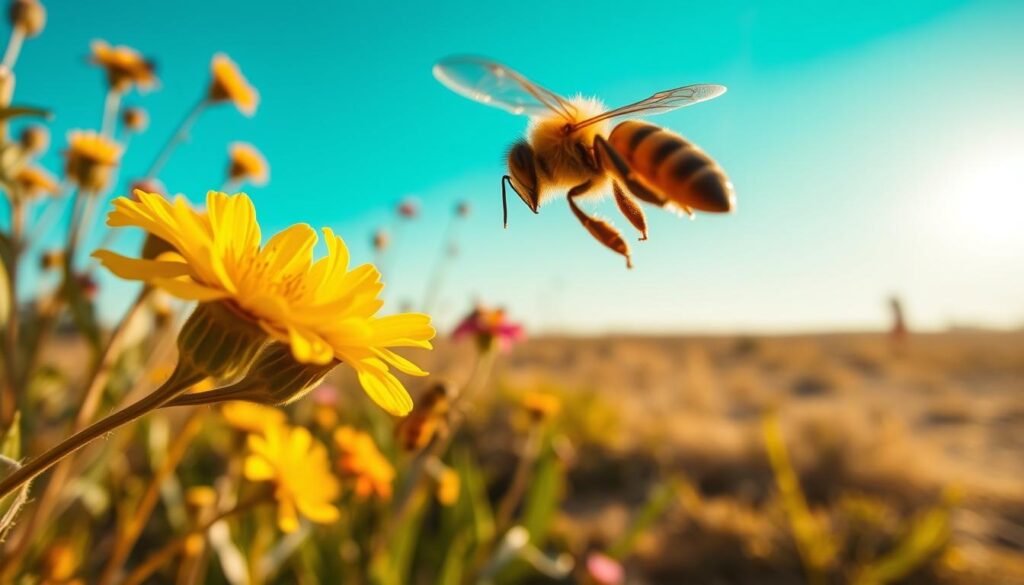
High daytime heat and sparse blooms shrink foraging windows and raise flight costs for working bees. Temperature, wind, humidity, radiation, and rain together define when colonies can collect nectar and water profitably.
Temperature and optimal flight ranges
Honey bee flight is efficient near moderate temperatures. Too cool, and activity stalls. Too hot, and energy spent cooling the hive cuts gains.
Wind, humidity, radiation, and precipitation
High wind reduces flights and increases energy use. Low humidity concentrates nectar sugars but raises water trips. Intense radiation forces more fanning and water collection.
Diurnal timing and nectar flows
Nectar availability often peaks mid-morning to early afternoon. When blooms are scarce, those windows narrow and workers make more fruitless trips.
Nutrition gaps, concentrated water, and disease risk
Drought-driven forage collapse forces colonies to prioritize water, fly farther, and expend more calories. Sparse water points near treated fields can concentrate pesticides and raise exposure even without fresh applications.
“Fruitless foraging and overcrowding around green islands accelerate worker attrition and pathogen spread.”
- Poor nectar reduces brood food and slows population renewal.
- Overstocking near limited forage raises drift, robbing, and spread of Varroa, Nosema, and viruses.
- Monitor exit counts, weight gain, and preemptively feed when traffic is high but gains are low.
Management matters: diversify water, place clean sources on-site, stagger placements, lower hive density, and coordinate with growers on chemical timing to reduce pesticide risk. These actions break the cascade from harsh conditions to elevated disease and loss.
Regional Impacts: Great Plains and the North Dakota Honey Engine
The Great Plains have long powered U.S. honey output, tied to wide alfalfa and sweet clover flows that feed spring and summer blooms.
When those plant resources shrink, foragers work harder and per-hive yields fall. In north dakota hive density has topped 10 hives per square mile, leaving less than 64 acres per hive in some hotspots.
Conversion of about 1.3 million acres of grassland (2006–2011) in the Corn Belt equals forage for roughly 130,000 colonies lost at 10 acres per colony. That scale of land use change narrows nectar windows and raises competition.
How pressure shows up in the field
- Overstocking around irrigated crops and sunflower patches boosts drift and disease spread among bee colonies.
- Monoculture shifts reduce plant diversity and compress nectar flows, so sunflower returns rarely replace clover or alfalfa.
- Management adapts: many beekeepers split operations, chase irrigated sources, or rotate out of overstocked hotspots.
Maintaining forage maps and enrolling acres in CRP or pollinator habitat helps spread risk. Aligning placements with micro-regional rainfall and soil moisture improves odds when summers go dry.
“Sustained honey output from the Plains depends on precipitation patterns and conservation-driven land use.”
California Almonds: Timing, Chill Events, and Pollination Risk
California almond pollination depends on tight timing and strong colonies. About 1.5 million colonies are placed on roughly 800,000 acres, typically a week before bloom. Many orchards offer little or no forage before or after that window.
Pre-bloom scarcity and spring turnover
Pre-bloom scarcity forces fruitless flights and concentrates bees around scarce resources. That increases attrition and disease drift from nearby deadouts.
Spring turnover raises risk: winter bees must be replaced just as forage is absent. Chill events that drop temperatures into the 20s °F compress brood care, contract broodnests, and can cause chilled brood or ejection of brood.
Operational realities and mitigations
Brokers reported grading variability, late certifications, late deliveries, and some deadouts with signs of recent mite treatment. Those issues raise pollination risk when colonies come from drought-impacted areas.
| Issue | Impact | Practical action |
|---|---|---|
| Pre-bloom forage gap | Fruitless flight, worker loss | Stage bees with alternative forage or feed |
| Chill events | Contracted brood, lower grades | Shelter sites, windbreaks, monitor temps |
| Late/variable grading | Delivery risk, deadouts | Transparent broker communication; weather-informed dispatch |
Management focuses on late-stage feeding, careful timing of placement, and aligning arrivals with actual bloom. Weather-informed dispatch preserves pollination quality and protects hive strength.
For broader operational planning and migration guidance, see our expansion tips for beekeepers.
Land Use Change: Corn Belt Conversion, CRP Loss, and Forage Gaps
Acreage changes across the Western Corn Belt create measurable deficits in forage available per hive. Between 2006 and 2011, roughly 1.3 million acres of grassland went to cropland. That equals forage for about 130,000 colonies at 10 acres per colony.
Grassland-to-cropland trends and the acreage-per-colony equation
North dakota hive density exceeded 10 hives per square mile in hotspots. When grassland shrinks, the acres-per-colony math shows the scale of shortfalls. Fewer acres mean less diverse plants and shorter bloom windows.
Implications for bee colonies migrating across states
Herbicide-heavy monocultures cut flowering edges. That forces migratory beekeepers into nutritional bottlenecks and raises feeding costs.
| Driver | Effect on forage | Practical response |
|---|---|---|
| Grassland loss (1.3M acres) | Forage for ~130,000 colonies removed | Stage in habitat mosaics; enroll acres in CRP |
| High hive density (ND hotspots) | Competition and higher disease risk | Track county land use; avoid overstocking |
| Monoculture + herbicide use | Loss of flowering edges and plants | Partner with growers to restore field margins |
Practical takeaways: track CRP enrollments, use irrigated pivots where available, and stage colonies near remnant habitats. Restoring plant diversity lengthens the productive season and stabilizes honey and pollination returns.
“Restoring floral corridors along migration routes reduces feeding bills, lowers disease pressure, and spreads risk when weather flips.”
For habitat and migration guidance, consult our resource hub and coordinate with growers and conservation programs to rebuild floral resources along flight paths.
Compounding Stressors: Varroa, Viruses, Nosema, and Pesticides
Shifts in spring warmth and scarce forage have pushed parasite cycles out of sync with standard treatment calendars.
Calendar-timed mite treatments vs. weather-driven brood cycles
Early brood rearing during warm spells drives rapid Varroa buildup. Fixed, calendar-based miticide schedules often miss those peaks.
Nosema was found in about 70% of colonies in prior sampling, and viruses show cyclical collapse patterns. Nutritional stress magnifies these infections.
- EFB and EFB-like brood issues resurged and did not clear with flows; targeted diagnostics are needed.
- Pesticide and herbicide tank-mix incidents have converted marginal hives into deadouts under weakened conditions.
- Late or unavailable miticides left some operations with killing-level mite loads before winter chills set in.
| Stressor | Effect | Recommended action |
|---|---|---|
| Varroa surge | Rapid mite growth with early brood | Monitor counts; time treatments to brood cycles |
| Nosema & viruses | Reduced resilience; hidden declines | Sample regularly; boost nutrition and reduce stress |
| Pesticide exposure | Acute deadouts, sublethal loss | Coordinate sprays; establish buffers |
Systems approach wins: integrate monitoring-based Varroa control, proactive disease sampling, nutrition support, and clear grower communication. That combination gives colonies the best chance to recover before pollination windows or winter.
Beekeeping Practices Under Drought: What Works and What Breaks
Field reports show which tactics kept colonies viable and which accelerated losses under tight forage windows. Practical, fast actions often trump long plans when nectar and water run short.
Feeding, splits, and smart moves
Feed targeted protein patties and thin syrup to bridge gaps without sparking robbing. Stage feed inside or under screened bottoms to limit theft.
Split early to avoid late weak hives that fail over winter. Use strong queens and cull slow rebuilders to save resources.
Broker lessons and site strategy
Brokers reported state-level variation: southern-sourced colonies often arrived stronger than Midwest stock. Remote placements outperformed ag-edge sites where drift and pesticides concentrated stress.
- Prioritize irrigated flows, elevation shifts, or regions with positive rainfall anomalies.
- Space hives, add windbreaks, and provide clean water to reduce crowding at scarce sources.
- Use weight and traffic monitoring to stop fruitless placements fast and redeploy hives.
“Flexible pollination planning and clear data sharing with brokers and growers saved grading and contract performance this season.”
Technology and Monitoring: Smarter Hives for Tougher Seasons
Sensors on hives and linked analytics turn subtle shifts into actionable alerts.
Automatic hive scales, temperature and humidity sensors, acoustic and vibration devices now track reserves, brood stability, and swarming signals at high resolution.
Smart scales, sensors, and early-warning analytics for colony stress
Bee counters (optical, infrared, image-based) and RFID quantify flights and foraging. Neural networks and computer vision classify pollen carriers and flag stress signatures.
Weather-informed dispatch and in-season decision support
Activity correlates strongly with temperature and solar radiation; thresholds near 20–30°C guide moves. Tie sensor alerts to feed, relocation, or contract decisions.
“Automated alerts shorten response time and preserve grading and pollination value.”
| Technology | Metric | Practical action |
|---|---|---|
| Automatic scales | Weight stagnation | Trigger feeding or relocation |
| Temp/humidity sensors | Brood stability | Adjust shading, ventilation |
| Acoustic/traffic analytics | Flight quality | Inspect or pull weak hives |
- Recommendation: deploy scales fleetwide to spot nectar dearth early.
- Share anonymized data with brokers and growers to align timing and expectations.
Bee Health Innovations: Breeding, Nutrition, and Parasite Control
Advances in stock selection and nutrition offer practical ways to sustain bee health and hive performance in hotter seasons.
Mite-resistant and heat-tolerant stock
Breeding programs now emphasize heat tolerance and Varroa resistance to keep honey bee populations viable in warm, dry climates.
Prioritize queens that show hygienic behavior and stable brood patterns. Trials by research groups, including WSU investigators, focus on lines that keep mite growth low while retaining foraging efficiency.
Improved nutrition and natural treatments
Seasonally adjusted feeds that supply balanced protein, lipids, and micronutrients support immunity when pollen is scarce.
Integrated pest management pairs brood interruption with targeted treatments and nonchemical options to reduce pesticide residues and limit resistance.
- Adopt mite-resistant lines that perform under higher temps.
- Select queens for heat tolerance and hygienic traits.
- Use precision nutrition to supply key amino acids and fats in pollen gaps.
| Practice | Benefit | Field action |
|---|---|---|
| Heat-tolerant stock | Stable brood and flight in heat | Source region-tested queens; track performance |
| Mite-resistant lines | Lower mite loads, fewer treatments | Monitor counts; rotate controls |
| Precision nutrition | Improved immunity and longevity | Feed timed supplements during pollen dearth |
Result: resilient genetics plus precision feeding can raise production and pollination reliability for honey bees and protect bee populations and colonies through heat-stressed seasons.
Policy and Funding: How Programs Can Buffer Drought Impacts
Policy tools that pay for habitat offer one of the fastest ways to rebuild nectar corridors. CRP enrollments in the Great Plains show habitat programs can restore millions of acres for pollinators and offset some forage lost to conversion.
Conservation incentives and practical steps
Expand targeted habitat incentives near migratory corridors and pollination hubs to stabilize nectar and pollen availability for migrating colonies.
- Advocate expanded CRP and stacked benefits that improve soil and water retention while creating forage.
- Offer state-level grants that subsidize drought-resilient plantings and clean water provisioning for major crops.
- Design flexible rules so migratory beekeepers can access staging sites and long-term habitat.
Research and partnership priorities
Support research partnerships among universities, apiary inspectors, and industry to scale best practices and measure habitat ROI. Encourage transparent reporting and public-private projects to seed native corridors across the United States.
“Consistent funding enables multi-year habitat establishment critical for resilient forage networks.”
For a model state approach, review the state pollinator plan to align incentives with monitoring and outreach.
Market Effects: Pollination Fees, Supply Chains, and Consumer Prices
Rising scarcity has pushed pollination into the center of seasonal crop planning and market pricing. Fees per hive climbed from roughly $200 to over $300 in recent years, reflecting higher risk and rising operational costs.
Late or weak colony deliveries force growers to shift planting and harvest windows. Those changes raise insurance claims and create scheduling friction across packing and transport.
Honey production remains valuable at about $350 million, but the larger exposure is clear: roughly $18 billion in pollination-dependent crops ties consumer food prices to colony availability and quality.
- Contract risk: drought-driven scarcity raises fees and benefits beekeepers who can guarantee delivery and grade.
- Supply chain impact: late blooms and colony reversals cascade into planting delays and lower yields for fruits, nuts, and vegetables.
- Market resilience: pollination revenue often steadies operations when honey production falls in a tough year.
Contract terms are evolving. Growers now add flexible delivery windows, performance clauses, and shared-risk models. Certification timing, interstate moves, and inspection backlogs create logistics bottlenecks at peak demand.
“Stable pollination supply requires investment in habitat, monitoring, and health innovations to reduce shocks.”
Policy and private risk-sharing that fund upstream habitat and tech improve reliability and lower price volatility for consumers and the broader industry.
49. beekeeping during droughts USA: Signals to Watch Next Season
Early indicators — soil moisture, reservoir levels, and degree-day totals — set the stage for bloom timing and forage length. Track these now to anticipate narrow windows and plan moves.
Productivity zones are shifting. Traditional leaders such as north dakota and Montana can lose up to 30% of yield in extreme years. Some Mid-Atlantic pockets may improve as plant ranges shift.
National data show U.S. honey production at 134 million pounds in 2024 with lower yield per colony. Expect flavor profiles to evolve as bees visit more heat- and drought-tolerant plants and diurnal nectar peaks narrow in hot, dry conditions.
- Monitor weather outlooks, soil moisture, and degree-days to time feeding and moves.
- Use hive scales to spot early flow anomalies and redeploy before losses mount.
- Watch for diurnal nectar blackouts in heat waves and schedule work in morning windows.
- Track reservoir and irrigation reports to estimate irrigated forage reliability.
- Align marketing with shifting honey flavor profiles and document provenance.
“Forecast-driven actions shorten risk windows and protect production and product quality.”
For deeper health and forage context, see the forage and health review.
Conclusion
, Rising heat and tight floral windows have rewritten the seasonal math that governs hive survival and honey production.
Evidence shows that compressed nectar flows, higher thermoregulation costs, and parasites push many colonies past tipping points. Beekeepers must pair smart monitoring with timely moves, targeted feeding, selective breeding, and reduced pesticide exposure to stabilize production and protect bee health.
Policy and funding for habitat and research matter. Aligning placements with bloom timing, using flight and temperature thresholds, and coordinating with growers and brokers will help pollinators, crops, and the industry weather future seasons.
Track signals — bloom timing, yield per colony, and loss rates — and act early to keep colonies and food supplies resilient.
FAQ
How does severe lack of rainfall affect nectar and pollen availability?
Extended dry periods reduce plant flowering and nectar secretion, shrinking forage for honey bees and other pollinators. Drought-stressed crops like alfalfa and clover produce fewer blooms and lower-quality pollen, forcing colonies to forage farther and increasing energy costs and exposure to pesticides and pathogens.
What signs indicate a hive is struggling because of heat and water stress?
Look for reduced brood rearing, smaller honey stores, increased water foraging trips, and clustering near water sources. Workers may show shortened lifespans and colonies can display erratic flight patterns. Monitoring weight loss with smart scales and inspecting brood patterns help detect early decline.
Can supplemental feeding replace natural forage during a dry season?
Supplemental sugar and pollen substitutes can sustain colonies short-term, support brood, and prevent starvation. However, they lack the full nutrition of diverse nectar and pollen. Good feeding protocols paired with timely mite and disease control preserve colony resilience until real forage returns.
When should beekeepers consider moving hives to better forage or pollination contracts?
Move when local floral resources collapse or when pollination fees for crops like almonds offset transport costs. Early-season scouting and weather-informed dispatch reduce stress. Consider destination forage, pesticide risk, and state regulations before migration.
How do droughts alter honey production and the commercial value of crops?
Reduced nectar flows cut honey yields per colony and raise costs for producers. Pollination-dependent crop yields may fall, lifting pollination fees but also increasing supply-chain volatility. Regions like North Dakota can see pronounced production shifts when prairie and field forage declines.
What practices reduce colony losses in hot, dry summers?
Shade placement, ventilation, consistent water sources, and timely feeding help. Split operations prudently, maintain strong mite treatment schedules aligned to brood cycles, and use heat-tolerant stock. Strategic hive density and rotational placement across foraging zones also lower competition and disease spread.
How do varroa mites and viruses interact with drought stress?
Drought weakens colonies, making them less able to tolerate parasite loads. Longer foraging and nutrition deficits can suppress immunity, raising virus prevalence. Calendar-based mite controls may fail if brood timing shifts; monitoring and weather-driven treatment timing improve outcomes.
What monitoring technologies give the best early warning for stress during dry spells?
Smart hive scales, temperature and humidity sensors, and remote brood cameras provide real-time signals of weight loss, heat stress, and reduced foraging. Combined with local weather forecasts and floral bloom maps, these tools guide feeding, relocation, and treatment decisions.
Are there bee strains better suited to high temperature and low-forage conditions?
Breeding programs produce mite-resistant and heat-tolerant stock that show improved survival in extreme conditions. While no strain solves forage scarcity, selecting resilient genetics and pairing them with strong nutrition and parasite management improves colony performance under stress.
How do land-use changes like CRP conversion affect forage availability for migratory operations?
Conversion of grasslands to cropland reduces diverse spring and summer blooms, shrinking the acreage-per-colony ratio needed for healthy migration. Loss of Conservation Reserve Program habitat concentrates hives on remaining forage, raising competition, disease risk, and pressure on honey production.
What role do state and federal programs play in buffering drought impacts on pollinators?
Programs such as the Conservation Reserve Program and state pollinator habitat incentives fund habitat restoration and forage enhancement. Research grants and extension services support best practices, while emergency funding can help beekeepers replace colonies and adapt operations during severe seasons.
How should apiary managers adjust pesticide risk when forage shrinks?
Reduced forage concentrates bees on fewer plant patches, increasing exposure to treated fields. Coordinate with growers, track pesticide application windows, and place hives away from recent sprays. Advocate for integrated pest management on neighboring farms to lower risk.
What are practical water strategies to support hives in hot, dry areas?
Provide clean, shallow water stations with landing surfaces to reduce drift and predation. Locate multiple sources near hives to limit flight distance. Avoid stagnant containers that attract mosquitoes and change water frequently to prevent disease spread.
How does drought influence pollination contracts and scheduling for crops like almonds?
Pre-bloom scarcity and cold snaps complicate colony health and timing, increasing grading variability and late deliveries. Growers and operators may renegotiate terms or adjust placement dates. Clear communication and contingency plans reduce economic and crop-yield risks.
Which regional indicators should be monitored to forecast honey flavor and yield shifts next season?
Watch seasonal precipitation forecasts, bloom phenology, and land-use changes in key source states such as North Dakota and California. Shifts in dominant forage species change nectar composition, which alters honey flavor profiles and marketability.