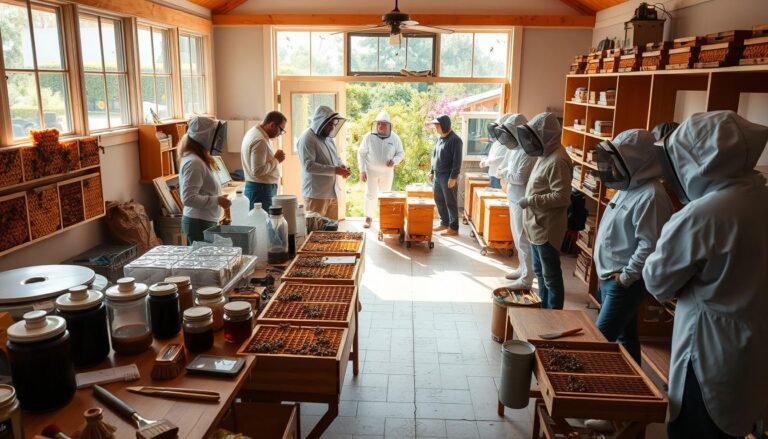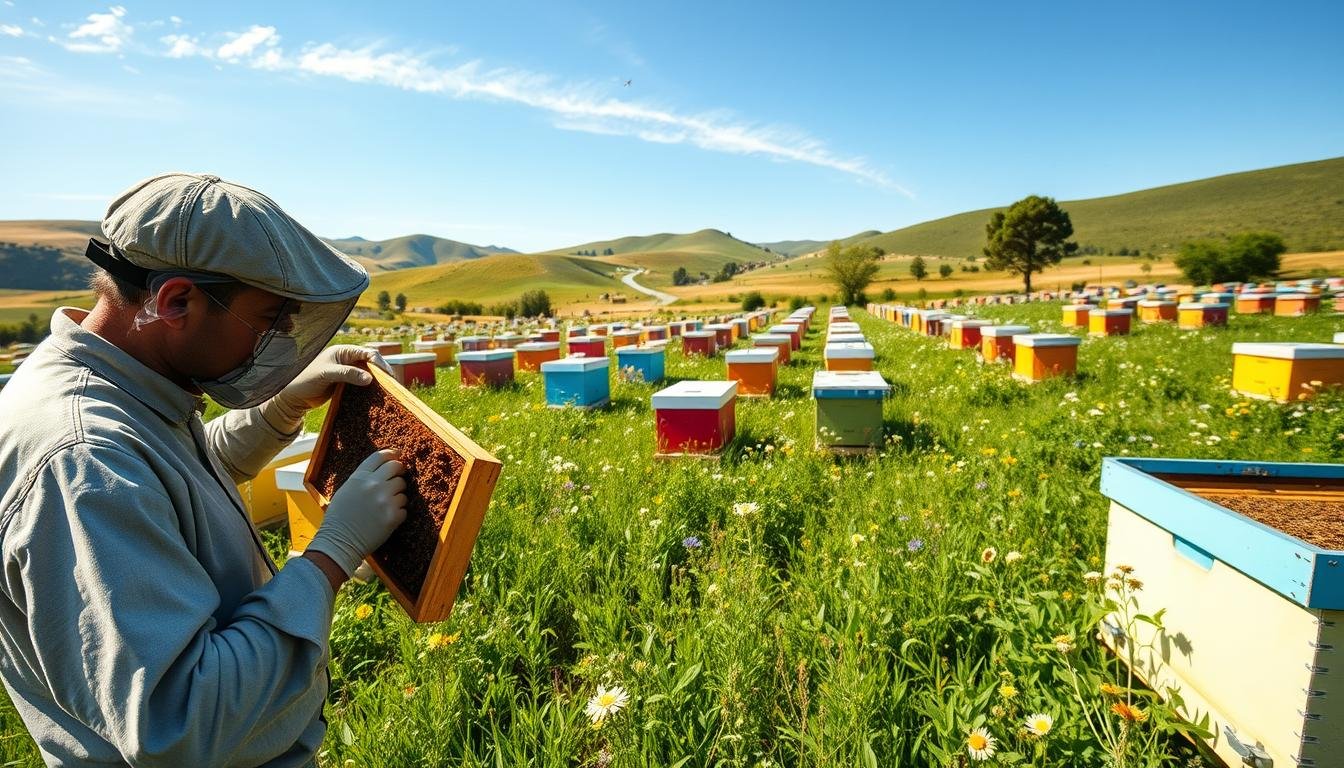
This introduction lays out the scope and purpose of a practical resource for beekeepers who move hives to follow bloom cycles and deliver pollination across the United States.
The text previews how mobile operations differ from stationary practice and highlights coordination among growers, logistics partners, and producers of honey. February’s California almond rush brings over one million hives and more than 31 billion bees to set roughly 700 billion flowers.
Routes often flow from almond orchards to apple blocks and summer sunflower fields, and safe transport uses palletized hive stacks, ventilated trucks, and secure tie‑downs. This model supports a multi‑billion‑dollar agricultural system that moves an estimated 2.5 million colonies annually.
Later sections cover timing, equipment, site selection, colony health, and profitability. For an in-depth look at almond pollination data see the almond pollination overview, and for reference materials check the book resources.
Key Takeaways
- Scope: Integrates pollination, honey production, and route planning.
- Mobile operations require tight coordination with growers and haulers.
- Seasonal routes drive decisions that affect colonies and yields.
- Transport safety and biosecurity are critical at large scale.
- Data‑driven bloom calendars improve outcomes and protect bees.
What Migratory Beekeeping Is and Why It Matters in the United States
Transporting honey bee colonies on planned routes connects floral resources to farm demand through the year. Migratory beekeeping is the coordinated relocation of hives so colonies arrive during peak bloom and provide reliable pollination.
Commercial beekeepers adopt this practice to secure forage, earn pollination services revenue, and stabilize honey production across seasons. Farmers pay for pollination to boost fruit set, size, and quality, which supports broader food supply and farm income.
The model balances forage gaps by shifting hives to regions with abundant nectar when local resources decline. It also enables specialty honeys tied to specific blooms, adding market value and diversifying operator revenue.
“Concentrating colonies where crops need them most within short windows is what makes large-scale pollination possible.”
Operational discipline—route planning, scheduling, and compliance—delivers consistent outcomes. For deeper technical context on colony movement and health, see this bee health research.
- Key benefits: improved crop yields, diversified income, and stabilized production.
How Migratory Beekeeping Works in Practice
Successful hive movement starts with a calendar that matches bloom timing to travel windows.
Planning colony movement and timing
Operators map nectar flows and pollination services windows to fix departure and arrival dates. A clear schedule reduces idle time and protects colony strength.
Use route blocks that list stops, expected bloom stages, and contingency days for weather or road delays.
Loading systems and in‑transit care

Most teams palletize hives in four‑way configurations so forklifts load flatbeds quickly. Tarps, screened openings, straps, and water sprayers keep temperatures safe during transit.
Checklists should cover tie‑downs, ventilation screens, and refillable water sprayers before each departure.
Routes, roles, and compliance
Typical U.S. progress begins with almonds in California, moves to Pacific Northwest orchards, then to Dakotas prairie forage.
Beekeepers supply colonies that meet contract strength. Farmers provide placement guidance and pesticide updates. Contracts spell out timing, metrics, and access rules.
- Forecast drive times, night moves, fuel stops, and driver rest with buffer days.
- Keep permits, apiary registration, and health certificates ready for inspection along routes.
- On arrival, allow colonies to rest, open entrances, and confirm water sources before starting services.
| Item | Purpose | Typical Location | Notes |
|---|---|---|---|
| Palletized hives | Fast loading/unloading | Flatbeds, semi‑trailers | Four‑way configs for forklifts |
| Ventilation gear | Temperature control | In‑transit / on‑site | Tarps, screens, water sprayers |
| Contracts | Service terms | Grower fields, orchards | Define strength, dates, payment |
| Records | Route evaluation | All stops | Dates, strength, bloom status |
For planning templates and seasonal checklists, see these seasonal tasks. Good records improve future routing and colony performance.
Seasonal Timing and Route Design for Maximum Honey and Pollination Value
Seasonal route design ties bloom timing, colony strength, and market value into a single annual plan.
Build a living bloom calendar that tracks apples, blueberries, sunflowers, clover, and almonds across key regions. Update it yearly with grower notes and local scout reports.
Building bloom calendars by region and crop
Prioritize early‑season almond work in February, then move north for spring orchards and later to prairie forage. A layered calendar shows peak days and backup windows.
Aligning colony strength with orchards and summer forage
Set pre‑move strength targets for colonies headed to orchards. Strong colonies deliver reliable pollination and exploit summer nectar to build stores and varietal honey.
Adapting to shifting bloom windows
Weather can compress or extend openings. Plan rapid redeployment and skip stops if bloom density or weather makes a location unprofitable.
“Use multi‑year route data and local intel to refine timing and protect production through variable seasons.”
| Timing | Crop | Strength Target | Action |
|---|---|---|---|
| Feb | Almonds | Strong, population buildup | Deploy early; prioritize rest before bloom |
| Spring | Apples / Blueberries | High forager numbers | Coordinate with growers, confirm bloom |
| Summer | Sunflower / Clover | Store accumulation | Target varietal honey, extend forage stay |
| Year‑round | All | Maintain records | Use data to reduce deadhead miles |
Logistics, Equipment, and Site Selection for Safe Hive Movement
Safe movement relies on tested gear and site scouting to keep crews and colonies healthy. Plan transport, loading, and placement to limit heat and mechanical risk.
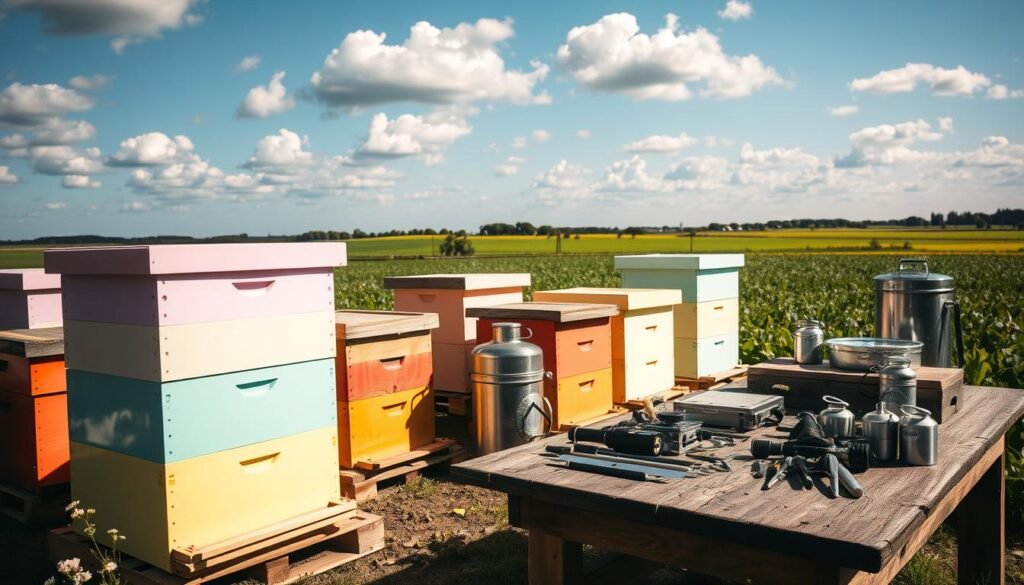
Transport setup and ventilation
Use flatbeds or semi‑trailers fitted with palletized, four‑way stacks and secure straps. Corner braces and tiedowns keep hives stable while allowing airflow.
Ventilation matters: screened entrances, bee tarps, and in‑route water sprayers cut temperature spikes and reduce stress for bees.
On‑load / off‑load best practices
Load with forklifts using clear spacing and ramp safety. Arrange entrances immediately after staging so bees cool quickly and colonies recover.
Drivers should move in cooler hours and run periodic checks on strap integrity and airflow during long movement.
Choosing sites and coordinating sprays
Ideal locations sit within 2–3 miles of abundant forage, have clean water, wind protection, and afternoon shade. Good vehicle access prevents long staging in confined conditions.
Coordinate with farmers on spray windows and buffer areas to minimize pesticide exposure and protect pollination services.
| Transport Item | Purpose | Best Practice | On‑site Action |
|---|---|---|---|
| Palletized four‑way stacks | Fast loading of many hives | Use straps, corner braces | Set spacing; open entrances |
| Bee tarps & screens | Ventilation & cooling | Allow crossflow; secure edges | Monitor temp; add water sprays |
| Forklift & ramps | Safe load/unload | Train crew; inspect ramps | Stage clear area; GPS pin place |
| Contingency kit | Repair & emergency response | Extra straps, screens, water | Perform pre‑move checks |
Document placement maps and GPS pins for each stop. This reduces delays and helps beekeepers manage follow‑up visits in varied regions and areas.
Colony Health Management on the Move
Keeping colonies healthy on the road requires clear protocols that start weeks before loading. Set pre-move goals: 8+ frames of bees for strong almond work, stable brood patterns, and enough stores to limit mid-route feedings.
Conditioning colonies for specific crops and regions
Match nutrition to the target crop by scheduling syrup and protein feeds ahead of placement. Add frames or combine weak units so each colony meets contract strength.
Targeted supplements fill pollen or nectar gaps and protect brood development in new conditions.
Controlling varroa and disease risks
Monitor mite counts and treat on a schedule that avoids reducing foragers during peak pollination. Maintain strict biosecurity: sanitize equipment, isolate suspect hives, and avoid mixing unknown deadouts.
“Ongoing varroa control protects yield and colony life across long routes.”
Minimizing transport stress and arrival routines
Use airflow, hydration, night moves, and staged rest stops to cut heat and stress. On arrival, open entrances gradually, provide water, and observe for queen issues before service.
Keep concise records of counts, feed use, and observations. Train crews on emergency ventilation and heat triage to preserve bee vitality.
For operational scaling and practical templates see beekeeping expansion tips.
3. migratory beekeeping guide USA: Profitability, Risks, and Sustainable Practices
Profitability hinges on clear contracts, tight cost control, and smart placement decisions. This section shows how to structure pollination services, estimate costs, and reduce risk while protecting colony health and long‑term production.
Structuring pollination contracts and pricing
Write contracts that state colony strength metrics, deployment dates, placement, access, and payment schedules. Include inspection windows and penalties for late arrivals.
Benchmark pricing varies by crop; almond work often commands a premium (roughly $150–$200 per colony). Use crop demand cycles to shape expected income across the season and year.
Budgeting and ROI
Major cost drivers include fuel, labor, tires, maintenance, insurance, and equipment depreciation. Allocate overhead per route to see true cost per colony moved.
Evaluate ROI by combining pollination fees, varietal honey potential, and transport efficiency across locations. Track yield per stop and per‑mile costs to improve margins.
Risks, sustainability, and protections
Key risks: weather, bloom shifts, equipment failures, and disease. Keep reserves, backup gear, and contingency routes to reduce exposure.
Adopt sustainable stocking densities to protect forage and reduce stress on colonies. Coordinate written spray protocols and buffer zones with farmers to limit pesticide impacts.
- Diversify revenue: price premium honey varieties and add crop‑specific services (night pickups, extra moves).
- Insurance: carry cargo, liability, and colony‑value coverage tailored to mobile operations.
- Continuous improvement: record contract performance and cost metrics to refine future seasons.
For detailed operational templates and contractual language, see this comprehensive resource to help standardize service terms and improve profit stability.
Conclusion
Final checks and steady routines convert route data and hive care into resilient, year‑round results.
Why it matters: aligning honey bee foraging with crop bloom secures reliable pollination and opens premium honey markets across the season.
Execution hinges on simple tools: calendars, clear routes, strong colonies, and safe hives logistics. Keep mite surveillance and biosecurity top of mind to limit diseases and protect colony life.
Transport best practices—pallets, airflow, shade, hydration, and scheduled rests—cut stress during long hauls between place to place.
Collaborate with growers on spray timing and access, refine routes each year, and confirm bloom, water, and staging before moves. For practical resources on large‑scale movement and the broader benefits of this practice see migratory beekeeping overview and read more on the benefits of beekeeping.
Apply these steps to build resilient operations that protect bees, satisfy customers, and support the food supply.
FAQ
What is migratory beekeeping and why is it important for U.S. agriculture?
Migratory beekeeping moves honey bee colonies to follow bloom periods and provide pollination services for crops such as almonds, apples, blueberries, and sunflowers. This practice supports crop yields, enables commercial honey production, and ties together regional forage resources with farmer needs. It also helps concentrate colonies where they deliver the greatest economic and ecological value.
How do commercial beekeepers plan seasonal routes for honey and pollination?
Beekeepers build bloom calendars by region and crop, mapping when almonds in California bloom, when orchards in the Pacific Northwest flower, and when prairie forages are productive in the Dakotas. They schedule colony movements to align hive strength with peak bloom, coordinate with growers, and factor in travel time, weather, and rest periods for colonies.
What permits and registrations are required for interstate movement of hives?
Requirements vary by state. Most states require apiary registration and health inspections. Interstate movement often needs certificates from state veterinarians or department of agriculture offices, proof of mite control and disease checks, and adherence to federal Plant Protection and Inspection Service guidance. Always verify current rules before transport.
How can beekeepers reduce disease and varroa mite risks when moving colonies?
Use integrated pest management: monitor mite levels, apply appropriate miticides or non-chemical controls between major moves, maintain strong nutrition before transport, and isolate suspect colonies. Good sanitation of equipment, prompt removal of sick hives, and communication with receiving growers cut cross-infection risk.
What transport and equipment setups keep hives safe during long hauls?
Secure hives on flatbeds or semi-trailers with proper ventilation and tie-downs. Palletized systems and four-way stack configurations speed loading and unloading with forklifts. Ensure entrances are blocked or reduced during travel, provide airflow to prevent heat stress, and follow weight and height limits for highway safety.
How do beekeepers match colony strength to specific crops?
For crops that need intensive pollination like almonds, beekeepers build strong colonies with ample brood and stores. They may requeen, feed protein supplements, and manage varroa to boost population. For lighter pollination tasks, moderate-strength hives suffice. Assessment of brood pattern, adult population, and food stores guides placement.
What best practices minimize transport stress on bees?
Feed colonies before and after moves, limit travel during extreme heat, provide ventilation, and schedule rest periods at forage-rich staging sites. Secure frames to prevent comb shifting, reduce hive openings for transport, and avoid moving during major weather fronts. Gradual conditioning before long-distance moves helps colonies adjust.
How are pollination services priced and contracted with farmers?
Contracts specify hive numbers per acre, dates, hive strength, and payment terms. Pricing depends on crop value, timing (almond pollination commands premium rates), distance, and services included (replacement for dead colonies, insurance). Clear agreements on pesticide communication, liability, and on-site access protect both beekeeper and grower.
What site-selection factors improve hive survival and production at placement locations?
Choose sites with abundant nectar and pollen sources, reliable water, shelter from prevailing winds, and shade options. Avoid fields recently treated with harmful pesticides and coordinate spray schedules with growers. Proximity to roads for easy access and legal land use permissions are also essential.
How do weather variability and shifting bloom windows affect route design?
Beekeepers build flexible schedules and contingency stops to adapt to early or late blooms. Monitoring regional phenology, weather forecasts, and crop development helps reroute colonies to maximize forage or fulfill pollination contracts. Diversifying destinations reduces reliance on any single crop or region.
What insurance, maintenance, and budgeting should commercial operators plan for?
Budget for fuel, labor, vehicle and trailer maintenance, hive repairs, replacement queens, feed, and treatment costs. Commercial operators often carry liability insurance and coverage for colony loss. Detailed cost tracking and margin analysis for pollination fees versus honey income guide long-term profitability planning.
How can growers and beekeepers coordinate to reduce pesticide exposure?
Establish communication channels before bloom, share spray schedules, and use bee-safe application timing (evening or night). Growers can adopt integrated pest management practices and selective chemistries. Written agreements that define notification procedures and responsibilities help protect colonies on-site.
What are common health checks performed before and after moving hives?
Inspect brood patterns, queen status, food stores, and adult population levels. Conduct mite counts using alcohol or powdered sugar methods, look for signs of Nosema or foulbrood, and treat or remove compromised colonies. Post-move checks confirm colony recovery and readiness for pollination or honey flow.
How do almond pollination timing and demand shape national hive movement?
California almond bloom in late winter drives a major national migration, drawing tens of thousands of colonies to the Central Valley. This demand sets the season’s calendar and influences where commercial beekeepers stage hives before and after almonds. The almond market also impacts pollination rates and contract pricing nationwide.
What sustainable practices can commercial operators adopt to improve long-term viability?
Rotate forage locations to reduce local resource depletion, use integrated pest management, invest in queen quality, and maintain genetic diversity. Collaboration with conservation programs and planting pollinator-friendly cover crops help stabilize nutrition and reduce stress on colonies over multiple seasons.