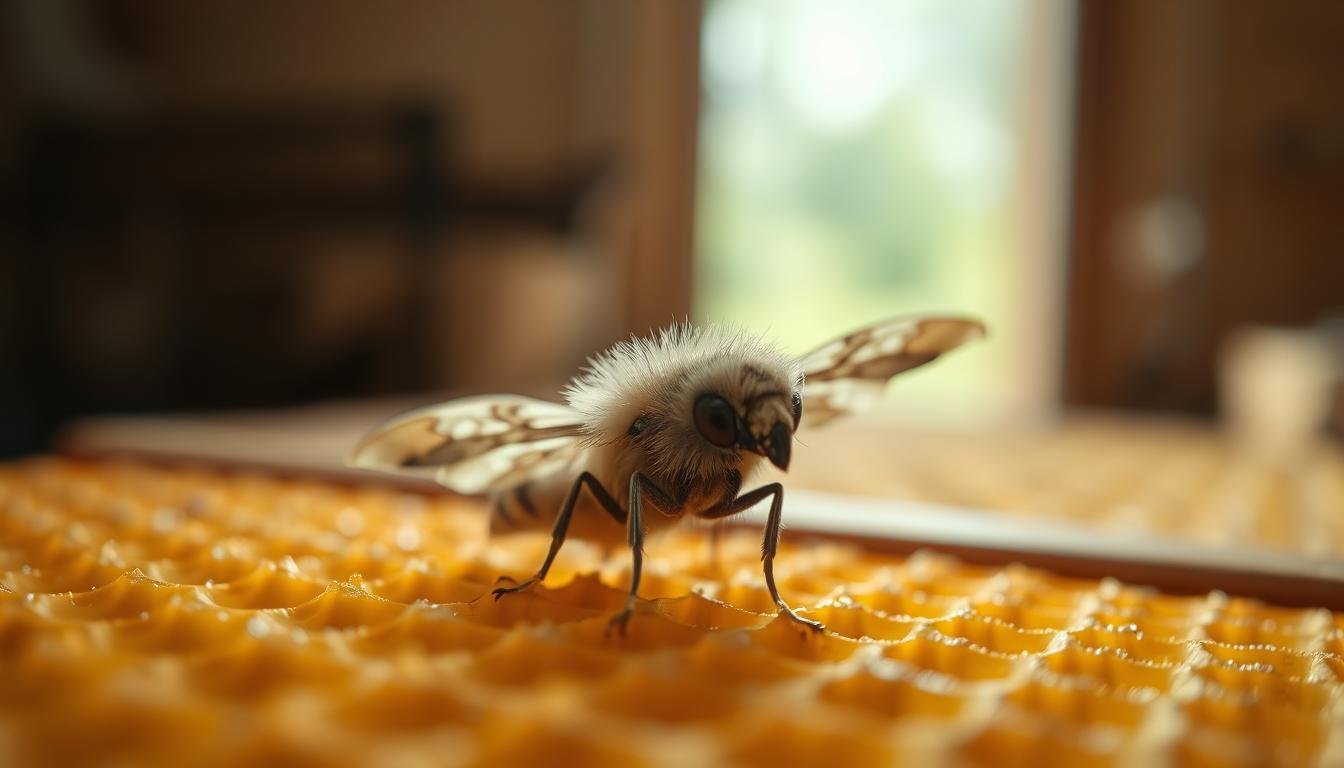
This practical introduction outlines the problem and sets clear expectations for beekeepers facing wax moth pressure. Wax moths are scavengers that target weak or dead colonies, not usually the initial cause of collapse. When left unchecked, they can damage comb, frames, and stored equipment quickly.
Early detection and quick action matter. Adult females invade at night and lay hundreds of eggs in cracks. Eggs can hatch in days, and warm weather speeds the lifecycle. Freezing infested frames remains the most reliable way to kill eggs, larvae, and pupae so bees can salvage comb later.
Prevention focuses on right-sizing the hive, reducing entrances, rotating dark brood comb, and routine scraping of bottom boards. Stored combs need freezing before storage, or use Bt (Certan b402) or Para-Moth crystals for stacked supers only with proper airing. This guide presents a step-by-step, lifecycle-based plan that protects honey, comb, and colony strength while minimizing harm to bees.
Key Takeaways
- Wax moths exploit weak hives; strong colonies resist them.
- Freeze frames to reliably kill all stages in comb.
- Adjust box space and cut entrances to help bees defend the hive.
- Rotate and clean comb, and use proper storage: light, air, and cool temps.
- Use traps and treatments away from hive openings to avoid attraction.
- This guide offers seasonal checklists and gentle control that spares bees.
Why wax moths threaten weak hives today
Night-flying adults use hive scents to find weak colonies, then lay eggs in hidden crevices. These insects act like a cleanup crew, moving into low‑defense sites and unmonitored equipment. Larvae tunnel through dark brood comb and pollen, leaving silk and frass that block emerging brood.
Weak hives lack the bee coverage needed for defense. Low numbers or a lost queen let nocturnal visitors enter and reproduce with little resistance.
Pressure from these pests often signals other problems, such as varroa, disease, or excess space. Over‑supering gives a small population too much room, making the hive harder to guard.
Beekeepers shouldn’t panic at a stray adult. Focus on detecting larvae, webbing, and frass during warm months when eggs hatch faster.
- Brood comb attracts larvae because of protein residues; darker comb is favored over fresh honey comb.
- Unattended deadouts and long‑closed hives can suffer severe comb and wood damage.
- Timely inspections and keeping colony size matched to hive volume reduce ongoing pressure.
Bottom line: regular oversight and prompt intervention turn a single problem into a manageable task, protecting brood, comb, and the overall health of your apiary.
Spot the signs: webbing, frass, and cocoons in brood comb
Spotting silk and scattered pellets early saves frames. Identify thin silk draped over frames and the “galleried” tunnels carved through brood and pollen comb. These are clear signs of active larvae.
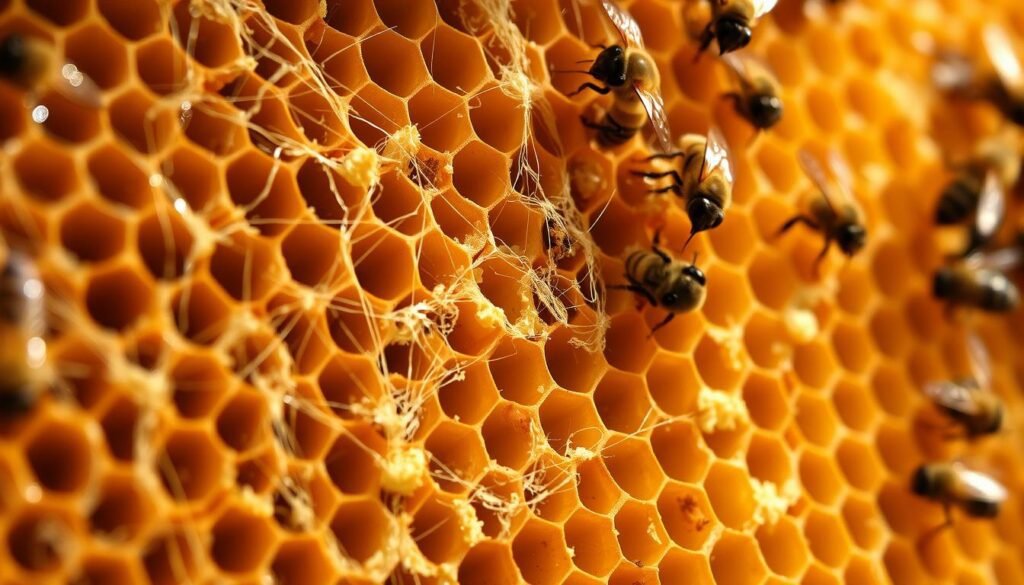
Frass looks like tiny pellets and spreads across comb and box parts. Unlike mouse droppings, frass is smaller and not just on the bottom board. Look for silk threads mixed with scattered pellets — a reliable indicator of infestation.
- Find ~1/2-inch silk cocoons in top bars, end bars, and crevices; larvae notch wood before pupating.
- Bees can become trapped in dense webbing, so intervention is often required.
- Compare larvae: larger, cream-colored larvae that leave silk are typical; small, numerous beetle larvae come with slime and fit several in a cell.
- Scan brood comb and pollen stores first; these attract larvae more than honey-only comb.
For treatment options and deeper guidance, see wax moth treatment.
22. how to stop wax moth infestations: quick actions to take now
A swift response at the first sign of silk or frass can save frames and limit further damage. Pull any frames with webbing, tunnels, or visible larvae and shake off live bees before handling.
Scrape pupae casings and silk with a hive tool or wire brush, then seal frames in heavy bags and freeze. Follow temperature guidance: about 20°F (~−6.7°C) for roughly 5 hours or 5°F (~−15°C) for roughly 2 hours to kill eggs, larvae, and pupae. Thaw fully before returning any salvageable comb.
Reduce entrances immediately with a reducer and remove extra boxes so the bee population densely covers comb. Inspect neighboring hives for signs of infestation and combine a weak, queenright unit with a stronger colony when brood or eggs are absent.
- Document damage per box and replace heavily tunneled frames.
- Reassess varroa, disease, or queen issues that allowed this problem.
- Act quickly: warm days mean eggs hatch faster and larvae cause more harm.
Lifecycle-led control: eggs, larvae, pupae, and adult wax moths
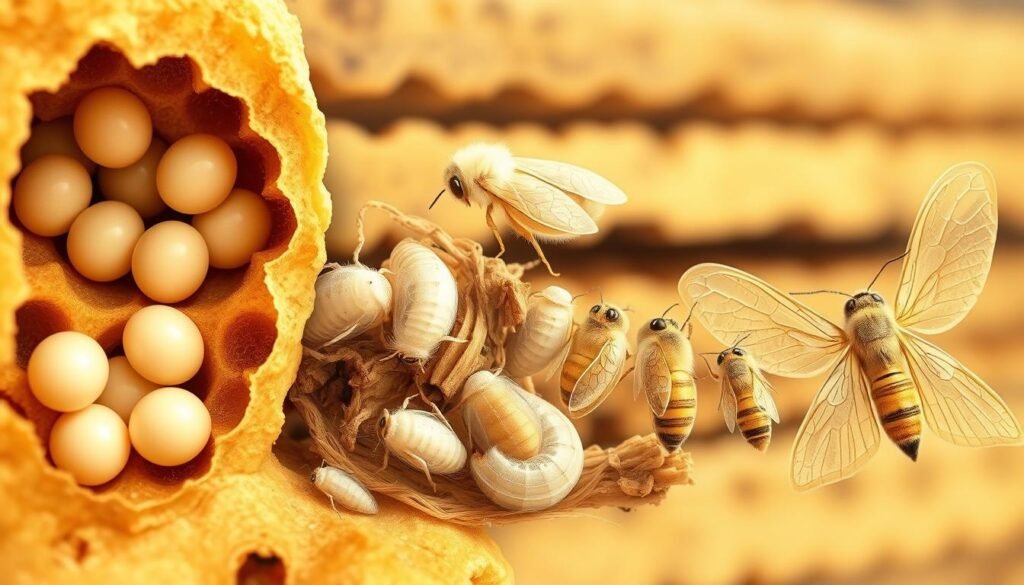
Tactical control begins with knowing where eggs, larvae, pupae, and adults hide. Match treatments to each stage and you cut damage and save comb. Below are stage-specific notes and simple actions you can use this season.
Egg stage: nighttime laying in cracks and crevices
Females deposit roughly 300–600 eggs at night in dark crevices. These moth eggs are hard to spot and often missed during daytime checks.
Eggs hatch in about 3–8 days, with warm days speeding development. Seal gaps and reduce nighttime access to limit fresh laying.
Larval stage: rapid tunneling through brood comb and pollen
Larvae tunnel brood comb and pollen, leaving silk webbing and frass that trap bees. Moth larvae prefer older, darker comb with cocoon residues.
Quick action—removing or freezing infested frames—stops tunneling and preserves salvageable wax.
Pupal stage: wooden notch damage and silk cocoons
Pupae form silk cocoons anchored in notches and crevices. These cocoons scar boxes and create future hiding spots for pests.
Adult stage: nocturnal intruders attracted by hive odors
Adult wax moths fly at night and follow scents of wax, honey, and pollen. Reducing excess space and keeping colonies strong lowers successful entries.
- Break the cycle: freeze frames, rotate out dark comb, and use cold or Bt treatment in storage.
- Seasonal vigilance matters—warm days mean faster transitions through these stages.
- For a seasonal action checklist, see seasonal beekeeping tasks.
Strengthen the colony to prevent wax moth infestation
A compact, well-occupied set of boxes makes nightly intruders far less likely to succeed.
Match box count to colony size. Start small and add space only after frames fill. This lets bees cover comb and defend all surfaces effectively.
Use entrance reducers and adjust them as populations change. A smaller opening makes it easier for guard bees to monitor activity at night.
Scrape bottom boards and corners monthly. Removing debris cuts off egg‑laying niches and lowers the chance of hidden larvae causing damage.
Frame rotation and odor tactics
Retire the darkest brood comb on a schedule and replace with fresh foundation. Dark comb holds residues that attract larvae.
Never use mothballs in live hives; chemicals can contaminate wax and honey. Consider planting mint around stands as a harmless odor mask.
- Hang a homemade trap 100 yards away (water, sugar, apple cider vinegar, banana peel) to draw adults away from the hive.
- Keep lids tight, stands sunlit, and airflow steady to reduce dark, damp niches that pests prefer.
| Action | Frequency | Benefit |
|---|---|---|
| Right‑size boxes | Seasonal / as frames fill | Better defense; fewer hiding spots |
| Entrance reduction | Weekly during dearths | Easier guard control; lower night entries |
| Bottom board scraping | Monthly | Removes debris and egg sites |
| Frame rotation | Annually or per inspection | Reduces larvae attraction; preserves comb quality |
Control options inside live hives without harming bees
Address active infestations with nonchemical tactics that let the colony repair salvageable comb. Remove any ruined frames and move them to a freezer. Freezing kills eggs, larvae, and pupae that scraping can miss.
Freeze and return
Freeze compromised frames in heavy bags, then thaw fully before reintroducing. Allow warmed frames to reach ambient temperature so condensation does not harm brood or honey.
Keep brood out of honey supers
Install a queen excluder under honey supers. This keeps brood away from stored comb and makes those boxes far less attractive to larvae later.
- Downsize boxes if the colony is over‑supered and feed briefly if needed after consolidation.
- Avoid in‑hive chemical controls; rely on mechanical removal and colony strengthening.
- Inspect and remove webbing and pupae cocoons promptly and sanitize equipment and gloves after handling affected items.
- Train to distinguish wax moth larvae from small hive beetle larvae so you choose the right response.
| Action | Why | When |
|---|---|---|
| Freeze removed frames | Kills eggs, larvae, pupae | Immediately after removal |
| Use queen excluder | Prevents brood in honey supers | Before nectar flow or storage |
| Downsize and feed | Tightens defense; helps rebuild | After combining or during dearth |
| Sanitize tools | Prevents spread between hives | After handling infested material |
Protect stored combs and equipment between seasons
A layered approach — cold, biological, and sealed storage — preserves comb and woodenware. Start by removing suspect frames and plan treatments before stacking boxes for the off‑season.
Cold treatment: Freeze drawn comb frames before storage. Many beekeepers target about 48 hours and then store below 50°F where possible. This kills eggs and larvae that could otherwise carry over.
Biological control: Certan b402 (Bt) works on stored frames when diluted 1:19 and sprayed on both sides. Larvae die after ingestion; do not use Bt in live hives.
Para‑Moth crystals: Use only for stacked, stored supers. Place 2 tablespoons on a plate atop stacks (5 deeps, 7 mediums, or 9 shallows), seal the stack, and air out equipment thoroughly before reuse.
Favor light-and-air stacking, cool dry storage, and tight sealing to deter adult moths and other pests. Consider safe placement where natural predators can reduce larvae, and rotate stored equipment regularly.
For full winter storage guidance, see how to store beekeeping equipment for.
Clean, restore, and reuse: frames, foundations, and boxes
Restoring used comb and boxes starts with a practical triage: inspect each frame for silk, frass, and visible cocoons. Scrape webbing and pupae casings with a hive tool or wire brush. Keep frames with only minor tunneling and label or discard those that are structurally damaged.
Plastic foundation and re-wax
Remove plastic foundation from frames before soaking. Use about 2 cups bleach + 1 cup Dawn per 53‑qt tote and let pieces soak long enough to loosen cocoons.
Power wash or brush clean, dry fully, then apply fresh beeswax to encourage even comb build. This step saves foundation and reduces future damage from adults or larvae.
Woodenware and frame cleaning
For wooden boxes and parts, use a brief bleach dip (roughly 1 cup bleach in 4.5 gal water or 3 cups in ~12 gal), two minutes per side, then dry completely to avoid warping.
Useful tips and disposal
- Triage frames: scrape silk, frass, and cocoons; scrap deeply tunneled frames.
- Keep bleach off wax-coated exteriors unless you will recoat finishes.
- Collect heavily infested pieces outdoors and let chickens remove larvae and pupae before rendering wax.
- Document what was saved and what was scrapped, then freeze doubtful frames once more before returning them to the hive or storage.
Practical cleanup protects equipment and honey stores. Thorough restoration helps beekeepers keep usable comb and prolongs the life of boxes and foundations.
Your wax moth toolkit: materials, methods, and safe handling
Quick access to freezer space and tools makes salvage possible for affected comb. A compact kit helps beekeepers act fast and limit damage.
Essentials: reliable freezer, heavy-duty trash bags, a stiff wire brush, and a hive tool. Keep gloves and eye protection for bleach or Para-Moth handling.
Field workflow and traps
Scrape webbing and frass first, then seal frames in bags and move them to the freezer at recommended temperatures. Label treated boxes and segregate them from clean equipment.
“Scrape, bag, freeze — then clean and dry before returning frames to service.”
- Prepare heavy bags to seal infested frames before transport and freezing.
- Mix trap: 1 cup water + 1 cup sugar + 1 cup apple cider vinegar + 1 old banana peel; place in a bottle with a 1/2-inch hole and hang about 100 yards away from hives.
- Keep spare boxes, entrance reducers, and markers in the kit for rapid resizing and labeling.
| Item | Purpose | Notes |
|---|---|---|
| Freezer access | Kill eggs, larvae, pupae | Track freeze cycles and thaw fully before reuse |
| Heavy trash bags | Contain pests during transport | Seal twice; label date and contents |
| Wire brush & hive tool | Remove silk and cocoons | Sanitize after use to avoid cross‑contamination |
| Trap bottles | Redirect adult moths away from hive | Hang downwind ~100 yards from hive siting |
For reference materials and deeper reading, see this beekeeping resources and books.
Seasonal beekeeping checklist to stay ahead of wax moths
Start each season with a short checklist that protects comb and preserves honey stores. A few steady steps each spring, summer, fall, and winter keep hives ready and reduce pest pressure.
Spring
Assess colony strength and match hive size to bee numbers. Replace some dark brood frames and fit queen excluders under honey supers to keep brood out of stored honey.
Summer
Right‑size boxes and check weekly for webbing or frass in brood areas. Pull compromised frames and freeze them immediately for the recommended time.
Fall
After harvest, freeze supers and frames before storage. Treat stored comb with Certan b402 (Bt) or use Para‑Moth crystals only for stacked supers, then air stacks with light and airflow.
Winter
Keep stored frames and boxes cool and dry, ideally under 50°F when possible. Seal stacks but inspect equipment periodically for activity.
“Schedule checks and record freezing times — consistent records make prevention routine.”
| Season | Key actions | Why it matters |
|---|---|---|
| Spring | Assess colony, rotate frames, set excluders | Limits brood in honey; reduces future attraction |
| Summer | Tighten space, monitor weekly, freeze frames | Stops larvae spread fast |
| Fall | Freeze, treat stored comb, stack with airflow | Protects comb during storage |
| Winter | Cool, dry storage; periodic inspections | Prevents carryover and saves equipment |
- All seasons: scrape bottom boards and keep corners clean so eggs have no safe sites.
- Keep simple records of interventions, freezing dates, and treatments so practices improve over time.
- Train any beekeepers helping you to spot early signs and act within days to avoid escalation.
Conclusion
A clear plan that mixes quick action with steady maintenance saves drawn comb and keeps colonies strong.
Start with a well-sized hive that honey bees can defend at night. Remove and freeze any infested frames immediately, then restore useful comb carefully so bees can repair it.
Rotate dark comb, keep bottom boards clean, and reduce entrances during vulnerable periods. Reserve chemical controls only for stored supplies — follow airing rules for Certan b402 or Para-Moth on stacked supers.
Store equipment cool, dry, and airy. Use traps and odor masking placed well away from hive entrances and keep records so practices improve each season.
For guidance on temperature control methods used against these pests, see temperature control methods. With timely action and disciplined storage, beekeepers can preserve frames, comb, and colony productivity.
FAQ
What are the first signs of a wax moth problem in a weak colony?
Look for silk webbing across frames, loose frass pellets in comb crevices, and small cocoons tucked into brood comb tunnels. Damaged or hollowed brood frames, shredded pollen stores and scattered debris on the bottom board also signal activity. Inspect at night or early morning when adults are less active.
How can I tell larvae damage from small hive beetle or mouse droppings?
Larval frass is granular and tan to brown, often mixed with chewed wax and webbing. SHB larvae leave slimy fermentation and pupal cases in soil, not the silky galleries wax larvae produce. Mouse droppings are darker, firmer and distinct in shape. Compare texture and location on frames and in wooden crevices.
What immediate steps should I take when I find infested frames?
Remove affected frames and isolate them in heavy trash bags or a sealed container. Freeze frames for 48–72 hours at 0°F to kill eggs, larvae and pupae. Replace with clean frames and reduce hive volume so the existing bee population can defend comb effectively.
Can I treat infested comb inside a live hive without harming bees?
Yes. Pull and freeze heavily damaged frames outside the hive and return only salvageable comb. Use queen excluders to keep brood out of honey supers and let the colony repair light damage. Avoid Para-Moth or similar fumigants inside active colonies.
What storage methods protect supers and loose equipment between seasons?
Cool, dry, well-ventilated storage with tight seals prevents reinfestation. Light-and-air stacking reduces sheltered spots for egg laying. Freeze frames before storage or treat with Bacillus thuringiensis (Certan B402) on stored comb; Para-Moth crystals are for sealed, non-live equipment only.
How does colony strength reduce risk of infestation?
Strong colonies maintain temperature and effectively patrol entrances, removing eggs and larvae and deterring nocturnal adults. Right-sizing boxes to population density, rotating out dark brood comb and merging weak colonies into healthy ones cut vulnerability.
Are there safe biological controls for stored combs?
Yes. Certan B402 (a Bacillus thuringiensis product) targets lepidopteran larvae and can protect stored frames when applied per label instructions. It is safe for stored combs but not a substitute for proper freezing and sealing practices.
When are adults most active and where do they lay eggs?
Adults are mainly nocturnal and attracted to hive odors, wax and breached comb. Females lay eggs in cracks, crevices, and shaded tunnels in weakened or stored equipment. Eliminating sheltered egg sites reduces future generations.
Which maintenance tools and items should every beekeeper have for control?
Keep freezer access for treatment, heavy trash bags, a hive tool, wire brush, and a spare set of frames and foundations. A simple trap of water, sugar, apple cider vinegar and old banana can monitor adult presence but place traps away from hive entrances.
Can natural predators or animals help manage larvae?
Chickens and some wild birds will scavenge comb and reduce larval populations when allowed access. In certain regions, predatory ants may consume pupae, but relying on predators risks other problems—use them as supplemental, not primary, control.
How often should I inspect and rotate frames to prevent future problems?
Inspect hives at least every 7–14 days during active season. Rotate out and replace dark brood comb on a multi-year schedule, and freeze or treat frames before long-term storage. Frequent bottom board and entrance checks catch early signs.
Is chemical fumigation safe for wax and equipment reuse?
Fumigants like Para-Moth are labeled for stored equipment only and must be used strictly per directions; they are not appropriate inside live hives. For reuse, prefer freezing, Bt treatments and thorough cleaning over harsh chemicals.
What are best practices for cleaning and restoring salvaged frames and woodenware?
Scrape off webbing and frass, dip or briefly wash woodenware in a dilute bleach solution, then dry fully in the sun. Plastic foundations can be soaked with soap and bleach, power washed, and re-waxed. Let chickens or rendering remove larvae before processing wax.