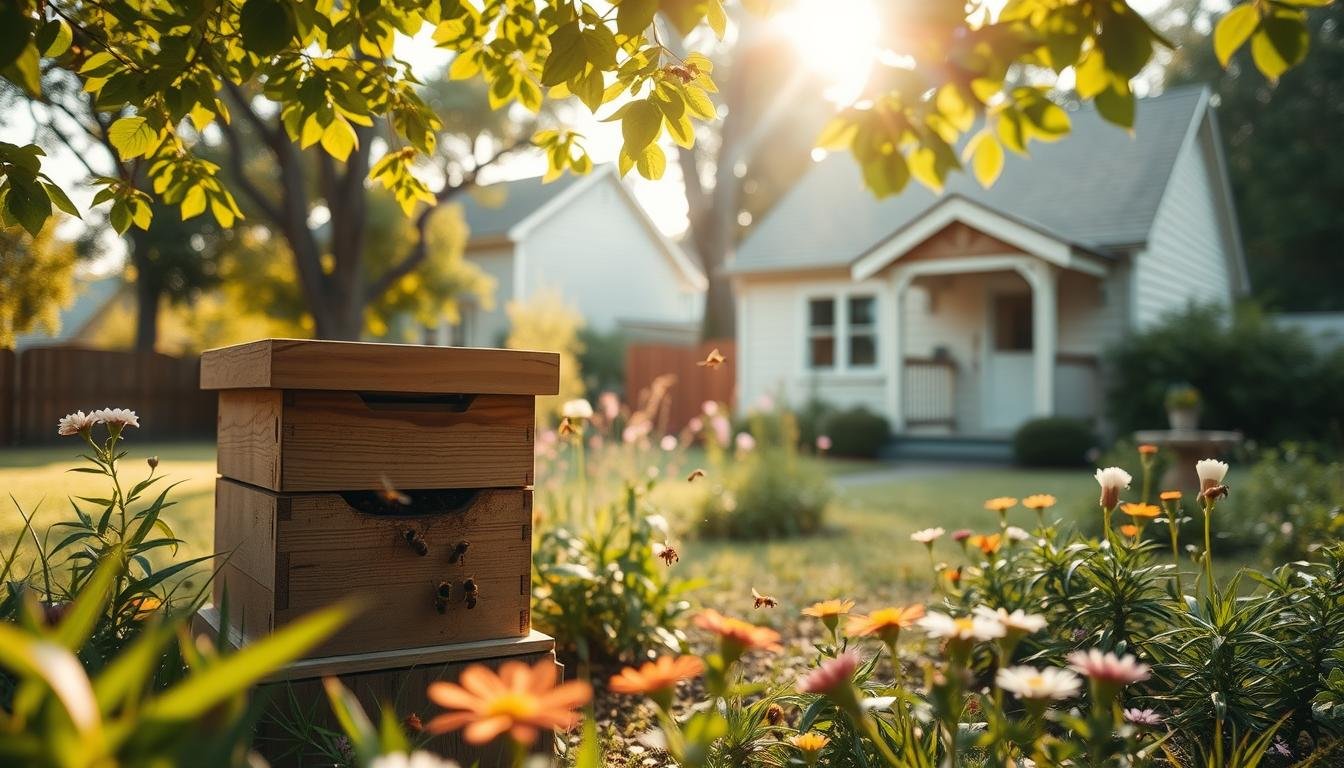
Goal: Place your hive so it cuts down conflicts while keeping inspections safe and practical on your property. A single wood box is small (about 22 inches by 16 inches), yet it needs clear room to work.
Core factors that guide location decisions include lot size, neighbor proximity, local rules, flight paths, sun and wind exposure, and ground drainage. Give each unit at least five feet of space in every direction and keep multiple hives at least three feet apart.
Remember that bees can forage 2.5 miles or more, so nearby flowers or a garden are helpful but not mandatory. Focus on safe flight lines, good airflow, stands off the ground, and easy access for lifts, inspections, and winter care.
This introduction previews simple rules of thumb for distance, local ordinance tips, entrance and flight-line management, siting for hive health, water planning, and predator protection so you can choose a location that supports beekeeping and honey production while protecting family and neighbors.
Key Takeaways
- Allow a minimum five-foot working buffer around each hive footprint.
- Keep multiple units three feet apart and on stands with good drainage.
- Prioritize sun, windbreaks, and clear flight paths over having flowers on-site.
- Comply with local rules and reduce neighbor conflict by placing hives thoughtfully.
- Design for easy access year-round to protect hive health and support honey harvests.
Quick answer: safe distances and the factors that change them
A simple rule gives small lots about ten feet and roomy properties up to 200 feet for placing a hive, depending on traffic, neighbors, and layout.
Site-specific factors change that range. Morning sun at the entrance energizes foraging. Wind, wet ground, and how people move through your yard also matter.
- Practical range: ~10 feet on tight yards if flight paths avoid doors and patios; 50–200 feet where space allows and access remains convenient. See guidance on hive location.
- Working area: Allow an 8 × 8 feet pad per one or two hives for tools, lifting, and safe movement.
- Entrance & traffic: Point entrances east or southeast for morning sun and away from busy walkways to reduce encounters during high-activity times.
- Heat & winter: Plan partial afternoon shade in hot summers and provide windbreaks for winter shelter.
- Neighbors & rules: Ordinances and neighbor concerns can cap placement, so use fences, hedges, or setbacks when needed.
| Situation | Suggested distance | Key factor |
|---|---|---|
| Small urban yard | ~10 feet | Avoid doors, patios; use barriers |
| Suburban/medium lot | 50–100 feet | Balance access with reduced encounters |
| Large property | 100–200 feet | Maximizes separation; still consider access |
Remember that bees will forage widely for pollen and nectar, so yard plantings help but should not drive the primary distance decision. For additional reading on resources and reference texts, consult this beekeeping resource guide.
Understand rules and keep the peace with neighbors
Confirm local codes first, then plan placement that respects neighbors and local rules. Start by checking city and county ordinances, plus any HOA bylaws that govern lot size, setbacks, and allowed hive counts.

Local ordinances, HOA bylaws, and lot-size requirements
Many jurisdictions limit numbers, require registration, or set setbacks from the property line. For example, Cary, North Carolina mandates a 6,000 sq ft minimum and no units within 10 feet of the property line.
Talk to neighbors early and use barriers
Explain that colonies are defensive, not aggressive, and that you will orient the entrance away from high-traffic zones. Adding a tall fence, wall, or dense shrubs forces flight paths upward and reduces encounters with people.
If local water is scarce, provide a safe yard source so bees avoid neighbors’ pools and bird baths.
Contact your local beekeeping association for guidance
Reach out to the state or local beekeeping association for rule interpretations, registration help, and model solutions other beekeepers use. For more placement tips, see optimal hive placement.
18. how far should beehives be from a house
Choose a location that keeps routine inspections safe while minimizing chance encounters. On tight city lots, a workable distance is roughly ten feet if the entrance points away from pathways and you add a fence or hedge to lift flight paths above head height.
For larger properties, placing hives fifty to two hundred feet from the home cuts incidental contact while keeping access short enough for regular work. Plan an 8 × 8 feet working pad near each unit so you have room to lift boxes and step back during checks.
Keep clearances practical: allow at least five feet around the hive and space multiple units three feet apart. This layout eases frame removal, mite treatments, and reduces crowding during inspections.
“Remember heavy honey boxes can top fifty pounds; plan paths and lifts accordingly.”
- Use inches when fine-tuning stand level and a slight forward tilt to shed rain.
- Point entrances away from doors, play areas, and heavy foot traffic.
- Reserve extra room nearby so the colony can expand without disruptive moves.
Control flight paths with entrances, fences, and hedges
Simple adjustments at the entrance create predictable flight lines and cut conflicts. Position and screening shape takeoff routes so bees climb above human activity. These steps lower surprise encounters in the yard and keep work near the hive safer.
Point entrances away from doors, play areas, and traffic
Treat the entrance like a runway: face it away from doors, grills, and paths so flying bees do not cross busy routes. On narrow lots, stagger hive placement and vary angles to limit drifting between colonies.
Use a fence or dense shrubs to force bees to fly up and over
Place a tall fence, wall, or thick hedge a short distance in front of the entrance. This forces an immediate up-and-over flight line and keeps most activity above head height.
“Facing hives toward a high fence, wall, or dense shrubs elevates flight paths above head level, reducing interference with human traffic.”
| Measure | Benefit | Tip |
|---|---|---|
| Entrance orientation | Reduces crossings | Point away from doors and play areas |
| Fence or hedge | Raises flight altitude | Keep partial sun on the entrance |
| Staggered hives | Limits drifting | Vary facing directions on narrow lots |
- Train family members to avoid entrance zones during peak activity.
- Use temporary panels in high-use seasons to reinforce safe flight corridors.
Siting for bee health: sun, wind, drainage, and elevation
Pick locations where warmth, airflow, and dry ground combine to lower stress on the colony. Good siting speeds morning foraging and reduces moisture-related problems that invite pests.

Morning sun, partial afternoon shade, and southern exposure
Morning light at the entrance wakes bees quickly, helping them begin work early. In hot climates, provide partial afternoon shade to keep internal temperatures steady.
Good airflow, dry ground, and a slight forward tilt for runoff
Avoid low, damp hollows. Choose elevated pads with steady breeze to cut damp and cold drafts.
Set the hive level side-to-side and tilt it slightly forward so rain runs out, not into the bottom board.
Rooftops and urban options that reduce human contact
Rooftop placement raises flight paths above busy yard areas and deters skunks. Supply on-site water so bees do not seek neighbor pools.
“Choose sunny, well-drained spots and give colonies shelter from prevailing winds.”
| Feature | Benefit | Practical tip |
|---|---|---|
| Morning sun | Boosts early foraging | Face entrance southeast when possible |
| Dry, elevated ground | Reduces pests and damp stress | Use stands and gravel pads |
| Windbreak | Conserves colony energy in winter | Plant hedge or install fence on windward side |
| Rooftop | Keeps flights high over people | Ensure steady water access and safe access route |
- Balance sun and shade by climate to protect honey and hive condition.
- Keep a nearby water source so bees get what they need without troubling neighbors.
Space, stands, and access: make beekeeping manageable
Give your apiary a clear work zone so inspections, feeding, and harvests stay safe and efficient.
Plan an 8 × 8 feet work pad for one or two hives so you have room to set tools, stage frames, and step back if bees get defensive. This area reduces clutter and speeds routine checks.
Map direct access routes from storage to the apiary. Short carries cut strain during harvest and reduce the chance of dropping heavy boxes.
Raise each hive about 18 inches on stable stands such as concrete blocks or treated lumber. Elevation keeps gear off damp ground and deters skunks, while protecting your back when lifting heavy boxes.
Keep the stand level side-to-side and tilt the hive slightly forward to shed rain and condensation. Avoid excessive height — upper boxes become hard to manage and raise injury risk.
- Leave clear room around hive fronts and sides for smokers and spare frames.
- For multiple units, vary orientation slightly to limit drifting between colonies.
“An organized pad and steady stands make beekeeping safer and more efficient.”
Water and forage: keep bees out of pools and in the garden
A steady, safe water spot close to the hive prevents visits to neighbor pools and bird baths.
Provide continuous fresh water with simple landings so bees get what they need without drowning. Use a pail with floating wood or cork, a slow-drip basin, or a feeder placed near the stand.
Train honey bees to your station by lightly sweetening the water for a few days, then return to plain water while keeping levels consistent.
- Install landing rafts (wood, cork, pebbles) so bees can sip safely and avoid pools.
- Place the water where it warms in the morning but avoids midday overheating.
- Plant a backyard garden of native flowers and stagger bloom times to supply pollen and nectar.
Expect bees to forage miles, yet nearby garden plantings shorten trips and boost colony nutrition. In dense neighborhoods, a reliable water source is one of the best beekeeping practices to protect neighbor relations.
“Provide continuous fresh water with safe landings: a pail with floating wood or cork works well.”
| Action | Benefit | Quick tip |
|---|---|---|
| Landing rafts | Prevents drowning | Use cork, wood, or stones |
| Sweeten then plain water | Trains traffic | Only 2–3 days of light syrup |
| Native garden | Stable pollen and flowers | Mix early, mid, and late bloomers |
For planning in varied climates, see the guide on beekeeping in different climates for region-specific planting and water advice.
Predators and security: protect colonies and avoid nuisances
Protecting colonies means planning for both wildlife and curious neighbors before you set any equipment in place. Take security seriously: simple measures prevent major losses and keep honey safe.
In bear country, install an electric fence before you bring in bees. A preemptive shock creates a learned avoidance and is far more effective than adding protection after an attack. Costs often start near $300, depending on the setup and posts.
Electric fencing and visual screening
Set up the fence first so bears learn to keep distance. Shield the apiary from view to cut vandalism and to raise flight lines above property edges.
Night pests, elevation, and tidy ground
Raise each hive at least 18 inches to discourage skunks and raccoons that harass entrances. Keep the ground neat with pavers, crushed stone, or landscape fabric instead of herbicides.
- Prioritize security: fence first in bear regions to protect the colony and stored honey.
- Elevate and secure: make entrance harassment harder for nocturnal pests.
- Limit access: choose a location with easy keeper access but reduced public entry; use gates or signage.
- Maintain: check fence chargers, clear vegetation on wires, and watch entrance activity to resolve issues early.
“A preemptive fence creates a psychological barrier and is far more effective than after an attack.”
Conclusion
Pick a site that protects your family while letting bees work efficiently. On tight lots, about ten feet with good entrance management and screening can work. On larger property, 50–200 feet often gives a safer buffer without sacrificing access.
Focus on the key factors: morning sun, wind protection, dry ground, a clear working area, compliant setbacks, and a dependable water source. Use raised stands, a slight forward tilt, and screening to shape flight paths and ease inspections.
Keep notes and tweak angles, shade, and screening through the year. Consult your local association for rules and site reviews. For recommended setbacks see recommended setbacks, and use the seasonal tasks guide to plan year-round care.
With thoughtful placement and small adjustments, you can support productive hives and quality honey while keeping neighbors comfortable.
FAQ
What is a safe distance for placing hives near my home?
Place colonies so they don’t direct flight paths toward doors, windows, or play areas. On small urban lots, you can use barriers and routing to make about 10 feet workable. For suburban or rural sites, giving bees 50 to 200 feet of separation from primary living spaces reduces encounters while keeping access convenient.
What local rules should I check before setting up colonies?
Review city ordinances, county codes, and HOA bylaws for setbacks, lot-size limits, and maximum hive counts. Many municipalities require specific distances from property lines, setbacks from dwellings, or registration of apiaries. Your nearest beekeeping association and county extension office can point to exact regulations.
How can I reduce neighbor concerns about bees?
Talk with neighbors before installing boxes. Explain hive placement, seasonal activity, and your management plan. Use physical barriers such as fences or hedges to direct bees upward. Offer to collect swarm hotline info and demonstrate that bees are generally nonaggressive when managed correctly.
How should hive entrances be oriented to control flight paths?
Aim entrances away from high-traffic areas like doorways, sidewalks, and play spaces. A southern or southeast-facing entrance gives morning sun, which encourages early foraging and faster hive warming. Combine orientation with fences or dense shrubs to force bees to rise above human height.
What siting conditions improve bee health?
Choose a sunny to partially shaded spot with morning sun, good airflow, and well-drained soil. A slight forward tilt helps water runoff from bottom boards. Avoid low, soggy areas and heavy afternoon heat; elevation and ventilation lower disease and pest pressure.
Can I keep hives on rooftops or balconies?
Urban rooftop and balcony apiaries are possible when loads, access, and safety are addressed. Rooftops reduce ground-level contact but require secure stands, railings to direct flight, and a reliable water source. Check structural capacity and local ordinances before proceeding.
How much working space is needed around a hive?
Plan roughly an 8×8-foot clear working area for each hive cluster to inspect, manipulate boxes, and store tools. Raise hives about 18 inches on a level stand to ease lifting and to keep entrances clear of debris and predators.
How close should a water source be to the apiary?
Provide fresh water within a few yards of the hive so foragers don’t need to visit neighbors’ pools or yards. Use shallow basins with landing stones or floating rafts. Position water so bees fly up from the source, reducing low-flight activity near people.
How far do bees typically forage, and how does that affect placement?
Honey bees commonly forage within a 1 to 2-mile radius, but most activity is in the first few hundred yards. Place hives near abundant flowers and diverse forage to support strong colonies and reduce flights toward distant gardens or neighbors.
What spacing is recommended between multiple colonies?
Keep hive entrances separated and orient boxes so bees don’t confuse colonies. A few feet between stands is fine if entrances face different directions; for heavy apiaries, wider spacing reduces drifting and disease spread. Ensure aisles allow safe movement and hive inspections.
How do I protect hives from predators and pests?
In bear country, use electric fencing and elevate hives on sturdy stands. Shield colonies from skunks and raccoons with short fences or hardware cloth. Manage weeds and maintain cleanliness to lower pest habitats, avoiding broad herbicide use near colonies.
When should I consult a local beekeeping association?
Contact your local beekeeping association for mentorship on siting, swarm prevention, local pest cycles, and legal requirements. Associations often run classes, offer inspection assistance, and provide community-approved practices to keep bees and neighbors safe.
How do barriers like hedges or fences affect bee flight?
Dense shrubs or tall fences force bees to fly upward, raising flight paths above human height and limiting low-level interaction. Combine barriers with entrance direction to steer traffic away from walkways and doors, improving neighbor relations and safety.