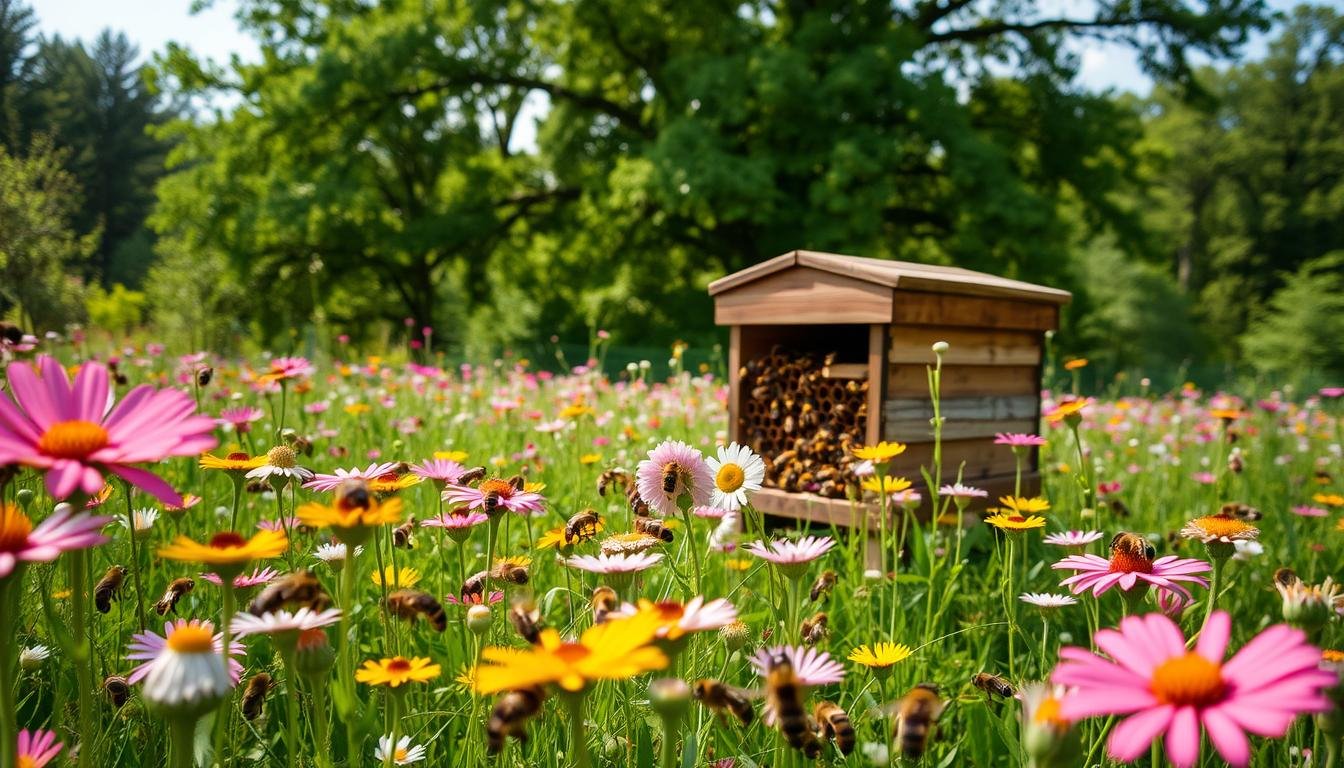
Supporting native pollinators starts with clear choices in everyday hive care. This short guide shows how honey bees and other wild bees can thrive when management focuses on habitat, health, and local needs.
Honey bees were introduced to North America centuries ago, and in many areas they are widespread. Urban and backyard keepers often push for more flowers and nesting sites, which benefits many species across the city and around world gardens.
Research on competition, flower use, and disease spillover is mixed. Still, careful placement of apiaries, diverse bloom planning, and strict hive health practices reduce risks. This guide previews steps: map the landscape, increase high-quality forage, create nesting habitat, and manage health to help both honey bees and native bees flourish.
Key Takeaways
- Align daily choices with habitat and floral planning to help wild pollinators.
- Urban and backyard projects can expand forage and nesting resources.
- Decisions should follow current research on foraging ranges and disease.
- Scale and season matter—adjust colony numbers to local bloom density.
- Find practical planting ideas in this pollinator guide and a plant list at Beekeepers Realm.
Understand the landscape: native bees, honey bees, and conservation realities
Understanding habitats helps guide smart decisions about hives and plantings.
Native, wild, exotic, and endemic species: why diversity matters
Definitions matter: native species arrived without human help, wild populations live outside management, exotics were introduced, and endemic species occur only in certain locales.
Oregon hosts roughly 900 wild bees, including about 25 bumble bees. That diversity supports resilient pollination across many plants and crops.
Competition, floral resources, and seasonality
Research shows honey bees compress foraging ranges when flowers are abundant—most trips fall within 0.31–0.75 miles in cities.
Seasonal shifts matter: in Oregon’s Willamette Valley, honey pollen intake drops in July as brood rearing slows. Mass blooms often leave surplus pollen even when managed colonies are numerous.
Urban vs. rural contexts
Dense urban plantings can concentrate foraging and lower travel stress. But too many hives in flower-poor neighborhoods can raise risks for local pollinators.
| Context | Typical effect | Management tip |
|---|---|---|
| Urban, high floral density | Shorter foraging range; shared resources | Site hives near abundant plants |
| Rural, sparse bloom | Expanded foraging; more competition | Limit colony numbers; enhance plantings |
| Mass bloom events | Pollen surplus; temporary shifts in flower use | Monitor seasonal needs |
Shared pathogens appear on flowers, but presence does not prove transmission direction. Keeping colonies healthy reduces potential impacts. For practical guidance on boosting floral resources, see how to really save the bees.
Create abundant, season-long bee forage with native plants and diverse flowers
A well-timed mix of perennials, annuals, and cover crops keeps foraging bees fed across seasons.
Design a bloom calendar: spring, summer, fall flowers for nectar and pollen
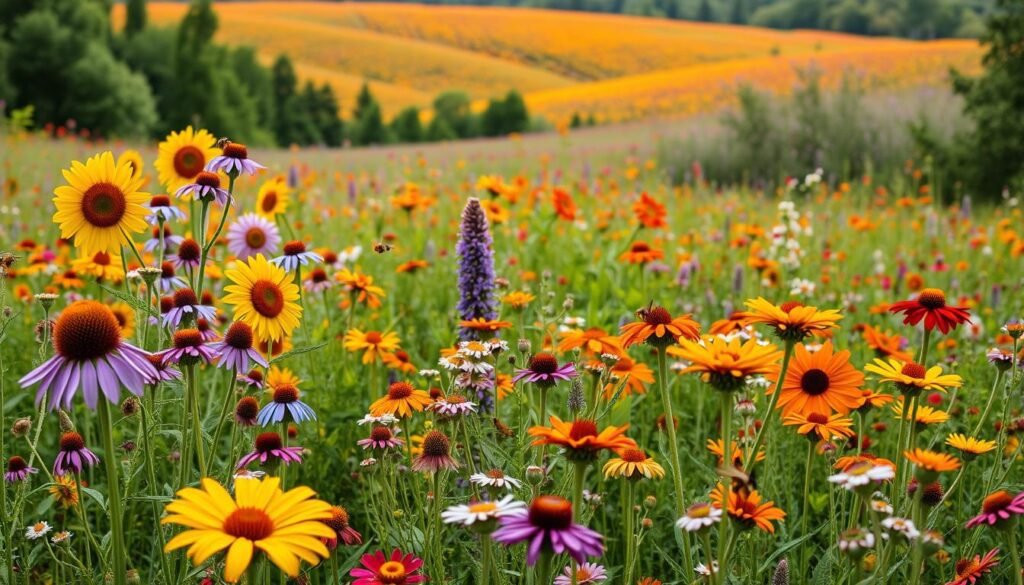
Plan continuous bloom by pairing early-spring shrubs and bulbs with midseason perennials and late-flowering shrubs. This keeps honey colonies and many native bees collecting both nectar and pollen from March through October.
Include summer cover crops—buckwheat and mustard for quick nectar, sunflower and cowpea for longer summer blooms—and fall mixes with peas, vetch, and clover to extend forage into cool months.
Balance plant choices: integrate high-nectar sources without over-relying on weedy species
Prioritize regional plants to support local bee species while adding mint-family staples like lavender and oregano for late-summer honey flow.
“Match plant choices to local specialists—squash and pumpkin for squash bees—and keep diverse flower forms to reduce competition.”
- Scatter plantings across yards, borders, and set-asides so bees find food within short flight areas.
- Use succession planting and staggered cultivars to smooth gaps in nectar and pollen.
- Observe which flowers attract different bee species and adapt the calendar yearly.
Build and protect habitat: nesting sites, stems, and undisturbed ground
Many pollinators nest in bare soil or hollow stems, so on-site habitat matters more than distant refuges.
Provide sunny, bare patches where nearly 70% of bee species can dig nests. These spots should be warm, well-drained, and scattered across yards or field margins so different soil textures suit varied bee species.
Keep stems and dead wood through winter. Standing stems, bramble canes, and snags offer cavities for stem- and wood-nesting bees. Retaining small piles of excavated soil also creates quick, attractive nesting mounds.
Reduce tillage and include cover crops. No-till plots show large gains: squash bee visitation can triple on fields left untilled. Flowering cover crops add nectar and pollen while structuring ground for bumble bees and other bees native to pastures.
- Limit soil disturbance at edges and beds.
- Allow cover crops to bloom and plan irrigation in droughts to keep soils workable.
- Adjust mowing and cleanups to avoid peak nesting and emergence windows.
These small land changes help honey bees and native bees coexist, improving local pollination and strengthening habitat across areas you manage.
Supporting native bee conservation as a beekeeper: smart apiary placement and management
Apiary siting should favor long-season blooms and nearby natural areas to keep populations balanced.
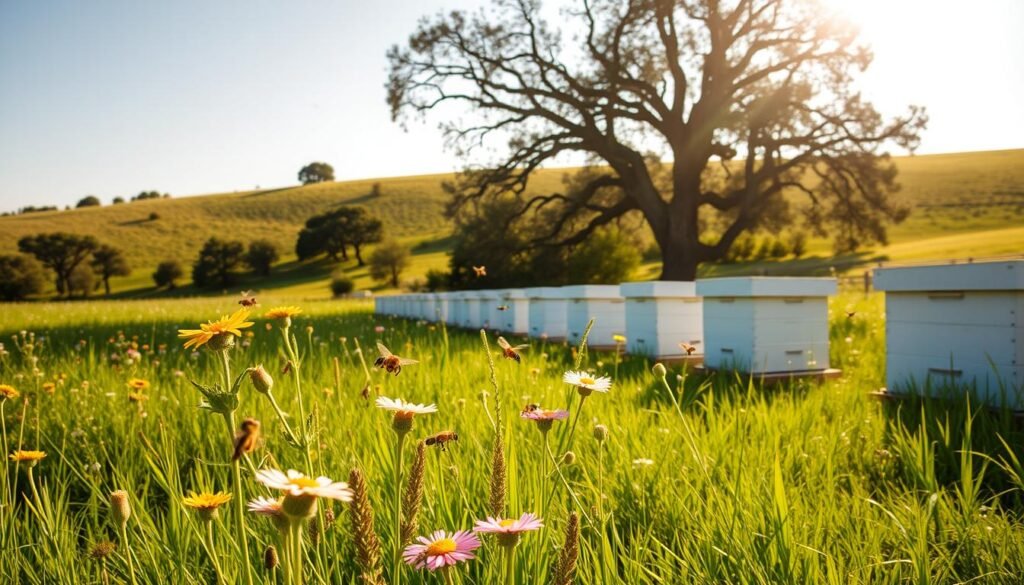
Right place, right density: place colonies where bloom density and diversity are reliably high from spring through fall. Follow guidance to avoid siting hives near sensitive conservation areas that host rare species or limited nesting habitat.
Map floral corridors—riparian strips, hedgerows, and cover-cropped fields—and pick sites that reduce long-range foraging during nectar dearths. Fields within about 1,000–6,000 yards of natural patches get more crop pollination from wild bees, so proximity matters.
- Calibrate colony numbers to local carrying capacity; fewer in lean landscapes.
- Coordinate with neighbors and community gardens to prevent clustering and disease hotbeds.
- Provide on-site supplemental bee forage and water in late summer to lower competition for shared flowers and pollen.
| Placement factor | Desired condition | Management action |
|---|---|---|
| Bloom density | High, continuous spring–fall | Site hives near diverse plantings |
| Nearby habitat | Adjacent natural areas within 1,000–6,000 yards | Favor edges of natural patches, monitor impacts |
| Apiary density | Matches forage capacity | Limit colonies; move or split when needed |
Keep records and health checks. Regular inspections and clear logs help you adapt placements and reduce disease risks that amplify when many colonies cluster in tight areas.
Practice disease-aware beekeeping and minimize resource conflicts
Proactive health checks and smart apiary layout cut the odds of disease spillover at shared flowers.
Detecting pathogens across taxa is common in research, but studies rarely show directionality or clear impacts on wild bees. Varroa remains the most damaging parasite for honey bees, while viruses and microbes can appear on flowers used by many species.
Follow state university guidance and lab findings: keep colony pathogen loads low to reduce possible spillover. Limit hive density and ensure abundant flowers to lower flower sharing during dearth.
- Monitor and treat Varroa, replace old comb, and maintain strong nutrition to keep honey production steady and infections down.
- Space colonies to reduce drift and robbing; quarantine new packages and avoid swapping frames without sanitation.
- Avoid siting colonies near commercial bumble bee operations when possible, since those facilities have been linked to higher disease in local bumble bees.
| Action | Purpose | Outcome |
|---|---|---|
| Regular Varroa checks | Lower virus amplification | Reduced pathogen loads in honey bees |
| Quarantine and sanitation | Prevent cross-contamination | Fewer shared infections at flowers |
| Match apiary density to blooms | Limit competition and crowding | Healthier bee populations and steadier pollen and nectar flow |
Track colony records and local observations to adapt management. Share practices with peers to raise standards and protect all pollinators in your landscape.
Conclusion
Practical actions—siting hives wisely and staging blooms—help both managed colonies and wild bee populations.
Keep a landscape-first mindset. Grow diverse plants, stagger flowering times, and protect nesting spots like bare soil, stems, and snags. Reduced tillage, cover crops, and timely irrigation boost outcomes for many species, from squash specialists to common bumble bees.
Match hive numbers to local floral capacity and avoid sensitive areas where native bee populations may be strained. Monitor disease, crop pollen trends, and mid-summer drops in demand to guide moves and feeding.
With careful choices, backyard honey production can coexist with thriving native bee communities around the world.
FAQ
What is the difference between honey bees and wild bee species?
Honey bees (Apis mellifera) are social, managed pollinators kept in hives for honey and crop pollination. Wild bees include bumble bees, solitary bees, and other endemic species that nest in stems, wood cavities, or bare ground. Wild species often specialize on certain flowers and forage at different times, so they complement honey bees and boost pollination diversity across landscapes.
Can keeping honey bees harm local pollinator populations?
It can if hives are placed too densely near limited floral resources or sensitive habitats. High colony densities may increase competition for nectar and pollen and raise the risk of disease spillover. Careful apiary placement, reduced hive density, and good disease management lower those risks and reduce impacts on bumble bees and other wild pollinators.
How should I choose a location for hives to reduce conflict with wild pollinators?
Pick sites near abundant, diverse forage but away from remnant habitat patches and nesting hotspots. Avoid placing apiaries next to spring-blooming meadows that support ground-nesting bumble bees and solitary bees. Work with local extension services or universities for landscape-level guidance and maps of key pollinator areas.
What plants provide the best season-long forage for local pollinators?
Use a mix of spring, summer, and fall bloomers. Native wildflowers, shrubs, and trees such as goldenrod, Echinacea, native clovers, and serviceberry offer nectar and pollen across seasons. Balance high-nectar sources like lavender and Salvia with early-blooming species so food is available from early spring to late fall.
Are lawns and monoculture plantings harmful to bee populations?
Yes. Large lawns and single-crop plantings offer little nectar or pollen and fragment habitat. Replacing parts of turf with mixed wildflowers, cover crops, or native grasses increases forage and nesting options. In agricultural areas, integrating bee forage strips and hedgerows supports pollination services for crops and wild species.
What nesting resources do ground-nesting and stem-nesting bees need?
Ground-nesting bees need patches of bare, well-drained, sunny soil with minimal vegetation and disturbance. Stem-nesting species use hollow stems, pithy stalks, or drilled blocks. Leaving plant stems standing through winter, creating sand or soil banks, and installing bee hotels tuned to local species improves nesting success.
How can I reduce disease transmission between honey bees and wild bees?
Maintain strong hive health through regular inspections, Varroa control, and hygienic practices. Remove diseased resources and avoid feeding sugar syrup in ways that attract wild bees to hive entrances. Vaccination is not available, so biosecurity, reduced drift, and limiting robbing behavior help minimize pathogen spillover.
Should I change tillage or irrigation practices to help pollinators on my land?
Yes. Reducing tillage preserves nesting sites for squash bees and bumble bees that use undisturbed ground. Strategic irrigation can extend bloom periods during dry spells, boosting forage availability. Cover crops and minimal soil disturbance also enhance habitat and increase pollen and nectar resources.
How many hives per acre is appropriate to avoid over-foraging?
There is no one-size-fits-all number. Appropriate density depends on existing forage, landscape context, and seasonality. In forage-poor areas, limit hives; in diverse, flower-rich landscapes, moderate densities work better. Consult local extension services or university research for regional recommendations.
Can planting nonnative flowers benefit local pollinators?
Some nonnative ornamentals supply nectar, but they rarely replace native species’ value for specialized wild bees. Prioritize regionally adapted native plants for pollen and nectar. Use noninvasive ornamentals like certain salvias or lavender as supplements, not substitutes, to maintain ecological balance.
What role do cover crops and hedgerows play in pollinator management?
Cover crops and hedgerows provide continuous forage, nesting sites, and shelter. They increase floral abundance, reduce pesticide drift, and can improve soil health. For farms, these practices support crop pollination while enhancing biodiversity and resilience across the landscape.
How can backyard beekeepers collaborate with conservation groups or researchers?
Share hive locations and management data with local conservation organizations and university extension programs. Participate in citizen science projects that monitor wild bee populations and floral resources. Collaboration helps align apiary practices with landscape-scale conservation goals and provides useful research data.
What immediate steps can beginners take to help pollinators this season?
Plant a variety of flowering species that bloom in different seasons, leave some stems standing over winter, create a small bare-soil patch, reduce pesticide use, and keep hives healthy with routine care. Even modest changes in yards and farms can boost pollen and nectar availability and support diverse pollinator populations.