This Ultimate Guide offers a practical, science-based overview of how nectar dynamics, weather, and active management intersect across the year to shape honey yields in the region.
Beekeeping timing is not one-size-fits-all. Vegetation, latitude, altitude and annual weather swings mean each site needs local tweaks rather than a fixed schedule.
Use this framework to pair observations of blooms and temperature with actions like feeding, space management, swarm control, and varroa monitoring. Open hives only when disturbance is minimal; for cold borderline days, limit checks to brief top inspections.
High-level arc: late-winter stimulation for early build-up, spring expansion, summer variability and water needs, autumn consolidation and acaricide, then winter moisture control and insulation. Climate change raises uncertainty, so adapt by tracking local cues and applying data-driven adjustments.
Key Takeaways
- Adapt the guide to your local region and microclimate rather than following dates rigidly.
- Start stimulation and protein support in late winter for a stronger spring build.
- Feed 2:1 sugar syrup ~500 g/week about six weeks before the season if needed.
- Monitor varroa by thresholds and treat in autumn; manage swarms in spring.
- Minimize cold-weather inspections; use brief top checks when temps are low.
- Track blooms and weather in real time — bees respond fast to changing nectar availability.
What this Ultimate Guide Covers and How to Use It
This guide provides a practical reference grid so beekeepers can match tasks to what plants and weather are doing in real time. Map your apiary’s needs to actual bloom and weather cues, not fixed dates, and adjust by time and local observations across the months.
Why a universal beekeeping calendar can’t exist
No single schedule fits all regions. Latitude, elevation, coastal proximity, and vegetation shift bloom timing by weeks. Annual variability and climate-driven change further scramble predictable patterns.
Reading the calendar against your local conditions
Use a “calendar vs. conditions” approach: track daytime highs, overnight lows, soil moisture, wind, and humidity. Note first bloom dates and rainfall for several seasons to spot trends.
Practical rules:
- Pair the grid with cumulative temperature accumulation (growing degree days) to forecast spring speed.
- Colonies need about 4–5 hours of dry, warm flying weather during key blooms for good surplus.
- Respond fast: delay adding supers if a cold front stalls blooms; pre-stage gear if a warm spell advances them.
| Observed Condition | Short-term Action | Management Trigger |
|---|---|---|
| Warm spell, early bloom | Pre-stage supers and feeders | Advance by 1–2 weeks |
| Extended rain during bloom | Hold off on expansions; protect entrances | Delay honey harvest |
| Inland/upland lag vs coast | Stagger moves and feeding | Shift tasks by weeks |
Keep concise records of bees flight activity, bloom status, and yields. Clear logs of pollination, hive behavior, and honey accumulation make future decisions faster and more accurate.
The Science of Nectar Flow: Temperature, Rainfall, and Timing
Small swings in temperature and rain often control whether a bloom becomes a major honey opportunity. Read the cues, and you can match hive actions to real-world conditions. Below are the key thresholds and practical signs to watch.
Temperature thresholds for nectar secretion and bee foraging
Plants secrete the most nectar in a mild-to-warm band, roughly 16–32°C. Colder snaps cut secretion and extreme heat reduces usable nectar.
Bees begin foraging near 13°C, with peak collection around 19–34°C. Wind above ~24–32 km/h (15–20 mph) lowers foraging even if temperatures are good.
Rainfall patterns, soil moisture, and bloom windows
Moderate, regular rain builds soil moisture and increases flower rewards. Heavy rain during bloom washes off sugars and reduces flight time.
The ideal pattern is steady moisture followed by several clear, warm days. Track growing degree accumulation; it can shift bloom timing by 2–3 weeks year to year.
Humidity’s effect on honey ripening inside the hive
Nectar arrives at roughly 80% moisture and must dry to below 18% for stable honey. High ambient humidity slows this process and lengthens the time before extraction is safe.
Harvesting too soon risks fermentation. Test moisture and wait for a stable low-humidity window before extracting.
| Variable | Optimal Range / Impact | Immediate Action | Risk if Ignored |
|---|---|---|---|
| Temperature | 16–32°C for plants; bees 19–34°C peak | Pre-stage supers during warm runs | Missed collection or reduced nectar |
| Rainfall | Moderate + consistent builds reserves | Watch forecasts; time expansions after clearing | Washout of nectar, delayed flows |
| Humidity | Low for fast ripening; high delays drying | Delay harvest; increase ventilation | Fermentation risk, lower honey quality |
| Wind | >15–20 mph reduces foraging | Limit inspections; expect lower returns | Unpredictable yields despite good temps |
Practical tip: Keep time-stamped notes of temperatures, rainfall totals, and bloom stage. Pre-position equipment when forecasts show warm, clear days after consistent rain. That lets you capture short, high-yield windows efficiently.
Bee Behavior and Weather Limits in Mediterranean Climates
Weather and hive site together set hard limits on daily bee work and overall season returns. Small shifts in wind speed, pressure, and rain alter how long colonies can forage and how much honey they bring in. Watch short-term cues closely to time management moves.
Foraging efficiency: wind, barometric pressure, and rain cues
Foraging efficiency falls quickly when wind climbs into the 15–20 mph range. Expect fewer incoming loads and slower hive buildup on gusty days.
Bees sense barometric drops and rising humidity before rain. Colonies often retreat early and cut field activity, even before the first drops arrive.
Heavy rain stops flights entirely. Light showers still suppress activity and reduce daily returns, so plan inspections and expansions around forecasts.
Daily flight windows and microclimate gains
Optimal foraging happens in mild temperatures near 19–34°C with low wind and clear skies. These windows drive sustained activity and steady honey collection.
Sun-exposed, sheltered sites can start flights up to two hours earlier and end later. That extra time can lift spring collection by 20–30% for some yards.
- Use windbreaks and morning sun exposure to boost daily gains.
- Monitor entrance traffic to quantify shifts and time super additions precisely.
- Schedule yard work for warm, low-wind periods to avoid disturbing marginal days.
| Weather Cue | Effect on Activity | Practical Action |
|---|---|---|
| Wind 15–20 mph | Incoming loads drop; flights shorten | Delay expansions; add windbreaks |
| Barometric fall / humidity rise | Pre-rain retreat; reduced foraging | Protect entrances; avoid heavy handling |
| Light showers | Lower collection rates | Hold off harvest; keep supers staged |
| Warm clear days (19–34°C) | Peak foraging and longer flight windows | Pre-stage equipment; open supers |
Note: Brief, strong midday windows can still yield significant honey. Keep gear ready and plan moves around predictable resting-and-surge patterns. For broader site strategies, see beekeeping in different climates.
Regional and Microclimate Factors across Greece and the Mediterranean
Where you place a yard—sunny hillside or cool valley bottom—directly affects daily foraging windows and honey characteristics.

Latitude, altitude, coastal vs. inland influences
Latitude and altitude shift bloom timing: upland and inland locations typically lag coastal areas by days to weeks.
Proximity to the sea moderates temperature swings but brings wind and salt spray that can reduce nectar secretion and field returns.
Valley, hillside, and urban heat island effects
Valley bottoms often trap cool air, delaying morning flights. Hillsides warm earlier and give longer stable foraging windows.
Urban heat islands start spring sooner and can extend activity into autumn. They also widen the mix of plant species bees visit, which affects pollen and honey profiles.
Practical steps:
- Map dominant plant communities within 200 m and 1 km to anticipate sequence of blooms.
- Split yards across micro-sites to hedge against local poor conditions and stagger yields.
- Position hives for morning sun and add windbreaks to extend foraging hours.
| Micro-site | Typical effect | Best management |
|---|---|---|
| Coastal exposure | Moderate temps, higher wind, salt spray | Use windbreaks, choose sheltered locations, monitor honey moisture |
| Hillside | Warmer mornings, longer flight windows | Place hives facing morning sun, stage supers early |
| Valley bottom | Cool-air pooling; delayed starts | Use south-facing placement and avoid frost pockets |
| Urban | Extended season, diverse plant species | Monitor pollen mix, water access, and local regulations |
Note: Honey color and flavor can change over short distances because plant species and microclimate affect nectar chemistry. Simple landscape surveys and staggered placement deliver more consistent results across regions.
Seasonal Overview: Spring, Summer, Autumn, Winter
Knowing what to expect through the year lets you anticipate hive needs and seize short high-yield windows.
Expected bee activity and nectar availability by season
Spring begins once sustained temperatures exceed ~13°C. Bee activity ramps as blooms open; this often yields lighter, floral spring honey.
Summer brings the longest foraging days. Under 21–32°C, with light winds and periodic rain, colonies can collect 3.6–4.5 kg nectar daily. Heat waves or drought sharply cut returns.
Autumn depends on warm spells; each extra week above ~18°C supports late collection. Cool, dry autumns raise crystallization rates and produce darker, stronger honey.
Winter shows minimal flight and near-zero forage. Focus on conserving stores, moisture control, and protecting colonies from weather stress.
Honey characteristics: color, flavor, and crystallization trends
Spring honey tends to be light and floral. Summer profiles vary: drought summers produce darker, mineral-rich honey while rainy summers yield milder, higher-moisture honey.
Fall honey is often robust and crystallizes faster due to higher glucose ratios. Plant species composition and ripening conditions determine final color, taste, and stability.
- Keep detailed records of blooms, temperatures, and yields to refine expectations by area.
- Proactively add supers ahead of forecasted mild, dry spells to capture short windows.
- Stagger yards across different exposures to smooth supply across regions.
For technical reference on brood and management timing see the master beekeeper lecture notes.
January-February: Wintering Colonies and Pre-Season Stimulation
Focus on food, ventilation, and low-disturbance checks to guide hives through late winter. Keep colonies tight and avoid full openings. Only perform brief top inspections when temperatures rise above ~16°C to check stores and moisture.
Begin pre-season feeding about six weeks before expected bloom. Offer 2:1 syrup at ~500 g/week and place protein patties directly over small brood patches. Watch for pollen brought in by bees as a cue to increase stimulation.
Improve site conditions: clear entrances, ensure ground drainage, tie down lids, and avoid exposed, windy positions. Add Nosema prevention supplements during late-winter feedings to protect gut health before brood ramps up.
Use warm, calm days for low-disturbance checks to confirm the queen and cluster behavior. Track weeks to bloom with local records and adjust stimulation start to avoid exhausting stores if cold returns.
| Check | Action | Why it matters |
|---|---|---|
| Food reserves | Top-check, feed 2:1 syrup ~500 g/week | Prevents starvation and supports early brood |
| Protein | Place patties over brood | Supports larval growth and spring buildup |
| Site & pests | Secure lids, clear drains, trap hornet founders | Reduces stress and predation risk |
| Ventilation | Consider removable mesh floors | Improves airflow and lets you monitor mite drop |
March: Brood Development and Early Foraging Windows
March marks the shift from slow overwintering to active brood expansion and the first real foraging windows. Inspect only on warm, calm days and keep checks brief to limit heat loss. Evaluate brood pattern, queen performance, and nearby food frames close to the cluster.
1:1 syrup, protein, and brood assessment
Shift to 1:1 syrup to stimulate development as temperatures stabilize. Place protein patties over small brood patches when pollen is scarce.
Check for even brood and adequate stores adjacent to the cluster. Multiple small inspections beat long openings.
Varroa monitoring and equipment prep
Begin structured varroa checks now to baseline mite pressure before brood peaks. Plan treatments based on counts, not dates.
Pre-stage supers and repair extraction equipment so you can add space quickly when foraging activity and incoming honey rise.
- Watch entrance pollen diversity — varied colors mean broader nutrition for larvae.
- Track weeks of steady warm weather to decide when to taper feeding and rely on fields.
- Consider planting early forage near the yard to buffer slow starts.
| Action | When | Why |
|---|---|---|
| Switch to 1:1 syrup | Early March, on warm spells | Stimulates brood development and spring buildup |
| Protein patties | When pollen returns are low | Supports larval growth and queen output |
| Varroa monitoring | Begin now, repeat in 2–4 weeks | Establish mite baseline before major brood expansion |
| Pre-stage gear | Before multi-day warm runs | Capture short honey windows and avoid congestion |
April: Rapid Spring Growth, Space Management, and Swarm Prevention
As temperatures rise in April, colonies expand fast. Inspect hives every 7–10 days to catch early signs of congestion and queen cell formation. Small, regular checks reduce disturbance and help time super additions.

Adding supers, equalizing the apiary, and drone-brood tactics
Add full or half-supers ahead of visible stores to prevent swarming and protect honey production. Keep at least one super of drawn comb ready for quick transfers.
Balance strong and weak colonies by moving frames and bees to stabilize populations across the yard. Remove directed drone brood 28 days after capping as a biotechnical varroa control, and treat if nurse-bee mite rates reach ~3%.
Tracking early bloom and pesticide exposure risks
Track local flowers and plant species to anticipate surges and stage supers before peak days. Alternate pollen traps daily to assess incoming pollen without stressing stores.
Watch for pesticide symptoms—disoriented or trembling bees and unusual brood patterns—and act fast if hives forage in treated crops. Keep detailed notes and consult the seasonal beekeeping tasks page for task checklists.
- Verify queen performance early and replace weak queens to secure spring honey prospects.
- Maintain good ventilation as conditions warm to protect brood and honey quality.
- Log bloom sequences and inspections to refine next year’s timing.
May: Peak Spring Honey and Swarm Pressure
Peak spring activity demands quick, decisive management to convert heavy foraging into framed honey, not lost swarms. This month often shows full brood chambers and supers filling fast, so act on space and queen checks every week.
Preempt congestion by adding drawn comb and opening storage lanes before hives bottleneck. Move supers onto strong colonies early in a warm week to keep stores flowing and reduce swarm impulse.
Evaluate queen laying patterns during brief inspections. Replace queens with poor brood patterns to stabilize production and cut swarm tendency.
Stage bait hives near the apiary using old, dark frames to attract cast swarms. If you take a swarm, integrate quickly to preserve forager cohesion and reduce stress.
Spring honey harvesting and traceability
Use cappings as your harvest cue: remove spring honey supers when ≥¾ of cells per frame are capped. This protects quality and reduces moisture risk.
Document each lot: apiary, date, and handling notes. Maintain traceability for consumer confidence and regulatory checks.
- Inspect brood frames for queen cells and act by cutting or splitting when thresholds are met.
- Monitor weekly nectar inflow and add supers one week ahead of strong bloom surges.
- Minimize yard disturbances during peak foraging hours to maximize daily honey intake.
- Turn around extraction equipment fast so you can return empty supers during continuing spring harvests.
For broader timing guidance, consult the beekeeping calendar to align week-by-week tasks with local bloom patterns.
June: Managing Heat, Space, and Late Blooms
As June warms, plan to add capacity and water so robust colonies stay productive through late blooms. Colonies often reach maximum populations this month and need careful handling to avoid heat stress and brood loss.
Quick actions:
- Add a second super early to give room for honey and to reduce crowding in the brood area.
- Stage water stations sized to yard headcount and refill multiple times per week; each hive may use ~200 ml/day in hot spells.
- Provide afternoon shade or top-vent shims in exposed yards to moderate internal temperatures and protect comb structure.
Monitoring pests and health
Intensify varroa surveillance during peak populations. Track natural mite drop and inspect brood for parasitic mite syndrome.
“Watch for bees with damaged wings — this often signals heavy virus load from mites and calls for prompt treatment.”
Consider short moves to cooler areas where later blooms persist, but plan transport and permits. Harvest only fully ripened honey, leaving enough stores to help internal cooling. Keep entrances clear and schedule yard work in cooler morning or evening windows to avoid disturbing peak foraging conditions.
July-August: Summer Flow Variability, Predation, and Robbing Risk
When high temperatures and scarce flowers coincide, hive priorities move from expansion to conservation and defense. Hot, dry summer spells often produce darker, mineral-rich honey with lower volumes. Conversely, rainy stretches dilute incoming sugars and raise moisture, slowing ripening.
Reading drought vs. rainy patterns for honey profiles
Diagnose local conditions by watching plant species and daily returns at the entrance. Drought reduces nectar volumes but yields stronger, darker honey; wet periods give milder flavors and higher moisture.
Hornet pressure, wax moth vigilance, and controlled openings
Robbing risk rises in dearth. Tighten entrances, avoid mid-day frame exposure, and limit inspections to cool parts of the day. Use selective hornet traps and report nests to local authorities to reduce predation pressure.
- Inspect weak hives for wax moth and freeze or store vulnerable comb promptly.
- Keep abundant water and shade to aid cooling and sustain pollination activity.
- Pre-stage equipment for short post-rain pulses to capture sudden honey windows.
Practical tip: Track entrance traffic for colony efficiency. If activity drops sharply, pause super additions and focus on reserves and pest control until conditions improve.
September: Transition Month—Late Blossoms and Autumn Treatments
September is a pivot between harvest and winter prep. Temperatures soften and late blossoms may still appear, offering short chances to top off frames. At the same time, predator pressure rises and mite work must be confirmed before cold sets in.
Water, predators, and varroa strategy
Keep water available if warm days persist; foragers will return for hydration during late blooms. Continue selective trapping for hornets and watch for bird predation at flight lines.
Measure mites and schedule autumn treatment at month’s end if counts exceed thresholds. Recheck efficacy after application and record results.
Relocation, harvest wrap-up, and records
Balance final harvests against winter needs: remove surplus honey but leave adequate stores. Consider moving hives toward milder regions or lower altitude if lingering forage can boost fall nursing and stabilize brood.
- Reserve enough honey for each hive before extraction.
- Secure clean, dry storage for equipment to avoid mold and pests.
- Log relocations, lot IDs, dates, and per-hive yields for traceability.
| Task | When | Why |
|---|---|---|
| Varroa check & autumn treatment | Late September | Protect winter bees and reduce virus risk |
| Final honey removal | Warm, low-humidity days | Ensure low moisture and stable storage |
| Relocation / staging | Early Sept if moving | Align hives with remaining blooms and milder conditions |
“Record keeping now saves weeks of guesswork next spring.”
October-December: Consolidation, Reserves, and Overwintering
October begins the crucial work of tightening hives and converting late stores into secure winter reserves. Small, fast actions now save weeks of trouble when cold weather arrives.
Space and cluster management
Consolidate boxes so the cluster, honey, and pollen sit adjacent. Remove empty comb and reduce brood chambers to limit heat loss.
Autumn acaricide and health checks
Apply autumn acaricide on schedule and verify effectiveness with mite-fall counts or sugar/alcohol tests. Watch for Nosema and chalkbrood as temperatures shift; feed supplements if needed to reduce gut stress.
Moisture control, insulation, and site care
Tighten lids and boxes to keep out drafts and rain. Prioritize top ventilation and add absorbent material if humidity rises; excess moisture is a major winter risk for bees and comb.
Warehouse and equipment workflows
Finish extractor cleaning, rotate blackened frames, process wax, and archive honey lot records. Store late-season honey for emergency feed and stage early-spring equipment once overwintering is set.
- Combine small or queenless units before severe weather.
- Inspect stands, check drainage, and clear entrances for occasional warm flights.
- Avoid heavy inspections; monitor weight and moisture instead of full frame checks.
“Plan early so your spring work is mostly staging and not recovery.”
For deeper reference and tools, see beekeeping resources to align winter management tasks and inventory.
Key Mediterranean Plant Communities and Nectar Sources
Landscape mosaics within a kilometer of an apiary strongly steer pollination patterns and honey outcomes. Local plant communities set the timing and intensity of forage, so mapping nearby vegetation helps predict what bees will collect.
Seasonal plant-visitor networks and diversity peaks
Plant-visitor networks show clear peaks between spring and early summer. At a given site, seven plant species can account for most visits while other species fill niches as the season shifts.
Managing which plants are present is more practical than trying to manage every pollinator species. Habitat choices change the mix of visitors and stabilize pollination services.
Notable spring, summer, and fall flora for reliable forage
Representative flowers by season help plan forage buffers:
- Spring: early bulbs, wild legumes, and mass-bloom shrubs that jump-start brood rearing.
- Summer: drought-tolerant herbs and native shrubs that sustain foraging in hot spells.
- Fall: late-bloom asters and shrubs that top off stores before winter.
Regions with richer habitat within 200 m–1 km of hives support steadier availability and more consistent honey yields.
“Investing in habitat close to hives compounds returns by shortening flight distances and extending daily foraging windows.”
Practical steps: diversify hedgerows, keep fallow floral patches, and work with landowners to maintain key plant communities. Track bloom sequences or use pollen analysis—see the nectar sugar study for floral sugar profiles—to link honey batches back to plant species and seasonal influences.
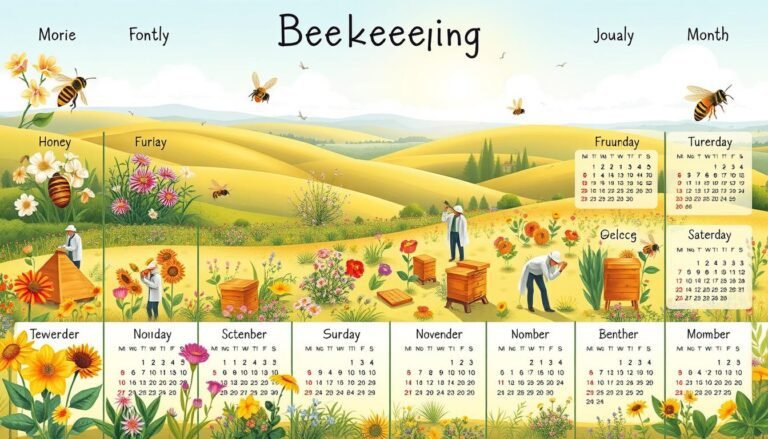
seasonal nectar flow calendar (Greece / Mediterranean)
A concise month-by-month checklist helps you act fast during short bloom windows and protect winter strength.
Month-by-month hive tasks, foraging cues, and bloom highlights
January–February: top checks on warm days (>16°C), 2:1 syrup and protein support. Watch early pollen colors at the entrance to spot spring start.
March–April: switch to 1:1 syrup, start varroa monitoring, inspect every 7–10 days, add supers before congestion. Remove drone brood about 28 days after capping.
May–June: manage swarm risk, harvest when ≥¾ of cells are capped, add second supers, supply ~200 ml water per hive per day, and provide shade in hot spells.
July–August: reduce full openings, guard against robbing and hornets, prioritize stores if dry, and stage gear for post-rain pulses.
September–December: autumn mite treatments, final harvests on dry days, consolidate boxes, control moisture, and finish equipment workflows.
Adjusting timelines by region, altitude, and coastal proximity
Coastal and urban locations often run earlier. Higher latitude or altitude areas can lag by one to three weeks.
| Location type | Typical shift | Practical tweak |
|---|---|---|
| Coastal / urban | Starts earlier by ~1–2 weeks | Pre-stage supers sooner; watch warm spells |
| Inland / high altitude | Lags by ~1–3 weeks | Delay feeding taper and move tasks later |
| Mixed exposures | Staggers yields across areas | Split apiaries to smooth honey supply |
Keep concise monthly notes on temperature, rainfall, bloom onset, and harvest dates. Over time this refines timing for spring honey opportunities and local plant species cues.
Adapting Management to Climate Variability and Change
As springs advance and extremes grow, practical management must focus on buffer stocks, diverse forage, and dynamic moves between sites.
Resilience starts with reserves. Keep larger honey stores in each colony—regionally 18–45 kg—so brood and workers survive false starts and late frosts.
Diversify forage around apiaries to avoid reliance on single bloom events that weather can wipe out. Planting mixed shrubs and herbs near yards reduces single-point failures.
Buffering and moving hives
Use short moves or transhumance to follow staggered blooms. Urban or sheltered microclimates can extend productive days and stabilize yields when nearby rural sites stall.
Data-driven scheduling
Link local weather models and bloom tracking to schedule supering, splits, and varroa treatments. Recalibrate treatment windows to actual brood cycles rather than fixed dates.
| Strategy | Why it helps | Key action | Risk if ignored |
|---|---|---|---|
| Maintain larger reserves | Buffers brood during false springs | Leave 18–45 kg honey per hive | Starvation or lost brood |
| Diversify forage | Spreads risk across blooms | Plant diverse hedgerows, stagger sites | Crop failure from single-event weather |
| Weather & bloom models | Improves timing for honey and treatments | Use forecasts to pre-stage gear | Missed harvest windows, poor mite control |
| Transhumance / microclimate use | Tracks later or cooler blooms | Move hives short distances seasonally | Lower annual yields and resilience |
“Record changes in bloom timing and returns to refine thresholds and reduce surprise losses.”
- Anticipate earlier springs; pre-stage equipment and staff.
- Adjust yard work to avoid compounding heat or storm stress on bees.
- Keep clear logs of behavioral shifts, yields, and weather to spot multi-year trends.
Conclusion
End the year by turning simple measurements—weight, entrance counts, and bloom notes—into repeatable management decisions for each yard. Track time and weather so you add space, feed, or treat when your locations actually need it.
Honey reflects the season and the conditions that produced it: droughts yield darker, mineral-rich batches; wet years give milder, higher-moisture lots. Keep moisture testing and selective harvesting to protect quality.
Discipline in observation—regular entrance checks, bloom records, and hive weights—lets you adapt quickly. Use space management, reserves, and habitat work around plant communities to smooth summer variability and strengthen autumn and winter outcomes.
Across regions, refine what works in your yards and record it. Apply local data and professional management so your bees convert seasonal opportunity into consistent, high-quality honey year after year.
FAQ
What is the purpose of this guide and how should I use it?
This guide helps beekeepers align hive management with local bloom and weather patterns. Use it to plan inspections, feeding, varroa treatments, and honey harvests, then adjust timing based on your altitude, coastal influence, and recent temperature and rainfall data.
Why can’t one universal beekeeping schedule work for every apiary?
Floral communities, microclimates, and latitude vary widely. Coastal areas warm earlier, mountain sites lag behind, and urban heat islands shift bloom windows. These differences change forage availability, colony development, and predator pressure, so calendars must be adapted locally.
What temperature ranges matter most for foraging and nectar secretion?
Honeybees typically forage when daytime temps exceed about 50–55°F (10–13°C). Many Mediterranean plants secrete usable resources above these thresholds, and extended cool spells will pause colony expansion and reduce collection rates.
How do rainfall patterns and soil moisture affect bloom timing?
Rainfall sets soil moisture that drives flowering windows. Heavy winter-spring rain can boost spring blooms, while summer drought suppresses late-season blossoms. Short-term rains can trigger bursts of floral resources, affecting when bees can gather.
What role does humidity play in honey ripening inside the hive?
High hive humidity slows water evaporation from nectar, delaying ripening and increasing fermentation risk. Good ventilation and maintaining adequate but not excessive stores help bees dehydrate nectar efficiently for stable honey.
How do wind, barometric shifts, and rain cues change foraging efficiency?
Strong wind and falling barometric pressure reduce flight windows and make navigation harder. Bees prefer calm, stable conditions; short-term pressure drops often precede foraging pauses. Monitor local forecasts to avoid unnecessary inspections during marginal days.
What are typical daily flight windows and how can microclimates extend them?
Flight windows concentrate in the warmest daylight hours, often mid-morning to mid-afternoon. South-facing slopes, sheltered valleys, and urban heat islands can raise local temps and extend productive hours for collection and brood care.
How do latitude and altitude affect bloom schedules and colony development?
Higher latitudes and elevations delay flowering and shorten active seasons. Colonies at these sites often need later stimulation and earlier overwintering preparations. Conversely, lower elevations and southern latitudes see earlier spring expansion and longer potential foraging periods.
What management changes are needed for valley, hillside, and coastal apiaries?
Valleys may trap cold air, causing late frosts; monitor night lows and delay major manipulations. Hillsides get better drainage and earlier warmth, allowing faster spring growth. Coastal sites have milder winters and extended forage but higher wind and salt exposure—plan hive placement and windbreaks accordingly.
How should I plan hive feeding and protein support in January–February?
Assess stores and brood comb status. Use 1:1 sugar syrup only when temps allow active feeding and avoid creating frames of uncapped syrup late in winter. Provide protein patties if pollen is scarce to support early brood rearing, and limit disturbances during tight clustering.
What checks and treatments are advisable in March for early brood development?
Perform low-disturbance inspections for queen quality and brood pattern. Begin varroa monitoring with sugar roll or alcohol wash and prep equipment for the season. Light stimulation with thin syrup can support colony buildup when foraging starts.
When should supers be added and how do I prevent swarming in April?
Add supers as brood nests expand and frames fill with nectar. Manage space by equalizing colonies, splitting high-pressure hives, and using drone-brood removal or checkerboarding to reduce swarming drive. Timely inspections and queen assessments help prevent sudden absconding.
How do I maximize spring honey yields in May while maintaining colony health?
Provide ample supers and rotate frames to avoid congestion. Monitor queen performance and treat high varroa loads before heavy nectar flows. Keep records for traceability and harvest only fully capped honey to ensure low moisture and shelf-stable product.
What adjustments are recommended for June heat and late blooms?
Offer shade, water sources, and increased ventilation during hot spells. Consider adding a second honey super for late-flowering species. Maintain varroa surveillance, as heat stress can reduce foraging and amplify disease impacts like deformed wing virus (DWV).
How can I manage robbing, predators, and pests in July–August?
Tighten entrances, reduce exposed supers if flows wane, and use screened bottom boards selectively. Watch for hornets and wax moth activity; keep hive openings small and store frames properly. Controlled, quick inspections reduce robbing triggers.
What should I do in September to prepare for autumn treatments and relocation?
Finalize harvests, check stores, and plan miticide timing based on brood breaks and local mite counts. If moving apiaries, do so early in the month to allow colonies to reorient before colder nights. Update records and water provisioning before cooler weather sets in.
How do I consolidate colonies and control moisture from October through December?
Reduce space, remove unneeded supers, and ensure good hive ventilation to prevent condensation and mold. Apply autumn acaricides as appropriate and add insulation or moisture-absorbing materials in wet, mild winters to preserve cluster health.
Which plant communities offer the most reliable forage across the season?
Mixed landscapes with native shrubs, fruit trees, and herbaceous plants provide staggered bloom peaks. In many Mediterranean-influenced regions, early bulbs and fruit trees feed spring growth, while shrubs like thyme and heather contribute in summer and fall.
How should I adjust month-by-month tasks by altitude and coastal proximity?
Shift tasks earlier at lower altitudes and coastal spots, and delay them at higher elevations. Use local bloom observations and degree-day tracking to fine-tune syrup feeding, super additions, and treatment windows rather than fixed calendar dates.
What strategies help buffer colonies against climate variability and longer-term change?
Diversify forage sources, maintain healthy reserve stores, and consider transhumance to follow blooms. Use local weather models and bloom-tracking tools to anticipate shifts, and time varroa and disease treatments around actual colony brood cycles.
How can I use weather models and bloom tracking to optimize mite timing?
Combine forecasted temperature trends with in-field bloom observations to predict brood pauses and peak foraging. Time mite treatments during natural brood breaks or when brood levels are low to increase efficacy and reduce re-infestation risk.
What common signs indicate a poor season for forage and when should I feed?
Reduced forager return rates, light-weight hives, and prolonged nectar dearths signal scarce resources. Feed emergency syrup and provide pollen substitutes when natural sources lag, especially before extended cold or drought periods to prevent starvation.