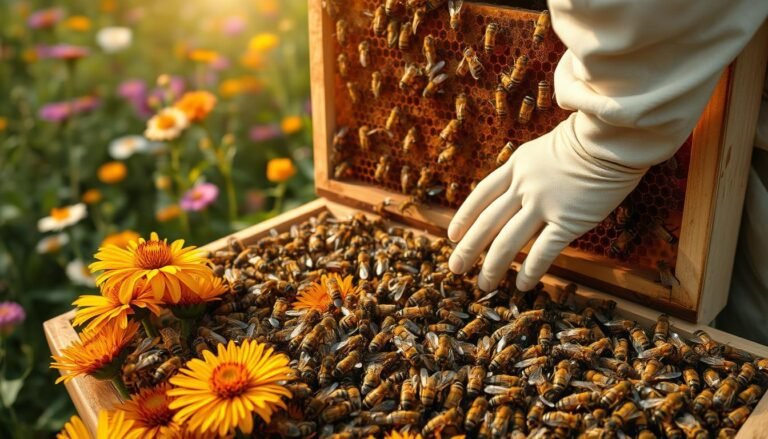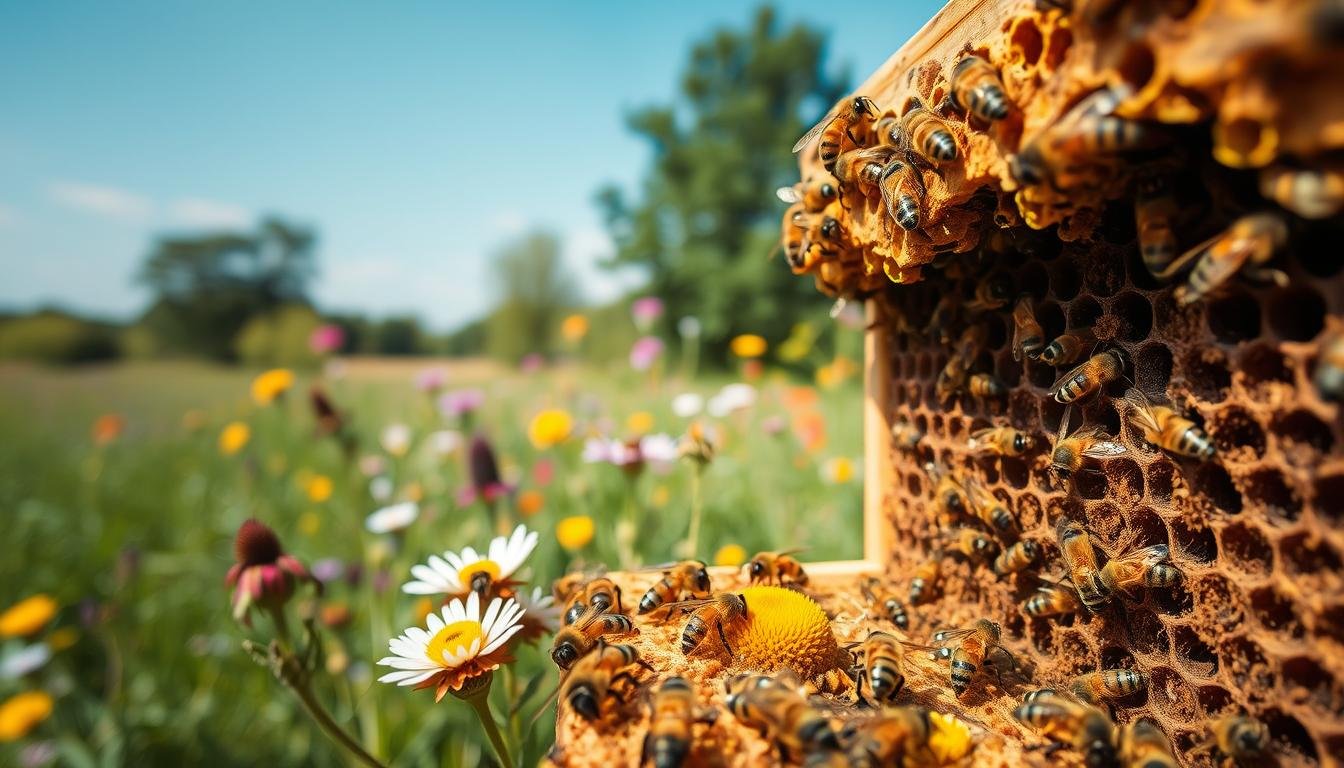
This introduction frames the central question: why colonies reduce or halt surplus honey storage and what practical steps help recovery. The phrase reasons bees stop making honey names the issue we will diagnose.
Native and managed pollinators face habitat loss, pesticide exposure and climate shifts. Varroa destructor and associated viruses weaken workers and suppress colony growth. These pressures reduce foraging and limit nectar processing, so production drops.
Some slowdowns reflect short nectar gaps. Other cases show systemic decline from combined stressors — poor nutrition, heat, parasites and pesticide residues. A hive can look normal while hidden problems erode efficiency.
This guide previews basic honey biology, a quick diagnostic checklist, deeper causes, and an action plan for beekeepers in the United States. It focuses on monitoring mites, queen performance, placement and landscape fixes to restore steady output.
Key Takeaways
- Multiple interacting factors usually reduce honey output, not a single cause.
- Varroa and viruses often drive steep declines in colony strength.
- Seasonal nectar gaps differ from chronic production problems.
- Hidden pesticide exposure and poor nutrition cut foraging efficiency.
- Practical levers: monitor mites, assess the queen, and improve forage.
Understanding the problem: how honey production works in a healthy hive
Within a thriving colony, foragers collect nectar and return it to a network of in‑hive workers that transform it into stable stores.
From nectar to capped stores: roles and microclimate
Foragers deliver dilute nectar to house bees. Those workers add enzymes and transfer fluid between mouthparts to start sugar conversion.
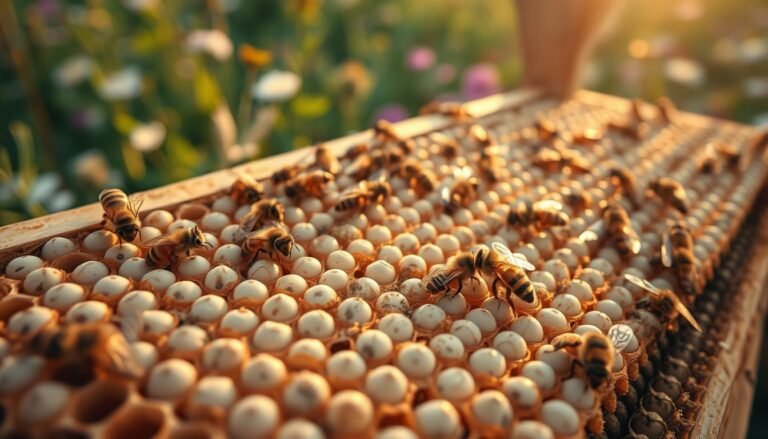
Evaporation follows. Fanning and ventilation drop moisture until cells reach a safe target and are capped for long‑term storage.
Brood rearing versus surplus
During rapid spring build‑up, nurse workers allocate food to brood first. That shifts resources away from surplus storage and can delay production.
Colony demographics matter: a balanced age mix keeps steady foraging and in‑hive processing. Loss of cohorts weakens the pipeline.
“Good ventilation and timely supering keep nectar flowing into stores instead of stalling in open cells.”
| Factor | Effect on storage | Management tip |
|---|---|---|
| High internal heat | Slows evaporation | Improve top ventilation or add screened inner cover |
| Congestion | Nectar diverted to brood | Add a super before peak flow |
| Phenology shift | Foraging misaligned with bloom | Monitor local bloom timing and adjust management |
Quick diagnostic: how to assess a hive that’s not producing honey
A short, methodical check can separate seasonal slowdowns from serious colony decline.
Checklist — brood, queen, and population
- Open a frame and confirm a solid brood pattern with eggs and larvae to infer queen performance.
- Estimate colony strength by frame coverage and entrance traffic at peak foraging hours.
- Record whether stored food looks adequate or if frames hold uncapped nectar.
Field signs and in‑hive clues
- Compare forager departures and returns; note pollen baskets and fresh white wax as nectar-flow indicators.
- Heft the hive to gauge weight; uncapped nectar suggests intake without adequate dehydration.
- Schedule mite checks with alcohol or sugar rolls; document levels over time.
- Look for deformed wings as a DWV sign linked to Varroa destructor.
- Consider pesticide exposure if adults vanish but food and the queen remain; review EPA advisory windows for sprays.
“Keep a simple log of brood pattern, weights, mite counts, and weather to tell transient slowdowns from deeper health issues.”
Reasons bees stop making honey
A drop in floral resources can quickly translate into empty frames even when a colony looks strong.
Nectar dearths and lack of floral resources
Nectar gaps from drought, seasonal lull, or habitat loss reduce intake immediately. Monocultures and urban development shrink bloom windows and floral diversity. That lack forces colonies to use stores for brood and survival rather than surplus production.
High varroa mite levels and disease pressure
Varroa and associated viruses shorten worker life and impair foraging. Higher mite loads lower brood viability and cut colony output. Persistent infestations translate to chronic production decline unless treated swiftly.
Queen failure or queenlessness
A failing queen disrupts egg-laying and triggers emergency rearing. Workers shift effort to brood care and requeening, which halts surplus storage until a stable laying pattern returns.
Climate stress and extreme conditions
Heat, poor ventilation, and moisture imbalances slow nectar dehydration. Warm winters and mismatched bloom timing alter phenology and reduce effective foraging days.
“Multiple pressures—pesticides, pests, and heat—often act together to compound losses in production.”
| Cause | Immediate effect | Linked factors | Action |
|---|---|---|---|
| Nectar dearth | Reduced intake; uncapped nectar | Drought, habitat loss, monoculture | Feed syrup; plant diverse forage |
| Varroa and viruses | Fewer foragers; weak brood | Mites vector DWV; poor nutrition | Monitor and treat mites |
| Queen issues | Disrupted laying; workforce shift | Older queen, loss, or poor mating | Requeen or unite colonies |
| Climate extremes | Slowed evaporation; phenology mismatch | Heat waves, warm winters | Improve ventilation; shade hives |
- Detect early: log brood, weight, and mite counts.
- Target response: feed during dearths; treat mites; requeen if needed.
- Landscape fixes: increase bloom continuity and reduce pesticide windows.
Nectar and pollen availability: the foundation of honey production
A hive’s production hinges on the timing and diversity of local floral supply. Strong spring flows deliver the workforce and early stores that set the season’s trajectory.
Seasonal flows in spring, summer, and fall in the United States
Spring brings rapid build-up in many areas as maples, fruit trees, and wildflowers bloom. That surge fuels brood rearing and the first surplus.
Mid-summer often provides major flows in certain regions, but timing varies by crop and climate. Late-summer and fall sources prepare colonies for winter if diverse forage persists.
Track local bloom calendars and rainfall patterns and align supering and feeding plans to expected flows. For a practical calendar, consult a regional guide like seasonal beekeeping tasks.
Monocultures, habitat loss, and reduced pollen diversity
Large-scale monocrops give short, intense nectar pulses but little shoulder-season forage. That creates boom‑and‑bust cycles that depress continuous production.
Diverse pollen improves immune function and worker longevity. Colonies near conservation lands show better performance than those in isolated urban or monocrop areas.
- Monitor weight trends and white wax to confirm real nectar gain; visible pollen does not always mean surplus.
- Siting hives near mixed landscapes or conservation easements buffers against single-crop declines.
- Homeowners can bridge gaps by planting native species with staggered bloom to support bees through summer lulls.
“Predictable blooms and varied pollen keep foragers healthy and steady, reducing the need for emergency feeding.”
For long-term planning and research on trends in production, review regional studies such as the Penn State analysis on long-term output and shifts in bloom patterns: long-term honey production study.
Queen health and brood pattern: signals of a colony’s capacity to store honey
A queen’s laying rhythm and a clear brood pattern give a fast, reliable read on future production. Solid frames of eggs and compact larvae predict the workforce needed for surplus later in the season.
Signs of queen failure include scattered brood, many drone cells, or falling egg counts. These patterns force workers to prioritize rearing and repair, which diverts energy away from stores.
Pheromonal stability keeps the hive cohesive. When pheromones are stable, stress behaviors drop and foraging and processing run smoothly. Unstable cues increase unrest and slow in‑hive work.
“Combine regular queen checks with mite monitoring; varroa and DWV can mimic queen problems by degrading brood quality.”
Practical steps for beekeepers: re‑queen with locally adapted stock, rotate old comb, track brood area versus nectar flows, and pair queen checks with mite tests. These actions protect brood viability and shorten the window when a colony cannot build surplus.
| Signal | What to check | Impact on stores | Action |
|---|---|---|---|
| Consistent brood pattern | Eggs across frame, tight larvae | Predicts strong forager numbers | Monitor and time supering |
| Scattered brood or drone layer | Irregular eggs, many drone cells | Diverts resources to rearing | Requeen or unite colony |
| High DWV/Varroa signs | Deformed wings, poor brood | Shorter forager lifespan | Test and treat mites; replace comb |
For deeper reading on management and regional stock, see the beekeeping resources guide.
Varroa mites and pathogens: how parasites suppress honey yields
Parasitic infestations and viral agents quietly erode colony productivity long before obvious collapse appears.
Varroa destructor, deformed wing virus, and brood viability
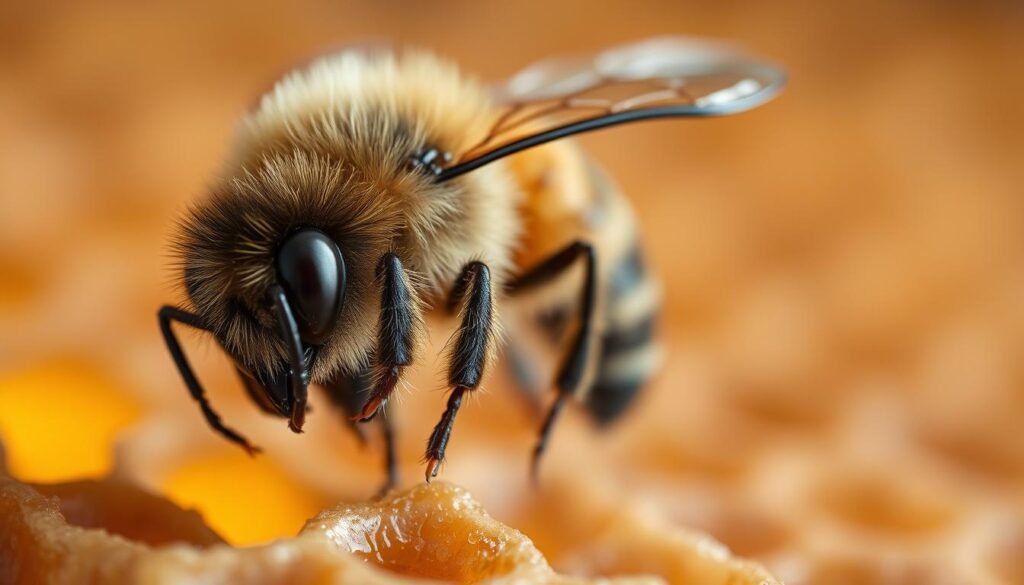
Varroa destructor feeds on developing and adult bee hemolymph, raising DWV loads and shortening worker life. Reduced lifespans cut foraging days and curb seasonal nectar intake.
Other threats: Nosema, small hive beetle, and foulbrood
Nosema harms gut function and lowers nutrient uptake, while American foulbrood kills brood and destroys future workforce. Small hive beetle expands in warm areas and can ruin stored frames.
Testing and thresholds: integrating monitoring into your calendar
Monthly mite checks during buildup and peak flow are essential. Use alcohol or sugar rolls and act when counts near local thresholds to protect summer yields.
“Disciplined monitoring, timely treatments, and equipment hygiene keep colonies productive across seasons.”
| Threat | Effect | Action |
|---|---|---|
| Varroa | Elevated DWV; fewer foragers | Monthly checks; rotate controls after harvest |
| Nosema | Poor nutrient uptake; shorter life | Improve nutrition; consider targeted treatments |
| Small hive beetle | Comb damage; stolen stores | Trap and shade hives; remove infested frames |
Sanitize gear and isolate collapsing colonies to reduce spread. Integrated control of parasites and disease sustains brood turnover and improves honey bee health and yield consistency.
Pesticide exposure and sublethal effects on foraging and nectar processing
Pesticide exposure can quietly sap a colony’s foraging power even when hives appear normal.
Sublethal impacts impair navigation, reduce foraging efficiency, and disrupt nectar processing. Workers may return with less nectar or fail to finish dehydration in the hive, undermining stores without obvious mass kills.
Understanding advisory labels and drift risk during bloom
The EPA requires a bee advisory box on some neonicotinoid labels (imidacloprid, thiamethoxam, clothianidin, dinotefuran). It prohibits use where bees and flowers are present and urges drift minimization.
Application choices — timing, nozzle selection, and buffer zones — matter. Aerial and high‑pressure sprays near flowering crops or wildflower areas present the highest drift risk.
Timing applications and coordinating with growers
- Avoid sprays during active foraging or when plants are flowering, shedding pollen, or producing nectar.
- Coordinate with farmers to spray at night or before bloom when possible.
- Prefer lower‑risk options (insecticidal soap, targeted controls) when feasible.
- Notify neighbors and document any local spray events; consider moving hives if applications are unavoidable.
“Early spring or off‑season sprays can still harm solitary and bumble bee queens and affect the season ahead.”
| Risk | Effect on foraging | Practical step |
|---|---|---|
| Drift from aerial/high‑pressure spray | Reduced return rates; contaminated forage | Request buffer zone; track weather; use low‑drift nozzles |
| Bloom‑time applications | Impaired navigation and nectar processing | Avoid spraying during bloom; apply at night if essential |
| Low‑dose chronic exposure | Subtle behavior change; lower yield | Monitor for sudden drops in activity; log incidents; work with growers |
Climate and weather: hot days, drought, and mismatches with bloom
Rising temperatures and shifting rainfall patterns are changing bloom windows and stressing colonies across many regions. These shifts alter when and how much forage is available each year.
Heat, ventilation, and moisture balance inside the hive
During heat waves, many workers switch to fanning and water collection. That reduces the workforce available to process nectar and finish capped stores.
Good ventilation and shade help keep comb temperatures and moisture in the right range for ripening. In hot areas, add top vents, provide afternoon shade, and keep a clean water source nearby.
Warm winters, early springs, and forage timing mismatches
Warm winters can trigger brood rearing before reliable blooms begin. Colonies then draw on reserves and may weaken before major flows arrive.
Drought reduces nectar secretion and shortens flower life. Even strong colonies will see intake fall when plants fail to produce.
Phenological mismatches—when spring blooms peak before forager numbers rise—create missed opportunities for surplus production.
“Monitor local weather and bloom timing each year to align supering and feeding decisions.”
- Conservative harvesting when extended heat is forecast preserves stores.
- Provide top ventilation, seasonal shading, and a clean water source.
- Watch for increased pest pressure, such as small hive beetle, as warming trends expand their range.
Nutrition quality: why diverse pollen matters for colony health
Diet quality controls immune strength and worker lifespan. Mixed pollen diets improve honey bee health, reproduction, and stress resilience. One study linked poor diet to a 30% colony loss, showing the stakes clearly.
Parasitized individuals fed diverse pollen lived longer than those limited to a single source. Diverse forage also lowers virus loads and reduces queen loss compared with pollen substitutes alone.
- Varied diets support robust immune responses, better brood rearing, and steady foraging.
- Poor nutrition amplifies Nosema and DWV impacts, shortening worker life and compressing yield windows.
For continuous bloom from early spring to late fall, plant regionally adapted natives, herbs, shrubs, and trees. Integrate staggered bloom times and drought‑tolerant species to buffer summer dearths.
“Balance supplemental feeding with preservation of stores; natural pollen diversity delivers benefits that substitutes cannot fully replace.”
| Topic | Effect | Practical tip |
|---|---|---|
| Mixed pollen | Improves immunity and longevity | Plant diverse natives; include herbs and shrubs |
| Monoculture crop | Short bloom, limited diet choice | Supplement forage; coordinate plantings with neighbors |
| Poor nutrition | Higher disease risk; fewer foragers | Use targeted feeding; preserve stores during dearths |
For regional planting plans and seasonal timing, consult the beekeeping expansion guide.
Absconding, swarming, or CCD? Telling scenarios apart when hives go empty
Not all disappearances are the same—how frames, stores, and the queen appear points to different outcomes.

Rapid absconding versus normal swarm behavior
Absconding is a fast abandonment driven by severe stressors such as heat, heavy mite or beetle pressure, chronic disturbance, or food shortage.
It often leaves combs scattered and few returning foragers. Prevention focuses on shade, improved airflow, proactive mite control, and calmer inspections.
Colony collapse disorder (CCD) cues and diagnostics
CCD typically shows a living queen and capped brood with ample stores, but very few workers and minimal dead insects on site.
Robbing and pest invasion are often delayed after the loss. Document recent inspections, weather spikes, and treatments to narrow the cause.
“A queen present with intact stores is a red flag for CCD-like loss rather than a simple queen failure.”
| Scenario | Key signs | Quick action |
|---|---|---|
| Absconding | Empty hive, scattered comb, pest signs | Shade, ventilate, treat mites, minimize disturbance |
| Swarming | Orderly cast of workers, new queen cells, parent hive remains strong | Manage splits or provide space before season peak |
| CCD-like loss | Queen present, capped brood, stores intact, few dead | Sanitize gear, document timeline, avoid reusing suspect comb |
Queenless collapses show scattered brood and falling egg counts, not the intact-store pattern of CCD. Track dates, weather, and treatments this year to help pinpoint the most likely reason.
Hive placement and disturbance: minimizing stress that reduces honey stores
Where you place a hive shapes internal conditions and daily work patterns. Choose spots with morning sun and afternoon shade in hot climates to prevent overheating and to support steady nectar ripening.
Set hives near diverse forage and a clean water source so foragers spend less energy foraging and cooling. Elevate boxes for drainage and pest control, and orient entrances away from prevailing winds to ease traffic.
Protect colonies from predators and nuisance pests with stands, fencing, and targeted traps. Keep hive areas free from constant loud machinery and heavy human traffic; noise and disturbance reduce foraging consistency.
Beekeepers should conduct calm, goal‑oriented inspections and avoid needless intrusions during major flows. Minimal disturbance preserves forager focus and leads to steadier stores.
“Good siting and gentle handling translate directly into more reliable intake and stronger seasonal storage.”
Competition for resources: honey bees, native bees, and crowded forage areas
When many colonies share limited floral cover, per‑hive intake often falls and stress rises.
High stocking density depresses nectar and pollen collected per colony. That reduces surplus and can increase robbing and drift between yards.
Landscapes near conservation easements tend to show higher per‑colony returns, suggesting less crowding and richer forage. Placing hives in lower‑competition areas often improves yield and colony health.
Shared flowers also create contact points where pathogens move between managed and wild pollinators. Disease exchange at blossoms can raise local population stress and contribute to wider pollinator decline.
- Coordinate stocking rates with neighboring beekeepers to avoid saturating flows.
- Plan moves after transient crop blooms or add supplemental plantings to extend forage.
- Avoid adding colonies solely to chase a single flow; crowded areas give marginal gains and more stress.
“Balance apiary goals with native pollinator stewardship to sustain resilient services.”
| Issue | Effect | Practical step |
|---|---|---|
| High colony density | Lower per‑colony intake | Coordinate stocking; stagger placements |
| Crop boom then desert | Short-term surplus, long dearth | Plan transhumance or plant corridor species |
| Shared floral transmission | Pathogen exchange | Monitor health; reduce overlap at key flowers |
For guidance on broader population trends and management practices, review local research such as factors contributing to bee decline.
Seasonal strategy: managing colonies for honey in spring, summer, and fall
A clear seasonal plan helps beekeepers match colony growth to local floral pulses.
Spring build-up: balancing brood rearing with supering for production
In spring, watch brood area and adult population. Add supers as frames fill with nectar to give room for stores while nurses rear the next worker cohort.
Avoid congestion: if brood expands faster than foragers, consider splitting or equalizing colonies so resources do not bottleneck production.
Summer dearths and fall management for winter survival
During summer dearths, favor conservative harvesting and supplemental feeding when stores run low. Right‑size colonies to match available forage and reduce robbing risk.
Late‑summer mite and disease checks set the stage for a strong fall build and robust winter bees. In fall, secure adequate stores, requeen if needed, and optimize ventilation and moisture control for cold months.
- Align actions with local bloom calendars and weather forecasts each year.
- Keep records per colony—weights, mite counts, brood area—to refine timing across seasons.
“Plan early, act often.”
Season‑by‑season choices compound; thoughtful timing keeps workforce and stores balanced so surplus honey is achievable more years than not. For an applied seasonal reference, see the seasonal management guide.
Action plan: what beekeepers can do when honey production stalls
When production stalls, a focused action plan helps a struggling apiary recover quickly. Start with a calm, stepwise triage before treating.
Stabilize nutrition
Verify queen-right status, brood pattern, recent weight, and mite levels before feeding. If a dearth is confirmed, offer sugar syrup at appropriate ratios and provide quality pollen substitute sparingly to bridge the gap.
Healthy colonies need water access; they can use up to a gallon a day. Mixed pollen diets outperform substitutes but supplements keep a yard viable through short lulls.
Control mites and disease
Test immediately. If mite counts exceed local thresholds, apply a season-appropriate treatment and re-test to confirm reduction.
Improve hygiene: replace damaged frames, freeze or discard infested comb, and clean equipment to limit spread of disease.
- Adjust space and supering to match population and airflow.
- Reduce heat stress with shade, top ventilation, and a reliable water source.
- Requeen promptly when issues are obvious to restore pheromonal balance.
- Document actions, results, and timing to guide future responses.
Practical triage and measured action give the best chance to restore honey stores and a productive colony.
Landscape-level solutions: improving forage and reducing risk
Healthy landscapes supply continuous food, shelter, and safe water so colonies can rebuild and sustain stores across the year.
Planting for continuous bloom and avoiding high-risk pesticide windows
Diversify plantings with native trees, shrubs, and understory species to keep flowers available each season and to supply reliable pollen and nectar through droughts and heat.
Coordinate with local growers to avoid spray windows during bloom. Follow EPA advisory label restrictions and ask for off‑hour applications when possible. A habitat-focused approach can reduce drift and protect solitary and social pollinators alike: habitat-focused approach.
Creating shelter, water, and nesting habitat near hives
- Provide shallow water sources with landing areas and partial shade to aid thermoregulation and nectar processing.
- Include undisturbed ground patches, pithy stems, and cavity blocks to support native bee nesting and boost local pollinator diversity.
- Plant buffer strips between crop fields and apiaries to lower drift and supply emergency forage when main crops finish.
Long-term investment: locating apiaries near conservation areas and habitat corridors reduces competition and raises annual production for commercial and sideline operations.
Conclusion
Multiple factors usually combine as the primary reasons a colony reduces surplus. Habitat loss, pesticides, climate extremes, parasites, competition, and poor nutrition act together to lower output.
Use a fast diagnostic: check brood pattern, queen status, foraging traffic, hive weight, and mite counts. Those signals point to the right corrective steps.
Act decisively: stabilize nutrition, control varroa and disease, improve ventilation and placement, and reduce pesticide risk. A strong, practical takeaway is simple — secure the basics first.
Invest in diverse forage and seasonal planning across the year. Healthy, well‑sited colonies with controlled varroa and strong queens are the most reliable path to steady honey production.
Document outcomes over years and apply the action plan and landscape strategies here to turn stalled production into steady gains next season.
FAQ
What causes a healthy colony to produce less honey even when flowers are present?
Reduced yields can come from a weak population, poor queen performance, high Varroa mite loads, or nutritional gaps. A colony with many brood frames often prioritizes feeding larvae over storing surplus. Combine that with disease or pesticide exposure and foraging efficiency drops, so less nectar makes it back to the comb.
How does nectar become capped honey inside the hive?
Forager bees collect nectar and transfer it to house bees, which reduce water content by fanning and enzymatic action. Once moisture falls to roughly 18%, worker bees cap cells with wax. Temperature, hive ventilation, and worker numbers influence the rate and success of that processing.
What field signs tell me a hive isn’t gathering enough nectar?
Watch for low forager traffic, empty pollen baskets on returning workers, and lack of bright nectar glints on frames. Reduced weight and many uncapped, watery cells are in-hive clues. Seasonal expectations matter — a low flow during a known dearth is normal, but poor performance during peak bloom signals trouble.
When should I check a hive for mites, disease, or pesticide impact?
Sample regularly: early spring before the main honey flow, mid-summer peak varroa check, and late summer before winter preparations. Perform sugar-roll or alcohol wash for Varroa, inspect brood for signs of foulbrood, and note abnormal bee behavior that might indicate pesticides.
Can a failing queen reduce honey stores?
Yes. A queen with irregular laying or poor pheromone output lowers colony cohesion and population growth. Fewer workers means less foraging and reduced ability to process nectar into stores. Replace failing queens promptly to restore build-up.
How do Varroa destructor and associated viruses cut honey production?
Varroa weakens individual bees and spreads viruses like deformed wing virus. Infected workers forage poorly, live shorter lives, and provide less care to brood. High mite infestation reduces colony strength and directly lowers honey yields.
What role does landscape and monoculture farming play in honey production?
Monocultures offer short, intense bloom followed by long dearths and low pollen diversity. That pattern forces colonies to rely on a narrow diet, increasing nutritional stress and disease risk. Diverse forage across the season supports sustained honey production.
How does weather affect whether colonies store surplus nectar?
Heat waves, drought, or untimely rains can truncate floral nectar flows. Extreme temperatures stress colonies, making them focus on thermoregulation instead of production. Warm winters or early springs can also misalign peak bee numbers with peak bloom, reducing net stores.
Should I feed colonies sugar syrup or pollen substitute if they’re not storing honey?
Feed when stores run low or during extended dearths to prevent starvation and support brood. Sugar syrup and pollen substitutes buy time, but they don’t replace the nutritional benefits of diverse pollen. Use feeding strategically and stop before major nectar flows to avoid robbing.
How can pesticide exposure reduce foraging efficiency and processing?
Sublethal pesticide doses impair navigation, learning, and food processing. Drift during bloom is a common source. Coordinate with growers, check product labels, and avoid placing hives near fields during high-risk application windows to reduce impact.
What’s the difference between absconding, swarming, and colony collapse disorder when a hive goes empty?
Swarming is a normal reproductive event where many workers leave with a queen. Absconding happens when the entire colony abandons the site due to pests, heat, or severe disturbance. Colony collapse disorder shows sudden worker disappearance while brood and food remain. Each scenario requires different management steps.
How important is hive placement for maximizing honey production?
Placement affects forage access, wind exposure, and heat load. Provide morning sun, afternoon shade in hot climates, nearby water, and shelter from prevailing winds. Less disturbance and good forage access improve foraging rates and storage.
When should I combine or split colonies to improve production?
Combine weak colonies before winter to improve survival and spring buildup. Split strong colonies in spring to prevent swarming and create more productive colonies for the main nectar flow. Timing depends on local bloom patterns and colony strength.
What landscape actions help increase long-term honey yields for multiple apiaries?
Plant continuous-bloom species, restore native wildflower strips, and provide water and nesting habitat. Work with neighbors and growers to reduce pesticide windows during bloom. Landscape diversity sustains nutrition and reduces dearth-related declines.
How often should I inspect brood pattern and population when production stalls?
Inspect every 7–14 days during build-up and less frequently during stable periods. Look for solid brood patterns, adequate winter stores, and sufficient worker numbers. Early detection of a failing queen or disease allows corrective action before yields drop further.
Which pathogens besides Varroa have the biggest effect on honey storage?
Nosema reduces forager longevity and digestion; small hive beetle can contaminate stores and provoke robbing; American and European foulbrood directly damage brood viability. Integrated monitoring and hygiene reduce these threats and protect production.