


Burr comb forms when bee space exceeds about 3/8 inch. Bees fill that gap with stray comb, which can block frames and make routine inspections slow and messy.
This section sets clear expectations. You will learn what causes the issue and a simple, safe way to fix it. Use cool smoke, start cuts at joints, work swiftly, and restore correct spacing before closing the hive.
Gather basic kit: hive tool, smoker, lidded containers, rags, and optional rubber-banded frames. Scrape excess comb from top bars and interior walls. Watch for pests like small hive beetles and wax moths, and check that the queen is not laying in stray wax.
Prevention matters: keep frames pushed together and inspect every 7–10 days in active season. That limits buildup and keeps honey bees productive.
Good technique and steady inspections make this a manageable part of beekeeping.
Key Takeaways
- Keep bee space near 3/8 inch to prevent burr comb formation.
- Use cool smoke and quick, gentle cuts at joints when clearing excess comb.
- Pack a simple kit: hive tool, smoker, lidded containers, rags, and spare frames.
- Inspect hives every 7–10 days during active season to limit buildup.
- Removed wax can be saved for projects; avoid discarding near yards to deter robbers.
- Watch for pests and queen activity within excess material before disrupting it.
Understanding Burr Comb and Bee Space in the Hive
Small gaps in frames or mismatched equipment often lead bees to bridge the void with stray wax. This excess material is called burr comb and usually appears on top bars and along interior walls.
What it is and where bees build it
Burr comb is comb constructed outside intended frame areas when internal space exceeds the normal clearance. You will commonly find it across top bars, between boxes, or running along side walls. The colony may even place brood—often drone cells—there, which complicates later handling.
Why 3/8‑inch matters
The Langstroth standard of about 3/8-inch bee space gives workers room to move and keeps comb predictable. When beekeepers leave gaps or mix gear with different tolerances, bees opportunistically build comb. That makes frames hard to lift, boxes stick together, and inspections slow.
- Reason: proper bee space aids traffic flow and fast, low-stress checks.
- Unmanaged space also leads to cross comb patterns in some areas, though locations differ.
- Left unchecked, bees will keep adding wax, and pests like beetles or moths may use the extra material.
Good practice is to clear excess wax during routine inspections to preserve order and reduce risks to the hive.
Preparation: Tools, Safety, and Setup Before You Start
Gathering a tidy kit and choosing the right moment makes the task far simpler for both you and the hive.
Essential kit includes a sharp hive tool for cutting and scraping, a smoker packed full of fuel for steady cool smoke, and a sealed bucket or lidded container for honey and wax. Stage a wet rag for sticky hand cleanup and a dry rag for grip control.
Optional aids and staging
Frames prepped with rubber bands let you save straight comb sections fast so the colony can finish them. A small folding table keeps gear off the ground and speeds the job.
Gloves and handling
Many beekeepers work with bare hand contact for maximum dexterity. Nitrile gloves give protection while keeping feel and control. Choose what keeps you calm and precise.
- Timing: Work on calm, warm daylight with low wind and good nectar flow when possible.
- Spacing: Push frames tightly together before and after work to reset correct space and avoid fresh buildup.
- Plan: Block enough time so you can move steadily without rushing; steady work lowers stress for you and the bees.
| Item | Purpose | Benefit |
|---|---|---|
| Hive tool | Cut and scrape wax | Precise removal, less hive disturbance |
| Smoker (packed) | Produce cool smoke | Calms bees, speeds work |
| Sealable container | Hold wax and honey | Controls mess and deters robbers |
| Rubber-banded frames | Secure salvageable comb | Lets bees reattach and finish cells |
Extra reading on general hive prep and wax handling can help refine your routine. See a primer for starting colonies at preparing for honey bees and safe wax processing guidance at bee wax extraction safety.
How to remove burr comb properly
A calm, decisive approach speeds clearing and keeps the colony steady. Apply several puffs of cool smoke and wait a moment so workers settle before opening the hive.
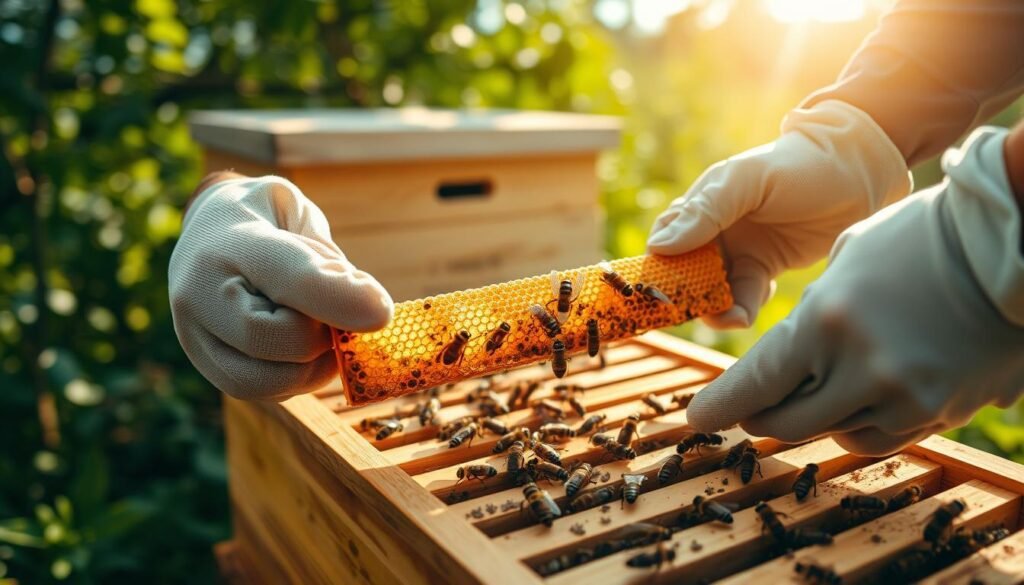
Start at one end and cut at the joints where extra wax meets frames or interior walls. Make controlled cuts to avoid tearing across active areas.
Use a hive tool to scrape top bars and inner walls clean. Clean surfaces stop boxes and combs from binding on your next visit.
Sort material as you go: place straight, salvageable comb into rubber-banded frames for the colony to reattach. Put irregular chunks in lidded containers for later processing or crush-and-strain harvest.
- Work smoothly and aim for a single pass across each area to limit open-hive time.
- Wipe tools and hands often to prevent slips and accidental crushing of bees.
- Before closing, push frames tightly and confirm about 3/8 inch bee space so the issue does not return.
For community tips on stopping buildup in hybrid setups, see stopping burr comb in hybrids. For layout ideas that reduce gaps, consult this horizontal hive guide.
Special Situations: Brood, the Queen, and Varroa Awareness
If brood appears off frames, your next moves should focus on safety and diagnosis. Extra wax often hosts drone brood near the nest edge, so scan removed pieces carefully.
Protect the queen. Hold each piece over the hive and look for her before moving it away. If she is on that wax, gently guide her back onto a frame and pause.
Check drone cells for varroa. Open a few and look for reddish spots on developing brood. Visible mites require an immediate mite test and prompt treatment.
- Expect drone brood in stray wax; cut or lift methodically to avoid tearing many larvae.
- Removing some drone cells can lower varroa pressure while you follow your main control plan.
- If comb shows slimy or webby damage, treat pest issues and strengthen the colony after cleanup.
- Keep removed pieces sealed so pheromones do not attract robbers during the inspection.
- Record findings—amount of brood, varroa signs, and pest evidence—for your next inspection and schedule.
For a practical walk-through of a first brood check, see this first brood inspection. For seasonal planning that reduces these problems, review seasonal tasks.
What to Do With Removed Wax and Honey
Treat harvested wax and honey as valuable farm goods rather than waste. Sort pieces at the hive. Keep edible comb separate from brood, debris, and thick chunks that are unsuitable for reframing.

Crush-and-strain small harvests without foundation
For small, foundationless harvests, mash comb in a wide container using a fork. Pour the mash into a bucket strainer set over a clean pot or bucket.
Let gravity do the work for at least four hours. Cover the setup to keep insects and dust out while the honey drains.
Save beeswax for crafts and never discard near the hive
Reserve cleaned wax for candles, soaps, balms, and lotions. Render and label beeswax, then store it sealed in a cool, dry place.
- Sort immediately: separate honey-bearing comb from brood and debris.
- Use thick, irregular pieces for rendering rather than forcing them into frames and disrupting space.
- Never toss comb by the beehive; its scent attracts robbers and wildlife.
- Clean tools and containers promptly to prevent fermentation or ant problems.
| Material | Immediate Action | Best Use |
|---|---|---|
| Clean honeycomb | Keep separate, crush-and-strain | Table honey, jars, tasting |
| Thick burr pieces | Render and filter | Beeswax for candles and balms |
| Brood or debris | Contain and discard responsibly | Compost or sealed disposal away from apiary |
Preventing Burr Comb: Frame Management and Inspection Cadence
Consistent frame care saves time and keeps colonies productive across the season. Focus on small habits that stop the problem before bees build extra wax in wide gaps.
Avoid common mistakes
Never leave frames out or misaligned. Forgetting frames or failing to push them tight creates space where bees will build. Mixing gear from different makers also creates tiny gaps that invite cross comb.
Inspection rhythm and equipment
Set a steady schedule: hive inspections every 7–10 days during active months. Short, regular visits catch early growth on top bars and inner walls so work stays minimal.
- Standardize frames and foundation across hives to reduce variability and guide straight cells.
- Check for box warpage and align frames as you close the hive to restore correct bee space.
- Record problem spots in each hive so patterns reveal recurring fixes and save you time.
Conclusion
A steady routine that checks spacing and sorts wax saves hours and keeps colonies productive.
Maintain about 3/8-inch bee space, push frames tight after each inspection, and use cool smoke with a clean hive tool. Quick, gentle work prevents the next buildup and preserves worker calm.
Save straight comb sections in rubber-banded frames, crush-and-strain loose honey, and render beeswax rather than discarding near the beehive. Check drone cells for mites during scheduled hive inspections every 7–10 days.
With consistent habits and the right tool in hand, beekeeping becomes smoother, queen safety improves, and burr-related problem areas shrink over time.
FAQ
What is burr comb and where do bees usually build it?
Burr comb is extra beeswax built in gaps inside a hive where worker bees find space. You’ll often see it between frame tops, under the outer cover, or along box walls. It forms where bee space is reduced and can bridge frames or boxes, disrupting free-moving parts and inspections.
Why does a 3/8-inch bee space matter during inspections?
The 3/8-inch bee space keeps bees from filling gaps with wax or propolis. Maintaining that clearance between frames and boxes prevents cross comb and makes routine inspections quicker and less disruptive to the colony.
What tools and safety gear should I have ready before working a hive?
Bring a hive tool, smoker with fuel, buckets with lids for salvage, rags, and a face veil or jacket. Optional items include nitrile gloves, a folding table, and rubber bands for stabilizing frames. Set these up nearby so you can work efficiently and reduce handling time.
When is the best time and weather to deal with extra comb?
Choose calm, warm, and sunny days when bees are most active flying. Avoid cold, windy, or rainy conditions that stress the colony. Work during mid-morning to early afternoon for lower bee numbers in the hive and easier handling.
What’s the proper technique for cutting and clearing extra comb?
Use cool smoke to calm bees, then start at one end and cut comb where it joins a frame or wall. Work steadily and keep the hive open the minimum time. Scrape residue from top bars and box interiors with a hive tool to restore clean surfaces and correct spacing.
How can I salvage straight comb for honey or brood?
Transfer straight, undisturbed comb into frames held by rubber bands or foundation. Keep comb level and supported so it won’t bend or drop. Label and return frames promptly so the colony can repair and accept them.
How do I protect the queen when removing bridged comb?
Use soft smoke and slow movements to locate the queen before pulling comb. If the queen is on or near comb you must remove, gently lift with a hive tool and place her on an adjacent frame. Avoid quick tugs that could injure her or stress the colony.
What about drone brood in burr comb and varroa checks?
Drone brood often appears in odd combs. Inspect those cells for varroa mites—look for reddish or dark spots. If you find infestation, remove or freeze comb and increase mite control steps for the colony immediately.
What should I do with wax and honey gathered from removed comb?
Small honeyed combs can be crushed and strained for a home harvest. Beeswax is useful for candles, soap, and balms; render and store it away from the apiary so you don’t attract robbing bees. Never dump leftovers at the hive entrance.
How often should I inspect to prevent excessive comb building?
Inspect every 7–10 days during the active season. Regular checks keep frames aligned, reveal missing or warped frames early, and reduce the chance of cross comb forming between inspections.
What common mistakes lead to more comb in the hive?
Frequent culprits include uneven equipment, missing frames, poorly seated boxes, and long gaps left unchecked. Inconsistent frame spacing or skipping inspections gives bees the opportunity to bridge spaces with wax.
Can I burn or discard unwanted wax near my apiary?
Avoid discarding wax and honey near the hives; it invites robbing and pests. Render or store wax off-site, or process it into products like candles and balms. If you must destroy comb, do so away from the apiary.


