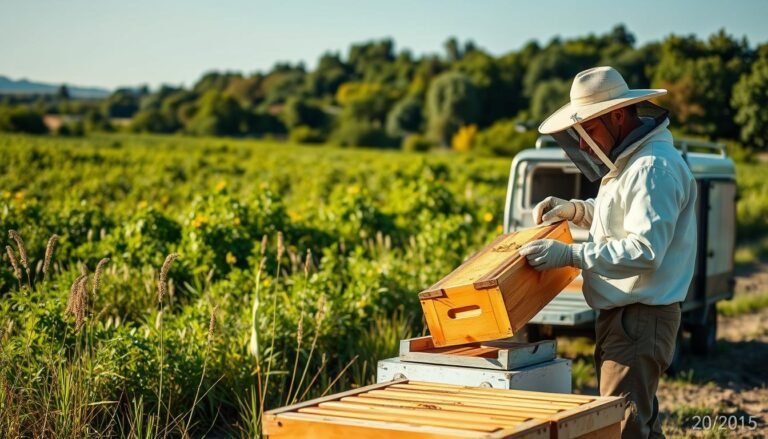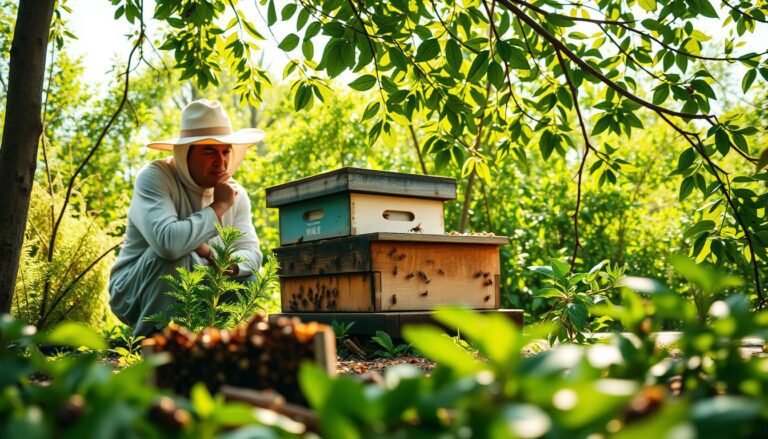
Next-generation hive solutions merge engineering and biology to keep bees thriving when temperatures swing and storms intensify.
The goal is clear: translate volatile weather into practical design choices that ease management and boost colony resilience and honey yield.
We preview two landmark case studies: HIIVE, which recreates a tree-cavity microclimate using hemp wool insulation, vapor barriers, and recycled-plastic frames; and Cathedral Hive, with hex-shaped top bars that stabilize combs and calm colonies during inspections.
Modularity, smart sensors, and living-roof concepts make these systems adaptable across regions in the United States.
Expect a practical guide that covers materials, airflow, monitoring, regional strategies, and market context. For background on horizontal approaches and materials, see this concise guide on horizontal beehives.
Key Takeaways
- Engineering meets biology: practical designs reduce stress on colonies.
- Insulation and airflow are critical to brood stability.
- Modular systems cut management risk and improve flexibility.
- Smart sensors and plans help across hot, cold, and wet seasons.
- Real-world case studies show measurable gains in hive health and yield.
Why this ultimate guide matters for beekeeping in extreme climates
As weather grows less predictable, practical upgrades become central to beekeeping success. Strong, climate-aware choices in equipment and routine inspections safeguard pollination services and local food systems across the United States.
Bees face heat stress, sudden moisture spikes, and hard freezes that affect brood development and forager returns. Targeted practices and modest hive upgrades cut losses and stabilize honey flows.
Resilient beekeeping pairs hands-on checks with designs that keep internal conditions within a safe band for brood and adult bees. Timing matters: install retrofits before peak stress to reduce emergency interventions.
Smart, modular hives and simple retrofits help both backyard stewards and commercial operators. Choices about ventilation, insulation, and material selection improve colony health across varied microclimates.
“Align equipment, layout, and handling with bee biology to reduce stress and raise survival odds.”
- Stakes: protect pollination and stabilize seasonal yields.
- Practicality: routine inspections plus better ventilation guard brood health.
- Scalability: compact climate-ready units enable urban beekeeping in heat islands.
Search intent: what readers want to know about future hive designs for extreme climates
Practical questions drive most searches: which systems keep brood steady when days swing from hot to cold?
Key user needs include clear comparisons of material, ventilation, and sensors so beekeeping choices match a region’s stressors.
New beekeepers want a forgiving option that is scalable and simple to use. Hobbyists and commercial operators ask when a retrofit suffices and when a new system pays off.
- Which hive designs manage temperature swings best and which features to prioritize.
- How to balance airflow with brood protection and avoid damaging drafts.
- Material guide: wood, polystyrene, composites—pick by local conditions and handling style.
- Interpreting sensor data: actions from shade to entrance adjustments when temperature spikes.
Practical signposts: cheap retrofits often fix moisture or heat problems. More complex systems help when losses persist despite routine care.
“Aim for simple monitoring, targeted retrofits, and minimal handling to keep colonies resilient.”
Climate pressures shaping next‑gen hive designs
Beekeepers now face weather patterns that demand adaptable, performance‑focused hive solutions. Heat waves, sudden cold snaps, and irregular rainfall change how colonies allocate energy and how equipment must protect them.
Heat waves, polar vortices, and erratic rainfall: what colonies face
Heat waves elevate internal temperature and humidity. Bees spend labor cooling rather than foraging or caring for brood.
Polar vortices and cold snaps force dense clustering. That behavior drains stored energy and exposes gaps from poor insulation.
Erratic rainfall raises moisture inside boxes. Without clear airflow, mold and brood chill become real threats.
Translating weather volatility into design requirements
Manufacturers now add modular components and sensors to track temperature and humidity in real time. This turns reactive fixes into preventive care.
- Thermal protection: higher R‑value shells and reduced thermal bridging keep brood stable.
- Moisture control: rain‑shedding roofs, moisture‑buffering liners, and targeted ventilation prevent mold.
- Adaptability: modular entrances, shading panels, and adjustable airflow suit varied areas.
- Durability: robust joints and swell‑resistant materials keep seals tight through wet/dry cycles.
- Pest resistance: physical barriers and layout choices reduce intrusions without heavy chemicals.
| Pressure | Impact on colony | Design response | Key metric |
|---|---|---|---|
| Heat waves | Cooling labor shifts, reduced foraging | High R‑value shells, ventilation control, shading | Internal temperature stability (°F) |
| Cold snaps | Energy‑draining clustering | Insulation, reduced thermal bridges, tighter seals | Heat retention (U‑value) |
| Erratic rainfall | Moisture buildup, mold risk | Rain‑shedding roofs, moisture buffers, airflow pathways | Relative humidity (%) |
“Align external weather defenses with internal bee thermoregulation to keep colonies resilient.”
Core design principles: insulation, ventilation, and airflow done right
Keeping brood temperature steady means pairing thermal mass and R‑value with tuned ventilation so bees spend less energy heating or cooling the nest.
Thermal mass and R‑value: keeping brood temperature stable
Dense, continuous insulation and internal mass smooth short temperature swings. Proper R‑value reduces cold spots and cuts the labor bees must do to warm brood.
Eliminate thermal bridges at lids, joints, and frames. The HIIVE cave‑like geometry shows how avoiding direct cold paths makes a measurable difference.
Moisture control and ventilation without drafts
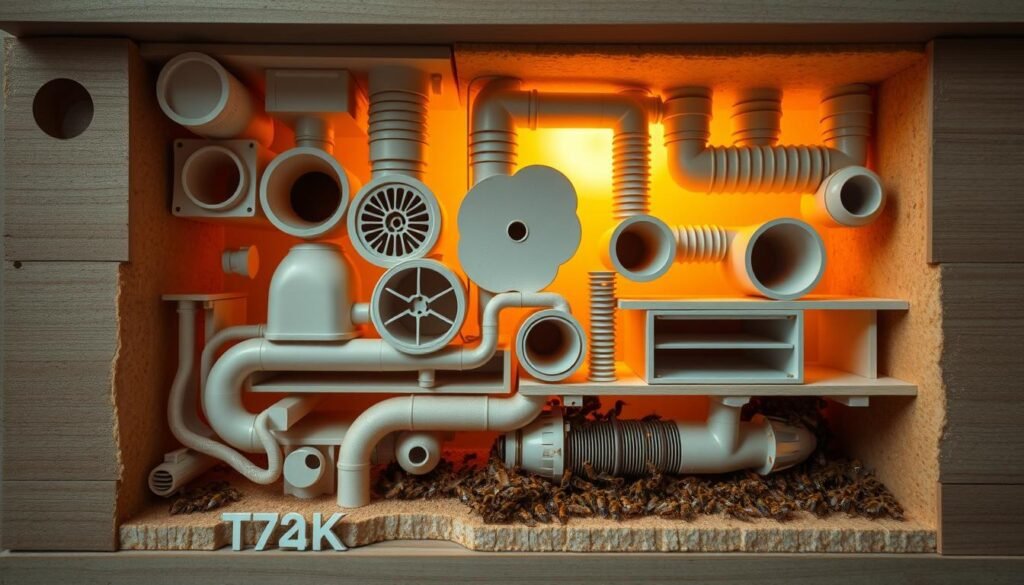
Build ventilation that removes moist air without blasting the brood nest. Use offset vents, baffles, and top exits to exhaust warm, wet air.
Vapor barriers and hemp wool help buffer humidity while breathable covers prevent condensation during cold nights.
Air flow pathways that protect brood and stores
Route air across the top of frames or comb, not through the brood core. Adjustable entrances and screened components let you tune openings during nectar flow or storms.
- Insulation placement matters more than thickness; cover junctions continuously.
- Use sensors to track temperature and relative humidity and adjust vents.
- Simple retrofits—insulating lids, vented inner covers, and wind baffles—give big gains at low cost.
“Design airflow to let bees manage the microclimate with less effort.”
Materials for extreme weather: wood, polystyrene, plastics, and composites
What hives are made from matters: each material trades breathability for durability in different ways.
Wood’s breathability versus synthetic durability
Wood offers natural thermal buffering and moisture regulation that helps brood stability. It breathes, so damp air moves through the box rather than pooling on combs.
Finish and coatings can protect wood from rot while keeping some moisture control. Use breathable sealers and regular maintenance to retain those benefits.
Polystyrene and recycled plastics in cold and hot regions
Polystyrene delivers high insulation in northern areas and reduces winter energy loss. That can cut spring buildup delays and lessen colony stress.
Recycled plastics and composites resist swelling and warping in hot, humid zones. HIIVE’s recycled-plastic frames paired with hemp wool insulation and a vapor barrier show how hybrids balance strength and thermal control.
- Key trade-offs: wood = repairable and light; synthetics = durable, lower upkeep.
- Build tips: prioritize continuity of insulation and tight joints to avoid thermal bridges.
- Procurement: buy small batches and field-test materials locally before large orders.
For practical retrofit options and insulated examples, read more about insulated beehives.
Case study: HIIVE’s tree‑cavity microclimate and modular design
HIIVE models a tree cavity to give bees a steadier internal climate without rigid corners or cold spots. The round, cave-like geometry removes sharp edges and cuts thermal bridging. That keeps gentle temperature gradients across the brood area.
Cave geometry, hemp insulation, and moisture control
The inner shell uses thermo hemp wool plus a vapor barrier and textile cover to regulate heat and moisture. This insulation smooths daily swings in both hot and cold seasons.
Modular two‑chamber layout and sensor roadmap
The fully modular system lets operators swap parts for repair or sanitation. A two-chamber arrangement separates brood and honey, preserving brood-first thermal stability while easing harvests.
- Dedicated refuge: a controlled space for symbionts and parasites reduces chemical pressure and supports colony health.
- Recycled plastic frames: resist weather and cut maintenance without adding weight.
- Sensors and app: planned alerts track colony trends and swarm timing to aid management.
“By lowering the workload bees spend on climate control, HIIVE increases foraging potential and resilience in volatile regions.”
Where it fits: best in stationary apiaries and educational sites demonstrating bee-centric architecture. Key takeaways apply elsewhere: eliminate thermal bridges, insulate continuously, and separate brood and honey to protect internal stability.
Case study: Cathedral Hive innovations for bee health and stability
Small changes in top-bar shape and passage layout yield big gains in comb stability and colony calm.
Hex-shaped top bars create a broad base for comb. This reduces breakage during inspections and transport. Combs hang from the flat faces and do not attach to the side walls. That makes handling clean and simple.
Passage holes and calmer handling
Passage holes in the bars let bees move and communicate. Traffic flows more evenly and clusters thin out. Field reports show observers can see colony status without moving bars.
“Orderly comb, visible activity, and gentle ‘herding the bees’ steps make inspections faster and less disruptive.”
Living‑roof concept and comb stability
The living‑roof cushions temperature swings and sheds rain. Its mass buffers heat and moisture above the brood chamber. Hives with Cathedral geometry held dense brood, strong pollen stores, and capped honey in rough weather.
- Benefits: fewer comb failures, reduced disturbance, consistent brood patterns.
- Design lesson: prioritize stable bar geometry, intentional passageways, and roofs that temper heat and moisture.
| Feature | Effect | Outcome |
|---|---|---|
| Hex top bars | Stable comb support | Less breakage; easier transport |
| Passage holes | Improved traffic flow | Lower clustering; calmer handling |
| Living roof | Thermal and moisture buffer | Stable brood; stronger stores |
Smart and connected hives for harsh environments
Networked sensors and simple controls shrink the gap between observation and action. Real‑time data gives beekeeping teams continuous visibility into temperature and humidity so they can tune ventilation and shade before brood suffers.

Real‑time temperature, humidity, and colony health monitoring
IoT sensors fit standard Langstroth boxes and stream easy data to phones or dashboards. Mann Lake’s 2024 partnership with HiveTech and Flow Hive’s BeeHero acquisition show the market is moving toward mainstream, accessible tools.
From IoT sensors to AI analytics: reducing losses and boosting productivity
AI flags anomalies such as queen loss, brood breaks, or moisture spikes. Alerts can prompt simple actions—adjust an entrance, add insulation, or open vents—so bees spend less effort on climate control and more on foraging.
- Dashboards combine environmental and activity metrics to guide feeding, supering, and heat mitigation.
- Data sharing builds regional baselines that support extension services and research.
- Pilot programs and careful sensor placement, calibration, and data hygiene reduce false alarms and wasted time.
| Sensor | Monitors | Actionable response |
|---|---|---|
| Temperature | Brood zone °F | Adjust ventilation or shade |
| Humidity | Relative % | Add ventilation or vapor buffer |
| Activity | Flight & weight | Flag queen problems or feeding need |
“Smart alerts turn small interventions into major gains in colony health and yield.”
Market outlook: the beekeeping hive industry through 2032
Investors and manufacturers now treat beekeeping gear as a resilient segment tied to food security and pollination services. Demand for better hives links directly to pollination needs and stable honey production.
Key figures and growth
The global market reached USD 1 billion in 2024 and is projected to grow at about 8% CAGR to roughly USD 1.7 billion by 2032. That projection covers multiple years of steady investment and product iteration.
Trends shaping buyers and builders
Modular, smart, and eco‑friendly systems are the main growth drivers. Urban beekeeping is expanding rooftop and educational demand. Manufacturers such as Mann Lake, Dadant & Sons, Betterbee, Swienty, and Flow Hive lead product and channel moves.
- Consolidation and partnerships in 2024 sped distribution and integration of sensor platforms.
- Sustainability policies push recycled plastics and responsibly sourced wood into mainstream designs.
- Data-driven operations will scale as connected platforms mature across regions.
| Driver | Impact | Outcome |
|---|---|---|
| Pollination & food demand | Higher equipment spend | More resilient apiaries |
| Urban growth | Compact, eco hives | Better local access |
| Tech & research | Smarter monitoring | Faster interventions |
“Buy with a three‑ to five‑year plan: track outcomes, not brands.”
Procure with medium‑term budgeting. Set KPIs tied to colony survival, honey yield, and maintenance costs. Watch regulations and incentives that can change equipment prices and adoption rates.
Future hive designs for extreme climates
A clear checklist helps operators prioritize vents, insulation, and storage layout when weather swings are likely.
Design features checklist for heat, cold, and high‑moisture areas
Heat: use reflective or shaded lids, adjustable ventilation, high R‑value lids, and unobstructed top air flow channels.
Cold: add continuous insulation around the brood, reduce thermal bridges, install wind breaks, and include moisture‑buffering layers.
High moisture: place hives on raised stands, add drip edges and water‑shedding roofs, and use breathable internal liners so condensation does not form over the brood.
- Modular components — entrance reducers, screens, and insulation inserts — let you tune performance across seasons.
- Place vents and baffles to keep air moving above stores while the brood core stays protected from drafts.
- Include inspection windows or minimally invasive access to reduce heat loss during checks and keep colonies calm.
Brood-first architecture: separating brood and honey for resilience
Adopt a brood-first layout that prioritizes a stable thermal zone around the brood. HIIVE’s two‑chamber approach separates brood and honey to reduce temperature swings during harvest.
Why it matters: stable brood conditions let bees spend energy on foraging and brood care rather than microclimate control.
“Designs should amplify what bees already do, supporting thermoregulation rather than competing with it.”
| Stress | Feature | Purpose | Key check |
|---|---|---|---|
| Heat | Shaded/reflective lid, adjustable vents | Lower internal peak temps | Max internal temp stability |
| Cold | Continuous insulation, reduced bridges | Retain brood warmth | Heat retention test |
| Moisture | Raised stand, vapor barrier, breathable liners | Prevent condensation over brood | RH and surface dryness |
Verify outcomes with simple sensors. Confirm that ventilation changes deliver the intended microclimate before wide rollout.
Regional insights for the United States
Regional strategies tailor equipment and routines to the weather each area brings. Practical, local choices reduce stress on a hive and help keep bees productive.
Southwest heat strategies: insulation, shade, and airflow
In hot, arid zones, deploy shade structures and reflective lids to cut peak sun load. Add evening ventilation adjustments so heat escapes overnight without blasting the brood.
Insulation still matters here; thin, continuous liners or insulated lids reduce rapid temperature spikes near frames. Aim airflow upward so moist, hot air leaves above combs and does not sweep through the brood nest.
Northern cold strategies: wind breaks, polystyrene options, and moisture control
In cold areas, consider polystyrene shells or insulated wraps to retain heat and prevent chill at walls. Elevate stands and add wind breaks to limit snow and drafts at entrances.
Combine vapor barriers or quilts with controlled top ventilation so moisture from clustering bees exits without condensing over comb. In temperate zones, favor wood with targeted insulation and a rain-shedding roof.
- Log temperature and humidity per hive to learn microclimate patterns.
- Adjust supering and colony size before long nights to avoid late-season stress.
- Urban sites need tailored vent placement for heat islands and wind tunnels.
“Tune gear to place, not just theory; local data beats guesswork.”
Choosing the right hive type for your goals
Match your goals—inspection ease, yield, or low‑intervention care—to a hive that supports daily routines and long‑term colony health.
Langstroth, Top‑bar, Warre, Flow, observation, and dome hives compared
Langstroth remains the go-to for modular frames and straightforward inspections. It fits operations that value scalable equipment and easy sensor add‑ons.
Top‑bar and Warre support low‑intervention practices. These formats let colonies expand naturally and suit beekeeping that favors hands‑off management.
Flow systems prioritize fast, clean extraction. They reduce labor during harvest and appeal to apiaries focused on time‑efficient yields.
Observation hives excel in education and research. They require careful thermal management to keep bees healthy while offering visibility.
Dome hives are niche but prized for ventilation and visual appeal. Commercial operations rarely use them at scale, though they fit demonstration sites.
- New beekeepers: start with a Langstroth or top hive that matches your time and tolerance for complex equipment.
- Weight & handling: choose supers or bars you can lift; use stands and proper packing to reduce strain during inspections.
- Climate fit: pick materials and insulation based on hot, cold, or wet regional needs and add vents or vapor buffers as required.
“Pilot one type, measure survival and yield, then scale or adapt your setup based on real results.”
Operations playbook: best practices for bee health and productivity
A concise operations playbook turns seasonal checks into measurable gains in colony stability.
Seasonal checkpoints set a clear rhythm: early spring build‑up, summer heat management, fall consolidation, and winter moisture control. Schedule inspections and actions at each checkpoint to keep productivity steady.
Low‑stress handling matters. Use smoke sparingly, practice the Cathedral Hive “herding” technique where passage holes allow gentle guidance, and keep open‑hive time short to protect bee health.
Practical routines and ventilation tuning
- Log interventions and outcomes over several years to refine timing and reduce disruptions.
- Standardize ventilation by season—adjust entrances and top vents to control moisture while preserving brood warmth.
- Plan supers to avoid congestion and align feeding to measured need, not habit.
- Adopt brief, targeted inspections focused on brood pattern, stores location, and queen‑right indicators.
- Perform preventative maintenance: tighten joints, replace warped lids, and check seals to protect the microclimate.
- Integrate simple sensors to validate assumptions and trigger timely responses during heat waves or cold snaps.
“Build a calendar that reserves time for education and peer exchanges; repeated learning speeds improvements in practices and outcomes.”
Procurement and partners: channels, brands, and emerging tech
Procurement choices shape how quickly new equipment reaches apiaries and how well it performs in local conditions.
Online vs. specialty retail, direct sales, and distributors
Online retail leads in selection and convenience. It saves time and gives access to many suppliers.
Specialty stores add value with hands-on demos and expert beekeeping advice. They help buyers choose the right product side‑by‑side.
Commercial buyers should use direct sales or distributors to secure volume pricing, custom configurations, and reliable lead time.
Key players and notable collaborations shaping climate‑ready equipment
- Mann Lake — modular systems and the Mann Lake + HiveTech IoT tie.
- Flow Hive — AI integration after the BeeHero acquisition.
- Dadant, Betterbee, Swienty — facility and materials advances and strategic mergers in 2024.
| Channel | Strength | Best use |
|---|---|---|
| Online | Selection, speed | Small buys and research |
| Specialty | Guidance, demos | First‑time purchasers |
| Distributor/Direct | Pricing, scale | Commercial rollouts |
“Request pilot units and run side‑by‑side tests to validate claims in local weather and management systems.”
Practical tips: check warranties, spare parts, and service response. Factor shipping windows during peak season and pursue grants for educational or urban programs. Document procurement decisions and outcomes to guide future purchases and support ongoing research into better beekeeping tools.
Conclusion
Local testing and simple sensors let operators convert data into clear actions that protect brood and stores. Use short trials, log outcomes, and let measured results guide purchases and upgrades.
Practical takeaways: continuous insulation, controlled ventilation, and airflow that protects brood and honey deliver steady gains in colony health and yield. HIIVE and Cathedral Hive show how bee‑centric thinking improves handling and welfare.
Plan purchases ahead of harsh seasons, pilot changes with sensors, and work with trusted suppliers like Mann Lake and Flow Hive. Ongoing research and market momentum this year will widen options across the United States.
With sound engineering, modern tools, and careful operations, a well‑spec’d hive helps bees spend less energy on climate control and more on foraging and growth.
FAQ
What key design features help colonies survive extreme heat and drought?
Effective solutions include high R-value insulation, reflective outer surfaces, deep shaded placement, and passive ventilation paths that pull hot air away from brood frames. Combining thermal mass with adjustable vents and screened bottom boards stabilizes internal temperature without creating damaging drafts. Also plan for water access and planting forage to reduce stress on stores.
How do beekeepers control moisture in cold, wet regions without chilling brood?
Use breathable materials like unfinished wood or enhanced composites that wick moisture, plus roof overhangs and raised entrances to shed rain. Install ventilation that exchanges humid air above the brood nest—such as upper vents with baffles—while insulating the brood area. Polystyrene or insulated inner covers can keep brood warm while passive venting prevents condensation.
Which materials work best for long-term durability in harsh weather?
Durable choices include marine-grade plywood, exterior-grade cedar, recycled HDPE plastics, and closed-cell foam cores laminated into composite panels. Each has trade-offs: wood offers breathability and repairability, synthetics resist rot and pests, and composites give high insulation and structural strength. Match material to local temperature swings and moisture levels.
Can modular or multi-chamber hives improve colony resilience?
Yes. Separating brood and honey into dedicated chambers helps colonies prioritize warmth and food stores. Modular systems allow targeted insulation or heating, easier inspections, and staged responses to stress. Two-chamber designs also reduce temperature gradients and protect developing brood during rapid weather shifts.
Are smart sensors worth the investment for beekeepers in volatile climates?
Real-time temperature, humidity, and CO2 monitors can deliver early warnings about brood cooling, moisture buildup, or ventilation failures. When paired with simple alerts, analytics reduce colony loss and guide targeted interventions. Cost varies, but even basic sensor kits often pay back through improved survival and steady honey production.
How should I adapt traditional Langstroth, Top-bar, or Warre hives for extreme conditions?
For Langstroth, add insulated outer boxes, recessed inner covers, and screened ventilation baffles. Top-bar and Warre hives benefit from added roof insulation, wider eaves, and modular insulation wraps that avoid compressing comb. Prioritize airflow channels that do not cross the brood nest and use windbreaks or shade to reduce thermal stress.
What management practices reduce losses during heat waves and cold snaps?
Monitor stores and brood status frequently, feed emergency syrup or candy boards as needed, maintain adequate ventilation without drafts, and minimize disruptive inspections during stress periods. In heat, provide shade and evaporative cooling; in cold, consolidate brood into warmer boxes and reduce entrance size to limit chill. Plan interventions based on local seasonal trends over several years.
How do urban beekeepers manage microclimate challenges on rooftops and balconies?
Use lighter-colored or reflective exteriors, wind screens, elevated stands with insulated pads, and compact modular boxes that shield comb from radiant heat. Ensure stable water sources and place hives where airflow removes heat but doesn’t create direct wind tunnels. Remote monitoring is especially helpful for rooftop colonies.
What role does brood-first architecture play in colony survival?
Brood-first layouts place insulation and thermal control around the nursery, allowing bees to maintain core temperatures with less energy. Separating honey stores reduces brood exposure to humidity and pests. This approach improves overwintering success and preserves foraging efficiency during stressful seasons.
Are there proven case studies or products that show improved outcomes?
Several modular and cavity‑mimicking systems have shown positive results in trials—units that combine hemp or wool insulation, cavity geometry to reduce thermal bridges, and sensor integrations. Look for products with field-tested performance data and transparent materials specs from reputable suppliers and research collaborations.
How should I choose a hive based on regional conditions in the United States?
In the Southwest prioritize reflective surfaces, deep ventilation paths, and shade provisions. In northern states opt for insulated walls, reduced entrance sizes, and moisture‑managing vents. Consider local forage, predator pressure, and winter length when selecting materials and configurations.
What maintenance and inspection cadence works best for climate‑ready hives?
Increase checks during rapid seasonal shifts: weekly during extreme heat or cold onset, monthly during stable periods. Focus on brood temperature, moisture accumulation, and store levels. Use low‑stress handling techniques to minimize heat loss or overheating during inspections.
Can recycled plastics and polystyrene be environmentally responsible choices?
Recycled HDPE and closed‑cell polystyrene offer long life and strong insulation, reducing hive replacement frequency. Choose recyclable or reclaimed materials and avoid additives that off‑gas. Combining synthetics with breathable internal liners can balance durability and colony health.
What are the cost considerations when upgrading to climate‑ready equipment?
Higher‑performance materials and sensor systems increase upfront costs but often lower losses and labor over time. Evaluate total cost of ownership: material lifespan, expected reduction in winter kills, productivity gains, and compatibility with existing equipment. Prioritize investments that address the most frequent local threats.
How do ventilation pathways protect brood without increasing disease risk?
Design ventilation to move humid air above the brood nest, using baffles and screened channels to avoid drafts across comb. Proper airflow reduces condensation and fungal growth. Maintain easy access for regular hygiene checks and ensure vents discourage pests rather than creating entry routes.